
Note: This article contains affiliate links. If you click on these links and make a purchase, we may earn a small commission at no extra cost to you. This helps support our research and content. Read our full affiliate disclosure here.
If you want café-style espresso at home without overspending, the right semi-automatic espresso machine on a budget makes a big difference. These machines put manual control where it matters — grind size, dose, tamping, and extraction time — while still automating boiler heat and pump pressure so you get repeatable results. This guide walks through a short list of carefully chosen budget semi-automatic espresso machines, explains the practical tradeoffs you should expect, and outlines the performance and usability features we evaluated. Read on to find an option that fits your space, routine, and preferred level of hands-on control.
Top Picks at a Glance
| Best Overall The best all-around choice for most situations | Neretva Espresso Machine 3690 |  |
| Best Quality Built to a higher standard if you want something more solid | CASABREWS Ultra Espresso Machine |  |
| Best Value The sweet spot between price and what you get | AERCANA ST-699B Espresso Machine |  |
| Top Rated A top-rated pick with lots of positive feedback | Havato Semi-Automatic Espresso Machine |  |
| Most Popular A crowd favorite that many people choose with confidence | Gevi 20 Bar Espresso Machine ECMG0 | 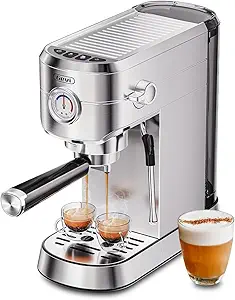 |
| Best Seller A high-volume bestseller chosen again and again | CASABREWS CM5418 Espresso Machine |  |
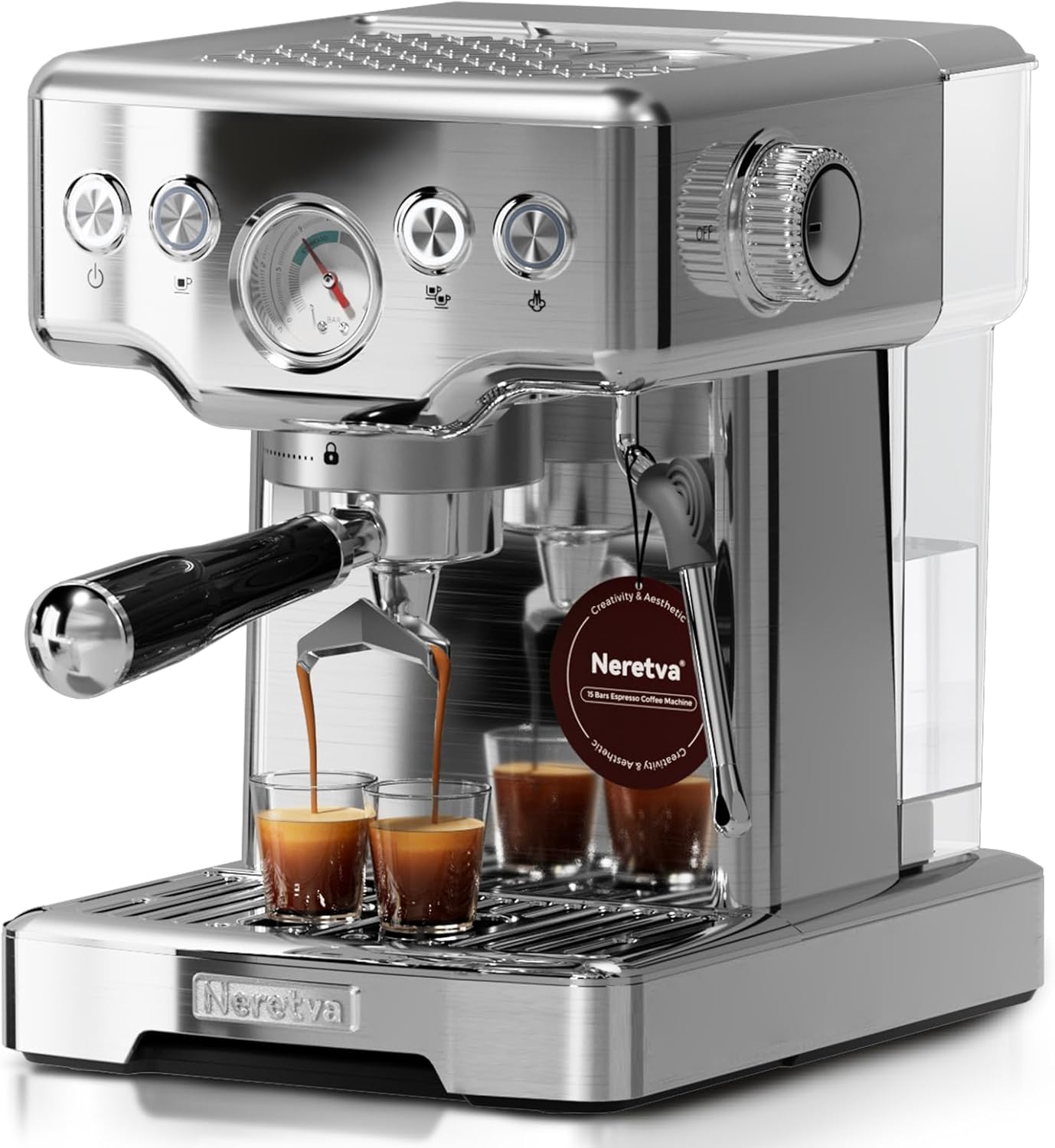
Neretva Espresso Machine 3690
| Output Pressure | 15 bar |
|---|---|
| Capacity | 1.8 liters |
| Operation Mode | Semi-Automatic |
| Wattage | 1350 watts |
| Coffee Input Type | Ground |
The Neretva 15-bar espresso machine is a compact, semi-automatic unit built for everyday home espresso, latte, and cappuccino making. It uses a 15 bar pump, visible pressure gauge, and pre-infusion to help stabilize extraction, while a powerful steam wand and milk frothing pitcher let you texture milk for latte art. Practical touches include a removable 1.8 L water tank, cup-warming top, and single/double shot pressurized filters that simplify dosing for beginners. The control layout is button-based with a steam dial and an automatic pressure relief valve for safety and consistent results. Expect good crema when you use medium-dark roasts and the right grind and tamping; weaker pressure or inconsistent shots can result from coarse grind or light tamping, and the machine requires some setup and technique to get the best results. For a budget-oriented semi-automatic, it balances useful barista features with an emphasis on approachable operation rather than clinic-grade temperature stability or commercial parts.
Best for: Home buyers who want a budget-friendly semi-automatic that offers hands-on brewing and milk steaming for daily lattes and espressos while still being approachable for someone learning barista skills.
Less Ideal for: People who need commercial durability, precision temperature control, or high-volume cafe performance should look at higher-end, commercial-grade machines.
- 15 bar pump with visible pressure gauge helps monitor extraction in real time
- Powerful steam wand and included frothing pitcher for milk-based drinks and latte art
- Removable 1.8 L water tank and cup warmer make daily use convenient
- Includes single and double pressurized filters and a 51 mm portafilter for easy dosing
- Requires careful grind size and tamping to reach optimal pressure and shot quality
- Not designed for commercial-level temperature stability or heavy daily cafe use
Verdict: A capable, budget-minded semi-automatic that gives home baristas pressure feedback and strong steaming power for making good lattes and espressos at home.
CASABREWS Ultra Espresso Machine

| Wattage | 1350 watts |
|---|---|
| Voltage | 120 volts |
| Operation Mode | Semi-Automatic |
| Coffee Input Type | ground_coffee |
| Filter Type | 58mm Portafilter & one/two cup filters |
The CASABREWS Ultra is a semi-automatic espresso machine aimed at home baristas who want café-style shots without a commercial price. It uses a 20-bar Italian pump and a 1350W heating system with a PID-like four-level temperature control to deliver steady extraction and richer crema, while a pre-infusion stage helps even saturation of the puck. Daily use centers on filling the removable 73 oz tank, dosing and tamping into the included 58mm portafilter, then selecting brew and steam functions via the clear LCD and button controls. The long 10mm commercial-style steam wand produces dense microfoam for lattes and cappuccinos and the top cup warmer keeps cups near serving temperature. Practical benefits include a three-way solenoid for drier pucks and an adjustable drip tray for different cup heights. Expect some learning curve for grind size and tamping to hit ideal shots, and routine cleaning is required like any prosumer unit; this is not a heat-exchange or dual-boiler commercial machine. For the price it offers many pro-grade features that improve flavor and milk texture compared with basic home machines.
Best for: Buyers prioritizing extraction quality and milk texture who want pro-level controls and hardware at a budget-friendly price and are willing to learn basic barista technique.
Less Ideal for: People who need a fully automatic, no-training-required machine or a commercial multi-boiler setup for high-volume service should look elsewhere.
- 20-bar Italian pump for steady extraction and improved crema
- Four-level adjustable brew temperature for more consistent shots
- Commercial-style 58mm portafilter and included filters and tamper kit
- Powerful steam wand capable of creating microfoam for latte art
- Removable 73 oz water tank and cup warmer for convenient daily use
- Single boiler design means you cannot brew and steam simultaneously for back-to-back milk drinks
- Requires practice with grind and tamp to consistently hit ideal extraction
- Larger footprint and routine maintenance typical of prosumer machines
Verdict: If you want café-quality extraction and a pro-style steam wand without spending commercial-level money, the CASABREWS Ultra delivers the core performance features that matter most.
AERCANA ST-699B Espresso Machine

| Output Pressure | 20 bar |
|---|---|
| Wattage | 1450 watts |
| Coffee Input Type | Ground |
| Capacity | 1 liters |
The AERCANA ST-699B is a compact semi-automatic espresso maker that aims to deliver café-style shots and frothed milk on a tight countertop. It uses a 20-bar pro pump with a visible pressure gauge to extract crema from ground coffee and a 1450W rapid-heating system that reaches brewing temperature quickly. The stainless steel housing includes a steam wand for microfoam, a removable 34 oz water tank and a detachable drip tray for easier cleaning, plus extras like an included filter and cleaning pin. In everyday use it fits small kitchens or offices well: preheat the machine and cup, pull a blank shot to stabilize temperature, then brew and steam for lattes or cappuccinos; the steam wand produces firm steam for latte art if you follow the frothing instructions. Trade-offs are the semi-automatic controls that require some technique and the small footprint means limited simultaneous batch brewing, so it is better suited to single-serve routines than high-volume commercial use.
Best for: Buyers who want a compact, countertop espresso machine that delivers cafe-style shots and reliable steaming but are focused on practical everyday use and space efficiency.
Less Ideal for: Avoid this model if you need a fully automatic programmable machine or plan to serve many drinks quickly in a high-traffic setting.
- 20-bar pump with visible gauge for consistent extraction
- Powerful steam wand capable of producing dense microfoam for milk drinks
- Rapid 1450W heating system reduces wait time to brew
- Removable 34 oz water tank and detachable drip tray simplify refills and cleaning
- Semi-automatic controls require learning to dial in grind, dose, and frothing technique
- Small capacity and single-group setup limit throughput for multiple cups in a row
Verdict: AERCANA ST-699B delivers café-style extraction and strong steaming in a compact, budget-friendly package ideal for practical daily home use.
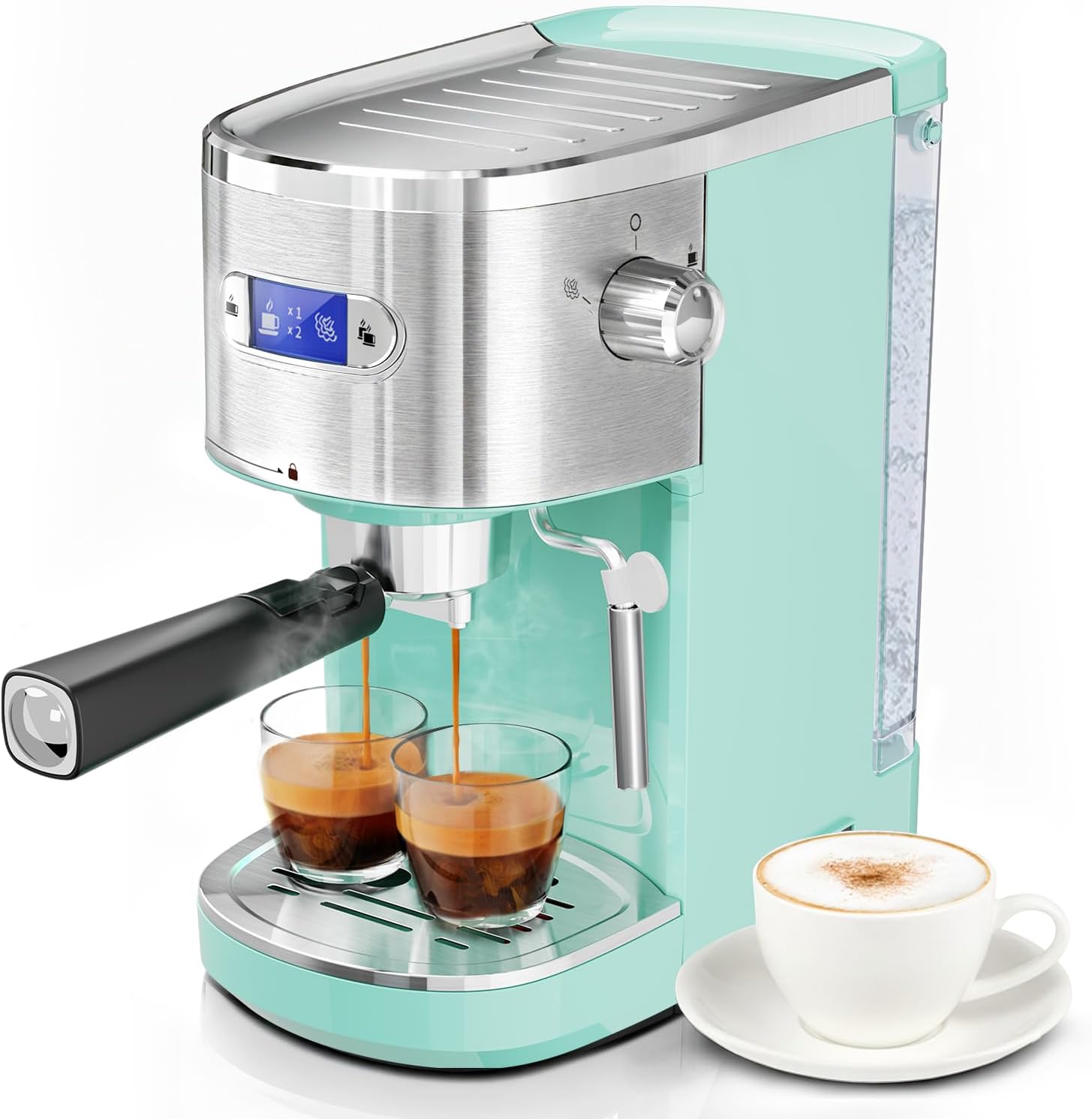
Havato Semi-Automatic Espresso Machine
| Output Pressure | 20 bar |
|---|---|
| Operation Mode | Semi-Automatic |
| Coffee Input Type | capsule, ground |
| Material | Stainless Steel |
The Havato semi-automatic espresso machine brings a compact, café-style setup to a home kitchen by combining a 20 bar pump, steam wand, and a 45 oz removable water tank. It brews with either ground coffee or compatible capsules and uses elevated extraction pressure and pre-soaking to produce a bold shot with crema. The steam wand lets you froth milk for cappuccinos and lattes, and the removable water tank and removable drip tray make filling and fitting taller cups straightforward. Practical benefits include a stainless steel build that feels sturdy for daily use and simple controls aimed at hobbyist baristas rather than commercial operation. Expect basic maintenance like priming the pump, regular descaling, and cleaning the steam wand to keep performance consistent. Limitations are its compact footprint and likely simpler temperature control compared with pricier machines, so achieving precise, repeatable shots may take a little dialing in for grinders and tamping technique.
Best for: Buyers who prioritize a durable, no-frills home espresso setup that can deliver stronger extraction and milk steaming without needing advanced commercial features.
Less Ideal for: Anyone seeking precise digital temperature and pressure profiling or a machine intended for heavy commercial use should consider higher-end prosumer models instead.
- 20 bar pump for stronger extraction and visible crema
- Supports both ground coffee and capsules for flexibility
- Stainless steel construction that feels durable for everyday use
- Removable 45 oz water tank and drip tray for easier filling and larger cups
- Basic temperature control compared with higher-end prosumer models
- Compact machine may require practice to get consistent shot quality
Verdict: A sturdy, budget-friendly semi-automatic that delivers barista-style shots and milk steaming for home users who want reliable, straightforward performance.
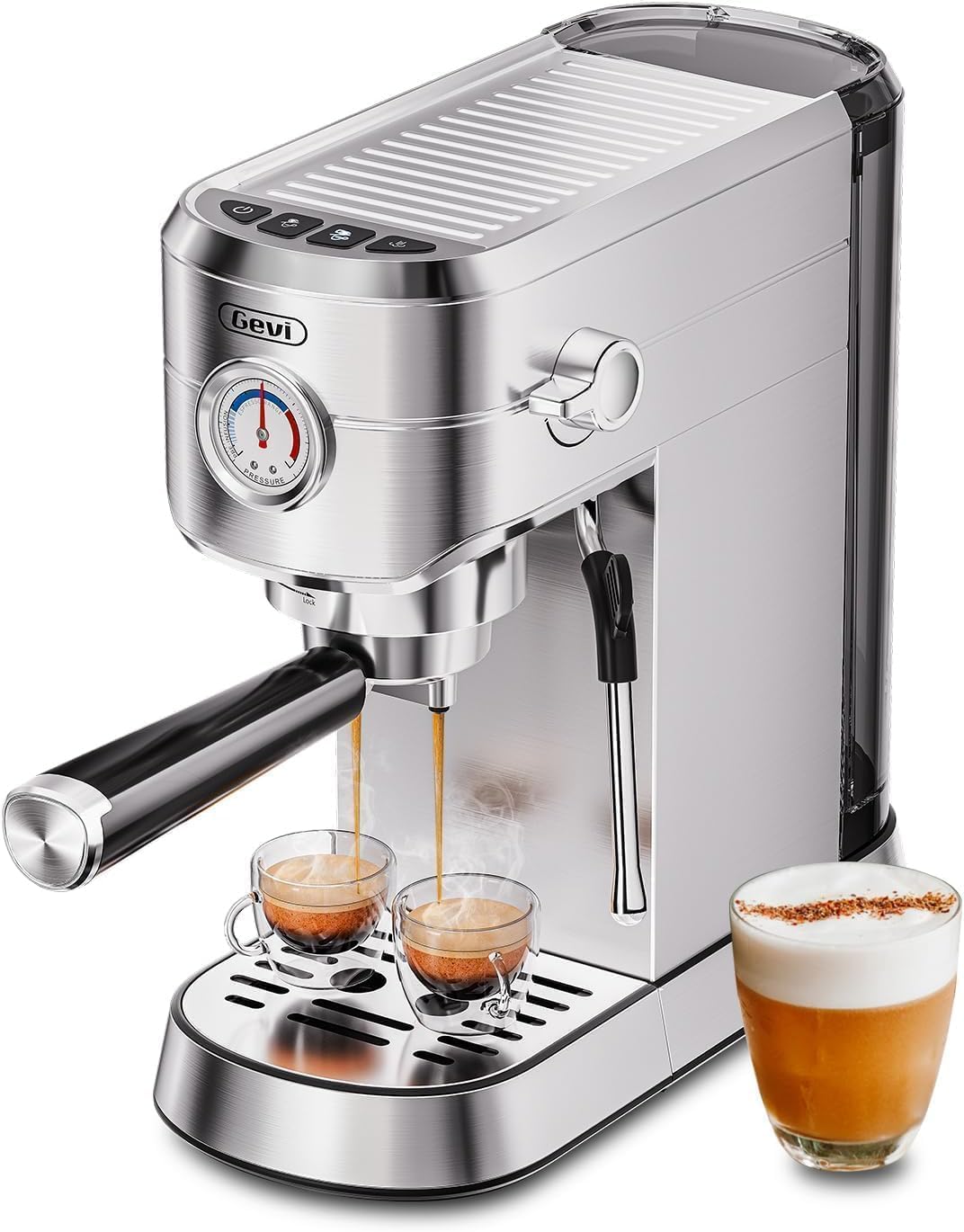
Gevi 20 Bar Espresso Machine ECMG0
| Output Pressure | 20 bar |
|---|---|
| Wattage | 1350 watts |
| Power Source | AC adapter |
| Capacity | 1 liters |
| Filter Type | Reusable |
The Gevi 20 Bar Espresso Machine is a compact stainless steel semi-automatic unit aimed at home use that puts café tools into a small countertop package. It brews via a 20-bar pump with NTC temperature control and a pre-infusion function, and includes a built-in pressure gauge and shot-volume adjustment so you can dial extraction more precisely. Typical use covers single or double espresso shots, Americano via hot-water function, and milk drinks using the powerful steam wand and removable froth nozzle. Practical benefits include a removable water tank for easy refills, a cup warmer on top, and a reusable filter in the included 51 mm portafilter with basic tamping tools. Expect some pump noise and vibration because of the high-pressure pump, and the machine requires manual steaming skill for best microfoam; portafilter parts should not be cleaned with acidic agents or in the dishwasher. For buyers focused on getting espresso-level controls on a budget, this model packs the important features in a compact chassis but lacks the automation and build refinements of higher-end units.
Best for: Buyers who want the controls and features of a café-style semi-automatic machine on a limited budget and who value measurable extraction cues and a compact stainless design.
Less Ideal for: Those seeking fully automatic or hands-off milk steaming solutions or nearly silent, commercial-grade build quality should consider higher-end models.
- 20-bar pump with pre-infusion and built-in pressure gauge for more controlled extraction
- Powerful steam wand with removable froth nozzle for milk-based drinks
- Compact stainless steel build with removable water tank and cup warmer for countertop convenience
- Includes portafilter, single and double baskets, tamper and cleaning tools so you can start brewing immediately
- Manual steam wand requires practice to produce microfoam consistently
- Some vibration and noise during operation due to high-pressure pump
Verdict: For budget-conscious buyers who want café-style control, this compact Gevi delivers 20-bar extraction, a pressure gauge, and a steam wand in a ready-to-use package.
CASABREWS CM5418 Espresso Machine

| Operation Mode | Semi-Automatic |
|---|---|
| Wattage | 1350 watts |
| Voltage | 120 volts |
| Output Pressure | 20 bar |
| Coffee Input Type | Ground |
The CASABREWS CM5418 is a compact semi-automatic espresso maker aimed at home users who want café-style drinks without a large machine. It uses a 20-bar pump and a built-in pressure gauge to help dial in extraction, and a low-pressure pre-infusion feature to smooth flavor. The steam wand produces microfoam suitable for lattes and cappuccinos, while single- and double-shot buttons let you control volume. Practical touches include a removable 34 oz water tank, cup warmer on top, and a removable drip tray that accepts taller cups. In real-world use the CM5418 handles daily espresso and milk drinks well for beginners and budget-minded buyers, though it requires some learning—grind size, tamping, and cooling after steaming affect performance and the machine has an over-temperature protection sequence that can interrupt back-to-back drinks. Cleaning and routine descaling are important to avoid slow draws. For its size and price the machine offers strong extraction control and a capable steam wand, but expect a learning curve to get consistently balanced shots.
Best for: Buyers who want a budget-friendly machine that delivers café-style espresso and steamed milk but prefer a model with visible controls and straightforward maintenance.
Less Ideal for: People who need fully automatic or instant multi-cup throughput for large households or commercial use should choose a higher-end dual-boiler or commercial machine.
- 20-bar Italian-style pump with built-in pressure gauge for visible extraction feedback
- Powerful steam wand capable of producing microfoam for lattes and cappuccinos
- Removable 34 oz water tank and removable drip tray for easier refills and cleaning
- Compact stainless steel body with top cup warmer fits small kitchens
- Requires user tuning of grind and tamp to avoid slow extraction or low pressure
- Single boiler design needs cooling time after steaming, which interrupts consecutive drinks
Verdict: A compact, budget-friendly semi-automatic that gives visible pressure control and a strong steam wand for home baristas learning to make café-style espresso and milk drinks.
Choosing the Right Semi-Automatic Espresso Machine on a Budget: Key Factors to Consider
Boiler Type and Temperature Stability
Boiler design and control affect how consistently a machine holds extraction temperature. On budget semi-automatic machines, single boilers are common and can be adequate for straight espresso shots, but they may struggle when you want to steam milk immediately after pulling a shot. Look for models with reliable thermostats, PID control, or clear manufacturer guidance on heat-up and recovery times.
Temperature stability matters because even small swings can change extraction rate and flavor balance. If you plan to make milk drinks frequently, account for the time needed to recover boiler temperature between steaming and pulling shots.
Pump Pressure and Flow Consistency
A stable pump and consistent flow rate produce even extraction and a good crema. Many budget semi-automatic machines use a 15-bar pump, but actual in-cup pressure during extraction depends on pump control and the machine's plumbing. Consistent flow paired with a good portafilter seal helps avoid channeling and uneven puck saturation.
If you are dialing in grind and dose, small differences in flow consistency will show up quickly. Prioritize machines with user-accessible pressure checks or reliable factory settings versus models known for wide pressure fluctuations.
Portafilter and Grouphead Quality
A well-machined portafilter and grouphead create a tight seal and uniform water dispersion. Budget machines sometimes use pressurized baskets to mask grind and dose inconsistencies, which can be useful for beginners but limit the ability to refine shots. If you want control, choose a machine with a solid commercial-style portafilter and the option to use non-pressurized baskets.
Grouphead temperature mass and gasket quality also influence extraction. Better-fit parts reduce leaks and make it easier to maintain consistent tamping and distribution routines.
Steam Wand Reach and Texturing Ability
If you drink milk-based espresso drinks, the steam wand is a critical factor. Powerful steam performance combined with good wand articulation helps create microfoam and shortens steaming time. Budget machines vary widely: some deliver quick steam that produces acceptable foam, while others are underpowered and make texturing slow and inconsistent.
Consider wand tip design, the presence of a single- or multi-hole tip, and whether the wand allows angle and height adjustments for cup positioning. Faster recovery after steaming also improves throughput when making multiple drinks.
Ease of Use and Daily Maintenance
Daily usability influences whether you actually use the machine. Look for features like an accessible removable water tank, a straightforward control panel, easy-to-remove drip tray, and clear indicator lights. Machines that simplify routine tasks such as backflushing, descaling, and cleaning the steam wand reduce long-term frustration.
On budget models, tradeoffs often exist between compact size and service access. Prioritize units where regular maintenance tasks can be completed without tools or complex disassembly.
Serviceability and Long-Term Durability
Lower-cost machines can be a smart buy when they are built to be serviceable. Check whether common wear parts—gaskets, grouphead seals, portafilter baskets, and steam tips—are user-replaceable. Machines that allow access to the pump and boiler without invasive disassembly are easier and cheaper to maintain.
Durability also ties into material choices. Stainless-steel boilers and metal-bodied components tend to outlast mostly plastic housings. For a budget purchase, balancing initial cost with expected maintenance and part availability will improve lifetime value.
Setup and First-Time Calibration
Getting good results from a semi-automatic espresso machine on a budget starts with a correct initial setup. Spend time leveling and seating the portafilter, checking the water tank is clean, and following any manufacturer break-in recommendations before dialing in grind size and dose.
Calibrate your grinder to match the machine, then test a range of doses and tamp pressures. Small adjustments in grind or distribution often yield bigger improvements than changing the machine settings themselves.
- Flush a few blank shots on first use to stabilize temperatures.
- Start with a medium-fine grind and adjust in small steps.
- Use a level tamp and consistent dose to make comparisons meaningful.
Grinder Pairing and Why It Matters
Even the best semi-automatic machines depend on a consistent, appropriate grind. A budget machine will not correct unstable particle distribution or inconsistent dosing. Pairing with a capable burr grinder is often the single most effective upgrade for shot quality.
If you are constrained by budget, prioritize a grinder with stepless adjustment or multiple fine settings. A stable grinder reduces the time you spend chasing extraction and makes steaming and dosing more predictable.
- Blade grinders are not recommended for espresso-level consistency.
- Match grind adjustments to tamping routine to create repeatability.
- Consider grind retention and daily throughput when choosing a grinder size.
Milk Texturing Techniques on Budget Machines
Budget semi-automatic machines often require more technique to get creamy microfoam, but good results are achievable. Purge the wand first, position the tip near the surface to create a whirlpool, and listen for a steady paper-tearing sound to indicate proper air incorporation.
Work in short bursts and keep a thermometer handy until you learn the visual and auditory cues. Clean the wand immediately after steaming to avoid milk buildup and to keep tip holes clear.
- Start steaming with chilled whole milk for faster texturing.
- Use a pitcher with the right spout profile for latte art practice.
- Wipe and purge the wand right after each use to prevent clogging.
Space, Water Source, and Kitchen Fit
Measure clearance for the machine, portafilter, and a milk pitcher when choosing a model. Compact machines save counter space but may have smaller water reservoirs and drip trays that require more frequent emptying and refilling.
Consider water quality: hard water can accelerate scale buildup and affect flavor. Using filtered or softened water within the manufacturer's guidelines extends maintenance intervals and preserves internal components.
- Allow extra front clearance for locking and removing the portafilter.
- Plan for a nearby sink for steaming and cleaning.
- Empty and clean the drip tray regularly to avoid odors and mold.
Common Maintenance Tasks and a Simple Schedule
A small maintenance routine keeps a budget machine performing well. Wipe the grouphead daily, backflush with a blind filter weekly if the machine supports it, and descale according to water hardness and usage. Replace gaskets and screens when leaks or poor extraction patterns appear.
Keep spare seals and a small toolkit on hand for inexpensive repairs. Simple preventative steps like regular descaling and wand cleaning extend the usable life of entry-level machines.
- Daily: flush grouphead and purge wand.
- Weekly: clean portafilter and baskets; backflush if applicable.
- Monthly or quarterly: descale based on usage and water hardness.
How We Chose the Best Semi-Automatic Espresso Machine on a Budget
We selected budget semi-automatic espresso machines based on factors that most affect everyday home espresso success. First, we looked for machines with stable boiler temperature and consistent pump pressure because those two dimensions directly influence shot extraction and crema. Next, we evaluated portafilter compatibility and grouphead design to ensure proper seal and consistent water distribution across the puck. We also prioritized steam wand performance and boiler recovery time since milk texturing is a major use case for many buyers. Ease of use and serviceability were included as concrete filters: removable drip trays, accessible water tanks, and straightforward access to serviceable parts matter on lower-cost models. Durability and build materials were considered to avoid machines that commonly fail after light use. Finally, we excluded overly complex, prosumer models and capsule or fully automatic machines to keep the list focused on hands-on semi-automatic units that fit a budget mindset.
Our full evaluation process is outlined in our review methodology.
FAQ
Can you get café-quality espresso from a budget semi-automatic machine?
Often you can get very good results with a budget semi-automatic machine, but achieving café-level consistency depends on grinder quality, technique, and patience. Expect a learning curve to dial in dose, grind, and tamping for repeatable shots.
Do I need a separate grinder or will a built-in grinder suffice?
Most budget semi-automatic machines do not include high-quality grinders. A dedicated burr grinder usually produces a more consistent grind and is a better long-term investment for espresso. Built-in or bundled grinders often compromise on stability and adjustment range.
How important is water quality for these machines?
Water quality is very important. Hard water increases scale buildup and can affect flavor. Using filtered or softened water within manufacturer recommendations reduces maintenance frequency and helps preserve the boiler and plumbing.
What maintenance should I expect with a budget machine?
Expect routine tasks like daily wand and grouphead cleaning, periodic backflushing where supported, and descaling based on water hardness. Budget machines may also require occasional gasket and screen replacement as wear occurs.
Is pulling a consistent shot harder on a single-boiler machine?
Single-boiler machines can be more challenging when switching between steaming and pulling shots because of recovery time. However, with proper sequencing and waiting for temperature recovery, consistent shots are achievable.
Final Verdict
When choosing a semi-automatic espresso machine on a budget, prioritize temperature stability, consistent pump flow, and a serviceable portafilter. Those elements have the biggest impact on shot quality and ease of dialing in grind and dose. If you plan to make milk drinks often, give extra weight to steam wand performance and boiler recovery. Accept some tradeoffs on cosmetic finishes and advanced automation to get the fundamentals right. With a sensible grinder pairing and a little technique, a budget semi-automatic can deliver satisfying daily espresso without unnecessary complexity.