
Note: This article contains affiliate links. If you click on these links and make a purchase, we may earn a small commission at no extra cost to you. This helps support our research and content. Read our full affiliate disclosure here.
If you sew denim regularly you need a serger that can handle heavy layers, dense seams, and frequent topstitching without bogging down. A purpose-built serger sewing machine for denim makes hems, edge finishes, and raw-edge seams faster and more reliable than a standard home sewing machine. In this guide we shortlist the top sergers suited to denim work, focusing on robust needles and rollers, strong stitch formation, and straightforward threading and tension controls. Below you will find the top picks and clear evaluation criteria to help you match a model to the way you sew. Read on to see which machines made our list and why they are appropriate for thick fabrics.
Top Picks at a Glance
| Best Overall The best all-around choice for most situations | Brother ST4031HD Serger |  |
| Best Quality Built to a higher standard if you want something more solid | Juki MO-50E Serger |  |
| Best Value The sweet spot between price and what you get | FEIYUE FY505 Serger |  |
| Best Budget The cheapest option that still gets the job done reliably | SNWJIAYIN 4-Thread Serger BI-MLYP-2666-US |  |
| Top Rated A top-rated pick with lots of positive feedback | SINGER X5004-HD Serger |  |
| Most Popular A crowd favorite that many people choose with confidence | SINGER S0230 Serger |  |
| Best Seller A high-volume bestseller chosen again and again | Brother 1034D Serger |  |
Brother ST4031HD Serger

| Thread options | 3 or 4 threads |
|---|---|
| Max speed | 1,300 stitches per minute |
| Power source | Corded Electric |
| Input voltage | 120 volts |
The Brother ST4031HD is a purpose-built heavy-duty serger that handles everything from lightweight knits to multi-layer denim. It uses a sturdy metal interior frame and a high-durability carbon steel blade to cut thick fabrics cleanly, and its 3- or 4-thread capability gives flexibility for strong overlock seams on woven denim or narrower 3-thread finishes on knits. The wide detachable extension table supports bulky projects so the fabric feeds evenly, and color-coded threading guides plus numbered loopers make setup and rethreading less fiddly. With a top speed of 1,300 stitches per minute and a foot controller for variable speed, it moves through thick seams quickly while allowing fine speed control for tricky sections. The machine ships with common accessory feet, spool caps, thread nets, trim trap, and a foot pedal so you can start heavy projects right away. Expect a learning curve if you are new to serging and plan for basic routine maintenance on the blade and loopers when working with abrasive threads or leather, but for tackling denim and layered fabrics this model brings the power and stability most home sewists need.
Best for: Home sewists who want a reliable, heavy-duty machine for sewing and finishing denim and other thick materials and who value stability and cutting power over portability.
Less Ideal for: If you primarily sew lightweight garments, need a compact travel-friendly serger, or prefer a machine with minimal setup for occasional use, a lighter model would be a better choice.
- Durable metal interior frame provides stability at high speed and when sewing heavy fabrics
- Carbon steel cutting blade gives clean, consistent edge cuts through multiple layers of denim
- Supports 3- or 4-thread configurations for flexible seam strength and finish options
- Large detachable extension table helps keep bulky or heavy projects level while serging
- Color-coded threading guides simplify threading and reduce setup mistakes
- Heavier, bulkier unit that can be less portable than lightweight sergers
- May require practice to master tension and threading for thick or specialty fabrics
Verdict: Choose the ST4031HD when you need a stable, heavy-duty serger that can cut and finish multiple layers of denim with speed and durability.
Juki MO-50E Serger

| Power Source | Corded Electric |
|---|
The Juki MO-50E brings industrial serger features into a home-friendly package for reliable, high-speed overlocking. It handles 3- or 4-thread stitches and includes lay-in tensions, an automatic lower looper threader, adjustable calibrated knife and differential feed, and a built-in rolled hem, so it excels at finishing edges, sewing stretch fabrics, and trimming seam allowances in a single pass. In practice the adjustable differential feed helps control puckering on heavy fabrics like denim and prevents wavy seams when sewing knits, while the robust aluminum construction and corded electric power give the machine the stability needed for thicker materials. Threading is easier than many sergers thanks to the lower looper threader, though users will still need to learn tension settings for optimal results. The unit is fairly compact and fairly heavy, so it sits steady on a table but is not the most portable choice. If you need a workhorse serger to produce strong, professional seams on denim and other heavy fabrics, the MO-50E offers the core features and build quality to do the job without industrial bulk.
Best for: Sewists who prioritize professional, durable seams on heavy fabrics and want industrial-style serger performance at home for projects like denim garments and homewares.
Less Ideal for: If you need a very lightweight, highly portable serger or want a model targeted solely at beginners with fully automated settings, this is not the best fit.
- 3- or 4-thread capability for versatile overlock and seam finishes
- Automatic lower looper threader reduces setup time
- Adjustable differential feed helps control fabric stretch and puckering
- Calibrated adjustable knife and built-in rolled hem for clean, consistent edges
- Not intended as a lightweight portable machine due to its weight
- Requires manual tension and stitch adjustment learning curve for optimal results
Verdict: Choose the MO-50E if you want a compact, industrially inspired serger that can produce strong, professional finishes on denim and other heavy fabrics.
FEIYUE FY505 Serger

| Model Number | FY505 |
|---|---|
| Power Source | Corded Electric |
| Number of Items | 1 |
| Included Components | Embroiderer Plate |
The FEIYUE FY505 is a heavy-duty serger aimed at finishing and trimming fabric edges quickly and cleanly. It supports 2-, 3-, and 4-thread stitches, a built-in rolled hem option, adjustable differential feed and cutting width, and a stitch length dial, which together let you tailor seams for thick or stretchy materials. The metal frame and an extra-hard carbon steel blade deliver a durable platform and precise trimming—useful when working with dense fabrics like denim. Color-coded thread guides and numbered loopers simplify threading, and the machine is rated up to about 1,100 stitches per minute, so it moves through bulky seams faster than a domestic sewing machine. Practical limitations: it is a dedicated overlocker, so it does not replace standard lockstitch sewing for garment construction, and learning to set tensions and differential feed takes some practice to avoid puckering on lightweight fabrics. For heavier work it handles edge finishing and seam trimming reliably, though you should expect a short break-in period to dial settings for denim thicknesses.
Best for: A practical sewer who needs a sturdy overlocker for finishing and trimming heavy fabrics like denim and prioritizes durable construction and adjustable controls to optimize results.
Less Ideal for: People who only need basic straight stitching or beginners unwilling to learn serger tension and feed adjustments should stick with a standard sewing machine instead.
- 2/3/4-thread capability for multiple seam types and rolled hems
- Durable metal frame and hardened carbon-steel blade for precise cutting on heavy fabrics
- Adjustable differential feed and stitch length to manage layers and prevent fabric stretch
- Color-coded guides and numbered loopers make threading more user-friendly
- High maximum speed (around 1,100 SPM) for faster finishing of heavy materials
- Not a substitute for a regular sewing machine for straight lockstitch construction
- Requires setup and practice to master tensions and differential feed for different fabric weights
Verdict: Choose the FY505 if you want a robust, adjustable serger that trims and finishes heavy fabrics like denim with factory-quality cutting and feed control.
SNWJIAYIN 4-Thread Serger BI-MLYP-2666-US
| Power | 100W |
|---|---|
| Voltage | 110V |
| Max sewing speed | 1200 Stitches/min. |
| Number of lines | 4 |
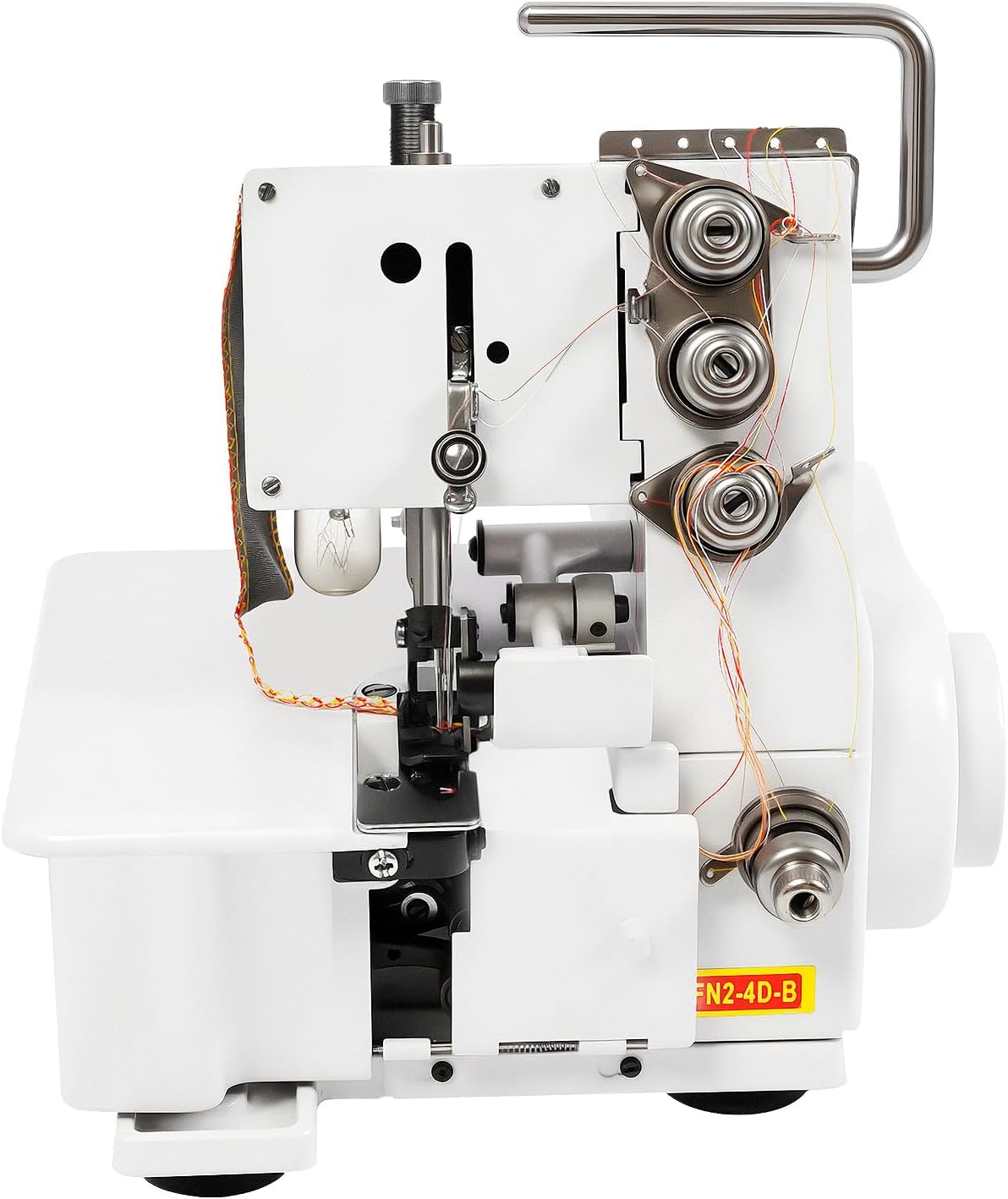
This 4-thread serger is built around a 100W motor and cast iron frame to deliver durable, consistent overlocking at up to 1200 stitches per minute. It trims and finishes fabric edges in one pass and offers adjustable needle pitch and individual tension dials so you can tune settings for lightweight knits or heavier fabrics like denim. The machine includes a foot controller for hands-free speed control and an LED light to improve visibility when working with dark materials. Practical touches such as a heat-dispersing window aim to protect internal electronics during long runs. Because it is designed for domestic and light industrial use, it handles typical home projects and occasional denim work well, though heavy continuous industrial workloads could push its limits. The unit ships with basic accessories and a manual, so expect some setup and threading learning curve if you are new to sergers.
Best for: Buyers on a tight budget who want a capable 4-thread serger that can handle home projects and occasional denim finishing without paying for commercial-grade equipment.
Less Ideal for: Users who need a machine for continuous industrial production or heavy-volume factory use should choose a more robust commercial serger instead.
- Powerful 100W motor with up to 1200 stitches per minute for fast finishing
- 4-thread construction produces wider, durable overlocked seams that resist fraying
- Cast iron frame for stability and longer-term durability
- Individual tension dials and adjustable needle pitch for tuning across fabrics
- Includes foot controller and built-in LED light for better control and visibility
- Not intended for heavy continuous industrial production
- Setup and threading may be challenging for first-time serger users
Verdict: A budget-friendly 4-thread serger that offers fast, durable edge finishing and tuning flexibility suitable for home sewing and occasional denim work.
SINGER X5004-HD Serger

| Thread capability | 2–4 threads |
|---|---|
| Maximum speed | 1,300 stitches/min |
| Built‑in stitches | 8 |
| Power source | Corded Electric |
The SINGER X5004-HD is a metal‑frame serger built for heavy use and thicker fabrics like denim. It offers 2-, 3-, or 4‑thread stitching across eight built‑in stitch options and a 60% larger cutting knife that trims through bulky seams more cleanly than standard sergers. At up to 1,300 stitches per minute and with an adjustable differential feed, it speeds through large projects while keeping knits and lightweight fabrics from puckering and letting you control gathering on stretch fabrics. The stainless steel bed plate helps fabric glide smoothly, and a built‑in accessory compartment stores tools and spare parts for quick setup and maintenance. Practical limitations include a primarily mechanical interface that may require a short learning curve for beginners and a relatively heavy chassis that makes the unit less portable, but those same traits contribute to stable, skip‑free stitching on denim and upholstery. For anyone needing a durable, production‑capable overlocker for heavy fabrics, the X5004‑HD is a solid choice.
Best for: Buyers who prioritize long‑term reliability and need a machine that can handle frequent work on denim, upholstery, and other heavy fabrics without skipping stitches or wearing out quickly.
Less Ideal for: Casual hobbyists who need a lightweight, highly portable serger or users seeking a feature‑packed electronic interface with automated threading aids.
- Heavy‑duty metal frame for stable, skip‑free stitching on thick fabrics
- 60% larger cutting knife that handles denim and upholstery more effectively
- High sewing speed up to 1,300 stitches per minute for faster project completion
- Adjustable differential feed prevents puckering and allows controlled gathering
- Stainless steel bed plate and onboard accessory storage for smoother sewing and easy access to tools
- Mechanical controls and threading require practice for first‑time serger users
- Heavier weight makes it less convenient to move between workspaces
Verdict: Choose the X5004‑HD when you need a rugged, factory‑quality serger that reliably handles denim and other heavy fabrics day after day.
SINGER S0230 Serger

| Power Source | Electric |
|---|---|
| Stitch Speed | 1300 stitches/min |
| Thread Capability | 2, 3, or 4 threads |
The SINGER S0230 is a beginner-friendly mechanical serger that handles finishing seams, rolled hems, and trim-in-one overlock stitching at up to 1300 stitches per minute. You use it like a dedicated overlocker: thread the color-coded guides, choose 2/3/4‑thread configurations depending on the project, and let the built-in knife trim excess fabric while it sews. The differential feed makes a real difference when working with stretch knits or lightweight sheers, preventing stretching and puckering, and the free arm helps with cuffs and sleeves. Included accessories such as tweezers and spare needles are stored in the machine for quick access. For denim specifically, the machine's sturdy construction and high stitch speed let you finish seams quickly, though very heavy multilayer denim may require slower feeding and heavier needles than those supplied. Setup and threading are much simpler than many sergers, so it gets novices sewing professional-looking edges with minimal fuss, while more experienced users will appreciate the core features for everyday garment work.
Best for: Sewists who want an affordable, reliable serger that simplifies threading and delivers professional seam finishes for everyday garment and denim projects, with an emphasis on predictable, well-documented performance.
Less Ideal for: If you routinely sew very thick leather or many layers of heavy industrial denim, seek a heavy‑duty industrial serger built for constant high‑tension work and thicker needles.
- 2/3/4‑thread versatility for a range of seam types from rolled hems to 4‑thread overlocks
- Color‑coded threading simplifies setup for beginners
- Differential feed reduces stretching and puckering on knits and tricky fabrics
- High top speed (1300 spm) speeds up multi-piece projects
- Compact build with onboard accessory storage keeps supplies handy
- May struggle with very heavy, multi-layer denim without using specialized heavy‑duty needles or slower feed
- Mechanical controls offer fewer automated conveniences than computerized sergers
Verdict: A straightforward, high‑speed mechanical serger that gives reliable professional finishes and easy setup, making it a strong choice for home sewists working on denim and garments.
Brother 1034D Serger

| Stitch speed | Up to 1,300 stitches per minute |
|---|---|
| Thread functions | 3- and 4-thread |
| Power source | Corded Electric |
| Input voltage | 120 volts |
The Brother 1034D is a mechanical serger aimed at home sewists who need dependable edge finishing and the ability to handle thicker fabrics like denim. It offers 3- and 4-thread overlock stitches plus narrow and rolled hems, and the differential feed helps prevent puckering on knits and layered materials. The machine reaches up to 1,300 stitches per minute and includes color-coded lay-in threading and a F.A.S.T. lower looper to simplify thread changes. A removable trim trap, snap-on presser feet for standard, gathering and blind-hem tasks, and a sturdy metal interior frame contribute to consistent stitching and longer life. Practical limitations include the manual lay-in threading (not fully automatic) and a narrower feature set compared with higher-end sergers that add coverstitching or automated tensioning. For denim work you may still need to slow the speed and use appropriate needles and thread, but this model provides the core serging functions and durability most hobbyists and small-project makers need.
Best for: Practical sewists who prioritize a reliable, well-built serger for finishing seams and tackling heavier fabrics like denim without needing advanced automated features.
Less Ideal for: Users who want a serger with built-in coverstitching, fully automatic threading, or advanced computerized controls should consider more feature-rich models.
- Durable metal frame for long-term stability and consistent stitching
- High speed up to 1,300 stitches per minute for faster seaming
- Color-coded lay-in threading and F.A.S.T. lower looper reduce threading confusion
- Differential feed improves results on stretch and layered fabrics
- Includes useful accessories: trim trap and three snap-on presser feet
- Manual lay-in threading rather than automatic needle/threader
- No coverstitch function for hemming heavy fabrics
Verdict: Buy this if you want a sturdy, no-nonsense serger that reliably handles denim and everyday finishing tasks.
Choosing the Right Serger Sewing Machine for Denim: Key Factors to Consider
Needle and Presser-Foot Compatibility
Denim is a dense, tightly woven fabric that requires stronger, heavier needles than everyday cotton. Confirm the serger accepts heavy-duty needles and has a presser foot that can be swapped or adjusted to accommodate greater thickness. A higher presser-foot lift or a low-to-high adjustable foot makes it easier to position multiple layers of denim under the foot without forcing the fabric.
Needles and feet affect stitch formation and how cleanly the fabric feeds under the machine. If the machine uses common needle types, you will have more options for reinforced or topstitching needles. Also check whether the included presser feet are metal and robust enough to tolerate thicker threads and repeated use.
Feed System and Differential Feed
A reliable feed system prevents skipped stitches and puckering when sewing heavy fabrics. Look for strong, serrated feed dogs and a differential feed that can be dialed to handle multiple plies of denim. Differential feed helps control puckering on lighter fabrics and avoids stretching or jamming when feeding dense materials.
The position and engagement of the feed dogs matters for layering. Machines with adjustable or higher-profile feed dogs make it easier to pull thick seams through evenly. Smooth, positive feeding reduces the need to guide the fabric aggressively, which keeps seams straighter and reduces hand fatigue.
Motor Power and Torque
Motor torque is more important than peak speed when working with denim. Sewing through several layers or topstitching near bulky seams requires a motor that maintains consistent rotational force without stalling. Look for machines described as having higher torque or reinforced gearing; these are better at pushing heavy fabric through the stitch area.
Electric motors that deliver steady power at low-to-moderate speeds allow you to control stitch placement on thick seams. Even if two sergers list similar maximum speeds, the one with stronger torque will handle denim more reliably and reduce the chance of skipped stitches or broken needles.
Stitch Options and Adjustability
Denim work benefits from adjustable stitch length and robust overedge or coverstitch options for finishing edges and topstitching. A serger that offers a wider stitch-length range and easy tension adjustments lets you tailor the stitch to the fabric thickness and thread size. Longer stitch lengths are often necessary when sewing thick layers to prevent bunching and to produce attractive topstitching.
Check for easy access to tension dials and clear markings for common settings. Machines that allow incremental stitch-length changes and independent loop-tension adjustments give you the control needed to get consistent results across varied denim weights.
Threading, Maintenance, and Service Access
Working with thicker threads and heavier needles increases wear and debris accumulation. A serger with straightforward threading paths, clear color-coded guides, and easy looper access shortens setup time and simplifies routine maintenance. Look for removable panels or generous clearance to clean lint and denim fiber from the looper area.
Consider how simple it is to change needles and adjust tensions. Machines that provide tool storage and clear maintenance instructions reduce downtime and keep the machine running well for shop-level sewing.
Why a Dedicated Serger Helps with Denim
Sergers trim and finish seam allowances while simultaneously overcasting the raw edge, which is especially useful on heavy fabrics that fray. Using a serger for denim speeds up hem and seam finishing compared with hand trimming or repeated passes on a standard sewing machine.
A serger also produces stronger overedge stitches that anchor topstitching and prevent seam slippage. When configured for heavy threads and longer stitch lengths, a serger can create professional-looking finishes on jeans, jackets, and denim accessories.
- Overedge finish prevents fraying on raw denim edges
- Simultaneous trim and stitch saves time on multi-layer hems
- Robust stitch formation supports topstitching durability
Preparing Denim for Serger Work
Prewash and press denim before serging to reduce shrinkage and remove sizing that can gum up needles and loopers. If your denim is heavily starred with starch, a brief wash and low-heat dry will make feeding more consistent.
Use a heavy-duty thread and test stitch settings on scrap fabric. Mark seam lines and clip seam allowances neatly so the serger trims predictably. For very thick seams consider reducing the number of plies under the foot or using a specialized presser foot to ease feeding.
- Prewash to stabilize fabric
- Test settings on scrap before sewing a garment
- Use heavy-duty topstitch thread for visible seams
Thread and Needle Choices for Thick Denim
Select a needle size and type rated for heavy-weight woven fabrics. Topstitch needles and denim-specific needles have reinforced shanks and sharper points to penetrate dense weaves with less deflection. Match thread weight to the look and strength you need; heavier thread shows more but requires appropriate tension and needle size.
When using thicker thread, adjust stitch length and tension accordingly. Too-tight tension with heavy thread can pucker fabric and create broken threads, while too-loose tension will produce loose overedge loops that do not hold well on denim.
- Choose reinforced or denim-rated needles
- Use heavier thread for visible topstitching
- Adjust tension and stitch length when using thicker thread
Common Troubleshooting When Serging Denim
Skipped stitches, broken needles, and thread breakage are common issues when a machine is underpowered or set up for lighter fabrics. First, verify you are using the correct needle, the appropriate thread size, and that the presser-foot pressure and feed settings are adjusted for thickness. Clean lint and fibers from the looper path frequently to prevent build-up that causes tension issues.
If the machine stalls or hesitates on bulky seams, slow your stitching speed and let the motor recover, or hand-crank across the problem area. For persistent problems check whether the feed-dog engagement is high enough and consider using a walking foot or specialty presser foot if available for better feeding.
- Use correct needle and thread sizes
- Clean looper area regularly
- Slow stitching speed on bulky seams to avoid stalling
When to Combine Serger and Traditional Sewing Machine Work
A serger excels at finishing raw edges and producing durable overedge seams, but traditional sewing machines still have advantages for bartacks, buttonholes, and certain topstitching techniques. Many denim projects benefit from a hybrid workflow where the serger prepares and secures edges before a sewing machine applies decorative or structural topstitching.
Plan your workflow to take advantage of both tools. Use the serger for seaming and edge finishing, then switch to a sewing machine for heavy-duty topstitching with larger needles and specialized feet designed for visible stitch work.
- Use serger for seam finishing; sewing machine for bartacks
- Switch tools to match the type of stitch and strength required
- Coordinate thread choices between machines for consistent appearance
How We Chose the Best Serger Sewing Machine for Denim
We prioritized features that directly affect sewing performance on heavy fabrics such as denim. Primary evaluation criteria included needle and presser-foot compatibility with heavy-duty needles, differential feed and lay-in mechanisms that manage layered thickness, and motor torque to prevent stalling on dense seams. We also considered stitch quality and adaptability, including stitch length range and overedge formation when working with multiple fabric plies. Ease of use and maintenance were important because denim sewing often involves frequent thread changes and thicker threads. We evaluated threading and tension systems, access to the looper area for cleaning, and the clarity of guides for heavy threads. Durability factors such as reinforced feed dogs, metal internal frames, and quality of included feet were considered to anticipate long-term reliability under repeated heavy use. We excluded lightweight or compact sergers designed strictly for thin knits and trim work, as well as machines lacking compatibility with heavier needles or lacking sufficient motor torque. Our short list reflects machines that balance power, feeding control, and serviceability for consistent denim results.
Our full evaluation process is outlined in our review methodology.
FAQ
Can a home serger handle multiple layers of denim?
Often yes, if the machine accepts heavier needles and has sufficient motor torque. Many home sergers can stitch several layers of denim when properly set up, but very heavy multilayer seams may require specialized needles and slower stitching.
What needle size is best for denim on a serger?
Needle size depends on denim weight, but heavier needles or those labeled for denim or topstitching are common choices. Test on scrap to determine the best size to avoid deflection and skipped stitches.
Should I change my presser foot pressure for denim?
Yes. Increasing presser-foot pressure or using a foot with a higher lift helps feed thick fabric layers evenly. If your machine allows pressure adjustment, make small changes and test before sewing the actual piece.
How often should I clean the looper area when working with denim?
Clean the looper and surrounding areas more frequently than with light fabrics, often after a few hours of heavy denim work. Denim fibers and lint build up quickly and can affect thread tension and stitch consistency.
Can I use heavy-duty topstitch thread in all looper positions?
It depends on the thread path and tension capacity of the machine. Heavy thread works best when matched to the correct needle size and when tension is adjusted. Some thicker threads are better used in the needle positions while using standard thread in loopers.
Final Verdict
Choose a serger that balances strong feeding, sufficient motor torque, and compatibility with heavy needles and threads when you plan to work with denim regularly. Prioritize machines with adjustable feed mechanisms, easy maintenance access, and clear tension controls since these features reduce downtime and improve stitch consistency on thick layers. Keep in mind tradeoffs between raw power and user-friendliness; a machine that is slightly slower but more controllable often produces cleaner results on denim. Focus on the criteria above to narrow options and pick a serger that fits the volume and type of denim projects you make.