
Note: This article contains affiliate links. If you click on these links and make a purchase, we may earn a small commission at no extra cost to you. This helps support our research and content. Read our full affiliate disclosure here.
A serger sewing machine changes how you finish seams and build garments. If you sew knits, make home decor, or routinely finish raw edges, a serger will deliver faster stitch formation, stronger seam allowances, and professional-looking hems. This guide focuses on the top serger sewing machines we shortlisted for home use and light production sewing. We evaluated models across stitch variety, threading and setup, usability, and durability so you can pick the right serger for your projects. Below are our top picks followed by practical buying guidance and clear criteria used to evaluate each machine.
Top Picks at a Glance
| Best Overall The best all-around choice for most situations | Brother ST4031HD Serger |  |
| Best Quality Built to a higher standard if you want something more solid | Bernette B64 Airlock Serger |  |
| Best Value The sweet spot between price and what you get | VEVOR Serger Overlock 336 |  |
| Best Budget The cheapest option that still gets the job done reliably | ZERNEIL 4-Thread Serger |  |
| Top Rated A top-rated pick with lots of positive feedback | Juki MO-80CB Serger |  |
| Most Popular A crowd favorite that many people choose with confidence | Brother 1034D Serger |  |
| Best Seller A high-volume bestseller chosen again and again | SINGER HD0500S Serger |  |
Brother ST4031HD Serger

| Thread options | 3 or 4 threads |
|---|---|
| Maximum speed | 1,300 stitches per minute |
| Power source | Corded Electric |
| Input voltage | 120 volts |
The Brother ST4031HD is a workhorse serger designed to handle everything from delicate knits to multiple layers of denim and canvas. It operates as a 3- or 4-thread overlock machine with a carbon-steel blade that trims fabric cleanly while stitching, and a strong interior metal frame that keeps the machine stable at speeds up to 1,300 stitches per minute. Color-coded threading guides simplify setup, and the included wide extension table supports heavier projects for smoother feeding. The package also includes three accessory feet, spool caps, thread nets, a trim trap, foot controller, and basic tools so you can start finishing seams and hems right away. Because it is a mechanically focused, heavy-duty serger, it does not offer computerized stitch programming or a touchscreen, so you should expect manual adjustments for tension and stitch width when switching materials. For sewists who need a reliable, high-speed finishing machine that stands up to thick fabrics, the ST4031HD delivers consistent, professional overlock results.
Best for: Sewists who want a robust, high-speed serger that reliably finishes seams on both lightweight and heavy fabrics and who value mechanical durability over computerized convenience.
Less Ideal for: If you need a compact, lightweight machine for occasional hobby use or want computerized stitch programming and on-screen controls, this heavy-duty serger is not the best match.
- Durable metal interior frame for stability at high sewing speeds
- High-durability carbon steel blade that cuts through multiple fabric layers cleanly
- Capable of 3- or 4-thread overlock stitches for flexible seam strength and finish
- 1,300 stitches per minute for fast, efficient finishing
- Color-coded threading guides and included accessories make setup and first use straightforward
- No computerized controls or LCD, so stitch adjustments are manual
- Relatively heavy and aimed at heavy-duty tasks, which may be more than casual users need
Verdict: Choose the ST4031HD when you need a fast, metal‑framed serger that handles heavy fabrics and delivers professional overlock finishes reliably.
Bernette B64 Airlock Serger

| Stitch speed | 1300 SPM |
|---|---|
| Stitch patterns | 16 built-in stitches |
| Power source | Electric |
| Included components | 6 Pcs Overlock Foot kit |
The Bernette B64 Airlock is a feature-packed serger designed to speed up finishing and heavy sewing tasks at home. Its automatic air threading takes the frustration out of looper threading and the machine can run up to 1300 stitches per minute, which makes hemming, finishing seams, and decorative overlock work noticeably faster. Sixteen built-in stitch patterns, Micro Thread Control for tension adjustments, an included 6-piece overlock foot kit and an extension table broaden what you can tackle, from lightweight edge finishes to layered or thicker fabrics. The Free Hand System lets you lift the presser foot hands-free for precise fabric handling and the LED-lit workspace improves visibility on detailed work. As a portable tabletop unit it balances power with a manageable footprint, though heavier industrial workloads may demand a larger machine. The B64 arrives with common accessories so you can start projects right away, and its straightforward controls keep it approachable for experienced hobbyists focused on performance.
Best for: Experienced home sewists and performance-minded hobbyists who want a fast, feature-rich serger that handles a range of fabrics and reduces setup time.
Less Ideal for: Users who need an industrial continuous-use machine for high-volume production or who require advanced computerized stitch programming.
- Automatic air threading speeds setup and eliminates difficult looper threading
- High maximum speed of 1300 stitches per minute for fast production
- Sixteen stitch options plus a 6-piece overlock foot kit increase versatility
- Free Hand System allows hands-free presser foot control for precise fabric handling
- Built-in LED light and extension table improve visibility and workspace for larger projects
- Compact consumer design may not endure continuous industrial-level workloads
- No LCD or advanced digital controls for fine programming
Verdict: Buy this if you want a fast, easy-to-thread serger with professional features that accelerates home sewing and quilting projects.
VEVOR Serger Overlock 336
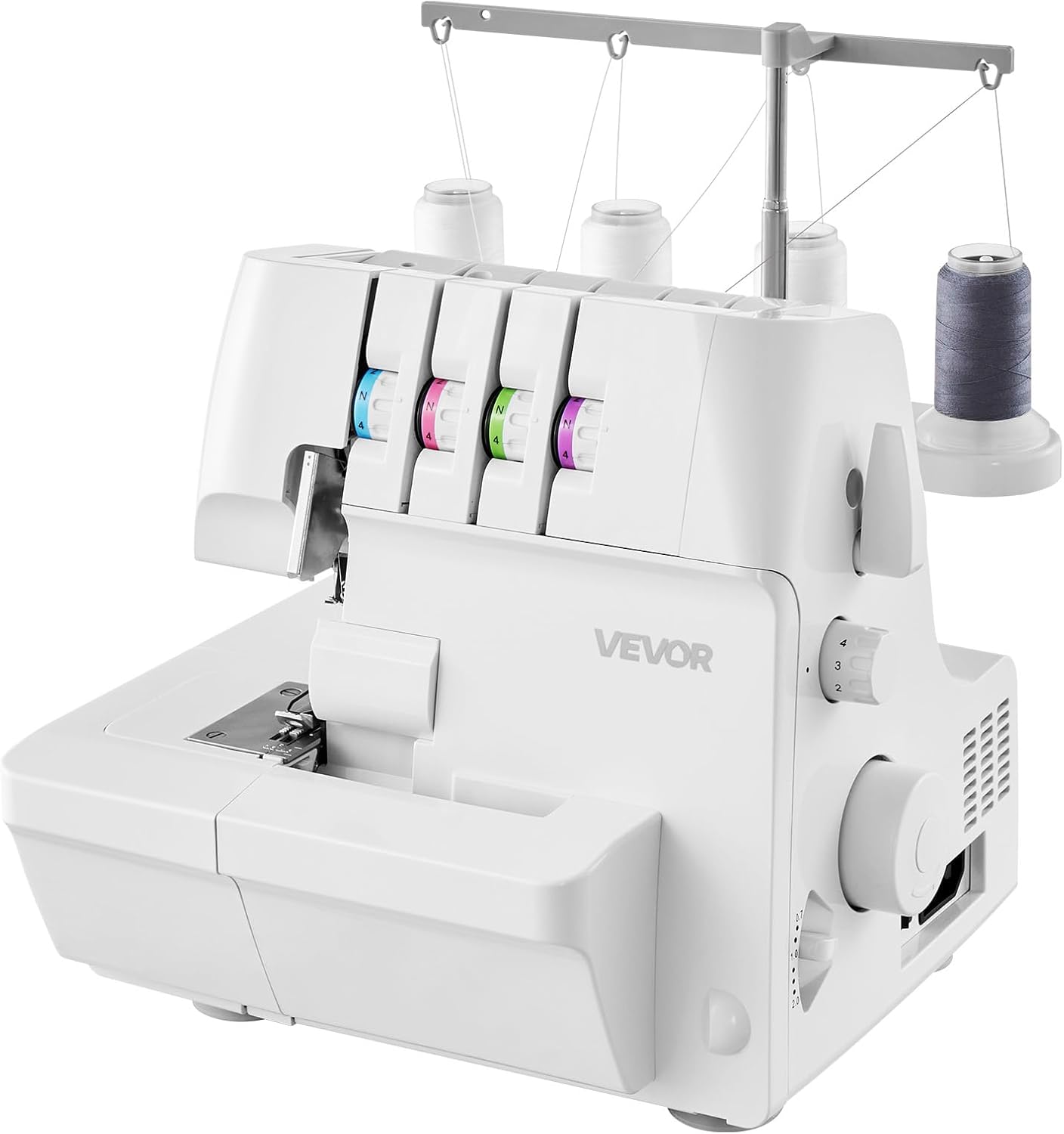
| Thread capability | 2-3-4 thread |
|---|---|
| Stitch speed | 1,250 SPM |
| Differential feed | 0.7-2.0 adjustable |
| Input voltage | 120 volts |
| Included components | Accessory kit, dust cover, foot pedal, presser foot, test fabric, manual, waste bin |
This VEVOR serger is designed to give hobbyists and small-business sewists a flexible overlock option without a steep learning curve. It supports 2-, 3- and 4-thread setups and variable stitch length so you can move from basic seam finishing to rolled hems and decorative edges. The 0.7–2.0 adjustable differential feed helps control stretchy or lightweight fabrics and reduces puckering, while the color-coded threading and built-in LED make setup and close work easier. At up to 1,250 stitches per minute it finishes edges quickly, and onboard storage plus a trim trap help keep the workspace tidy. The free arm is useful for cuffs and sleeves, and the adjustable presser foot lets you handle a range of fabric thicknesses. Expect a learning period for tension and threading compared with a basic sewing machine, and the unit is fairly utilitarian in fit and finish rather than premium, but it delivers the core capabilities most people need for garment finishing and alterations.
Best for: Practical sewers who want a capable, no-frills serger for faster edge finishing, hemming, and small-batch garment work without paying for pro-grade features.
Less Ideal for: Users seeking an industrial-grade, high-speed production serger or those who want a luxury, high-end finish and advanced automated features.
- 2/3/4-thread flexibility covers basic finishing, rolled hems, and decorative edges
- Adjustable 0.7–2.0 differential feed improves handling of stretchy and lightweight fabrics
- Color-coded threading and LED light simplify setup and close work
- Up to 1,250 stitches per minute for faster edge finishing and project throughput
- Functional, budget-oriented build rather than premium materials or finish
- Requires practice to master tension and multi-thread threading compared with a regular sewing machine
Verdict: A versatile, budget-friendly serger that brings fast, professional-looking edge finishes and stretchy-fabric control to home sewists and small businesses.
ZERNEIL 4-Thread Serger

| Power | 100W |
|---|---|
| Max. Sewing Speed | 1200 Stitches/min |
| Voltage | 110V |
| Number of Lines | 4 |
This ZERNEIL 4-thread serger is an entry-level overlocker aimed at small workshops and home sewing desks. It locks edges with a four-line stitch, trims fabric automatically, and uses a foot controller for hands-free speed control, making it useful for finishing knit and woven edges quickly. The cast iron body and built-in LED light add stability and visibility while a heat-sink window helps sustained operation; stitch width, presser foot stroke, and thread tension are adjustable so you can tailor seams for lightweight cotton up through medium-weight denim. At 100W and a top speed of 1,200 stitches per minute it keeps pace on most hobby projects, though heavier industrial workloads will push its limits. Setup requires threading four threads and basic tension adjustments, so beginners should expect a short learning curve. For buyers focused on value, it packs core serger functions and practical features without pro-level build complexity.
Best for: Budget-minded home sewers who want a capable serger to finish seams, trim edges, and speed up hobby projects without paying for professional industrial machines.
Less Ideal for: People who need heavy continuous production sewing or factory-grade durability should look for a higher-end industrial serger built for nonstop use.
- Four-thread design provides secure, compact overlock seams and edge finishing
- 100W motor and up to 1,200 stitches per minute for efficient home sewing
- Cast iron construction and anti-slip mats improve stability during use
- Built-in LED light and automatic fabric cutter aid accuracy and convenience
- Limited to hobby and light-medium duty use and may struggle with heavy continuous industrial workloads
- Only basic accessories included, so additional tools or spare needles may be needed
Verdict: A cost-conscious home serger that delivers four-thread edge finishing and practical features for hobbyists who need faster, cleaner seams without a pro price.
Juki MO-80CB Serger

| Power Source | Corded Electric |
|---|
The Juki MO-80CB is a straightforward, reliability-focused serger that handles common overlocking tasks with professional results. It offers a free arm for sewing cylindrical pieces, an adjustable cutting width for crisp overlock or rolled-hem finishes, and a differential feed that you can tweak while sewing to tame knits and lightweight fabrics. The presser foot pressure is adjustable for fabric weight, and the lower looper threader uses a lever to simplify one of the fiddlier threading steps. In practical use the machine feels solid and consistent, aimed at steady, repeated finishing rather than flashy extras; its controls are simple to learn and suited to regular home sewing or small-batch production. Limitations include the lack of built-in automation or electronic controls and a more basic feature set compared with higher-end sergers, so those who need extensive stitch options or computerized conveniences may find it too plain. For buyers prioritizing dependable, repeatable performance and easy adjustments, this model covers the essentials well.
Best for: Buyers who want a solid, no-nonsense serger that consistently produces clean finishes and tolerates frequent use without complex setup or electronic features.
Less Ideal for: Sewers who prioritize extensive programmable stitches, touchscreen controls, or advanced automation should look at higher-end computerized sergers instead.
- Free-arm configuration for sewing sleeves and hems makes handling cylindrical garments easier
- Adjustable cutting width supports both overlock and rolled-hem finishes
- Differential feed adjustable during sewing helps control stretching and puckering on knits
- Adjustable presser foot pressure allows tailored pressure for lightweight to heavyweight fabrics
- Lever-assisted lower looper threader reduces time and frustration when threading
- Basic, non-electronic controls with no computerized stitch programming
- Not designed for users who need a large variety of specialty stitch types
Verdict: Choose the Juki MO-80CB when you need a dependable, easy-to-adjust serger that delivers consistent professional seam finishes without unnecessary complexity.
Brother 1034D Serger

| Stitch speed | Up to 1,300 stitches per minute |
|---|---|
| Thread functions | 3- and 4-thread |
| Power source | Corded Electric |
| Input voltage | 120 volts |
The Brother 1034D is a consumer-grade serger that delivers the core functions most hobbyists and small sewing businesses need: 3- and 4-thread overlock, rolled and narrow hems, and basic decorative stitches. It runs up to 1,300 stitches per minute and includes a foot pedal for speed control, making it useful for trimming and finishing seams quickly. The machine has a sturdy internal metal frame and a color-coded lay-in threading system plus a F.A.S.T. lower looper to simplify threading changes. Differential feed helps with knits and lightweight fabrics, and three snap-on presser feet (standard, gathering, blind stitch) plus a removable trim trap round out everyday usability. Limitations include a basic feature set compared with pro or cover-stitch machines and no advanced electronic controls, so customization and specialty stitches require optional feet or different models. It is billed for 120V operation and built with practical accessories in the box, so you get a ready-to-use machine suited to frequent hemming, edge finishing, and garment construction.
Best for: Buyers who want a reliable, well-built serger for regular garment finishing and alterations and who value proven performance and user-friendly features over advanced electronics.
Less Ideal for: Those who need integrated cover-stitch or extensive computerized stitch libraries for professional production work should consider more advanced or specialized machines.
- Supports 3- and 4-thread overlock stitches for versatile seam finishes
- High speed capability up to 1,300 stitches per minute for fast production
- Durable metal frame for long-term stability and reliable operation
- Color-coded lay-in threading and F.A.S.T. lower looper make threading easier
- Differential feed improves results on stretch and thin fabrics
- Basic mechanical controls without advanced electronic customization
- No cover-stitch capability included for professional hemming finishes
Verdict: A sturdy, easy-to-thread 3/4‑thread serger that delivers fast, reliable finishing for hobbyists and small-scale sewists.
SINGER HD0500S Serger

| Thread options | 2-3-4 thread |
|---|---|
| Stitch options | 6 stitches |
| Maximum speed | 1,300 stitches/min |
| Power source | Corded Electric |
The SINGER HD0500S is a sturdy home serger designed to give professional seam finishes quickly and reliably. It handles 2-, 3-, and 4-thread configurations and six stitch types, making it useful for rolled hems, overlock seams, and stretch fabrics. A relatively powerful motor delivers up to 1,300 stitches per minute for fast production and better penetration on thicker fabrics, and the metal frame adds stability during heavier work. Practical touches include a lower-looper LED and color-coded threading to simplify setup, an adjustable stitch width and length plus presser foot pressure for control, and a removable free arm to finish cuffs and hems. The unit also includes differential feed to reduce stretching on knits and a basic accessory kit. Expect a learning curve if you are new to serging, and the machine is fairly heavy compared with lightweight models, which limits portability. For sewists who want a durable, higher-speed serger that produces clean, consistent finishes, this covers the essentials well.
Best for: Buyers who prioritize a durable, reliable machine for professional-looking seam finishes and want straightforward threading and controls rather than the lightest portable model.
Less Ideal for: If you need a compact, ultra-light travel serger or want a completely beginner-focused, ultra-simple unit with minimal setup, this heavy-duty model may be more than required.
- High top speed (1,300 stitches/min) for fast, efficient sewing
- 2–4 thread capability with six stitch options for versatile finishing
- Lower-looper LED and color-coded threading simplify setup
- Metal frame provides stability for heavier fabrics and longer use
- Relatively heavy, which reduces portability
- Learning curve for beginners new to sergers
Verdict: Choose the HD0500S if you want a solid, higher-speed serger that delivers professional seam finishes and straightforward threading for dependable home use.
Choosing the Right Serger Sewing Machine: Key Factors to Consider
Stitch Types and Adjustability
A serger's stitch options determine what finishes and repairs you can do. Look for machines that offer multiple stitch configurations such as 3-thread overlock, 4-thread overlock, and rolled hems. Adjustable stitch length and width allow you to fine-tune seam strength and appearance across lightweight knits and heavier woven fabrics.
Some sergers also include coverstitch or convertible plates for hemming. Even if you mainly need basic overlocking, having extra stitch choices expands what you can accomplish without buying a second machine.
Threading System and Looper Access
Threading can be the most time-consuming part of using a serger, especially for beginners. Machines with color-coded threading paths, numbered guides, and integrated upper or lower looper threaders reduce setup time and frustration. Quick-release looper covers and easily removable panels speed maintenance and cleaning.
If you expect to change threads or colors often, prioritize models with straightforward threading and visible tension disks. That makes color swaps and troubleshooting much faster and reduces downtime during sewing sessions.
Differential Feed and Fabric Handling
Differential feed controls how the feed dogs move material under the presser foot and is essential for handling stretchy fabrics without puckering. Machines with a wide differential feed range let you gather, stretch, or evenly feed thin and heavy fabrics. This is especially important for knit garments, ruffles, and bias cuts.
A responsive differential feed paired with adjustable presser foot pressure improves stitch consistency. If you work with delicate or loosely woven textiles, consider a model with fine-grain differential adjustments to avoid damaging material.
Build Quality and Maintenance
A serger will encounter lint, loose fibers, and thread fragments during regular use. Durable construction, accessible panels for cleaning, and user-serviceable components reduce long-term upkeep headaches. Metal internal gears or reinforced drive components generally outlast cheaper plastic mechanisms under similar workloads.
Check how easy it is to access tension disks, change needles, and clean the looper area. Machines that include clear maintenance instructions and simple part replacement extend the usable life of the serger and lower repair costs.
Speed Control and Motor Performance
Serging is fundamentally about speed, but raw top speed is only part of the story. Smooth acceleration, dependable stitch formation at low speeds for careful work, and a responsive foot control all contribute to usable performance. Look for adjustable speed limits or modes that let you slow the machine for precise tasks.
A stable motor that maintains torque at higher stitch rates helps prevent skipped stitches on dense seams. If you sew a mix of lightweight and heavier fabrics, evaluate how the motor responds across the speed range.
Included Accessories and Versatility
Accessories such as multiple presser feet, additional needles, seam guides, and a convertible plate for rolled hems expand the serger's usefulness. Having a spare set of loopers or a dedicated tool kit for adjustments is convenient. Some machines include waste-trimming knives and adjustable stitch fingers to handle specific fabric behaviors.
Consider what accessories you will actually use based on your regular projects. A well-stocked accessory set reduces the need for aftermarket purchases and helps you get more out of the machine from day one.
Who Should Add a Serger to Their Sewing Room
A serger is most valuable for sewers who regularly work with knits, want fast professional seams, or need clean edge finishes. If you frequently make garments, activewear, or home textiles that require durable, flexible seams, a serger will save time and improve results.
Hobby sewers who only occasionally finish seams may still benefit from a simpler serger with basic stitch options, while those doing small-batch production or frequent garment sewing will appreciate machines with enhanced feed control and heavier-duty components.
- Ideal for knit garments and stretch fabrics
- Reduces time spent trimming and finishing seams
- Provides stronger, more flexible seam construction than a standard sewing machine
How to Set Up Your Workspace for a Serger
Serger machines vibrate and produce trimmed fabric waste, so place yours on a stable, level table with enough room for fabric to flow freely. A flat workspace that supports the entire garment prevents tugging or pulling during long seams.
Keep a small brush and a lint container nearby to catch trimmed threads and fabric scraps. Good lighting and a magnified or high-contrast threading guide make daily setup faster and reduce eye strain during threading and adjustments.
- Allow 24 to 36 inches of front-to-back table depth for larger projects
- Use a waste bin beneath the machine to collect trimmed fabric
- Keep spare needles and basic tools within arm's reach
Common Maintenance Tasks to Keep a Serger Running
Regular maintenance ensures reliable stitch formation and reduces the risk of thread breakage. Remove lint from the looper area and knife housing after each sewing session. Periodically remove the throat plate to clean accumulated fibers and dust.
Change needles at the first sign of skipped stitches and oil the machine according to the manufacturer's maintenance schedule. Keep tension disks clean and free of debris to maintain consistent tensions across all threads.
- Brush lint from loopers and feed teeth after each use
- Replace needles frequently when sewing heavier fabrics
- Schedule yearly professional servicing for machines used heavily
Troubleshooting Common Serging Problems
Many issues with serging trace back to threading errors or tension imbalance. If stitches look uneven or threads are breaking, recheck the threading sequence and confirm the looper threads follow the correct colored guides. Inspect the needle and looper for burrs or damage if problems persist.
Puckering often results from incorrect differential feed settings or too much presser foot pressure. Adjust differential feed and test on scrap fabric before sewing the actual garment. If the machine skips stitches on thick seams, slow the stitch speed and use heavier needles made for the fabric weight.
- Re-thread when in doubt, following the color guides
- Test on scrap fabric before final seams
- Adjust differential feed to prevent puckering on knits
Accessories That Make Serging Easier
A clear seam guide or edge guide helps maintain consistent seam allowances when trimming and overlocking at high speed. A waste catcher or small fabric bin keeps your workspace tidy and prevents scraps from interfering with the feed dogs.
Optional presser feet, such as a blind hem or gathering foot, extend the number of finishes you can produce without swapping machines. Extra snap-on conversion plates for rolled hems or flatlock stitches increase versatility for decorative work.
- Edge guides for consistent seam allowances
- Waste catcher for trimmed fabric
- Additional presser feet for specialty finishes
How We Chose the Best Serger Sewing Machine
We limited our list to serger sewing machines intended for home sewers and small-scale sewing projects. Machines were evaluated on concrete, measurable features that matter during regular use. First, stitch capability: we prioritized models with a useful selection of stitches and adjustable stitch length and width so users can handle knits, woven edges, and decorative finishes. Second, ease of threading and loopers: serger threading can be a barrier, so we favored designs with color-coded paths, built-in threaders, or simplified looper access. Third, build and serviceability: we looked for sturdy construction, accessible tension disks, and parts that are easy to replace or service. Fourth, speed control and motor responsiveness: consistent stitch formation at variable speeds is important for different fabrics. Fifth, accessories and included feet: practical presser feet, a differential feed that handles stretch, and conversion options increase versatility. We excluded industrial-only machines and devices intended for high-volume commercial production. We also excluded models that lack basic safety features or that do not provide clear threading guides. Our selections reflect machines that balance usability and capability for home sewers rather than extreme specialty tools.
Our full evaluation process is outlined in our review methodology.
FAQ
Do I need a serger if I already have a sewing machine?
It depends on the projects you sew. A standard sewing machine can construct seams, but a serger trims and finishes edges while forming stretch-friendly seams. If you sew knits or want cleaner, faster edge finishes, a serger is a worthwhile addition.
How difficult is it to learn to use a serger?
Learning a serger has a short initial learning curve, mainly around threading and adjusting tensions. With practice on scrap fabric and following color-coded guides, most users become comfortable within a few sessions.
Can a serger replace a sewing machine?
No. A serger is a complement to a sewing machine. It excels at finishing edges and creating stretch seams, but it does not perform tasks like zipper insertion, buttonholes, or topstitching that require a regular sewing machine.
What threads and needles work best with a serger?
Use serger-specific threads that are lightweight and strong for multi-thread stitches. Match needle size and type to fabric weight and use ballpoint needles for knits to prevent fabric damage. Heavier fabrics require sturdier needles and appropriate thread weight.
How often should I service a home serger?
For typical home use, clean the looper area and remove lint after each session and change needles regularly. Have a professional servicing every 12 to 18 months if the machine is used frequently; less frequent use may only require annual checks.
Final Verdict
Choosing the right serger sewing machine comes down to matching stitch capability, threading design, and fabric-handling features to your typical projects. Prioritize a reliable threading system, a useful range of stitches, and a differential feed if you sew knits. Balance motor responsiveness and build quality with the accessories you will use most. Focus on the features that reduce setup friction and improve everyday sewing speed. With those priorities in mind, you can pick a serger that delivers professional finishes and fits smoothly into your workflow.