
Note: This article contains affiliate links. If you click on these links and make a purchase, we may earn a small commission at no extra cost to you. This helps support our research and content. Read our full affiliate disclosure here.
Sewing stretch fabrics well requires a machine that can handle knit recovery, variable fabric weight, and tricky feed without causing skipped stitches or stretched seams. If you plan to sew garments, activewear, or soft home textiles from knits and jerseys, the right sewing machine makes construction faster and more dependable. This guide shortlists the top options for stretch fabrics and explains the practical reasons each type of machine is a strong choice. We evaluate stitch capability, feed systems, and ease of setup so you can pick a model that reduces fitting problems and finishing work. Read on for the factors we used and what to expect from the top picks.
Top Picks at a Glance
| Best Overall The best all-around choice for most situations | Janome JW8100 Sewing Machine |  |
| Best Quality Built to a higher standard if you want something more solid | Juki TL-2010Q Sewing & Quilting Machine |  |
| Best Value The sweet spot between price and what you get | SINGER M3500 Sewing Machine |  |
| Top Rated A top-rated pick with lots of positive feedback | Brother HC1850 Sewing Machine |  |
| Most Popular A crowd favorite that many people choose with confidence | Brother XM2701 Sewing Machine |  |
| Best Seller A high-volume bestseller chosen again and again | SINGER Heavy Duty 4423 |  |
Janome JW8100 Sewing Machine

| Stitches built-in | 100 |
|---|---|
| Buttonholes | 7 one-step buttonholes |
| Power source | Corded Electric |
The Janome JW8100 is a feature-rich computerized sewing machine designed for home sewists who want versatility for garments and quilting. It offers 100 built-in stitches and seven one-step buttonholes accessible via a backlit LCD and easy navigation buttons, while conveniences like a built-in needle threader, needle up/down control, start/stop button and speed slider make it comfortable to use without constant adjustments. The machine's 7-piece feed dog system and even feed foot help move fabric evenly, which is especially useful when working with knits and multiple fabric layers; an included extra-wide extension table and quarter-inch foot make large patchwork and quilt blocks more manageable. The jam-proof drop-in bobbin and auto-declutch bobbin winder speed setup and reduce interruptions. Trade-offs are typical for a home machine: it is not an industrial unit, so very heavy-duty or continuous production sewing could strain it, and advanced users may find some specialized stretch-stitching features limited compared with sergers or specialty stretch machines.
Best for: Sewists who want a capable, all-purpose computerized machine that handles quilting, garment sewing and occasional stretch fabrics without a steep learning curve.
Less Ideal for: Users who regularly sew heavy-production runs or need dedicated serger-level stretch finishing should consider a more specialized machine.
- Large stitch library with 100 built-in stitches for decorative and utility sewing
- Backlit LCD and intuitive controls for quick stitch selection and adjustments
- 7-piece feed dog system plus even feed foot for smoother fabric feeding and better handling of layered or stretchy materials
- Convenience features like built-in needle threader, start/stop button, speed control, and jam-proof drop-in bobbin
- Includes extension table and multiple presser feet useful for quilting and larger projects
- Not intended for industrial or continuous heavy production use
- May lack some specialist stretch-sewing functions found on dedicated stretch machines or sergers
Verdict: Buy this if you want a versatile, user-friendly computerized machine that balances quilting features and reliable fabric feeding for everyday sewing and occasional stretch fabrics.
Juki TL-2010Q Sewing & Quilting Machine
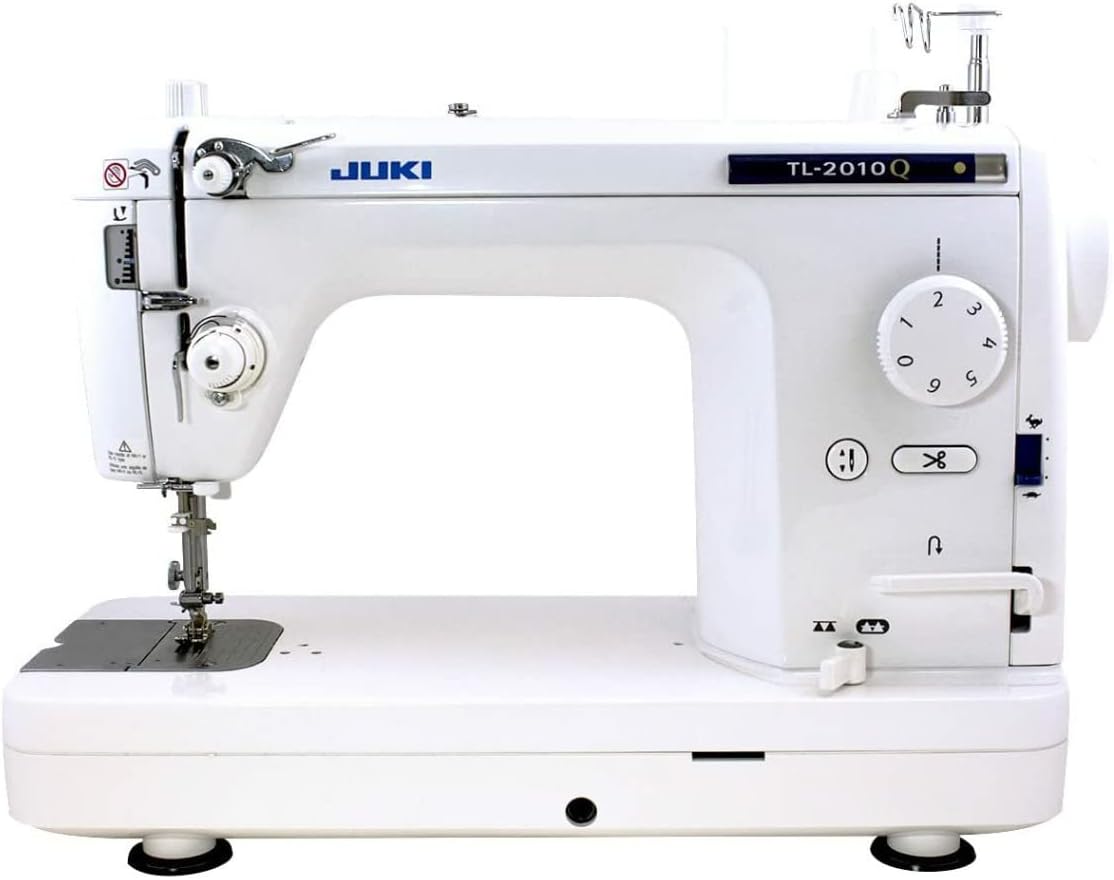
| Brand Name | JUKI |
|---|---|
| Model Number | TL-2010Q |
| Power Source | Electric |
The Juki TL-2010Q is a high-speed, straight-stitch machine aimed at quilters and serious hobbyists who need fast, consistent stitching and a roomy throat for large pieces. It delivers professional-grade straight stitches driven by a powerful motor, which makes it easy to handle multi-layer quilts, heavy fabrics, and long seams without bogging down. The large workspace, adjustable presser foot pressure and knee lifter help when feeding bulky or stretchy materials, and the automatic thread trimmer speeds up common tasks. Built with a metal frame and industrial-style components the TL-2010Q minimizes vibration at high speeds and feels very stable during extended sessions. Limitations include its single straight-stitch design, so zigzag or decorative stitches require a different machine or attachment, and beginners may need time to learn tension and pressure adjustments for fine control on lightweight knits. The included bonus accessory pack gets you started, but expect to add specialty feet for optimal stretch-fabric results.
Best for: Buyers who prioritize speed, precision, and durability for heavy quilting or frequent large-project sewing and who are comfortable adjusting settings for different fabrics.
Less Ideal for: Casual sewists who want built-in decorative stitches or beginners who prefer an all-in-one, low-learning-curve machine.
- Very high stitch speed for fast completion of long seams and quilt layers
- Large throat space and workspace for handling bulky or wide projects
- Robust metal construction reduces vibration during high-speed sewing
- Adjustable presser foot pressure and knee lifter improve fabric control
- Automatic thread trimmer for quicker workflow
- Straight-stitch only machine without built-in zigzag or decorative stitches
- May require additional specialty feet or accessories for best results on delicate stretch fabrics
Verdict: Choose the TL-2010Q when you need a fast, stable, factory-quality straight-stitch machine that handles heavy work and large quilts with professional-level consistency.
SINGER M3500 Sewing Machine

| Built-in stitches | 32 |
|---|---|
| Stitch applications | 110 |
| Power source | Ac/Dc |
| Included components | Needles, bobbins, presser feet and accessories |
| Free arm sewing space | 5.7 inches (needle to tower) |
The SINGER M3500 is a compact mechanical machine aimed at home sewists who need a versatile, straightforward tool for garment work including stretch fabrics. It provides 110 stitch applications with adjustable stitch width and length, so you can switch between basic, decorative, and stretch stitches for knits and lightweight materials. Practical touches such as a one-step buttonhole, built-in needle threader, top-drop bobbin and an LED work light make setup and frequent use quicker and easier. The machine has a free arm and roughly 5.7 inches of sewing space from needle to tower, helpful for cuffs, sleeves and small quilting projects, and a durable metal frame adds stability for heavier fabric like denim. The included accessory kit stores in the front compartment and covers common presser feet and maintenance tools, which keeps extras organized. Trade-offs are typical for a mechanical model: it lacks computerized stitch memory, automatic tension adjustment, and advanced specialty feet found on higher-end machines, so heavy tailoring or advanced stretch techniques may require more manual tuning.
Best for: Buyers who prioritize a practical, no-frills machine that handles everyday garment sewing and stretch fabrics reliably and keeps setup and maintenance simple.
Less Ideal for: Sewers who need computerized automation, programmable stitch sequences, or many specialty presser feet for professional tailoring or intensive industrial tasks should look at higher-end models.
- Wide stitch selection (110 stitch applications) for working with knits and decorative finishes
- One-step buttonhole and built-in needle threader speed common garment tasks
- LED lighting and free arm improve visibility and access for sleeves, cuffs and small projects
- Durable metal frame provides stability when sewing thicker fabrics
- Comprehensive accessory kit stored in the machine’s front compartment for convenient organization
- No computerized features like stitch memory or automatic tension control
- Limited advanced specialty feet and automated functions compared with higher-end models
Verdict: Choose the SINGER M3500 when you want a practical, stable mechanical machine that handles stretch fabrics and everyday garment sewing with a large selection of stitches and useful time-saving features.
Brother HC1850 Sewing Machine

| Built-in stitches | 185 |
|---|---|
| Power source | Corded Electric |
| Input voltage | 120 volts AC |
| Included feet | 8 |
The Brother HC1850 is a midrange computerized sewing and quilting machine designed to handle a broad range of home sewing tasks from garment construction to quilting. It offers 185 built-in stitches including utility, decorative, and 55 alphanumeric stitches plus eight one-step auto-size buttonholes, all chosen via a backlit LCD and push-button controls. Notable conveniences include an advanced automatic needle threader, a jam-resistant top drop-in bobbin, variable speed control, and an extended table and spring-action quilting foot for free-motion quilting. The feed system and included presser feet help it manage many fabric types, and the manual and DVD make setup straightforward. Because it runs on 120V corded power and includes a strong feed mechanism, it handles light to medium-weight stretch fabrics well when paired with appropriate needles and settings, though very heavy-duty or industrial stretch materials may be beyond its scope. Lightweight and portable with a built-in handle, the HC1850 is a reliable, feature-packed machine for home sewists who want quilting features and easy threading without a steep learning curve.
Best for: Sewists who prioritize a dependable, easy-to-use machine that reliably handles everyday sewing and quilting projects and makes working with stretch fabrics simpler with the right needles and settings.
Less Ideal for: Professional sew shops or users who need industrial-strength sewing for very heavy stretch materials or continuous high-volume production.
- Wide selection of 185 built-in stitches including alphanumeric options for monogramming
- Automatic needle threader and jam-resistant top drop-in bobbin for easier setup and fewer interruptions
- Included quilting accessories such as spring-action quilting foot and extension table for larger projects
- Variable speed control and LCD stitch selection simplify operation for beginners and experienced users
- Robust feed system that helps move stretch and medium-weight fabrics smoothly
- Not rated or intended for industrial or very heavy-duty stretch fabrics
- 12"×19"×15" footprint and included features add weight despite being marketed as portable
Verdict: Choose the HC1850 if you want a reliable, feature-rich home sewing and quilting machine that makes sewing stretch and everyday fabrics easier without a steep learning curve.
Brother XM2701 Sewing Machine

| Built-in stitches | 27 |
|---|---|
| Power source | Corded Electric |
| Input voltage | 120 volts |
| Included feet | 6 |
The Brother XM2701 is a beginner-friendly mechanical sewing machine that handles everyday sewing, alterations, and projects with stretch fabrics when paired with the right needle and settings. It offers 27 built-in stitches including stretch and zigzag options plus a one-step auto-size buttonholer, which makes finishing knit garments and applying elastic easier. Practical features for real use include an automatic needle threader, jam-resistant drop-in top bobbin, automatic bobbin winder, and a built-in LED light that keeps work areas well lit. Six quick-change presser feet are included so you can swap in a zipper, blind hem, narrow hemmer, or button foot without extra purchases. The free arm simplifies hemming sleeves and cuffs. As a mechanical machine, stitch selection and tension are controlled with dials, which keeps the machine simple and reliable but limits precision compared with computerized models. It is corded and sized for home use rather than heavy industrial workloads. For users who prioritize straightforward setup, proven reliability, and helpful built-in stitches for knits, this is a solid choice; advanced sewers who need programmable patterns or high-speed computerized control may prefer a different class of machine.
Best for: Buyers who want a dependable, easy-to-use machine for garment sewing and working with stretch fabrics and who value simple setup and proven user feedback.
Less Ideal for: Sewers who need computerized stitch programming, high-speed production, or industrial-level durability should consider higher-end or specialized machines instead.
- 27 built-in stitches including stretch and zigzag for working with knits
- Automatic needle threader and drop-in bobbin for quick setup and fewer jams
- Includes 6 quick-change presser feet covering common tasks like zippers and buttonholes
- Free arm design for sewing cuffs, sleeves, and pant legs easily
- Bright built-in LED light improves visibility on detailed work
- Mechanical dial controls lack the fine programmable options of computerized machines
- Designed for home/light to medium projects rather than continuous heavy-duty production
Verdict: A reliable, user-friendly machine that gives beginners and home sewers the essential stitches and features needed to sew and alter stretch fabrics confidently.
SINGER Heavy Duty 4423

| Built-in stitches | 23 |
|---|---|
| Stitch applications | 97 |
| Max sewing speed | 1,100 stitches per minute |
| Power source | Corded Electric |
| Input voltage | 120 volts |
The SINGER Heavy Duty 4423 is a mechanically simple yet powerful sewing machine built to handle both heavy fabrics and everyday sewing tasks. It offers 23 built-in stitches that translate into 97 stitch applications, a top drop-in bobbin for easy monitoring of thread, an automatic needle threader, and an extra-strong motor rated for up to 1,100 stitches per minute so seams through denim and canvas are straightforward. The metal interior frame and stainless steel bed plate help keep stitching stable and reduce skipped stitches when working with multiple layers. Included accessories such as zipper and buttonhole feet and several bobbins make it useable right away. Limitations for some users are its mechanical controls rather than digital presets and a smaller set of decorative stitches compared with feature-rich computerized machines, so fine-tuning specialty stitches may take more manual adjustment. For everyday repairs, garments made from stretch fabrics, and hobby sewing where reliability matters, the 4423 is a practical, no-frills performer.
Best for: Buyers who want a reliable, straightforward machine that powers through tough fabrics and delivers consistent results without needing advanced digital features.
Less Ideal for: If you need a fully digital machine with extensive decorative stitch libraries, programmable patterns, or touchscreen controls, this mechanical model is not the best match.
- Powerful motor with high sewing speed for piercing thick seams and multi-layer fabrics
- Heavy-duty metal interior frame and stainless steel bed plate for stable, skip-free stitching
- Automatic needle threader and top drop-in bobbin for easier setup and thread monitoring
- Includes essential presser feet and accessories so the machine is ready to use out of the box
- Mechanical controls lack the convenience of computerized stitch memory and advanced stitch customization
- Relatively small built-in stitch library compared with some modern computerized models
Verdict: Choose the 4423 when you prioritize raw motor power and a sturdy metal frame for dependable sewing of stretch and heavy fabrics.
Choosing the Right Sewing Machine for Stretch Fabrics: Key Factors to Consider
Stitch Selection and Utility
Having the right stitch types is fundamental when sewing stretch fabrics. Stretch straight stitches, narrow zigzag, and overedge-style stitches preserve fabric elasticity at seams and reduce seam popping. A machine that includes a built-in stretch stitch or a reliable narrow zigzag will handle most knit constructions without requiring specialty attachments.
Beyond the basic stitches, look for options that support decorative and reinforcement stitches for necklines and hems. The ability to adjust stitch width and length precisely matters because different knits respond to different settings. Machines that let you store or quickly recall common stitch settings save time when you move between projects.
Feed Mechanism and Differential Feeding
Consistent fabric feeding prevents stretching, puckering, and uneven seams. Differential feed or a walking foot system actively advances multiple layers of fabric at controlled, proportionate rates, which is especially helpful with very lightweight or very heavy knits. If a machine lacks differential feed, accessories such as a walking foot can help, but built-in systems usually give more precise, repeatable results.
Also consider the feed-dog design and whether the feed can be lowered or adjusted for thin single-layer sewing. Smooth gliding surfaces, a clear throat plate, and a stable feed under high-speed sewing reduce the chance of fabric slipping or shifting during long seams.
Needle and Presser-Foot Compatibility
Needles and presser feet are the primary interface between the machine and the fabric. Using the correct ballpoint or stretch needle prevents skipped stitches and yarn breakage. A machine that accepts a variety of presser feet, including a walking foot, stretch foot, and narrow hem foot, gives you more control over common knit techniques.
Check how easy it is to swap feet and whether specialty feet are supported without adapters. A drop-in presser foot or quick-release shank speeds up transitions between tasks, which matters if you alternate between seam construction and hemming frequently.
Tension Control and Stitch Consistency
Proper tension settings are crucial for balanced stitches on stretch fabrics. Knit materials can cause loops or puckers if top and bobbin tensions are not in harmony. Machines with accessible, calibrated tension dials and clear guidance for knit fabrics make setup faster and reduce trial-and-error.
Some models offer automatic tension features that adapt to stitch type and thickness, which can help beginners. However, the best machines still provide manual overrides so experienced sewists can fine-tune tension for layered seams or highly elastic fabrics.
Motor Power and Speed Management
Motor torque affects how well a machine handles multiple fabric layers, heavy seam allowances, and bulkier trims often encountered in stretch garments. A motor with good low-speed control and steady torque prevents stalling and allows precise stitching near curves and neckline openings.
Variable speed controls or a speed limiter are helpful for sewing delicate knits where slow, consistent stitching is necessary. Higher top speed is useful for long straight seams, but maintaining control at low speeds is more important for most knit sewing tasks.
Maintenance, Accessibility, and Support
Regular maintenance keeps stitch quality consistent, so consider how easy it is to access the bobbin area, remove the throat plate, and clean lint from feed dogs. Machines with clear maintenance guides and accessible parts reduce downtime and simplify troubleshooting.
Also consider parts availability and whether common items like bobbins, needles, and presser feet are easy to source. User-friendly manuals and straightforward threading diagrams reduce setup errors that can cause tension and stitch problems on stretch fabrics.
Why Stretch Fabrics Behave Differently
Stretch fabrics rely on yarn elasticity and knit structure rather than woven interlock to recover shape. That elasticity means seams must be sewn with techniques and stitches that allow the fabric to stretch without popping stitches or distorting seams. Understanding the mechanical differences helps you pick the right machine features and sewing workflows.
Common issues when sewing knits include skipped stitches, stretched-out seam lines, and rolling hems. These typically stem from feed problems, incorrect needle choice, or improper tension. Addressing those root causes is usually more effective than simply slowing down or stretching the fabric while sewing.
- Knits require needles with rounded points to avoid cutting yarns.
- Differential or walking-feed systems reduce stretching and puckering.
- Appropriate stitch selection preserves elasticity at seams and hems.
Presser Feet and Attachments That Make Sewing Knits Easier
A few well-chosen presser feet and attachments transform how a machine handles stretchy materials. A walking foot is often the most useful accessory because it feeds both fabric layers evenly, preventing one layer from stretching relative to the other. A stretch or roller foot can help with very fine or slippery jerseys.
Hemming feet such as narrow hem or blind hem attachments produce clean finishes on lightweight stretch fabrics without stretching the edge. Magnetic or snap-on presser foot systems reduce changeover friction and save time during multi-step projects.
- Walking foot for even feeding of multiple layers
- Stretch foot for preventing fabric snagging
- Narrow hem foot for tidy knit hems
- Clear or open-toe foot for visibility on tricky topstitching
Needle Choices and Thread for Best Results
Needle shape and thread selection influence stitch security. Ballpoint needles push between knit loops rather than cutting them, preventing skipped stitches. Use stretch or jersey needles for very elastic fabrics and select needle sizes that match the yarn thickness and fabric density.
Thread choice matters too. All-purpose polyester thread offers good strength and slight give for most knits. For seams that must recover well, consider polyester corespun or specialty stretch threads. In many cases, a slightly longer stitch length reduces fabric distortion compared with very short stitches.
- Ballpoint or stretch needles reduce skipped stitches
- Polyester thread offers balanced strength and some give
- Adjust stitch length to reduce seam distortion
Techniques for Sewing Durable Knit Seams
Use controlled handling and avoid stretching the fabric as you feed it through the machine. Pin temporarily or use clips to keep layers aligned without distorting the seam line. When topstitching or understitching, slightly stretch the seam allowance if the pattern calls for it, but do so consistently to avoid wavy seams.
Consider reinforcing high-stress areas such as crotch seams or sleeve heads with a narrow strip of stable knit interfacing or stay tape. This preserves elasticity where garments undergo frequent movement while preventing seam failure.
- Use clips rather than pins for delicate knits
- Reinforce stress points with knit-friendly interfacing
- Practice consistent seam allowance handling to avoid waves
When to Consider a Serger or Coverstitch Machine
If you sew many stretch garments, you may eventually want to add a serger or coverstitch machine to your workflow. A serger trims and sews clean overedges in a single pass, producing durable, flexible seam finishes that mimic factory production. A coverstitch machine provides professional-looking hems with two or three needle rows and a stretchy looper stitch underneath.
That said, many standard sewing machines can produce acceptable results for occasional garment sewing with the right stitches, feet, and techniques. Evaluate whether the volume and garment type you sew justify adding specialized equipment.
- Serger: fast, neat overedge seams and seam trimming
- Coverstitch: professional, elastic hem finishes
- Regular sewing machine: versatile for many knit tasks with proper accessories
How We Chose the Best Sewing Machine for Stretch Fabrics
We focused on features that directly affect how well a machine handles stretch fabrics and the techniques knit sewers use most often. Key evaluation criteria included stitch types and breadth, feed system design, needle and presser-foot compatibility, motor torque and speed control, and ease of tension adjustment and maintenance. We prioritized machines that offer multiple stretch-friendly stitches such as narrow zigzag, stretch straight stitches, and overedge or cover stitches, plus presser feet tailored for knits. Feed systems matter for consistent feeding across slippery or lightweight knits, so models with differential feed, walking foot options, or improved drop-in feed mechanisms scored higher. We also checked how intuitive tension and stitch-length controls are, since frequent adjustments are common when moving between lightweight and medium-weight stretch fabrics. Durable, torque-capable motors that maintain low-speed control for precision sewing were another filter, especially for users who work with bulk seams or layered knits. We excluded machines that lack basic stretch stitches, have nonadjustable tension, or offer no compatible presser feet for knits. Units with poor user documentation or limited threading/accessibility were also removed from consideration.
Our full evaluation process is outlined in our review methodology.
FAQ
Can a regular domestic sewing machine handle stretch fabrics?
Often, yes. Many domestic machines can sew knits effectively if they offer appropriate stitches, accept stretch needles, and have presser feet suited for knits. Proper tension, the right needle, and feeding technique are essential. Very heavy or production-volume knit work may still benefit from specialized machines.
What stitch should I use for seams in stretch garments?
Use a stretch straight stitch or a narrow zigzag for seams that must retain stretch. For edges, an overedge or a faux overlock stitch helps secure raw edges while allowing elasticity. Adjust stitch length and tension to avoid puckering.
Do I need a walking foot to sew knits successfully?
A walking foot is helpful, especially for slippery or multi-layer knits, because it feeds both layers evenly. It is not strictly required for all knits, but it solves many common feeding problems and makes sewing more predictable.
How do I prevent skipped stitches on jersey or interlock fabrics?
Use a ballpoint or stretch needle of the correct size and ensure the machine is threaded correctly with compatible thread. Check tension settings and reduce presser-foot pressure if your machine allows it. A walking foot or using stabilizer at critical areas can also reduce skipped stitches.
Is twin-needle topstitching necessary for professional hems?
Twin-needle topstitching gives a professional double-row appearance on the garment right side while allowing stretch. It is not necessary for durability but improves the look of hems and neckline finishes when applied correctly with suitable needles and thread.
Final Verdict
Focus on machines that provide stretch-friendly stitch options, a reliable feed system, and accessible tension controls. Prioritize presser-foot compatibility and motor control if you plan to sew multiple layers or heavy seam allowances. For occasional knit projects, a well-equipped domestic machine with the right needles and feet will suffice; for frequent garment production, consider units that include differential feed or pair the machine with a walking foot or serger to achieve factory finishes. Choose based on the types of knits you sew most often and how much control you need over tension, feed, and finishing.