
Note: This article contains affiliate links. If you click on these links and make a purchase, we may earn a small commission at no extra cost to you. This helps support our research and content. Read our full affiliate disclosure here.
If you store wine at home, a dedicated single-zone wine cooler can make a big difference in how bottles age and how they taste at serving time. A single cooling zone is ideal when you mostly keep one wine type at a consistent temperature, and many compact units fit easily into kitchens, dining rooms, or living areas. This guide shortlists the top single-zone wine coolers for home use and explains the practical tradeoffs for typical households. We evaluated models for temperature accuracy, internal layout, noise, and energy use so you can pick a cooler that matches your space and wine habits. Read on for the top picks and the criteria we used to choose them.
Top Picks at a Glance
| Best Overall The best all-around choice for most situations | EdgeStar CWF440SZ Wine Cooler |  |
| Best Quality Built to a higher standard if you want something more solid | Zephyr Presrv 24" Wine Fridge |  |
| Best Value The sweet spot between price and what you get | Ivation 18-Bottle Wine Cooler |  |
| Best Budget The cheapest option that still gets the job done reliably | YDOOLNG 23L Wine Cooler JC-23 |  |
| Top Rated A top-rated pick with lots of positive feedback | EUHOMY Wine Cooler BR001-110 |  |
| Most Popular A crowd favorite that many people choose with confidence | Ivation 12-Bottle Wine Cooler |  |
| Best Seller A high-volume bestseller chosen again and again | EUHOMY 18L Wine Fridge |  |
EdgeStar CWF440SZ Wine Cooler

| Capacity | 4.43 cubic feet |
|---|---|
| Bottle Capacity | 44 bottles |
| Temperature Range | 40 to 65 degrees F |
| Cooling Method | Compressor |
| Shelves | 6 metal shelves with wood faces |
The EdgeStar CWF440SZ is a 44-bottle freestanding single-zone wine cooler designed for home use where capacity and visible display matter. It uses a compressor-based cooling system with an inverter and digital temperature control to maintain a single set temperature between 40 and 65 degrees F, and the interior is lit by blue LEDs for easy display. Six metal shelves with wood fronts offer a neat presentation and some flexibility for storing standard 750ml Bordeaux-style bottles, with the option to remove a shelf for larger bottles. The unit includes a reversible, lockable glass door and a towel-bar handle, making it simple to position in most kitchens or entertaining spaces. Practical strengths are its sizable capacity, electronic controls, and interior lighting, while buyers should note it is not rated as Energy Star efficient and is intended only as a freestanding unit rather than built-in installation. The compressor will be steadier than thermoelectric models but may produce more background noise and consume more energy.
Best for: Home enthusiasts who want a high-capacity, display-friendly single-zone cooler for a mixed collection of standard bottles and who prioritize steady compressor cooling over ultra-quiet thermoelectric operation.
Less Ideal for: People needing a built-in undercounter solution or buyers who want a dedicate multi-zone cooler for serving and long-term cellar aging under different temperatures.
- Holds up to 44 standard 750ml bottles for larger home collections
- Compressor cooling with inverter provides consistent temperature control across the cabinet
- Digital temperature controls and blue LED interior light simplify monitoring and display
- Reversible lockable glass door and wood-faced shelves give a polished presentation
- Not Energy Star certified and lists relatively high annual energy consumption
- Freestanding only, so it cannot be used for built-in installations
Verdict: Choose this EdgeStar cooler if you want a large single-zone compressor unit that showcases and stores a substantial home wine collection reliably.
Zephyr Presrv 24" Wine Fridge

| Configuration | Freezerless |
|---|---|
| Cooling Method | Active Cooling Technology |
| Number Of Shelves | 6 |
| Refrigerant | R-600A |
| Installation Type | Countertop |
The Zephyr Presrv 24" is a single-zone wine fridge built to store standard 750ml bottles at a stable temperature for home bars or kitchens. It uses active cooling technology, a reversible glass door with dual-pane low-e argon-filled glass, and six wooden shelves sized to accommodate larger-diameter bottles like Pinot Noir and Champagne. The interior lighting offers three color choices to show off the collection, and the unit includes a keyed lock for security. In practice this model fits under a counter or stands alone, keeps bottles organized on the wooden racks, and provides consistent cooling thanks to its active system and R-600A refrigerant. Trade-offs are the single temperature zone, which limits storing two very different wine types at once, and its modest net capacity relative to full-size cellar units. For someone prioritizing reliable temperature control, premium finishes, and presentation in a compact footprint, this fridge performs well; buyers who need multi-zone flexibility or larger commercial capacity should look elsewhere.
Best for: Buyers who want a compact, performance-focused single-zone wine fridge that maintains steady temperatures and showcases a curated bottle collection under a counter or as a freestanding unit.
Less Ideal for: People who need separate temperature zones for mixed wine storage or those who require large commercial-scale capacity.
- Active cooling technology for steady temperature control
- Large-diameter wooden racks accommodate wider bottles
- Dual-pane, low-e argon-filled glass door improves insulation
- Reversible door and keyed lock add installation flexibility and security
- Three-color LED interior lighting for display and visibility
- Single-zone design cannot maintain separate temperatures for red and white wines
- Net capacity is relatively modest compared to larger cellars
Verdict: Choose this Zephyr Presrv if you want a well-built, single-zone 24" wine fridge that delivers steady cooling and polished presentation for a curated home collection.
Ivation 18-Bottle Wine Cooler

| Capacity | 1.8 cubic feet |
|---|---|
| Bottle Capacity | 18 Bottle |
| Temperature Range | 41°F–64°F |
| Cooling Method | Compressor |
| Defrost System Type | Automatic |
The Ivation 18-Bottle Wine Cooler is a compact freestanding unit that uses a compressor and internal fan to keep temperatures steady between 41°F and 64°F, making it suitable for storing reds, whites, and sparkling wines. It typically sits on the floor or a countertop and is configured as a single-zone cooler with six wire racks that are removable to fit different bottle sizes. Notable features include a double-paned thermopane glass door that reduces UV exposure, a digital touch display with lock, soft LED interior lighting, and automatic defrost for low-maintenance operation. The compressor design and inverter help the cooler maintain set temperatures even when ambient room temperature fluctuates, which is valuable for long-term storage and reliability-focused buyers. Trade-offs are its single-zone layout, which does not allow separate temperatures for whites and reds, and modest capacity, which limits it to small collections or secondary storage. Energy consumption is moderate and the unit is intended as a dedicated wine fridge rather than a full-size cellar.
Best for: Buyers who prioritize a reliable, temperature-stable freestanding cooler for a small collection or secondary wine storage and want a low-maintenance unit with clear digital controls.
Less Ideal for: Collectors who need a large-capacity or dual-zone cellar for storing multiple wine types at different temperatures should consider larger or dual-zone models instead.
- Compressor cooling with internal fan for stable, consistent temperatures
- Double-paned thermopane glass door that helps block UV and insulates the interior
- Digital touch controls with lock and clear LCD for easy temperature management
- Removable wire racks accommodate different bottle sizes and simplify loading
- Single-zone design cannot maintain different temperatures for whites and reds
- Limited 18-bottle capacity may be too small for larger collections
Verdict: Choose this Ivation cooler when you want a compact, compressor-driven freestanding unit that keeps a small wine collection at stable, reliable temperatures.
YDOOLNG 23L Wine Cooler JC-23

| Capacity | 23 liters |
|---|---|
| Cooling Method | Compressor |
| Power | 55W |
| Voltage | 110 volts |
| Defrost System Type | Automatic |
This compact wine cooler is built as a budget-friendly freestanding unit that uses a compressor cooling system and a digital LED display for temperature control. It is sized for small collections and typically sits on a countertop or cabinet; buyers set a target temperature using the touch panel and the cooler circulates air with an internal fan for more even cooling. Notable features include double-layer tempered glass with interior blue LED lighting, five removable shelves/racks that match bottle shapes, and an automatic defrost system. The unit is relatively quick to cool thanks to its 55W compressor and is intended for ambient indoor use only rather than built-in installation. Expect simple, straightforward operation and modest energy use, but also a very small total capacity and a basic 3-month warranty, so long-term reliability and advanced vibration or humidity controls are limited compared with higher-end models.
Best for: Buyers prioritizing the lowest-cost way to keep a few bottles at serving temperature who need a small freestanding cooler for an apartment, office, or secondary spot.
Less Ideal for: Collectors who need long-term storage, strict humidity control, or room for dozens of bottles should choose a larger, feature-rich cellar instead.
- Compact 23L capacity fits small collections and tight spaces
- Compressor cooling with internal fan provides faster, more consistent cooling than passive units
- Digital LED display and touch controls allow precise temperature selection
- Double-layer tempered glass door with interior LED light lets you check bottles without opening the door
- Five removable shelves/racks accommodate common bottle shapes
- Very limited overall capacity for larger collections
- Short 3-month warranty and basic feature set compared with premium coolers
Verdict: If you want an inexpensive, countertop-friendly compressor cooler to chill a handful of bottles reliably, this 23L unit is a practical budget pick.
EUHOMY Wine Cooler BR001-110

| Capacity | 3.2 cubic feet |
|---|---|
| Bottle capacity | Up to 25 standard 750ml bottles |
| Temperature range | 41°F to 64°F |
| Cooling method | Compressor |
| Door orientation | Reversible |
This EUHOMY wine cooler is a compact freestanding unit aimed at steady, long-term beverage storage. It uses a compressor cooling system with a 41 to 64°F temperature range controlled by a digital touchscreen, so you can keep reds, whites, and sparkling bottles at appropriate serving temperatures. The interior offers four chrome full-width racks, a flat shelf and a bottom compartment to fit up to 25 standard 750ml bottles and to reconfigure storage as needed. The double-layer thermopane glass door reduces temperature swings and blocks UV light, and soft LED lighting helps with visibility without harsh heat. Practical touches include adjustable leveling legs, a built-in handle and a reversible door for flexible placement under counters or freestanding in a bar or office. Expect manual defrosting and typical small-fridge energy use; for buyers prioritizing quiet, vibration-free operation the compressor is described as high-performance and low-vibration but compressor units can still be noisier than thermoelectric models. The unit is supported by a one-year warranty and arrives with a user manual for setup and operation.
Best for: Buyers who want a compact, reliable freestanding cooler for steady storage of a small to medium wine collection and value precise temperature control and flexible placement.
Less Ideal for: Those seeking a zero-maintenance built-in cellar replacement, ultra-low energy operation, or very large bottle capacity should consider larger or different-style units.
- Compressor cooling with a wide 41–64°F range for storing different wine styles
- Double-pane glass door that insulates and blocks UV to protect wine quality
- Adjustable shelves and mix of racks allow flexible storage up to 25 standard bottles
- Digital touchscreen control and internal LED lighting simplify temperature monitoring and viewing
- Reversible door and leveling legs make placement under counters or freestanding easier
- Manual defrost requires occasional user maintenance
- Annual energy consumption is relatively high compared with the smallest thermoelectric units
Verdict: A compact, compressor-cooled freestanding wine cooler that delivers precise temperature control and flexible storage for a small commercial or bar setting.
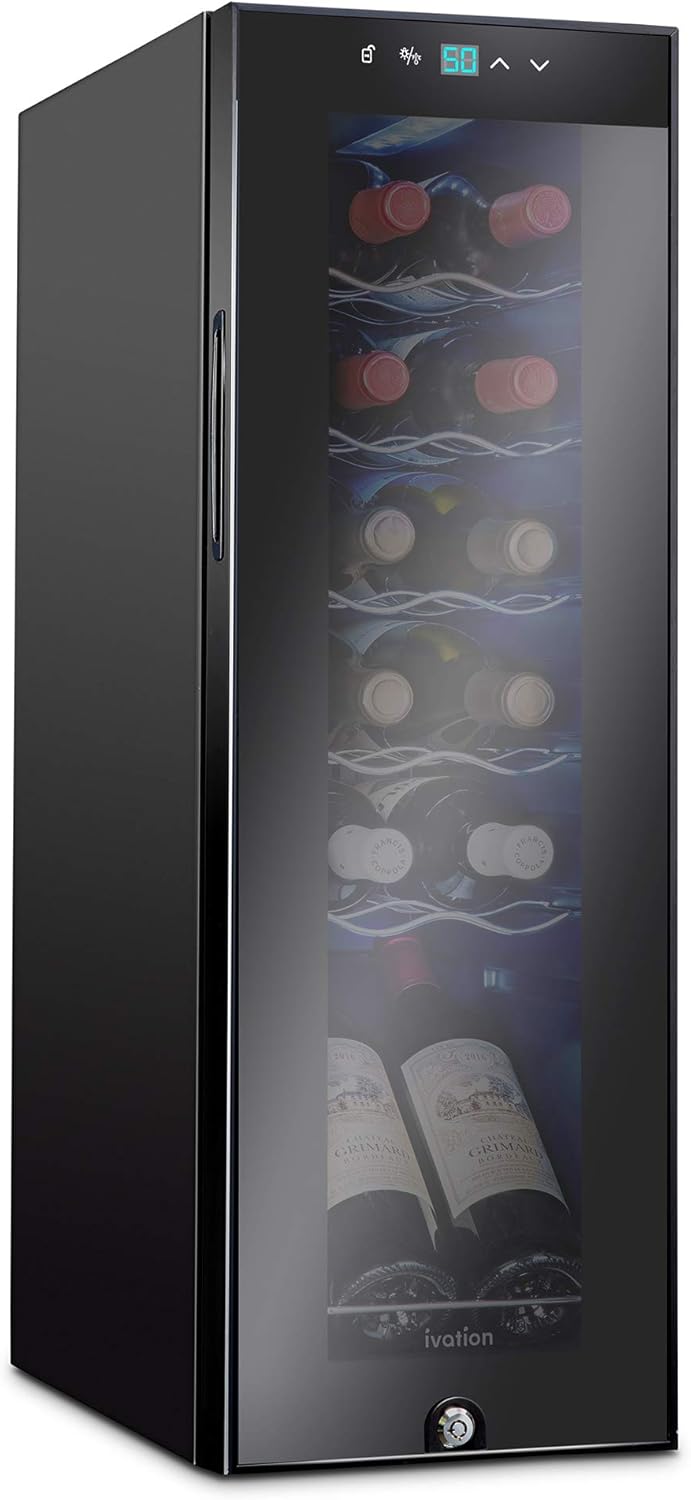
Ivation 12-Bottle Wine Cooler
| Capacity | 1.2 cubic feet |
|---|---|
| Temperature Range | 41-64°F |
| Power | 95W / 1.2 Amps |
| Cooling Method | Compressor |
| Refrigerant | R-600A |
This Ivation 12-bottle cooler uses a compressor cooling system and internal fan to hold a stable 41–64°F range, making it suitable for both chilling and longer-term storage. It installs freestanding and has six removable wire racks so you can fit standard 750 ml bottles or rearrange for larger formats. The digital touch display shows temperature in Fahrenheit or Celsius and can be locked to prevent accidental changes, while the double-paned UV-resistant glass and rubber gasket help keep light and air out. Vibration-reducing compressor operation preserves sediment and the interior LED provides soft illumination for inspections without harsh heat. As a compact unit it draws modest power (rated 95W) and includes a keyed lock for security. Limitations include a small 1.2 cu ft capacity that restricts larger fermentation batches and single-zone control that prevents separate temperature settings for multiple products. The unit is best when you need a reliable, quiet compressor fridge with precise temperature stability in a compact footprint rather than a higher-capacity or dual-zone system.
Best for: Buyers seeking a compact, performance-focused compressor fridge that holds steady temperatures for precise fermentation or small-batch aging and who prioritize stability and quiet operation.
Less Ideal for: Those who need higher capacity, multiple temperature zones, or to run several fermentations at different setpoints simultaneously should look at larger or dual-zone units.
- Compressor cooling with inverter ensures stable, low temperatures suitable for fermentation control.
- Wide adjustable temperature range (41–64°F) with digital touch controls and lock for set-and-forget operation.
- Double-paned UV-resistant glass and airtight gasket protect contents from light and external air.
- Removable wire racks allow flexible bottle arrangement and easier cleaning.
- Quiet, vibration-reducing operation that minimizes disturbance to sediments or sensitive contents.
- Small 1.2 cubic foot capacity limits the number and size of fermentation vessels you can fit.
- Single temperature zone cannot maintain different temperatures for multiple simultaneous projects.
Verdict: Choose this cooler when you want a compact, compressor-driven fridge that delivers stable, low-temperature control for small-batch fermentation and precision cooling.
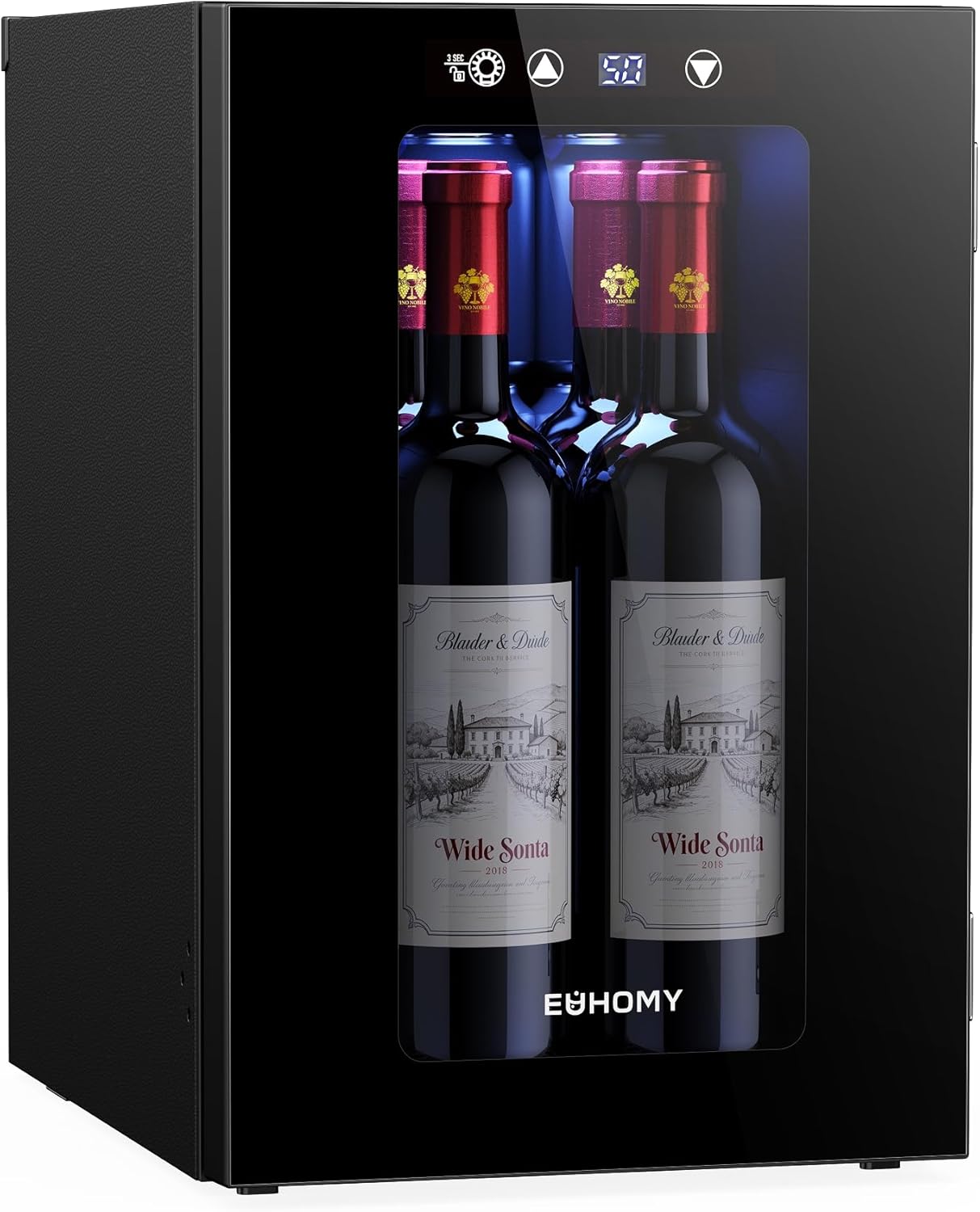
EUHOMY 18L Wine Fridge
| Capacity | 18 liters |
|---|---|
| Cooling Method | Compressor |
| Temperature Range | 40°F to 61°F |
| Number Of Shelves | 1 |
| Installation Type | Countertop |
The EUHOMY 18L Wine Fridge is a small compressor-cooled cooler designed for countertop or freestanding use to store a handful of bottles and cans. It offers a digital touchscreen that sets temperatures between 40°F and 61°F, a double-pane glass door with LED interior lighting, and one removable shelf so you can fit bottles or stacks of cans. The compressor system provides steady cooling and the manufacturer states quiet operation around 38 dB, which helps the unit sit beside a bar, office, or kitchen without creating a constant noise nuisance. Practical benefits include the ability to keep red, white, sparkling wine, or beer at ready-to-serve temperatures and the compact footprint that fits tight spaces. Limitations to expect are the very small 18 L capacity that only holds about four 750 ml bottles or up to two dozen cans when arranged differently, manual defrosting, and a single door orientation without reversible mounting, so placement options are somewhat constrained.
Best for: Buyers who want a reliable, compact cooler to keep a small selection of wines or beverages at controlled serving temperatures without complicated setup or large space requirements.
Less Ideal for: Those who need to store larger collections, organize many bottle sizes, or require a built-in undercounter installation should look at larger-capacity or different-format coolers.
- Digital touchscreen with adjustable 40°F–61°F temperature range for precise control
- Compressor cooling for consistent, dependable chilling compared with thermoelectric units
- Compact countertop form that fits small kitchens, dorms, or home bars
- Double-pane glass door with LED lighting showcases contents while blocking UV rays
- Very limited 18 L capacity suitable for only a few bottles or a small can stash
- Manual defrost requires occasional maintenance and can be inconvenient
Verdict: A compact, compressor-cooled countertop wine fridge that delivers quiet, accurate temperature control for buyers who need dependable short-term storage for a few bottles.
Choosing the Right Single-Zone Wine Cooler for Home Use: Key Factors to Consider
Temperature Stability
Consistent temperature is the single most important factor for a wine cooler. Fluctuations accelerate chemical reactions that can spoil delicate wines or alter their intended development. For home use you want a unit that holds a set temperature within one to two degrees over days and weeks.
Pay attention to how the cooler achieves stability. Compressor-driven units typically offer stronger control for long-term storage and warmer ambient conditions, while thermoelectric models can be adequate for low-capacity, low-ambient use. Consider where you will place the cooler and how ambient temperature swings in that location might affect internal stability.
Storage Capacity and Layout
Nominal bottle counts are a starting point but do not tell the whole story. Look at usable shelf width and spacing, whether shelves slide for access, and how the cooler handles different bottle shapes. Home collectors often need to store a mix of standard 750 ml bottles, magnums, and a few larger bottles for special occasions.
Shelving materials and design matter for vibration dampening and airflow. Removable or adjustable shelves let you reconfigure for entertaining or seasonal buying. Also consider overall footprint versus interior usable volume to ensure the unit fits your space without sacrificing storage you will actually use.
Noise and Vibration
Because the cooler will live in or near social spaces, low noise and minimal vibration are essential. Excess vibration disturbs sediment in older wines and can degrade aromatics, while audible fan or compressor noise can be distracting in open-plan homes.
Check rated decibel levels and whether the unit includes vibration-reducing shelves or anti-vibration mounting for the compressor. Thermoelectric units are usually quieter but less capable at high ambient temperatures. Decide how close the cooler will sit to seating or sleeping areas and prioritize quieter models for more exposed locations.
Temperature Range and Controls
Even single-zone coolers vary in the span of temperatures they can maintain. For home use you typically want a range that covers serving temperatures for whites and light reds, roughly 45 to 65 degrees Fahrenheit, and the ability to nudge settings for short-term needs.
Look for intuitive digital controls and a clear temperature display. Rapid-response controls and accessible sensors make it easier to adapt when loading many warm bottles. Some units offer boost or fast-cool modes that can be helpful after bringing new purchases home.
Installation and Venting Requirements
Installation constraints affect where you can put the cooler. Built-in or undercounter models require front ventilation, while freestanding units need space around the back and sides. For home use, knowing the venting type prevents overheating and maintains efficiency.
Consider the floor surface and leveling needs. Some coolers are designed to be freestanding in basements or garages, while others are finish-grade for cabinetry. Power location and cord length are practical items to confirm before purchase so the cooler fits where you want it to live.
Where to Place a Single-Zone Cooler in Your Home
Placement determines how well the cooler maintains temperature and how much it interferes with daily life. Avoid direct sunlight, proximity to heat sources, and areas with large ambient temperature swings. A kitchen corner, pantry, or dedicated beverage nook is usually ideal.
If you plan to use the cooler for serving rather than long-term cellaring, positioning it near entertaining areas reduces trips across the room. For built-in units, ensure the cabinetry allows the required ventilation pattern and that doors have clearance to open fully.
- Keep away from ovens, radiators, and sunny windows.
- Allow recommended clearance for airflow as specified in the manual.
- Place on a level surface to prevent excessive vibration.
Thermoelectric Vs Compressor: Which Fits Home Use?
Thermoelectric coolers run quietly and are energy efficient for small capacities in stable ambient temperatures. They are a good fit if the unit will sit in a cool room and you mostly store a few bottles for short-term serving.
Compressor-based coolers provide stronger cooling power and better temperature control in warmer rooms or when storing larger quantities. They tend to be louder and may produce more vibration but are more reliable for long-term bottle maintenance.
- Choose thermoelectric for low-noise, low-capacity needs in stable rooms.
- Choose compressor models for higher ambient temperatures or larger collections.
Organizing Bottles for Maximum Access
Organize by type and frequency of use. Reserve the middle shelves for everyday bottles and use top or bottom shelves for longer-term storage. Label shelves or use a simple inventory so you do not overbuy or forget older bottles on the back.
When entertaining, pull frequently served bottles to the front and leave less-used bottles staged behind. Slide-out shelves and gentle bottle cradles reduce the risk of knocking bottles when accessing the cooler.
- Store wines you drink soon at easier-to-reach shelves.
- Rotate stock so older purchases are used before newer ones.
- Use removable shelves to create space for larger bottles when needed.
Maintenance Basics for Long-Term Reliability
Regularly clean the interior with a mild, nonabrasive cleaner and check door seals for tightness. Clean condenser coils or ventilation grilles as the manual recommends to maintain efficiency and reduce stress on the compressor.
Monitor temperature readouts and listen for changes in noise that can signal mechanical issues. Replace filters or desiccant packs if the unit includes them, and keep the interior dry to prevent mold and odors.
- Wipe spills promptly and sanitize shelves periodically.
- Vacuum ventilation openings annually to prevent dust buildup.
- Check door gasket condition and replace if cracked or loose.
Maximizing Serving Performance
For immediate serving, set the cooler to the target serving temperature a day or two beforehand. Whites and sparkling wines benefit from lower settings while lighter reds do well slightly warmer. A single-zone cooler forces you to compromise, so plan how you will sequence service for multiple varietals.
Use an insulated cooler bag or a chilled bucket for wines that require a significantly different serving temperature for a single event. This avoids constant adjustment of the cooler and preserves stability for stored bottles.
- Pre-chill frequently served bottles in the days before an event.
- Use secondary chilling options for one-off temperature needs.
- Avoid frequent large temperature changes by staging bottles in advance.
How We Chose the Best Single-Zone Wine Cooler for Home Use
We selected single-zone wine coolers that deliver consistent storage temperatures, efficient internal layouts, and quiet daily operation. Key evaluation criteria included temperature accuracy across the cabinet, the quality and flexibility of shelving and bottle support, noise levels suitable for living spaces, cooling system reliability and energy efficiency, and the warranty and service access offered by manufacturers. We prioritized units that maintain a steady temperature within a narrow band, since stability is the most important factor for both short-term serving readiness and longer-term bottle conditioning. We also considered usable capacity more than nominal bottle counts, inspecting whether shelves accommodate standard and larger formats. Noise testing focused on units appropriate for kitchens and open-plan homes, excluding commercial-grade or excessively loud compressors. Excluded from consideration were multi-zone units and purely decorative refrigerators that do not control temperatures within wine-recommended ranges. The final selection favors practical, widely applicable designs for home environments rather than boutique or oversized cellar systems.
Our full evaluation process is outlined in our review methodology.
FAQ
Can a single-zone wine cooler store both red and white wines?
Often yes for short-term serving, but you will need to pick a compromise temperature that suits the dominant type. For longer storage or for households that want both consistently at ideal temperatures, a single-zone unit forces tradeoffs.
How much ventilation clearance does a typical unit need?
It depends on the model and whether it is designed for built-in or freestanding use. Built-in units usually vent from the front and need minimal side clearance, while freestanding units require several inches at the back and sides. Check the installation recommendations for exact measurements.
Are thermoelectric coolers reliable for home use?
Thermoelectric coolers are reliable when used within their design limits, particularly in cooler ambient conditions and for smaller capacities. They are quieter and simpler but can struggle in hot rooms or with heavy loads compared with compressor units.
What noise level should I expect from a home wine cooler?
Many home-oriented models operate between roughly 30 and 45 decibels, which is comparable to quiet conversation or background music. If the cooler will sit in a living room or next to seating, aim for lower-rated units and look for vibration-dampening features.
How do I prepare bottles before storing them in the cooler?
Allow warm bottles to cool gradually by placing them upright in the cooler and avoiding temperature shocks. Make sure bottles are dry and clean to prevent mold and odors, and store them on their sides if the cooler will be used for longer-term aging to keep corks moist.
Final Verdict
For home use, prioritize temperature stability, the right capacity for your collection, and low noise. Decide whether you need the stronger cooling and flexibility of a compressor model or the quiet operation of a thermoelectric unit based on where the cooler will live and how you use it. Balance storage layout and energy considerations against your entertaining habits and bottle mix. With those priorities clear, you can confidently choose a single-zone wine cooler that keeps bottles ready at serving temperature while fitting smoothly into your home.