
Note: This article contains affiliate links. If you click on these links and make a purchase, we may earn a small commission at no extra cost to you. This helps support our research and content. Read our full affiliate disclosure here.
If you want sweeter, brighter carrot juice with more vitamins and less foam, the right slow juicer matters. A slow juicer for carrot juice uses low-speed, cold-press extraction to squeeze more liquid and nutrients from dense root vegetables while producing less heat and oxidation than fast centrifugal machines. That can mean clearer juice, longer fridge life, and better texture for blending or cooking. This guide shortlists the top slow juicers suitable for carrot-focused juicing and evaluates them across yield, ease of cleaning, build durability, and nutrient retention. Use the criteria below to match a juicer to your daily routine, counter space, and cleanup tolerance, then read on for our top picks and practical tips.
Top Picks at a Glance
| Best Overall The best all-around choice for most situations | Ninja NeverClog Cold Press Juicer JC151 |  |
| Best Quality Built to a higher standard if you want something more solid | Hurom H330 Cold Press Juicer |  |
| Best Value The sweet spot between price and what you get | AMZCHEF Cold Press Juicer ZM1939 |  |
| Best Budget The cheapest option that still gets the job done reliably | Elite Gourmet EJX600 Juicer |  |
| Top Rated A top-rated pick with lots of positive feedback | anybear Cold Press Juicer |  |
| Most Popular A crowd favorite that many people choose with confidence | Jocuu Slow Masticating Juicer |  |
| Best Seller A high-volume bestseller chosen again and again | EanOruus 3-in-1 Masticating Juicer |  |
Ninja NeverClog Cold Press Juicer JC151

| Maximum Power | 150 watts |
|---|---|
| Number of Speeds | 2 |
| Capacity | 24 fluid ounces |
| Power Source | Corded Electric |
The Ninja NeverClog JC151 is a slow masticating juicer built to push through fibrous produce like carrots, celery, and leafy greens using a 150-watt high-torque auger and NeverClog cold-press design. It offers two one-touch programs — start/stop and reverse — that help clear jams and improve extraction, and two interchangeable pulp filters let you choose less pulp for smoother juice or more pulp for thicker, fiber-forward drinks. The unit includes a 24 oz juice jug and a 36 oz pulp container so you can make larger batches without frequent emptying, and an anti-drip lever reduces mess when pausing to pour. Assembly is straightforward, most juice-contact parts are dishwasher-safe, and the compact footprint fits easily on countertops. For carrot juice specifically, the low-speed extraction and robust auger yield a smooth, high-yield result with less foam than centrifugal models, though the 150 W motor means it is slower than high-powered centrifugal machines and intended for steady batch processing rather than quick single servings. Overall it balances extraction performance, easy cleanup, and pulp control for everyday cold-pressed juices.
Best for: Home cooks who want consistent, high-yield cold-pressed carrot juice with easy pulp control and manageable cleanup for regular at-home juicing.
Less Ideal for: People who need very fast single-serve juicing or heavy-duty commercial throughput should consider faster, higher-powered machines instead.
- High-torque 150 W auger handles fibrous vegetables like carrots and celery without frequent clogging
- Two interchangeable pulp filters for customizable juice texture
- Larger 24 oz juice jug and 36 oz pulp container support bigger batches
- Easy-to-clean design with dishwasher-safe juice-contact parts
- One-touch programs including reverse to reduce jams and improve yield
- Slower processing speed compared with centrifugal juicers, so batch prep takes more time
- Relatively modest motor wattage limits throughput for heavy commercial use
Verdict: A balanced slow juicer that delivers smooth, high-yield carrot juice with easy pulp control and dishwasher-safe cleanup for regular home use.
Hurom H330 Cold Press Juicer

| Capacity | 2 liters |
|---|---|
| Auger Speed | 50 RPM |
| Power Source | Corded Electric |
| Material | Plastic |
The Hurom H330 is a single-auger cold press juicer built for batch juicing and minimal prep thanks to its 2-liter self-feeding hopper that accepts whole apples, carrots, celery, and leafy greens. It runs at a slow 50 RPM using Hurom's patented gentle squeeze action to reduce heat and oxidation, which boosts juice yield and helps retain vitamins for up to 72 hours refrigerated. The unit includes fine and coarse strainers for low-pulp or fuller-texture juice, a pulp container, and removable parts that make disassembly and hand-washing straightforward. It is notably quiet in operation and offers safety features like an automatic shut-off if the hopper lid opens. Practical limits are that parts must be hand-washed and the machine is fairly heavy, so countertop placement and storage should be planned, and some specialty accessories such as the ice cream strainer are sold separately. For those prioritizing high yields and nutrient retention in carrot and vegetable juices, the H330 delivers reliable, low-foam results.
Best for: Buyers focused on maximum yield and nutrient preservation for frequent vegetable and carrot juicing who want a low-foam, batch-capable slow juicer that handles whole produce.
Less Ideal for: People who need a lightweight, fully dishwasher-safe machine or only want occasional single-serving centrifugal juicing should consider simpler alternatives.
- Large 2-liter self-feeding hopper allows whole produce batching with minimal prep
- Slow 50 RPM auger and patented squeeze tech reduce oxidation and preserve nutrients
- Fine and coarse strainers provide control over pulp level and juice texture
- Quiet motor suitable for early-morning use and safety shut-off feature for family use
- Removable parts and included cleaning brush speed up disassembly and cleaning
- Parts are hand-wash only which requires manual cleaning after use
- Heavier, bulkier unit that needs a dedicated space on the counter
Verdict: Choose the Hurom H330 if you want a high-yield, nutrient-preserving slow juicer that can batch-process whole carrots and vegetables with minimal prep.
AMZCHEF Cold Press Juicer ZM1939

| Maximum Power | 600 watts |
|---|---|
| Power Source | dc |
| Voltage | 120 volts |
| Number of Speeds | 2 |
| Special Features | 3-in-1 Function, Anti-Clogging Design |
The AMZCHEF ZM1939 is a single-auger cold press juicer designed to process larger produce with its 6.5-inch reversible wide chute and built-in cutting blades, which cut down prep time for carrots and other firm vegetables. It uses a low-speed masticating auger driven by a 600W motor, two speeds and a reverse function to reduce clogging and maximize juice yield, and it ships with two strainers for juice and sorbet or nut milk. Assembly and cleanup are straightforward thanks to removable parts and a simple locking design, and many components are dishwasher safe. For carrot juice specifically the wide chute and strong auger mean you can feed longer carrot pieces and extract a high yield with less shredding. Expect slower throughput than centrifugal models, and the unit takes some bench space, but the gentler extraction preserves nutrients and reduces foam. The sorbet and nut milk options add versatility if you want more than straight juices.
Best for: Buyers who prioritize efficient extraction and minimal prep for vegetables like carrots, and who value nutrient-preserving cold press results plus occasional nut milk or sorbet making.
Less Ideal for: People who need very fast, single-serving juices on a tight time schedule or who have extremely limited countertop space should consider faster or more compact alternatives.
- 6.5-inch wide reversible chute reduces prep for whole carrots and larger produce
- 600W motor with reverse function helps prevent clogs during tough juicing
- Two strainers support juice, nut milk and sorbet recipes for multiuse versatility
- Low-speed masticating auger maximizes juice yield and reduces foam
- Removable parts and dishwasher-safe components make cleaning easier
- Slower processing speed compared with centrifugal juicers, so larger batches take longer to produce
- Takes more countertop space than compact models
Verdict: A practical choice for carrot juice lovers who want high yield and minimal prep thanks to a wide chute and a powerful cold-press auger.
Elite Gourmet EJX600 Juicer

| Capacity | 16 ounces |
|---|---|
| Wattage | 100 watts |
| Power Source | Corded Electric |
| Number of Speeds | 1 |
The Elite Gourmet EJX600 is a mini masticating juicer built for single‑serve cold‑pressed juice. Its single‑auger, low‑speed (about 70 RPM) design extracts juice slowly to reduce foam and oxidation, which helps preserve nutrients and produce smoother carrot and leafy green juices. The compact housing and 16 oz Tritan juice cup make it easy to run small batches without taking much counter space, though the 3/4" feed chute means firmer produce like carrots need to be cut into smaller pieces. It has a simple one‑speed motor with 100 watts and built‑in overload/overheat protection for safer operation. Cleanup is straightforward thanks to only three removable parts and a cleaning brush, and most removable parts are top‑rack dishwasher safe. Limitations are its single‑serve capacity and small feed chute, so it is not suited for frequent large‑batch juicing or continuous heavy use. For budget buyers who want nutrient‑dense carrot juice without a large machine, it delivers good value in a small footprint.
Best for: Buyers on a tight budget who want a compact cold‑press juicer for occasional single‑serve carrot and vegetable juices and value easy cleanup and a small footprint.
Less Ideal for: Those who need to juice large quantities, frequently make multiple bottles, or want a wide feed chute to reduce prep time should consider a larger slow juicer instead.
- Low‑speed masticating extraction reduces foam and oxidation for smoother juice
- Very compact single‑serve design saves counter space
- Only three removable parts for quicker cleaning and included brush
- Most removable parts are top‑rack dishwasher safe
- Small 3/4" feed chute requires extra prep for hard produce like carrots
- 16 oz capacity limits juice to one or two servings per cycle
Verdict: A budget‑friendly compact cold‑press juicer that makes nutrient‑dense single‑serve carrot juice with minimal counter space and easy cleanup.
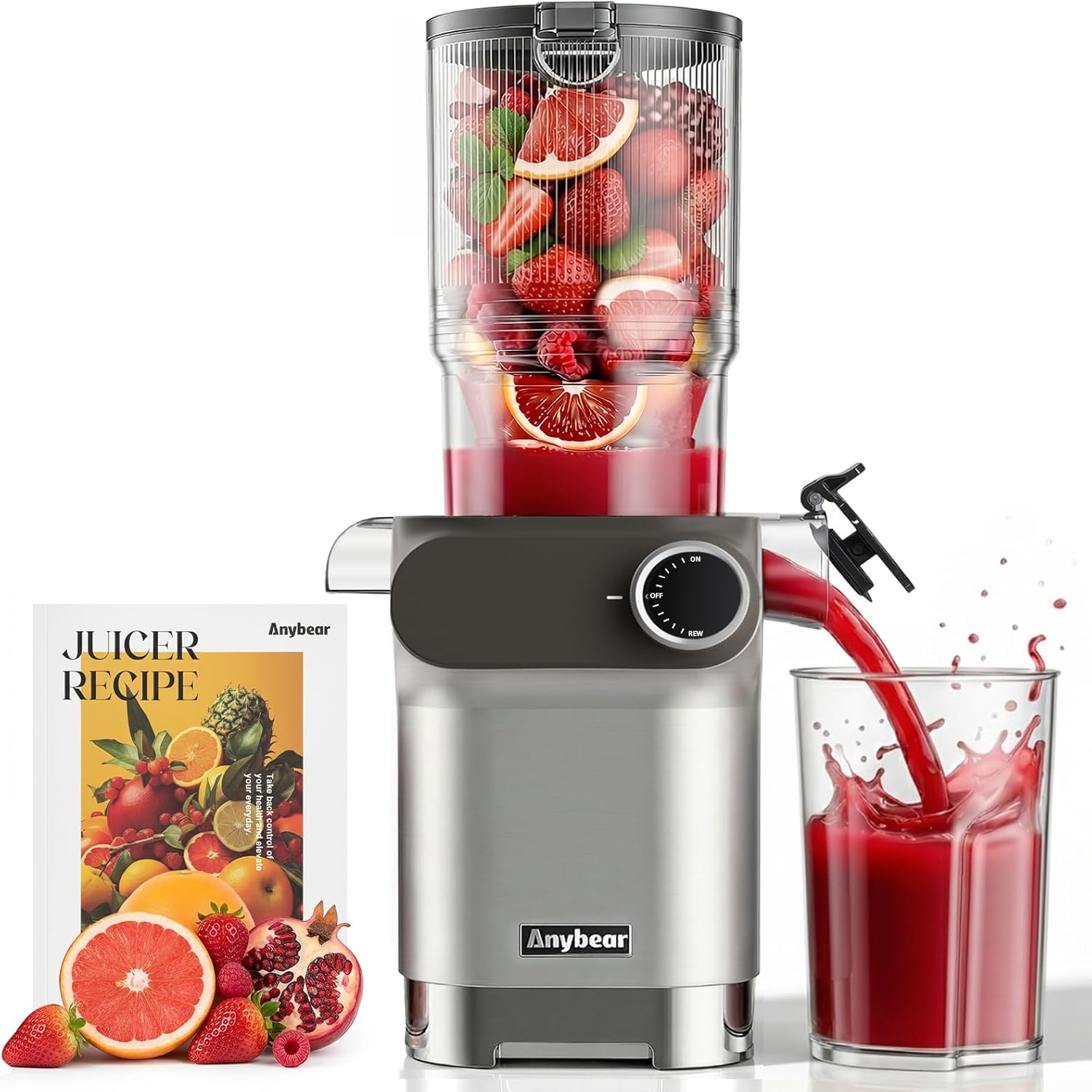
anybear Cold Press Juicer
| Wattage | 200 watts |
|---|---|
| Maximum Power | 200 watts |
| Voltage | 110 volts |
| Special Features | Easy to Clean |
The anybear Cold Press Juicer is a single-auger masticating machine designed for slow, low-oxidation extraction from whole fruits and vegetables, including dense roots like carrots. It runs on a 200W motor with a high-torque auger turning at about 65 RPM to squeeze out juice gently, which helps maximize yield and preserve flavor. The 4.3-inch feed chute accepts larger pieces so you can add bigger carrots or whole small fruits with less prep, and Tritan and stainless-steel contact parts keep juice taste neutral. The one-piece stainless filter and included brush simplify cleaning compared with multi-part designs, and the unit is intended for hand washing. Practical limits are that it is a countertop single-speed masticating model, so it is slower than centrifugal juicers and better suited to focused cold-press tasks rather than high-volume commercial use. For home juicing of carrots and other root vegetables it balances extraction efficiency and easy cleanup well, though heavier daily commercial workloads would need a more robust appliance.
Best for: Home users who prioritize reliable, high-yield cold-press juicing for carrots and other root vegetables and want a machine that minimizes oxidation and preserves flavor.
Less Ideal for: People who need high-volume or commercial-speed juicing or who prefer multi-speed or fully dishwasher-safe machines should consider other options.
- High-torque 200W motor and slow 65 RPM auger for efficient cold-press extraction
- 4.3-inch wide feed chute reduces prep by fitting larger carrots and produce
- Tritan and stainless-steel contact parts preserve juice flavor and are food-grade
- Simple one-piece filter design and included brush make cleaning quicker
- Single-speed operation is slower than centrifugal models and lengthens juicing time
- Hand-wash only care instructions mean more post-use cleaning effort compared with dishwasher-safe parts
Verdict: A dependable, low-speed masticating juicer that delivers high-yield, low-oxidation carrot juice for home users focused on flavor and reliability.
Jocuu Slow Masticating Juicer

| Wattage | 150 watts |
|---|---|
| Number of Speeds | 2 |
| Power Source | Corded Electric |
| Special Features | Auto-Reversing, Portable |
The Jocuu slow masticating juicer is a single-auger cold-press machine designed to extract high-yield, low-oxidation juice from fibrous produce like carrots. It offers two speed settings for soft and hard ingredients, a slow 150-watt motor that runs around 60 dB for quiet use, and an auto-reverse function to clear clogs. The small feeding chute and fine spiral auger help separate pulp from juice and reduce bitterness from seeds, while detachable parts are dishwasher-safe for easier cleanup. Built-in motor protection automatically stops the unit after extended runs to prevent overheating. Practical limits include a modest feed capacity that requires chopping larger items and a plastic construction that is lighter but less heavy-duty than full-metal commercial units. For regular carrot juicing at home it balances yield, noise, and ease of cleaning, though heavy daily use or processing very large volumes may expose durability limits compared with higher-end professional models.
Best for: Buyers who want a reliable, quiet cold-press juicer for home use and value high-yield extraction for fibrous vegetables like carrots while preferring easy cleaning and safety features backed by customer feedback.
Less Ideal for: Those who need a commercial-grade juicer for heavy daily throughput or a metal-bodied machine built for extensive continuous use should consider more robust, higher-powered models.
- Two speed modes optimize extraction for soft and hard produce like carrots and apples
- Low-speed motor design reduces oxidation for higher-quality juice
- Quiet operation around 60 dB makes it suitable for morning use
- Auto-reverse and included brush help clear clogs and simplify cleaning
- Detachable, dishwasher-safe parts and BPA-free materials for safer cleaning
- Plastic construction may feel less durable than metal-bodied units
- Smaller feed capacity requires pre-cutting larger produce
- 150-watt motor and automatic shutoff limit continuous heavy-duty use
Verdict: A quiet, easy-to-clean cold-press juicer that reliably extracts high-yield carrot juice for home users who prioritize noise, convenience, and safety.
EanOruus 3-in-1 Masticating Juicer

| Maximum Power | 250 watts |
|---|---|
| Power Source | ac |
| Voltage | 110 volts |
| Capacity | 100 fluid ounces |
The EanOruus 3-in-1 masticating juicer is a slow single-auger machine built for high-yield juicing and multi-use kitchen prep. It accepts whole fruits and vegetables through a 6.5-inch wide chute into a 100 oz hopper so you can process large batches with less trimming and fewer refills, which is handy for frequent carrot juicing. The 250 W AC brushless motor runs quietly and is rated for steady torque, helping extract juice from fibrous produce like carrots while the auto-reverse and overheat protection reduce stalls and motor stress. Two interchangeable strainers let you switch between juice and sorbet, and a sorbet strainer plus nut-milk capability expand use beyond juice. Detachable parts and a removable pulp outlet simplify cleaning, but the unit is relatively heavy and uses plastic components where metal alternatives exist, and the manufacturer recommends hand washing removable parts. For a cautious buyer focused on reliable, low-speed extraction and large batch capacity for carrot juice, this model offers practical performance and safety features, though those wanting lighter, dishwasher-safe parts or a metal build may prefer different designs.
Best for: Home cooks who prioritize steady, low-speed extraction and large-batch capacity for frequent carrot juicing and want built-in safeguards against jams and overheating.
Less Ideal for: Buyers who need ultra-light, fully dishwasher-safe components or those who prefer a metal-bodied professional juicer for long-term heavy commercial use.
- Extra-wide 6.5-inch chute reduces prep time by allowing large whole fruits and vegetables
- 100 oz hopper supports large batches for family use or meal prep
- 250-watt AC brushless motor provides steady torque for fibrous produce like carrots
- Auto-reverse and overheat protection help prevent jams and protect the motor
- Includes interchangeable strainers for juice and sorbet plus nut-milk capability
- Many removable parts require hand washing rather than dishwasher-safe cleaning
- Significant unit weight and plastic construction may feel less premium than metal alternatives
Verdict: If you want a quiet, high-capacity slow juicer that handles fibrous carrots and large batches with safety features to reduce jams, this EanOruus model is a practical choice.
Choosing the Right Slow Juicer for Carrot Juice: Key Factors to Consider
Juice Yield and Extraction Efficiency
Juice yield determines how much liquid you get from a given weight of carrots, which affects cost per glass and how many carrots you need to prep. For dense root vegetables, look for slow juicers designed to apply consistent pressure and low-speed crushing rather than high-speed shredding. A higher extraction efficiency also produces drier pulp, signaling the machine is reclaiming more juice and nutrients.
Pulp Management and Dryness
How the juicer handles pulp matters for both convenience and performance. Machines that produce very wet pulp are leaving usable juice behind, while those with efficient separation deliver dryer pulp and higher yield. Good pulp ejection systems prevent clogging during continuous juicing and simplify cleanup. Consider whether the juicer offers continuous pulp discharge or requires manual emptying after small batches.
Ease of Cleaning and Maintenance
Carrot fibers can stick to screens and auger surfaces, so straightforward disassembly and washable parts reduce the friction of daily use. Parts that are dishwasher-safe or rinse-free improve usability, but pay attention to crevices where pulp collects. Tools and brushes that come with a unit can speed cleaning. Regular maintenance like checking seals and bearings extends service life and keeps performance consistent.
Motor Power, Torque, and Thermal Management
Carrots are dense and require torque more than raw speed. A motor with adequate low-end torque and good thermal management will push through batches without stalling or overheating. Look for juicers rated for continuous-duty or that include automatic shutoff and reverse functions to clear jams. Durable bearings and reinforced auger shafts reduce wear when you frequently process hard produce.
Form Factor and Kitchen Fit
Counter footprint, weight, and hopper capacity influence where and how you use a slow juicer. A smaller footprint is easier to store in limited kitchens, while a larger hopper speeds prep by accepting longer carrot pieces. Stability during operation and a lid design that prevents splatter are practical considerations. If you plan to keep the unit on the counter, choose one with a tidy profile and cord storage.
Noise Level and Vibration
Noise matters for morning routines or open-plan living spaces. Slow juicers are typically quieter than centrifugal models, but build quality affects vibration and sound. Units with rubber feet or balanced augers run more quietly and move less on the counter. Consider noise if you juice early or near sleeping family members, and weigh quieter operation against other priorities like yield and cleaning ease.
Preparing Carrots for Best Results
Proper prep improves extraction and reduces strain on the juicer. Trim carrot tops and peel only if the skin is dirty or bitter; many slow juicers handle thin skins fine. Cut carrots into lengths that fit your hopper to avoid unnecessary chopping.
Soak very dry or brittle carrots briefly in cold water to revive them before juicing. Hard, cold carrots can be more brittle and may create more foam. If you want sweeter juice, use fresher carrots and remove any woody cores when possible.
- Remove large blemishes and woody cores to avoid clogging.
- Cut carrots into consistent pieces to keep feed steady.
- Alternate carrots with a softer fruit or cucumber to clear the auger and reduce foam.
Common Juicing Problems and How to Fix Them
If your juicer stalls or clogs, use the reverse function if available to back out stuck material. Stop the machine and clear the feed tube if reverse does not free the obstruction. Avoid forcing oversized pieces into the hopper.
Excess foam can come from high-speed agitation or from overprocessing. Reduce foam by pulsing carrots with a small amount of water, alternating with softer produce, or allowing freshly squeezed juice to settle before bottling.
- Jams: use reverse and smaller feed pieces.
- Foam: alternate produce or add a splash of cold water.
- Overheating: give the motor rest periods during long sessions.
Cleaning Workflow to Save Time
Develop a simple routine to keep cleanup quick. Rinse components immediately after use to prevent carrot fibers from drying on screens. Use the supplied brush to clear mesh and auger crevices before a deeper wash.
If parts are dishwasher-safe, place them on the top rack. For non-dishwasher components, soak briefly in warm soapy water to loosen pulp, then scrub and air-dry completely before reassembly to prevent mold.
- Rinse immediately to prevent dried pulp buildup.
- Use the supplied brush for the screen and tight areas.
- Periodically check seals and gaskets for wear.
Maximizing Nutrition and Flavor in Carrot Juice
Cold-press extraction from a slow juicer reduces heat and oxidation, helping retain carotenoids and vitamin C. To preserve nutrients, drink juice within 24 to 48 hours and store it airtight in the refrigerator. Avoid prolonged exposure to light and air that can break down sensitive compounds.
Combining carrots with a small amount of acidic fruit, such as citrus or apple, can enhance flavor and help balance sweetness. For smoother texture, strain juice through a fine sieve or chill before serving to reduce foam and separate any remaining solids.
- Store juice cold in airtight containers up to 48 hours.
- Add citrus or apple to brighten flavor and preserve color.
- Chill and decant to reduce foam and improve mouthfeel.
Accessories and Add-Ons That Make Juicing Easier
Useful accessories include a sturdy pulp container for continuous juicing, a fine mesh strainer for smoother juice, and a dedicated brush for screening. A bundle with multiple-sized feeding tubes or pusher tools speeds prep for different produce sizes.
If you plan to alternate between juice types, spare gaskets or replaceable screens can be helpful for maintenance and long-term uptime. Look for accessories that are easy to store and dishwasher-safe to keep the workflow efficient.
- Pulp containers for long sessions
- Fine mesh strainers to adjust texture
- Spare gaskets and brushes for maintenance
How We Chose the Best Slow Juicer for Carrot Juice
We focused on attributes that matter most when extracting juice from dense root vegetables like carrots. Primary filters included extraction efficiency for firm produce, the juicer's feed design and auger geometry, and how well the machine handles continuous output without clogging. We also prioritized ease of cleaning because fibrous carrot pulp can cling to screens and chambers, and evaluated motor robustness and thermal management to ensure the unit can press many carrots without overheating. Our selection excluded high-speed centrifugal machines and appliances intended solely for soft fruits or leafy greens. We also left out compact single-serve models that lack the hopper capacity or torque for consistent carrot processing. Evaluation dimensions that determined placement were juice yield and pulp dryness, ease of disassembly and cleaning, build quality and motor cooling, and accessory compatibility such as pulp ejection and reverse functions. These criteria guided the shortlist and ensured the picks are practical for regular carrot juicing.
Our full evaluation process is outlined in our review methodology.
FAQ
Is a slow juicer better than a centrifugal juicer for carrots?
Often yes. Slow juicers typically extract more liquid and preserve heat-sensitive nutrients when working with dense root vegetables. However, they take longer to process and may require more prep.
How often should I empty the pulp container when juicing carrots?
It depends on hopper size and how many carrots you process at once. For continuous sessions, check pulp after every few batches to prevent backflow or clogging. Emptying regularly keeps performance consistent.
Can I juice unpeeled carrots in a slow juicer?
Usually. If carrots are thoroughly washed and not waxed, leaving the skin on preserves nutrients. Peel only if the skin is dirty, bitter, or waxed.
Why is my carrot juice foamy and how can I reduce it?
Foam results from air incorporated during extraction. Reduce foam by alternating carrots with cucumber or apple, running a short clear-water flush through the auger, or letting juice settle in the fridge before serving.
How long can carrot juice sit in the fridge before it goes bad?
Carrot juice stays best for up to 24 to 48 hours when stored airtight and refrigerated. Freshly made juice is highest in nutrients and flavor, so drink it sooner rather than later.
Final Verdict
When choosing a slow juicer for carrot juice, prioritize extraction efficiency and pulp dryness first, because these determine how much juice and nutrients you recover from each batch. Balance that with ease of cleaning and the motor's ability to handle dense root vegetables without overheating. Consider countertop space and how often you plan to juice; a larger-capacity machine suits frequent juicers, while a smaller footprint benefits occasional use. Focus on the tradeoffs between yield, maintenance effort, and noise to pick a unit that fits your routine. With the right slow juicer matched to your priorities, you will get sweeter, clearer carrot juice with less waste and simpler cleanup.