
Note: This article contains affiliate links. If you click on these links and make a purchase, we may earn a small commission at no extra cost to you. This helps support our research and content. Read our full affiliate disclosure here.
If you rely on carrot juice for daily nutrients, selecting the right slow juicer matters. Carrots are dense and fibrous, so a juicer built to extract tightly packed juices will give you higher yield, smoother texture, and less waste. This guide presents a shortlist of the top slow juicers for carrots, focused on machines that handle hard vegetables efficiently while keeping foam and oxidation low. We evaluated models for extraction efficiency, ease of cleaning, and long-term reliability. Read on to see which options made the cut and why they suit home juicing routines.
Top Picks at a Glance
| Best Overall The best all-around choice for most situations | TUUMIIST Cold Press Juicer TM-780SJ | 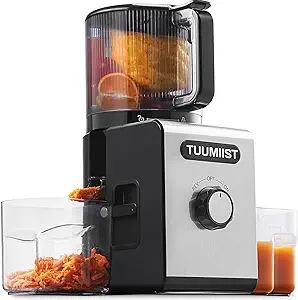 |
| Best Quality Built to a higher standard if you want something more solid | Omega Pure Press VSJ843QR |  |
| Best Value The sweet spot between price and what you get | AAOBOSI JS2401 Slow Juicer |  |
| Best Budget The cheapest option that still gets the job done reliably | Elite Gourmet EJX600 Slow Juicer |  |
| Top Rated A top-rated pick with lots of positive feedback | Hurom H330 Slow Juicer |  |
| Most Popular A crowd favorite that many people choose with confidence | EanOruus 3-in-1 Masticating Juicer E-18 |  |
| Best Seller A high-volume bestseller chosen again and again | Ninja NeverClog Cold Press Juicer JC151 |  |
TUUMIIST Cold Press Juicer TM-780SJ

| Maximum Power | 350 watts |
|---|---|
| Wattage | 350 watts |
| Power Source | Corded Electric |
| Voltage | 120 volts |
| Number of Speeds | 60 |
The TUUMIIST TM-780SJ is a slow, single-auger cold press juicer that handles whole fruits and vegetables with a 6.5-inch feed chute and a 350 W motor running at about 60 RPM. It is intended for daily juicing, batch prep, and making nut milks or sorbets thanks to its 3-in-1 strainer and large 100 oz hopper that lets you load multiple items for hands-free extraction. The slow extraction preserves nutrients and keeps noise down compared with high-speed machines, and the no-mesh-filter design plus quick-release parts and included brush make cleanup straightforward. Practical benefits include high juice yield for fibrous produce like carrots, the ability to process whole apples without chopping, and overheat protection for extended runs. Limitations to consider are the unit weight and footprint for small counters and that the 350 W motor, while adequate for everyday carrots and greens, may be slower on very hard or large batches compared with higher-power commercial models.
Best for: Buyers who want a versatile slow juicer that minimizes prep and preserves nutrients for daily carrot and mixed-vegetable juices while also making nut milk and sorbet.
Less Ideal for: Users needing an ultra-compact travel-friendly machine or professionals who require a high-capacity commercial juicer for continuous heavy-duty throughput.
- Large 6.5-inch feed chute accepts whole fruits, reducing prep time
- 3-in-1 strainer supports juice, nut milk, and sorbet without swapping major parts
- Slow 60 RPM extraction maximizes juice yield and preserves nutrients
- 100 oz hopper enables hands-free batch juicing for meal prep
- Includes quick-release parts and cleaning brush for easier cleanup
- 350 W motor is not as fast as higher-power commercial juicers for very large or hard batches
- Relatively heavy and sizable footprint may be awkward on small counters
Verdict: This cold press juicer is a versatile, nutrient-preserving choice for home users who want hands-free batch juicing of carrots and whole fruits plus the option to make nut milk and sorbet.
Omega Pure Press VSJ843QR

| Maximum Power | 150 watts |
|---|---|
| Power Source | Corded Electric |
| Voltage | 120 |
| Number of Speeds | 1 |
The Omega Pure Press VSJ843QR is a vertical cold-press masticating juicer built for high-yield, nutrient-forward juicing. It runs at a slow 43 RPM with a powerful three-stage auger and dual-edge design to squeeze more liquid from produce while reducing heat and oxidation, which helps preserve vitamins and enzymes. Typical use is batch juicing of hard and soft items alike—carrots, leafy greens, citrus, and even nut milks—while the no-drip tap and automatic pulp ejection make switching tasks and cleanup easier. The unit is relatively quiet in operation and its vertical footprint saves countertop space. Cleaning is straightforward with dishwasher-safe parts and an auto-cleaning feature that helps keep the screen clear. Limitations are modest motor power compared with some high-speed models and the single-speed design offers no variable control, so aggressive slicing/prep of very hard items may still be required for best throughput. The included 15-year warranty is notable for long-term reliability expectations.
Best for: Health-focused home cooks who want maximum juice yield and nutrient retention from carrots and other vegetables and prefer a quiet, space-efficient machine for regular batch juicing.
Less Ideal for: Buyers who need high-speed, variable RPM performance for very large commercial batches or those who want multi-speed customization for different produce types.
- Slow 43 RPM cold-press preserves nutrients and reduces oxidation
- Three-stage dual-edge auger maximizes juice yield from hard produce like carrots
- No-drip tap and automatic pulp ejection simplify batch juicing and reduce mess
- Dishwasher-safe parts and an auto-cleaning function speed up cleanup
- Quiet vertical design saves countertop space and runs with low noise
- Single fixed speed limits fine control for specific textures or delicate greens
- 150-watt motor is modest for extremely heavy continuous loads
Verdict: Choose the Omega Pure Press VSJ843QR when you want a quiet, nutrient-preserving juicer that pulls maximum juice from carrots and other hard vegetables.
AAOBOSI JS2401 Slow Juicer

| Feed chute | 6.5" large feed chute |
|---|---|
| Capacity | 100 oz |
| Special Features | Easy to Clean, Masticating, Quiet Motor |
| Care instructions | Hand Wash Only |
The AAOBOSI JS2401 is a single-auger cold press juicer built for everyday home use and larger batches. It uses a low-speed masticating system to crush produce gently, which preserves juice texture and helps extract from fibrous vegetables like carrots while reducing clogging. The extra-wide 6.5-inch feed chute fits whole apples and many vegetables so you can skip extensive chopping, and a 100 oz collection capacity is convenient for multiple servings. Detachable parts and a smooth internal design make cleaning straightforward and quick, and the motor runs quietly for early-morning use. Beyond juice it can make nut milk and sorbet, adding versatility for families. Limitations are that it is hand-wash only and requires bench space for the wider chute and collection container, and some very hard produce may still need trimming to fit or protect the auger. For carrot juicing the slow extraction and anti-clog design should deliver good yield and a smoother texture compared with fast centrifugal machines.
Best for: Buyers who prioritize efficient prep and steady, high-yield extraction for daily family juicing, especially those who want to minimize chopping and make larger batches.
Less Ideal for: People with very limited countertop space or those who need fully dishwasher-safe components should consider other models.
- 6.5-inch wide feed chute accepts whole fruits and many vegetables to reduce prep time
- Slow masticating auger yields smooth juice and better extraction from fibrous produce like carrots
- Large 100 oz capacity suitable for multi-serving batches
- Quiet motor suitable for early-morning juicing
- Detachable parts and smooth interior design for faster cleaning
- Hand-wash only parts rather than dishwasher-safe
- Requires counter space due to wide chute and larger collection capacity
Verdict: Choose the AAOBOSI JS2401 if you want a quiet, wide-chute masticating juicer that simplifies prep and extracts smooth, high-yield juice from carrots and other fibrous produce.
Elite Gourmet EJX600 Slow Juicer

| Capacity | 16 ounces |
|---|---|
| Wattage | 100 watts |
| Power Source | Corded Electric |
| Number of Speeds | 1 |
| Material | BPA‑Free, Stainless Steel, Tritan |
The Elite Gourmet EJX600 is a mini masticating slow juicer built for single‑serve cold‑pressed juice. It runs at a low 70 RPM with a 100‑watt motor and a single speed, so it extracts juice more gently than centrifugal machines to reduce foam and oxidation. The small 3/4" feed chute means you will need to pre‑cut carrots and other firm produce into smaller pieces, but the machine handles fibrous vegetables and leafy greens with typical masticating efficiency. It includes a 16 oz Tritan juice cup, three removable parts and a cleaning brush for quick teardown and mostly top‑rack dishwasher safe parts, while overload and overheat protection help prevent motor damage during heavy use. Because it is compact and limited to one speed and a small capacity, it is best for daily single servings rather than batch juicing for a family or meal prep. Hand wash is recommended for the motor base and the unit is sized for tight counters or small kitchens.
Best for: Buyers who want an inexpensive, space‑saving slow juicer for daily single servings and prioritize nutrient‑dense cold‑pressed juice over high throughput.
Less Ideal for: Anyone who needs to juice large quantities, make multiple bottles at once, or expects variable speed control for tougher produce.
- Low‑speed masticating action (70 RPM) preserves nutrients and reduces oxidation
- Compact, single‑serve footprint fits small counters or apartments
- Only three removable parts and included brush make cleaning faster
- BPA‑free Tritan juice cup and stainless steel blade for food‑safe extraction
- Built‑in overload and overheat protection for safer operation
- Small 3/4" feed chute requires more pre‑cutting for carrots and large produce
- Limited to one speed and a 16 oz capacity, not suited for batch juicing
Verdict: A compact, budget‑friendly slow juicer that delivers nutrient‑preserving single‑serve carrot juice for small households or solo juicers.
Hurom H330 Slow Juicer

| Capacity | 2 liters |
|---|---|
| Auger Speed | 50 RPM |
| Power Source | Corded Electric |
| Material | Plastic |
| Blade Material | Stainless Steel |
The Hurom H330 is a self-feeding cold-press masticating juicer built for batch juicing of whole produce, so you can load apples, carrots, celery, and leafy greens without chopping. Its 2‑liter hopper and 50 RPM slow squeeze auger focus on gentle compression rather than high-speed shredding, which reduces heat and oxidation and helps preserve vitamins and flavor for up to 72 hours. The H330 includes fine and coarse strainers for low- or fuller-pulp juice and supports nut milk and smoothie prep; parts disassemble quickly for hand washing and the motor runs quietly enough for early-morning use. Practical touches include a safety shut-off if the hopper opens and a detachable power cord for neater storage. Expect above-average juice yield and nutrient retention, but plan to hand wash components and allow some counter space for the fairly substantial unit. The machine is clearly aimed at regular juicers who value consistent extraction and low-noise operation rather than an ultra-compact footprint.
Best for: Buyers who prioritize consistent, nutrient-preserving extraction and reliable daily performance for juicing carrots and other whole produce will appreciate this unit.
Less Ideal for: If you need a very compact or lightweight juicer for occasional use or want dishwasher-safe convenience, look at smaller or dishwasher-compatible models instead.
- Large 2‑liter self-feeding hopper handles whole produce for batch juicing
- Slow 50 RPM auger preserves nutrients and reduces foam and oxidation
- Quiet motor suitable for early-morning use
- Includes fine and coarse strainers for control over pulp level
- Quick disassembly and removable parts speed up cleaning and maintenance
- Requires hand washing of parts rather than dishwasher-safe cleaning
- Relatively large and heavier countertop footprint
Verdict: Choose the Hurom H330 when you want a dependable, self-feeding slow juicer that maximizes nutrient retention and yield for regular carrot juicing.
EanOruus 3-in-1 Masticating Juicer E-18

| Capacity | 100 fluid ounces |
|---|---|
| Wattage | 250 watts |
| Power Source | ac |
| Voltage | 110 volts |
The EanOruus E-18 is a single-auger cold press juicer designed for heavy home use and batch prepping. It accepts whole fruit through a 6.5-inch chute and feeds into a 100 oz hopper so you can load apples, carrots and other produce with minimal chopping and fewer stops. The 250 W AC brushless motor runs relatively quietly while delivering steady low-speed extraction that preserves nutrients and yields less foam and heat than high-speed centrifugal models. Two strainers let you switch between juice and sorbet or make nut milk, and the included parts such as a detachable pulp outlet simplify cleaning and pulp removal. Safety features like auto-reverse and overheat protection reduce the chance of jams when juicing fibrous items like carrots. Practical downsides are the hand-wash-only parts and the unit weight, which make it less convenient to move or toss in the dishwasher, and serious users should expect some pulp cleanup after processing dense roots. For buyers focused on high-yield, nutrient-preserving carrot juice and batch juicing, this machine balances capacity and robustness at a midrange entry point.
Best for: Home cooks who value high-yield, nutrient-rich carrot juice and want to prep multiple servings at once with minimal chopping and fewer interruptions.
Less Ideal for: People who need a compact, lightweight juicer for occasional single servings or who prefer dishwasher-safe parts for fast cleanup.
- Extra-wide 6.5-inch chute accepts whole fruits and large pieces to reduce prep time
- 100 oz hopper supports large batches and less frequent refilling
- Low-speed single-auger extraction yields higher nutrient retention and less foam
- Auto-reverse and overheat protection help prevent jams when juicing fibrous produce
- Removable parts require hand washing only, increasing cleanup time
- Heavier, bulkier unit is less portable and takes more counter space
Verdict: Choose this juicer if you want a high-capacity, low-speed extractor that makes nutrient-rich carrot juice and handles whole produce with minimal prep.
Ninja NeverClog Cold Press Juicer JC151

| Maximum Power | 150 watts |
|---|---|
| Number of Speeds | 2 |
| Capacity | 24 fluid ounces |
| Included Components | 24 oz juice jug; 36 oz pulp container; 2 pulp filters |
The Ninja NeverClog JC151 is a slow masticating juicer designed to push through fibrous ingredients like carrots, celery, and leafy greens with a high-torque 150-watt auger. It is used for making cold-pressed juice, green blends, and small-batch prep; the included 24 oz juice jug and 36 oz pulp container let you produce multiple servings before stopping to empty. Two interchangeable pulp filters give control over texture, while two one-touch programs (Start/Stop and Reverse) help clear jams and improve extraction. Practical touches include an anti-drip lever to reduce spills and mostly dishwasher-safe juice-contact parts for easier cleanup. Because it runs at low speed, it minimizes foam and helps retain nutrients compared with centrifugal models, and the NeverClog design aims to reduce interruptions when juicing dense items like carrots. Limitations are typical for compact masticating machines: it is not a heavy commercial unit, so very high-volume users may need larger-capacity or more powerful models, and assembly/disassembly for cleaning takes a bit more time than with simple centrifugal juicers.
Best for: Buyers who want a reliable home cold-press juicer that handles carrots and other fibrous produce with minimal clogging and who prioritize consistent extraction and easy cleanup.
Less Ideal for: People who need a commercial or very high-capacity juicer for continuous heavy use or those who want the fastest single-serving centrifugal-style juicing experience.
- High-torque 150W auger handles fibrous produce like carrots effectively
- Two interchangeable pulp filters let you choose smoother or thicker juice
- Reverse program and NeverClog design reduce jams during continuous juicing
- Larger 24 oz jug and 36 oz pulp container support small-batch or family servings
- Most juice-contact parts are dishwasher safe for easier cleanup
- 150W motor is strong for home use but not suited for commercial, nonstop heavy-duty juicing
- Requires assembly and some cleaning time compared with simple centrifugal models
Verdict: If you want a dependable home slow juicer that can power through carrots and other fibrous vegetables with fewer clogs, the Ninja JC151 is a practical, easy-to-clean choice.
Choosing the Right Slow Juicer for Carrots: Key Factors to Consider
Juice Yield and Extraction Efficiency
How much liquid you extract from a given weight of carrots directly affects cost per glass and waste. High extraction efficiency results from slow, low-RPM augers that squeeze fiber rather than shredding it. Look for machines with proven pulp dryness and auger geometry optimized for hard roots.
Extraction efficiency also affects texture and nutrient retention. Slower extraction reduces heat and oxidation, preserving flavor and vitamins common in carrot juice. If you plan to juice frequently or in larger batches, prioritize models that consistently produce drier pulp and higher yield.
Pulp Texture and Dryness
Carrot pulp can be wetter or drier depending on the machine design. Drier pulp means more of the carrot's solids were converted into juice, which is the main goal for efficient juicing. Conversely, wetter pulp signals lower extraction and higher waste.
Texture matters for drinking preference and for recipes that use pulp. If you want smooth, low-foam carrot juice, choose a slow juicer engineered to minimize air incorporation and that routes pulp away cleanly. Consider whether you plan to repurpose pulp for baking or composting when evaluating acceptable dryness levels.
Feed Throat Size and Throughput
Feed throat diameter and the machine's ability to process whole or large pieces of carrots affect prep time. A larger throat reduces chopping and speeds up routine juicing, but may require a stronger auger to maintain pressure and extraction quality.
Throughput also ties to motor capability and cooling. If you often make several liters at once, choose a juicer designed for continuous runs with adequate motor cooling and a throat that balances convenience with consistent pressure on the produce.
Ease of Cleaning and Maintenance
Cleaning time is a major daily friction point for juicing. Machines with fewer parts, tool-free disassembly, and smooth crevice-free components are faster to clean. Dishwasher-safe parts can save time, but check whether the manufacturer recommends hand washing for parts that contact juice to avoid damage.
Maintenance also includes access to replacement parts like screens and augers. Consider how easy it is to remove clogged pulp and whether routine maintenance requires special tools. The easier a unit is to clean, the more likely you are to use it regularly.
Build Quality and Longevity
A higher-quality housing, stronger auger materials, and a reliably cooled motor contribute to longevity, especially when juicing hard roots frequently. Metal or reinforced polymer augers and tightly fitted seals resist wear and reduce leaking.
Warranty length and manufacturer support can indicate how confidently a product is built. Also consider the availability of replacement components and the simplicity of common repairs when projecting long-term ownership costs and downtime.
Noise Levels and User Comfort
Slow juicers are generally quieter than centrifugal models, but some designs still produce noticeable noise or vibration. Lower noise improves the user experience for morning routines or shared living spaces.
User comfort also covers ergonomics, such as where pulp exits, how stable the unit is while operating, and whether controls are intuitive. A comfortable, quiet unit encourages regular use and reduces the chance of operator error.
Why Slow Juicing Is Better For Carrots
Slow juicers extract juice by pressing or slowly compressing carrot fiber, which reduces heat and air exposure compared with high-speed shredding. That lower-oxidation approach helps retain carotenoids and other heat-sensitive nutrients found in carrots.
For carrots specifically, slow extraction tends to produce higher yields and smoother texture. The gentle action also cuts down on foam, which is a common annoyance when juicing dense root vegetables with fast-spinning machines.
- Lower oxidation preserves color and flavor
- Less foam and sediment in the finished juice
- Higher yield from the same amount of carrots
Preparing Carrots For Best Results
Trimming, peeling when needed, and cutting carrots into pieces that match the juicer's feed throat will improve throughput and reduce the chance of jamming. For machines with a narrow throat, cut carrots into uniform lengths. For wider throats, you can often feed larger pieces or whole carrots.
Removing dirt and sanding marks is important because grit can damage screens or wear the auger. If you plan to juice organic carrots with skins on, scrub thoroughly to remove soil rather than relying on rinsing alone.
- Trim tops and hard ends before juicing
- Cut to match the machine's throat size
- Rinse and scrub to remove grit
Common Troubleshooting Tips
If the juicer clogs, try feeding shorter pieces and alternate carrot with softer produce to reduce pack buildup. Stubborn jams often clear when you reverse the auger if the unit supports a reverse function, or by stopping and removing the clogged pulp manually.
Excess foam or wet pulp can indicate the need for a different strainer or slower feeding speed. Inspect seals and screens regularly for wear; small tears or warped filters reduce extraction efficiency and can increase pulpy output.
- Feed shorter pieces to avoid jams
- Use reverse or manual clearing for clogs
- Replace worn screens to restore yield
How To Store Fresh Carrot Juice
Fresh carrot juice oxidizes quickly. Store it in a sealed container in the coldest part of your refrigerator and consume within 24 to 48 hours for best flavor and nutrient retention. Minimizing headspace in the bottle slows oxidation.
If you want to extend freshness slightly, keep juice in an opaque container and fill it to the top. For longer storage beyond a couple of days, consider freezing portions rather than refrigerating to preserve flavor and nutrients.
- Use airtight, headspace-minimized containers
- Refrigerate immediately and use within 48 hours
- Freeze portions for longer-term storage
Using Carrot Juice In Recipes
Carrot juice can be a versatile ingredient beyond drinking. It adds natural sweetness and color to smoothies, marinades, soups, and baked goods. When substituting carrot juice for liquid in recipes, account for its sweetness and texture.
Pulp can be repurposed in muffins, crackers, or composted to reduce waste. Drier pulp from high-extraction juicers is easier to handle in recipes and has lower residual moisture.
- Add to smoothies for vitamin boost
- Use juice in sauces or marinades for color and sweetness
- Repurpose dry pulp in baking or compost
How We Chose the Best Slow Juicer for Carrots
We prioritized machines that are specifically effective with hard, fibrous roots like carrots. Our selection filters emphasized slow, low-RPM extraction systems that reduce heat and oxidation, along with robust auger design and throat sizing that accommodate carrot pieces without frequent jamming. We looked for units with easy-to-disassemble parts and dishwasher-safe components to cut cleanup time, plus sturdy housings and motor cooling that support repeated use. Noise, warranty support, and available spare parts were considered as indicators of likely durability. We excluded centrifugal-style juicers and devices meant only for soft fruits or citrus because they are less efficient at extracting juice from dense roots. The final list reflects a balance of juice yield, extraction consistency, maintenance burden, and build quality.
Our full evaluation process is outlined in our review methodology.
FAQ
Can I juice whole carrots without chopping?
It depends on the juicer's feed throat. Some slow juicers have a wide throat designed for larger pieces or whole carrots, while others require you to cut carrots into shorter lengths. Check the throat diameter and plan prep accordingly.
How much carrot juice can I expect from one pound of carrots?
Yield varies with carrot size and machine efficiency, but a slow juicer optimized for roots typically produces more juice per pound than high-speed models. Expect differences based on pulp dryness and extraction method.
Is it safe to juice carrots with skins on?
Yes, you can juice carrots with skins on if they are well scrubbed to remove dirt and grit. For cosmetic or flavor reasons, some people prefer to peel, but peeling is not strictly necessary for safety.
How often should I clean the juicer after juicing carrots?
Clean the juicer after each use to prevent dried residue and bacterial growth. Quick rinses right after juicing make full cleaning easier, and regular deep cleaning preserves extraction performance.
Will juicing carrots destroy their nutrients?
Juicing removes most fiber but retains many vitamins and carotenoids. Slow extraction methods minimize heat and oxidation, which helps preserve sensitive nutrients better than high-speed shredding.
Final Verdict
When choosing a slow juicer for carrots, focus on extraction efficiency, pulp dryness, and how easy the unit is to clean. Prioritize a machine with a throat size that matches your prep habits and an auger design that consistently delivers dry pulp. Expect tradeoffs between throughput and convenience: faster-feeding throats may require sturdier motors, while smaller throats mean more prep but often better pressure for extraction. Choose the balance that fits your routine, and favor units that are simple to maintain so you will use them regularly.