
Note: This article contains affiliate links. If you click on these links and make a purchase, we may earn a small commission at no extra cost to you. This helps support our research and content. Read our full affiliate disclosure here.
If you bake bread regularly but have limited counter space, choosing the right small stand mixer for bread matters. The wrong machine struggles with high-hydration doughs, overheats on long kneading cycles, or leaves you hand-kneading when you expected automation. This guide shortlists top small stand mixers suited specifically for bread making and evaluates each by how well it handles dough volume, kneading torque, and sustained use. Below you will find compact options selected for home bakers who want consistent gluten development and reliable long-cycle performance. The picks are judged on practical criteria that affect daily baking, from dough capacity to ease of cleanup. Continue for the detailed product list and buying guidance.
Top Picks at a Glance
| Best Overall The best all-around choice for most situations | CUSIMAX Stand Mixer 5-Quart |  |
| Best Quality Built to a higher standard if you want something more solid | Cuisinart Stand Mixer SM-50BC |  |
| Best Value The sweet spot between price and what you get | Hamilton Beach Classic Stand and Hand Mixer |  |
| Best Budget The cheapest option that still gets the job done reliably | Max Life Stand Mixer ML-6638 |  |
| Top Rated A top-rated pick with lots of positive feedback | KitchenAid Classic Series K45SS |  |
| Most Popular A crowd favorite that many people choose with confidence | KitchenAid Artisan 5-Qt Stand Mixer |  |
| Best Seller A high-volume bestseller chosen again and again | Kitchen in the box 3.2QT Stand Mixer | 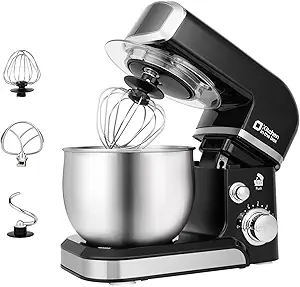 |
CUSIMAX Stand Mixer 5-Quart

| Wattage | 650 watts |
|---|---|
| Number of Speeds | 8 |
| Capacity | 5 liters |
| Controls Type | Touch |
The CUSIMAX 5-quart stand mixer is a compact, home-focused machine built for everyday baking from whipped egg whites to dough for small loaves. Its 650W motor and metal gear drive deliver steady power for mixing and kneading, while the tilt-head and lifting handle make attaching the stainless steel bowl and the included dough hook, wire whip and flat beater straightforward. The digital touch controls and 8 speed settings plus a 15-minute timer let you dial in gentle folding or more aggressive kneading without watching the clock. A splash guard with an access port reduces mess when adding ingredients and non-slip feet hold the unit stable during heavier mixing. Because it is a smaller, consumer-oriented mixer, very heavy or professional-scale dough batches may push the motor longer than ideal and the ABS housing is lighter than all-metal designs, but for regular home baking and making multiple small loaves it balances features, capacity and usability well.
Best for: Home bakers who want a versatile, compact stand mixer that handles typical bread and pastry recipes reliably without professional-scale capacity.
Less Ideal for: Commercial bakers or users who regularly make very large loaves or high-volume dough batches should choose a larger, professional-grade mixer instead.
- Powerful 650W motor with metal gear drive for consistent mixing and kneading
- 5-quart stainless steel bowl suitable for small to medium dough batches
- Digital touch controls with 8 speeds and a 15-minute timer for precise mixing
- Tilt-head with handle and included splash guard make attachment changes and ingredient addition easy
- ABS housing and consumer-grade build may feel less heavy-duty than professional all-metal mixers
- May strain with very large or very dense commercial-scale dough batches
Verdict: A well-rounded 5-quart stand mixer that delivers the power and timed control most home bakers need for making small to medium bread batches.
Cuisinart Stand Mixer SM-50BC
| Capacity | 5.5 quarts |
|---|---|
| Wattage | 500 watts |
| Number of Speeds | 12 |
| Controls Type | Knob |
| Material | Metal |
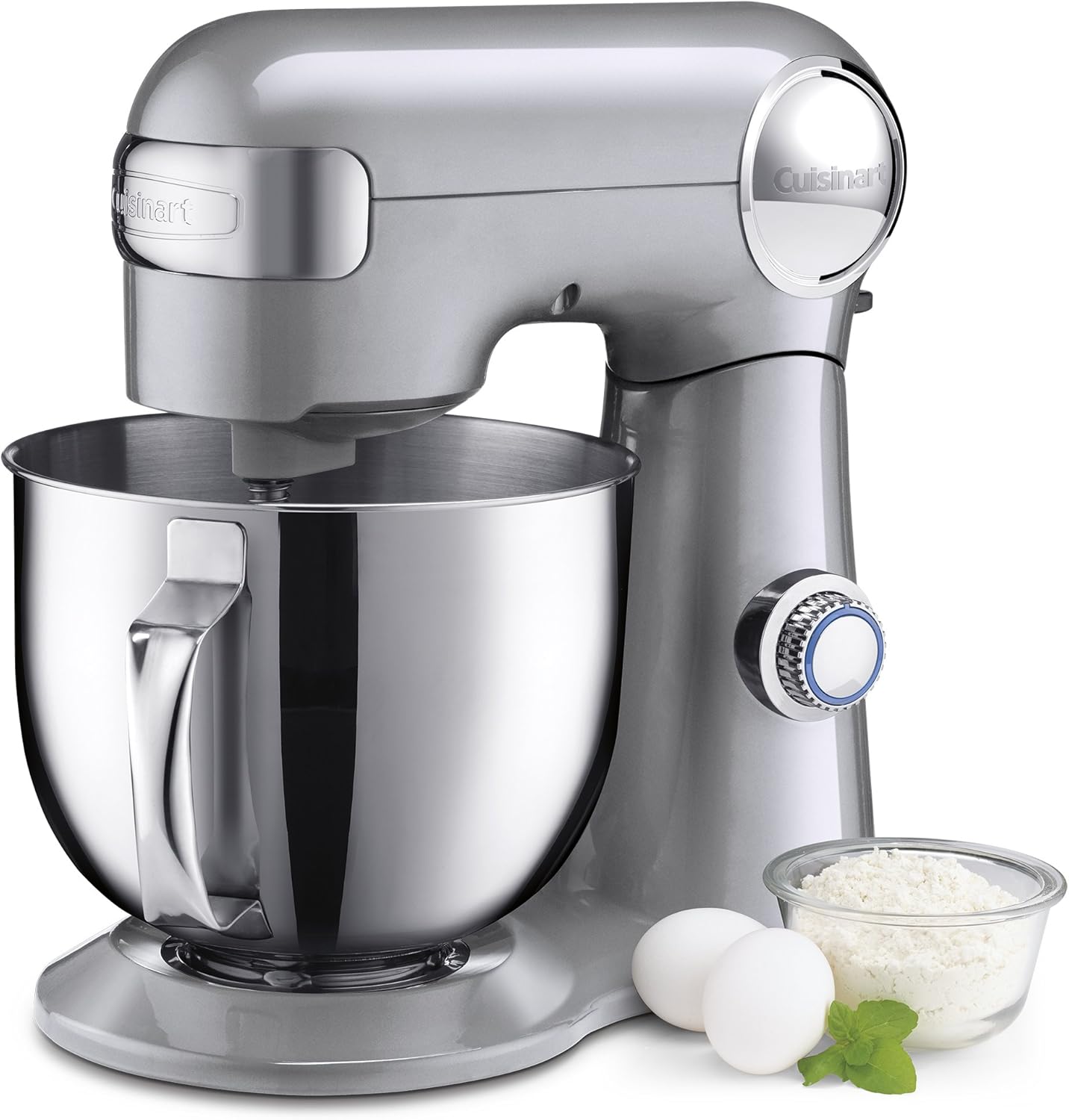
The Cuisinart SM-50BC is a mid-size stand mixer built for everyday baking tasks and small-batch bread making. Its 500-watt motor and 12 selectable speeds let you start slow for flour incorporation and step up to higher speeds for whipping or kneading dough, while the tilt-back head makes bowl access and attachment changes straightforward. The included 5.5-quart stainless steel bowl suits most home bakers making loaves, rolls, or enriched dough for families, and the package contains a chef's whisk, flat paddle, dough hook, and a splash guard with pour spout for cleaner mixing. Die-cast metal construction gives the unit a solid, stable feel during heavier mixes, and accessories plus the bowl are dishwasher safe for easier cleanup. It accepts optional Cuisinart attachments for tasks like grinding or pasta if you later expand your setup. Limitations are its 5.5-quart capacity, which can be tight for very large bread batches, and it lacks the very high torque of some heavier-duty bakery-grade mixers, so very dense or high-volume professional batches may underperform compared with larger models.
Best for: Home bakers who prioritize reliable mixed performance and versatility for weekly bread and pastry prep and who want a sturdy, mid-size mixer for family-sized batches.
Less Ideal for: Bakers who regularly make very large batches or commercial volumes should consider a larger, higher-torque machine designed for heavy duty use.
- 500-watt motor and 12 speeds provide precise control for mixing and kneading
- Die-cast metal construction improves stability during heavier dough cycles
- 5.5-quart stainless steel bowl fits most home bread and baking tasks
- Includes whisk, paddle, dough hook, and splash guard with pour spout for versatile prep and cleaner operation
- Accessories and bowl are dishwasher safe for easy cleanup
- 5.5-quart capacity may be limiting for large or commercial-sized bread batches
- Not as high-torque as larger professional mixers for very dense doughs
Verdict: A solid, mid-size mixer that delivers dependable power and control for home bakers making family-sized bread and doughs.
Hamilton Beach Classic Stand and Hand Mixer

| Capacity | 4 quarts |
|---|---|
| Wattage | 290 watts |
| Number of Speeds | 6 |
| Included Attachments | Beaters, dough hooks, whisk |
The Hamilton Beach Classic combines a compact stand mixer with a removable hand mixer, so you can tackle heavy doughs on the base and switch to the handheld tool for quick jobs. It ships with two beaters, two dough hooks and a whisk that are dishwasher safe, and the 4-quart stainless steel bowl has a side-to-side Shift & Stir action to help mix ingredients thoroughly without scraping. Six speed settings plus a QuickBurst button let you dial in slow folding through high-speed whipping, and the 290-watt peak motor provides enough torque for many home bread and cookie recipes. Practical features like the built-in bowl rest and stabilizer make switching between modes tidy and convenient. Limitations include a modest bowl capacity and a consumer-grade motor, so while it handles small-to-medium bread doughs well, very large or frequent heavy kneading sessions may push the unit harder than a dedicated full-size machine.
Best for: Home bakers who want a space-saving, versatile machine to handle occasional to regular small-to-medium bread and pastry recipes without buying two separate appliances.
Less Ideal for: Bakers who make large loaves frequently or who need a heavy-duty, commercial‑grade mixer for continuous high-volume kneading.
- 2-in-1 design lets you use a stand mixer for heavy jobs and a hand mixer for quick tasks
- Includes beaters, dough hooks and whisk for common baking needs
- Shift & Stir side-to-side bowl movement improves ingredient incorporation
- Six speeds plus QuickBurst provide flexible speed control
- Dishwasher-safe attachments and bowl simplify cleanup
- 4-quart bowl and consumer motor are best for small-to-medium batches, not high-volume bread baking
- Not as powerful or durable as larger, dedicated stand mixers
Verdict: A compact, budget-friendly 2-in-1 mixer that reliably handles small-to-medium bread doughs while saving counter space.
Max Life Stand Mixer ML-6638

| Capacity | 3.2 quarts |
|---|---|
| Wattage | 150 watts |
| Number of Speeds | 5 |
| Voltage | 120 |
The Max Life ML-6638 is an entry-level stand mixer designed for everyday baking tasks like mixing batters, whipping, and light kneading. It pairs a 150W motor with five speed settings and a 3.2-quart stainless steel bowl, and includes beaters and dough hooks that eject via a beater ejection button for easier swapping. The mixer is ETL certified and has overheat protection and an efficient cooling system to keep it running during typical home baking sessions. Its compact footprint and dishwasher-safe components make cleanup straightforward, and the detachable spindle simplifies storage. Expect it to handle cookie doughs, cake batters, and small to medium bread doughs, but very heavy or high-hydration bread recipes may push the motor and capacity. For bakers on a budget who need a reliable machine for routine batches, this model offers a solid set of features in a lightweight package.
Best for: Home bakers on a budget who make regular small to medium batches of bread, cookies, or cakes and want a straightforward, easy-to-clean mixer that handles routine doughs.
Less Ideal for: People who bake large loaves, multiple batches at once, or frequently work with very stiff or high-hydration doughs should choose a higher-power, larger-capacity mixer.
- 3.2-quart stainless steel bowl suitable for small to medium batches
- Five speed settings give flexible control for mixing, beating, and kneading
- Detachable spindle and beater ejection button make accessory changes and cleaning easier
- ETL certification and overheat protection for safer everyday use
- 150W motor may struggle with very heavy or large bread doughs
- Compact capacity limits large-batch or commercial baking
Verdict: A cost-conscious option for home bakers who need a compact, easy-to-use mixer that reliably handles small to medium bread and batter tasks.
KitchenAid Classic Series K45SS
| Capacity | 4.5 quarts |
|---|---|
| Number of Speeds | 10 |
| Wattage | 275 watts |
| Voltage | 120 volts |
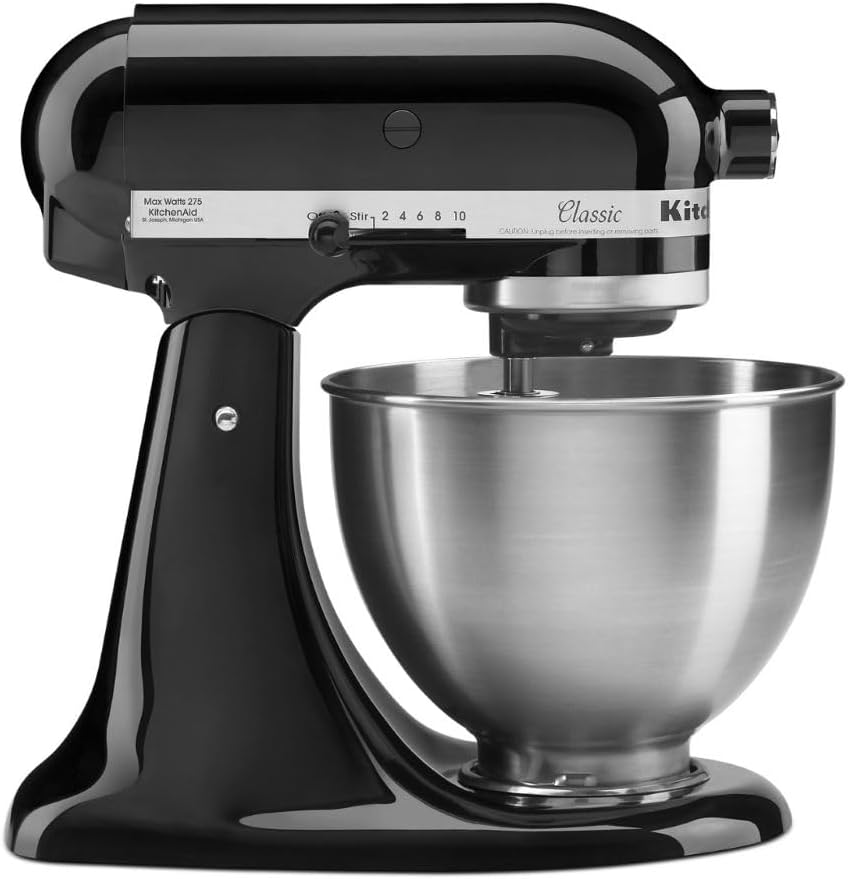
The KitchenAid Classic Series K45SS is a compact, durable tilt‑head stand mixer aimed at everyday home baking and cooking tasks. Its 4.5‑quart stainless steel bowl and included flat beater, dough hook, and 6‑wire whip cover common jobs from cookie batter to whipped cream and small to medium bread doughs. The metal construction and multiple touchpoints around the bowl promote consistent mixing, while the 10‑speed control gives fine adjustment for gentle stirring up to faster whipping. The power hub lets you add optional attachments for grinders, pasta, and more if you want to expand its uses. Because it is a smaller, lower‑wattage model compared with professional machines, it handles typical home bread recipes and batches comfortably but may struggle with very large, dense doughs or commercial workloads. Its tilt‑head design makes adding ingredients and swapping tools straightforward, and the stainless bowl is dishwasher safe for cleanup.
Best for: Home bakers who prioritize a reliable, long‑lasting mixer for regular small to medium bread and baking projects and want a machine that integrates with optional attachments over time.
Less Ideal for: People who plan to mix large commercial batches or very dense doughs frequently should choose a heavier‑duty, higher‑power machine instead.
- Durable metal construction built for regular home use
- 4.5‑quart stainless steel bowl suitable for small to medium batches
- Includes flat beater, dough hook, and whisk for common mixing tasks
- 10 speeds give precise control from stirring to whipping
- Power hub supports optional attachments for added versatility
- 275‑watt motor may be underpowered for very large or heavy bread doughs
- Tilt‑head layout offers less bowl clearance than some bowl‑lift designs
Verdict: Choose the KitchenAid Classic Series K45SS if you want a dependable, compact stand mixer that reliably handles everyday small to medium bread and baking jobs.
KitchenAid Artisan 5-Qt Stand Mixer

| Capacity | 5 quarts |
|---|---|
| Wattage | 325 watts |
| Number of Speeds | 10 |
| Voltage | 120 |
The KitchenAid Artisan 5-Quart Tilt-Head Stand Mixer is a durable, full-featured home mixer designed for frequent baking and larger batches. It uses a metal body and robust motor to handle tasks from whipping cream to kneading dough, and the included polished stainless steel bowl with handle fits up to nine dozen cookies or multi-loaf bread doughs in one batch. The tilt-head makes it easy to add ingredients and swap the flat beater, dough hook, or whisk, while ten speeds let you start slow for sticky dough and finish fast for peak whites. Its hub accepts optional attachments for grinding or pasta making, expanding its kitchen utility. For bread bakers this mixer gives consistent mixing and enough capacity for small to medium loaves, but it is a tilt-head design rather than a bowl-lift, so very heavy commercial doughs may push its limits. The mixer is sizeable on the counter and heavier than small hand mixers, but the build quality and versatile speed range make it a reliable long-term appliance for home bread baking and broader kitchen use.
Best for: Home bakers who prioritize reliable, long-lasting equipment and want a mixer that handles regular bread and batch baking while offering expanded attachment options.
Less Ideal for: Users needing a compact, lightweight mixer for occasional single loaves or those who regularly mix very large, commercial-style doughs that demand a bowl-lift design.
- Sturdy metal construction built for long-term home use
- 5-quart stainless steel bowl handles small to medium bread batches
- Ten-speed control for gentle kneading through high-speed whipping
- Tilt-head design gives easy access for adding ingredients and changing attachments
- Accessible accessory hub expands functions with optional attachments
- Tilt-head form can be less stable with very heavy or very large doughs compared with bowl-lift designs
- Relatively heavy and takes significant counter space
Verdict: A reliable, heavy-duty home stand mixer that delivers consistent mixing power and capacity for regular bread baking and multi-batch recipes.
Kitchen in the box 3.2QT Stand Mixer

| Capacity | 3 liters |
|---|---|
| Wattage | 300 watts |
| Number of Speeds | 6 |
| Included Components | Whisk, Beater, Dough Hook, Mixing Bowl |
This Kitchen in the box compact stand mixer is built for small-batch baking and everyday countertop use. It pairs a 3.2QT stainless steel bowl with a tilt-head design and three common attachments (whisk, dough hook, flat beater) so you can whip cream, mix batters, and knead dough for one- to two-person batches. The mixer offers six speeds and a mechanical knob control for straightforward operation, while four suction feet help keep the chassis steady during mixing. Practical touches include a transparent splash guard and removable bowl for easier cleanup, and the included attachments are aluminum or stainless for durability. The 300W motor delivers usable power for light to moderate doughs but the manufacturer warns the bowl is small and this unit is not intended for large or professional batches. Buyers should also note the unit emphasizes compactness and affordability over heavy-duty performance, so expect slower rise times and longer mix cycles on very stiff doughs compared with larger, higher-wattage models.
Best for: Bakers who want a reliable, space-saving stand mixer for everyday small batches, novices, or couples who prioritize ease of use and a compact footprint over heavy-duty capacity.
Less Ideal for: Serious home bakers who regularly make large loaves, multiple batches, or require a high-torque motor for heavy doughs should choose a larger-capacity, more powerful mixer.
- Compact, lightweight design saves counter and storage space
- Includes stainless steel bowl and three useful attachments (whisk, dough hook, flat beater)
- Six-speed knob control lets you handle everything from gentle folding to whipping
- Transparent splash guard and removable bowl make cleanup easier
- 3.2QT bowl is small and not suited for large batches or frequent heavy dough mixing
- 300W motor is modest, so kneading very stiff or high-volume doughs may be slower
Verdict: A compact, easy-to-use small-capacity stand mixer ideal for everyday bread and batter tasks for one to two people.
Choosing the Right Small Stand Mixer for Bread: Key Factors to Consider
Dough Capacity Relative to Loaf Size
Bowl capacity determines how much dough you can mix in one batch. For bread bakers, consider how many standard loaves you want to make at once. A mixer that looks compact on paper may still handle a single standard loaf comfortably, while others are sized for double batches.
If you routinely bake multiple loaves or larger artisan loaves, capacity affects whether you need to split batches or invest in a larger machine. Also think about headroom inside the bowl; dense doughs expand and need space during kneading to avoid splashing or binding the beater.
Motor Torque and Heat Management
Bread dough requires sustained torque, especially for higher-hydration or whole-grain recipes. A motor with adequate torque and a transmission designed for slow, steady kneading will develop gluten more effectively and run cooler over long cycles.
Thermal protection and ventilation matter because repeated long kneading cycles can cause overheating. Choose mixers with clear thermal cutoff mechanisms or cooling designs to reduce the risk of stress on the motor during back-to-back bakes.
Kneading Mechanics and Attachment Quality
Effective kneading depends on the mixer's planetary action and the shape and fit of the dough hook. Look for consistent, full-coverage mixing action that reaches the bowl sides and bottom to prevent unmixed pockets of flour. A well-shaped dough hook replicates hand-kneading motion to stretch and fold dough efficiently.
Attachment fit and material also affect long-term performance. Metal, well-machined hooks resist bending and maintain contact with dough under load better than thin or poorly attached pieces.
Build Materials and Long-Term Durability
Durable materials in the head, housing, and drive train extend a mixer's useful life. Metal gears or reinforced transmissions handle the stress of dense dough. Plastic housings and internal components can be fine for light use but may wear faster under the repeated strain of bread kneading.
Consider warranty scope and how easy it would be to service the drive components. A sturdier build can be heavier and take more counter space, so weigh durability against footprint if space is limited.
Ease of Cleaning and Maintenance
Bread baking generates sticky dough that can accumulate on hooks, bowl rims, and attachment hubs. Dishwasher-safe bowls and attachments make cleanup faster, but also assess how easy it is to reach crevices where dough accumulates. A mixer with fewer exposed gears and a simple attachment-release mechanism reduces time spent cleaning.
Regular maintenance tasks like inspecting seals, knobs, and vents are easier when access is straightforward. Plan for periodic checks to keep the motor vents clear of flour dust.
Noise, Vibration, and Countertop Stability
Compact mixers can vary widely in how much vibration they transmit. Excessive vibration can shift the machine during kneading, leading to inconsistent mixing and more cleanup. Assess whether the base has non-slip feet and whether the mixer stays stable during higher-torque cycles.
Noise level is a practical concern in open kitchens or shared spaces. While some vibration is normal during heavy kneading, a mixer that isolates motion well will feel more stable and be less disruptive during early-morning or late-night bakes.
How Much Mixer You Actually Need
Think in terms of typical batch sizes and how often you bake. If you make one loaf occasionally, a very small mixer can be sufficient. If you bake several loaves a week or experiment with higher-hydration or enriched doughs, pick a model that can handle one standard loaf with room to spare.
Small stand mixers can still offer strong kneading performance if their motor and gearing are engineered for torque rather than raw speed. Prioritize machines that list higher torque or that explicitly mention heavy dough capability, and check bowl volume against the recipes you use most.
- Estimate the maximum dough weight you typically mix and compare with bowl capacity.
- Remember headroom matters: allow space for expansion during kneading.
- Consider whether you will ever want to scale up recipes in the future.
Attachments That Make Bread Baking Easier
Dough hooks are the primary attachment for bread, but other tools can add versatility. Flat beaters and whisks are useful for non-dough tasks, turning the mixer into an all-purpose tool when needed.
Check whether the dough hook is spiral or conventional c-shaped, and how it interacts with bowl geometry. Spiral hooks often provide more efficient gluten development in short cycles, while C-hooks are simple and robust.
- Prefer solid metal hooks over hollow or thin sheet-metal designs for durability.
- Look for attachments that are easy to remove and dishwasher-safe if cleanup speed matters.
Speed Settings and Control for Kneading
Bread dough benefits from low, steady speeds rather than high RPM. A mixer with a clear low-speed range and a slow start reduces flour dusting and prevents ingredient scattering. Variable speed control gives more precision when transitioning from mix to knead.
Some mixers offer a slow start or pulse function that helps combine ingredients without launching flour. Others have electronic speed governors that maintain torque under load. Those features improve control for delicate or sticky doughs.
- Look for reliable low-speed options for initial combining and long kneading cycles.
- Avoid mixers that only emphasize high RPM features for whipping and beating.
Space-Saving Tips for Small Kitchens
If counter space is at a premium, consider where the mixer will live when in use and when stored. A lighter machine is easier to stow but may sacrifice some durability. Some compact mixers have a tilt-head design that simplifies access to the bowl without taking extra lateral space.
Think about how often you will use the mixer. Frequent bakers may prefer a permanent countertop spot, while occasional bakers will value a model that slides into a cabinet or pantry easily.
- Measure cabinet openings and counter clearances before buying.
- Tilt-head designs are handy for quick access; bowl-lift designs often provide a more secure engagement for heavy dough.
Maintenance Practices to Extend Mixer Life
Regularly wipe flour from vents and around the attachment hub to prevent buildup that can impede cooling and wear seals. After heavy use, allow the motor to rest between long kneading sessions to avoid thermal stress.
Inspect dough hooks and attachment interfaces for signs of bending or wear. Replace or service components showing excessive play to prevent transmission strain. Follow manufacturer care guidance for lubrication and part replacement schedules when available.
- Clean immediately after use to prevent dried dough from hardening in crevices.
- Periodically check mounting hardware and tighten loose fittings to maintain alignment under load.
How We Chose the Best Small Stand Mixer for Bread
We prioritized mixers that can reliably handle bread dough rather than just light batters. Key filters included motor torque and thermal protection to ensure the mixer sustains long kneading cycles without overheating, and bowl capacity relative to typical loaf sizes so the machine can mix dough for one or more standard loaves. We also considered gear or transmission design and build materials because those determine long-term durability under the higher stress of bread dough. User-facing elements such as speed range, planetary action, and included dough-specific attachments were factored in because they affect kneading effectiveness and versatility. Practical usability was another filter: how easy each mixer is to clean, whether attachments are dishwasher-safe, and how accessible the bowl is during use. Noise and vibration were noted when they affected control or countertop stability. We excluded machines designed solely for light-duty tasks and models with insufficient torque ratings or small bowls that cannot mix common bread recipes. The final shortlist balances sustained kneading performance, capacity for typical home loaves, durability of drive components, and everyday convenience.
Our full evaluation process is outlined in our review methodology.
FAQ
Can a small stand mixer handle whole-grain bread dough?
Often yes, but it depends on motor torque and transmission design. Whole-grain doughs are denser and require more sustained force, so choose a compact mixer rated for heavy dough or with a stronger drive train.
How much dough can a compact mixer typically knead?
Small mixers vary, but many can handle a single standard loaf worth of dough. Check the listed bowl capacity and compare with your recipe's dough weight to ensure compatibility.
Is a spiral hook necessary for good gluten development?
Not strictly. Spiral hooks can be more efficient for certain doughs, but a well-designed C-shaped hook paired with proper speed and kneading time can also develop gluten effectively.
Will long kneading cycles damage a small mixer?
Long cycles increase thermal load and stress on the drive train. Mixers with good torque ratings, thermal protection, and robust gearing are better suited to regular long kneading sessions.
How do I prevent my mixer from moving while kneading?
Place the mixer on a non-slip mat or ensure it has rubber feet. Also check that bowl and head locks are fully engaged and avoid using excessively high speeds that increase vibration.
Final Verdict
For home bakers, the right small stand mixer for bread balances bowl capacity, sustained motor torque, and robust kneading mechanics. Prioritize machines that list heavy-dough capability and have durable attachments and a solid drive design. Expect tradeoffs between footprint and durability: the most compact units may be fine for occasional loaves, while frequent bakers should favor slightly larger, sturdier models. Focus on the factors that match how you bake: match bowl size to your typical batch, choose torque and thermal protection for long cycles, and pick a mixer with easy cleanup and stable operation. Doing so will help you select a compact mixer that produces consistently well-developed loaves without unnecessary compromises.