
Note: This article contains affiliate links. If you click on these links and make a purchase, we may earn a small commission at no extra cost to you. This helps support our research and content. Read our full affiliate disclosure here.
If you want reliable wine storage without a large footprint, a small wine cooler is the most practical upgrade for casual collectors and apartment kitchens. The right unit preserves flavors by holding a stable temperature, minimizes vibration, and fits in tight spaces while still leaving room for a meaningful bottle selection. This guide shortlists the top small wine coolers under $500 that balance temperature accuracy, usable capacity, and quiet operation. Below you will find our top picks and the evaluation criteria used to assess them, plus practical guidance on fitting a cooler to your space and needs.
Top Picks at a Glance
| Best Overall The best all-around choice for most situations | BLACK+DECKER 8-Bottle Wine Cellar BD60026 |  |
| Best Quality Built to a higher standard if you want something more solid | Cuisinart 8-Bottle Wine Cellar CWC-800CEN |  |
| Best Value The sweet spot between price and what you get | Antarctic Star Wine Cooler 1.7 Cu Ft |  |
| Best Budget The cheapest option that still gets the job done reliably | Icyglee Beverage Refrigerator WC-6B |  |
| Top Rated A top-rated pick with lots of positive feedback | Ivation 12-Bottle Wine Cooler |  |
| Most Popular A crowd favorite that many people choose with confidence | Koolatron 6 Bottle Wine Fridge WC06 |  |
| Best Seller A high-volume bestseller chosen again and again | EUHOMY 18L Wine Fridge |  |
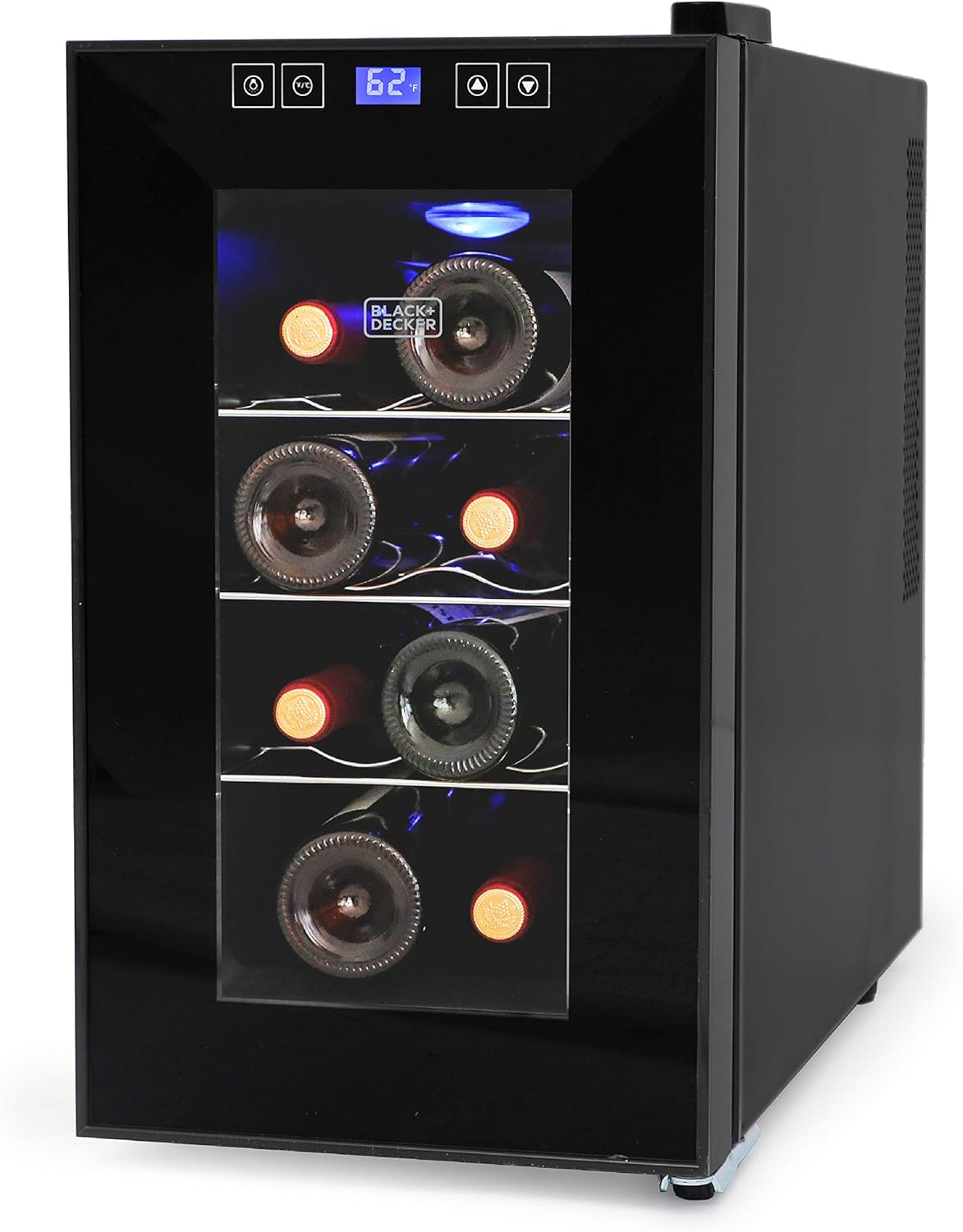
BLACK+DECKER 8-Bottle Wine Cellar BD60026
| Capacity | 0.88 cubic feet / 8 Bottles |
|---|---|
| Cooling Method | Thermoelectric |
| Temperature Range | 46°F – 65°F |
| Number of Racks | 3 |
| Power | 120 volts |
The BLACK+DECKER 8-Bottle Wine Cellar is a countertop thermoelectric cooler designed to keep wine at stable serving or short-term storage temperatures between 46 and 65°F. It uses a quiet thermoelectric system with low vibration and an electronic LED readout so you can set and monitor temperature easily, and the triple-pane clear glass door helps preserve the internal climate. The unit includes three removable chrome slide-out racks and an interior light for display, plus adjustable leveling legs and a recessed handle for a tidy countertop fit. Practical benefits include energy-efficient operation, minimal vibration that is kinder to wine sediment, and a small footprint that works in offices, bars, or kitchens. Limitations are inherent to its cooling method and size: thermoelectric units do not chill as aggressively as compressor fridges, so it is best for short- to medium-term storage and serving rather than long-term cellar aging, and the eight-bottle capacity restricts how many bottles you can store at once.
Best for: Buyers who want a compact, low-noise wine cooler for everyday serving and short-term storage and who prioritize a small footprint and simple digital controls.
Less Ideal for: Collectors needing long-term aging at very specific low temperatures or anyone who wants to store large numbers of bottles should consider larger compressor-based wine fridges.
- Compact footprint fits on counters or in small entertainment spaces
- Quiet thermoelectric cooling with low vibration preserves wine sediment
- Triple-pane glass door helps maintain stable internal temperature
- Electronic temperature control with LED display for simple monitoring
- Thermoelectric cooling is less powerful than compressor systems for rapid or very low-temperature chilling
- Only three slide-out racks limit capacity to standard bottle sizes
Verdict: A compact, quiet countertop cooler that is ideal for everyday serving and short-term storage of up to eight bottles.
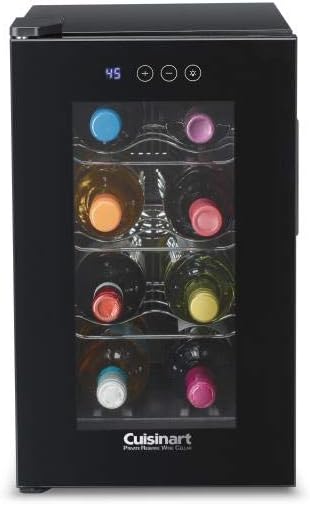
Cuisinart 8-Bottle Wine Cellar CWC-800CEN
| Cooling Method | Thermoelectric |
|---|---|
| Number Of Shelves | 8 |
| Capacity | 6 liters |
| Power Source | Electric |
The Cuisinart 8-Bottle Private Reserve Wine Cellar is a small freestanding cooler designed to keep a selection of reds, whites, or sparkling wines at controlled serving temperatures. It uses a thermoelectric cooling system, which runs quietly and is more energy efficient than compressor units, and a touchscreen control with LED readout lets you set temperatures from 39°F to 68°F. Inside, contoured chrome racks and soft interior lighting make bottle access and display simple, and the unit ships with three removable racks to organize various bottle shapes. Typical use is for short- to medium-term storage and serving in an apartment, kitchen, or home bar where vibration-free, quiet operation matters. Limitations include the small 8-bottle capacity and thermoelectric cooling, which performs best in moderate ambient temperatures and is not suited for long-term cellar aging or very warm rooms. For buyers prioritizing quiet performance and a compact footprint, this is a practical countertop or freestanding option; buyers needing larger capacity or cooler performance for hot spaces should look at compressor-based models instead.
Best for: Buyers who want a quiet, energy-conscious small wine cooler to keep a few bottles at serving temperature and prefer a compact freestanding unit for a kitchen, office, or home bar.
Less Ideal for: Collectors who need long-term proper cellar conditions, those with larger collections, or people who will place the cooler in consistently hot rooms.
- Quiet thermoelectric cooling with low vibration suitable for delicate wines
- Touchscreen controls and LED display for easy temperature setting
- Soft interior lighting and contoured chrome racks for neat presentation and access
- Compact freestanding design fits small kitchens, apartments, or bars
- Only holds up to eight bottles, limiting larger collections
- Thermoelectric cooling is less effective than compressor units in very warm ambient temperatures
Verdict: Choose this Cuisinart if you want a quiet, compact 8-bottle cooler that maintains serving temperatures with energy-efficient thermoelectric performance.
Antarctic Star Wine Cooler 1.7 Cu Ft

| Capacity | 1.7 cubic feet |
|---|---|
| Bottle Capacity | 16 bottles |
| Can Capacity | 68 cans |
| Temperature Range | 40°F–61°F |
| Defrost System Type | Manual Defrost |
This Antarctic Star wine cooler is a compact freestanding unit intended for chilled beverages and wine rather than food storage. It offers 1.7 cubic feet of capacity with two adjustable shelves so you can fit standard bottles or stacks of cans, and the digital thermostat lets you set temperatures between 40°F and 61°F. The compressor-based cooling and double-pane tempered glass door with an airtight seal help keep temperatures steady while the internal blue LED makes it easy to see contents at night. Setup is simple—place it on a countertop or under a counter and plug in—though defrosting is manual. The cooler is relatively quiet in operation, which suits shared spaces like home bars, dorm rooms, or offices. Practical limitations are its small footprint and single-zone design, so it is best for short-term chilling or small collections rather than long-term wine aging or storing large-format bottles. The unit delivers good features for its size and budget-focused price point if you need a reliable compact beverage fridge.
Best for: Buyers who want an affordable, compact beverage fridge for a small home bar, office, or dorm and prioritize easy temperature control and a tidy display over long-term wine cellaring.
Less Ideal for: Collectors with large wine inventories, those needing dual-zone temperature control, or anyone planning to age bottles long term should choose a larger or specialized cellar instead.
- Holds up to 16 bottles or 68 cans in a compact 1.7 cu ft footprint
- Digital thermostat with 40°F–61°F range for straightforward temperature control
- Adjustable shelving lets you arrange space for bottles or cans
- Double-pane tempered glass door and airtight seal improve insulation
- Quiet compressor operation suitable for living spaces
- Manual defrost requires occasional maintenance
- Single temperature zone is not suitable for simultaneously storing red and white at different temperatures
Verdict: A compact, budget-friendly beverage cooler that gives reliable compressor cooling and simple digital control for small collections and convenience chilling.
Icyglee Beverage Refrigerator WC-6B

| Capacity | 0.6 cubic feet |
|---|---|
| Cooling Method | Compressor |
| Temperature Range | 40–61°F |
| Defrost Type | Manual Defrost |
The Icyglee WC-6B is a small compressor beverage fridge designed to chill cans and a few bottles in tight spaces. It offers one removable wire shelf so you can stack cans or lay a couple of wine bottles flat, and a temperature dial that ranges roughly from 40 to 61°F for basic beverage and wine chilling. Because it uses an R600 compressor it cools faster and more consistently than thermoelectric units, and the manual defrost and tight door seals help keep internal temps steady. The compact freestanding design and mirrored black door make it easy to tuck under a counter, in an office, or next to a home bar, and the claimed noise level under 40 dB keeps operation unobtrusive. Limitations include very small capacity — listed as 18 liters or 0.6 cu ft — so it is best for singles, couples, or very light entertaining, and there are no advanced controls like a digital thermostat or dual zones. For buyers wanting an affordable, space-saving compressor cooler for a handful of drinks, this covers the basics well.
Best for: Buyers looking for an inexpensive, space-saving beverage cooler to hold a small rotation of drinks in a dorm, office, or compact home bar.
Less Ideal for: Anyone who needs larger capacity, multi-zone temperature control, or a dedicated wine cellar solution for long-term bottle storage.
- Compressor cooling (R600) for faster, more consistent chills than thermoelectric units
- Removable shelf lets you switch between cans and a few bottles
- Very compact freestanding footprint fits tight spaces and under counters
- Quiet operation reported under 40 dB for low-noise placement
- Very small internal capacity (0.6 cu ft) limits storage to about a dozen cans or a few bottles
- No digital thermostat or dual-zone control for precise wine storage
Verdict: A budget-friendly, compressor-cooled mini beverage fridge that saves space while reliably chilling a small number of drinks.
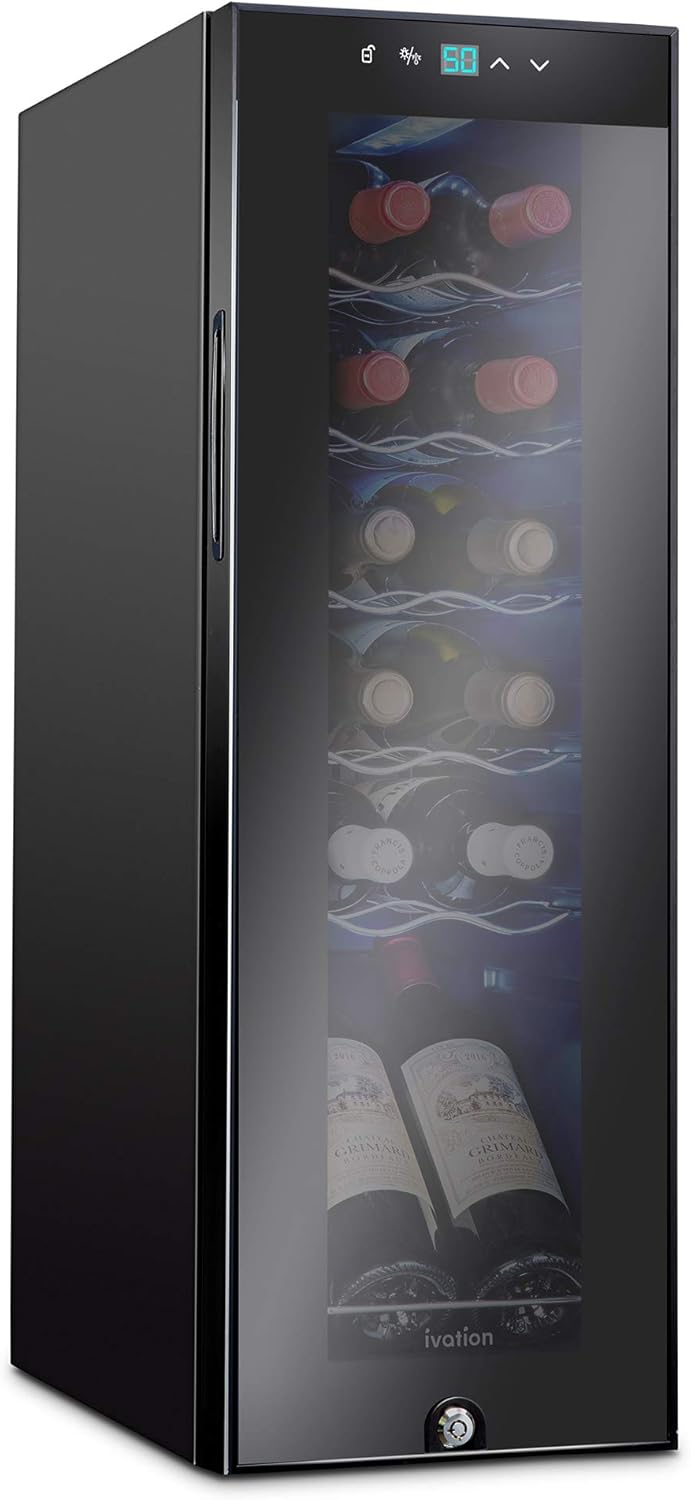
Ivation 12-Bottle Wine Cooler
| Capacity | 1.2 cubic feet |
|---|---|
| Temperature Range | 41-64°F |
| Power | 95W / 1.2 Amps |
| Cooling Method | Compressor |
| Refrigerant | R-600A |
This Ivation 12-bottle cooler uses a compressor cooling system and internal fan to hold a stable 41–64°F range, making it suitable for both chilling and longer-term storage. It installs freestanding and has six removable wire racks so you can fit standard 750 ml bottles or rearrange for larger formats. The digital touch display shows temperature in Fahrenheit or Celsius and can be locked to prevent accidental changes, while the double-paned UV-resistant glass and rubber gasket help keep light and air out. Vibration-reducing compressor operation preserves sediment and the interior LED provides soft illumination for inspections without harsh heat. As a compact unit it draws modest power (rated 95W) and includes a keyed lock for security. Limitations include a small 1.2 cu ft capacity that restricts larger fermentation batches and single-zone control that prevents separate temperature settings for multiple products. The unit is best when you need a reliable, quiet compressor fridge with precise temperature stability in a compact footprint rather than a higher-capacity or dual-zone system.
Best for: Buyers seeking a compact, performance-focused compressor fridge that holds steady temperatures for precise fermentation or small-batch aging and who prioritize stability and quiet operation.
Less Ideal for: Those who need higher capacity, multiple temperature zones, or to run several fermentations at different setpoints simultaneously should look at larger or dual-zone units.
- Compressor cooling with inverter ensures stable, low temperatures suitable for fermentation control.
- Wide adjustable temperature range (41–64°F) with digital touch controls and lock for set-and-forget operation.
- Double-paned UV-resistant glass and airtight gasket protect contents from light and external air.
- Removable wire racks allow flexible bottle arrangement and easier cleaning.
- Quiet, vibration-reducing operation that minimizes disturbance to sediments or sensitive contents.
- Small 1.2 cubic foot capacity limits the number and size of fermentation vessels you can fit.
- Single temperature zone cannot maintain different temperatures for multiple simultaneous projects.
Verdict: Choose this cooler when you want a compact, compressor-driven fridge that delivers stable, low-temperature control for small-batch fermentation and precision cooling.
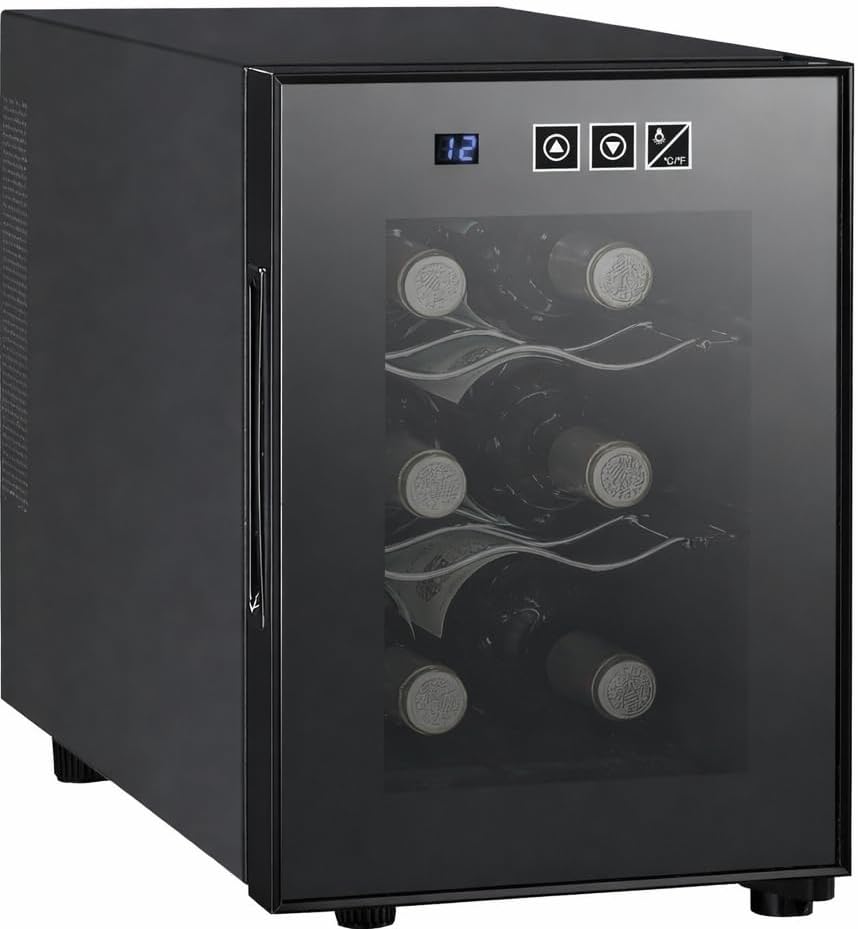
Koolatron 6 Bottle Wine Fridge WC06
| Cooling Method | Thermoelectric |
|---|---|
| Capacity | 0.6 cubic feet |
| Temperature Range | 46-66°F (8-18°C) |
| Included Components | 2 Removable Wire Shelves |
| Installation Type | Freestanding; Counter Top |
The Koolatron 6 Bottle Wine Fridge is a small countertop thermoelectric cooler that keeps up to six standard wine bottles at serving temperatures between 46 and 66°F. It is typically used on a countertop, sideboard, or in tight spaces where a full-size cellar would not fit, and it runs quietly with vibration-free cooling to avoid disturbing bottle sediment. Key features include external touch screen digital controls for setting temperature and the interior LED light, two removable wire racks for different bottle shapes, and a mirrored double-pane door that blocks UV light. Practical benefits are its compact footprint and simple controls that make it easy to store ready-to-serve bottles close at hand, plus the low-noise thermoelectric system that is suitable for living spaces. The main limitations are the small capacity and single-zone cooling, so it cannot store a larger collection or maintain different temperatures for reds and whites simultaneously, and thermoelectric cooling is less effective than compressor units in very warm rooms.
Best for: Buyers who want a space-saving, easy-to-use countertop cooler to keep a handful of bottles at serving temperature and value quiet operation and simple digital controls.
Less Ideal for: Collectors who need larger capacity, separate temperature zones, or strong cooling performance in very warm rooms should consider larger compressor-based units.
- Compact countertop design fits small kitchens, apartments, and offices
- Digital external touch controls and LED light for easy temperature management
- Mirrored double-pane glass door provides UV protection
- Quiet, vibration-free thermoelectric cooling preserves sediment and reduces noise
- Only six-bottle capacity limits storage to a few ready-to-serve bottles
- Single-zone cooling cannot hold different wines at different temperatures
Verdict: A compact, quiet countertop wine cooler that keeps a small selection of bottles at serving temperature with easy digital controls.
EUHOMY 18L Wine Fridge
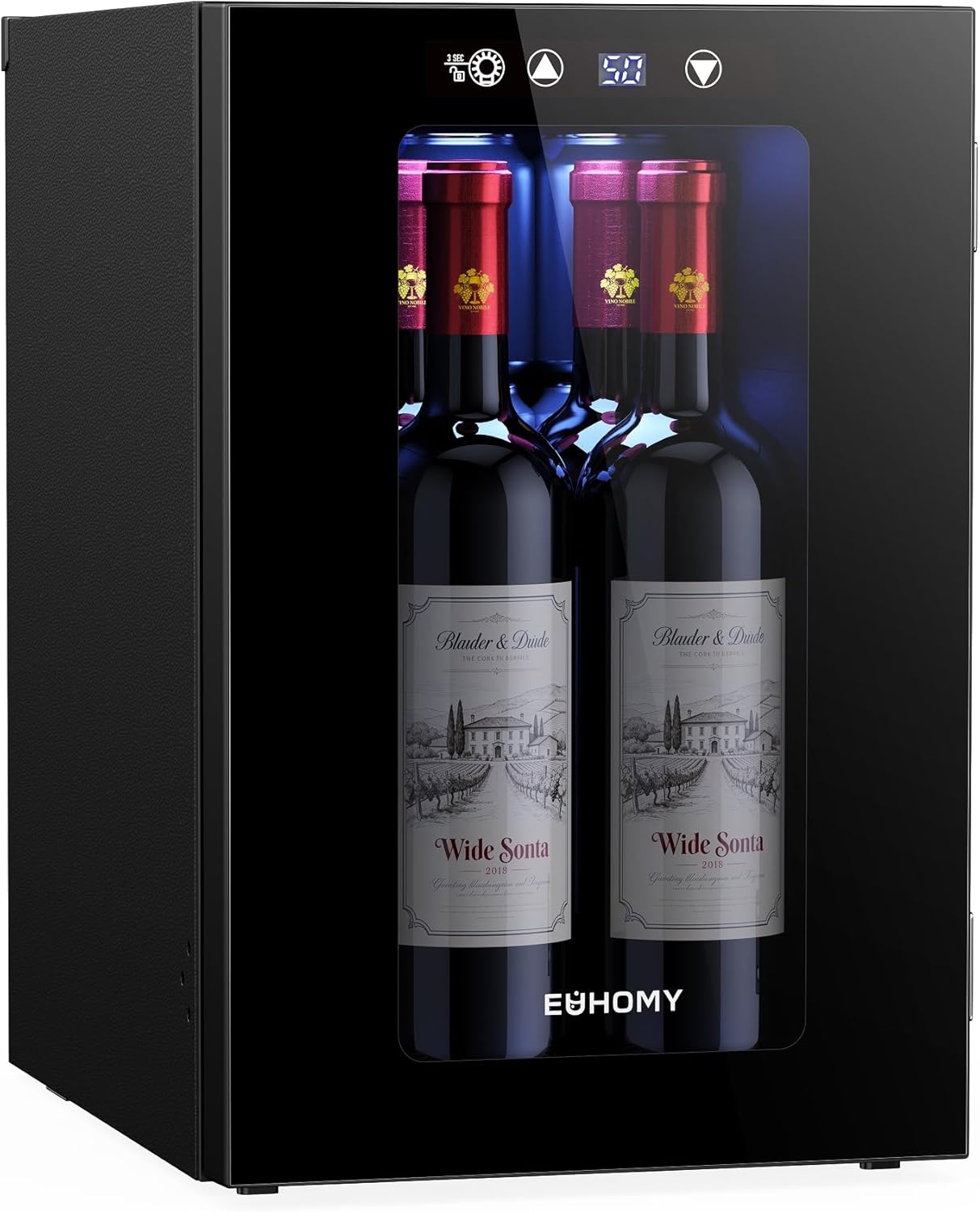
| Capacity | 18 liters |
|---|---|
| Cooling Method | Compressor |
| Temperature Range | 40°F to 61°F |
| Number Of Shelves | 1 |
| Installation Type | Countertop |
The EUHOMY 18L Wine Fridge is a small compressor-cooled cooler designed for countertop or freestanding use to store a handful of bottles and cans. It offers a digital touchscreen that sets temperatures between 40°F and 61°F, a double-pane glass door with LED interior lighting, and one removable shelf so you can fit bottles or stacks of cans. The compressor system provides steady cooling and the manufacturer states quiet operation around 38 dB, which helps the unit sit beside a bar, office, or kitchen without creating a constant noise nuisance. Practical benefits include the ability to keep red, white, sparkling wine, or beer at ready-to-serve temperatures and the compact footprint that fits tight spaces. Limitations to expect are the very small 18 L capacity that only holds about four 750 ml bottles or up to two dozen cans when arranged differently, manual defrosting, and a single door orientation without reversible mounting, so placement options are somewhat constrained.
Best for: Buyers who want a reliable, compact cooler to keep a small selection of wines or beverages at controlled serving temperatures without complicated setup or large space requirements.
Less Ideal for: Those who need to store larger collections, organize many bottle sizes, or require a built-in undercounter installation should look at larger-capacity or different-format coolers.
- Digital touchscreen with adjustable 40°F–61°F temperature range for precise control
- Compressor cooling for consistent, dependable chilling compared with thermoelectric units
- Compact countertop form that fits small kitchens, dorms, or home bars
- Double-pane glass door with LED lighting showcases contents while blocking UV rays
- Very limited 18 L capacity suitable for only a few bottles or a small can stash
- Manual defrost requires occasional maintenance and can be inconvenient
Verdict: A compact, compressor-cooled countertop wine fridge that delivers quiet, accurate temperature control for buyers who need dependable short-term storage for a few bottles.
Choosing the Right Small Wine Cooler: Key Factors to Consider
Temperature Control Accuracy
Consistent, accurate temperature control is essential for preserving wine character. Small coolers must hold a set temperature without wide swings, and the ability to fine-tune settings in one-degree increments helps match storage needs for whites, reds, or a mixed selection.
Look for units with clear digital readouts and reliable thermostats. Temperature performance affects aging potential and immediate drinking condition, so buyers should prefer systems known for stability rather than flashy features.
Internal Capacity and Rack Design
Rated bottle counts often assume ideal storage of standard Bordeaux bottles. Real-world capacity depends on shelf spacing, whether shelves are fixed or sliding, and how well the cooler accommodates assorted bottle shapes like Burgundy or Champagne.
Consider how many bottles you currently own and whether you plan to rotate selections frequently. Sliding or roll-out shelves improve access and let you store bottles in two layers without risking damage, while flat wire racks may limit stability for odd shapes.
Noise Level and Vibration
Many small wine coolers live in open kitchens or shared spaces, so low operational noise is important. Compressors produce intermittent noise while thermoelectric units tend to run quieter but may struggle with high ambient temps.
Vibration can disturb sediment in older bottles and potentially affect aging. Look for models with vibration-dampening racks or low-vibration compressors. If you plan to place a cooler near living areas, prioritize measured decibel ratings and user reports about hum and vibration.
Door Type and Insulation
Door design influences both appearance and performance. Tinted or UV-resistant glass doors let you showcase bottles while protecting them from light damage, but glass must be well insulated and sealed to prevent temperature loss.
Solid doors can be more efficient but limit display. Check door seals and hinge quality because a tight seal maintains stable internal temps and reduces runtime. Consider whether you need a reversible door for your installation.
Energy Use and Running Cost
Operating cost matters over the long term, especially if the cooler runs continuously. Smaller compressors generally use less energy, but poorly insulated cabinets or frequent compressor cycles can increase consumption.
Look at published energy ratings when available and consider placement away from heat sources to reduce runtime. Energy-efficient units may have higher up-front quality in insulation and compressors, which can pay off over time.
Installation Footprint and Venting
A compact cooler must physically fit the intended space, and venting requirements determine whether it can be built-in or freestanding. Some small wine coolers require front-venting for built-in installation, while others rely on rear or bottom clearance.
Measure the installation area, account for door swing and ventilation gaps, and verify whether the unit is rated for partial or full integration. Proper venting prevents overheating and preserves performance.
Where To Place a Small Wine Cooler
Placement affects performance more than most buyers expect. Avoid direct sunlight, cooktop heat, or unconditioned spaces such as garages where ambient temperatures can exceed the cooler's operating range. Ideal locations are climate-controlled kitchens, pantries, or under-counter niches where ambient temperatures remain steady.
Ensure there is adequate clearance for airflow based on the unit's venting design. Front-vented models can be built into cabinetry with little rear clearance, while rear-vented units need space behind them. Also consider door swing and nearby foot traffic to keep bottles safe during access.
- Keep away from heat sources and direct sunlight
- Allow clearance for the coolers specified venting
- Consider reversible doors for flexible installation
- Choose a quiet spot if the cooler will be in living areas
Thermoelectric Vs Compressor Cooling
Thermoelectric coolers are typically quieter and have fewer moving parts, which can be attractive in small units used for short-term chilling. However, they are less effective at lowering temperature in hot rooms and provide a narrower cooling range.
Compressor-driven coolers offer stronger, more reliable cooling across a wider range of ambient conditions and better temperature stability for long-term storage. For most small wine cooler buyers seeking consistent results, a compact compressor system is often the more practical choice.
- Thermoelectric: quieter, less powerful, best in mild climates
- Compressor: stronger cooling, better for varied ambient temps
Organizing Mixed Collections
If you plan to store both whites and reds, decide whether you need a single setpoint that favors one style or frequent rotation between zones. Small coolers rarely offer true dual-zone separation, so group bottles by serving temperature when possible and prioritize the wines you drink most.
Use shelf order to separate styles: keep whites toward the lower-temperature zone if available, and place reds where they will be slightly warmer. Consider supplementary chilling for occasional bottles that need a different temperature before serving.
- Store by serving temperature rather than varietal if space is tight
- Rotate bottles to maintain even use and avoid long-term exposure at suboptimal temps
Maintenance and Longevity
Regular maintenance keeps a small wine cooler performing well. Clean spills promptly to avoid odors, vacuum any accessible condenser coils if the manufacturer recommends it, and check door seals periodically for integrity. Replace filters if included and follow recommended cleaning intervals for glass doors.
Avoid refilling the cooler immediately after a large intake of warm bottles. Allow the unit time to re-stabilize between bulk additions to prevent extended compressor cycles and thermal stress on seals and components.
- Clean interior with mild detergent and avoid abrasive cleaners
- Inspect seals and hinges every few months
- Allow time for temperature recovery after adding warm bottles
Matching Cooler Capacity to Your Habits
Think in terms of everyday bottles rather than theoretical maximums. If you typically drink several bottles per week, a smaller unit that keeps bottles at serving temp may be better than a slightly larger unit that is hard to organize. Conversely, if your goal is short-term storage for rotating selections, prioritize usable capacity and easy access.
Also factor in bottle shape and gifting patterns. If you frequently receive larger-format bottles, opt for models with adjustable shelves or flat storage options to accommodate nonstandard sizes.
- Prioritize usable, accessible space over headline bottle counts
- Adjust shelves to match your common bottle shapes
How We Chose the Best Small Wine Cooler
We focused on features that directly affect wine storage quality and everyday usability. Selection prioritized temperature control accuracy and consistency because precise set points keep wine in peak condition. Capacity and internal layout were next, since a stated bottle count means little if racks waste space or cannot accommodate different bottle shapes. Noise and vibration levels matter for wines that can be sensitive to disturbance and for placement in living areas. Build quality and door insulation affect long-term temperature stability and energy use, so we weighed materials and sealing design. Finally, controls and usability determine whether users can set and maintain conditions without constant fiddling. We excluded oversized units and specialty dual-zone systems that exceed the under $500 scope or the compact footprint criteria. We also excluded models with unverified temperature performance or inconsistent user reports about durability. The resulting shortlist represents compact coolers that meet practical performance thresholds across these specific, measurable dimensions.
Our full evaluation process is outlined in our review methodology.
FAQ
Can a small wine cooler age wine long-term?
Small coolers can maintain stable temperatures suitable for short- to medium-term storage, but most compact units lack the long-term climate control features that dedicated cellar systems provide. For extended aging, prioritize models with excellent temperature stability, low vibration, and strong insulation.
Is a glass door safe for wine storage?
A tinted, UV-resistant glass door is generally acceptable if it blocks light and the cooler maintains stable temperatures. Avoid placing glass-doored units in direct sunlight and check for good door seals to prevent heat transfer.
How much clearance does a small cooler need for ventilation?
Clearance requirements vary by model and venting design. Front-vented units can be integrated with minimal rear clearance, while rear-vented coolers typically need several inches of space behind them. Always follow the manufacturer's specified clearance recommendations.
Will a thermoelectric cooler work in a warm kitchen?
Thermoelectric models are less effective in warm rooms and may struggle to reach low setpoints when ambient temperatures are high. In kitchens that heat up during cooking, a compressor-based cooler is usually a more reliable choice.
How do I reduce vibration in a small wine cooler?
Choose a unit with vibration-dampening shelves or rubber mounts, and place the cooler on a level, stable surface. Minimizing nearby foot traffic and avoiding tight cabinet wedging can also reduce transmitted vibration.
Final Verdict
When choosing a small wine cooler under $500, prioritize temperature accuracy, usable capacity, and low vibration above decorative extras. Decide whether you need a quieter thermoelectric unit for display or a compressor model for consistent storage in varied ambient conditions. Balance installation constraints and venting with internal layout to ensure you can store the bottles you actually drink. Ultimately, pick the cooler that best matches how you organize and access bottles, and accept reasonable tradeoffs between footprint, noise, and capacity to get the most reliable performance for the space.