
Note: This article contains affiliate links. If you click on these links and make a purchase, we may earn a small commission at no extra cost to you. This helps support our research and content. Read our full affiliate disclosure here.
Picking the right solar security camera matters because you want continuous outdoor monitoring without daily charging or frequent battery swaps. The right unit keeps a driveway, backyard, or entryway covered through daylight charging and overnight recording, with motion alerts and usable video when you need it most. This guide shortlists seven top-rated solar security cameras that perform well for typical residential use. We evaluated power management, image quality, and installation flexibility to focus on durable, low-maintenance options. Read on to compare the most important features and to decide which setup fits your property and monitoring needs.
Top Picks at a Glance
| Best Overall The best all-around choice for most situations | aosu SolarCam Pro 4-Cam Kit |  |
| Best Quality Built to a higher standard if you want something more solid | eufy SoloCam E42 4-Cam Kit | 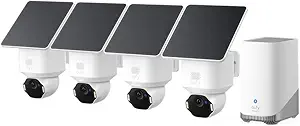 |
| Best Value The sweet spot between price and what you get | Hiseeu 4MP Solar Security Cameras (2-Pack) |  |
| Best Budget The cheapest option that still gets the job done reliably | VIRTAVO SolarFlask 2K Camera |  |
| Top Rated A top-rated pick with lots of positive feedback | Ring Spotlight Cam Plus Solar |  |
| Most Popular A crowd favorite that many people choose with confidence | eufy SoloCam S220 | 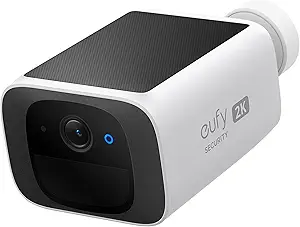 |
| Best Seller A high-volume bestseller chosen again and again | SEHMUA RBX-S73 Solar Security Camera |  |
aosu SolarCam Pro 4-Cam Kit

| Video Capture Resolution | 2k |
|---|---|
| Viewing Angle | 166 degrees |
| Zoom Ratio | 6x |
| Night Vision Range | 23 feet |
| Memory Storage Capacity | 128 GB |
The aosu SolarCam Pro 4-Cam Kit is a wireless outdoor security system designed for easy installation and low-maintenance operation. Each bullet camera records in 2K QHD with a 166° ultra-wide field of view and 6x digital zoom, while built-in spotlights provide full-color night vision for clearer nighttime identification. The system uses the aosuBase for local, encrypted storage (32GB included) and streams up to four live feeds to a smartphone app with cam-to-cam tracking and synchronized timelines for related events. Solar panels and rechargeable batteries keep cameras running with minimal sunlight and the unit is rated IP66 for weather resistance. AI human detection helps reduce false alerts and two-way audio plus an audible/strobe deterrent provide active response options. Important limitations are a 15 fps frame rate which may feel less smooth for fast motion and reliance on Wi-Fi and the base station for remote access, so placement and network quality matter. For buyers who want a subscription-free, solar-run whole-home view, this kit balances image quality, smart features, and practical local storage.
Best for: Buyers who want a subscription-free, solar-powered outdoor kit that prioritizes wide coverage and local encrypted storage for balanced home surveillance.
Less Ideal for: Users who need high-frame-rate video for tracking fast action or who cannot provide reliable Wi‑Fi and a central base location for the aosuBase should consider other setups.
- 2K QHD video with 166° ultra-wide field of view covers large areas with fewer cameras
- Full-color night vision using built-in spotlights improves nighttime identification
- Includes aosuBase with 32GB local encrypted storage so no subscription is required
- Solar panels and rechargeable batteries enable largely maintenance-free outdoor operation
- AI human detection and cam-to-cam tracking reduce false alarms and simplify event review
- 15 frames per second video capture can look less smooth during rapid motion
- Remote access and notifications depend on the base station and home Wi-Fi quality
Verdict: A subscription-free, solar-powered 4-camera kit that delivers wide 2K coverage, local encrypted storage, and smart detection for balanced, low-maintenance home security.
eufy SoloCam E42 4-Cam Kit

| Power Source | Battery Powered |
|---|---|
| Battery Power | 55.98 watt-hours |
| Video Capture Resolution | 4k |
| Connectivity Protocol | Wi-Fi |
The eufy SoloCam E42 4-Cam Kit is a solar-capable outdoor security system designed for continuous, high-resolution monitoring without mandatory cloud subscriptions. Each camera records in true 4K, offers 360 degree pan and tilt coverage with AI-powered auto tracking, and triggers a strobe light and siren for deterrence; the kit includes HomeBase 3 for onboard storage and expandable HDD support. SolarPlus 2.0 and a 55.98 Wh battery let the cameras remain charged with minimal maintenance, and Wi‑Fi connectivity plus smartphone integration makes setup and alerts straightforward. Practical benefits include clear license-plate level detail at short range, cross-camera tracking to follow moving subjects, and optional 24/7 recording when in wired or HomeBase-backed modes. Important limitations are that continuous recording requires direct power or the HomeBase, microSD is not included for standalone camera use, and high-resolution 4K footage will consume significant storage and bandwidth. For buyers focused on image quality and automated tracking, this kit delivers capable hardware and local storage without recurring fees, but expect larger storage needs and occasional firmware updates for optimal performance.
Best for: Buyers who prioritize top-tier image quality and automated subject tracking for outdoor perimeter monitoring and who prefer local, subscription-free storage.
Less Ideal for: Users who need a purely battery-only 24/7 recording solution or who want a plug-and-play camera with minimal storage management and low bandwidth usage.
- True 4K Ultra HD capture for detailed images and readable license plates at close range
- 360° pan and tilt with AI auto tracking and cross-camera tracking to follow subjects
- SolarPlus 2.0 plus a 55.98 Wh battery enables long runtime with minimal charging maintenance
- HomeBase 3 included for local storage with expandable hard drive support and no mandatory monthly fee
- 24/7 continuous recording requires direct power or HomeBase connection rather than battery-only operation
- MicroSD card not included for standalone camera storage
- High-resolution 4K video increases storage and network bandwidth demands
Verdict: Choose this kit if you want high-resolution 4K solar cameras with AI tracking and local HomeBase storage for subscription-free, performance-focused outdoor security.
Hiseeu 4MP Solar Security Cameras (2-Pack)

| Video Capture Resolution | 4 MP |
|---|---|
| Night Vision Range | 33 feet |
| Viewing Angle | 135 degrees |
| Battery Power | 5200 milliampere_hour |
| Memory Storage Capacity | 256 GB |
These Hiseeu cameras are a practical solar security kit for outdoor monitoring where running power is inconvenient. Each bullet camera is 100% wireless, charges from an included solar panel and uses a 5200 mAh rechargeable battery to reduce the need for manual recharging. They record 4MP video with a 135° field of view, provide full‑color night vision via LED spotlights, and run PIR/AI human detection to cut down false alerts. The system supports two‑way audio and has siren and strobe responses for active deterrence. You can store footage to an SD card (up to 256 GB) or opt for the vendor cloud plan, and the cameras work with Alexa and Hiseeu systems. Tradeoffs to note are the modest 15 fps frame rate and dependence on adequate sunlight for long autonomous runtime, and the product primarily connects over 2.4 GHz Wi‑Fi rather than 5 GHz. For straightforward outdoor coverage without wiring, these cameras deliver solid image quality and flexible alarm options at a sensible feature set.
Best for: Buyers who want a low‑maintenance, wire‑free outdoor camera setup for straightforward perimeter coverage and prefer solar charging to avoid running power cables.
Less Ideal for: Users who need high frame‑rate footage for fast action capture or those planning to install cameras in very shaded locations without reliable sun exposure.
- Completely wireless solar power with included panels and 5200 mAh battery for low maintenance operation
- 4MP video and 135° field of view give clearer, wider coverage than 1080p cameras
- Full‑color night vision with LED spotlight for usable nighttime detail
- Built‑in PIR/AI human detection reduces false motion alerts and supports customizable activity zones
- Supports local SD storage up to 256 GB and optional cloud backup, plus Alexa compatibility
- Frame rate is limited to 15 fps which can make fast motion look less smooth
- Reliable continuous operation depends on sufficient daily sunlight and panel placement
Verdict: A practical, mostly maintenance‑free solar camera pair that provides higher‑resolution daytime and color night footage for outdoor monitoring without running power.
VIRTAVO SolarFlask 2K Camera

| Power Source | Solar Powered |
|---|---|
| Battery Capacity | 4400 milliamp_hours |
| Video Capture Resolution | 1440p |
| Viewing Angle | 120 degrees |
| Local Storage | microSD up to 256GB |
The VIRTAVO SolarFlask is a wireless outdoor security camera designed to run off its built-in solar panel and rechargeable battery so you can install it without running power cables. It captures 2K (2560×1440) video through a wide-angle lens and uses starlight imaging plus two IR LEDs for color-aware night recording up to about 30 feet, while a 120-degree field of view covers broad areas. Setup is app-driven via the Home V app on 2.4 GHz Wi-Fi and the camera supports PIR motion detection with adjustable sensitivity, custom detection zones, push alerts, and a built-in siren. You can speak through the camera with two-way audio and save footage locally to a microSD card (up to 256 GB) or opt for encrypted cloud storage. Because it is solar powered with a 4400 mAh battery and a 5 ft panel cable, the unit can sustain long runtimes with as little as a few hours of daily sun, but it does not support 5 GHz Wi-Fi or standard RTSP/ONVIF/NVR integrations, which limits use with third-party recorders. For buyers wanting a self-contained, low-maintenance outdoor camera that minimizes wiring, this is a practical option at a budget-friendly spec level.
Best for: Buyers who want an affordable, low-maintenance outdoor camera that avoids wiring and delivers higher-than-1080p video and color night vision for everyday home surveillance.
Less Ideal for: Users who require integration with third-party NVRs, RTSP/ONVIF-based systems, or need guaranteed performance in consistently low-light or low-sun locations.
- Solar-powered with built-in battery and 5 ft panel cable for flexible, charge-free installation
- 2K QHD resolution with starlight color night vision for clearer low-light detail
- PIR motion detection with adjustable sensitivity, custom detection zones, and instant push alerts
- Two-way audio for live interaction and a built-in siren for deterrence
- Supports local microSD storage up to 256 GB plus optional encrypted cloud storage
- Only connects to 2.4 GHz Wi-Fi and does not support RTSP/ONVIF or NVR/FTP integration
- Relies on solar exposure for long battery life so performance can vary in low-sun locations
Verdict: A budget-friendly, self-contained solar security camera that delivers 2K video and color night vision for wire-free outdoor monitoring.
Ring Spotlight Cam Plus Solar

| Video resolution | 1080p HD |
|---|---|
| Power | Solar panel and quick-release battery |
| Night vision | Color Night Vision |
| Two-way talk | Yes |
The Ring Spotlight Cam Plus Solar bundle pairs a 1080p wide-angle camera with a solar panel and quick-release battery for continuous outdoor monitoring with minimal maintenance. It records day or night with color night vision and activates two bright motion-triggered LED spotlights while offering two-way talk so you can speak to visitors from your phone. Customizable motion zones reduce nuisance alerts and the built-in security siren can be triggered remotely to deter intruders. The solar panel helps keep the battery topped off, which is useful for homeowners who want a lower-maintenance camera but may still need the battery as a fallback in low-sun conditions. The camera ties into Ring's ecosystem and optional Protect subscription for cloud storage and AI alerts, which expands functionality but is not required for live view and basic notifications. Installation is straightforward for typical exterior mounting, and the quick-release battery makes seasonal swaps easy if solar charge is insufficient.
Best for: Homeowners who prioritize a reliable, lower-maintenance outdoor security camera that combines continuous solar-assisted power with clear day/night video and active deterrence features.
Less Ideal for: Users who need local-only recording without cloud dependency or who lack consistent sun exposure where the camera will be mounted.
- Solar panel plus quick-release battery reduces how often you need to manually recharge or swap power
- 1080p wide-angle video with color night vision provides clear daytime and nighttime footage
- Motion-activated LED spotlights and built-in siren add active deterrence options
- Customizable motion zones help cut down on irrelevant alerts
- Full cloud features and AI alerts require a separate subscription
- Solar charging effectiveness depends on sun exposure and placement
Verdict: A dependable solar-assisted outdoor camera that reduces maintenance while delivering clear 24/7 video and built-in deterrence features.
eufy SoloCam S220

| Video Capture Resolution | 2k |
|---|---|
| Power Source | Solar Powered |
| Waterproof Rating | IP67 |
| Field Of View | 135 degrees |
| Flash Memory Installed Size | 8 GB |
The eufy SoloCam S220 is a tiny, wire-free outdoor bullet camera designed for simple, low-maintenance surveillance. It records 2K video to an internal 8GB drive and is solar powered so once mounted it can keep running with minimal charging upkeep — eufy says about three hours of daily sun under ideal conditions. Setup is straightforward: drill a single hole, attach the mount, and connect either to your home Wi‑Fi or to a HomeBase 3 for enhanced features. The camera uses AI to flag human motion and supports night color vision plus two-way audio for basic interaction. Its 135 degree field of view covers wide areas for a single unit, and the IP67 rating means it tolerates rain and weather. Important limits: it does not support HomeKit, cloud or NAS storage, nor 24/7 continuous recording, and advanced face recognition requires HomeBase 3. If you need a nearly maintenance-free solar camera with local storage and reliable daytime/nighttime video, the S220 delivers; if you require cloud backup, continuous recording, or HomeKit integration, look elsewhere.
Best for: Buyers who prioritize a low-maintenance, solar-powered outdoor camera with local storage and AI-based human detection for straightforward yard or entryway monitoring.
Less Ideal for: Users who need cloud backup, continuous 24/7 recording, Apple HomeKit integration, or advanced multi-device NAS workflows should consider other systems.
- Integrated solar panel for mostly maintenance-free power
- Built-in 8GB storage eliminates the need for cards or subscription
- 2K resolution and f/1.6 aperture improve daytime and low-light details
- AI human detection reduces false alerts and supports smart zones
- IP67 weather rating for reliable outdoor use
- Does not support cloud or NAS storage or 24/7 continuous recording
- Advanced face recognition and enhanced features require HomeBase 3
- Only 2.4 GHz Wi‑Fi supported, no HomeKit compatibility
Verdict: A compact, solar-powered outdoor camera that delivers 2K local recording and smart human detection for low-maintenance home surveillance.
SEHMUA RBX-S73 Solar Security Camera

| Power Source | Solar Powered |
|---|---|
| Battery Power | 6000 milliamp_hours |
| Video Capture Resolution | 2k |
| Connectivity Technology | 2.4GHz Wi-Fi Only |
| Night Vision Range | 98 feet |
The SEHMUA RBX-S73 is an outdoor solar security camera that combines a removable solar panel and a rechargeable battery for near-continuous operation without frequent charging. It provides 2K capture with effective 1080p video, a motorized pan/tilt mechanism for wide coverage, and a 4x digital zoom for closer inspection. Color night vision is supported by a white spotlight plus IR LEDs, and the camera offers PIR motion detection with push alerts, a two-way audio mic/speaker for remote conversations, and app control over a 2.4 GHz Wi‑Fi connection. Installation is screw-mount based and the unit is rated IP65 for weather resistance. Storage can be local via microSD up to 128 GB or optional cloud service. Practical limits to note are the reliance on 2.4 GHz Wi‑Fi only, so it will not work on 5 GHz networks, and image sharpening comes from digital zoom rather than optical zoom. For buyers who prioritize low-maintenance, solar-powered outdoor monitoring and wide-area coverage, this camera is a solid option; users in locations with poor 2.4 GHz Wi‑Fi or who need higher-fidelity zoom should evaluate alternatives.
Best for: Buyers who want a low-maintenance, solar-charged outdoor camera that delivers broad coverage and color night footage with easy app control for home or property monitoring.
Less Ideal for: People who rely exclusively on 5 GHz Wi‑Fi or who need high-detail optical zoom for license-plate or long-distance identification should look elsewhere.
- Removable solar panel plus 6000 mAh battery supports long runtime and reduces charging maintenance
- Motorized pan/tilt and 360 degree view provide wide coverage from a single mount
- 2K capture with effective 1080p output and color night vision via spotlight for clearer nighttime images
- PIR motion sensing with push alerts and two-way audio enables immediate, interactive responses
- IP65 weather rating and built-in storage option up to 128 GB for local recording
- Only compatible with 2.4 GHz Wi‑Fi networks, so it will not connect to 5 GHz routers
- Zoom is digital rather than optical, limiting image detail when zoomed in
Verdict: Choose this camera if you want a weatherproof, solar-powered outdoor camera that delivers wide pan/tilt coverage and color night vision with minimal upkeep.
Choosing the Right Solar Security Camera: Key Factors to Consider
Battery Runtime and Reserve Capacity
Battery runtime determines how long the camera can record and send alerts when solar input is limited. Longer runtime matters in winter, on cloudy stretches, or when the camera records frequent motion events. A larger battery or better power management reduces downtime and the need for supplemental charging.
Consider both advertised runtime and how manufacturers manage deep-discharge protection. Some systems throttle activity to preserve charge, which affects recording frequency and notification latency. For homes in variable climates, choose a camera with reserve capacity enough to cover several days of low sunlight.
Solar Panel Output and Placement Flexibility
Solar charging efficiency depends on panel size, efficiency, and how easily you can mount the panel where it gets direct sun. Panels that accept rotated mounts or extension cables let you position the panel for maximum exposure while the camera remains focused on the target area.
Also consider whether the panel supports quick-disconnects for servicing and whether the cable length fits your installation. Higher-efficiency panels charge faster in marginal light, which improves performance in shaded yards or during shorter winter days.
Video Resolution and Night Vision
Video quality affects your ability to identify people and vehicles. Higher resolution and good dynamic range help in mixed-light scenes, such as sunlit driveways with shaded areas. Night vision quality depends on sensor sensitivity and the type of illumination used, whether infrared or low-light color modes.
Check how the camera handles glare and backlight and whether it supports adjustable motion zones to reduce false captures. Better night performance reduces missed events and increases the chance of actionable footage when incidents occur after dark.
Connectivity Options and Local Storage
Stable connectivity is vital for timely alerts and remote viewing. Cameras that support both 2.4 GHz Wi-Fi and local backup storage give flexibility when a network is unstable. Some models offer microSD slots or local NVR support, which can store footage even if cloud services are interrupted.
Also consider whether the mobile app supports push notifications, customizable motion sensitivity, and multi-user access. A camera with reliable reconnect behavior after power or network blips reduces false alarms and missed clips.
Weather Resistance and Materials
Solar security cameras live outdoors, so ingress protection ratings and corrosion-resistant materials matter. A robust housing and sealed connectors protect electronics from rain, snow, and dust. Metal mounts and UV-resistant plastic panels last longer in sun-exposed installations.
Look for cameras rated for the temperature range typical in your area and with keyed connectors or gaskets to prevent water wicking along wires. Durable construction reduces maintenance and the risk of downtime due to environmental damage.
Installation and Mounting Versatility
How easy it is to install and aim the camera and panel influences whether you get optimal coverage. Flexible mounts, tool-free angle adjustments, and included templates speed installation. Consider whether the kit includes long mounting poles or angled brackets for soffits and eaves.
A straightforward setup reduces professional installation costs and increases the likelihood you will position the panel and camera for best performance. Cabling options and weatherproof junctions also affect long-term reliability and aesthetics.
Power Management Best Practices
Optimizing a solar security camera depends on both the camera settings and physical placement. Keep the solar panel unobstructed by trees or roof overhangs and orient it toward the sun for your hemisphere. Small changes in panel angle and shade avoidance can materially increase daily energy harvest.
Adjust the camera's recording behavior to match available power. Use event-triggered recording rather than continuous streaming if solar capacity is limited. Lowering motion sensitivity or shortening clip lengths reduces energy use while preserving critical captures.
- Mount panels where morning and midday sun is strongest.
- Use motion-triggered recording to save battery.
- Disable unnecessary push notifications during expected downtime.
Placement Strategies for Better Coverage
Position the camera to cover likely approach routes and critical angles such as entry points while keeping the solar panel in direct sunlight. Avoid aiming the lens directly at reflective surfaces or streetlights that create glare and false detections.
Consider mounting height and tilt to balance field of view with identification needs. Higher mounts expand coverage but reduce facial detail at distance. Use adjustable brackets to fine-tune aim after testing in real conditions.
- Aim for a 6 to 10 foot mounting height for typical porch and yard coverage.
- Test motion detection zones during day and night to reduce false alerts.
- If possible, separate the panel and camera to get better sun exposure without compromising view.
Network Security and Privacy
Secure your camera by using strong, unique passwords and enabling two-factor authentication on associated accounts when available. Keep the camera firmware and mobile app updated to patch security vulnerabilities.
If privacy is a concern, restrict cloud permissions and prefer local storage options. Configure recording schedules and motion zones to avoid capturing neighbor properties where local laws or etiquette make that problematic.
- Change default credentials immediately during setup.
- Use WPA2 or WPA3 Wi-Fi security and isolate cameras on a guest network if possible.
- Limit sharing of camera access to trusted users only.
Maintaining Performance Through Seasons
Solar performance changes with seasons, so plan for reduced charging in winter and increased solar harvest in summer. Clean panels periodically to remove dust, pollen, or snow that reduces output.
Inspect seals and mounts annually and test battery health long before the expected end of a warranty period. Preemptive maintenance keeps cameras online and reduces the likelihood of missed events when you most need coverage.
- Wipe panels monthly in dusty climates and clear snow promptly in winter.
- Schedule a fall inspection to prepare for shorter daylight hours.
- Swap in a charged backup battery for extended cloudy periods if supported.
Choosing Between Cloud and Local Recording
Cloud recording offers offsite backup and easy access but often requires recurring subscriptions. Local recording via microSD or network video recorder keeps footage in your control and avoids subscription costs, but it can be vulnerable if the camera is tampered with.
Weigh the convenience of cloud access against privacy and long-term storage needs. A hybrid approach that uses local storage for recent clips and optional cloud backup for important events can be a pragmatic compromise.
- Check whether the camera supports both microSD and cloud export.
- Verify retention limits and export options before relying on cloud-only storage.
- Use encrypted connections and strong credentials for cloud accounts.
How We Chose the Best Solar Security Camera
We focused on attributes that directly affect real-world reliability for solar-powered outdoor surveillance. Key evaluation criteria included battery runtime under mixed light conditions, solar charging efficiency and panel placement flexibility, daytime and nighttime video clarity, and connectivity options for stable remote viewing. We also looked at build quality for weather resistance, mounting and installation ease, and software features such as motion detection zones and alert responsiveness. Products were excluded if they relied on proprietary power sources that prevented solar charging, lacked weatherproof ratings suitable for outdoor use, or offered only extremely low-resolution video. We prioritized units that balance dependable charge management with clear footage and straightforward setup. The resulting shortlist favors cameras that minimize daily upkeep while providing consistent capture and alerts for typical home perimeter monitoring.
Our full evaluation process is outlined in our review methodology.
FAQ
How much sun does a solar security camera need each day to stay charged?
It depends on the camera's battery size and power consumption, but most systems need several hours of direct or strong indirect sunlight daily. Performance varies by season and by how frequently the camera records events.
Can I mount the solar panel separately from the camera?
Yes. Many systems support remote panel mounting with a long cable so you can place the panel in full sun while positioning the camera for optimal viewing. Ensure any extension does not introduce water ingress at connections.
Are solar security cameras reliable in cloudy or winter climates?
They can be, provided the battery has sufficient reserve and the solar panel is efficient. Look for systems with larger batteries, power-saving modes, and the ability to continue recording during stretches of low sunlight.
Do solar security cameras require a Wi-Fi connection to record?
Not always. Some cameras can record to local storage without Wi-Fi, but a network connection is usually required for remote live view, push notifications, and cloud backup. Local-only setups still require periodic checks to offload footage.
How do I keep the solar panel from being shaded by trees?
Assess sun paths at different times of year and trim branches that cause midday or prolonged shading. If trimming is impractical, relocate the panel to a sunnier spot with a longer mounting cable or pole.
Final Verdict
When choosing a solar security camera, prioritize power management and reliable charging first, because sustained uptime is the foundation of effective monitoring. Next, balance video clarity—especially at night—with connectivity options that meet your preferences for local versus cloud storage. Expect tradeoffs between feature-rich software and lower power draw, and match settings and placement to your local sunlight and weather patterns. Focus on battery reserve, panel placement flexibility, and durable construction to get consistent coverage with minimal upkeep.