
Note: This article contains affiliate links. If you click on these links and make a purchase, we may earn a small commission at no extra cost to you. This helps support our research and content. Read our full affiliate disclosure here.
If you bake frequently or run a small bake-at-home business, the right stand mixer makes a measurable difference in speed, texture, and consistency. A stand mixer designed for bakery tasks needs enough motor torque to handle heavy doughs, a bowl and attachments sized for your typical batch, and durability that stands up to repeated use. This guide shortlists the top stand mixers for bakery use and explains the features that matter for mixing, kneading, and whipping. Below we focus on practical decision points—power, capacity, controls, and cleanup—so you can pick a mixer that fits your recipes and workflow. Read on for the criteria we used and the key tradeoffs to consider before you choose.
Top Picks at a Glance
| Best Overall The best all-around choice for most situations | KitchenAid Classic Series K45SS |  |
| Best Quality Built to a higher standard if you want something more solid | Bosch Universal Plus Stand Mixer |  |
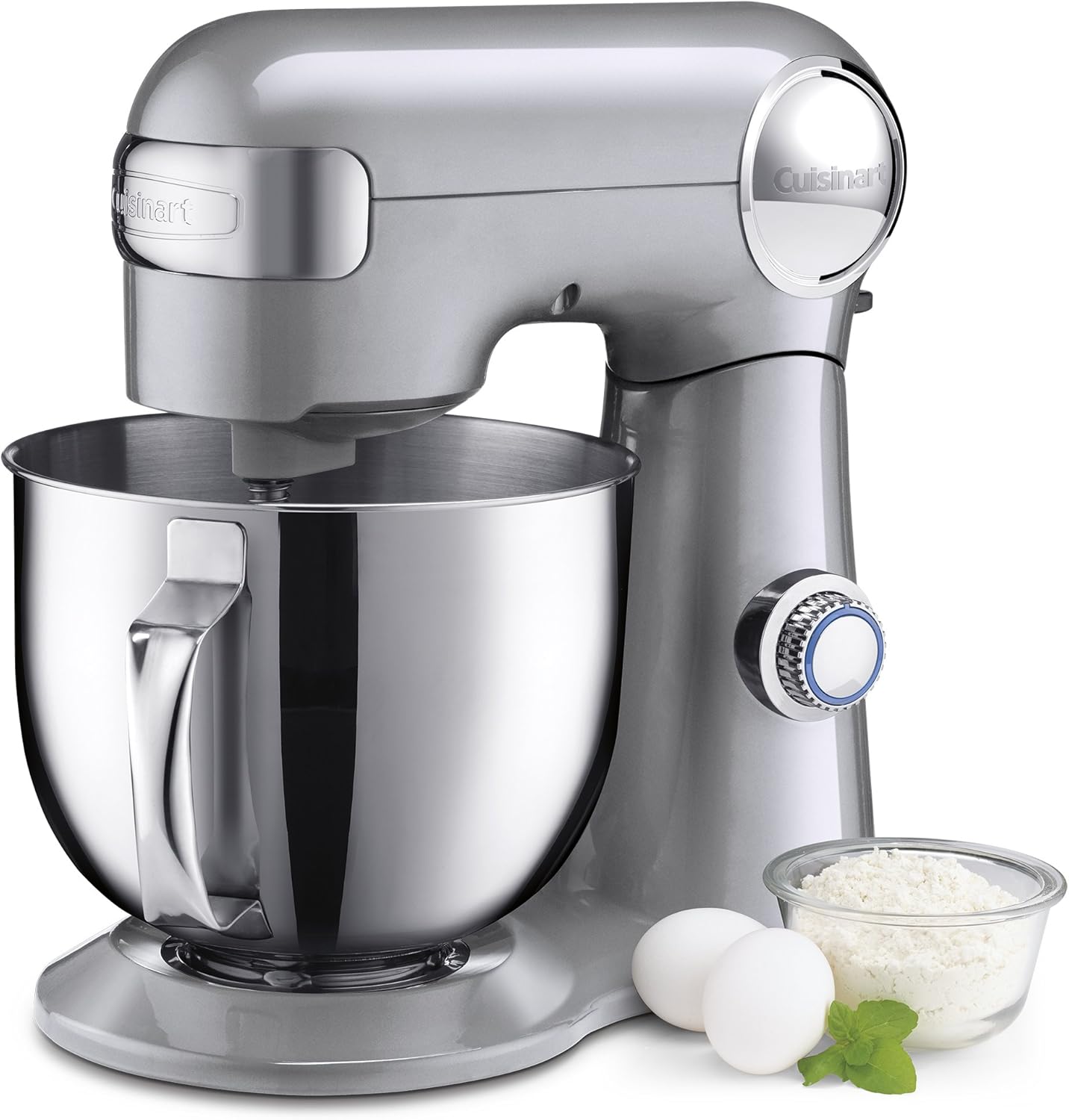
| Best Value The sweet spot between price and what you get | Cuisinart Stand Mixer SM-50BC |  |
| Best Budget The cheapest option that still gets the job done reliably | OLIXIS 4.2 Qt Stand Mixer |  |
| Top Rated A top-rated pick with lots of positive feedback | KitchenAid Artisan 5-Qt Mixer |  |
| Most Popular A crowd favorite that many people choose with confidence | Kitchen in the box 3.2QT Stand Mixer | 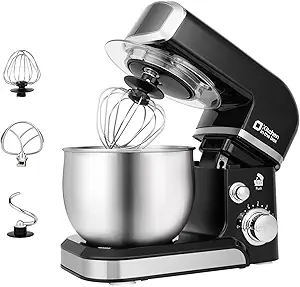 |
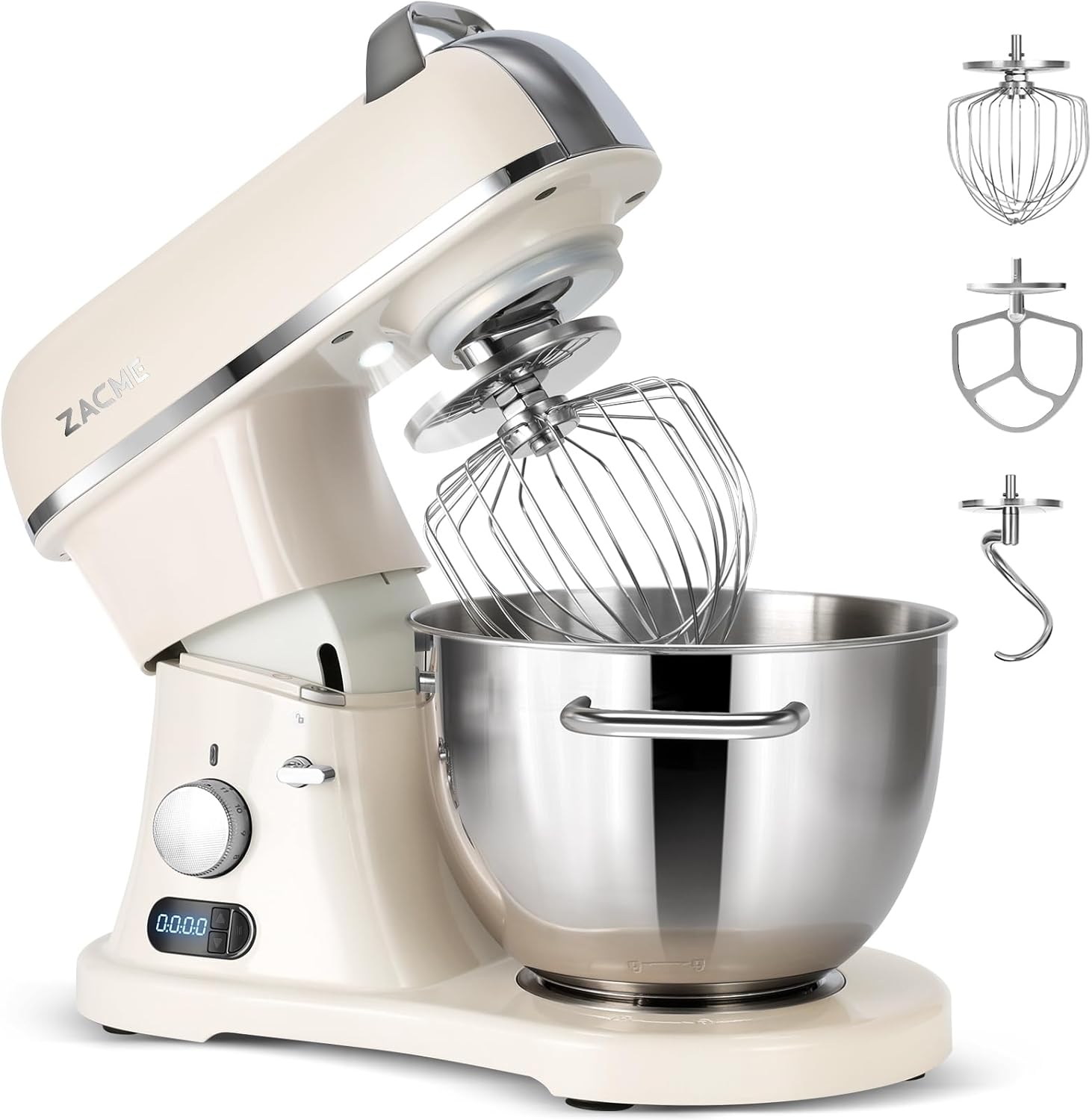
| Best Seller A high-volume bestseller chosen again and again | ZACME 8.4QT Commercial Stand Mixer |  |
KitchenAid Classic Series K45SS

| Capacity | 4.5 quarts |
|---|---|
| Wattage | 275 watts |
| Number of Speeds | 10 |
| Included Components | Flat beater, Dough hook, 6-wire whip, 4.5-qt stainless bowl |
The KitchenAid Classic Series K45SS is a straightforward tilt-head stand mixer built for everyday baking and mixing. It handles common tasks like cookie dough, whipped cream, and small-batch bread dough using a 4.5-quart stainless steel bowl and included flat beater, dough hook, and wire whip. The mixer's 275W direct-drive motor and 10-speed control give enough range for stirring, whipping, and kneading without complicated settings, and the tilt-head design makes adding ingredients and changing attachments easy. Durable all-metal construction and a multipurpose hub let you expand into optional hub-driven attachments such as pasta makers or grinders. Practical benefits include dishwasher-safe beaters and strong beater-to-bowl coverage for thorough mixing. Limitations are the midrange motor power and 4.5-quart capacity, which suit most home bakers but may feel small for very large batches or frequent heavy doughs.
Best for: Home bakers who want a durable, no-frills mixer that handles everyday recipes, occasional larger batches, and can grow with optional attachments.
Less Ideal for: High-volume bakers or commercial kitchens that need a heavier-duty motor and larger bowl capacity for continuous, large-batch production.
- Solid all-metal construction built for long-term home use
- Versatile 10-speed control covers stirring, whipping, and kneading
- Includes stainless steel bowl plus flat beater, dough hook, and wire whip
- Multipurpose hub expands functionality with optional attachments
- 275W motor is adequate for home baking but not designed for continuous heavy industrial workloads
- 4.5-quart capacity may be small for very large batches
Verdict: A dependable, expandable stand mixer that delivers reliable home-bakery performance for most everyday and occasional larger baking tasks.
Bosch Universal Plus Stand Mixer

| Wattage | 500 watts |
|---|---|
| Number of Speeds | 4 |
| Capacity | 6.5 quarts |
| Voltage | 230 volts |
The Bosch Universal Plus is built around a powerful bottom-drive design and 500 W motor that delivers high torque directly into a 6.5-quart bowl, so it easily handles heavy doughs and large batches. It uses suction-cup feet for stability and offers four speeds plus a pulse for precise control when kneading bread, mixing cookie dough, or whipping cream. The included wire whips provide a triple-whip action for fast volume while the heavy-duty dough hook and extender make long kneading sessions manageable. The plastic, dishwasher-safe bowl keeps the unit lightweight and easy to clean, and the removable drive shaft and splash ring help contain messes during high-capacity jobs. Limitations include a manual control layout with only four speeds which may lack fine increments for some delicate tasks, and the plastic bowl and body components are not as premium-feeling as all-metal alternatives, though they help reduce weight. For bakers who need torque and capacity more than a full metal build or many fine-speed steps, this mixer is a strong, practical choice.
Best for: Bakers who prioritize raw mixing power and high-capacity kneading for frequent large batches and artisan bread projects and want a dependable machine that focuses on torque rather than premium metal finishes.
Less Ideal for: If you mostly bake very small batches, require many precise speed increments, or prefer an all-metal aesthetic and heft, a different mixer would be a better fit.
- High-torque bottom-drive motor suitable for heavy bread dough and large batches
- 6.5-quart bowl supports big batches like multiple loaves or dozens of cookies
- Triple-whip dual-wire whips build volume quickly for meringues and whipped cream
- Suction-cup feet provide stable operation during heavy mixing or kneading
- Dishwasher-safe removable bowl, whips, and splash ring for easier cleanup
- Controls limited to four speeds plus pulse so fine speed adjustment is limited
- Bowl and many exterior parts are plastic rather than all-metal, which may feel less durable to some buyers
Verdict: Choose this mixer when you need strong, reliable torque and large-batch capability for serious baking and bread making.
Cuisinart Stand Mixer SM-50BC
| Capacity | 5.5 quarts |
|---|---|
| Wattage | 500 watts |
| Number of Speeds | 12 |
| Voltage | 110 volts |
This Cuisinart SM-50BC stand mixer is a solid midrange machine that brings a 500-watt motor, die-cast metal body, and a 5.5-quart stainless steel bowl together for everyday baking tasks. It is used like most tilt-head mixers: attach the bowl and accessory, select one of 12 speeds with the knob, and let the motor handle mixing, whipping, or kneading. The included chef's whisk, flat paddle, and dough hook cover the basic functions from whipped cream to bread dough, and the splash guard with pour spout helps keep counters cleaner when adding ingredients. Dishwasher-safe bowl and attachments simplify cleanup, and the unit accepts optional attachments such as a pasta roller or meat grinder for expanded capability. Expect reliable power for batter, cookie dough, and small to medium bread batches, though heavy commercial loads will push its limits compared with higher-capacity, higher-power bakery machines. The tilt-head design is convenient for quick bowl access but can feel less stable under the heaviest doughs than bowl-lift designs.
Best for: Bakers who want a reliable, versatile home stand mixer that handles batters, cookies, and small to medium bread batches while offering expandability through optional attachments.
Less Ideal for: Those planning frequent large-scale or commercial baking who need a higher-capacity, more powerful bowl-lift mixer for heavy doughs.
- 500-watt motor and 12 speeds handle a wide range of mixing tasks
- 5.5-quart stainless steel bowl suitable for most home baking batches
- Die-cast metal construction for sturdiness and longer service life
- Includes whisk, flat paddle, dough hook, and splash guard with pour spout
- Accessories and bowl are dishwasher safe for easy cleanup
- Tilt-head design and midrange motor are not ideal for very heavy commercial doughs
Verdict: A sturdy 5.5-quart mixer with enough power and speeds for serious home bakers who want reliable everyday performance and optional attachments for more tasks.
OLIXIS 4.2 Qt Stand Mixer

| Capacity | 4.2 quarts |
|---|---|
| Wattage | 300 watts |
| Number of Speeds | 10 |
| Noise Level | 60 db |
| Voltage | 120 volts |
The OLIXIS 4.2 Qt Stand Mixer is a compact tilt-head mixer aimed at everyday home bakers who want a capable machine without a premium price. It uses a 300W motor and ten speed settings to handle tasks from whipping egg whites to kneading modest batches of dough, and it comes with a stainless steel bowl plus dough hook, flat beater, and whisk so you can start baking immediately. The removable bowl with a splash lid and an all-in-one cover that incorporates measuring and prep tools helps keep the countertop tidy and speeds up setup for recipes. At about 60 dB reported noise, it runs reasonably quietly for its class. Expect good value for routine baking — mixing cakes, cookies, and small loaves — though the 4.2-quart capacity limits very large batches and the 300W motor is not as heavy-duty as higher-end models for prolonged heavy dough work. Controls are simple knob-based speeds, which keeps operation straightforward but lacks digital timers or presets.
Best for: Buyers looking for an affordable, ready-to-use stand mixer that handles everyday baking tasks and saves countertop space while still offering useful speed control.
Less Ideal for: Professional bakers or home cooks who regularly make very large batches or need a high-torque motor for extended heavy dough mixing should consider a larger, more powerful model.
- Includes dough hook, whisk, and flat beater so it is ready to use out of the box
- Ten speed settings provide control from slow kneading to high-speed whipping
- Compact 4.2 qt bowl and removable splash lid save counter space and reduce mess
- Reasonable noise level around 60 dB for home kitchens
- 4.2-quart capacity can be small for larger batches or frequent heavy bread baking
- 300W motor is adequate for home use but less powerful than pro-grade mixers
Verdict: A budget-friendly stand mixer that delivers dependable performance for everyday home baking tasks without the cost of professional models.
KitchenAid Artisan 5-Qt Mixer

| Capacity | 5 quarts |
|---|---|
| Wattage | 325 watts |
| Number of Speeds | 10 |
| Included Components | Stainless steel bowl, flat beater, dough hook, 6-wire whip, pouring shield |
| Voltage | 120 volts |
The KitchenAid Artisan 5-Quart Tilt-Head Stand Mixer is a durable, full-featured mixer built for frequent baking tasks. Its metal construction and 59 bowl touchpoints deliver consistent mixing performance, and the tilt-head design makes it easy to add ingredients or swap attachments. With 10 speeds controlled by a simple knob you can stir, mix, whip, and knead recipes from batters to doughs; the included stainless steel bowl, coated flat beater, coated dough hook, and 6-wire whip cover most everyday bakery needs. The 5-quart capacity handles large batches—KitchenAid states it can mix up to nine dozen cookies using the flat beater—so it is practical for both home bakers and small-batch commercial use. The mixer also accepts a wide range of optional hub-powered attachments for grinding, pasta, or shredding if you want to expand its capabilities. Expect a heavy unit that stays stable under load and offers long-term reliability, though its weight and size mean it is not the easiest to move or store in small kitchens.
Best for: Bakers who prioritize a long-lasting, workhorse machine that reliably handles frequent large batches and can expand with optional attachments.
Less Ideal for: Casual bakers who need a compact, lightweight mixer for occasional use or people who require an ultra-high-torque commercial mixer for very heavy professional workloads.
- Robust metal construction built for long-term use
- Five-quart stainless steel bowl suited for large batches
- Ten speed settings cover stirring, mixing, whipping, and kneading tasks
- Includes standard mixing tools plus a pouring shield for cleaner ingredient additions
- Accepts many optional hub-powered attachments for expanded functions
- Heavy and relatively large, making it less convenient to move or store
- No motor power spec beyond wattage to compare torque for very dense doughs
Verdict: A sturdy, dependable 5-quart mixer that reliably handles large home-bakery batches and adapts to more tasks with optional attachments.
Kitchen in the box 3.2QT Stand Mixer

| Capacity | 3 liters |
|---|---|
| Wattage | 300 watts |
| Number of Speeds | 6 |
| Voltage | 120 |
| Included Components | Whisk, Beater, Dough Hook, Mixing Bowl |
This Kitchen in the box stand mixer is a small, lightweight mixer aimed at 1-2 person households and beginner bakers. It uses a tilt-head design and planetary action to mix batters, whip cream, and knead small amounts of dough, and comes with a stainless steel bowl plus aluminum dough hook, flat beater, and stainless whisk. The six-speed knob gives enough range for folding, whipping, and low-speed dough work, while four suction feet help keep the unit steady during operation. Practical touches include a transparent splatter lid and removable bowl for easier cleaning, and accessories that are dishwasher safe. The mixer is powered at 300 watts, so it handles everyday tasks but is not intended for large batches or heavy commercial use; the product description repeatedly warns the 3.2QT bowl is small and best for light, everyday mixing. Build materials are a mix of ABS plastic with metal attachments, offering a lightweight but less heavy-duty feel compared with larger, higher-wattage appliances. For someone who needs a space-saving, affordable home mixer for occasional breads, cakes, and whipped creams, it is a sensible choice, but serious bakers should opt for a larger-capacity, higher-power machine.
Best for: Buyers seeking an entry-level, space-saving stand mixer for occasional home baking, small batches, and everyday desserts who value easy storage and simple operation backed by broad user feedback.
Less Ideal for: Bakers who regularly make large batches, commercial-scale recipes, or heavy bread doughs should choose a higher-capacity, higher-power mixer instead.
- Compact, lightweight design saves counter and storage space
- Comes with three common attachments: whisk, dough hook, and flat beater
- Six speed settings cover whipping, mixing, and low-speed dough work
- Stainless steel removable bowl and dishwasher-safe accessories simplify cleanup
- Suction feet improve stability during mixing
- 3.2QT bowl is small and not suitable for large batches or frequent heavy doughs
- 300W motor limits performance on stiff doughs and extended heavy use
Verdict: A compact, budget-friendly stand mixer that fits small kitchens and casual bakers who need a reliable machine for light, everyday mixing tasks.
ZACME 8.4QT Commercial Stand Mixer
| Wattage | 800 watts |
|---|---|
| Capacity | 8.4 quarts |
| Number of Speeds | 11 |
| Controls Type | Knob + LCD Panel |
| Voltage | 120 volts |
This ZACME 8.4QT commercial stand mixer is built for heavy mixing tasks and frequent use, combining an 800W DC motor, metal gears, and an aluminum die-cast body to handle large batches reliably. It is typically used for kneading bread dough, whipping cream, and mixing cake batter in family or small bakery settings; the planetary mixing action and included dough hook, flat beater, and wire whip make those jobs hands-free and consistent. The mixer offers 11 speeds, a knob plus LCD panel with a timer, a tilt-head for easy access, and suction feet for stable, low-vibration operation. Practical benefits include a large 8.4-quart stainless bowl that lets you mix up to about 3 kg of dough at once, dual cooling fans to support longer runs, and claimed NSF/ANSI 8 compliance for commercial safety standards. Noise levels are relatively low on the lower speeds, and the metal construction should outlast typical plastic-bodied machines. It is a substantial appliance in weight and footprint, so it requires a dedicated counter space and may be more than needed for occasional bakers.
Best for: Buyers seeking a sturdy, near-commercial mixer for frequent baking or small-batch production who prioritize longevity and consistent performance over compactness.
Less Ideal for: Those who bake only occasionally or who need a lightweight, highly portable mixer for small kitchens should consider smaller consumer models instead.
- Robust aluminum die-cast body and metal gears for commercial-grade durability
- Powerful 800W DC motor with dual cooling fans for extended mixing sessions
- Large 8.4-quart stainless steel bowl suitable for multi-loaf dough or bulk batches
- Digital LED display and timer plus 11 speed settings for precise control
- Includes stainless steel dough hook, flat beater, and wire whip
- Heavy and bulky, requiring significant counter space and effort to move
- Relatively high weight may be overkill for light or occasional home baking
Verdict: Choose this mixer when you need a durable, high-capacity machine built to handle frequent, bakery-style mixing with reliable commercial-grade components.
Choosing the Right Stand Mixer for Bakery: Key Factors to Consider
Motor Torque and Continuous Power
Motor torque is the most important spec for bakery-focused mixing. Heavy bread doughs and large cookie batters demand sustained torque to knead effectively without bogging down. Ratings in watts or horsepower can be a rough guide, but the real indicator is how the mixer performs under load and whether it maintains speed without overheating.
Continuous power delivery matters because bakery tasks often involve extended mixing or multiple consecutive batches. A motor with adequate cooling and robust gearing reduces the risk of thermal cutoff during busy sessions, which preserves dough development and prevents mid-batch interruptions.
Bowl Capacity and Batch Size
Choose a bowl size that matches the quantities you plan to mix. Small bowls are fine for single dozen cookies or small cake batters, but bakery use typically benefits from larger bowls that handle multiple loaves or bigger cookie batches without overflow. Consider both the listed capacity and the realistic usable volume, since full capacity leaves little room for flour or rising.
Think about how often you make multiple batches in a row. Larger bowls reduce the number of cycles and save time, but they also add weight and may require more motor torque to manage dense doughs effectively.
Attachment Compatibility and Versatility
A bakery mixer should support durable, well-designed attachments for mixing, whisking, and dough kneading. Planetary mixing action and robust attachment mounts help ensure even mixing across the bowl. Look for mixers that accept a range of dough hooks, paddle beaters, and whisks that are easy to install and remove.
Versatility matters when you want to expand beyond basic mixing. Some mixers can accept pasta, grinder, or slicer attachments that broaden their utility, but for bakery use prioritize the quality and durability of the core mixing attachments above add-on novelty tools.
Durability, Materials, and Serviceability
Frequent bakery use accelerates wear, so construction materials and internal gearing quality are important. Metal gears and an all-metal stand are more durable than plastic components in high-stress areas. Look for mixers with replaceable parts and accessible service options to extend usable life under heavy rotations.
Also consider how easily common wear items can be replaced, such as bowls, gaskets, or gear housings. Mixers designed with serviceability in mind cost less over time than units that require complete replacement after a few seasons of hard use.
Control Options and Speed Range
Precise speed control affects results for everything from gentle folding of egg whites to aggressive kneading of dense dough. A wide, consistent speed range and smooth transitions between speeds help you reproduce recipes reliably. Look for mixers with incremental speed settings or digital controls if you need repeatable results.
Additional features like timers, soft start, and pulse functions can reduce mess and improve control during tricky steps. For bakery work, a stable low-speed setting for slow dough development and a powerful high-speed setting for whipping are both valuable.
Cleaning and Maintenance
Bakers cycle through many batches, making cleanup a practical concern. Bowl and attachment materials that resist sticking and are dishwasher-safe save time. A mixer design that minimizes crevices where dough collects reduces the time spent scrubbing.
Regular maintenance tasks such as lubricating gears or replacing seals should be straightforward. Consider how easy it is to remove attachments and access the bowl area for cleaning between batches to maintain hygiene and performance.
How Capacity Affects Workflow
Bowl capacity changes how you schedule mixing sessions. A larger bowl lets you mix bigger batches in a single cycle, which reduces total hands-on time and oven load balancing. However, it also demands more from the motor when processing dense doughs.
Smaller bowls are lighter to handle and may be quicker to clean, but they force more cycles when producing bakery quantities. Match bowl size to your most common recipes rather than the absolute maximum you might occasionally make.
- Larger bowls reduce the number of batches but need stronger motors.
- Real-world usable volume is usually less than the listed maximum.
- Think about storage and lifting when selecting larger bowls.
Noise, Heat, and Long Sessions
Performance during long mixing sessions involves more than raw power. Heat buildup can throttle motors and shorten runs, so mixers with better cooling and more efficient gearing perform more consistently in bakery settings.
Noise level is another practical factor. Louder mixers are not inherently worse, but sustained noise can be fatiguing during long baking days. If you bake early or late, consider how sound level affects your environment.
- Look for mixers rated for continuous or extended duty cycles for heavy use.
- Check ventilation and motor cooling design to avoid thermal cutoff.
- If possible, test the mixer at high load to evaluate noise and heat.
Accessories That Actually Help Bakers
Not all attachments are equally useful for bakery tasks. Dough hooks and sturdy paddles are essential, while some specialty attachments offer limited value for routine bread and pastry production. Focus on the quality and fit of primary attachments.
Consider whether the mixer supports multiple bowl styles or accessory systems that simplify ingredient handling and portioning. Well-designed splash guards, pouring shields, and scraper paddles reduce mess and improve yield.
- Prioritize heavy-duty dough hooks and a whisk for meringues and creams.
- Splash guards and pouring shields cut cleanup time and reduce loss.
- Interchangeable bowls or guards can speed batch changes and scaling.
Counter Footprint and Storage
Stand mixers take significant counter space and are typically heavy. Think about where the mixer will live in your kitchen and whether it needs to be moved frequently. A permanently stationed mixer can be larger and heavier, whereas a unit that must be stowed after use should be compact and easier to lift.
Storage considerations also include how attachments are stored and whether the mixer fits under cabinets when tilted. These practical details influence daily usability more than headline specs.
- Measure countertop area and cabinet clearance before choosing a size.
- Plan for accessory storage to keep frequently used parts accessible.
- Consider weight if you need to move the mixer for cleaning or storage.
Power Source Considerations
Most stand mixers run on standard household power, but motor characteristics and rated voltage can impact performance. If you plan heavy bakery use, ensure your kitchen circuit can handle prolonged motor draws without tripping breakers.
For commercial or gallery-style kitchens, consult an electrician about dedicated circuits for heavy equipment. For home bakers, spreading large runs across different times of day reduces the chance of circuit overload.
- Check your kitchen circuit rating if you frequently run multiple appliances.
- Avoid running high-load mixers simultaneously with other heavy-draw devices.
- Consider motor efficiency and duty cycle for extended use.
How We Chose the Best Stand Mixer for Bakery
We evaluated models against bakery-specific needs, focusing on concrete performance and durability metrics that matter for repeated dough and batter work. Key criteria included motor torque and continuous power delivery to handle dense bread doughs without overheating; usable bowl capacity and accessory compatibility to match typical batch sizes; build quality and gearing materials that determine long-term reliability under heavy use; ease of cleaning and maintenance for fast turnaround between batches; and control precision including speed settings and pulse capability for repeatable results. We excluded compact hobby mixers that lack the torque or bowl volume required for bakery-sized batches. We also excluded units with poor serviceability or limited accessory ecosystems, because those constraints shorten useful life in regular baking use. Our selections favor mixers that balance sustained power and usable capacity with user-friendly cleaning and controls, ensuring each pick is suited to the labor of bakery-style mixing rather than occasional home use.
Our full evaluation process is outlined in our review methodology.
FAQ
What mixer motor power is best for heavy bread doughs?
For heavy bread doughs, prioritize high torque and a motor rated for sustained use rather than just peak wattage. Look for mixers with robust gearing and duty-cycle specifications that indicate the unit can run for longer mixing times without thermal cutoff.
How much bowl capacity do I need for small bakery batches?
For small bakery batches, a bowl that comfortably holds 4 to 6 quarts is often sufficient for single loaves or small cookie runs. If you routinely make multiple loaves or larger batches, consider a larger bowl to avoid repeated cycles.
Are metal gears worth it for frequent bakers?
Yes. Metal gears and an all-metal drivetrain typically last longer under the stress of frequent mixing and heavy doughs. They add weight and cost but reduce wear and the need for repairs over time.
Can I use a stand mixer for both dough and delicate batters?
Most bakery-capable stand mixers can handle both dense doughs and delicate batters if they offer a wide, stable speed range and smooth control. Use low speeds for folding and slow dough development, and faster speeds for whipping where needed.
How should I maintain a mixer used for bakery production?
Regularly clean bowls and attachments after each use, inspect seals and gear housings for buildup, and follow the manufacturer's maintenance schedule for lubrication or parts replacement. Address unusual noises or performance drops early to prevent larger failures.
Final Verdict
For bakery-focused mixing, prioritize motor torque, usable bowl capacity, and durable construction over cosmetic features. Those elements determine whether a mixer can handle dense doughs, multiple batches, and the wear of frequent use. Balance capacity with the motor and consider ease of cleaning and attachment quality to keep your workflow efficient. Ultimately choose a mixer that matches your typical batch sizes and mixing intensity. For regular bakery work, err on the side of sturdier construction and serviceability to reduce downtime and maintain consistent results over time.