
Note: This article contains affiliate links. If you click on these links and make a purchase, we may earn a small commission at no extra cost to you. This helps support our research and content. Read our full affiliate disclosure here.
If you bake cakes regularly, the right stand mixer makes a big difference in texture, crumb structure, and overall consistency. A mixer built for cake work should handle batters without overworking them, reach into bowls cleanly to avoid lumps, and be easy to clean between recipes. This guide shortlists the top stand mixers for cakes across common home baking needs, focusing on power delivery, bowl capacity, and accessory versatility. Read on for practical notes about how each option addresses cake-specific tasks and the evaluation criteria we used to pick them.
Top Picks at a Glance
| Best Overall The best all-around choice for most situations | Cuisinart Stand Mixer SM-50BC |  |
| Best Quality Built to a higher standard if you want something more solid | KitchenAid Classic Series K45SS 4.5-Qt |  |
| Best Value The sweet spot between price and what you get | Hamilton Beach 4-Quart Stand Mixer |  |
| Best Budget The cheapest option that still gets the job done reliably | Max Life Stand Mixer ML-6638 |  |
| Top Rated A top-rated pick with lots of positive feedback | KitchenAid Artisan 5-Qt Stand Mixer |  |
| Most Popular A crowd favorite that many people choose with confidence | Dash Everyday Stand Mixer |  |
| Best Seller A high-volume bestseller chosen again and again | Kitchen in the box 3.2QT Stand Mixer | 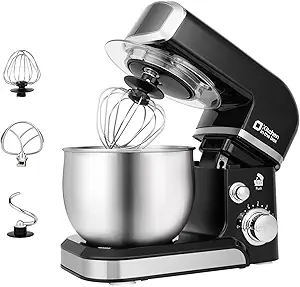 |
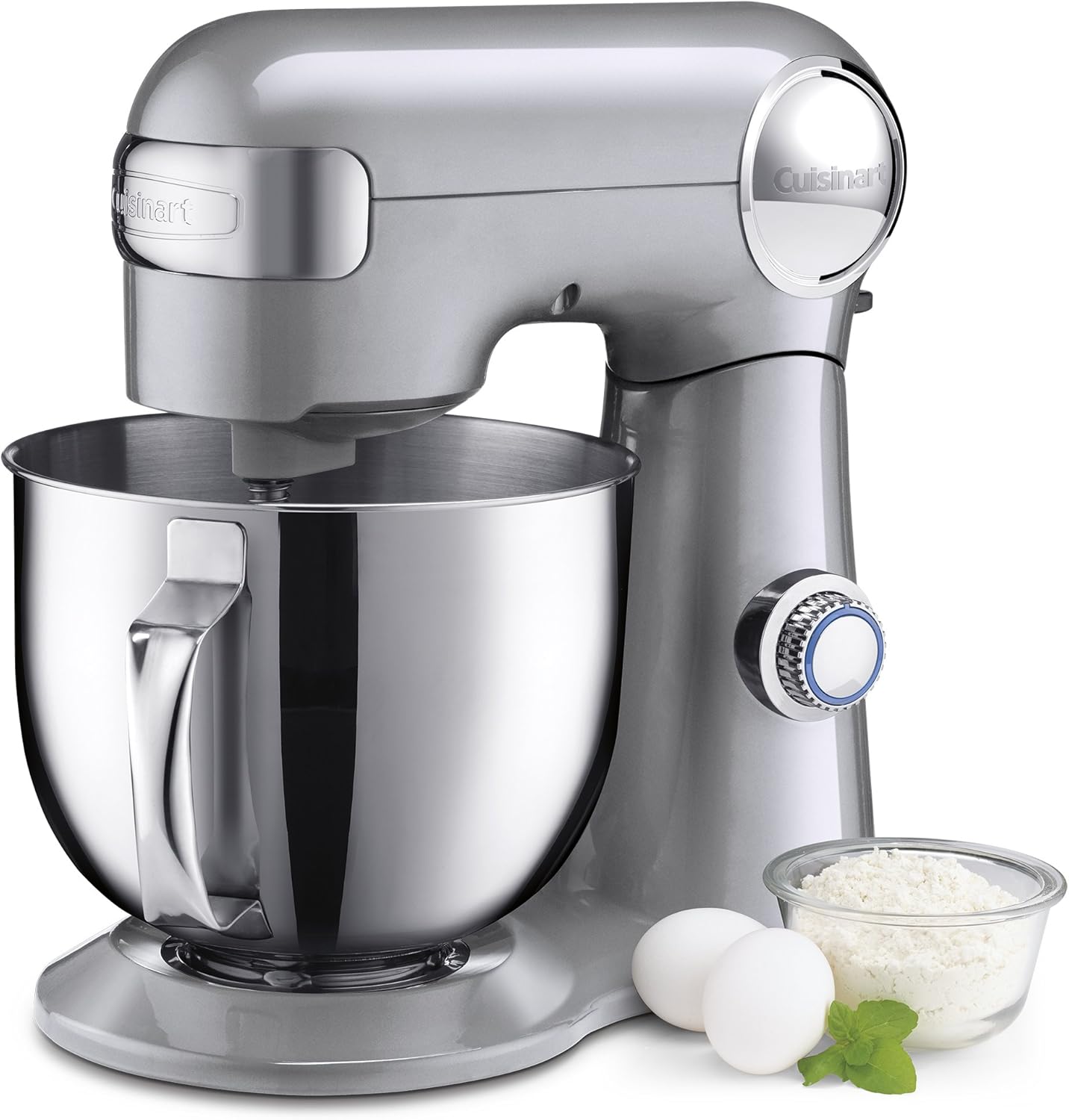
Cuisinart Stand Mixer SM-50BC
| Capacity | 5.5 quarts |
|---|---|
| Wattage | 500 watts |
| Number of Speeds | 12 |
| Voltage | 110 volts |
The Cuisinart SM-50BC is a straightforward tilt-head stand mixer designed for everyday baking and mixing tasks. With a 500-watt motor and 12 speed settings it handles everything from whipping egg whites to kneading dough, and the 5.5-quart stainless steel bowl gives enough capacity for typical cake batters and medium batches. The mixer ships with a chef's whisk, flat paddle, dough hook and a splash guard with pour spout, and the tilt-back head makes tool changes and bowl access easy. Die-cast metal construction and dishwasher-safe accessories add durability and convenience, and the knob control is simple to use. Limitations include a single standard power outlet for attachments rather than built-in accessory drives and a tilt-head layout that can be less stable for very heavy doughs compared with some bowl-lift designs. For typical home cake baking it offers dependable performance and enough power and capacity for layered cakes and frequent use.
Best for: Home bakers who want a reliable, easy-to-use mixer for cakes, frostings and regular baking without upgrading to a professional commercial machine.
Less Ideal for: Bakers who routinely mix very large batches or dense bread doughs and prefer the extra stability of a bowl-lift or commercial-grade mixer.
- 500-watt motor with 12 speeds for versatile mixing tasks
- 5.5-quart stainless steel bowl suits cake batters and medium batches
- Includes whisk, flat paddle, dough hook and splash guard with pour spout
- Die-cast metal construction and dishwasher-safe accessories for durability and easy cleanup
- Tilt-head design can be less steady than bowl-lift mixers for very heavy doughs or very large batches
Verdict: A dependable, mid-capacity stand mixer that delivers the power and attachments most home cake bakers need.
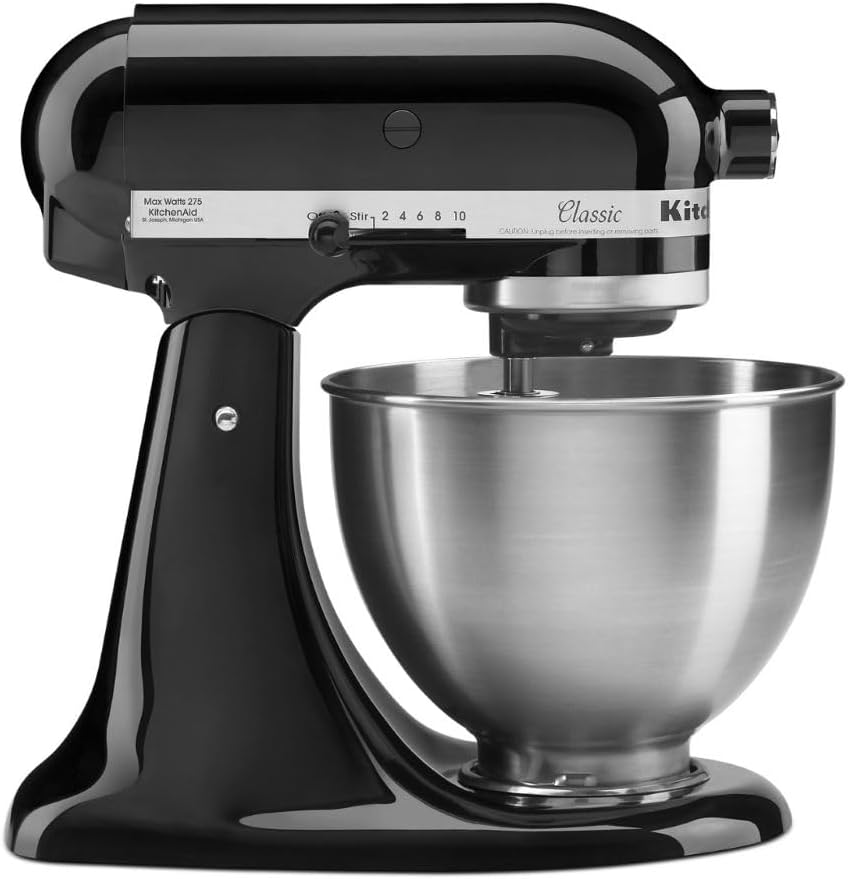
KitchenAid Classic Series K45SS 4.5-Qt
| Capacity | 4.5 quarts |
|---|---|
| Wattage | 275 watts |
| Number of Speeds | 10 |
| Included Components | Flat beater, dough hook, 6-wire whip |
The KitchenAid Classic Series K45SS is a compact, metal-constructed tilt-head stand mixer intended for routine home baking and cake preparation. It pairs a 4.5-quart stainless steel bowl with a 275-watt motor and 10 speed settings to handle mixing, whipping, and light to medium dough kneading. The package includes a coated flat beater, coated dough hook, and a 6-wire whip, which cover common cake tasks from batter mixing to whipping frosting. The tilt-head makes adding ingredients and changing attachments simple, and the mixer is compatible with KitchenAid power hub attachments if you want to expand into pasta or grinding later. Its smaller bowl is convenient for most cake batters and fits easily on counters, but heavier, very dense bread doughs will load the motor more than larger, higher-capacity models. For bakers focused on cakes, the machine delivers consistent mixing and user-friendly controls, though pros who regularly make very large batches or heavy doughs may prefer a higher-capacity, higher-power model.
Best for: Home bakers who prioritize reliable, consistent mixing for cakes and batters and want a compact, durable mixer that handles everyday batches well.
Less Ideal for: Commercial bakers or hobbyists who routinely mix very large batches or heavy bread doughs should choose a larger, more powerful model instead.
- Durable metal construction for long-term use
- 10 speed settings for precise control across tasks
- Includes flat beater, dough hook, and wire whip for common cake jobs
- 4.5-quart stainless steel bowl suits typical cake batters and frosting
- 275-watt motor is modest for very heavy or commercial-scale doughs
Verdict: A durable, user-friendly stand mixer built for consistent cake batters and everyday home baking.
Hamilton Beach 4-Quart Stand Mixer

| Capacity | 4 quarts |
|---|---|
| Wattage | 300 watts |
| Number of Speeds | 7 |
| Controls Type | Knob |
This Hamilton Beach stand mixer is a practical entry-level machine for home bakers who make cakes, cookies, and occasional bread. The 300-watt motor and planetary mixing action give thorough bowl coverage for even batter mixing, and the included 4-quart stainless steel bowl handles typical cake batters and layer-cake-sized batches. Controls are simple: a seven-speed knob with a deliberately slow first speed to cut splatter and help with kneading. You get the essentials out of the box — whisk, flat beater, dough hook and a splash guard — and most attachments and the bowl are dishwasher safe for quick cleanup. It is compact enough to store or move using the built-in carry handle, but the 4-quart capacity means it is best for small to medium batches rather than very large multi-layer cakes. The unit is straightforward and dependable for everyday baking, though serious bakers making frequent large batches may prefer a heavier-duty, higher-powered model.
Best for: Home bakers who prioritize a reliable, easy-to-use mixer for everyday cake batters and moderate baking sessions and who value straightforward features and easy cleanup.
Less Ideal for: People who regularly bake very large batches, multi-layer professional cakes, or who need a high-torque commercial-style mixer.
- Planetary mixing action for even coverage and consistent batter mixing
- Seven speeds including a slow first speed to reduce splatter and aid kneading
- Includes stainless steel bowl, whisk, flat beater, dough hook, and splash guard
- Dishwasher-safe bowl and attachments for easy cleanup
- Compact design with built-in handle for easy moving and storage
- 300-watt motor may struggle with very heavy doughs or very large batches
- 4-quart capacity limits batch size for multi-layer or large celebration cakes
Verdict: A straightforward, space-conscious stand mixer that reliably handles everyday cake batters and moderate baking tasks with easy cleanup.
Max Life Stand Mixer ML-6638

| Wattage | 150 watts |
|---|---|
| Capacity | 3.2 quarts |
| Number of Speeds | 5 |
| Voltage | 120 |
The Max Life ML-6638 is a budget-focused stand mixer aimed at home bakers who need a straightforward machine for cakes, batters, and light doughs. It pairs a real 150W motor with five speed settings and a 3.2-quart stainless steel bowl, so you can mix cake batters, whip cream, and knead modest quantities of dough without fuss. The unit includes detachable beaters and dough hooks with a beater ejection button for easier swapping, and its stainless bowl and removable attachments are easy to clean. Practical touches like overheat protection and ETL safety certification make it feel reliable for regular kitchen use. On the downside, the 150W motor limits heavy-duty kneading or very large batches, and the compact size means serious bakers making frequent big loaves or multi-dozen cupcakes may outgrow it. For simple cake recipes and everyday baking, it delivers solid value and predictable results at a low price point.
Best for: Home bakers who want an affordable, no-frills stand mixer for cakes, cupcakes, and everyday batters and who prioritize value over heavy-duty commercial performance.
Less Ideal for: Serious bakers who regularly mix large-volume doughs, frequent bread bakers, or anyone needing advanced features and high-capacity performance.
- Real 150W motor optimized for efficient mixing despite modest wattage
- Five speed settings for control across mixing, beating, and kneading tasks
- 3.2-quart stainless steel bowl suitable for typical cake batters and household batches
- Detachable beaters and dough hooks with ejection button for easier attachment changes and cleaning
- Built-in overheat protection and ETL safety certification
- Motor power and capacity are limited for heavy or very large doughs
- Basic controls with push buttons lack advanced features like timers or presets
Verdict: A budget-friendly stand mixer that reliably handles cake batters and everyday baking tasks without extra frills.
KitchenAid Artisan 5-Qt Stand Mixer

| Capacity | 5 quarts |
|---|---|
| Wattage | 325 watts |
| Number of Speeds | 10 |
| Voltage | 120 |
The KitchenAid Artisan 5-Quart Tilt-Head Stand Mixer is a durable, all-purpose mixer built for frequent home baking and small-batch production. Its metal construction and robust motor deliver reliable mixing across 10 speeds, from slow stir to high-speed whipping, and the tilt-head design makes adding ingredients and swapping attachments straightforward. The polished stainless steel 5-quart bowl handles large cake batters and up to nine dozen cookie batches, and the comfortable handle plus dishwasher-safe finish make cleanup easier. The mixer accepts hub-powered attachments for tasks like grinding or making pasta, expanding its usefulness beyond baking. Practical limitations include its tilt-head layout, which can be less stable than bowl-lift designs for very heavy doughs, and the unit is fairly heavy to move. For cake bakers the consistent speed control and roomy bowl translate to even creaming and reliable aeration, producing better texture in batters and frostings.
Best for: Bakers who prioritize a reliable, long-lasting mixer for regular cake and batter work and who value straightforward controls and easy bowl access.
Less Ideal for: Home cooks who need a lighter, more portable mixer or who regularly mix very heavy, high-volume doughs requiring a bowl-lift design should consider alternatives.
- Solid metal construction designed for long-term use
- 10-speed knob control for precise mixing from stir to whip
- 5-quart stainless steel bowl handles large cake batters and batches
- Tilt-head design gives easy access to the bowl and attachments
- Compatible with hub-powered attachments to expand functions
- Tilt-head format can be less stable with very heavy doughs compared with bowl-lift mixers
- Relatively heavy unit makes it less convenient to move between workspaces
Verdict: Choose this mixer if you want a dependable, heavy-duty stand mixer that delivers consistent mixing and handles cake batters and frequent home baking with ease.
Dash Everyday Stand Mixer

| Capacity | 3 liters |
|---|---|
| Number of Speeds | 6 |
| Wattage | 220 watts |
| Voltage | 110 volts |
The Dash Everyday Stand Mixer is a lightweight, space-saving tilt-head mixer built for routine baking tasks like mixing cake batter, whipping cream, and kneading small doughs. It includes a 3-quart stainless steel bowl, two dough hooks, and two beaters, and the six-speed knob control gives predictable results from slow folds to higher-speed whipping. The mixer is easy to use for home bakers: the tilt head lets you add ingredients and swap attachments quickly, and the removable bowl and attachments are dishwasher safe for simple cleanup. At 220 watts it handles typical cake batters and frosting, though very large batches or heavy, long kneading sessions may push its limits compared with full-size, higher-powered machines. Its compact footprint and lighter metal construction make it convenient for small kitchens or for bakers who want an always-ready countertop mixer without taking much space.
Best for: Home bakers who want an inexpensive, countertop-friendly mixer for everyday cake batters, frostings, and small doughs and who value ease of use and quick cleanup.
Less Ideal for: Bakers who regularly mix very large batches, heavy breads, or need a heavy-duty mixer for commercial or high-volume use should choose a more powerful, full-size model.
- Compact tilt-head design that fits easily on most countertops
- Includes 3-quart stainless steel bowl and common attachments for cakes and dough
- Six speed knob offers simple, reliable control from folding to whipping
- Dishwasher-safe bowl and attachments simplify cleanup
- 220-watt motor may struggle with very large batches or heavy doughs
- Lightweight construction is less robust than full-size professional mixers
Verdict: A compact, easy-to-use stand mixer well suited for home bakers making cakes and everyday recipes who want a space-saving, beginner-friendly appliance.
Kitchen in the box 3.2QT Stand Mixer

| Capacity | 3.2QT |
|---|---|
| Wattage | 300 watts |
| Number of Speeds | 6 |
| Included Components | Whisk, Beater, Dough Hook |
This Kitchen in the box 3.2QT stand mixer is a compact countertop mixer aimed at small households and beginner bakers. It uses a tilt-head design and planetary mixing to handle tasks like whipping cream, beating batters, and kneading small batches of dough, and it ships with an aluminum dough hook, flat beater, and stainless steel whisk. The unit has six speed settings and four suction feet to keep it steady during mixing, and a transparent splash guard helps control mess when working with wetter batters. At 300 watts and a 3.2QT bowl the mixer is space-saving and lightweight, so it is easy to store and move but it is intentionally sized for 1 to 2 people or small cake recipes rather than large batches. Accessories are reported dishwasher-safe which simplifies cleanup, though the small bowl means you may need to split recipes when making layer cakes for more servings. For buyers who need a compact, no-frills mixer for everyday cakes and desserts, it offers sensible functionality; those needing heavy-duty or pro-level capacity should look at larger models.
Best for: Bakers who prioritize a compact, easy-to-store mixer for small cake recipes and everyday dessert prep and who prefer a simple, dependable appliance over pro-level capacity.
Less Ideal for: Households that regularly bake large cakes, multiple-layer batches, or frequently work with very heavy doughs should opt for a larger, higher-powered mixer.
- Compact, lightweight design saves counter and storage space
- Includes three common attachments: whisk, flat beater, and dough hook
- Six speed settings let you handle whipping, mixing, and light kneading
- Transparent splash guard reduces mess when mixing wet batters
- Dishwasher-safe accessories simplify cleaning
- 3.2QT bowl is small for multi-layer or large cake batches
- 300W motor may struggle with very heavy or dense doughs
Verdict: If you want a space-saving, beginner-friendly stand mixer for small cakes and everyday desserts, this 3.2QT Kitchen in the box model delivers practical performance in a compact package.
Choosing the Right Stand Mixer for Cakes: Key Factors to Consider
Mixing Power and Speed Control
Mixing power and precise speed control matter because cake batters range from thin sponge batters to thick buttercreams. Too much power at the wrong speed can overdevelop gluten or cause aeration problems, producing tough cakes or large air pockets.
Look for mixers with smoothly variable speeds and a low crawl speed for gentle folding, plus higher settings for whipping egg whites and aerating batters. Consistent power under load ensures the mixer holds speed when you add heavier ingredients like sugar or melted butter, which helps maintain predictable results from batch to batch.
Bowl Capacity and Shape
Bowl capacity affects how much batter you can mix at once and whether the beater reaches all ingredients. For home bakers, a range of 4 to 6 quarts covers most needs, while larger capacity is helpful for party-sized or layer-cake batches.
The bowl shape also matters: rounded interiors encourage ingredients to be pulled into the beater, reducing unmixed pockets. Consider whether you prefer tilt-head or bowl-lift designs, as each affects how easy it is to access the bowl and add ingredients during mixing.
Attachment Compatibility and Versatility
A good mixer for cakes should support a whisk for aeration, a flat beater for creaming, and a paddle or flexible beater for folding. Attachment compatibility expands what you can do without switching appliances, enabling everything from meringues to dense buttercreams.
Check whether the mixer accepts standard attachments and whether optional accessories are available for tasks like pouring ganache or mixing small batches. Versatility reduces the need for extra handheld tools and makes the mixer a more central part of your baking workflow.
Ease of Cleaning and Maintenance
Cake batter and frosting are sticky and can accumulate in hard-to-reach places. Mixers with removable, dishwasher-safe bowls and attachments make cleanup faster and more hygienic.
Smooth finishes and minimal crevices on the head and attachment hubs reduce buildup. Consider how easy it is to detach the head or lift the bowl for access, and whether seals or exposed gears require periodic maintenance.
Stability and Noise
Stability matters during mixing because vigorous whisking or heavy batters can cause slower machines to walk across the counter. Heavier bases, suction feet, or rubberized pads help keep the mixer steady, which improves mixing consistency and reduces interruptions.
Noise level is also relevant for home use. Quieter machines let you bake without disrupting conversation or a quiet household, and tend to indicate smoother motor operation. Look for solid construction and secure mounting to balance power with low vibration and sound.
Build Quality and Expected Longevity
Build quality influences how long a mixer will perform reliably under regular cake-baking demands. Metal gearings, sturdy drive systems, and durable housing typically last longer than lighter, all-plastic designs.
Consider warranty coverage and the availability of replacement parts. A well-made mixer will maintain consistent mixing behavior over years of use, which is important if you bake frequently or prepare large batches.
Tilt-Head Vs Bowl-Lift Designs
Tilt-head and bowl-lift mixers both get the job done for cakes, but they offer different handling experiences. Tilt-head designs make it easy to access the bowl and change attachments quickly, which is convenient for small to medium batches and for home bakers who frequently swap tools.
Bowl-lift models often provide slightly better stability and are preferred for heavier loads because the bowl locks into place under the head. If you plan to mix larger cake batters regularly, a bowl-lift mixer can feel steadier, while a tilt-head is often lighter and easier to store.
- Tilt-head: quick access, typically lighter
- Bowl-lift: better stability with large volumes, often more robust
Attachments That Matter for Cake Baking
For cake work, some attachments are indispensable. A balloon whisk is essential for whipping air into egg whites and light batters. A flat beater or paddle is the workhorse for creaming butter and sugar and for most hybrid batters.
Flexible or silicone-edged beaters help scrape the bowl during mixing and reduce the need to stop and manually scrape. Some mixers accept optional specialty beaters that improve folding or handle sticky frostings more cleanly.
- Balloon whisk for aeration
- Flat beater for creaming
- Flexible paddle for folding and scraping
Preventing Overmixing and Achieving Proper Texture
Overmixing is a common reason cakes turn out dense or gummy. Use low speeds for initial ingredient incorporation and switch to higher speeds only when the recipe calls for aeration. Stand mixers can save time but also accelerate gluten development if used too aggressively.
Pulse or brief mixing at high speed for tasks like whipping, and rely on the lowest speed for folding in dry ingredients. Pay attention to visual cues in the batter rather than relying solely on time.
- Start slow for dry ingredient incorporation
- Use high speeds only for whipping or aeration
- Watch batter texture instead of the clock
Cleaning Tips for Cake-Focused Use
Clean attachments immediately after use to prevent sugar and fats from hardening. Most commonly used beaters and bowls are dishwasher-safe, but wiping and hand-drying can extend finish life and prevent spotting.
Wipe the mixer head and attachment hubs after every use to stop frosting build-up. Periodically inspect seals or exposed gears and follow manufacturer maintenance suggestions to keep the drive mechanism working smoothly.
- Soak sticky attachments before washing
- Wipe crevices and hubs after each use
- Dry thoroughly to prevent corrosion
Power Requirements and Kitchen Placement
Consider the motor size and the electrical demands of the mixer if you plan to use it frequently. Higher-powered motors handle dense mixes better and maintain speed under load, but may draw more current during heavy use.
Plan where the mixer will live on your countertop. A dedicated station with good clearance makes frequent use easier. Account for cord length and storage if you intend to tuck the mixer away between bakes.
- Higher power for dense batters
- Ensure a stable, accessible countertop spot
- Check cord length for convenient placement
How We Chose the Best Stand Mixer for Cakes
We evaluated stand mixers for cakes using criteria that reflect real-world baking needs. First, mixing power and speed control were prioritized because cake batters require gentle but consistent mixing across a range of viscosities. Bowl capacity and shape were included next to ensure the mixer can handle everything from single-layer sponge batters to large layer or bundt recipes. We measured attachment compatibility and accessory usefulness to ensure the mixer can perform whisking, folding, and low-speed creaming without needing specialty parts. Ease of cleaning and maintenance mattered because sticky batters and frosting residue are common and slow to remove. Finally, build quality and durability indicators were considered to predict long-term reliability for frequent bakers. We excluded units that were designed primarily for heavy dough work rather than delicate cake batters, as well as handheld-only mixers that lack the stability and power profile needed for consistent cake results. Our shortlist favors mixers that balance controlled power with gentle handling, adaptable bowl sizes, and straightforward cleaning procedures. These are the dimensions that informed selection and that shoppers should weigh when choosing a mixer for cakes.
Our full evaluation process is outlined in our review methodology.
FAQ
What bowl size is best for baking layer cakes?
For typical layer cakes, a bowl between 4 and 6 quarts handles most recipes comfortably. Larger bowls make it easier to mix multiple batches or larger single-batch recipes without splashing, while smaller bowls are fine for single-layer or small family recipes.
Can a stand mixer overmix cake batter?
Yes, a stand mixer can overmix cake batter if used at too-high a speed or for too long. To avoid this, combine ingredients slowly, use the lowest speed for folding, and stop as soon as the batter looks homogenous and smooth according to the recipe cues.
Do I need special attachments to make frosting?
Not usually. A flat beater or paddle works well for most frostings, and a whisk is useful for lighter, whipped frostings. Flexible paddles help manage sticky, butter-heavy frostings and reduce the need to stop and scrape the bowl frequently.
How often should I service my stand mixer?
Service needs vary with use, but periodic checks every year or two are sensible for frequent bakers. Inspect attachments, drive couplings, and seals for wear and follow any recommended maintenance from the manufacturer to keep the mixer running smoothly.
Are tilt-head mixers less durable than bowl-lift models?
Tilt-head and bowl-lift mixers both can be durable depending on construction. Bowl-lift designs often feel more stable under heavy loads, but build material and gearing quality are better indicators of longevity than hinge style alone.
Final Verdict
When choosing a stand mixer for cakes, prioritize smooth, controllable power and a bowl size that fits the batches you bake most often. Attachment compatibility and ease of cleaning will save time and expand the range of cake techniques you can perform reliably. Consider stability and build quality if you frequently mix larger volumes or heavier batters. Balance these tradeoffs to pick a mixer that supports your baking style and frequency, and you will get consistently better cake results.