
Note: This article contains affiliate links. If you click on these links and make a purchase, we may earn a small commission at no extra cost to you. This helps support our research and content. Read our full affiliate disclosure here.
Choosing the right stand mixer for bread matters because mixing and kneading are the foundation of reliable dough structure and consistent bakes. A purpose-suited mixer reduces manual work, shortens proofing variability, and helps you hit predictable results from batch to batch. This guide covers our shortlist of the top stand mixers for bread, selected for their dough-handling power, useful bowl sizes, and durable dough-hook designs. Below you will find the practical evaluation criteria we used and clear explanations to help you match a mixer to the volume and types of bread you plan to bake.
Top Picks at a Glance
| Best Overall The best all-around choice for most situations | Cuisinart Stand Mixer SM-50BC |  |
| Best Quality Built to a higher standard if you want something more solid | KitchenAid Artisan 5-Qt Mixer |  |
| Best Value The sweet spot between price and what you get | CUSIMAX Stand Mixer 5-Quart |  |
| Best Budget The cheapest option that still gets the job done reliably | Kitchen in the box 3.2QT Stand Mixer | 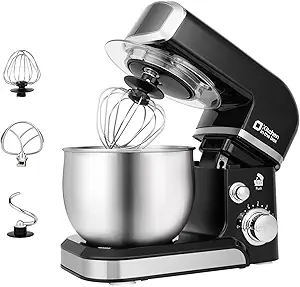 |
| Top Rated A top-rated pick with lots of positive feedback | KitchenAid Classic Series K45SS |  |
| Most Popular A crowd favorite that many people choose with confidence | Dash Everyday Stand Mixer |  |
| Best Seller A high-volume bestseller chosen again and again | Aucma Stand Mixer 6.5QT |  |
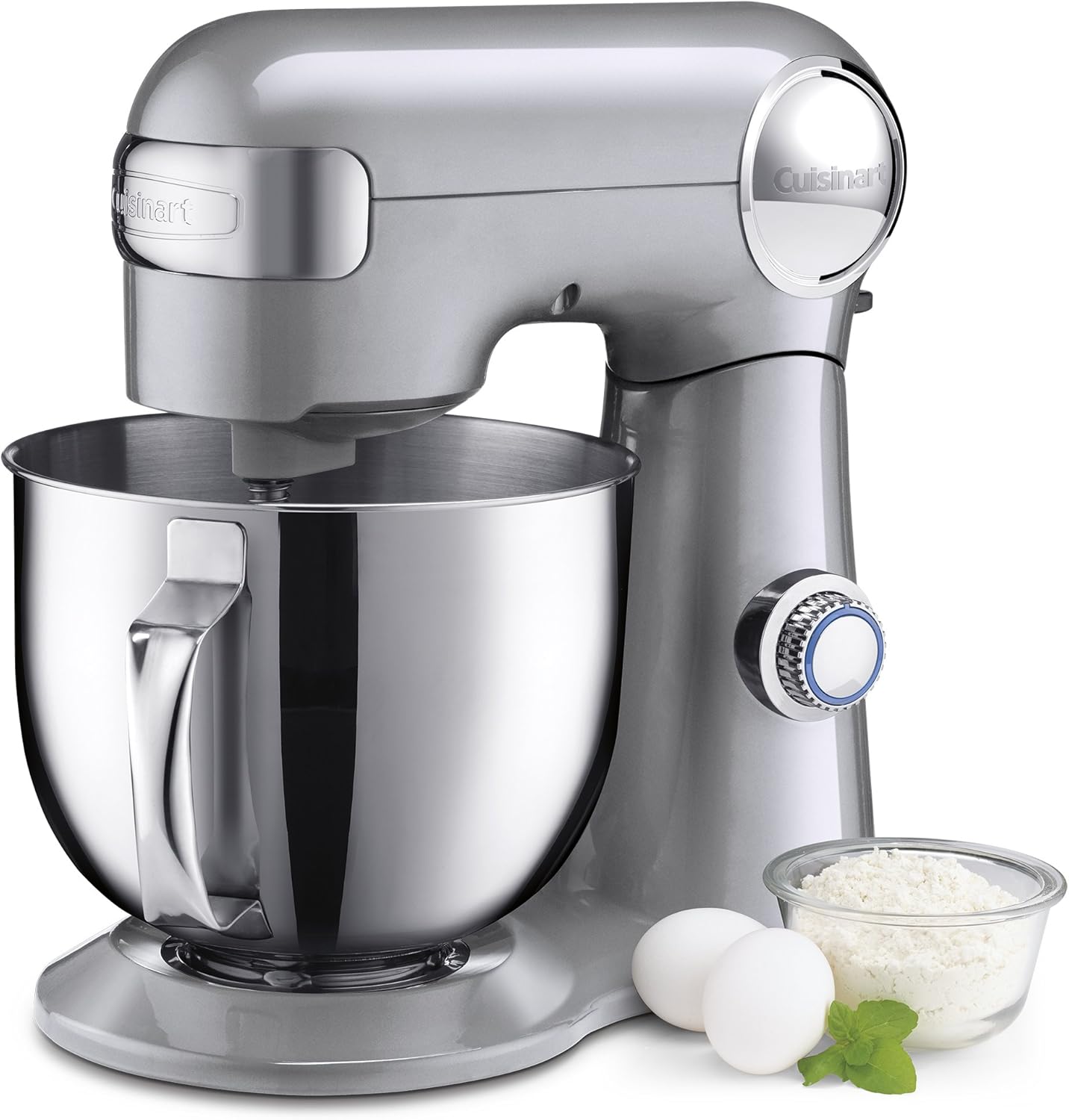
Cuisinart Stand Mixer SM-50BC
| Capacity | 5.5 quarts |
|---|---|
| Wattage | 500 watts |
| Number of Speeds | 12 |
| Controls Type | Knob |
| Container Material | Stainless Steel |
The Cuisinart SM-50BC is a metal-bodied stand mixer built for everyday baking and dough work. Its 500‑watt motor and 12 selectable speeds give you the control to mix gently for batters or increase power for kneading heavier doughs, while the tilt‑back head makes changing attachments and the 5.5‑quart stainless steel bowl easy. The package includes a chef's whisk, flat paddle, dough hook, and a splash guard with pour spout, and the bowl and accessories are dishwasher safe for simple cleanup. The mixer's construction feels sturdy for frequent home use and it accepts a range of optional attachments if you want to expand to pasta, meat grinding, or frozen desserts. On the downside, it is a fairly heavy unit and lacks digital speed presets or a timer, so precise repeatable settings require manual control. For most home bakers it delivers strong performance and versatile capability without the complexity of professional bakery gear.
Best for: Home bakers who want a solid, no‑frills mixer that handles batters and bread dough reliably and can grow with optional attachments.
Less Ideal for: Commercial bakers or users who need ultra‑precise digital controls, very large batch capacities, or frequent portability between locations.
- Powerful 500‑watt motor suitable for mixing and kneading bread dough
- Generous 5.5‑quart stainless steel bowl fits medium to large batches
- Included whisk, paddle, and dough hook cover common baking tasks
- Tilt‑back head and dishwasher‑safe accessories simplify use and cleanup
- Die‑cast metal construction provides a sturdy, durable feel
- No digital controls or timers for exact repeatable speed settings
- Relatively heavy unit which may be cumbersome to move
Verdict: A robust, straightforward stand mixer that reliably handles home bread baking and general mixing needs while offering expansion via optional attachments.
KitchenAid Artisan 5-Qt Mixer

| Capacity | 5 quarts |
|---|---|
| Wattage | 325 watts |
| Number of Speeds | 10 |
| Voltage | 120 |
The KitchenAid Artisan 5-Quart Tilt-Head Stand Mixer is a durable, full-featured mixer built for frequent use in home baking and small commercial-style tasks. It uses a robust metal body and a planetary mixing action to handle everything from slow stir to high-speed whipping across 10 speeds, and the 5-quart stainless steel bowl can mix large batches like up to nine dozen cookies or multiple loaves' worth of dough. The tilt-head design makes it easy to add ingredients and swap the included flat beater, dough hook, or wire whip, and the bowl handle and dishwasher-safe finish simplify cleanup. At 325 watts the motor delivers steady power for kneading and mixing, and the mixer accepts hub-powered attachments for grinding, pasta, and more if you need specialty functions. Limitations to consider are the tilt-head layout, which can restrict very large dough batches compared with bowl-lift commercial models, and it lacks explicit commercial-grade motor ratings, so extremely heavy continuous use may push its limits.
Best for: Home bakers focused on performance who want a reliable, durable mixer that can mix large batches and handle regular bread dough kneading while offering expansion via attachments.
Less Ideal for: Commercial bakeries or users who routinely mix very large, heavy dough volumes and need a bowl-lift, industrial-grade machine for continuous heavy use.
- Sturdy metal construction and planetary mixing give consistent mixing and kneading performance.
- 5-quart stainless steel bowl with handle supports large home-baking batches.
- Ten-speed control covers delicate folding through high-speed whipping.
- Tilt-head design provides easy access to bowl for ingredient additions and attachment changes.
- Compatible with hub-powered attachments to expand functionality.
- Tilt-head design is less ideal for very large or very dense doughs compared with bowl-lift mixers.
- Motor wattage is modest relative to heavy-duty commercial machines for continuous, very heavy kneading.
Verdict: For serious home bakers seeking dependable kneading power and large-batch capability with room to expand via attachments, this Artisan 5-quart mixer is a top practical choice.
CUSIMAX Stand Mixer 5-Quart

| Wattage | 650 watts |
|---|---|
| Capacity | 5 liters |
| Number of Speeds | 8 |
| Controls Type | Touch |
| Voltage | 120 volts_of_alternating_current |
The CUSIMAX 5-quart stand mixer is a versatile kitchen workhorse aimed at home bakers who need a reliable machine for dough, batters and whipped mixtures. Its 650W motor and metal gear system provide the torque to handle bread dough, while the tilt-head design and lifting handle make inserting and removing the bowl and attachments straightforward. The mixer offers 8 speeds, a digital touch control with a 15-minute timer and a splash guard with ingredient port for cleaner operation. Included dough hook, flat beater and wire whip cover most mixing tasks from kneading to whipping. Practical features like non-slip feet and a stainless steel bowl add stability and easy cleanup. Expect some vibration with heavy dough batches and the plastic housing is less robust than all-metal pro models, so take care with frequent high-volume use. For home bakers making regular loaves, pastries and cookie dough, this mixer balances power, capacity and useful controls without extra commercial bells and whistles.
Best for: Home bakers who prioritize a practical, feature-focused machine that can handle regular bread and pastry tasks without commercial-level cost or complexity.
Less Ideal for: Those who bake very large volumes daily, run continuous heavy-duty kneading, or want a full metal professional-grade stand mixer for long-term commercial use.
- 650W motor and metal gear system provide enough torque for typical bread dough and heavier batters
- 5‑quart stainless steel bowl accommodates family-size batches
- Digital touch controls with 8 speeds and a 15‑minute timer make repeatable mixing simple
- Tilt-head with lifting handle and splash guard speeds attachment changes and ingredient additions
- Non-slip feet improve stability during kneading
- Plastic housing is not as durable as full-metal commercial mixers
- May vibrate or move slightly when kneading very heavy or large dough batches
Verdict: A capable, budget-conscious 5‑quart mixer with solid torque and practical digital controls suited for regular home bread baking.
Kitchen in the box 3.2QT Stand Mixer

| Capacity | 3 liters |
|---|---|
| Wattage | 300 watts |
| Number of Speeds | 6 |
| Included Components | Whisk, Beater, Dough Hook, Mixing Bowl |
| Voltage | 120 |
This Kitchen in the box 3.2QT stand mixer is a lightweight, space-saving machine aimed at everyday small-batch baking. It uses a 300W motor with six speed settings and planetary rotation to handle tasks from stirring and whipping to mixing light doughs, and it includes a stainless steel whisk, aluminum dough hook, and flat beater. The removable 3.2QT stainless bowl, tilt-head access, and transparent splash guard make it easy to load, monitor, and clean, while four suction feet help keep the unit steady during mixing. Practical benefits include a compact footprint that stores easily in limited kitchens and dishwasher-safe accessories for simpler cleanup. Important limitations are the small bowl and modest motor power, which mean it is best for 1-2 person batches and not suited for heavy or frequent professional-level dough mixing. For budget shoppers who need a basic, everyday mixer for cakes, meringues, and small bread recipes, it delivers solid value; serious bakers or those who mix large batches will want a larger, more powerful model.
Best for: Home bakers on a tight budget who mostly make small batches for one or two people and need a compact, easy-to-store mixer for cakes, whipped cream, and light bread doughs.
Less Ideal for: People who bake large loaves, frequent heavy doughs, or need a commercial-capacity machine should choose a larger, higher-powered mixer.
- Compact, lightweight design that saves counter and storage space
- Includes three common attachments: whisk, dough hook, and flat beater
- Transparent anti-splash lid and tilt-head make loading and monitoring easy
- Dishwasher-safe accessories simplify cleanup
- Small 3.2QT bowl limits batch size and capacity for larger bread doughs
- 300W motor may struggle with heavy or very dense doughs
Verdict: A budget-friendly, compact stand mixer that handles everyday small-batch baking and light doughs for one to two people.
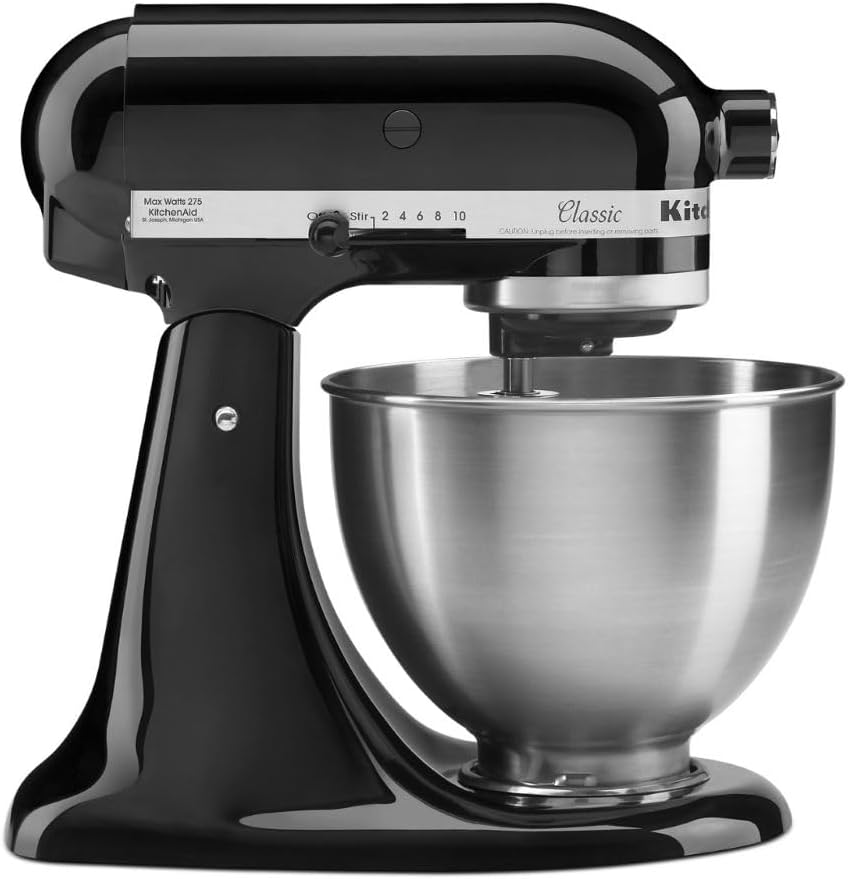
KitchenAid Classic Series K45SS
| Capacity | 4.5 quarts |
|---|---|
| Number of Speeds | 10 |
| Wattage | 275 watts |
| Voltage | 120 volts |
| Included Components | Stainless steel bowl, flat beater, dough hook, 6‑wire whip |
The KitchenAid Classic Series K45SS is a straightforward tilt‑head stand mixer built around a durable metal frame and a 4.5‑quart stainless steel bowl. It ships with a coated flat beater, coated dough hook, and 6‑wire whip, and the 10 speed settings cover everything from slow stirring to high‑speed whipping. The mixer is designed for everyday baking tasks and can handle bread dough in small to medium batches using the dough hook; the metal construction and established planetary mixing motion help deliver consistent results. The tilt‑head makes adding ingredients and swapping attachments easy, and the power hub accepts optional attachments for grinders or pasta makers if you want to expand functionality. Limitations include a 4.5‑quart capacity that is modest for very large bread batches and a 275 W motor that performs well for home use but is not meant for heavy industrial loads. For home bakers who want a dependable, no‑frills mixer that stands up to regular use, this model covers the essentials without complicated controls.
Best for: Home bakers who prioritize a reliable, sturdy mixer for regular breadmaking and baking tasks and value a proven, expandable platform.
Less Ideal for: Commercial bakers or those who routinely mix very large dough batches should choose a larger, higher‑powered machine designed for heavy continuous use.
- Durable metal construction for long‑term reliability
- Includes key accessories: flat beater, dough hook, and wire whip
- 10 speeds provide flexibility for mixing, whipping, and kneading
- Tilt‑head design for easy access when adding ingredients or changing tools
- Power hub supports optional attachments to extend functionality
- 4.5‑quart capacity is limited for very large bread batches
- 275 W motor is adequate for home baking but not for heavy commercial use
Verdict: A reliable, metal‑built tilt‑head mixer that reliably handles regular home bread baking and accepts attachments to expand capabilities.
Dash Everyday Stand Mixer

| Wattage | 250 |
|---|---|
| Number of Speeds | 6 |
| Capacity | 3 liters |
| Voltage | 110 |
The Dash Everyday Stand Mixer is a lightweight, space-saving tilt‑head mixer meant for basic home baking and dough work. It pairs a 250W motor with six speed settings to handle stirring, whipping, and light to moderate kneading, and ships with a 3‑quart stainless steel bowl, two dough hooks, and two beaters so you can mix batters, frostings, and small yeast doughs without extras. The mixer's compact footprint and low weight make it easy to store or keep on a crowded countertop, and the removable bowl and attachments are dishwasher safe for quick cleanup. Because it is designed as an entry-level appliance, heavy or very large batches of stiff bread dough will strain the motor and may require shorter kneading cycles or smaller batches. The simple knob control and tilt head make swapping attachments and adding ingredients straightforward, and the included recipe resources help new bakers get started. For casual bakers and small-batch bread makers this mixer offers good everyday utility, but serious home bakers should look for a heavier-duty model for frequent large loaves.
Best for: Buyers who value compact, easy‑to‑use kitchen gear and bake small to medium batches of bread or other recipes infrequently and want a ready‑to‑use kit.
Less Ideal for: Frequent bakers who mix large quantities or very stiff bread doughs should choose a heavier, commercial-style mixer with a more powerful motor.
- Compact, lightweight design that fits small kitchens and is easy to store
- Includes 3‑quart stainless steel bowl plus dough hooks and beaters for immediate use
- Six speed settings provide control from gentle stirring to faster whipping
- Tilt‑head design makes adding ingredients and swapping attachments simple
- Dishwasher‑safe removable parts simplify cleanup
- 250W motor is underpowered for very large or heavy bread dough batches
Verdict: A compact, beginner‑friendly stand mixer that lets you mix small to medium bread batches and everyday baking without taking up much counter space.
Aucma Stand Mixer 6.5QT

| Wattage | 660 watts |
|---|---|
| Voltage | 120 volts |
| Number of Speeds | 6 |
| Capacity | 6.5 quarts |
| Noise Level | 76 db |
The Aucma 6.5QT stand mixer is built for home bakers who need a large bowl and a powerful motor for heavier doughs. Its 660W pure copper motor and dough hook make it capable of kneading bread and dense cookie dough, while six speeds plus a pulse setting let you start slow and ramp up without splattering. The tilt-head design and dual-handled stainless bowl make adding ingredients and swapping attachments straightforward, and the splash guard cuts down on mess when mixing sticky batters. Included stainless whisk, beater, and dough hook are dishwasher safe, which simplifies cleanup after baking sessions. Noise is relatively low for the class at about 76 dB, and non-slip feet keep the unit stable during kneading. On the downside the housing is ABS plastic rather than metal, so it feels less heavy-duty than commercial-style mixers and long-term durability under very frequent heavy use is uncertain. For home bread bakers who prioritize a roomy bowl and a strong motor without paying pro-level prices, this mixer delivers solid performance.
Best for: Home bakers who want a roomy bowl and a powerful motor to reliably mix and knead bread and large batches without investing in a professional machine.
Less Ideal for: Users seeking a commercial-grade, all-metal mixer for daily heavy-duty bakery use should consider higher-end models built for constant professional operation.
- 660W pure copper motor provides strong performance for kneading bread dough
- Large 6.5-quart stainless steel bowl accommodates big batches
- Tilt-head design and dual handles make bowl and accessory changes easy
- Dishwasher-safe whisk, beater, and dough hook simplify cleanup
- Splash guard with access hatch reduces mess when adding ingredients
- ABS plastic housing feels less heavy-duty than metal-bodied mixers
Verdict: This mixer gives home bread bakers a strong motor and a large bowl for dependable kneading and mixing without the cost of a pro model.
Choosing the Right Stand Mixer for Bread: Key Factors to Consider
Motor Torque and Continuous Power
Torque is the most important mechanical property for bread mixing. Dense, high-hydration doughs and large batches put sustained resistance on the motor. A motor rated for higher torque will maintain mixing speed during kneading rather than stalling or hunting, which matters when developing gluten structures.
Continuous power delivery also influences how long you can run the mixer without thermal cutouts. For home bakers who frequently make multiloaf batches or work with heavy doughs like rye or sourdough levain blends, prioritize motors engineered for sustained loads rather than only peak wattage.
Bowl Capacity and Geometry
Bowl size dictates the maximum batch you can mix without spillage and how effectively ingredients circulate. For standard sandwich loaves, a medium bowl is usually sufficient; for larger artisan loaves or multiple loaves in one batch, a larger bowl is beneficial.
The shape of the bowl matters as well. A deeper, narrower bowl promotes better circulation for doughs, while a very shallow bowl can cause dough to climb the hook or fail to incorporate evenly. Look for bowls sized and shaped to match your typical recipe volumes.
Dough-Hook Design and Reach
A well-designed dough hook mimics hand-kneading by folding and stretching the dough. Hooks with a spiral or C-shape that reach close to the bowl bottom and walls will develop gluten more consistently and reduce the need to stop and scrape.
Also consider how the hook detaches and whether it releases sticky dough easily. A design that minimizes dough accumulation on the hook and allows straightforward cleaning saves time and retains mixing efficiency.
Speed Range and Control Accuracy
Bread dough benefits from slow, steady kneading followed by short bursts at higher speeds for finishing. Precise low-speed control prevents overworking and reduces heat generation in the dough. A mixer with several usable low speeds and a consistent ramp-up avoids sudden torque spikes that can toss dough.
Smooth electronic control or well-damped mechanical governors are both acceptable, but verify that low speeds are steady under load rather than merely pulsing the motor.
Build Quality and Long-Term Reliability
Repeated kneading cycles place mechanical stress on gears, attachments, and motor mounts. Metal gear trains, solid attachment hubs, and robust housing materials typically last longer than lighter, economy designs.
Consider whether replacement parts such as hooks, bowls, and seals are easy to source and whether the mixer design allows for routine maintenance. Reliability matters most if you bake frequently or at higher volumes.
How Capacity Affects Your Bread Workflow
Batch size choices shape your workflow from ingredient prep to proofing. If you bake multiple loaves at once, a larger mixer bowl reduces the number of rounds and shortens total bake-day time. Conversely, a smaller bowl can be more efficient for occasional single-loaf recipes and saves counter space.
Think beyond single-batch volume. Larger bowls often require more counter clearance and heavier lifting when moving dough. Plan for how you handle proofing and dividing dough when choosing capacity.
- Small bowls: good for occasional single loaves and limited counter space
- Medium bowls: versatile for most home bakers and small batches
- Large bowls: best if you frequently make multiple loaves or high-hydration doughs
Mixing Techniques and Attachment Use
Different mixing tasks call for different attachments and techniques. For bread, the dough hook is the primary tool, but occasional use of the flat beater for initial blending of wet ingredients can help ensure even hydration before kneading begins.
Use short rest intervals during long kneading cycles to check dough development rather than relying solely on timer-based programs. Visual and tactile cues like windowpane formation and dough temperature are better indicators of readiness than time alone.
- Start low to combine ingredients, then increase speed gradually for kneading
- Pause to check gluten development instead of only following recipe times
- Use the hook that reaches the bowl bottom for dense doughs
Noise, Heat, and Practical Kitchen Considerations
Mixing dense bread dough can make certain mixers audible and may generate heat in the motor housing. If you bake early in the morning or in an open-plan home, noise level can influence when you choose to mix.
Heat generation affects dough temperature and yeast activity. If a mixer runs hot during prolonged kneading, factor in dough cooling time or shorter knead-rest cycles to avoid over-warming the dough.
- Look for mixers with good ventilation and thermal protection
- Consider countertop space and storage for larger machines
- Assess how easy the machine is to clean after sticky doughs
Maintenance and Cleaning Tips for Bread Makers
Regular cleaning keeps dough residue from building up on the hook and bowl, which can affect performance. Detachable hooks and dishwasher-safe bowls or attachments reduce friction during cleanup and make routine maintenance quicker.
Inspect seals and attachment hubs periodically for wear. Lubrication points or replaceable gear covers extend service life, especially under heavy use. Keep spare sealing rings and gaskets on hand if the design uses them.
- Remove dough from hooks immediately after use to prevent hardening
- Hand-wash attachments if dishwasher use causes accelerated wear
- Wipe housing with a damp cloth and avoid immersing the mixer base
Recipe Types and Matching Mixer Capabilities
Not all bread doughs are the same. Lean doughs for baguettes and sandwich loaves are easier to knead than very sticky, high-hydration artisan or enriched doughs loaded with butter and eggs. Match mixer capacity and torque to the types of recipes you bake most often.
If you bake specialty breads that include seeds, nuts, or large inclusions, ensure your mixer handles intermittent load spikes without binding. A higher-torque motor and a hook that maintains contact will produce more consistent results across diverse recipes.
- Lean doughs: moderate torque and standard hooks work well
- High-hydration or enriched doughs: prioritize torque and bowl volume
- Doughs with inclusions: expect occasional slowdowns; pause and fold in extras manually if needed
How We Chose the Best Stand Mixer for Bread
We evaluated stand mixers for bread using measurable, bread-specific performance factors that matter during regular home baking. Key criteria included motor torque under load, because consistent kneading requires sustained power without overheating; bowl and capacity sizing, since hydration and batch size determine whether a mixer can handle typical loaves and wet doughs; dough-hook design and mixing action, which affect gluten development and ease of dough release; build quality and long-term durability, given the repetitive stresses of dense doughs; and speed control accuracy for gently developing dough at low speeds through higher-speed finishing. We also considered noise and heat generation during extended kneading cycles and available serviceability or parts access for long-term ownership. We excluded machines intended primarily for light mixing, whipping, or hand-held use that lack the torque or attachment geometry for heavy dough. We focused on models with documented torque and bowl capacities suitable for common home-batch and small-batch artisan breads. Our process filtered out units with limited low-speed control, undersized bowls for typical bread recipes, or unclear serviceability notes. The resulting shortlist emphasizes machines that balance real-world kneading performance with durability and practical bowl size.
Our full evaluation process is outlined in our review methodology.
FAQ
What bowl size is best for making multiple loaves at once?
For multiple loaves, choose a larger bowl capacity that comfortably holds the total dough volume without overflowing. Larger bowls let ingredients circulate freely and reduce the need to split batches, which saves time and keeps dough handling simpler.
Can I use a stand mixer for high-hydration sourdough dough?
You can, but high-hydration doughs place more stress on the motor and require a hook that reaches the bowl bottom. Look for steady low-speed control and sufficient torque to knead without stalling. Some bakers prefer manual folding for very wet doughs, but a robust mixer can save time.
How do I know when dough is properly kneaded in a mixer?
Assess gluten development with the windowpane test and by checking dough elasticity. Properly kneaded dough should be smooth, slightly tacky, and stretch into a thin translucent membrane without tearing. Time is a guideline, but visual and tactile checks are more reliable.
Will frequent bread making wear out a home stand mixer quickly?
Frequent use adds wear, especially on gears and attachment points. Choosing a mixer with sturdier construction and easier access to replacement parts reduces long-term downtime. Regular maintenance and mindful loading help prolong service life.
Is it better to knead bread by hand or use a stand mixer?
Both methods produce good results. Hand kneading gives tactile feedback and is suitable for small batches, while a stand mixer saves time and reduces repetitive strain for larger or frequent batches. The decision depends on your batch size, time, and preference for hands-on techniques.
Final Verdict
When selecting a stand mixer for bread, prioritize motor torque, bowl capacity, and dough-hook design since these factors most directly affect dough development and handling. Balance the desire for larger batches with the practicalities of counter space, noise, and maintenance needs. Choose a machine that matches the types of dough you bake most often so you get reliable, repeatable results.