
Note: This article contains affiliate links. If you click on these links and make a purchase, we may earn a small commission at no extra cost to you. This helps support our research and content. Read our full affiliate disclosure here.
If you regularly make bread, pizza, or other yeast-based recipes, the right stand mixer can save you time and protect your wrists. A mixer that handles dough needs strong torque, a roomy bowl, and attachments built for heavy, sticky batters. This guide shortlists the best stand mixers for dough so you can choose one suited to the size of your batches, the types of dough you make, and how often you bake. Below we evaluate models across the key dimensions that matter for dough work, including motor torque, bowl capacity, build durability, and ease of maintenance, so you can quickly find the right option for your kitchen.
Top Picks at a Glance
| Best Overall The best all-around choice for most situations | Bosch Universal Plus Stand Mixer |  |
| Best Quality Built to a higher standard if you want something more solid | Cuisinart Stand Mixer SM-50BC |  |
| Best Value The sweet spot between price and what you get | FOHERE Stand Mixer 5.8QT |  |
| Best Budget The cheapest option that still gets the job done reliably | Dash Everyday Stand Mixer DCSM250PB |  |
| Top Rated A top-rated pick with lots of positive feedback | KitchenAid Classic Series K45SS |  |
| Most Popular A crowd favorite that many people choose with confidence | KitchenAid Artisan 5-Qt Mixer |  |
| Best Seller A high-volume bestseller chosen again and again | Aucma 6.5‑QT Stand Mixer |  |
Bosch Universal Plus Stand Mixer

| Wattage | 500 watts |
|---|---|
| Capacity | 6.5 quarts |
| Number of Speeds | 4 |
| Voltage | 230 volts |
The Bosch Universal Plus is a high-torque, bottom-drive stand mixer built for serious home baking and heavy dough work. It uses a 500 W motor and belt-driven transmission to deliver strong, direct power into a 6.5-quart plastic bowl, making it capable of kneading large batches of bread or mixing dozens of cookies in one go. The dual wire whips and triple-whip action speed up whipping tasks, while the included dough hook and dough-hook extender are designed specifically for dense whole-grain doughs. Four suction feet add stability during heavy kneading and the mixer offers four speeds plus a pulse mode for control. Practical touches include a dishwasher-safe bowl, splash ring with lid, and built-in cord storage, and the platform accepts a wide range of optional attachments for shredding, grinding, pasta, and more. The main compromises are the plastic bowl and mostly manual controls compared with some higher-end, metal-bodied, electronic mixers, though the bottom-drive design and torque make it particularly strong for bread and heavy dough work.
Best for: Home bakers who want a robust, dough-focused mixer that can handle large loaves and frequent bread-making without needing a heavy, professional machine.
Less Ideal for: Buyers seeking a premium metal-bodied mixer with advanced electronic controls or those who prioritize an all-stainless-steel appliance aesthetic.
- High-torque bottom-drive motor well suited to heavy doughs
- Large 6.5-quart bowl handles big batches
- Included dough hook extender and wire whips cover kneading and whipping needs
- Stable suction-cup feet reduce movement during heavy mixing
- Dishwasher-safe bowl and removable drive shaft simplify cleaning
- Bowl is plastic rather than stainless steel
- Controls are basic knob speeds without digital precision
Verdict: Choose the Bosch Universal Plus if you need a torque-forward mixer that reliably handles large, dense doughs for serious home baking.
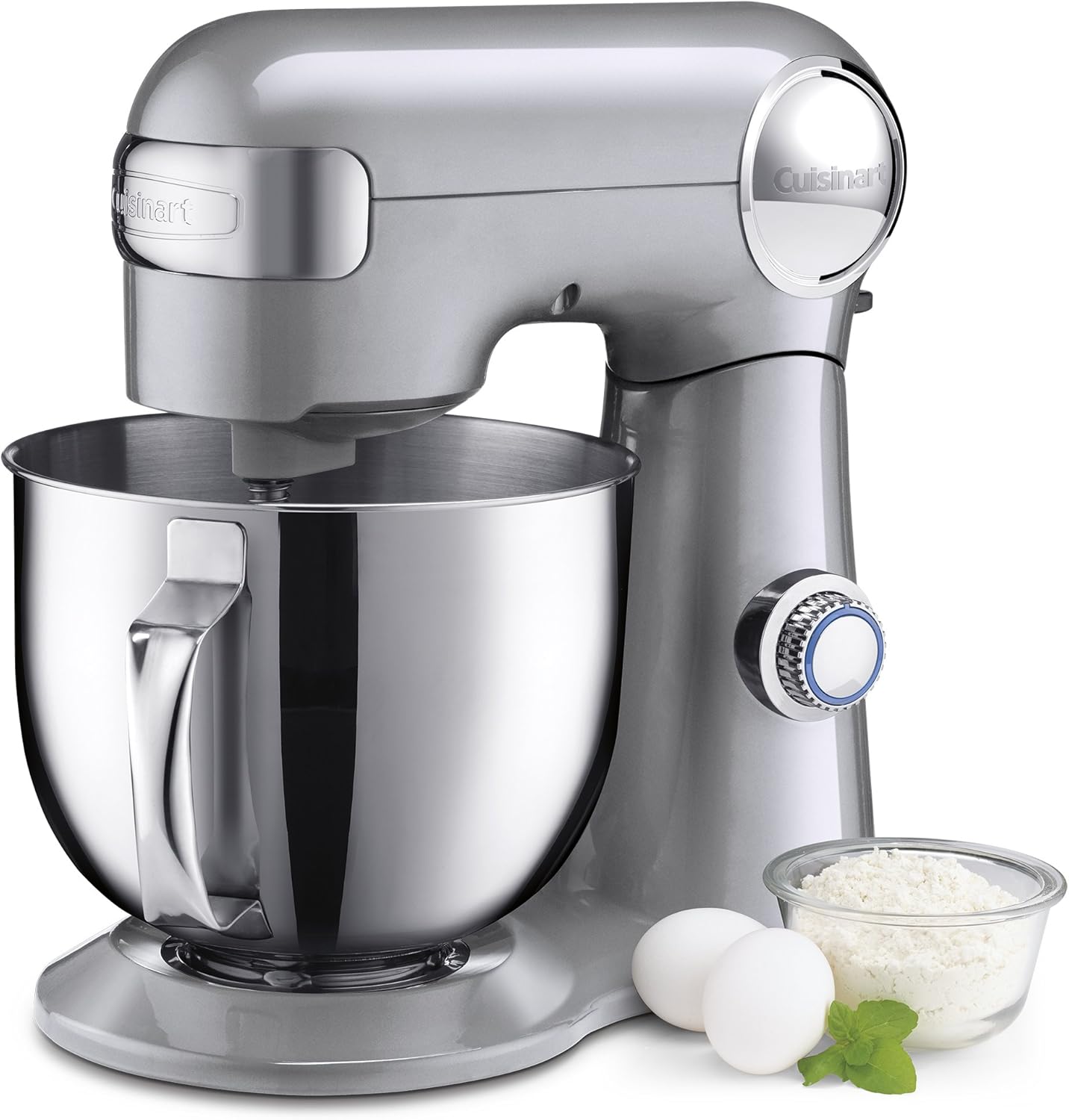
Cuisinart Stand Mixer SM-50BC
| Capacity | 5.5 quarts |
|---|---|
| Wattage | 500 watts |
| Number of Speeds | 12 |
| Controls Type | Knob |
The Cuisinart SM-50BC is a solid mid-range stand mixer built for everyday baking and dough work. Its 500-watt motor and 12-speed knob let you move from slow kneading to faster whipping without fuss, and the tilt-back head gives easy access to the included 5.5-quart stainless steel bowl. The package includes a chef's whisk, flat paddle and dough hook so you can mix batters, beat creams and knead small to medium bread doughs; the splash guard with pour spout keeps counters cleaner when adding ingredients. Metal die-cast construction and dishwasher-safe accessories make it feel durable and simple to maintain, and the mixer accepts a range of optional attachments if you want to expand to pasta or meat grinding. It is not the most powerful commercial machine, so very large heavy doughs will push the motor and may require smaller batches, but for home bakers who want responsive speed control and a sturdy build, this mixer handles most dough and prep tasks reliably.
Best for: Home bakers focused on reliable performance and versatility who want a sturdy mixer that handles typical bread doughs, batters, and whipping tasks and can accept optional attachments for more functions.
Less Ideal for: People who regularly make very large batches of heavy doughs or need a commercial-grade mixer should look for higher-power, professional models instead.
- 500-watt motor with 12 speeds for a wide range of mixing tasks
- Die-cast metal body and stainless steel bowl for durable, stable mixing
- Includes whisk, flat paddle, dough hook, and splash guard with pour spout
- Tilt-back head design for easy bowl and accessory access
- Accessories and bowl are dishwasher safe for easy cleanup
- Motor may struggle with very large or extremely heavy bread doughs
- Relatively heavy unit that takes countertop space
Verdict: A durable, mid-power stand mixer that gives responsive speed control and reliable performance for home bakers tackling dough and everyday mixing tasks.
FOHERE Stand Mixer 5.8QT

| Wattage | 600 watts |
|---|---|
| Number of Speeds | 6 |
| Capacity | 5.8 quarts |
| Voltage | 110 volts |
The FOHERE 5.8QT stand mixer is a metal-bodied kitchen mixer aimed at home bakers who need a roomy bowl and straightforward power for dough, batters, and whipped mixtures. Its 600W motor and planetary mixing action circulate attachments around the bowl for even mixing, while the spiral dough hook, flat beater, and wire whip cover common baking jobs from kneading to whipping. The tilt-head design makes installing the stainless steel bowl and attachments simple, and anti-slip silicone feet plus a splash guard help keep the counter clean during high-speed use. Six speed settings plus a pulse let you start slow for flour incorporation and ramp up for whipping egg whites. Noise is listed around 75 dB, so it is noticeably loud under heavy load, and the manufacturer warns against putting some accessories in the dishwasher to protect coatings. For people prioritizing capacity and durable metal construction over compactness or ultra-quiet motors, this mixer delivers reliable, practical performance for dough-focused baking at home.
Best for: Home bakers who prioritize a roomy bowl and durable, no-nonsense mixer for frequent dough and batch baking, and who want reliable mixing action without specialty attachments.
Less Ideal for: Those who need a very quiet machine, a compact countertop footprint, or extensive specialty attachments for non-baking tasks should consider other options.
- Large 5.8 quart stainless steel bowl fits family-sized batches
- All-metal housing for durability and improved heat dissipation
- Includes spiral dough hook, flat beater, and wire whip for common baking tasks
- Planetary mixing action promotes even ingredient coverage
- Silicone suction feet and splash guard reduce movement and mess
- Listed noise level around 75 dB can be loud during heavy mixing
- Some coated accessories are not recommended for dishwasher cleaning
Verdict: If you want a robust, metal-bodied stand mixer that handles family-sized dough and everyday baking reliably, this FOHERE 5.8QT is a practical buy.
Dash Everyday Stand Mixer DCSM250PB

| Wattage | 250 |
|---|---|
| Number of Speeds | 6 |
| Capacity | 3 liters |
| Controls Type | Knob |
| Voltage | 110 |
The Dash Everyday Stand Mixer is a lightweight, space-saving tilt-head mixer built for routine kitchen tasks like whipping, mixing, and light dough work. It includes a 3-quart stainless steel bowl, two dough hooks, and two mixer beaters, and the 250W motor runs through six speeds controlled by a knob, so you can go from gentle folding to faster whipping. The tilt-head design makes loading and swapping attachments easy and the removable bowl and accessories are dishwasher safe for straightforward cleanup. Because it is compact and weighs under 5 pounds, it is easy to move and stores well on small countertops, but that same small footprint limits heavy-duty performance for very large or dense bread doughs. For casual bakers and weekday cooks it handles cookie doughs, pizza dough for small batches, batters, and frostings with good convenience, but it is not intended as a high-capacity or commercial machine.
Best for: Buyers on a tight budget or anyone with limited counter space who wants an affordable, easy-to-store mixer for small to medium home baking tasks like cookies, small pizza doughs, and batters.
Less Ideal for: Serious home bakers who frequently make large batches of dense bread or want a heavy-duty, high-capacity mixer for frequent, high-volume dough kneading should look at larger, higher-powered models.
- Compact, lightweight design that fits small kitchens and tucks under cabinets
- Includes a 3-quart stainless steel bowl and both dough hooks and beaters for versatile mixing
- Six-speed control lets you match speed to tasks from gentle stirring to whipping
- Tilt-head mechanism simplifies ingredient addition and attachment changes
- Dishwasher-safe bowl and attachments speed cleanup
- 250W motor and 3-quart capacity limit heavy or very large dough batches
- Plastic body construction may feel less durable than heavier metal stand mixers
Verdict: If you need an inexpensive, compact stand mixer for everyday small-batch doughs and baking, this Dash model delivers practical performance and easy cleanup.
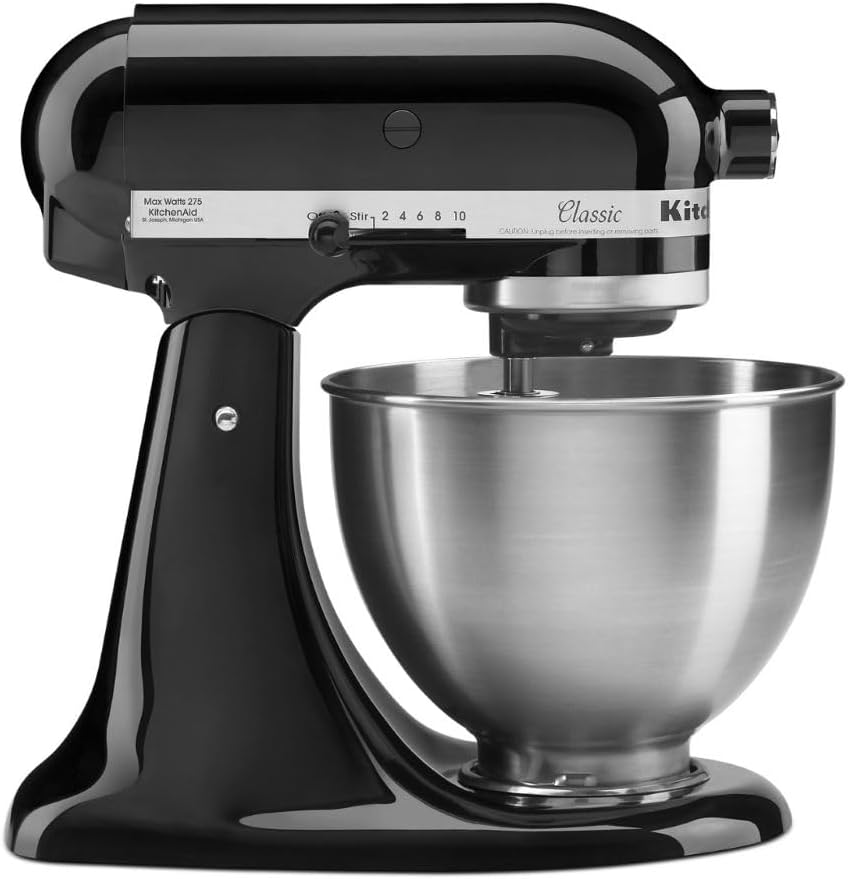
KitchenAid Classic Series K45SS
| Capacity | 4.5 quarts |
|---|---|
| Number of Speeds | 10 |
| Wattage | 275 watts |
| Included Components | Flat beater, dough hook, 6-wire whip, stainless steel bowl |
The KitchenAid Classic Series K45SS is a straightforward, durable tilt-head stand mixer aimed at routine baking and dough work. It pairs a metal construction and a 4.5-quart stainless steel bowl with a 10-speed motor, so you can mix, whip, and knead small- to medium-size batches like cookie dough, bread dough for a few loaves, and whipped cream. The tilt-head design makes adding ingredients and swapping the included coated flat beater, dough hook, and 6-wire whip easy, and the power hub accepts optional attachments for grinders or pasta makers. Practical benefits include consistent mixing across 10 speeds and a compact footprint that fits most counters. The machine is not the most powerful planetary mixer available, so very heavy, commercial-scale doughs will take longer to develop compared with higher-capacity or higher-torque models. Overall it is a reliable, no-frills choice for home bakers who need dependable daily performance rather than pro-level output.
Best for: Home bakers who prioritize a dependable, long-lasting mixer for everyday doughs and typical baking tasks and who want easy access for adding ingredients and swapping attachments.
Less Ideal for: Users who regularly make very large or heavy commercial-style doughs and need a higher-capacity, higher-torque machine for continuous heavy use.
- Durable metal construction built for regular home use
- Versatile 10-speed control for mixing, whipping, and kneading
- 4.5-quart stainless steel bowl handles typical home batches
- Includes flat beater, dough hook, and 6-wire whip for common tasks
- Power hub expands functionality with optional attachments
- 275-watt motor can be slower on very dense or large dough batches
- Tilt-head design limits bowl capacity compared with some bowl-lift commercial models
Verdict: A reliable, metal-built stand mixer well suited for home bakers who need consistent everyday performance for dough and regular baking tasks.
KitchenAid Artisan 5-Qt Mixer

| Capacity | 5 quarts |
|---|---|
| Wattage | 325 watts |
| Number of Speeds | 10 |
| Included Components | Flat beater, dough hook, 6-wire whip, pouring shield |
| Voltage | 120 volts |
The KitchenAid Artisan 5-Quart Tilt-Head Stand Mixer is a heavy-duty home mixer designed for tackling dough, batters, and whipped recipes. It uses a metal construction and a 5-quart stainless steel bowl to handle large batches like multiple dozen cookies or family-sized bread dough, and the tilt-head gives easy access for adding ingredients and swapping attachments. The mixer includes a coated flat beater, dough hook, 6-wire whip, and a pouring shield, and its 10-speed knob covers everything from slow stir to high-speed whipping. Practical benefits include a roomy bowl for big batches, dishwasher-safe bowl and accessories for easier cleanup, and a broad ecosystem of optional hub attachments for tasks like pasta or grinding. Trade-offs are that it is a fairly heavy, non-bowl-lift tilt-head design so very large or extremely heavy doughs may be better suited to a bowl-lift commercial-style machine, and its power rating is 325 watts which meets most home baking needs but is not industrial grade.
Best for: Home bakers who prioritize a proven, durable mixer with a roomy bowl and included attachments for everyday doughs, cookies, and whipped recipes and who rely on community confidence in the model.
Less Ideal for: People who regularly mix very large or dense commercial dough batches or who need an industrial-strength, bowl-lift commercial mixer.
- 5-quart stainless steel bowl handles large home batches like multiple dozen cookies
- Includes flat beater, dough hook, 6-wire whip, and pouring shield for common mixing tasks
- Durable metal construction designed for long-term home use
- Tilt-head design makes adding ingredients and swapping accessories quick and easy
- Tilt-head format and overall weight make it less ideal for mixing very heavy, commercial-scale doughs
- 325-watt motor is suitable for home baking but not industrial workloads
Verdict: A reliable, full-size home stand mixer that handles everyday doughs and large baking batches with proven durability and broad accessory support.
Aucma 6.5‑QT Stand Mixer

| Wattage | 660 watts |
|---|---|
| Voltage | 120 volts |
| Number of Speeds | 6 |
| Capacity | 6.5 quarts |
The Aucma 6.5‑QT stand mixer is built for home bakers who need a capable, budget‑friendly machine for tasks from whipping egg whites to kneading dough. Its 660W copper motor and six speed settings plus pulse give enough torque to handle cookie and bread dough in typical home batches, while the tilt‑head makes installing the stainless steel bowl and accessories straightforward. The package includes a whisk, flat beater and dough hook, and a splash guard with an ingredient chute keeps bowls cleaner during mixing. Non‑slip feet and a sturdy ABS housing help keep the unit stable during heavier mixes, and the accessories are dishwasher safe for easy cleanup. Noise is listed around 76 dB, so it is not whisper‑quiet, and power and build quality are appropriate for regular household use rather than heavy commercial workloads. If you need very large batches or a heavy‑duty, professional mixer, this model may feel limited, but for most home dough and baking tasks it offers solid performance and practical features at the price point.
Best for: Home bakers who prioritize a reliable, easy‑to‑use mixer for everyday doughs and baking projects and prefer a sensible, lower‑risk appliance choice.
Less Ideal for: Professional bakers or users who regularly mix very large or commercial batches should choose a heavier duty, all‑metal commercial mixer instead.
- Powerful 660W pure copper motor suitable for typical doughs and cookie batters
- Generous 6.5‑quart stainless steel bowl with dual handles for easy lifting
- Includes whisk, dough hook and beater plus splash guard with ingredient chute
- Tilt‑head design and non‑slip feet make attachment changes and mixing stable
- Dishwasher‑safe accessories simplify cleanup
- Noise level around 76 dB is noticeable during heavy mixing
- Housing is ABS plastic rather than full metal, which may feel less premium
Verdict: Aucma's 6.5‑QT mixer delivers dependable mixing power and practical attachments for home bakers who want a risk‑averse, capable machine for dough and everyday baking.
Choosing the Right Stand Mixer for Dough: Key Factors to Consider
Motor Torque and Sustained Power
Strong motor torque matters because dough mixing is a high-resistance task that can stall weaker motors. Look for mixers designed to sustain low-speed, high-torque operation without overheating.
Sustained power determines whether the machine can complete long kneading cycles for denser doughs or large batches. A higher-rated motor and good thermal management reduce the risk of automatic shutdowns during a bake session, which preserves dough structure and workflow.
Bowl Capacity and Shape
Bowl capacity affects how much dough you can make in one batch and whether ingredients have room to incorporate without spilling. For most home bakers, a 4.5- to 6-quart bowl covers single- and double-loaf recipes, while larger bowls are useful for bulk baking or pastry projects.
Bowl shape and depth also influence how well the hook or beater reaches the dough. A wide, gently sloped bowl helps ensure even mixing and reduces the need to stop and scrape, improving consistency and saving time.
Attachment Design and Compatibility
Effective dough hooks and drive attachments convert motor torque into kneading action. Look for hooks shaped to fold and stretch dough rather than smash it, and hubs that secure attachments tightly to avoid slippage.
Compatibility matters if you plan to use specialty accessories. Standardized attachment fittings make it easier to add or replace dough hooks and other tools, extending the machine's usefulness beyond basic mixing tasks.
Durability and Thermal Management
Durable construction and proper cooling determine long-term reliability under repeated dough cycles. Metal gear drives and robust housings resist wear from heavy loads, while well-designed ventilation or heat-shedding systems prevent overheating.
Durability also affects resale value and service life. A mixer built with replaceable parts and accessible internals will be easier and less costly to maintain if you bake frequently.
Speed Control and Low-Speed Torque
Precise low-speed control is crucial for dough development. Too fast and the dough will not develop gluten correctly; too slow or inconsistent and the mixer may stall. Smooth, incremental speed settings let you start at low RPMs for initial mixing and maintain steady torque through long kneading cycles.
Some mixers include electronic controls that limit sudden speed jumps or compensate under load, which helps protect both the motor and the dough's structure.
Ease of Cleaning and Maintenance
Dough can be sticky and messy, so features that simplify cleanup make regular use much more pleasant. Removable, dishwasher-safe bowls and hook attachments cut cleanup time, and smooth exterior finishes reduce trapped flour or dough residue.
Consider how easily seals, gaskets, and the attachment hub can be accessed for cleaning. Machines with fewer crevices and user-replaceable seals are less likely to trap moisture and develop hygiene problems.
Matching Mixer Size to Your Baking Habit
Think about how often you bake and the typical batch sizes you make. If you bake weekly for a household of two to four, a medium-capacity bowl and a strong motor will handle most needs. If you bake in larger quantities or for gatherings, prioritize a larger bowl and a motor designed for continuous loads.
Also consider storage and countertop space. Larger, heavier mixers may deliver superior performance but require a dedicated spot in your kitchen. If you need to stow the unit between uses, check weight and footprint first.
- Small households: 4.5 quart bowl usually sufficient
- Regular bakers: 5 to 6 quart for double loafs and bulk dough
- Frequent large batches: look for 7+ quart capacity and heavy-duty motor
How Dough Hook Shape Affects Kneading
Not all dough hooks knead the same way. C-shaped hooks fold and press dough repeatedly, while spiral hooks are designed to stretch and develop gluten more efficiently. Hook geometry changes how quickly dough comes together and how much time you need to knead manually.
Consider a machine with replaceable hooks so you can experiment or swap to a different style if your baking preferences change. A hook that keeps dough off the bowl walls and works the center mass typically yields more consistent results.
- Spiral hooks: faster gluten development for many breads
- C-shaped hooks: simple, reliable folding action
- Replaceable hooks let you adapt to different dough types
Practical Tips for Long Kneading Sessions
Dough that requires 10 to 20 minutes of kneading will stress both the motor and the mixer's cooling system. To protect equipment and improve results, use moderate speed settings and allow short rest periods for the motor if you notice heat buildup.
Scrape the bowl periodically to ensure even hydration and redistribute ingredients. If the machine offers variable-speed control with low-end torque, use those settings rather than higher speeds that can overwork the motor.
- Start at low speed to combine ingredients, then increase slightly for kneading
- Pause briefly if the motor becomes hot or strained
- Use a timer to track kneading intervals for consistent results
Cleaning Dough Residue Without Damaging Components
Remove attachment tools and soak them promptly to avoid hardened dough. Use non-abrasive brushes and plastic scrapers to protect coating on hooks and bowls. If parts are dishwasher-safe, place them on the top rack to minimize wear.
Wipe the mixer body with a damp cloth and avoid letting water enter the attachment hub or motor vents. Regular maintenance of seals and the attachment hub will extend the life of the machine and keep performance consistent.
- Soak sticky hooks immediately after use
- Protect painted finishes with gentle cleaning agents
- Keep vents and motor housing free of flour dust
When to Consider a Heavy-Duty or Commercial-Style Unit
If you bake professionally or run very large batches several times a week, a heavy-duty unit with a high-torque motor and metal gear train is worth considering. These designs tolerate sustained loads and typically have larger bowls and more robust attachment systems.
For serious users, also evaluate serviceability and parts availability. Commercial-style mixers often have simpler mechanical systems that are easier to repair and maintain over a long service life.
- Frequent large batches benefit from metal gears and industrial cooling
- Check for serviceable parts to simplify long-term maintenance
- Commercial-style units are heavier and require more countertop space
How We Chose the Best Stand Mixer for Dough
We prioritized features and performance characteristics that directly affect dough mixing and kneading. Key evaluation criteria included motor torque and sustained power to ensure the motor can handle dense, high-hydration dough without bogging down; bowl capacity and shape to match common batch sizes and allow adequate room for rising; attachment design and compatibility for effective kneading and easy removal of dough; and overall build quality and cooling to withstand repeated heavy use. We also assessed usability factors such as ease of cleaning, control precision across low-speed torque ranges, and noise levels during long kneading cycles. Safety features like secure bowl locks and automatic shutoffs under overload conditions were included in the review framework. We excluded mixers that are clearly underpowered for routine dough work, units lacking solid attachment systems, or those with bowl sizes unsuitable for typical home bread batches. The resulting shortlist focuses on machines that balance power, capacity, durability, and user-friendly maintenance for regular dough-making.
Our full evaluation process is outlined in our review methodology.
FAQ
What motor size do I need for kneading bread dough?
Motor size is often expressed in watts or horsepower, but sustained torque is more important for dough. Aim for a motor and drive system rated for continuous low-speed torque; many home mixers designed for dough will specify torque or recommend batch sizes rather than rely solely on peak wattage.
Can I use a stand mixer for very wet or high-hydration dough?
Many stand mixers handle high-hydration dough, but results depend on motor torque, hook design, and bowl geometry. High-hydration doughs may require longer kneading and careful speed control to avoid splatter and overworking the motor.
How do I prevent my mixer from overheating during long kneading cycles?
Use lower speeds, allow brief rest periods between long cycles, and avoid overfilling the bowl. Good ventilation and machines with thermal protection or enhanced cooling will tolerate longer runs more reliably.
Are spiral hooks better than C-shaped hooks for all types of dough?
Spiral hooks are often more efficient at developing gluten in many bread doughs, but C-shaped hooks can still be effective for basic mixing and lighter doughs. The best choice depends on the dough type and your preferred kneading speed and technique.
How important is bowl material for dough mixing?
Bowl material affects weight, durability, and cleaning. Stainless steel bowls are common because they are durable, easy to clean, and do not retain odors. Glass or ceramic bowls are less common for heavy kneading due to fragility and weight.
Should I look for electronic speed controls or manual dials?
Electronic controls can provide smoother acceleration and better low-speed torque management, which helps during long kneading. Manual dials are simple and reliable, but may lack the fine control that prevents sudden speed jumps under load.
Final Verdict
Choose a stand mixer for dough by matching motor torque and bowl capacity to the volume and types of dough you make. Prioritize sustained low-speed torque, a bowl that fits your typical batch size, and attachment designs that efficiently develop gluten without slipping or overheating. Balance durability and ease of cleaning against the space and storage tradeoffs. For most home bakers, a well-built machine with good thermal management and versatile attachments will provide the most reliable results over time.