
Note: This article contains affiliate links. If you click on these links and make a purchase, we may earn a small commission at no extra cost to you. This helps support our research and content. Read our full affiliate disclosure here.
Picking the right Tank Water Heater determines how reliably you get hot water for showers, appliances, and household chores. You need a model with the right tank size, enough recovery to match your household hot-water demand, and efficient operation to keep energy bills reasonable. This guide shortlists the top Tank Water Heaters across common household needs and explains the practical tradeoffs so you can match a heater to your home. Below are the best Tank Water Heaters we considered, followed by the criteria we used, factors to weigh, and answers to common owner questions.
Top Picks at a Glance
| Best Overall The best all-around choice for most situations | GE 18 Gallon Electric Water Heater |  |
| Best Quality Built to a higher standard if you want something more solid | Dometic WH-10GEA 10-Gallon Water Heater |  |
| Best Value The sweet spot between price and what you get | CAMPLUX ME40 Mini-Tank Water Heater |  |
| Best Budget The cheapest option that still gets the job done reliably | VEVOR 4-Gallon Mini Tank Water Heater |  |
| Top Rated A top-rated pick with lots of positive feedback | Bosch Tronic 3000 T ES2.5 |  |
| Most Popular A crowd favorite that many people choose with confidence | Suburban 6-Gallon RV Water Heater 5239A |  |
| Best Seller A high-volume bestseller chosen again and again | VEVOR 18-Gallon Electric Water Heater |  |
GE 18 Gallon Electric Water Heater

| Power Source | Electric |
|---|---|
| Wattage | 14400 watts |
| Voltage | 120 volts |
| Heat Output | 140 °F |
| Capacity | 45 liters |
This GE 18-gallon electric water heater is a compact point-of-use storage tank designed to deliver hot water in tight spaces like kitchens, laundry rooms, cabins, or garages. It connects to any 120-volt supply and uses standard 3/4-in NPT fittings for quick installation, making it a practical add-on near a single fixture or inline with a larger heater to boost distant runs or a washing machine. The unit includes an adjustable thermostat and stainless steel heating element for dependable heat and corrosion resistance, plus an anode rod and rust-proof drain valve to extend service life. Because it is a small-capacity tank, expect limited hot-water duration between recovery cycles, so it is best for single fixtures or light simultaneous use rather than whole-house demand. Its 14400-watt heating capability and 140°F maximum output give usable temperatures but require planning if you need continuous high-flow hot water. Overall, this is a straightforward, durable choice when you need localized hot water or a booster solution in constrained spaces.
Best for: Buyers who want a reliable, easy-to-install point-of-use or booster water heater for a single fixture or small dwelling and value compact, low-effort installation.
Less Ideal for: Homes that require continuous hot water for multiple bathrooms or large families should choose a larger tank or higher-capacity system instead.
- Compact point-of-use design fits in tight spaces like under sinks or laundry areas
- 120-volt connection and standard 3/4-in NPT fittings for easy, fast installation
- Stainless steel heating element and anode rod for improved corrosion resistance
- Adjustable thermostat allows simple temperature control for different needs
- Small 18-gallon capacity limits usable hot-water run time for multiple simultaneous fixtures
Verdict: A compact, durable electric point-of-use tank that delivers convenient hot water where space is limited or as a booster for longer plumbing runs.
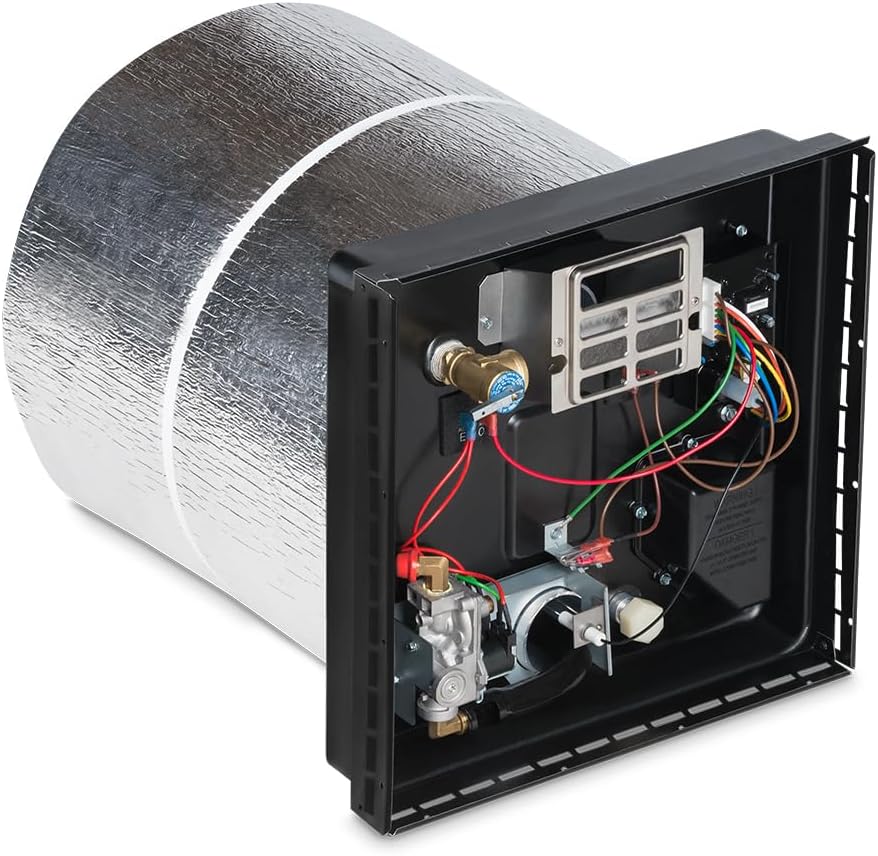
Dometic WH-10GEA 10-Gallon Water Heater
| Power Source | Corded Electric, Gas Powered |
|---|---|
| Wattage | 1400 watts |
| Voltage | 12 volts |
| Heat Output | 10,000 BTU |
| Capacity | 10 gallons |
The Dometic WH-10GEA is a compact tank water heater designed for mobile use in RVs and boats, combining a 10,000 BTU gas burner with 12V electric ignition for quick hot-water delivery. It is typically wall-mounted and meant to replace or upgrade factory units, providing larger capacity than standard RV tanks for longer showers and more steady hot-water draw. Notable features include a lightweight aluminum tank that does not require an anode, a pre-installed winterization bypass for freeze-prone use, and a front access door option (sold separately) for servicing. In practice the heater delivers faster recovery than smaller tanks and its electronic ignition simplifies starting without pilot lights. Trade-offs include the need to plan for a slightly larger footprint when installing and reliance on LP fuel for full BTU output; the unit also lists a 2-year limited warranty which buyers should consider for long-term ownership. For performance-focused mobile owners who want more hot water and quicker recovery, this model is a pragmatic upgrade over standard small RV tanks.
Best for: Buyers who prioritize stronger hot-water performance and faster recovery in an RV or boat and who plan upgrades that improve on factory tank capacity and convenience.
Less Ideal for: Campers who need the absolute smallest, lightest unit for very tight spaces or those who cannot or will not use LP fuel should consider alternatives.
- 10-gallon capacity offers longer hot-water availability than typical small RV tanks
- 10,000 BTU burner with electronic ignition for quicker recovery and easy starting
- Lightweight aluminum tank that eliminates the need for an anode and reduces weight for mobile use
- Pre-installed winterization bypass simplifies winter prep and protects against freezing
- Requires LP fuel or 12V electric ignition for full operation so shore power alone may be insufficient
- Front service door sold separately which can add to installation cost if access panel is needed
Verdict: Choose the Dometic WH-10GEA when you want a higher-capacity, faster-recovering RV water heater that delivers reliable hot water on the road.
CAMPLUX ME40 Mini-Tank Water Heater

| Capacity | 16 liters |
|---|---|
| Wattage | 1440 watts |
| Voltage | 120 volts |
| Maximum Temperature | 149 °F |
| Maximum Pressure | 150 psi |
The CAMPLUX ME40 is a compact 4.0-gallon mini-tank water heater intended for point-of-use installation under a kitchen or bathroom sink. It stores a small volume of hot water so you do not wait for hot water from a distant central heater, and it can be wall- or floor-mounted using the included bracket. At 1440 watts and 120 volts the heater warms water up to 149°F and offers a thermostatic control with three temperature settings, while built-in foam insulation and a triple-layer enameled liner help reduce heat loss and corrosion. Safety features include a T&P relief valve and UL-listed components. Practical limits are its small tank capacity and modest flow rate (about 0.8 GPM to reach hot in roughly 5 minutes), so it is best for single-sink tasks like handwashing, dish rinsing, or a prep sink rather than supplying showers or multiple fixtures. Installation is straightforward for someone comfortable tapping into a cold-water line and using a 120V outlet or plugging in directly.
Best for: Buyers who want a compact, energy-conscious solution to eliminate wait time for hot water at a single sink and prefer an easy plug-in installation over rewiring or a larger unit.
Less Ideal for: Homes that need hot water for showers, multiple fixtures, or high-flow appliances should choose a larger or whole-house solution instead.
- Point-of-use design delivers hot water quickly at a single sink
- Plug-in 120V installation avoids special wiring in most homes
- Built-in insulation and high thermal efficiency reduce standby heat loss
- Includes T&P relief valve and UL-listed safety features
- Triple-layer enameled liner and Incoloy 800 heating element for durability
- Small 4.0-gallon capacity limits continuous hot flow for larger tasks
- Low initial flow to hot water (~0.8 GPM) means longer wait for higher-volume uses
Verdict: A compact, efficient point-of-use heater that removes wait time for hot water at a single sink with easy plug-in installation.
VEVOR 4-Gallon Mini Tank Water Heater

| Power Source | Corded Electric |
|---|---|
| Wattage | 1440 watts |
| Maximum Temperature | 145 °F |
| Capacity | 4 gallons |
| Mount Type | Wall |
This VEVOR 4-gallon mini-tank heater is a space-saving indoor unit meant to supply instant hot water for kitchen or small bathroom use. It heats with a 1440W 310S stainless steel element and claims to reach up to 145°F, producing usable hot water in roughly 8 to 15 minutes and maintaining temperature with polyurethane insulation and an enamel-coated tank. Installation is straightforward for someone comfortable with basic plumbing and wall mounting; the unit ships with a bracket, safety valve, and screws and can be mounted on a shelf or secured to the wall. Practical features include an LED temperature display, a knob for easy temperature adjustment, and a temperature-pressure safety valve for protection. The heater is best for point-of-use tasks like dishwashing, handwashing, or a small prep sink where a full house water heater is impractical. Limits to note are the small 4-gallon capacity, which will run out under heavier continuous demand, and the need to hard-mount the unit per the instructions rather than simply connecting it inline.
Best for: Buyers looking to add a low-cost point-of-use hot water source for a kitchen sink, small bathroom, or commercial prep station who prioritize compactness and basic safety features over large capacity.
Less Ideal for: Households needing sustained hot water for multiple fixtures, long showers, or high-demand tasks should choose a larger-capacity tank or whole-house solution.
- Compact footprint suitable for under-sink or shelf mounting
- 1440W stainless steel heater that reaches hot water quickly
- Built-in temperature-pressure safety valve and LED display for easier monitoring
- Includes mounting bracket, safety valve, and screws for installation
- 4-gallon capacity can be exhausted quickly under continuous use
- Requires proper wall fastening and basic plumbing skills to install
Verdict: A compact, budget-friendly point-of-use tank that delivers quick hot water and basic safety features for sinks and small fixtures.
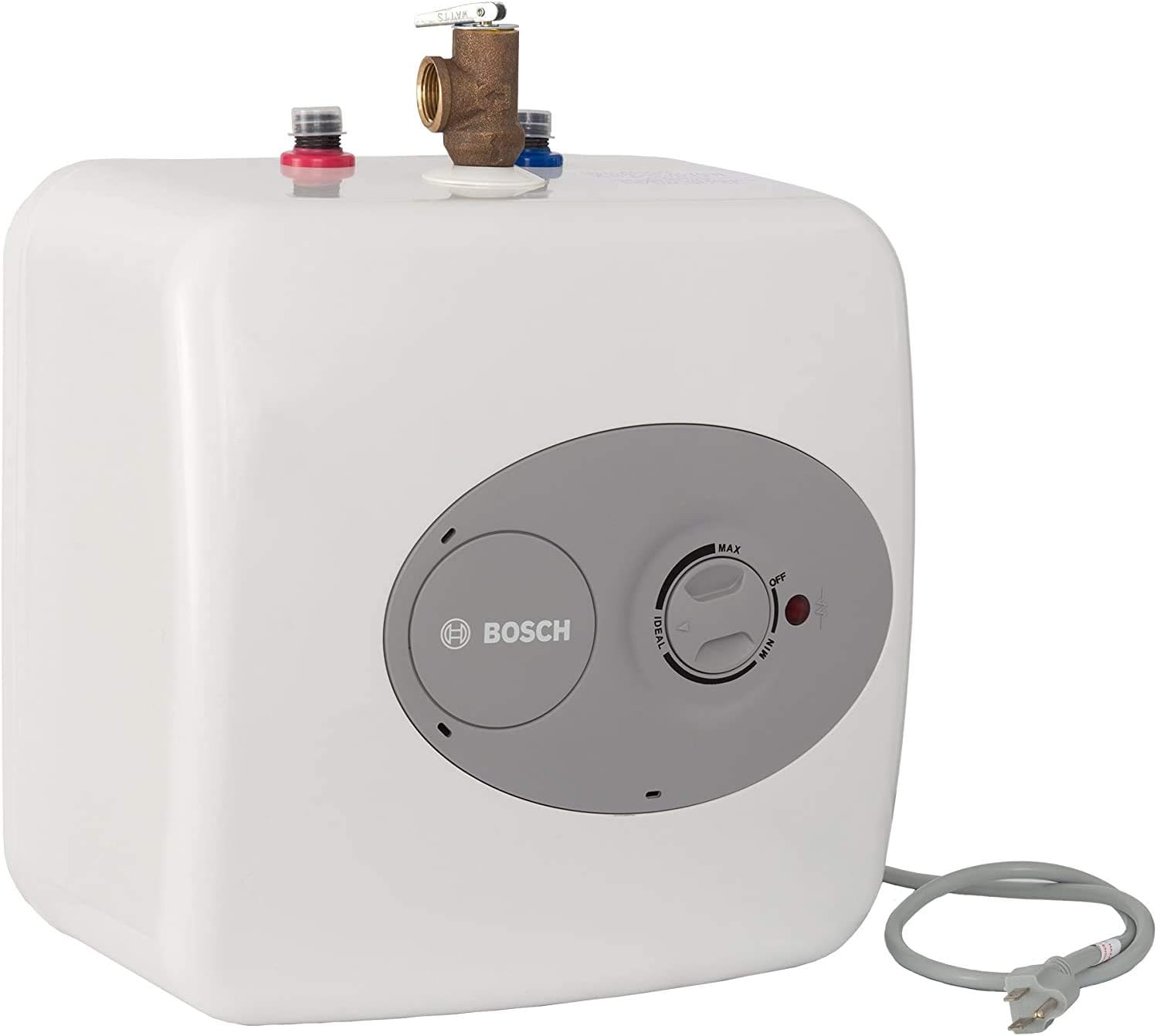
Bosch Tronic 3000 T ES2.5
| Capacity | 2.5 gallons |
|---|---|
| Wattage | 1440 watts |
| Voltage | 120 volts |
| Maximum Temperature | 140 °F |
| Efficiency | 98% |
The Bosch Tronic 3000 T ES2.5 is a compact point-of-use electric mini-tank that provides hot water where you need it without waiting for a main water heater to recover. It is typically installed under a sink or mounted on a wall or shelf and can be plugged into a standard 120-volt outlet for independent operation. Notable features include a 2.5-gallon glass-lined tank for corrosion resistance, a 1440-watt heating element with a fast recovery rate, an external temperature dial for easy control, and a temperature-and-pressure relief valve for safety. In practice it supplies hot water to one or two nearby fixtures on demand, reduces wait time at single sinks, and blends into visible spaces thanks to a modest exterior. Limitations are its small capacity, which is intended only for limited point-of-use service rather than whole-house needs, and the lower maximum temperature compared with larger commercial units. For those seeking a reliable, compact solution to eliminate cold-water lag at a sink, this model is straightforward to install and maintain.
Best for: Buyers who prioritize a dependable, low-maintenance solution to eliminate cold-water delays at a single sink or small fixture and want a compact unit that installs without special high-voltage wiring.
Less Ideal for: Homes needing hot water for multiple bathrooms, long continuous draws, or whole-house supply should choose a larger tank or on-demand system instead.
- Glass-lined tank improves durability and corrosion resistance
- Plugs into a standard 120V outlet for independent point-of-use installation
- Fast recovery with a 1440-watt element reduces wait time for hot water
- Flexible mounting options: shelf, wall, or floor with included bracket
- 2.5-gallon capacity is limited to point-of-use fixtures and cannot support whole-house demand
Verdict: A small, factory-quality point-of-use electric tank that reliably delivers near-instant hot water at a sink without special electrical work.
Suburban 6-Gallon RV Water Heater 5239A

| Capacity | 6 gallons |
|---|---|
| Heat Output | 12000 british thermal units |
| Wattage | 1440 watts |
| Voltage | 12 volts |
| Mount Type | Wall |
The Suburban 6-Gallon RV Water Heater (5239A) is a compact tank-style unit designed for travel use that combines gas firing with an optional electric element for campsite or generator power. It heats water using a 12,000 BTU gas burner with direct spark ignition and an Incoloy electric element rated at 1,440 watts for auxiliary heating. The porcelain-lined steel tank and replaceable anode rod provide corrosion resistance and easier maintenance, while the flue tube heat transfer design aims to improve recovery speed. In practice this model delivers fast recovery for its size—Suburban cites roughly 10 gallons per hour on gas and about 6 gallons per hour on electric—so it will reduce cool-water cycles during showers. Installation is wall-mount and intended for RV freshwater systems, and the unit is compact for common RV cutouts. Limitations are inherent to the 6-gallon capacity: it is best for smaller rigs or light hot-water demand and will not match a household tank or tankless unit for continuous multi-person use.
Best for: Buyers who prioritize proven, well-built RV gear and want a compact water heater that offers both gas performance and electric backup for reliable hot water on the road.
Less Ideal for: Those needing continuous large-volume hot water for multiple users or for non-RV residential installations should consider larger tanks or tankless systems instead.
- Porcelain-lined steel tank and replaceable anode rod for improved corrosion protection and easier maintenance
- Dual fuel capability with 12,000 BTU gas burner plus optional 1,440W electric element for flexible power sources
- Fast recovery rate for a 6-gallon RV tank, reducing cool-water interruptions during use
- Compact wall-mount design engineered for common RV cutouts and tight spaces
- Limited 6-gallon capacity restricts continuous hot-water availability for multiple successive users
- Requires proper RV gas and electrical hookups and space for venting, so not a drop-in fit for non-RV installations
Verdict: Choose this Suburban 6-gallon unit if you want a compact, maintenance-friendly RV water heater that pairs strong gas recovery with electric backup for dependable on-the-road hot water.
VEVOR 18-Gallon Electric Water Heater

| Capacity | 18 gallons |
|---|---|
| Wattage | 1600 watts |
| Maximum Temperature | 167 °F |
| Mount Type | Wall |
| Special Features | LED Display, IPX4 Waterproof Side Connection, 20mm Foam Insulation Layer |
This VEVOR 18-gallon electric water heater is a compact storage tank designed for steady household hot water needs. It uses a 1600W immersion heating element and 20mm foam insulation to heat water up to 167°F and retain heat for extended periods, with a rotary knob and LED indicator for simple temperature control. Safety features include dry-heating protection, overheat protection, and high-pressure hydraulic protection, and the enamel-coated inner tank and metal outer shell aim to reduce corrosion and leakage risk. Typical installations are wall-mounted in kitchens, bathrooms, or utility rooms where moderate daily hot water—dishwashing, a shower, or laundry—is required. The unit is straightforward to operate and easier to service than instantaneous tankless models, but its 18-gallon capacity limits how many simultaneous uses it can support and the 120V/1600W power means recovery times are slower than higher-wattage or 240V tanks. For buyers who prioritize simple controls and built-in safety features, it is a practical compact storage option; buyers needing large-volume or rapid recovery should consider larger or higher-power models.
Best for: Buyers who want a straightforward, safety-focused storage water heater for a small household or point-of-use location and prefer simple controls and proven tank-style operation.
Less Ideal for: Homes that require high-volume or fast-recovery hot water for multiple simultaneous uses or those that have 240V installation needs should consider larger or higher-power alternatives.
- Compact 18-gallon storage provides ready hot water for small households or point-of-use locations
- Simple knob temperature control with LED indicator for easy monitoring and adjustment
- Multiple safety protections including dry-heat and overheat protection reduce risk of damage or unsafe operation
- Enamel-coated inner tank and foam insulation improve corrosion resistance and heat retention
- 1600W on 120V supply gives slower recovery compared with higher-power 240V units
- Capacity is limited for multiple simultaneous uses like several showers back-to-back
Verdict: A compact, safety-minded 18-gallon electric tank heater that delivers simple, reliable hot water for small households or point-of-use installations.
Choosing the Right Tank Water Heater: Key Factors to Consider
Tank Capacity and First-Hour Rating
Tank capacity determines how much usable hot water is available at a given moment, while the first-hour rating estimates how much hot water a heater can deliver during peak demand. Larger households or homes with simultaneous showers and laundry need higher first-hour ratings to avoid cold-water spikes.
Underestimating capacity leads to frequent cooldowns and household inconvenience. Match the first-hour rating to typical morning or evening peak usage patterns and consider future household growth when choosing capacity.
Recovery Rate
Recovery rate measures how quickly the heater can reheat incoming cold water after hot water has been drawn. A higher recovery rate reduces the wait between successive showers or appliance cycles and is especially important for homes with staggered high-demand events.
Fuel type and burner or element sizing affect recovery. If your household frequently runs multiple hot-water uses back to back, prioritize a heater with a strong recovery rating to maintain steady supply.
Energy Efficiency and Standby Loss
Efficiency affects operating costs across the heater's life. Look at energy factor ratings and insulation levels to understand how much energy is used to heat water and how much is lost while stored in the tank. Better insulation cuts standby heat loss, which is especially meaningful in cooler basements or garages.
Higher efficiency can justify a slightly higher initial cost through lower monthly energy bills. Also check for features like heat traps, high-quality dip tubes, and programmable thermostats that help reduce wasted energy.
Fuel Type and Installation Requirements
Tank water heaters use electricity, natural gas, propane, or oil, and each fuel has different installation needs. Gas units require proper venting and combustion air; electric units need appropriate amperage and breaker capacity. Installation accessibility and local building codes will influence which fuel type is practical.
Consider the existing utility hookup and whether modifications to venting, gas lines, or electrical service would be required. Installation complexity affects total cost and timeline.
Durability, Materials, and Warranty
The tank materials, anode design, and coating influence long-term corrosion resistance. A robust warranty indicates manufacturer confidence and can reduce lifecycle risk. Look at the length and coverage details for both the tank and components such as heating elements or valves.
Regular maintenance, like flushing to reduce sediment, also extends service life. Factor expected maintenance needs into ownership plans when evaluating durability.
Size, Location, and Venting Constraints
Physical dimensions, clearance needs, and venting directions determine where a heater can be installed. Some homes have tight utility closets or limited ceiling height, which constrains the maximum tank diameter and height you can fit. Venting options vary between atmospherically vented, power-vented, and direct-vent systems.
Measure available space and review venting paths before selecting a model. If space or venting is limited, choose a unit designed for compact installation or consider relocating the unit only when necessary.
Sizing a Tank Water Heater for Your Household
Estimate peak-hour usage by counting simultaneous hot-water needs such as showers, dishwashing, and laundry. Use the first-hour rating as your sizing benchmark because it combines tank capacity with recovery to predict real-world performance during busy periods.
If multiple showers run at once or you have a large family, err toward a larger first-hour rating. For single-person households or infrequent hot-water users, a smaller tank can reduce standby heat loss and save energy.
- Single or couple: smaller tank, lower standby loss.
- Family of four or more: higher first-hour rating and larger capacity.
- Homes with electric service limits: check element configuration and load requirements.
Installation Considerations and Permitting
Installation needs vary by fuel type and venting method. Gas units need proper venting and combustion air; electric units require adequate breaker capacity. Some installations require permits and an inspection to meet local codes.
Plan for clearance around the tank for servicing and future maintenance. If you lack in-home mechanical skills, budget time to coordinate a licensed installer who can ensure code compliance and safe venting.
- Confirm fuel hookups and venting paths before purchase.
- Measure space for height and diameter including clearance.
- Check local permit requirements and inspection timelines.
Maintenance Tips to Extend Service Life
Regular maintenance extends the life of tank water heaters. Flushing the tank yearly or as recommended reduces sediment buildup that can lower efficiency and damage heating elements or burners. Replacing sacrificial anodes as they wear prevents tank corrosion.
Keep the area around the heater free of clutter and check pressure-relief valves periodically. For gas heaters, inspect venting and combustion components for blockages or corrosion to maintain safe operation.
- Flush tank annually or based on water hardness.
- Inspect and replace anode rod when corrosion is present.
- Test pressure-relief valve and check for leaks.
Matching Efficiency to Operating Costs
Compare energy factor ratings and insulation levels to estimate long-term operating costs. Higher efficiency reduces fuel consumption and standby loss, which can be meaningful if the heater operates in colder spaces where heat loss is higher.
Weigh the upfront installation impact versus ongoing savings. Even modest efficiency improvements can add up over years of operation, especially in homes with high hot-water demand.
- Look for strong insulation and lower standby heat loss.
- Consider programmable thermostats or vacation settings to reduce waste.
Common Troubleshooting and When to Call a Pro
Minor issues like reduced hot-water output can often be traced to sediment, a failed heating element, or thermocouple faults. Many of these can be diagnosed by checking tank temperature settings, listening for unusual noises, and inspecting visible fittings.
If you detect gas odors, persistent leaks, or venting problems, stop using the unit and contact a licensed technician. Major repairs or gas-related fixes should be handled by professionals to ensure safety and code compliance.
- Reduced hot water: check thermostat settings, inspect for sediment.
- Strange noises: may indicate sediment or scale buildup.
- Gas smell or venting issues: shut off gas and call a professional immediately.
How We Chose the Best Tank Water Heater
We focused on attributes that directly affect real-world ownership of Tank Water Heaters. Key evaluation criteria included tank capacity and first-hour rating to match household demand, recovery rate to minimize wait times between uses, energy efficiency and standby heat loss to estimate operating cost, durability and warranty length to project service life, and installation compatibility such as fuel type and venting requirements. We prioritized units with clear technical specifications and verified performance data so buyers can compare like for like. We excluded specialty or niche appliances not intended for standard home plumbing and any units lacking published efficiency or capacity specs. Fixtures designed solely for commercial or recreational-vehicle use were not considered. Our selection favors solutions that perform well in typical single-family or multifamily home settings and that offer sensible tradeoffs between upfront installation complexity and long-term operating cost.
Our full evaluation process is outlined in our review methodology.
FAQ
How do I determine the right tank size for my home?
Estimate peak-hour hot-water usage by counting simultaneous needs such as showers and appliance cycles. Use the first-hour rating to match that peak demand rather than relying on tank gallons alone.
How often should I flush my tank water heater?
Flushing once a year is typical, but homes with hard water may benefit from more frequent flushing. Regular flushing reduces sediment buildup that impairs efficiency and shortens component life.
Can I replace an electric tank water heater with a gas unit in the same location?
Possibly, but switching fuel types usually requires changes to venting, gas supply, and sometimes combustion-air provisions. Confirm local codes and plan for potential modifications before switching fuel types.
What are common signs a tank water heater is failing?
Signs include rusty or discolored hot water, persistent leaks around the tank, reduced heating performance, and strange noises from sediment buildup. These often indicate corrosion or component failure and warrant inspection.
Do higher efficiency tank heaters need different maintenance?
Maintenance needs are similar, but higher-efficiency models may include additional components like power vents or electronic controls that require periodic checks. Follow the manufacturer maintenance schedule for these features.
Final Verdict
Choosing a Tank Water Heater comes down to matching capacity and recovery to your household demand while balancing installation complexity and long-term operating cost. Prioritize first-hour rating and recovery rate for reliable performance during peak use, and factor in efficiency and warranty for lifecycle costs. If you have limited space or specific venting constraints, select a model that fits those requirements and plan professional installation where needed. Focus on the tradeoffs that matter most to your household to make a confident selection.