
Note: This article contains affiliate links. If you click on these links and make a purchase, we may earn a small commission at no extra cost to you. This helps support our research and content. Read our full affiliate disclosure here.
If your home has hard water, choosing a tankless water heater requires extra care because mineral scale can reduce efficiency and shorten service life. You want a unit that manages or resists limescale, is easy to maintain, and delivers steady hot water for showers, laundry, and dishwashing. This guide brings together seven top contenders that were shortlisted for hard-water households, covering features that matter most for longevity and reliable performance. We focus on scale-management design, recommended maintenance, flow rates for typical household loads, and installation considerations. Read on for the criteria we used and practical notes to help you pick the right unit.
Top Picks at a Glance
| Best Overall The best all-around choice for most situations | EcoSmart ECO 18 Tankless Water Heater |  |
| Best Quality Built to a higher standard if you want something more solid | Rheem RTEX-24 Tankless Electric |  |
| Best Value The sweet spot between price and what you get | SIVUATEK V7B-140B 14kW Tankless Heater |  |
| Best Budget The cheapest option that still gets the job done reliably | xwdzswgs Tankless Water Heater | 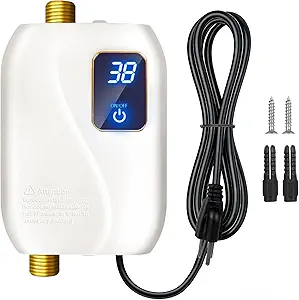 |
| Top Rated A top-rated pick with lots of positive feedback | thermomate ET060 6000W Tankless Heater |  |
| Most Popular A crowd favorite that many people choose with confidence | EcoSmart ECO 11 |  |
| Best Seller A high-volume bestseller chosen again and again | Rheem RTEX-18 Tankless Electric |  |
EcoSmart ECO 18 Tankless Water Heater

| Wattage | 18000 watts |
|---|---|
| Voltage | 240 volts |
| Flow Rate | 3.51 gpm |
| Efficiency | 99.8 % |
| Mount Type | Wall |
The EcoSmart ECO 18 is a compact electric tankless heater designed to deliver on-demand hot water for small households or single-sink/shower setups. It uses self-modulating technology to adjust power to flow, a digital temperature controller that sets in 1 degree increments, and is configured for incoming water temperatures of about 62°F and above. In practice it can provide roughly 2.5+ gallons per minute in moderate climates, supporting one shower plus a sink or two showers in warmer regions with higher inlet temperatures. Installation requires a 240V single-phase feed with two 40A double-pole breakers and 8-gauge wiring. The unit is wall-mounted and space-saving, with a metal housing and a lifetime warranty on core components. Limitations are its climate-sensitive capacity—performance drops with colder incoming water—and the high electrical service requirement means some homes need panel upgrades before installation. For areas with hard water, regular maintenance and scale control are advisable to preserve performance.
Best for: Buyers who want a space-saving electric on-demand heater for a small household in moderate or warm climates and who prioritize precise temperature control and energy-efficient operation.
Less Ideal for: Households in cold climates or homes without available high-capacity 240V electrical service should consider higher-capacity models or gas tankless options instead.
- Compact wall-mounted design saves space and fits tight mechanical areas.
- Self-modulating technology adjusts power to flow for efficient energy use.
- Digital temperature control lets you dial setpoint in 1 degree increments for precise comfort.
- Lifetime warranty on electronics, heat exchanger, and element provides long-term coverage.
- Rated capacity depends heavily on incoming water temperature, limiting flow in cold climates.
- Requires substantial electrical circuit capacity (two 40A breakers and 8 AWG wiring).
Verdict: Choose the ECO 18 when you need a compact, energy-efficient electric tankless unit that delivers precise temperature control for small hot-water demands in moderate climates.
Rheem RTEX-24 Tankless Electric

| Wattage | 24 KW |
|---|---|
| Voltage | 240 volts |
| Flow Rate | 5.9 gpm |
| Maximum Temperature | 140 °F |
| Mount Type | Wall |
The Rheem RTEX-24 is a wall-mounted 240V tankless electric heater built to supply continuous hot water for whole-home use in warmer climates, with a rated maximum flow of 5.9 gallons per minute. It uses self-modulating power control and an adjustable digital temperature display so the unit only draws the electricity required to reach setpoint, which helps cut energy use compared with tank models and reduces standby loss. Practical benefits include a compact footprint that frees up space, no venting requirement, and the ability to run multiple fixtures (two showers plus sinks in ideal conditions). Important installation considerations are the heavy electrical demand — the unit needs three 40A double-pole breakers and a robust 200A service is recommended — and real-world flow and output depend on incoming groundwater temperature. For homes with hard water, routine maintenance such as descaling will be necessary to preserve performance. The RTEX-24 is a high-capacity, efficient option when your electrical service and panel can support the load.
Best for: Buyers who prioritize strong, continuous hot-water performance and energy-efficient operation and who have a household electrical service capable of supporting a high-kW electric unit.
Less Ideal for: Homes with limited electrical panel capacity or where professional electrical upgrades are impractical should consider lower-kW point-of-use units or gas alternatives.
- High maximum output of 24 kW supports up to 5.9 GPM for multiple simultaneous fixtures
- Self-modulating power control improves efficiency by matching energy use to flow demand
- Compact wall-mounted design saves space and requires no venting
- Digital temperature control allows precise setpoint adjustments
- Requires significant electrical capacity and multiple 40A breakers, which may need panel upgrades
- Hard water can scale heating elements, so regular descaling and water treatment are recommended
Verdict: Choose the RTEX-24 if you need a compact, high-output electric tankless heater that delivers continuous hot water and efficient, self-modulating performance when your home can support its electrical demands.
SIVUATEK V7B-140B 14kW Tankless Heater

| Wattage | 14 KW |
|---|---|
| Voltage | 240 volts |
| Flow Rate | 2.3 gpm |
| Maximum Temperature | 110 °F |
| Mount Type | Wall mounted |
The SIVUATEK V7B-140B is a point-of-use electric tankless heater designed to supply instant hot water for sinks and showers without a storage tank. It self-modulates power based on flow and temperature, so users get a stable outlet temperature even as flow varies, and the unit reaches about 110°F quickly at typical low-flow rates. The compact wall-mounted design and 1/2" NPT standard fittings make it suitable for DIY installation near fixtures, and the touch sensor display simplifies temperature control. Built-in protections include leakage and overheat safeguards and ETL listing for safety. Practical buyers should note the unit is rated for 240V and 14 kW, which limits installation to properly wired circuits and may require an electrician; its flow rate is modest at 2.3 gpm so it is best for single-fixture or point-of-use applications rather than whole-house supply. For hard-water environments, the product does not list active scale-management features, so regular maintenance or upstream water treatment will be needed to avoid mineral buildup.
Best for: Buyers who want an efficient, compact point-of-use heater to optimize energy use and deliver steady hot water to a single sink or shower while keeping installation and control simple.
Less Ideal for: Homes needing whole-house hot water or users seeking built-in scale resistance for very hard water without separate water treatment.
- Self-modulating control maintains stable outlet temperature as flow changes
- Compact wall-mounted design suitable for point-of-use installation
- Digital touch display for easy temperature setting and status readout
- Multiple built-in protections (leakage, overheat) and ETL listing
- No listed anti-scale or descaling features for hard-water protection
- Modest maximum flow rate (2.3 gpm) limits use to single fixtures
Verdict: A compact, energy-efficient 14kW point-of-use tankless heater that delivers stable instant hot water and simple controls for single-fixture applications.
xwdzswgs Tankless Water Heater
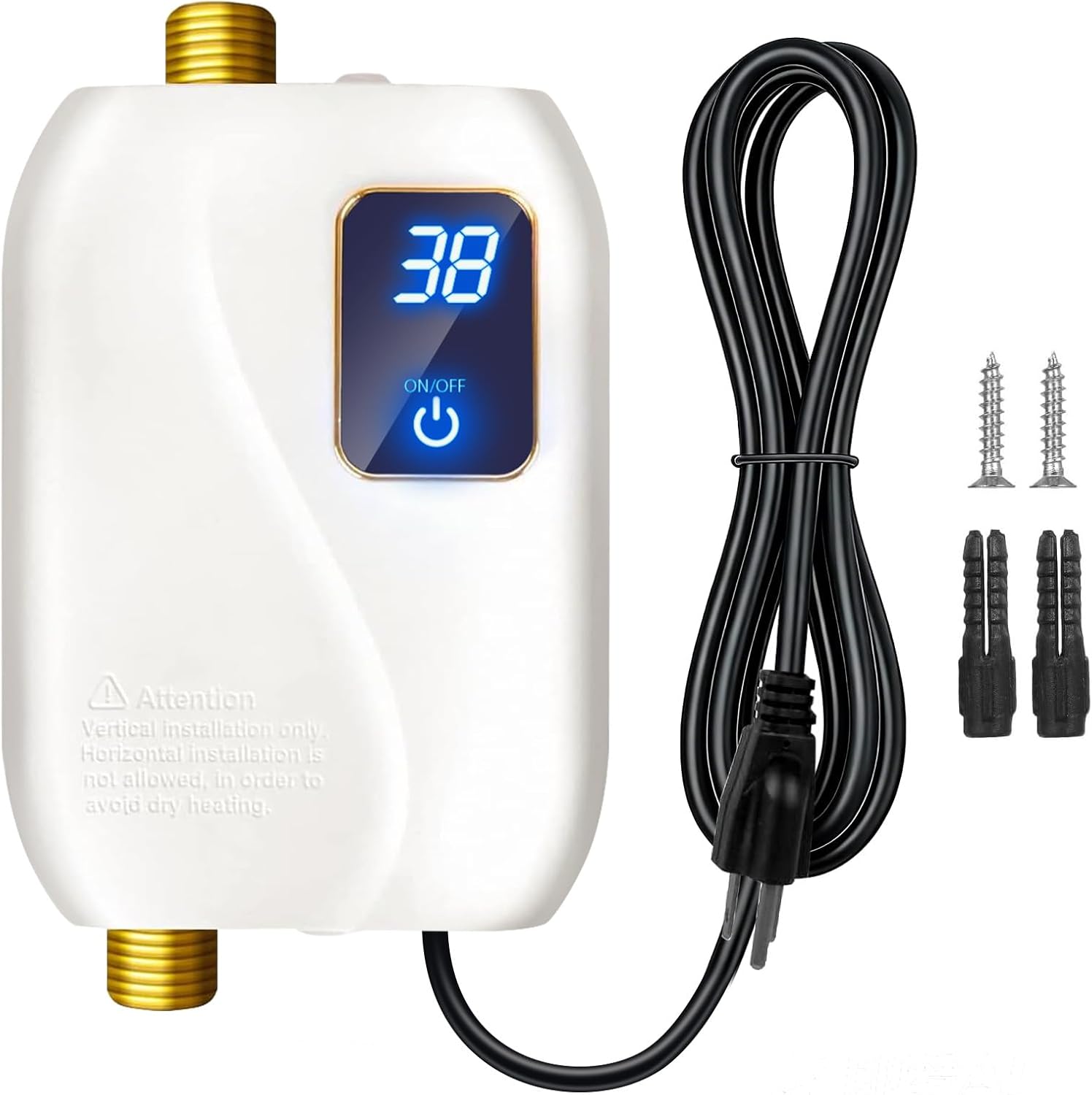
| Power Source | ac |
|---|---|
| Maximum Temperature | 131 °F |
| Heat Output | 10236 british thermal units |
| Included Components | Instant Hot Water Heater Under Sink, English Manual, 4 Screws |
This compact 110V tankless unit is a point-of-use electric heater designed to supply near-instant hot water for sinks and small fixtures. It installs vertically on a wall and connects to standard 1/2-inch NPT plumbing, with an LED display that toggles between °C and °F and shows operating status. At 3000W it boosts outlet temperature noticeably at low flow rates, making it useful for kitchen sinks, utility sinks, RVs, and other limited-space applications where a full-size heater is impractical. Built-in protections include IPX4 splash resistance, dry-burn protection, over-temperature cutoff, and leak isolation to reduce failure risk. Important limitations are its low flow performance and the vendor note that it is not suitable for showers, and vertical-only mounting which limits placement options. For homes with hard water, the unit's small internal passages and no mention of integrated scale management mean more frequent filter or maintenance attention will be needed to preserve performance.
Best for: Buyers seeking an affordable point-of-use solution to deliver hot water to a sink, small kitchen, or RV where space is limited and low-flow performance is acceptable.
Less Ideal for: Homes needing whole-house or shower-capable hot water solutions or buyers who want a low-maintenance unit for very hard water without external filtration.
- Compact wall-mounted design saves space and fits under sinks or in RVs
- LED digital display with Celsius/Fahrenheit toggle for easy temperature control
- Multiple safety protections including dry-burn, over-temperature cutoff, and IPX4 splash resistance
- Quick temperature rise at low flow rates for point-of-use fixtures
- Not recommended for showers due to low GPM capacity
- No built-in scale or descaling system, so hard water can require frequent maintenance
Verdict: A budget-friendly, compact on-demand heater that delivers instant hot water for sinks and small uses when paired with routine maintenance for hard water conditions.
thermomate ET060 6000W Tankless Heater

| Wattage | 6000 watts |
|---|---|
| Voltage | 240 volts |
| Flow Rate | 1.07 gpm |
| Maximum Temperature | 131 °F |
| Maximum Pressure | 150 psi |
The thermomate ET060 is a small wall-mounted electric tankless unit intended for point-of-use installations such as kitchen or bathroom sinks. It heats water on demand with a 6,000 watt self-modulating element that adjusts power to match flow and target temperature, and the unit displays set temperature in 1° increments on a touch panel. Installation requires a hardwired 240V circuit and 30A breaker, and the compact housing and 1/2" NPT fittings make it practical for under-sink mounting. The manufacturer highlights an isolated cast-aluminum heating chamber and a SUS 304 stainless steel water tube to reduce direct scale contact, which helps in hard-water environments by limiting corrosion and mineral buildup. Performance is modest at about 1.07 gpm at a 35°F rise, so it reliably supplies hot water for a single faucet but will not support multiple fixtures simultaneously. The unit is straightforward to use and space-saving, but buyers must ensure appropriate electrical capacity and expect limited flow for tasks that need higher hot-water volume.
Best for: Buyers who prioritize a durable, low-maintenance point-of-use heater for a single sink and want materials and design choices that reduce scale and corrosion risk in hard-water conditions.
Less Ideal for: Homes needing hot water for multiple fixtures at once or users who want higher flow rates for showers and simultaneous taps.
- Self-modulating 6,000W element adapts power to flow for stable outlet temperature
- Cast-aluminum heating chamber separated from water path to reduce scale and corrosion
- Compact, wall-mountable design fits under sinks and tight spaces
- Digital touch display with 1° temperature adjustment for precise control
- Low flow rate suitable only for single-point use rather than whole-house demand
- Requires hardwired 240V connection and a 30A circuit, which may need electrical work
Verdict: A compact, reliability-focused 6kW point-of-use tankless heater that minimizes scale contact and delivers consistent single-faucet hot water in hard-water settings.
EcoSmart ECO 11

| Wattage | 13000 watts |
|---|---|
| Voltage | 220 volts |
| Flow Rate | 3.1 gpm |
| Maximum Temperature | 140 °F |
| Heat Output | 11 KW |
The EcoSmart ECO 11 is a small, wall-mounted tankless electric heater aimed at point-of-use jobs like a bathroom sink or a single shower in warmer climates. It uses self-modulating electronics and a digital temperature control to heat water as it passes through, delivering between about 1.3 and 3.1 gallons per minute depending on inlet temperature. The unit is physically compact and mounts on the wall, which saves floor space and makes it easy to place near the fixture you want hot water for. Practical benefits include near-instant hot water at the point of use, simple temperature adjustment in 1 degree increments, and high thermal efficiency because it only powers the heating elements when water is flowing. Important limitations are its modest flow rate and electrical demand; it is intended for low-flow or single-fixture use and requires appropriate 240 V wiring and breaker capacity. In hard-water areas you should plan for regular maintenance or a water softening solution since mineral buildup can reduce performance over time.
Best for: Buyers looking for a compact, efficient point-of-use heater to supply a single sink or shower who prioritize reliable on-demand hot water backed by many user reviews.
Less Ideal for: Households needing whole-home hot water for multiple simultaneous fixtures or buyers who cannot provide the required electrical circuit and amperage.
- Compact wall-mounted design frees floor space and allows point-of-use placement
- Self-modulating electronics and digital temperature control for consistent on-demand hot water
- High thermal efficiency because it heats only when water flows
- Produces up to about 3.1 gpm depending on inlet temperature, suitable for a sink or single shower
- Low maximum flow rate limits use to single-fixture or low-flow applications
- Requires 240 V electrical supply and substantial amperage, so installation may need an electrician
- Susceptible to mineral buildup in hard-water conditions without softening or maintenance
Verdict: Choose the ECO 11 when you need a compact, energy-efficient point-of-use tankless heater that reliably delivers on-demand hot water for one low-flow fixture.
Rheem RTEX-18 Tankless Electric
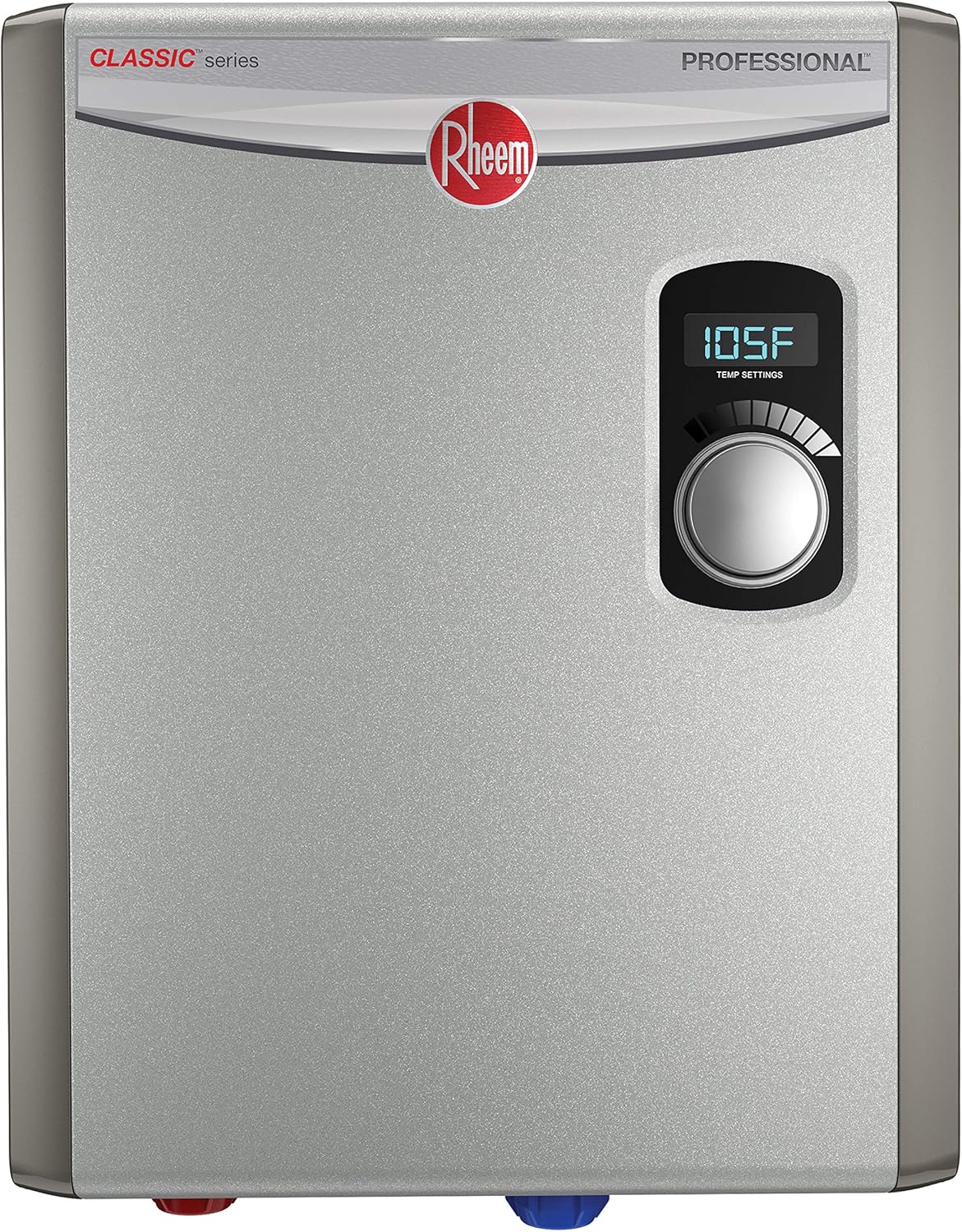
| Power Source | AC Power |
|---|---|
| Wattage | 18000 watts |
| Voltage | 240 volts |
| Flow Rate | 4.4 gpm |
| Efficiency | 99.8% |
The Rheem RTEX-18 is a compact, wall-mounted tankless electric heater intended to provide on‑demand hot water for mid‑range whole‑home applications. It uses two field‑serviceable copper immersion heating elements and self‑modulating electronics to adjust power to the flow, which helps reduce energy use compared with a storage tank. A front LED digital thermostat lets you set outlet temperature within one degree and monitor operation. With a maximum flow rate of about 4.4 GPM and 18 kW output at 240 V it can typically run a single shower plus a sink in moderate ground‑water climates. Installation is simplified by bottom 3/4
Best for: Buyers who prioritize reliable, energy‑efficient on‑demand hot water and want a compact, serviceable whole‑home electric option that minimizes standby losses.
Less Ideal for: Homes with very high simultaneous hot water demand or where 240 V electrical upgrades are impractical should consider higher‑capacity or gas alternatives.
- On‑demand heating reduces standby energy loss compared with tank heaters
- Self‑modulating control adjusts power to match water flow for improved efficiency
- Digital LED thermostat with +/-1°F accuracy for precise temperature control
- Compact wall‑mounted design saves space and allows flexible placement
- Field‑serviceable copper heating elements simplify repairs
- 4.4 GPM limit may not support multiple simultaneous high‑flow fixtures in cold inlet conditions
- Requires 240 V electrical service and substantial breaker capacity
Verdict: Choose the RTEX-18 if you want a compact, energy‑smart electric tankless unit that delivers precise, on‑demand hot water for moderate whole‑home loads.
Choosing the Right Tankless Water Heater for Hard Water: Key Factors to Consider
Scale Mitigation and Internal Design
Hard water deposits minerals inside heat exchangers and plumbing passages, which reduces heat transfer and can block flow. Look for units with heat-exchanger geometries that discourage heavy buildup and with smooth internal surfaces or coatings designed to resist adhesion. Some designs prioritize serviceability so scale-prone areas are easier to access and descale.
Understanding how a unit addresses scale is essential because it affects maintenance frequency, efficiency retention, and expected service life. A model with purpose-built scale control will often require less aggressive maintenance and deliver steadier performance over time.
Recommended Maintenance and Serviceability
All tankless units require periodic flushing or descaling when used on hard water, but the interval and difficulty vary. Consider how easy it is to perform routine descaling: are isolation valves standard, are access panels and ports reachable, and does the manufacturer provide clear instructions or a dedicated maintenance kit?
Easier maintenance lowers the effective cost of ownership and reduces downtime. If you are not comfortable with DIY descaling, check whether the unit is designed for quick professional service without extensive teardown.
Flow Capacity and Temperature Consistency
Hard-water deposits can reduce flow and heat transfer, so a unit with a healthy flow-rate margin is beneficial. Evaluate gallons-per-minute ratings at realistic temperature rises for your climate and typical usage patterns so the heater can support showers and simultaneous appliances with minimal temperature sag.
Choosing a unit with slightly higher capacity than your baseline need provides headroom to tolerate some scale buildup before performance is noticeably affected.
Materials and Corrosion Resistance
Mineral-rich water can accelerate wear in certain materials. Heat exchangers made from corrosion-resistant metals or with protective coatings resist pitting and failure better than untreated materials. Likewise, internal piping, fittings, and valves should be rated for mineral-laden water.
Durable materials extend the service interval and reduce the chance that scale leads to irreversible damage. Consider warranty terms as a signal of expected longevity in tough water conditions.
Installation and Water Treatment Compatibility
Proper installation impacts how a tankless unit performs with hard water. Installers may recommend pre-filters, sediment traps, or softening systems depending on local water chemistry. Check whether the unit tolerates upstream water-treatment devices and whether any such devices affect flow or warranty terms.
Compatibility with common water-treatment options is important because adding filtration or a softener can greatly reduce maintenance needs and extend equipment life.
Controls, Diagnostics, and User Feedback
Good control systems and on-unit diagnostics help you spot scale-related issues early. Look for clear digital temp control, error codes that indicate flow or heat-exchange problems, and easy-to-read performance readouts. Remote monitoring or app connectivity can simplify maintenance reminders and alert you to efficiency drops.
Better diagnostics reduce guesswork and can lead to faster, less costly repairs or preventative maintenance when mineral buildup begins to affect operation.
How Hard Water Affects Tankless Units
Hard water carries dissolved minerals that deposit as scale when heated. In tankless heaters, scale forms primarily on heat-exchanger surfaces and inside narrow flow passages, which reduces heat transfer efficiency and can restrict flow.
Over time, deposits increase energy use and may trigger error codes or reduce available hot water. Understanding the mechanics of scale formation helps you prioritize features like accessible service ports, recommended descaling methods, and material choices when selecting a unit.
- Scale lowers heat transfer efficiency, increasing energy consumption.
- Narrow passages and bends are more likely to clog.
- Early warning diagnostics can prevent costly failures.
Practical Maintenance Routine for Hard-Water Homes
Create a descaling schedule based on local water hardness and household usage. Many homes on hard water benefit from annual flushing; some require more frequent attention. Regular maintenance keeps efficiency high and prevents premature failures.
Keep a basic maintenance kit and familiarize yourself with isolation valve hookups, pump-assisted flush procedures, and the correct descaling solution concentrations. If you prefer not to perform maintenance yourself, arrange a repeatable service plan with a qualified technician.
- Check inlet filters monthly and clean as needed.
- Perform a full flush and descaling at recommended intervals.
- Document maintenance dates to track trending performance.
When to Add Water Treatment Upstream
A dedicated water-softening or conditioning system upstream of the heater can greatly reduce scale formation and extend intervals between service. Consider whole-house softeners, template-assisted crystallization systems, or targeted filtration depending on hardness levels and budget.
Weigh the upfront cost and additional maintenance of a treatment system against the potential savings in heater longevity and energy efficiency. In many hard-water areas, some form of pretreatment is the most cost-effective way to protect a tankless unit.
- Softening reduces dissolved calcium and magnesium before they reach the heater.
- Some treatment systems change water chemistry without adding salts.
- Ensure any treatment device maintains required flow rates for the heater.
Sizing for Resilience to Scale
Choose a unit with a modest capacity margin above your current peak demand so it can tolerate some efficiency loss from scale without failing to meet household needs. Calculate required gallons per minute at a realistic temperature rise rather than relying on peak, ideal conditions.
If you expect higher mineral loads or intermittent heavy use, size up or plan for more frequent maintenance to maintain performance.
- Estimate simultaneous fixture use to set GPM targets.
- Factor in colder incoming water temperatures for more conservative sizing.
- Allow headroom for gradual efficiency loss due to scale.
Diagnostics, Warnings, and When to Call a Pro
Modern units include error codes and performance readouts that indicate flow restrictions or overheating. Learn the common warnings related to scale and keep the manual accessible so you can interpret codes quickly.
Call a technician when you see repeated scale-related errors, unexplained performance drops, or if descaling does not restore normal operation. Professional service prevents small issues from becoming major repairs.
- Document error codes and operating conditions before service calls.
- Use diagnostic readouts to adjust maintenance frequency.
- Professional inspections can identify early corrosion from hard water.
How We Chose the Best Tankless Water Heater for Hard Water
We prioritized features and specifications that directly affect long-term performance in hard-water conditions. Key evaluation criteria included scale-mitigation design, which covers material choices, internal coatings, and engineered flow paths that reduce deposit formation. We assessed recommended maintenance procedures and accessibility for descaling, since units that are easier to service tend to last longer in mineral-rich water. Flow capacity and temperature-rise capability were judged for realistic household needs so a unit can meet simultaneous demands without excessive temperature fluctuation. Energy efficiency and control accuracy were included because efficient heat transfer and precise thermostatic control help counteract the insulating effects of scale. Finally, build materials and warranty coverage were considered as indicators of durability in aggressive water conditions. We excluded units that lack clear guidance for hard-water use or that require unusual, high-frequency professional servicing as a baseline requirement. Our shortlist favors models with clear maintenance paths, robust internal materials, and spec sheets that document performance under typical mineral loads. The scoring criteria below map to these priorities and guided our editorial judgments.
Our full evaluation process is outlined in our review methodology.
FAQ
How often should I descale a tankless water heater in hard water?
It depends on water hardness and household use. Many homes on hard water need an annual descaling, while very hard water or heavy use may require flushing every 6 months. Track performance and increase frequency if you see reduced flow or temperature swings.
Will a tankless heater fail sooner with hard water?
Hard water can shorten service life if scale is allowed to build up, because deposits reduce heat transfer and can cause overheating or blockages. Regular maintenance and material choices designed for hard water help prevent premature failure.
Can I install a water softener to protect the tankless heater?
Yes, installing a compatible water-treatment system upstream is a common strategy to reduce scale and extend unit life. Make sure the chosen treatment does not reduce flow below the heater's minimum requirements and confirm compatibility with any warranty terms.
Are there tankless models that need no descaling in hard water?
No tankless water heater is entirely maintenance-free when used with hard water. Some models are designed to reduce scale accumulation or simplify descaling, but periodic flushing or treatment is still necessary.
How can I spot early signs of scale buildup?
Watch for reduced hot-water flow, longer recovery times, fluctuating water temperatures, increased energy bills, or error codes related to overheating or flow restrictions. Regularly inspect inlet screens and document any gradual declines in performance.
Final Verdict
When choosing a tankless water heater for hard water, prioritize models with clear scale-mitigation features, serviceable designs, and corrosion-resistant materials. Size the unit with extra flow capacity to tolerate some efficiency loss, and plan a realistic maintenance routine or upstream treatment to minimize scale buildup. Balancing capacity, maintainability, and materials will deliver the most reliable hot-water performance and the lowest long-term repair risk for homes with hard water.