
Note: This article contains affiliate links. If you click on these links and make a purchase, we may earn a small commission at no extra cost to you. This helps support our research and content. Read our full affiliate disclosure here.
Picking the right thermostat for a gas furnace matters more than you might think. The wrong unit can cause short cycling, poor temperature control, or even compatibility headaches with existing wiring. You want reliable temperature regulation, simple setup, and a control interface that fits how you actually use heating in your home. This guide shortlists the top thermostats for gas furnaces across common installation scenarios and budgets. We evaluated each pick for compatibility, installation clarity, energy-saving features, and daily usability so you can choose a model that fits your furnace and lifestyle. Read on for our top picks and the criteria we used to vet them.
Top Picks at a Glance
| Best Overall The best all-around choice for most situations | Honeywell Home Smart Color Thermostat RTH9585WF |  |
| Best Quality Built to a higher standard if you want something more solid | PRO1 T715 Programmable Thermostat |  |
| Best Value The sweet spot between price and what you get | Honeywell Home RTH7600D Thermostat |  |
| Best Budget The cheapest option that still gets the job done reliably | Miuputake STN601 Thermostat |  |
| Top Rated A top-rated pick with lots of positive feedback | White-Rodgers 1E78-140 Thermostat |  |
| Most Popular A crowd favorite that many people choose with confidence | Sensi Touch ST75 Thermostat |  |
| Best Seller A high-volume bestseller chosen again and again | Google Nest Thermostat |  |
Honeywell Home Smart Color Thermostat RTH9585WF

| Connectivity Technology | Wi-Fi |
|---|---|
| Temperature Control Type | Heating and Cooling |
| Power Source | AC Power Supply |
| Display Type | LED |
The Honeywell Home Smart Color Thermostat is a Wi‑Fi programmable thermostat with a customizable color touch screen and features aimed at simplifying home comfort and energy savings. It supports 7‑day scheduling, Smart Response learning to anticipate temperature needs, and app/voice control so you can change settings from a phone or a compatible voice assistant. The display shows local weather and indoor humidity, and the system sends intelligent alerts for filter and humidifier pad changes and extreme temperatures. Installation is intended to be a DIY process for low‑voltage systems, but a common requirement is a C‑wire which many gas‑furnace setups already have; it does not work with line‑voltage electric baseboard heating. Practical benefits for gas furnace owners include flexible programming, auto heat/cool switching, and Energy Star reporting for tracking usage. Limitations are its incompatibility with high‑voltage systems and the need for a C‑wire adapter if your wiring lacks a dedicated common connection.
Best for: Buyers looking for a feature‑rich, easy to use smart thermostat for a gas furnace who value remote control, scheduling flexibility, and energy tracking.
Less Ideal for: Homes with line‑voltage electric baseboard heating or installations that lack a C‑wire and where adding one is not feasible.
- Customizable, bright color touchscreen that is easy to read and personalize
- Wi‑Fi and app control with voice assistant compatibility for remote adjustments
- Smart Response learning and scheduling options that simplify maintaining comfort
- Energy Star certification plus usage reports and utility rebate eligibility information
- Requires a C‑wire and is not compatible with high voltage or electric baseboard heating systems
Verdict: A versatile, Energy Star certified smart thermostat that gives gas‑furnace owners remote control, learning scheduling, and energy reporting in a customizable color touchscreen.
PRO1 T715 Programmable Thermostat

| Controller Type | Push Button |
|---|---|
| Temperature Control Type | Programmable |
| Power Source | Battery Powered or Hardwired |
| Display Type | LCD |
| Mounting Type | Wall Mount |
The PRO1 T715 is a multi-stage programmable thermostat built for 2 heat/2 cool gas HVAC systems and aimed at reliable, configurable temperature control. It supports 7-day, 5/1/1 or non-programmable schedules and exposes tuning options such as heating/cooling swing, second-stage control, room temperature calibration, and a 5-minute compressor delay to protect equipment. Installation is straightforward with a universal sub-base, color-coded terminal blocks, and choice of AA battery power or 24V hardwiring, and the large 4 sq. in. blue backlit LCD with a glow-in-the-dark button makes adjustments easy in low light. The unit also includes a filter change indicator and other performance-oriented controls that let HVAC-focused users fine tune operation. Limitations include a basic push-button interface rather than touchscreen or app control, and no Wi-Fi or smart home integration, so remote or voice control is not available.
Best for: Technically minded homeowners or HVAC installers who want precise control over multi-stage gas furnace behavior and value adjustable performance settings over smart features.
Less Ideal for: Users who want app-based control, voice assistant compatibility, or touchscreen convenience should consider a smart thermostat instead.
- Supports 2 heat/2 cool multi-stage gas systems with configurable second-stage control
- Flexible scheduling options including 7-day and 5/1/1 programs
- Large blue backlit LCD and glow-in-the-dark button for easy viewing and adjustments
- Can be powered by AA batteries or hardwired 24V for flexible installation
- Installer-friendly universal sub-base and color-coded terminal blocks
- No Wi-Fi or smart home connectivity for remote control or automation
- Push-button interface lacks the convenience of touchscreen controls
Verdict: Choose the PRO1 T715 if you need a performance-focused, installer-friendly programmable thermostat that gives precise multi-stage control for gas furnace systems.
Honeywell Home RTH7600D Thermostat

| Controller Type | Touch |
|---|---|
| Program mode | 7-Day |
| Power Source | Battery Powered |
| Voltage | 24 volts |
| Display Type | Digital |
The Honeywell Home RTH7600D is a straightforward 7-day programmable touchscreen thermostat designed to replace a basic wall thermostat and automate temperature schedules. You program separate schedules for each day with up to four periods per day, and the backlit touch display shows current and set temperatures at once for quick checks. Smart Response Technology learns how long your heating system takes to reach setpoints so the thermostat can start equipment early and meet your programmed times more reliably. It also supports auto changeover between heating and cooling, a compressor delay to protect equipment, and filter replacement and low battery alerts. Installation is intended for DIY with wired or battery-powered setups and broad system compatibility including many furnace and heat pump configurations. The unit lacks Wi-Fi or remote control features, so adjustments must be made at the thermostat, and it does not offer smart-home integrations or energy-reporting apps that some buyers expect from newer models.
Best for: Buyers who want a reliable, programmable thermostat that simplifies daily heating schedules and prioritizes predictable, on-time comfort without needing smart-home connectivity.
Less Ideal for: Users who want app control, voice assistant integration, or detailed energy reports should consider a connected smart thermostat instead.
- Large backlit touchscreen that displays current and set temperatures simultaneously
- 7-day programming with four periods per day for flexible schedules
- Smart Response Technology learns system run time to hit temperatures on schedule
- Auto changeover and compressor restart delay help protect equipment
- Filter replacement and low battery alerts for basic system maintenance
- No Wi-Fi or remote control capabilities for phone-based scheduling or monitoring
- No smart-home platform integration or energy usage reports
Verdict: A dependable, no-frills programmable thermostat that optimizes furnace run times with Smart Response Technology for predictable, scheduled comfort.
Miuputake STN601 Thermostat

| Controller Type | Push Button |
|---|---|
| Temperature Control Type | Manual |
| Power Source | 24VAC or 2 AAA batteries |
| Display Type | LCD |
| Mounting Type | Wall Mount |
The Miuputake STN601 is a basic wall-mounted digital thermostat intended for single-stage heating and cooling systems, including many gas furnaces. It provides a backlit LCD, push-button controls and a universal sub-base designed to speed DIY installation, and it can be powered either from 24VAC or two AAA batteries so it works where a common wire is absent. The unit includes adjustable temperature differential (swing), selectable compressor delay protection, and separate heating and cooling swing settings to help stabilize cycling and save energy in everyday use. Practical benefits are straightforward: clear display, simple operation, and wide compatibility with forced-air gas, oil or electric furnaces and basic heat-only systems. Limitations are that it is nonprogrammable, so you cannot set schedules or smart integrations, and it is not compatible with heat pumps that use auxiliary/emergency heat, line-voltage systems, electric baseboard heat, or mini-splits. If you need a no-frills thermostat to replace a basic gas furnace controller and prefer quick DIY setup, this covers the essentials without advanced features.
Best for: Buyers who want a low-cost, easy-to-install replacement thermostat for a basic gas furnace and prioritize simple, reliable temperature control over scheduling or smart features.
Less Ideal for: Users who want programmable schedules, Wi‑Fi or smart-home integration, or who have heat-pump systems with auxiliary/emergency heat should look at more advanced models.
- Works with common single-stage gas furnaces and other forced-air systems
- Dual power options (24VAC or two AAA batteries) remove need for a C-wire in many installs
- Large terminal blocks and universal sub-base simplify DIY installation
- Backlit LCD and straightforward button controls make settings easy to read and change
- Adjustable temperature differential and compressor delay help reduce short cycling
- Nonprogrammable so no schedules or remote/smart control
- Not compatible with systems that require auxiliary/emergency heat or line-voltage baseboard heating
Verdict: A budget-friendly, easy-to-install digital thermostat that gives reliable manual control for single-stage gas furnace systems.
White-Rodgers 1E78-140 Thermostat

| Power Source | Battery Powered (3 AAA) |
|---|---|
| Voltage | 24 volts |
| Temperature Control Type | manual |
| Display Type | Digital |
The White-Rodgers 1E78-140 is a straightforward non-programmable thermostat built for single-stage gas or heat-only systems that need reliable set-and-forget temperature control. Installation is typical wall-mount wiring for 24-volt and millivolt systems and it runs on three AAA batteries, so it keeps settings during power interruptions. The large digital display with backlight and button/touch controls makes it easy to read and adjust temperature, and the manufacturer claims +/-1 degree accuracy for steady comfort. Because it is non-programmable there are no scheduling features, which keeps operation simple and reduces potential electronic failure points. It is not compatible with electric baseboard heat and some specialized systems, so check system type before buying. For homeowners who want a durable, no-frills replacement that focuses on consistent temperature control, this model delivers dependable performance without unnecessary complexity.
Best for: Homeowners who prioritize a straightforward, durable thermostat for a gas furnace and want reliable manual temperature control without programming or smart features.
Less Ideal for: Those who want programmable schedules, remote control, or smart-home integration should choose a programmable or Wi-Fi thermostat instead.
- Simple non-programmable design reduces points of failure and is easy to use
- Large backlit digital display for clear temperature readout
- Runs on three AAA batteries so it retains function during power outages
- Compatible with most single-stage 24V and millivolt heat-only systems
- No programmable schedule or smart features for automated energy savings
- Not compatible with electric baseboard heat and some other specialized systems
Verdict: Choose this thermostat if you want a dependable, no-frills replacement that delivers accurate manual control for a single-stage gas heating system.
Sensi Touch ST75 Thermostat

| Connectivity Technology | Wi-Fi |
|---|---|
| Control Method | App, Touch, Voice |
| Display Type | LCD |
| Screen Size | 4.3 inches |
| Power Source | AC/DC |
The Sensi Touch ST75 is a wall‑mounted smart thermostat that brings remote control and basic energy-saving features to gas furnace systems that provide a common C‑wire. Installation is targeted at DIYers and the unit includes an illuminated terminal and step‑by‑step app guidance to simplify wiring and setup. In daily use the large color touchscreen and companion app let you set schedules, adjust temperature from anywhere, and view usage reports and smart alerts for filter changes and equipment issues. It supports voice assistants and home platforms for hands‑free control and is Energy Star certified to help reduce HVAC energy use. The thermostat requires a C‑wire and runs on AC/DC power, so it is not suited to older setups that lack that connection, and advanced users may miss deeper learning or multi‑zone features found on some premium models. Data privacy is called out as a feature, and Emerson's HVAC background helps with compatibility and reliability expectations for gas furnace control.
Best for: Buyers who prioritize proven reliability, clear social proof, and a straightforward smart thermostat experience for a gas furnace and want an easy DIY install backed by a known HVAC brand.
Less Ideal for: Homes without a C‑wire connection, or buyers who want adaptive learning thermostats or built-in multi‑zone controls should consider other options.
- Large, easy-to-read color touchscreen with intuitive menus
- Works with major smart platforms and voice assistants for remote and voice control
- Energy Star certification plus scheduling and usage reports to help reduce HVAC energy use
- DIY-friendly installation with illuminated terminals and step-by-step app instructions
- Smart alerts and maintenance reminders for filter changes and equipment
- Requires a common C‑wire so it is not compatible with some older furnace setups
- Does not include advanced machine-learning home learning or native multi-zone management
Verdict: Choose the Sensi Touch ST75 if you want a reliable, app‑controlled, Energy Star thermostat that is easy to install and well supported for gas furnace systems.
Google Nest Thermostat
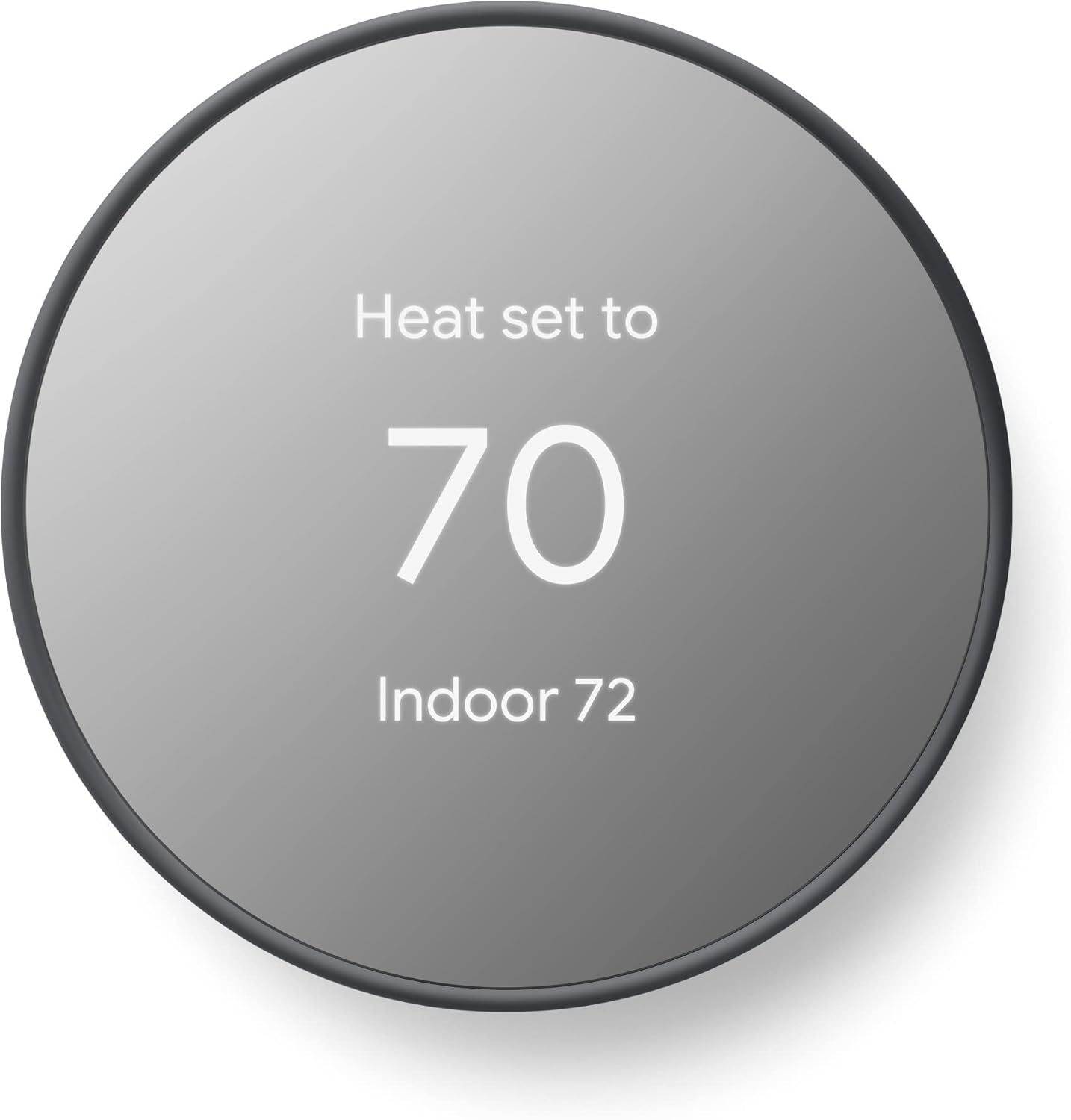
| Connectivity Technology | Bluetooth, Wi-Fi |
|---|---|
| Power Source | Battery Powered |
| Display Type | LCD |
| Control Type | Remote Control, Voice Control |
| Number of Batteries | 2 A batteries required (included) |
The Google Nest Thermostat is a budget-conscious smart thermostat that replaces a conventional wall thermostat and provides app and voice control for heating and cooling. It installs on most gas furnace systems and is designed for DIY setup in about 30 minutes using the Google Home app. The unit connects over 2.4/5 GHz Wi‑Fi and Bluetooth Low Energy, supports voice control through Google Assistant and other Matter-certified assistants, and runs on two included A batteries so many homes do not need a C wire. In daily use it can automatically set Eco Temperatures when you leave, suggest schedule tweaks via Savings Finder, and send basic HVAC monitoring alerts if something seems off. Practical benefits include easy remote adjustments, simple scheduling, and potential energy savings through automated setbacks. Limitations are that some heating-only, zone, or heat pump setups may require a C wire or power accessory, voice features need a compatible smart device and working internet, and alerts are informational rather than a substitute for professional diagnostics.
Best for: Buyers who want a straightforward, budget smart thermostat that is easy to install themselves, lets them control a gas furnace remotely, and prioritizes simple energy-saving automation.
Less Ideal for: Homes with complex HVAC setups that require constant professional configuration or users who need advanced, technician-grade diagnostic features.
- Works with Wi‑Fi and Bluetooth for remote app control and voice assistants
- Designed for easy DIY installation with included mounting hardware and batteries
- Automatic Eco mode and Savings Finder help reduce energy use when away
- HVAC monitoring and alerts provide early warnings about system issues
- Some systems (heating-only, zone, or certain heat pumps) may require a C wire or power accessory
- Voice control and remote features require working internet and a compatible smart device
Verdict: A simple, app‑driven smart thermostat that makes remote control and basic energy savings easy for mainstream gas furnace owners.
Choosing the Right Thermostat for Gas Furnaces: Key Factors to Consider
Wiring and Furnace Compatibility
Gas furnaces typically use specific control wires for heat call, fan, and sometimes a common wire. Confirming that a thermostat supports the furnace's control configuration is essential because incompatible wiring can prevent the furnace from responding correctly. For single-stage furnaces you need clear support for R, W, G, and C terminals; for two-stage furnaces the thermostat must explicitly support staged heat control.
Some newer thermostats expect a common wire to power smart features. If your home lacks a C wire, check whether the thermostat offers alternative powering options or whether you are comfortable adding common power at the furnace. Poor wiring match leads to frequent system errors, short cycling, or the thermostat failing to power up reliably.
Installation and Setup
How a thermostat mounts, labels wires, and walks you through setup determines whether installation is a quick DIY job or requires a technician. Clear terminal labels, detailed wiring diagrams, and straightforward mounting hardware reduce installation time and mistakes. Look for thermostats that offer step-by-step setup prompts and that detect wiring automatically during the initial power-up sequence.
If you plan to install without professional help, favor units with robust printed guides and in-app wiring diagrams. Consider whether you will need to shut down power at the furnace during installation and whether the thermostat provides clear instructions for restoring system operation safely.
Control Options and Scheduling
A thermostat's control model shapes daily comfort and convenience. Basic manual thermostats let you set a temperature directly, while programmable units allow weekday/weekend schedules or multiple daily setpoints. Learning thermostats can adapt to your patterns but may require a few weeks to reach optimal schedules.
Effective scheduling reduces runtime during unoccupied hours and avoids abrupt setpoint changes that stress the furnace. Check whether the thermostat supports temporary holds, vacation modes, and easy overrides so you can make short-term adjustments without losing your programmed schedule.
Energy Management and Reporting
Energy-saving controls translate to measurable reductions in runtime and fuel consumption when used correctly. Look for setback support, adaptive recovery (which starts heating early to reach target temperature at a set time), and clearly displayed run-time or usage feedback. Some thermostats include learning or presence-based adjustments that can further reduce gas use, but these features are only effective if they integrate cleanly with your existing schedule.
Consider whether the thermostat provides simple reports or integrates with home energy dashboards. Transparent feedback about furnace runtime helps you confirm that setback strategies are working and informs adjustments to schedules for better efficiency.
User Interface and Feedback
How the thermostat communicates status and errors matters for daily confidence. Clear displays, readable temperature readouts, and straightforward menus reduce accidental misconfiguration. Audible or on-screen alerts for wiring faults or low batteries help prevent unnoticed failures that could leave the house without heat.
If the thermostat includes an app or remote control, evaluate whether the mobile interface mirrors the on-device controls and whether changes sync reliably. Responsive, understandable feedback is especially important when managing temperature remotely or for homes with multiple occupants who may adjust settings.
Common Gas Furnace Wiring Layouts Explained
Most gas furnaces use a simple control scheme that includes wires for power, heat call, fan control, and sometimes a common wire. Familiarizing yourself with typical terminal labels helps you match a new thermostat to the furnace. The basic terminals you will encounter include R (power), W (heat), G (fan), and C (common).
When you open the furnace control compartment you should find a diagram or terminal block labeling. If you are unsure, take a clear photo of the existing thermostat wiring before disconnecting anything so you can reference it during installation.
- R — 24 VAC power supply from furnace transformer
- W — Heat call; closes when thermostat requests heat
- G — Fan control; operates blower independently
- C — Common; completes power circuit for smart thermostats
Handling Homes Without a C Wire
Many older homes lack a dedicated common wire to power networked thermostats. If you do not have a C wire, you have a few options: choose a thermostat designed to work without one, install an adapter that supplies power from the furnace, or run a new wire from the furnace control board to the thermostat location.
Each approach has tradeoffs. Adapter kits are often a quick fix but may complicate wiring and limit some functions. Running a new wire is the most robust solution but requires access through walls or conduits. Choose based on your comfort level with minor electrical work and the importance of full smart features.
- Adapter modules can supply power but may cause intermittent issues if not installed correctly
- Running a new C wire provides the most reliable power for advanced thermostat features
- Some thermostats implement power-stealing methods that work but can cause furnace cycling on marginal control boards
Balancing Comfort and Fuel Savings
Thermostats influence energy use primarily through setback scheduling and recovery behavior. Setting modest setbacks during unoccupied hours and using gradual recovery avoids sudden heavy firing of the furnace while still saving fuel. Extreme setbacks in very cold climates can increase runtime during recovery, offsetting savings.
Real-world savings depend on insulation, outdoor temperature, and how long setback periods last. Use the thermostat to track runtime and adjust schedules incrementally until you reach a balance between comfort and reduced gas usage.
- Use smaller setbacks if occupants are sensitive to temperature swings
- Program longer setback periods during consistent absences like workdays
- Enable adaptive recovery if available to reach setpoints efficiently
Remote Control and Integration Considerations
Remote access via Wi-Fi and integration with home automation systems can add convenience but also introduce complexity. If you rely on remote control, verify that the thermostat maintains stable connectivity and offers an intuitive app experience. Some units provide web dashboards or API access for advanced integration.
For households that use voice assistants or smart home hubs, prioritize thermostats with clear integration documentation. Ensure remote changes do not accidentally override important schedules or safety settings.
- Confirm the thermostat supports reliable Wi-Fi bands used in your home
- Check whether the app provides separate user access levels for household members
- Prefer systems that log recent activity so you can troubleshoot unexpected changes
Maintenance and Troubleshooting Tips
Basic thermostat maintenance includes keeping the unit free of dust and checking batteries if it includes a battery backup. Periodically verify that setpoints match indoor comfort and that scheduled setbacks are still active after power outages or firmware updates.
When troubleshooting, start with wiring checks and ensure the furnace control board shows the expected terminals energizing when the thermostat calls for heat. If the thermostat reports an error, consult the wiring photo you took during removal and follow the manufacturer troubleshooting checklist.
- Replace batteries annually if present
- Reboot the thermostat after firmware updates if you notice odd behavior
- Keep a wiring photo and label spare wire ends for future service calls
How We Chose the Best Thermostat for Gas Furnaces
We started by focusing on features that directly affect performance and homeowner experience with gas furnace systems. Compatibility with common gas furnace control wiring and support for gas-specific control stages was a primary filter. We prioritized units that document wiring schematics clearly and support conventional furnace control without requiring additional modules. Installation ease and documentation were next. Thermostats that minimize need for a common wire workaround, offer clear labeling, and include simple mounting/installation guides scored higher. Usability during daily operation mattered too. Devices with intuitive interfaces, programmable schedules, or reliable manual controls were favored. Energy and scheduling features were assessed for real-world impact. We looked for programmable or learning schedules, setback capability, and whether the thermostat supports temperature holds without confusing overrides. Long-term reliability and reported firmware update practices were considered where applicable. We excluded units that are exclusively designed for heat-pump operation or that require complex third-party gateways to work with basic gas furnace wiring. Products that lack clear wiring support for single-stage or two-stage gas furnace setups were not considered. The final list balances compatibility, installation clarity, user controls, and energy-management features.
Our full evaluation process is outlined in our review methodology.
FAQ
Do I need a special thermostat for a gas furnace?
Usually a conventional thermostat that supports R, W, and G terminals is sufficient for most gas furnaces. Ensure the unit explicitly lists compatibility with gas furnace control and supports any multi-stage heat your system may use.
Can I install a smart thermostat without a C wire?
Some smart thermostats can operate without a C wire using power-stealing techniques or adapter modules. These options work in many homes but may be less reliable than installing a proper common wire from the furnace control board.
Will a thermostat improve my furnace efficiency?
A well-configured thermostat can reduce fuel use by enabling setbacks and adaptive recovery. The actual efficiency gain depends on insulation, thermostat programming, and how consistently you use energy-saving schedules.
How do I know if my furnace is single-stage or two-stage?
Check the furnace control board or the existing thermostat wiring. Single-stage systems typically use a single heat call terminal labeled W. Two-stage systems will have an additional terminal or label indicating second-stage heat. Consult your furnace documentation or a technician if unsure.
What should I do if the thermostat shows an error after installation?
Start by powering the system down and verifying all wires are seated correctly on the labeled terminals. Restore power and check for the same error. If it persists, consult the thermostat troubleshooting guide and confirm the furnace control board outputs are functional.
Final Verdict
Choosing a thermostat for a gas furnace comes down to matching wiring compatibility, ensuring straightforward installation, and selecting control features that you will actually use. Prioritize units that clearly document support for your furnace wiring and that provide reliable scheduling and power behavior. Balance advanced features like learning schedules or remote access with the practical needs of consistent operation. Focus on wiring matches and ease of installation first, then evaluate scheduling and energy-management features. With those tradeoffs clear, you can confidently pick a thermostat that delivers comfort and reduces unnecessary furnace runtime.