
Note: This article contains affiliate links. If you click on these links and make a purchase, we may earn a small commission at no extra cost to you. This helps support our research and content. Read our full affiliate disclosure here.
If you manage rental units, a thermostat is more than a temperature control device. It affects tenant comfort, utility bills, and the time you spend on maintenance and troubleshooting. Choosing the right thermostat for rental properties helps you protect rental infrastructure, reduce service calls, and keep energy use predictable. This guide covers the top shortlisted thermostats for rental properties and explains the practical criteria we used to evaluate them, including installation effort, tenant controls, durability, and energy management. Read on to find options that balance landlord oversight with an easy experience for tenants.
Top Picks at a Glance
| Best Overall The best all-around choice for most situations | Sensi Smart Thermostat ST55 |  |
| Best Quality Built to a higher standard if you want something more solid | ecobee Smart Thermostat Essential |  |
| Best Value The sweet spot between price and what you get | Honeywell Home X2P Programmable Thermostat RTH20B |  |
| Best Budget The cheapest option that still gets the job done reliably | Honeywell Home CT30A1005 Thermostat |  |
| Top Rated A top-rated pick with lots of positive feedback | Heagstat H701W Single-Stage Thermostat |  |
| Most Popular A crowd favorite that many people choose with confidence | Amazon Smart Thermostat |  |
| Best Seller A high-volume bestseller chosen again and again | Google Nest Thermostat |  |
Sensi Smart Thermostat ST55

| Connectivity Technology | Wi-Fi |
|---|---|
| Controller Type | Amazon Alexa, Apple HomeKit, Google Assistant, SmartThings, Vera |
| Power Source | Corded Electric |
| Display Type | LED |
| Number of Batteries | 2 AA batteries required. (included) |
The Sensi Smart Thermostat ST55 is a wall‑mounted Wi‑Fi thermostat aimed at letting users control heating and cooling from the app, touchscreen and voice assistants. It pairs with Alexa, Google Assistant, Apple HomeKit and SmartThings and offers remote access, flexible scheduling, usage reports and smart alerts so landlords or tenants can monitor run times and spot maintenance needs. The unit is Energy Star certified and includes simple DIY installation aids such as a built‑in level, wire stickers and step‑by‑step app instructions, and it works in most homes without a common wire. Practical benefits for rental properties include straightforward setup, remote control for off‑site adjustments, and filter/equipment reminders that reduce maintenance surprises. Limitations to consider are the simple LED screen and button controls instead of a full color touchscreen and the need to rely on the Sensi app ecosystem for advanced reporting and scheduling nuances. The thermostat is compact, comes with batteries and mounting hardware, and leans toward ease of use rather than pro‑level configurability.
Best for: Property owners or managers who need a simple, remotely controllable thermostat that is quick to install and helps track HVAC usage across rental units.
Less Ideal for: Landlords seeking a high‑end touchscreen interface or installers who require enterprise multi‑unit management features should consider other options.
- Works with Alexa, Google Assistant, Apple HomeKit and SmartThings for voice and remote control.
- Energy Star certification plus usage reports and smart alerts help manage HVAC efficiency.
- Easy DIY installation with built‑in level, wire stickers and clear app instructions.
- Includes batteries, mounting hardware and a free mobile app for quick setup.
- Simple LED display and button controls lack the visual polish of color touchscreens.
- Advanced scheduling and reporting depend on the app rather than on‑device controls.
Verdict: A straightforward, Energy Star certified smart thermostat that makes remote control and DIY installation effortless for rental properties.
ecobee Smart Thermostat Essential

| Connectivity Technology | Wi‑Fi |
|---|---|
| Controller Type | Amazon Alexa, Android, Apple HomeKit, Google Assistant, iOS |
| Power Source | Battery Powered |
| Display Type | LCD |
The ecobee Smart Thermostat Essential is a compact Wi‑Fi thermostat designed to replace a standard wall thermostat and give landlords remote control and automated energy savings. It installs on a wall plate, connects to dual‑band Wi‑Fi, and can be controlled from the ecobee app or via Apple HomeKit, Google Assistant, or Siri/Alexa integrations. The Essential model includes auto‑scheduling, auto‑away detection, fan control, and ecobee's eco+ features to trim HVAC run time and deliver modest energy savings. It runs on battery power and can work with homes that may need the optional Power Extender Kit when a C‑wire is not present. The 3.74‑inch color touchscreen and simple touch controls make local adjustments straightforward, while remote monitoring and filter reminders reduce maintenance headaches for rental properties. Limitations include fewer premium sensors and advanced HVAC diagnostics compared with higher‑end ecobee models, so it focuses on core smart features rather than whole‑home sensing or air quality monitoring.
Best for: Landlords and property managers who want a reliable, easy‑to‑manage smart thermostat that offers remote control and energy savings without extra advanced sensors or enterprise features.
Less Ideal for: Owners seeking whole‑home sensing, integrated air quality monitoring, or advanced HVAC diagnostics should consider higher‑end models instead.
- Works with Apple HomeKit, Google Assistant, and Alexa for convenient remote and voice control
- Auto‑scheduling and auto‑away features help reduce energy use without manual intervention
- Compact touch interface and app make temperature changes and scheduling easy
- Compatible with most 24 VAC HVAC systems and supports an optional Power Extender Kit for homes without a C‑wire
- Does not include the premium SmartSensor temp/motion sensors in the box
- Fewer advanced diagnostics and air quality features compared with higher‑tier ecobee models
Verdict: A straightforward, app‑friendly smart thermostat that delivers remote control and automated energy savings ideal for rental properties needing dependable, low‑maintenance temperature control.
Honeywell Home X2P Programmable Thermostat RTH20B

| Compatibility | Single-Stage, 1 Heat/1 Cool |
|---|---|
| Scheduling | 5-2 day or non-programmable option |
| Power Source | 2 AA batteries |
| Display Type | Backlit LCD |
The Honeywell Home X2P (RTH20B) is a straightforward programmable thermostat built for single-stage 1 heat/1 cool systems common in rental properties. It offers 5-2 day scheduling (with non-programmable option), a large backlit LCD for easy reading, and basic reminders such as change-filter alerts and humidity monitoring. Installation is simple for someone comfortable with thermostat wiring and it runs on 2 AA batteries so no C-wire is required for basic operation. The unit supports typical forced-air and hot water systems but is not compatible with electric baseboard heat (120–240V). While it lacks smart-home integration and remote control, its clear interface and schedule presets let landlords set efficient temperature limits and reduce tenant calls about programming. The limited feature set keeps it inexpensive and easy to manage, though larger properties or owners wanting remote management will need a Wi-Fi model instead.
Best for: Property owners or managers who prioritize reliable, easy-to-use thermostats that tenants can operate without training and that reduce in-person service calls.
Less Ideal for: Owners who need remote temperature control, integration with smart-home systems, or support for high-voltage electric baseboard heating should consider a Wi‑Fi or specialized thermostat instead.
- Simple 5-2 day scheduling that fits common occupancy patterns
- Large backlit LCD and clear font for easy tenant use
- Runs on 2 AA batteries so basic install does not require a common wire
- Includes change-filter reminders and humidity monitoring for maintenance support
- No Wi-Fi or remote control for off-site management
- Not compatible with electric baseboard heating (120–240V)
Verdict: A no-frills, tenant-friendly programmable thermostat that makes it easy to set consistent schedules and reduce onsite troubleshooting for rental properties.
Honeywell Home CT30A1005 Thermostat

| Controller Type | Hand Control |
|---|---|
| Additional Features | Heat Only |
| Connectivity Technology | Wired |
| Power Source | Low Voltage Control |
| Control Type | Dial Control |
The Honeywell Home CT30A1005 is a straightforward manual thermostat intended to control heating-only furnace systems. It uses a bimetal temperature sensor and a snap-action (mechanical) switch with a dial control, so setting and adjusting temperature is immediate and intuitive without menus or power requirements beyond low-voltage wiring. Installation is DIY friendly with a decorative backplate and mounting hardware included, and the unit is mercury free. The lack of a digital display or programming means it is extremely simple to operate and durable for high-turnover settings like rentals, but it cannot control heat pumps, electric baseboard heat, or multi-stage systems and offers no scheduling, remote access, or energy-saving automation. Its pared-down design keeps costs and maintenance low, making it a practical replacement where basic, reliable temperature control is the priority and advanced features are unnecessary.
Best for: Property owners who need an inexpensive, low-maintenance thermostat that tenants can operate easily and that provides reliable basic heating control.
Less Ideal for: Landlords who want energy-saving scheduling, remote management, or compatibility with heat pumps and electric baseboard systems should choose a different model.
- Very simple mechanical dial operation that tenants can use without instructions
- Designed for heating-only furnace systems with low-voltage controls and snap-action switch for reliable switching
- Includes mounting hardware and decorative backplate for quick DIY installation
- Mercury free and built with a proven, durable bimetal sensor
- Not compatible with heat pumps, electric baseboard systems, or multi-stage HVAC setups
- No programmable schedule, Wi-Fi, or remote control features
Verdict: Choose this thermostat when you want the cheapest, most durable heat-only control for rental units with no need for programming or remote features.
Heagstat H701W Single-Stage Thermostat
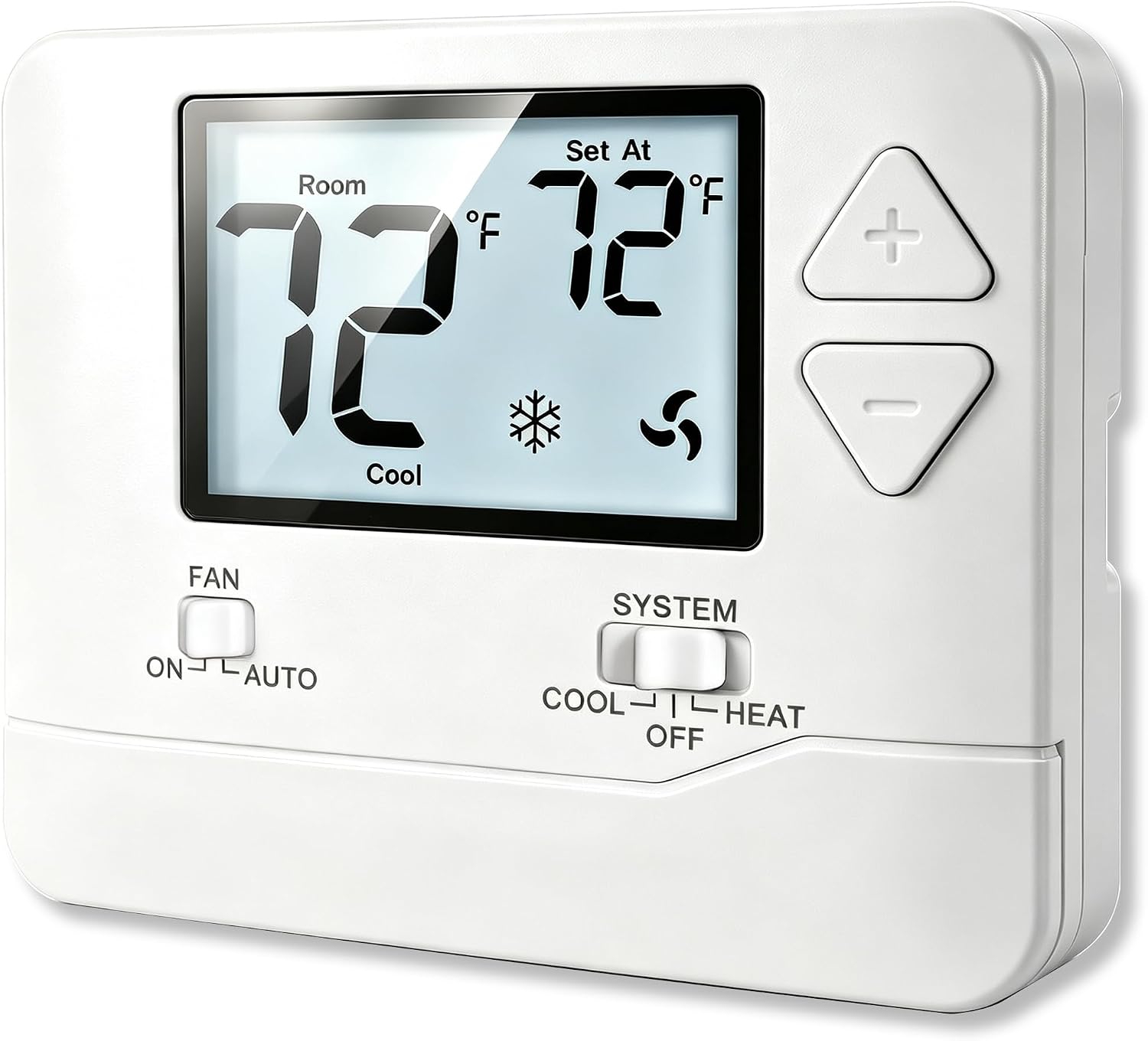
| Controller Type | Non-Programmable |
|---|---|
| Systems | Conventional 1 Heat / 1 Cool single-stage |
| Power | 24VAC or 2 AAA batteries |
| Display Size | 4.5 inches |
| Terminals | RH, RC, G, Y, C, O, B, W |
The Heagstat H701W is a simple manual thermostat built for conventional 1 heat/1 cool systems and straightforward temperature control. It is typically installed on a wall and used to switch between Heat, Off, and Cool while setting a target temperature via button controls on a 4.5 square-inch backlit LCD. Notable features include support for standard R, RH/RC, W, Y, G, and C terminals, optional 24VAC hardwiring or 2 AAA battery power, selectable 5-minute compressor delay protection, adjustable swing and manual temperature calibration. For rental properties this thermostat's minimal interface and lack of programming make it easy for tenants to operate and for landlords to avoid complex scheduling issues. The unit omits multi-stage, heat pump, and advanced smart functions, so it is best where reliable basic control and simple installation matter more than remote access or energy scheduling. Installation requires verifying system compatibility and basic wiring knowledge to prevent mismatches.
Best for: Landlords or property managers who want a dependable, easy-to-use thermostat for standard single-stage HVAC systems and prefer minimal tenant interaction or complexity.
Less Ideal for: Owners who need smart features, remote scheduling, or support for multi-stage or heat pump systems should consider a different model.
- Simple manual interface that is easy for tenants to use
- Supports standard R, RH/RC, W, Y, G, C terminals for common single-stage systems
- Dual power options: 24VAC hardwire or 2 AAA batteries
- Large backlit LCD for clear readability in low light
- Selectable 5-minute compressor delay protection to protect equipment
- Not compatible with multi-stage systems, heat pumps, or many specialty thermostats
- No programming, Wi-Fi, or remote control features for scheduling or monitoring
Verdict: A low-maintenance, tenant-friendly thermostat that delivers reliable basic temperature control for standard single-stage rental HVAC systems.
Amazon Smart Thermostat
| Manufacturer | Amazon |
|---|---|
| Requires C-wire | Yes |
| Works with | Alexa and Ring (select features require Alexa devices) |
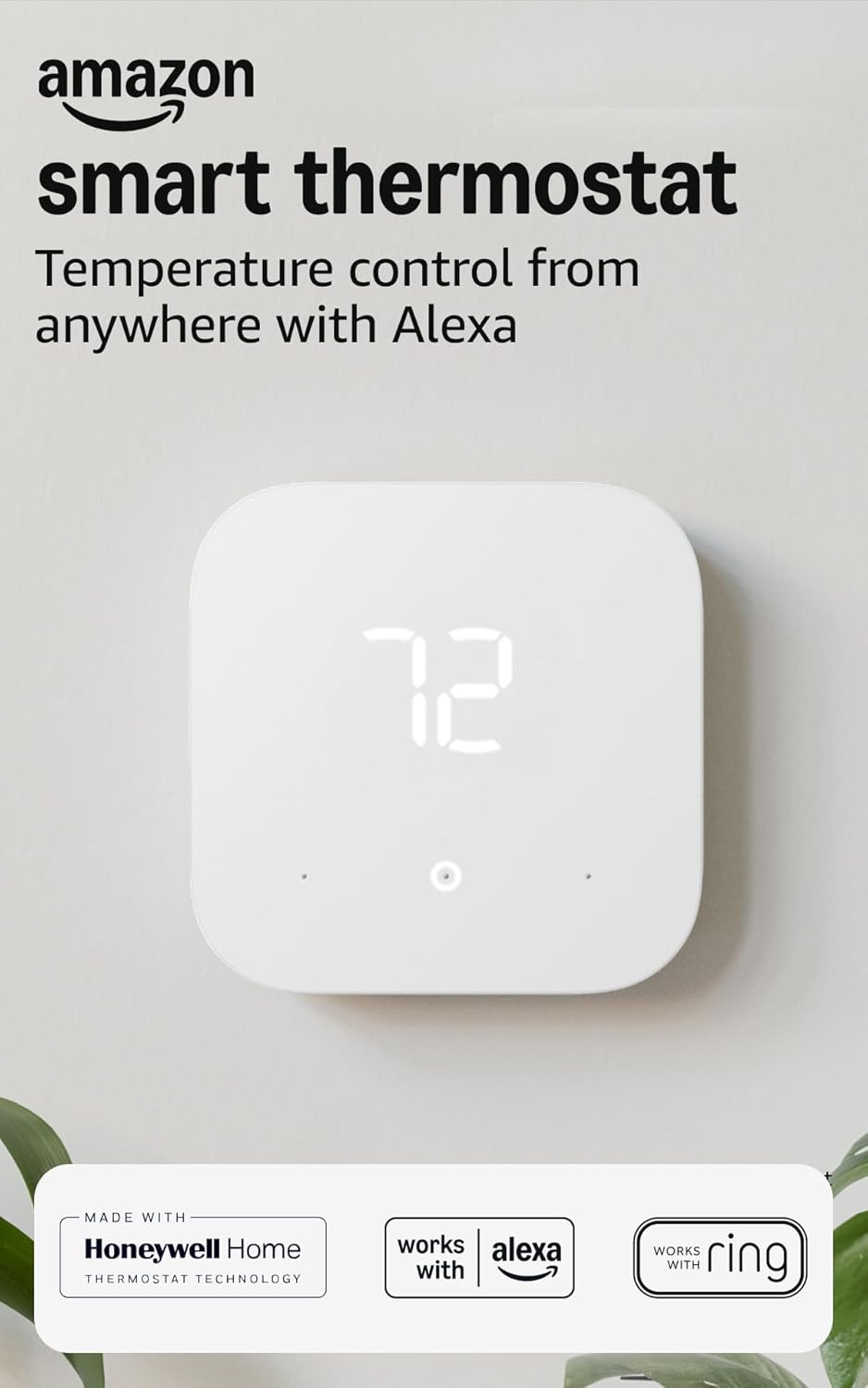
The Amazon Smart Thermostat installs in place of a conventional thermostat and provides app and voice control through Alexa for scheduling, remote adjustments, and presence-based temperature changes. It uses Honeywell Home thermostat technology under the hood and supports typical programmable modes like home, away, and sleep; the Alexa app guides do-it-yourself installation but a C-wire is required. In practice it is used to automate heating and cooling across daily routines and to let property managers or tenants change temperature remotely. Notable features include integration with Alexa+ routines and presence detection when paired with select Alexa devices, ENERGY STAR–aligned energy savings guidance, and email follow-up on potential local rebates. Limitations include the C-wire requirement and dependence on Alexa ecosystem features for advanced automation, so it is less useful if you want a standalone, voice-agnostic smart thermostat. The unit is straightforward for landlords who want remote control and energy reporting without complex setup, but expect to rely on Alexa for the most polished smart features.
Best for: Landlords or property managers who want an easy-to-manage, Alexa-integrated thermostat to enable remote scheduling and energy savings across rental units.
Less Ideal for: Owners who need a completely voice-agnostic or offline smart thermostat or rentals without C-wire wiring should consider alternative models or wiring solutions.
- Works with Alexa for voice control and Alexa+ routines
- Remote monitoring and scheduling via the Alexa app
- Built on Honeywell Home thermostat technology for familiar reliability
- ENERGY STAR aligned guidance and rebate information to help reduce energy costs
- Requires a C-wire for installation
- Advanced automation depends on Alexa ecosystem and compatible Alexa devices
Verdict: A simple, Alexa-first smart thermostat that gives landlords remote control and energy-saving features with minimal setup when C-wire wiring is available.
Google Nest Thermostat
| Connectivity Technology | Bluetooth, Wi-Fi |
|---|---|
| Power Source | Battery Powered |
| Display Type | LCD |
| Control Type | Remote Control, Voice Control |
| Number of Batteries | 2 A batteries required |
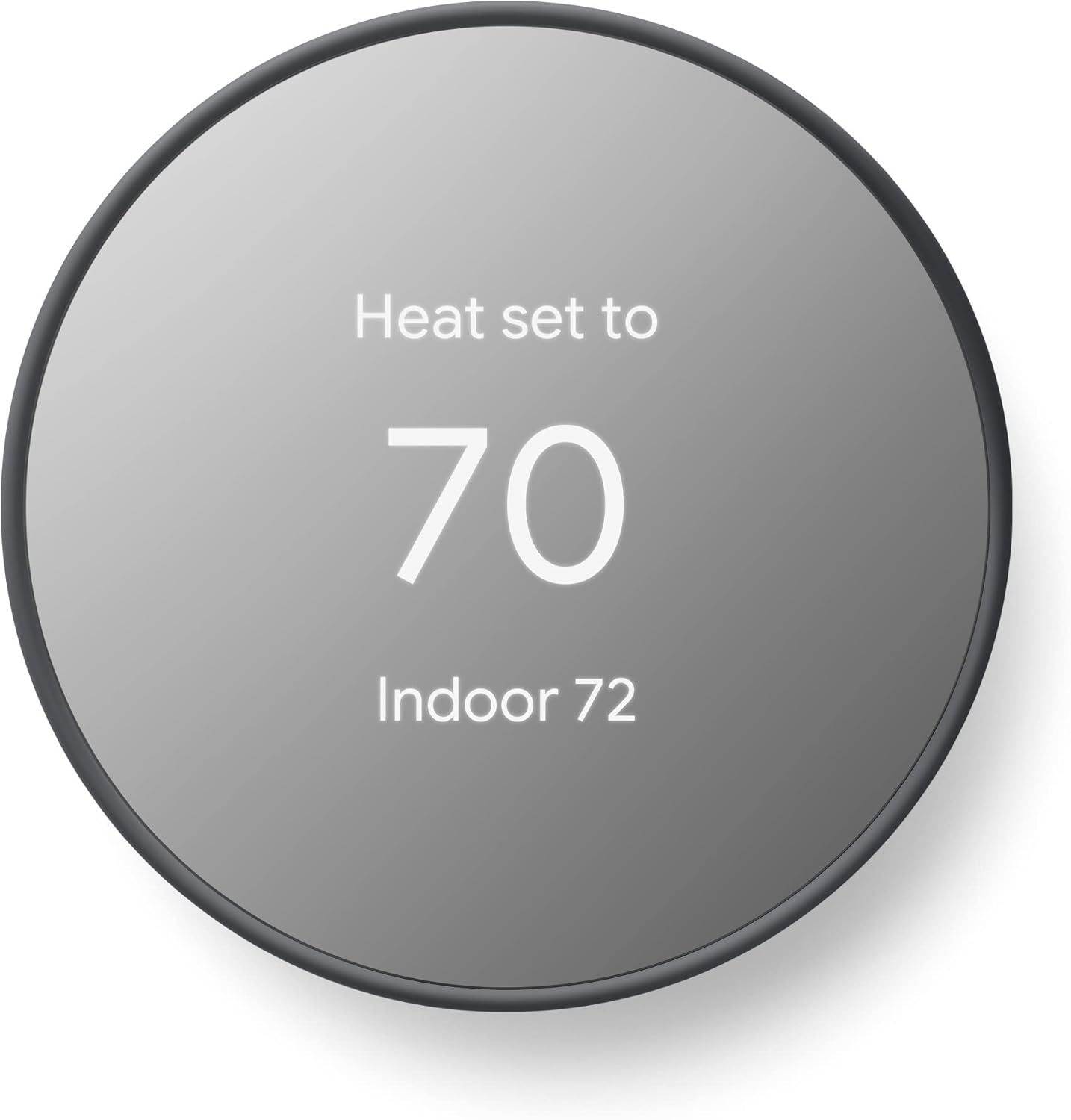
The Google Nest Thermostat is a straightforward smart thermostat designed for easy self-installation and app-based control. It connects over Wi‑Fi and Bluetooth, lets you set schedules in the Google Home app, and can be voice-controlled through compatible assistants. The unit includes features aimed at saving energy like automatic Eco Temperatures when it detects the house is empty and Savings Finder suggestions in the app, plus HVAC monitoring alerts for potential issues. It runs on two A batteries so many homes do not need a C wire, and the package includes a steel plate, mounting screws, and documentation for setup. For rental properties its simplicity is an advantage: tenants can use remote control when permitted and owners can rely on programmable schedules to limit wasted heating or cooling. Limitations to note are that advanced Nest services like Nest Renew and some monitoring features have specific eligibility requirements, voice control and remote alerts require active Wi‑Fi and compatible devices, and certain HVAC systems may still need a C wire or power accessory for full functionality.
Best for: Property owners seeking a simple, tenant-friendly smart thermostat that is easy to install and helps reduce energy waste in rental units.
Less Ideal for: Landlords needing advanced tenant management features or installers who require full compatibility with every niche HVAC system without adding a power accessory.
- Easy app-based scheduling and remote temperature control via Google Home
- Energy-saving features such as Eco Temperatures and Savings Finder
- Works without a C wire in most homes and runs on included A batteries
- Includes mounting plate and screws for simple DIY installation
- Some advanced features require eligibility or additional Google services
- Voice control and alerts depend on working Wi‑Fi and compatible devices
Verdict: A user-friendly, energy-conscious smart thermostat that is quick to install and well suited to rental properties where straightforward scheduling and remote control are priorities.
Choosing the Right Thermostat for Rental Properties: Key Factors to Consider
Durability and Tamper Resistance
Rental units see more turnover and occasional misuse than owner-occupied homes. A thermostat built with a durable case, secure mounting, and limited exposed buttons will survive longer and require fewer service calls.
Tamper-resistant features such as lockable covers, recessed buttons, or admin-only access modes protect setpoints and prevent tenants from making changes that could increase energy costs or harm HVAC equipment. Consider how easily a maintenance technician can access internal wiring for repairs while keeping everyday controls locked down.
Tenant Ease of Use
Tenants should be able to adjust comfort without confusion. Clear, large displays, straightforward physical controls or a simple app, and intuitive button layouts reduce support requests and accidental misuse.
Balance ease of use with the need to restrict extreme temperature changes. Thermostats that offer a simple user interface plus a landlord mode to set maximum and minimum temperatures hit the sweet spot between tenant autonomy and building control.
Installation and Compatibility
Rental properties often have a mix of HVAC systems, from simple heat-only units to multi-stage heat pumps. Choose thermostats that are compatible with common wiring configurations and that offer clear installation instructions.
Look for models that are easy to swap out without specialized tools, have labeled terminals for quick wiring, and include common adapters or wiring modules. Faster, simpler installations reduce downtime between occupants and lower electrician fees.
Remote Management and Monitoring
Remote access can save property managers time by allowing schedule updates, setpoint enforcement, and quick diagnostics without on-site visits. Useful remote features include centralized account access for multiple units, basic alerting for temperatures outside safe ranges, and the ability to lock or unlock local controls from a dashboard.
When relying on remote management, consider network reliability at the property and whether the thermostat supports fallback operation when connectivity is lost. Privacy matters too: remote tools should not expose tenant-specific data beyond what is necessary for maintenance and energy control.
Energy Control and Scheduling
Thermostats that support programmable schedules and enforceable setpoint limits help control utility spending across many units. Features like setback schedules, vacation modes, and adaptive recovery can reduce heating and cooling costs while maintaining guest comfort.
Evaluate how flexible the scheduling is and whether the thermostat can enforce minimum or maximum temperatures. Energy reporting is helpful but secondary to the ability to automatically limit extremes and schedule unoccupied periods.
Serviceability and Support
A thermostat that is easy to troubleshoot and repair reduces maintenance overhead. Clear diagnostic indicators, removable faceplates, and simple component-level access let on-site staff or HVAC technicians resolve common issues quickly.
Consider the availability of firmware updates and documentation. Good technical support and accessible guides shorten repair time and improve the lifespan of installed units, which is especially valuable across multiple rental properties.
Locking Options and Access Controls
For landlords, the ability to limit local changes can prevent tenant actions that cause excessive energy use or strain the HVAC system. Look for thermostats that offer physical locks, keypad codes, or administrator modes that hide advanced settings.
Some units provide a temporary unlock feature so maintenance staff can make adjustments during service visits without permanently exposing system controls.
- Physical covers or keyed locks for the display
- Admin mode to hide advanced menus
- Temporary unlock for maintenance
Centralized Management for Multiple Units
Managing several rental units benefits from centralized dashboards that aggregate thermostats by property. This simplifies firmware updates, schedule deployment, and alert monitoring.
Centralized tools should allow bulk actions like applying a season schedule or setting minimum and maximum temperatures across selected units, saving time during tenant turnover or seasonal changes.
- Group scheduling across properties
- Push firmware or setting updates in bulk
- Alerts for offline units or extreme temperatures
Battery Backup and Offline Behavior
Network outages and power interruptions happen. Thermostats that include battery backup or that retain schedules locally maintain comfort and protections even when connectivity is lost.
Check how a unit behaves offline: does it revert to a safe default, keep the last schedule, or lose its programming? For rentals, predictable offline behavior reduces unexpected comfort issues for tenants.
- Local schedule retention
- Battery-backed clock and settings
- Clear offline operation documented
Protecting HVAC Equipment
Beyond tenant comfort, a thermostat should protect the HVAC equipment in a rental unit. Features such as compressor protection delays, minimum runtime enforcement for heat pumps, and simple lockouts for dangerous setpoints can prevent premature wear.
Ensure the thermostat supports any required control logic for the HVAC system present in your properties so you do not inadvertently bypass safety or control features.
- Compressor short-cycle protection
- Minimum on/off runtime settings
- Support for common control logic
Privacy and Data Considerations
Remote thermostats collect operational data that can include temperatures and schedules. For rental properties, choose systems that respect tenant privacy, limit personally identifiable data collection, and offer clear controls for what landlords can see remotely.
Prefer solutions that separate tenant account data from landlord management access or that provide clear audit logs of remote changes.
- Minimal tenant-identifying telemetry
- Role-based access controls
- Audit logs for remote actions
How We Chose the Best Thermostat for Rental Properties
We prioritized thermostats that reduce landlord workload while delivering dependable comfort for tenants. Our selection process focused on features and attributes that matter to property managers and landlords: robust physical build and tamper-resistant design, simple and lockable local controls, straightforward installation and replacement for common HVAC systems, remote management options that respect tenant privacy, and energy-management features that limit extreme setpoints without constant oversight. We excluded experimental or single-purpose units not intended for multi-tenant housing and devices that require proprietary ecosystems or specialized installers. Key dimensions that determined inclusion were mechanical durability and vandal resistance, clarity and restrictability of local controls, compatibility with typical heating and cooling systems found in rental units, ease of installation and serviceability, and remote monitoring or scheduling features that support multiple properties. These evaluation points also shaped our scoring metrics and the final shortlist of seven thermostats.
Our full evaluation process is outlined in our review methodology.
FAQ
Can I install a rental thermostat myself or should I hire a technician?
Many thermostats are designed for straightforward replacement and can be installed by a competent DIYer with basic electrical skills. However, if your unit uses uncommon wiring, multi-stage HVAC controls, or you are unsure about power connections, hiring a technician is safer and avoids damage to the system.
How do I prevent tenants from changing temperature limits?
Choose a thermostat that offers lock modes, admin-only menus, or keypad protection. Some devices allow you to set minimum and maximum temperatures remotely so tenants can make small adjustments without overriding landlord-set limits.
Will remote management increase tenant complaints about privacy?
Remote management does not need to compromise privacy when implemented carefully. Use systems that limit remote telemetry to operational data and avoid tracking occupancy or personal usage. Clear communication with tenants about what is monitored also reduces concerns.
What happens if the network goes down?
Good rental-focused thermostats retain schedules and basic setpoints locally or provide battery backup so they continue to control HVAC without connectivity. Confirm a unit's offline behavior before deployment to avoid surprises during outages.
Are programmable schedules useful for short-term rentals?
Yes. Programmable schedules can automatically set back temperatures during vacant periods and recover before check-in. For short-term rentals, flexible scheduling tied to occupancy windows can lower energy use without sacrificing guest comfort.
How do thermostats protect HVAC compressors in rental units?
Many thermostats include compressor protection features that enforce minimum off times between cycles to prevent rapid cycling. These protections reduce wear on compressors and are especially important in rental properties with frequent setpoint changes.
Final Verdict
For rental properties, prioritize thermostats that reduce hands-on management while protecting HVAC equipment and tenant comfort. Focus on durable hardware, simple tenant-facing controls with landlord lock options, and reliable offline behavior so units remain functional during network or power issues. Ultimately, balance remote management features against privacy needs and choose devices that make installation and servicing straightforward. That approach minimizes maintenance costs and keeps tenants comfortable without constant oversight.