
Note: This article contains affiliate links. If you click on these links and make a purchase, we may earn a small commission at no extra cost to you. This helps support our research and content. Read our full affiliate disclosure here.
If you have a zoned heating and cooling setup, the thermostat you choose directly affects comfort, efficiency, and how well each zone responds to changing conditions. A thermostat designed for a zoned system coordinates with dampers, zone valves, or multiple heating/cooling stages to hold target temperatures in each area without creating imbalances elsewhere in the home. This guide shortlists the top options for a zoned system and evaluates them across practical criteria like compatibility with common zoning controllers, ease of installation, and control features. Read on for concise evaluations of our top picks and the criteria we used to choose them, so you can match a thermostat to your system layout and control needs.
Top Picks at a Glance
| Best Overall The best all-around choice for most situations | Sensi Smart Thermostat ST55 |  |
| Best Quality Built to a higher standard if you want something more solid | Honeywell Home X2P Programmable Thermostat |  |
| Best Value The sweet spot between price and what you get | Amazon Smart Thermostat |  |
| Best Budget The cheapest option that still gets the job done reliably | Aowel Non-Programmable Thermostat AW701 |  |
| Top Rated A top-rated pick with lots of positive feedback | PRO1 IAQ T705 Thermostat |  |
| Most Popular A crowd favorite that many people choose with confidence | Google Nest Thermostat |  |
| Best Seller A high-volume bestseller chosen again and again | Riseem S3001 Nonprogrammable Thermostat |  |
Sensi Smart Thermostat ST55

| Connectivity Technology | Wi-Fi |
|---|---|
| Controller Type | Amazon Alexa, Apple HomeKit, Google Assistant, SmartThings, Vera |
| Temperature Control Type | Programmable, Smart/Remote |
| Power Source | Corded Electric |
| Number of Batteries | 2 AA batteries required. (included) |
The Sensi Smart Thermostat ST55 is a wall‑mounted Wi‑Fi thermostat that replaces a traditional controller and gives remote access, scheduling, and usage reports via the Sensi mobile app. It supports common HVAC systems including air conditioners, furnaces, boilers, and heat pumps and works with voice assistants and smart home platforms for convenient control. Installation is aimed at DIYers with included mounting hardware, wire stickers, a built‑in level, and both battery and C‑wire power options in many setups. The LED display and button control provide familiar operation while app features deliver flexible scheduling, energy‑saving reports, and filter reminders. It is Energy Star certified and emphasizes data privacy and HVAC diagnostics. Limitations to consider are its basic button interface rather than a full color touchscreen and the need to verify compatibility for complex zoned systems or proprietary HVAC controls before purchase.
Best for: Buyers who want a straightforward smart replacement for a conventional thermostat with reliable app control, voice assistant integration, and easy DIY installation focused on comfort and energy savings.
Less Ideal for: Homes requiring advanced multi‑zone controllers or installers who need a full color touchscreen and highly customized on‑device programming should look at more specialized HVAC zone controllers.
- Easy DIY install with mounting hardware, built‑in level, and step‑by‑step app guidance
- Wi‑Fi remote access plus app reports and usage alerts for energy monitoring
- Works with Alexa, Google Assistant, Apple HomeKit and other smart platforms
- Energy Star certified for potential HVAC energy savings
- Includes batteries and basic controls that match traditional thermostat form and feel
- No full color touchscreen; uses LED display and button controls
- May require checking compatibility for multi‑zone or proprietary HVAC control panels
Verdict: Choose the Sensi ST55 when you want an Energy Star certified, easy DIY smart thermostat that gives dependable app and voice control for standard HVAC zones.
Honeywell Home X2P Programmable Thermostat

| Compatibility | Single-Stage, 1 Heat/1 Cool |
|---|---|
| Scheduling | 5-2 day or non-programmable |
| Power | 2 AA batteries (C-wire supported) |
| Display | Backlit LCD |
The Honeywell Home X2P is a straightforward programmable thermostat built for single‑stage heating and cooling systems. It provides 5-2 day scheduling or a non‑programmable mode, a large backlit LCD for easy setpoint changes, and options to remind you to change air filters and display indoor humidity. Installation is typical wall‑mount style and it runs on two AA batteries with an optional C‑wire for continuous power, making it usable in basic retrofit scenarios. Practical benefits include clear daily programming for different weekday/weekend routines and a simple touch control interface that keeps everyday adjustments quick. Limitations for performance-oriented zoned systems are that it is optimized for single‑stage (1H/1C) setups and does not provide advanced zoning controls, multi‑stage sequencing, or integrations specific to multi‑zone dampers; it also lacks smart home automation features found in Wi‑Fi smart thermostats. For buyers focused on reliable, no‑frills temperature scheduling on a single zone, this model covers the essentials without complexity.
Best for: Buyers who need a reliable, performance-focused thermostat to control a single heating and cooling zone and who prioritize precise weekday/weekend scheduling without complex smart features.
Less Ideal for: Homeowners managing true multi‑zone systems with dampers, multi‑stage equipment, or those who need remote cloud control and automation for coordinated zone performance.
- 5-2 day programmable scheduling for different weekday and weekend setpoints
- Large backlit LCD and clear font make setpoint changes easy
- Change filter reminder and humidity monitoring options for basic maintenance
- Works on battery power (2 AA) with C‑wire support for flexible installation
- Optimized for single‑stage 1H/1C systems so not suitable for multi‑stage or advanced zoning control
- No built‑in Wi‑Fi smart automation or cloud integrations for remote zone management
Verdict: A dependable, no‑frills programmable thermostat that delivers clear scheduling and simple controls for a single zone where reliable setpoint management matters most.
Amazon Smart Thermostat
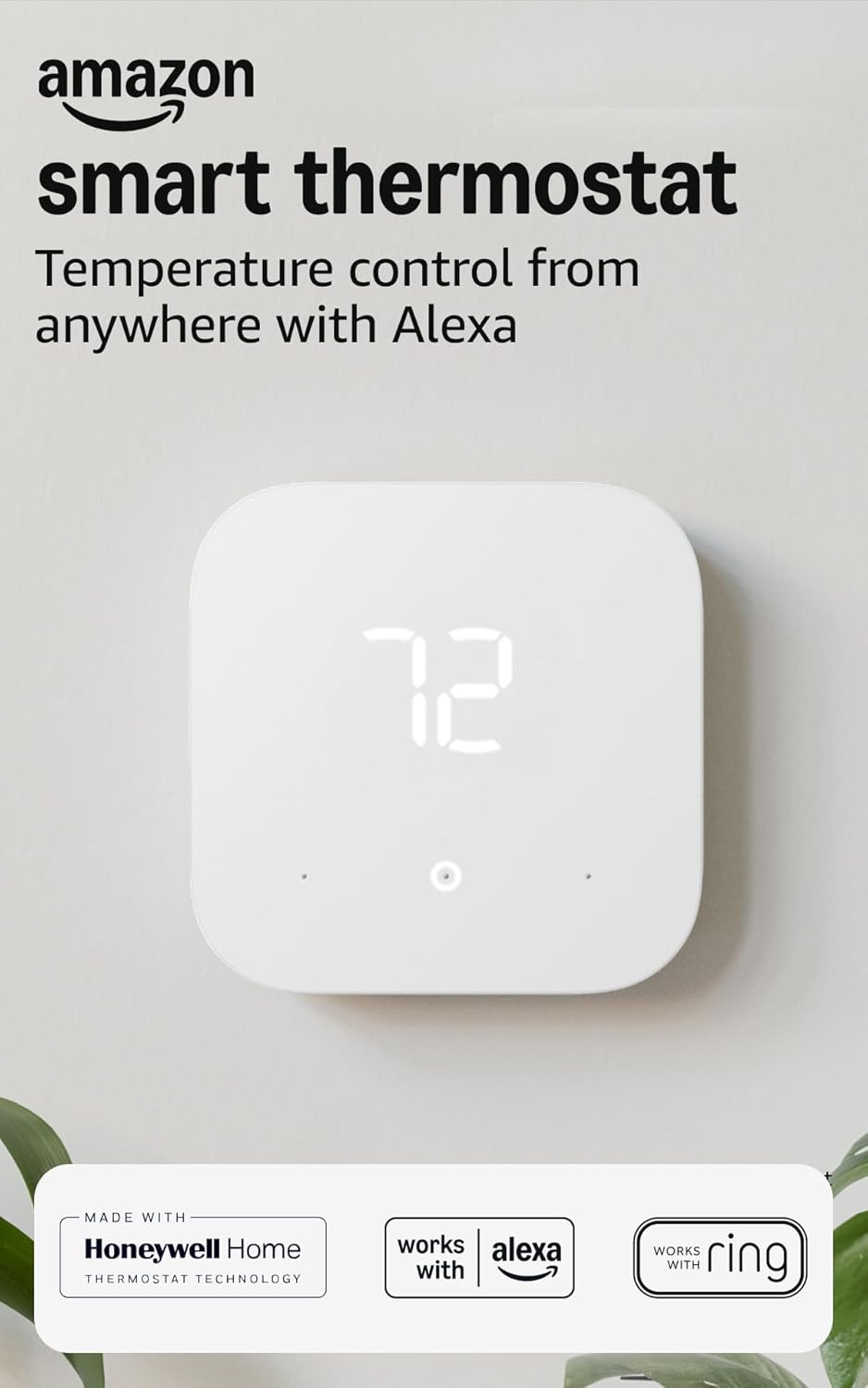
| ASIN | B08J4C8871 |
|---|---|
| Requires | C-wire |
| Compatible with | Alexa |
| Manufacturer tech | Honeywell Home |
The Amazon Smart Thermostat is a simple, Alexa-focused smart thermostat intended to replace a conventional wall unit and add app control and scheduling. It pairs with the Alexa app to create schedules, set home/away modes, and let Alexa or compatible devices adjust temperature automatically using presence or temperature readings. The unit uses Honeywell Home thermostat technology under the hood and supports do-it-yourself installation with C-wire requirement; Alexa setup and the app walkthrough make installation and initial configuration straightforward for most homeowners. Key benefits include on-the-go control from the Alexa app, the ability to build voice and routine automations with other Alexa devices, and ENERGY STAR oriented energy-saving features and rebate guidance. Limitations for multi-zone systems are that the product is a single thermostat intended for one zone, so managing a zoned HVAC system requires buying and installing one unit per controlled zone and integrating them through Alexa routines or a separate zone controller for coordinated operation.
Best for: Buyers who want an affordable, Alexa-centric smart thermostat to optimize schedules and energy use in a single zone and who plan to manage zones by installing separate thermostats per zone.
Less Ideal for: Homes looking for a single-device solution to control multiple HVAC zones or installers who need advanced HVAC integration without per-zone thermostats and a zone controller.
- Works tightly with Alexa for voice control, routines, and presence-based adjustments
- Remote scheduling and temperature control via the Alexa app
- Built on Honeywell Home thermostat technology for reliable temperature sensing and control
- ENERGY STAR focused features and guidance for potential utility rebates
- Requires a C-wire for installation, which may need extra wiring or an adapter
- Not a multi-zone controller, so each zone needs its own thermostat to support a zoned system
Verdict: A cost-conscious, Alexa-first smart thermostat that is a practical choice per zone for homeowners who prioritize voice control and simple app scheduling.
Aowel Non-Programmable Thermostat AW701

| Compatibility | Conventional single-stage systems (1H/1C) |
|---|---|
| Power Source | 24VAC or 2 AAA batteries |
| Display Type | LCD white backlit with humidity |
| Control Type | Push Button (non-programmable) |
The Aowel AW701 is a simple, manual thermostat made for single-stage central heating and cooling systems. It provides a large white backlit LCD that shows temperature and humidity and uses push-button controls for easy setpoint changes, making it quick to operate for anyone who prefers straightforward manual control. Technician-accessible settings include temperature calibration, separate heat and cool swing adjustments, selectable 3-minute compressor delay, and Fahrenheit/Celsius switching, which let an installer tune performance for a specific zone. The unit accepts 24VAC hardwire power or two AAA batteries and mounts on a universal sub-base for typical wall or junction-box installations. Important limitations are that it only supports 1 heat/1 cool single-stage systems and does not work with multi-stage, heat-pump, or line-voltage baseboard systems, so it cannot serve as a controller in most multi-zone or advanced HVAC setups. For basic zone control where each zone is a single-stage system, the AW701 offers a low-cost, readable, and easy-to-use option.
Best for: Buyers who need an inexpensive, easy-to-use wall thermostat for a single-stage zone and value a clear display and manual control over automated scheduling.
Less Ideal for: Users who need multi-stage or heat-pump compatibility, smart scheduling, or integration into a centralized zoning/automation system should look elsewhere.
- Large white backlit LCD with humidity readout for easy viewing
- Simple push-button operation suited to users who want manual control
- Technician-adjustable calibration and swing settings for customized performance
- Dual power options: 24VAC hardwire or battery backup
- Selectable 3-minute compressor delay for equipment protection
- Supports only single-stage 1H/1C systems and is incompatible with multi-stage and heat pump systems
- Non-programmable design lacks scheduling or smart/home integration
Verdict: Aowel AW701 is a budget-friendly, easy-to-read manual thermostat for simple single-stage zones where low cost and straightforward operation are the priority.
PRO1 IAQ T705 Thermostat

| Controller Type | Push Button |
|---|---|
| Additional Features | Programmable |
| Connectivity Technology | Wired (BACnet MS/TP) |
| Power Source | Battery Powered |
| Number of Batteries | 2 AA batteries required. |
The PRO1 IAQ T705 is a straightforward single-stage thermostat built for dependable temperature control in simple heating and cooling zones. It provides 5/1/1 programmable scheduling with intuitive wake, leave, return, and sleep icons so you can set weekday and weekend routines, and separate heating and cooling cycle adjustments let technicians fine-tune system swing. The 4-inch backlit digital display and push-button interface keep operation simple, and it can run on two AA batteries or be hardwired for continuous power. For installations where wired building control is required, the T705 supports BACnet MS/TP connectivity and mounts to a wall or junction box. Practical strengths are its installer-friendly design and the manufacturer focus on professional HVAC performance, making it a solid factory-quality replacement for single-stage zones; limitations are its basic button controls and lack of advanced smartphone or voice features, so it is not aimed at users wanting smart-home integration or multi-stage system control.
Best for: Buyers who prioritize a reliable, technician-friendly thermostat for single-stage zoned systems and want dependable scheduling and wired building-control compatibility.
Less Ideal for: Users seeking smart-home features, multi-stage HVAC control, or a touchscreen interface should consider more feature-rich models.
- 5/1/1 programmable schedule with clear wake/leave/return/sleep icons for routine control
- Supports BACnet MS/TP wired connectivity for integration with building control systems
- Can be battery powered or hardwired for flexible installation
- Installer-friendly wall or junction box mounting and adjustable heating/cooling swing settings
- Large backlit 4-inch digital display for easy reading
- No Wi-Fi, app, or voice assistant integration for remote control
- Simple push-button interface lacks a modern touchscreen or advanced UI
Verdict: A no-frills, reliability-focused thermostat that delivers solid programmable control and BACnet wired integration for single-stage zoned systems.
Google Nest Thermostat
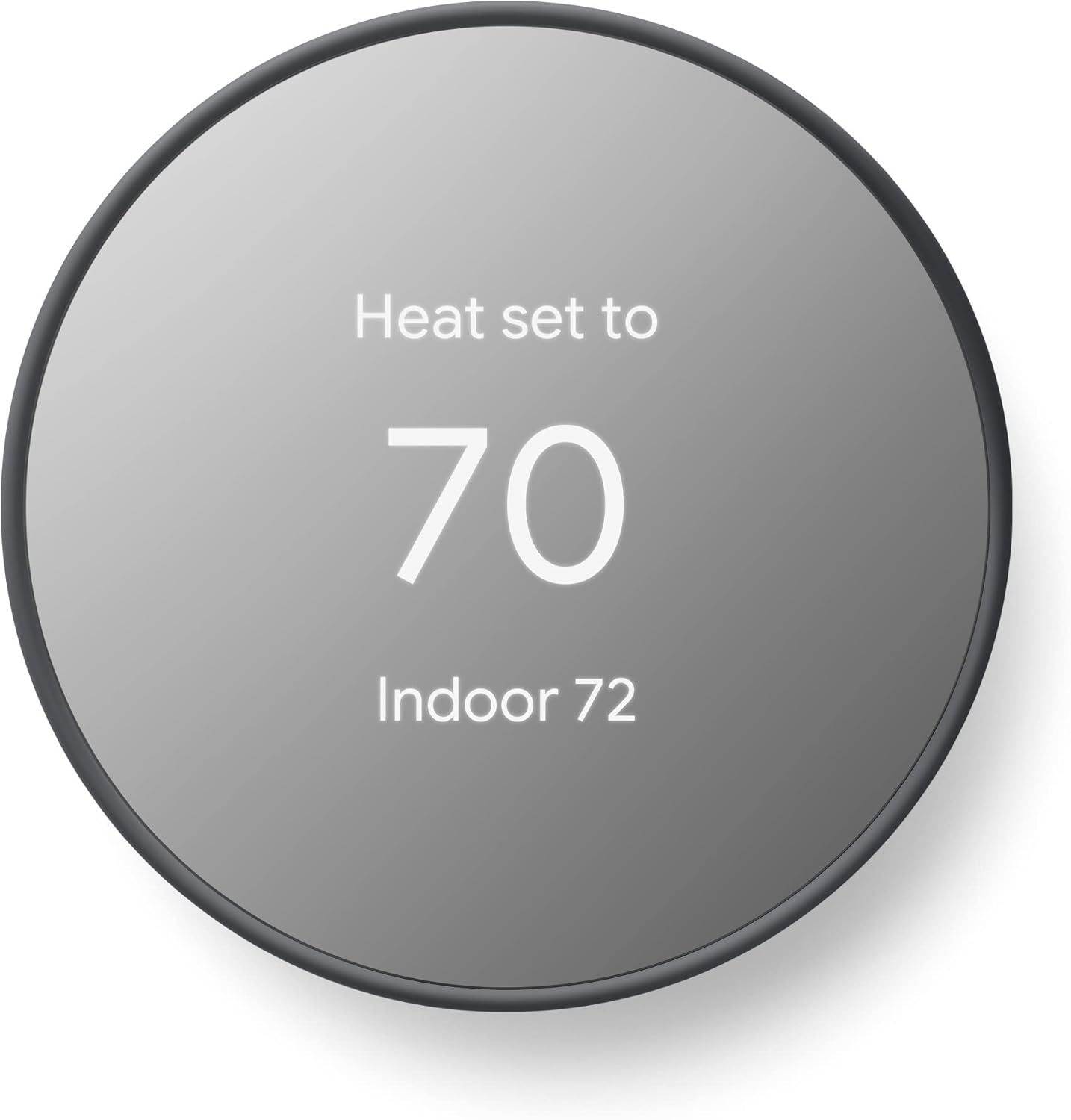
| Connectivity Technology | Bluetooth, Wi-Fi |
|---|---|
| Power Source | Battery Powered |
| Display Type | LCD |
| Screen Size | 2 inches |
| Control Type | Remote Control, Voice Control |
The Google Nest Thermostat is a compact smart thermostat designed for everyday home use, offering app and voice control for heating and cooling. It connects over Wi‑Fi and Bluetooth and can be controlled from the Google Home app or compatible voice assistants, letting you change temperature remotely and create schedules. Features like Savings Finder and Eco Temperature help reduce energy use by suggesting schedule tweaks and automatically lowering temperature when the home is empty, while HVAC monitoring can alert you if the system shows signs of problems. Installation is intended to be simple and often works without a C wire, and the unit runs on two AA batteries included. Important limitations for zoned systems: compatibility is not universal and some zone-controlled or specialty systems may require a C wire or a pro install to work correctly, so check the Nest Compatibility Checker before buying. The display and controls are straightforward but basic compared with higher-end Nest models that include more advanced sensors and integrations.
Best for: Buyers who want a budget-friendly smart thermostat that delivers remote and voice control plus energy-saving automation and who value straightforward app-based setup.
Less Ideal for: Homes with complex zone-controlled HVAC setups, older 110/120V systems, or users who need advanced multi-sensor or professional-grade zoning features.
- Remote control via Google Home app for adjusting temperature from anywhere
- Voice control compatibility with Google Assistant and Matter‑certified assistants
- Energy-saving features like Savings Finder and automatic Eco Temperature
- Simple self-install design that often does not require a C wire
- Not guaranteed compatible with all zoned or nonstandard HVAC systems and may need a C wire or pro installation
- Feature set is more basic than higher-end Nest models
Verdict: A compact, easy-to-install smart thermostat that brings remote and voice control plus energy-saving automation to typical homes, making it a practical choice for buyers seeking straightforward smart temperature control.
Riseem S3001 Nonprogrammable Thermostat

| Controller Type | Push Button |
|---|---|
| Temperature Control Type | Conventional Single Stage Systems |
| Connectivity Technology | Wired |
| Power Source | 24 volts AC or 2 AA batteries |
| Display Type | LCD |
The Riseem S3001 is a nonprogrammable wall thermostat aimed at simple single‑stage HVAC setups. It provides straightforward temperature control via push buttons and an easy-to-read backlit LCD, and it can run on 24VAC or two AA batteries so a common wire is not required for most installs. The unit supports separate heating and cooling swing settings to reduce system cycling and claims ±1°F accuracy for stable comfort. Installation is simplified by a universal sub-base and large terminal blocks, which most handy homeowners can wire in about half an hour if they follow the wiring diagram. Limits to be aware of are compatibility and capability: the S3001 works only with conventional 1 heat/1 cool systems and specifically excludes heat pumps, multistage systems, mini‑splits, and electric baseboard heat, so it will not fit more complex zoned or multi‑stage HVAC arrangements. There are also no scheduling features, smart controls, or remote access. For a straightforward replacement or a simple room controller this thermostat is practical, but buyers needing advanced zoning, programmability, or Wi‑Fi control should look elsewhere.
Best for: Buyers who want a reliable, no-frills thermostat for a conventional single‑stage heating and cooling zone and prefer simple manual controls and straightforward DIY installation.
Less Ideal for: Homeowners who need programmable schedules, remote or smart home control, or who have multistage or heat pump zoning setups should choose a more capable model.
- Simple, easy-to-read backlit LCD and intuitive button controls for basic temperature adjustments
- Dual power options (24VAC or 2 AA batteries) so a C-wire is not required in most installs
- Large terminal blocks and universal sub-base simplify DIY installation
- Separate heating and cooling swing setting helps reduce rapid cycling and stabilize temperature
- Advertised ±1°F accuracy for consistent room comfort
- Not compatible with heat pumps, multistage systems, mini‑splits, or electric baseboard heat
- No scheduling, smart features, or remote/Wi‑Fi control
Verdict: A dependable, easy-to-install manual thermostat for single‑stage zoned rooms where simple accurate temperature control is the top priority.
Choosing the Right Thermostat for Zoned System: Key Factors to Consider
Compatibility With Your Zone Controller
Not all thermostats are built to work with a separate zone controller or with actuator-driven dampers and zone valves. Confirm that a thermostat supports the control signals your zoning system uses, such as dry-contact relay outputs, conventional thermostat outputs for heating and cooling stages, or specific communication protocols used by the controller.
Mismatch here can prevent a zone from calling for heat or cooling correctly, cause short cycling, or leave some dampers stationary. Verifying compatibility ahead of purchase prevents rework and ensures each zone can be controlled independently as intended.
Wiring Requirements and Terminal Layout
Zoned installations often require additional wiring for zone relays, end switches, or damper position feedback. Check whether the thermostat needs a dedicated common line, anticipates separate fan or pump outputs, or requires a proprietary adapter. Some thermostats offer flexible terminal labeling and configurable output assignments that simplify integration into complex wiring schemes.
If your home lacks extra conductors, options that work without a common wire or that support power-stealing operation may be helpful. For professional installs, minimized re-wiring saves labor time. For DIYers, clear terminal diagrams and simple jumpers reduce installation errors.
Control Flexibility and Scheduling
One advantage of zoning is the ability to run different schedules and temperature set points in separate areas. Look for thermostats that support multiple independent schedules or that can be managed centrally while still allowing local overrides on a per-zone basis.
Adaptive features like gradual temperature ramping, setback optimization, and vacation modes help reduce energy use without sacrificing comfort. The more flexible the scheduling and mode options, the better you can tune each zone for occupancy patterns and thermal characteristics.
User Interface and Remote Access
Thermostats with clear local displays and straightforward physical controls make daily adjustments simple for everyone in the household. Equally important is remote access through a reliable app or web interface so you can change set points, view zone temperatures, or troubleshoot from any location.
If multiple occupants will control different zones, check for support for multiple user accounts and easy sharing of access. Voice assistant or smart home integrations can add convenience but are secondary to robust zone-level controls.
Energy Management and Reporting
Thermostats that provide energy-use estimates, runtime reporting, or integration with utility demand-response programs make it easier to quantify savings from zoning. Features like programmable setbacks, heat/cool lockouts, and smart recovery algorithms help balance comfort and efficiency across zones.
Detailed reporting also helps diagnose poorly performing zones or identify timing adjustments that improve overall system efficiency. For homes concerned about energy costs, prioritize thermostats that expose actionable usage data.
How Zoned Thermostats Differ From Standard Units
Thermostats intended for zoned systems are designed to coexist with controllers, dampers, or zone valves rather than directly commanding a single HVAC system from a central location. They need to coordinate calls for heating and cooling in a way that prevents conflicts between zones and the equipment controller.
Key technical distinctions include support for end-switch signaling, separate stage outputs, and the ability to defer local calls until the zone controller is ready. These units also often include features to prevent short cycling and to honor minimum run times required by many HVAC systems.
- May include dedicated terminals for zone end-switches or relay inputs
- Often configurable for single-stage or multi-stage HVAC equipment
- May communicate with zone controllers via simple relay logic or network protocols
Installation Tips for Zoning Setups
Plan your wiring before removing the old thermostat. Identify which conductors go to the zone controller, which to the HVAC equipment, and whether a common wire is present. Labeling wires at both ends can save significant time during installation.
If your thermostat requires a C-wire and none is available, consider a power adapter or an alternative thermostat design that does not need a dedicated common. When in doubt, consult the zoning controller documentation for expected inputs and outputs.
- Turn off power to HVAC at the breaker before touching wiring
- Document existing terminal connections with photos
- Verify zone actuator wiring and test damper response after installation
Balancing Comfort and Efficiency in Each Zone
Zoning can dramatically improve comfort by avoiding overconditioning areas that do not need it. To get the best results, set realistic temperature differentials between zones and allow for gradual changes rather than aggressive set point swings.
Consider how each zone heats and cools differently based on sun exposure, insulation, and airflow. Use setback schedules in low-occupancy zones and allow commonly used areas to maintain tighter control.
- Start with modest setback schedules to avoid large recovery loads
- Use sensors or remote temperature probes in problem rooms
- Monitor runtime to identify imbalanced zones that need duct or damper adjustments
Remote Management and Multi-User Control
When multiple occupants manage different areas, remote access and user accounts can simplify coordination. Choose thermostats with reliable cloud services and clear permissions to avoid accidental overrides or schedule conflicts.
If you prefer local control without recurring cloud dependence, look for devices that offer LAN-based control or a local web interface. This approach preserves remote management while minimizing privacy or reliability concerns tied to third-party cloud services.
- Confirm how many user accounts the system supports
- Check whether the app allows per-zone scheduling and overrides
- Look for local control options if cloud connectivity is a concern
Common Issues and Troubleshooting
Typical problems in zoned systems include stuck dampers, incorrect end-switch wiring, and conflicting calls between zones. Start troubleshooting by checking each zone's sensor and damper operation, then confirm proper wiring to the zone controller.
If a zone does not call for heating or cooling when expected, verify that the thermostat is configured to use the correct outputs and that the controller accepts the signal type the thermostat provides.
- Listen for damper motors when the system cycles
- Use a multimeter to confirm voltage or continuity on zone control lines
- Review thermostat configuration for stage and output mapping
How We Chose the Best Thermostat for Zoned System
We focused on thermostats that work reliably with zoned heating and cooling setups and that provide the control granularity homeowners expect from a multi-zone installation. Our selection filters prioritized compatibility with common zoning controllers and multi-stage HVAC equipment, clear support for separate schedules per zone, and robust communication options so the thermostat can operate independently or as part of a central controller. We also weighed installation complexity and wiring flexibility, because many zoned systems require specific terminal assignments or relay wiring. Usability was assessed by looking for thermostats with intuitive local controls and useful remote-management features. Energy and control features such as adaptive scheduling, setback options, and integration with demand-response signals were included as performance criteria. We excluded products that lack explicit zoning support, require proprietary gateway hardware with no local control fallback, or offer no clear wiring guidance for zone actuators. The final picks reflect devices that meet functional zoning needs across typical residential installations while offering different levels of installer involvement and user-facing features.
Our full evaluation process is outlined in our review methodology.
FAQ
Do I need a special thermostat for a zoned HVAC system?
Often you need a thermostat that supports zone-specific signaling such as end-switch or relay outputs and that can be configured for the controller in use. Standard single-stage thermostats may not provide the required terminal mapping or communication options for proper zoning.
Can I use smart thermostats with zone dampers?
Many smart thermostats can work with zone dampers if they provide compatible outputs and wiring options. It depends on the thermostat's terminal design and whether you need a separate zone controller. Verify wiring and control requirements before selecting a smart model.
How does a thermostat communicate with a zone controller?
Communication is typically via relay contacts or low-voltage thermostat terminals that signal calls for heating or cooling. Some systems use proprietary or networked protocols, but most residential zoning relies on straightforward relay or end-switch logic.
Will zoning always lower my energy bills?
Zoning can reduce energy use by conditioning only occupied spaces, but savings depend on how zones are used and configured. Improper setbacks or short cycling can negate benefits, so correct thermostat setup and balanced ductwork matter.
What should I check before installing a new thermostat in a zoned system?
Confirm the presence and function of zone control wiring, identify a common wire if required, and review the zone controller's input expectations. Also document existing connections and ensure power is shut off before starting work.
Final Verdict
Choosing the right thermostat for a zoned system comes down to matching the device to your controller, wiring, and how you want to manage each area. Prioritize proven compatibility with your zone control method, simple and clear wiring options, and flexible scheduling that supports per-zone comfort and setbacks. If you balance those priorities, you can achieve consistent comfort and meaningful efficiency gains. Focus on the tradeoffs between installer involvement and user-facing features to pick the thermostat that fits your household and operational preferences.