
Note: This article contains affiliate links. If you click on these links and make a purchase, we may earn a small commission at no extra cost to you. This helps support our research and content. Read our full affiliate disclosure here.
Choosing a tunable white smart light bulb changes how you light rooms throughout the day. You can shift from warm, relaxing tones for evenings to cooler, focus‑friendly light for daytime tasks, and a tunable bulb lets you do that with app or voice control. The right bulb also balances light quality, dependable wireless connections, and energy efficiency so your fixtures and daily routines work seamlessly. This guide covers six shortlisted tunable white smart light bulbs that stood out for real-world performance and control options. Below we explain the criteria used to evaluate them and highlight practical factors to weigh when picking bulbs for different rooms. Read on to find bulbs that meet your control, color, and reliability needs.
Top Picks at a Glance
| Best Overall The best all-around choice for most situations | LIFX Supercolor A21 |  |
| Best Quality Built to a higher standard if you want something more solid | Philips Hue Essential A19 4-Pack |  |
| Best Value The sweet spot between price and what you get | LIFX Color A19 800 Lumens |  |
| Best Budget The cheapest option that still gets the job done reliably | Amazon Basics Tunable A19 LED Bulb | 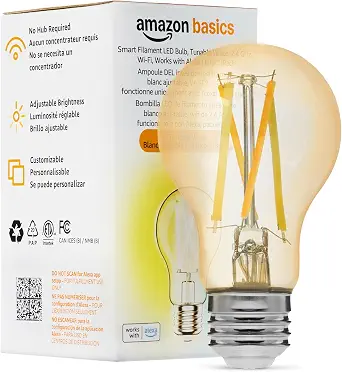 |
| Most Popular A crowd favorite that many people choose with confidence | SYLVANIA SMART+ WiFi A19 |  |
| Best Seller A high-volume bestseller chosen again and again | Linkind Tunable White A19 Bulb |  |
LIFX Supercolor A21

| Light Output Maximum | 1600 lumens |
|---|---|
| Power Consumption | 15.5 watts |
| Bulb Base | E26 |
| Color Temperature | 1500K–9000K |
| Color Rendering Index | 90 |
The LIFX Supercolor A21 is a bright, feature-rich smart bulb designed to light main rooms rather than just provide accent color. It delivers up to 1600 lumens at about 15.5 watts and a wide 210° beam, so a single bulb can fill a living room or large lamp with usable white light as well as vivid RGB. The bulb supports tunable white from warm 1500K to cool 9000K, has a high CRI (90) for accurate color rendering, and pairs with the LIFX app, voice assistants, and Matter-enabled platforms without a hub. Practical benefits include instant full-brightness response, schedules and routines for circadian-style lighting, music sync and scene presets for quick mood changes, and a long rated life of 25,000 hours. Trade-offs are the larger A21 form factor that may not fit every fixture and reliance on 2.4GHz Wi‑Fi which can be sensitive to network congestion; advanced users wanting the cheapest option per bulb may find simpler models more budget friendly.
Best for: Buyers who want a single smart bulb that can serve as primary room lighting and also deliver accurate tunable whites and vivid color scenes with easy app and voice control.
Less Ideal for: People who need bulbs for small, enclosed fixtures that only accept A19 sizing or who prefer the lowest-cost basic smart bulbs without advanced color or app features.
- Very high output at 1600 lumens suitable for main-room lighting
- Wide 210° beam spreads light evenly across larger spaces
- Tunable white (1500K–9000K) plus full RGB with high CRI for accurate colors
- Matter compatibility and direct 2.4GHz Wi‑Fi hookup means no hub and broad smart home support
- Rich app features including scheduling, scenes, and music sync
- Larger A21 bulb shape may not fit compact fixtures
- Depends on 2.4GHz Wi‑Fi which can be less reliable on congested networks
Verdict: Choose the LIFX Supercolor A21 when you need a bright, tunable-white smart bulb that doubles as full-color room lighting with Matter and wide-app control.
Philips Hue Essential A19 4-Pack
| Light Output Maximum | 800 lumens |
|---|---|
| Light Source Wattage | 8.8 watts |
| Bulb Base | E26 |
| Bulb Shape Size | A19 |
| Control Method | App |
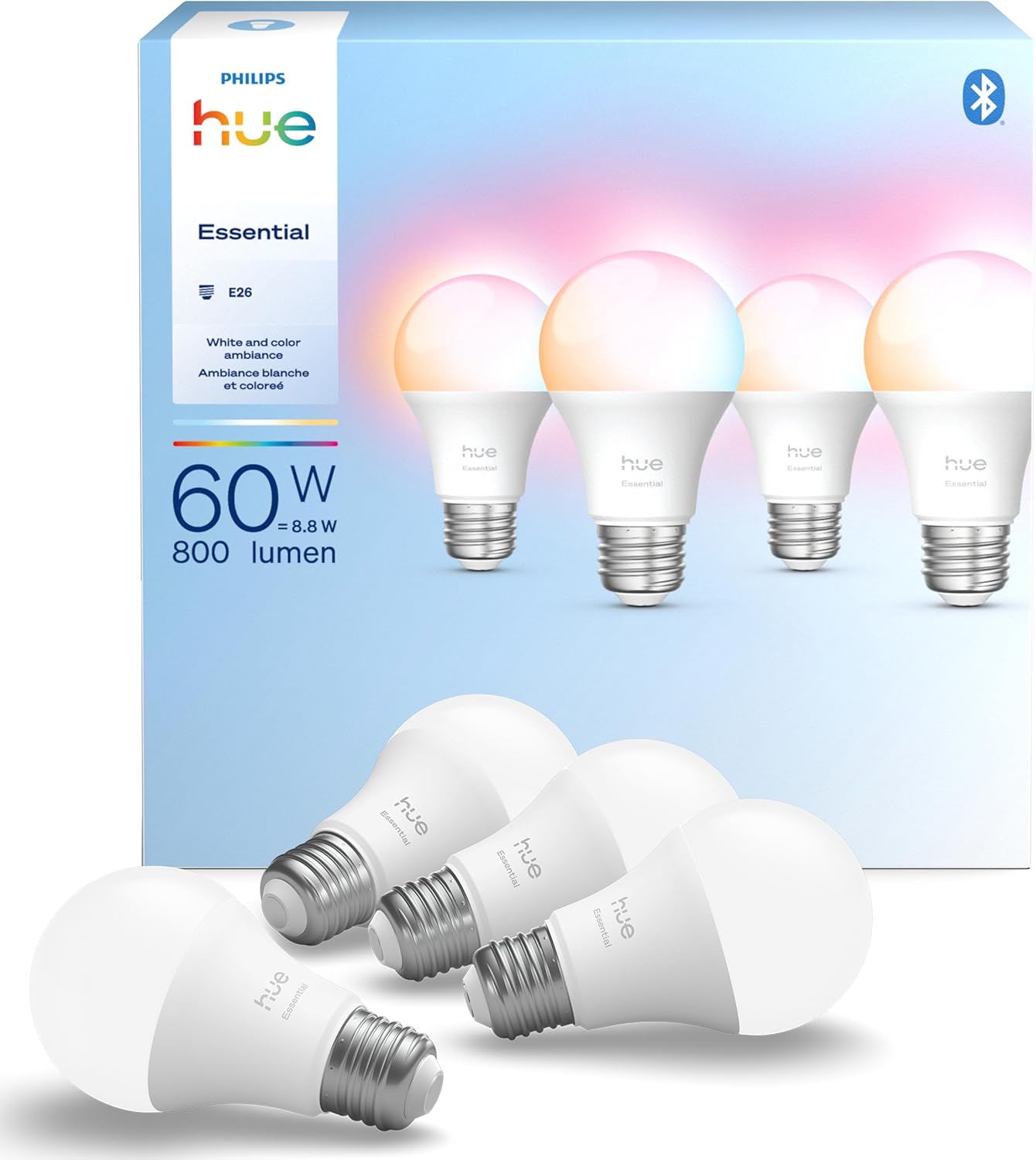
These Philips Hue Essential A19 bulbs bring tunable white and full-color smart lighting to standard E26 fixtures. They screw into lamps and ceiling sockets like normal bulbs and are controlled by the Hue app or voice through Alexa, Google Assistant, or Apple Home; adding a Hue Bridge unlocks extra features such as advanced scenes and syncing with music or video. Each bulb produces up to 800 lumens and can be dimmed smoothly down to 2 percent, so they work for task lighting, mood scenes, or general room illumination. The bulbs are energy efficient at about 8.8 watts while delivering a wide color temperature range and millions of colors for precise ambiance. Practical limitations are that some advanced multi-device features require a separate Hue Bridge and full feature parity depends on using Hue ecosystem components, and the color rendering index of 80 is adequate but not premium for color-critical tasks. For buyers seeking dependable tunable white and seamless smart-home voice control, these are a solid choice.
Best for: Buyers who want dependable, performance-focused tunable white smart bulbs that integrate into an existing smart-home voice or app setup and prioritize smooth dimming and consistent brightness.
Less Ideal for: Shoppers who need the highest possible color accuracy for photography or design work, or those who want every advanced feature without adding a Hue Bridge, should consider other options.
- Tunable white and full-color output for flexible ambiance and scenes
- Smooth dimming down to 2% for fine-grained light levels
- Standard E26 A19 form factor fits common fixtures
- App and major voice assistant compatibility for hands-free control
- Some advanced features and multi-device syncing require adding a Hue Bridge
- Color Rendering Index of 80 is not the highest for critical color work
Verdict: A reliable tunable white and color smart-bulb pack that delivers smooth dimming and strong smart-home control for buyers focused on real-world lighting performance.
LIFX Color A19 800 Lumens

| Light Output Maximum | 800 lumens |
|---|---|
| Power Consumption | 9 watts |
| Light Color | RGB + Tunable White |
| Light Source Operating Life | 25000 hours |
| Connectivity Protocol | Wi‑Fi |
The LIFX Color A19 is a full‑color smart LED bulb that combines a wide tunable white range with vivid RGB output and no hub requirement. It screws into standard E26 sockets and pairs via 2.4GHz Wi‑Fi or HomeKit QR code for fast setup, then is controlled with the LIFX app or voice assistants for schedules, scenes, and music sync. At 800 lumens and 9 watts it serves as a bright room bulb for general lighting while also supporting mood and circadian routines from warm candlelike tones up to cool daylight. Notable features include SuperColor saturation for richer hues, an extensive theme library and gradients in the app, and native Matter/HomeKit compatibility for reliable smart‑home integration. Limitations to consider are the 82 CRI which is adequate but not premium for color‑critical tasks, and the bulb is rated for indoor use only. If you need higher lumen output for very large rooms or recessed fixtures, LIFX offers brighter models, but for practical everyday rooms this model balances brightness, color range, and easy smart control well.
Best for: Buyers who want a practical, easy‑to‑manage smart bulb that covers both tunable white routines and colorful scenes without adding a hub, and who prioritize reliable app and voice control in everyday living spaces.
Less Ideal for: People who need the highest color accuracy for professional tasks or who require outdoor/exposed‑fixture rated bulbs should choose a different model.
- Wide tunable white range plus rich RGB colors for mood and task lighting
- No hub required — native Wi‑Fi and Matter/HomeKit support simplifies setup and integration
- 800 lumens at 9W provides energy‑efficient everyday room illumination
- Extensive app features including scenes, schedules, gradients, and music sync
- Indoor use only, not rated for exposed outdoor fixtures
- Color rendering around 82 CRI, which is fine for most rooms but not ideal for color‑accurate tasks
Verdict: A practical, no‑hub smart bulb that delivers strong tunable white performance plus rich color control for everyday rooms.
Amazon Basics Tunable A19 LED Bulb
| Wattage | 7 watts |
|---|---|
| Bulb Base | E26 |
| Light Output Maximum | 800 lumens |
| Light Color | Tunable White |
| Light Source Operating Life | 25000 hours |
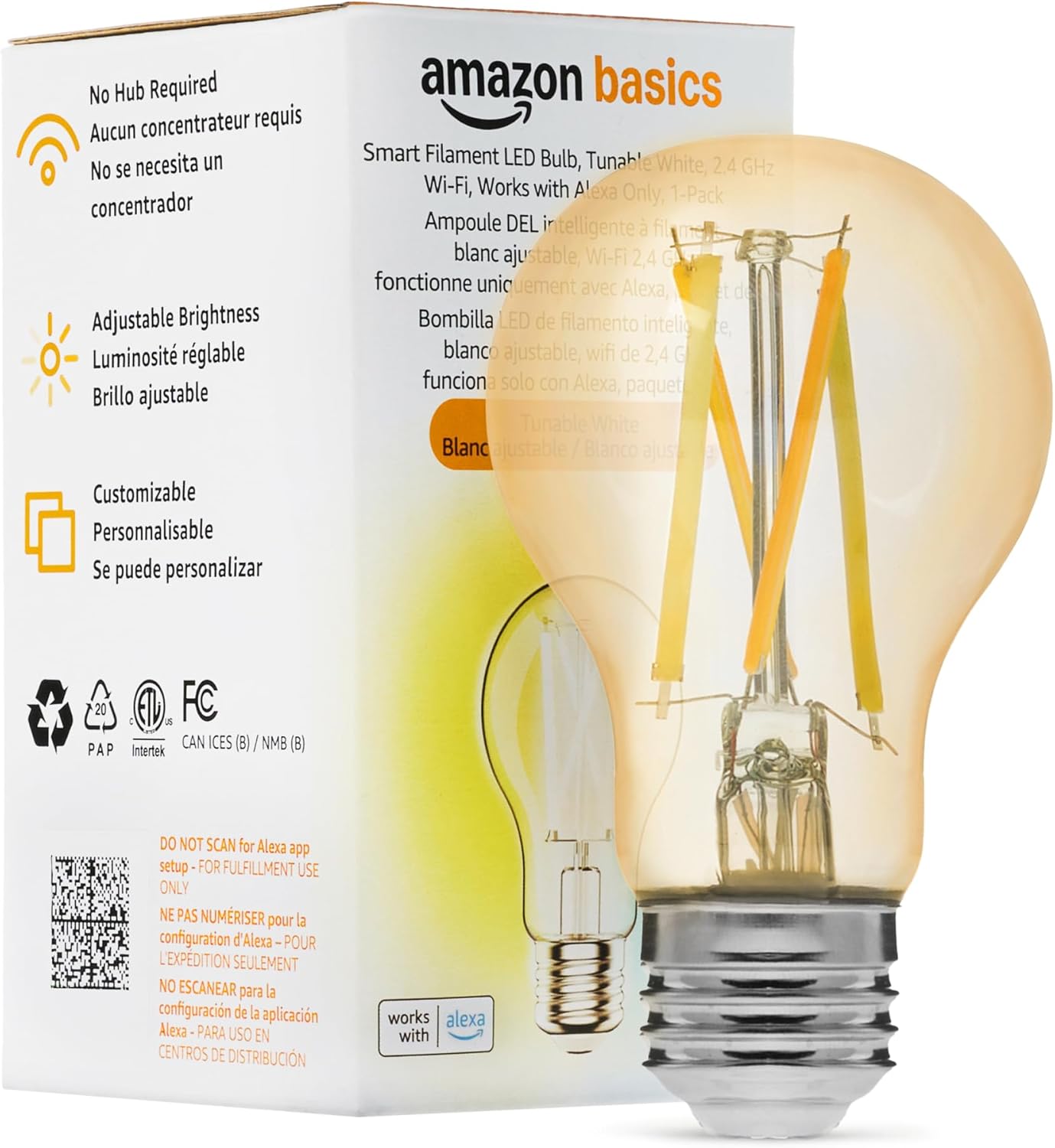
This Amazon Basics A19 smart filament LED bulb provides tunable white color from warm to cool (2200K–6500K) and up to 800 lumens of light while using 7 watts. It pairs directly with Alexa over 2.4 GHz Wi‑Fi so you can set brightness, color temperature, groups, and schedules with voice or the Alexa app without a separate hub. The bulb is practical for everyday lamps and fixtures where you want adjustable ambience and remote control; it also supports away scheduling to make a home look occupied. Setup is straightforward if you use Alexa, but the bulb will not work with Google Assistant, Apple HomeKit, or SmartThings, and it requires the Alexa app for tuning and dimming rather than a physical dimmer. With a 25,000‑hour rated life and CRI of 90, it offers good color rendering for the price, making it a sensible budget option for replacing standard 60W bulbs with smart control limited to the Alexa ecosystem.
Best for: Buyers who want an inexpensive, Alexa-centric smart bulb to replace standard A19 bulbs and control light color and schedules without buying a hub or premium brand.
Less Ideal for: People who use Google Assistant, Apple HomeKit, SmartThings, or who need physical dimmer compatibility should look elsewhere.
- Tunable white range (2200K–6500K) for flexible ambience
- Works with Alexa over 2.4 GHz Wi‑Fi with no hub required
- Rated 800 lumens output while consuming only 7 watts
- High CRI (90) for accurate color rendering
- Long rated life of 25,000 hours
- Only compatible with Alexa and 2.4 GHz Wi‑Fi, no support for other smart assistants
- Dimming and color tuning require the Alexa app or voice and not a physical dimmer
Verdict: A budget-friendly A19 smart bulb that delivers tunable white light and solid brightness for buyers committed to the Alexa ecosystem.
SYLVANIA SMART+ WiFi A19

| Light Output Maximum | 800 lumens |
|---|---|
| Color Temperature | 2700–6500 Kelvin |
| Connectivity Protocol | Wi‑Fi |
| Light Source Operating Life | 15000 hours |
| Color Rendering Index | 90 |
The SYLVANIA SMART+ WiFi A19 is a full‑color, tunable white LED bulb that connects directly to 2.4 GHz Wi‑Fi for app and voice control without a hub. It covers standard E26 fixtures and delivers up to 800 lumens with a 2700K–6500K white range plus millions of colors, enabling scenes, routines, and remote on/off scheduling via the SYLVANIA Smart WiFi app. With a 90+ CRI the bulb renders colors accurately, and it is dimmable through the app or voice assistants including Alexa and Google Assistant. Setup is straightforward for most home Wi‑Fi networks, and the listed operating life (about 15,000 hours) and high efficiency make it a practical long‑term replacement for 60W incandescent bulbs. Important caveats are hubless Wi‑Fi operation limited to 2.4 GHz networks and incompatibility with Apple HomeKit, which may restrict integration for some smart home setups; also it is rated for indoor, non‑enclosed fixtures only. For buyers who prioritize easy voice/app control and good color quality, this bulb is a strong tunable‑white option.
Best for: Buyers who want easy hubless smart lighting with accurate color and tunable white for living spaces and value proven performance backed by broad user feedback.
Less Ideal for: Users who need Apple HomeKit integration or who rely on 5 GHz‑only Wi‑Fi networks or require bulbs for enclosed or outdoor fixtures should look elsewhere.
- Full color plus tunable white range for flexible scene setting
- Works with Alexa and Google Assistant for hands‑free control
- No hub required — connects directly to 2.4 GHz Wi‑Fi
- High CRI (90+) for accurate, vibrant color rendering
- Dimmable and supports timers, routines, and remote control via app
- Requires a 2.4 GHz Wi‑Fi network and is not HomeKit compatible
- Not rated for use in fully enclosed fixtures or outdoor use
Verdict: A reliable, hub‑free smart A19 bulb that delivers tunable white and rich color with strong color accuracy for everyday rooms.
Linkind Tunable White A19 Bulb

| Light Source Operating Life | 25000 hours |
|---|---|
| White Brightness | 800 lumens |
| Power Consumption | 8.5 watts |
| Color Rendering Index | 90 |
| Connectivity Protocol | Bluetooth, Wi-Fi |
The Linkind tunable white A19 is a straightforward smart LED replacement that covers warm-to-daylight lighting needs in typical rooms. It offers 2700K–6500K color temperature adjustment, smooth 1%–100% dimming, and 800 lumens output while using 8.5W of power, making it suitable for bedrooms, living rooms, and home offices. Setup requires the AiDot app and both Bluetooth and 2.4 GHz Wi‑Fi for initial pairing, after which you can integrate the bulbs with Alexa or Google Home for voice control and remote access. High CRI (>90) preserves accurate colors for tasks like makeup or food prep, and grouping plus scheduling in the app simplifies whole-room control. The bulbs are not compatible with traditional wall dimmer switches and only support 2.4 GHz Wi‑Fi, so avoid using them on legacy dimmer circuits or 5 GHz networks. For buyers who want dependable, app-driven tunable white lighting with strong color rendering, these bulbs deliver practical features without extra complexity.
Best for: Buyers who want reliable, app-controlled tunable white lighting that prioritizes accurate color and simple scheduling for everyday rooms.
Less Ideal for: People who need bulbs that work directly with wall dimmer hardware or who rely on 5 GHz-only Wi‑Fi networks or purely voice-only setup without an app.
- Tunable white range from 2700K to 6500K for multiple scenes
- High CRI (>90) for accurate color rendering
- Dual Bluetooth and 2.4 GHz Wi‑Fi connectivity enables local control and remote access after setup
- Smooth 1%–100% dimming and grouping/scheduling via the AiDot app
- Energy efficient 8.5W LED with about 25,000-hour rated life
- Requires AiDot app and both Bluetooth plus 2.4 GHz Wi‑Fi for initial setup
- Not compatible with traditional dimmer switches and not supported on 5 GHz Wi‑Fi
Verdict: A dependable tunable white smart A19 bulb that delivers accurate colors and easy app-based dimming and scheduling for everyday home use.
Choosing the Right Tunable White Smart Light Bulb: Key Factors to Consider
Color Temperature Range
The span of color temperatures a bulb can produce matters because tunable white lighting aims to mimic daylight changes and support different activities. A wider range lets you choose very warm tones for relaxing evenings or cool daylight for reading and tasks. Pay attention to the lowest and highest Kelvin values listed and whether the transitions between those temperatures are smooth in real use.
Also consider how the bulb renders white at midpoints. Some bulbs advertise broad ranges but show noticeable shifts in perceived brightness or tint at extremes, which affects comfort in living spaces or work areas.
Color Rendering And Consistency
Color rendering index and user reports on color consistency are important because they determine how accurately whites and surrounding colors appear under the bulb. Good rendering helps tasks like cooking, dressing, or evaluating paint colors, and it prevents whites from looking yellowish or greenish at certain settings.
Consistency between bulbs is critical when you plan multi-bulb setups. Mismatched color tones across fixtures can look uneven even when all bulbs are set to the same temperature. Look for specs or tests that mention color consistency and tolerances.
Connectivity And Smart Ecosystem Compatibility
A tunable white smart light bulb is only as useful as the system it connects to. Stable Wi-Fi or Zigbee/Z-Wave performance ensures schedules, automations, and voice commands work reliably. Consider whether the bulb uses a bridge or works directly with common smart home hubs and whether the vendor supports local control versus cloud-only setups.
Also factor in the ease of grouping multiple bulbs and whether scene presets or routines can be created easily in the companion app or through third-party home automation platforms.
Control Options And User Interface
How you interact with the bulb affects daily usefulness. Look for bulbs that offer intuitive app sliders for temperature, quick presets for common scenes, and reliable voice control if you use smart assistants. Some apps include advanced features like circadian scheduling or sunrise/sunset automations that adjust color temperature through the day.
Consider whether the app supports persistent scenes and easy access from multiple accounts. Physical control options, like compatibility with smart switches or dimmers, are also worth checking to ensure flexibility.
Brightness And Energy Use
Lumen output and wattage determine whether a bulb can light a room adequately while keeping energy costs down. A tunable white bulb should provide enough lumens for the intended space at both warm and cool settings, since perceived brightness can shift with color temperature.
Compare lumen-to-watt ratios and look for ENERGY STAR or similar efficiency indicators when available. Also consider how dimming affects both light level and color — some bulbs maintain color when dimmed, while others shift toward warmer tones.
Form Factor And Fit
The bulb shape, physical size, and base type determine where the bulb will fit and how it behaves in different fixtures. Some smart bulbs are larger due to electronics and may not fit recessed or enclosed fixtures. Check the bulb length and diameter against your lamp or fixture clearance.
Also review any heat-management notes, since poor ventilation can reduce lifespan. A bulb that fits physically but runs hot in an enclosed fixture may degrade faster or have reduced reliability.
Best Rooms And Uses For Tunable White Lighting
Tunable white bulbs work well in living rooms, bedrooms, home offices, and kitchens because they let you tailor light to activity. Cooler temperatures help with focus in work areas, while warmer temperatures create a relaxed mood in seating areas and bedrooms. For kitchens, being able to shift to neutral-cool light improves visibility for food prep and color judgment.
Think about routines when planning placements. Use tunable bulbs in groups so you can set whole-room scenes with one command rather than adjusting individual fixtures.
- Home office: cooler 4000K to 5000K for alertness
- Living room: 2700K to 3000K for relaxation
- Bedroom: 2200K to 2700K for winding down
- Kitchen: 3000K to 4000K for task clarity
Installation Tips And Best Practices
Install tunable bulbs the same way as standard LED bulbs, but leave settings adjustments for after setup. Place bulbs in comparable fixtures when matching color and brightness across a room. If a bulb requires a bridge, complete the bridge setup before attempting to pair multiple bulbs.
When replacing multiple bulbs, swap and configure one at a time and then group them after confirming color consistency. If you use a smart dimmer switch, verify compatibility because some dimmers interfere with smart bulbs' internal electronics.
- Test one bulb first to confirm fit and app behavior
- Avoid enclosed fixtures unless the bulb is rated for them
- Group bulbs in the app by room for easier scene control
Circadian Lighting And Scheduling
Tunable white bulbs can support circadian routines by shifting color temperature across the day to align with waking and sleeping cycles. Morning light that trends cooler can help wakefulness, while evening light that trends warmer can support melatonin production and sleep readiness.
Use built-in scheduling or third-party automations to create gradual transitions rather than abrupt changes. Gradual color shifts are less distracting and mimic natural daylight more closely.
- Set gradual transitions over 30 to 60 minutes
- Combine dimming with temperature shifts for evening scenes
- Use location-based automations to match local sunrise and sunset
Common Compatibility Pitfalls
One frequent issue is assuming all smart bulbs behave the same with third-party hubs or smart switches. Some bulbs require a bridge or hub for full functionality, while others offer direct Wi-Fi control. Check whether features like temperature sliders, presets, and grouping work when the bulb is connected through a hub.
Another pitfall is physical fit. Larger smart bulbs may not fit inside compact fixtures or recessed cans. Finally, cloud-only control can be problematic if you prefer local automations, so verify control methods before committing to an ecosystem.
- Confirm bridge requirements before buying multiple bulbs
- Match bulb size to fixture clearance
- Verify local control support if you need offline automations
Maintaining Color Consistency Over Time
Bulbs can shift slightly in color output as they age, so selecting bulbs with tight color tolerance helps maintain consistency. When possible, buy bulbs confirmed to have a small color variance to minimize noticeable differences in the same room.
Periodically check grouped bulbs and recalibrate scenes in the app if one bulb drifts. Keeping firmware updated can also resolve occasional tuning or connectivity bugs that affect color performance.
- Update firmware when prompted
- Replace bulbs in groups to avoid sudden mismatches
- Recalibrate scenes if colors start to diverge
How We Chose the Best Tunable White Smart Light Bulb
We focused on practical, everyday performance when narrowing down the list of tunable white smart light bulbs. Our selection criteria prioritized color range and fidelity so bulbs actually reproduce warm and cool white tones smoothly, and connectivity reliability since users depend on stable Wi-Fi or hub links for schedules and scenes. We also considered app and voice-control features for intuitive tuning, compatibility with common smart home systems, and ease of setup and grouping for multi-bulb installs. Energy efficiency and reported lumen output were weighed to ensure adequate room illumination without wasting power. Finally, we looked at build quality and expected longevity to favor bulbs that maintain consistent color and output over time. We excluded bulbs that offered only single white temperatures, lacked documented smart control, or had persistent connectivity problems reported by multiple users. We did not include specialty color-changing RGB bulbs since this guide specifically targets tunable white functionality. The outcome: a focused list of bulbs that score well across color control, connectivity, usability, and lighting performance.
Our full evaluation process is outlined in our review methodology.
FAQ
Will a tunable white smart light bulb work with my existing dimmer switch?
It depends. Many smart bulbs include built-in dimming and are designed to work best with the fixture wired to a standard on/off switch. Using them with legacy dimmer switches can cause flicker or reduced functionality unless the dimmer is specified compatible with smart LED bulbs.
Do tunable white bulbs save energy compared with incandescent bulbs?
Usually yes. LED-based tunable white bulbs use considerably less power than incandescent bulbs for comparable lumen output. The exact savings depend on operating hours and the bulb's wattage, but LEDs typically offer better lumen-per-watt efficiency.
Can I set schedules so bulbs change color automatically throughout the day?
Often. Most tunable white smart bulbs support scheduling in their companion apps or through third-party home automation systems, allowing gradual or step changes in color temperature at set times or relative to sunrise and sunset.
Are tunable white bulbs suitable for color-critical tasks like painting or photography?
They can be, but performance varies. For color-critical work, look for bulbs with high color rendering characteristics and consistent output at the specific color temperatures you plan to use. Some general-purpose tunable bulbs may not match the fidelity of dedicated color-accurate fixtures.
Will the light output feel different at warm versus cool settings?
Yes. Perceived brightness can change with color temperature even if measured lumens remain constant. Cooler temperatures often appear brighter to the eye. Good tunable white bulbs minimize perceived shifts, but you may need to adjust brightness when changing temperature for consistent room illumination.
Final Verdict
Prioritize color range, consistent rendering, and reliable connectivity when choosing a tunable white smart light bulb. Decide which control features matter most to you, whether scheduled circadian shifts, voice control, or grouping multiple bulbs by room. Expect tradeoffs between advanced app features and simplicity of setup; choose bulbs that match your smart home approach and fixture constraints. Focus on matching lumen output to room size and verifying fit for enclosed or recessed fixtures. With those priorities in mind, you can confidently select tunable white bulbs that deliver the desired ambience and day-to-day control.