
Note: This article contains affiliate links. If you click on these links and make a purchase, we may earn a small commission at no extra cost to you. This helps support our research and content. Read our full affiliate disclosure here.
Picking the right under-sink reverse osmosis water filter for your sink affects water quality, faucet flow, and routine maintenance. The right system reduces common contaminants, improves taste and odor, and fits the space under your sink without creating installation headaches. This guide shortlists the best under-sink reverse osmosis water filters for sink and explains the practical differences you should consider. We evaluated systems for contaminant removal, daily output, installation complexity, and ongoing maintenance needs so you can match a system to your household routine. Read on for the top picks and the criteria we used to select them.
Top Picks at a Glance
| Best Overall The best all-around choice for most situations | FRIZZLIFE PD600 Tankless RO |  |
| Best Quality Built to a higher standard if you want something more solid | APEC Water ROES-50 |  |
| Best Value The sweet spot between price and what you get | Express Water RO5DX 5-Stage RO |  |
| Best Budget The cheapest option that still gets the job done reliably | AQUALTRA USF-4RF-100 RO System | 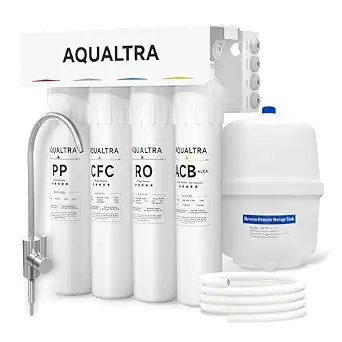 |
| Top Rated A top-rated pick with lots of positive feedback | Home Master Artesian TMAFC-ERP |  |
| Most Popular A crowd favorite that many people choose with confidence | iSpring RCC7AK-BN RO System |  |
| Best Seller A high-volume bestseller chosen again and again | Waterdrop G3P600 Tankless RO |  |
FRIZZLIFE PD600 Tankless RO

| Flow rate | 600 GPD |
|---|---|
| Purification method | Reverse Osmosis, Alkaline/Remineralize |
| Power source | Corded Electric |
| Other features | Smart TDS display, Change Filter Indicator, Tankless |
The FRIZZLIFE PD600 is a compact, tankless under-sink reverse osmosis system that produces high volumes of purified water while adding back minerals and raising pH. It uses a 600 GPD RO membrane plus a remineralization/alkaline stage and a pleated carbon prefilter to remove contaminants and restore healthy minerals, and a stainless faucet is included. The tankless design saves under-sink space and avoids tank-related secondary contamination, and the built-in LED TDS and filter-life display makes it easy to monitor water quality and know when to replace cartridges. With a claimed 2:1 pure-to-drain ratio and a fast fill rate, it suits households that need steady, fast drinking-water flow without storing water in a tank. Expect to need electricity for the pump and periodic filter and membrane changes on the schedule the display shows, and installation requires under-sink plumbing and a small footprint for the unit and faucet routing. The system is a practical choice for buyers who want high output, on-demand RO water with remineralization and simple monitoring in a space-saving package.
Best for: Buyers who want a high-output, space-saving under-sink RO system that produces on-demand purified water with added minerals and straightforward real-time monitoring.
Less Ideal for: Households that need filtered water during power outages or prefer a maintenance-free, no-replacement system should consider alternatives.
- Tankless design saves under-sink space and eliminates tank-related secondary contamination.
- 600 GPD membrane delivers high output and fast on-demand flow.
- Alkaline remineralization stage raises pH and returns beneficial minerals for better taste.
- Smart LED TDS and filter-life display provides real-time water quality and replacement reminders.
- Includes stainless steel faucet and necessary filter components for a complete under-sink setup.
- Requires electricity to operate the pump, so it will not run during power outages.
- Filters and RO membrane need periodic replacement, adding ongoing maintenance cost.
Verdict: Choose the FRIZZLIFE PD600 when you want a roomy-output, tankless under-sink RO that adds minerals back and makes water quality easy to monitor.
APEC Water ROES-50

| Purification Method | Reverse Osmosis |
|---|---|
| Filtration Stages | 5-Stage |
| Capacity | 50 gallons |
| Operating Pressure Range | 40-85 psi |
| Filter Life Cycle | 6 months |
The APEC ROES-50 is a five-stage under-sink reverse osmosis system designed to deliver high-purity drinking water at up to 50 gallons per day. It combines multiple pre-filters, an RO membrane, and a post-filter to reduce chlorine, lead, fluoride, arsenic, heavy metals, PFAs, microplastics, and more, and ships with a tank and a dedicated faucet for steady flow. Installation is DIY-friendly with quick-connect fittings and color-coded tubing so homeowners can fit the unit under a kitchen sink without special tools, and routine maintenance involves replacing prefilters every 6 to 12 months and the membrane or post-filters every 12 to 24 months depending on feed water quality. The system is WQA/NSF-grade in construction and built for reliable daily performance, but output is limited to about 50 GPD which may require patience during heavy simultaneous use and it needs adequate inlet pressure and space under the sink. For buyers focused on consistent contaminant removal and long filter life, this unit balances robust filtration with straightforward upkeep.
Best for: Buyers who prioritize thorough contaminant removal and reliable daily performance and want a durable, serviceable under-sink RO system they can install themselves.
Less Ideal for: Households needing very high flow or instant large-volume dispensing for multiple simultaneous uses should consider higher-capacity or tankless solutions instead.
- Five-stage filtration removes a broad range of contaminants including heavy metals, fluoride, and PFAs
- Produces up to 50 gallons per day, suitable for typical household drinking and cooking needs
- Includes tank and faucet for stable flow and ready-to-use installation
- DIY-friendly quick-connect fittings and color-coded tubing simplify installation and servicing
- Prefilters and membrane have long service intervals when feed water is moderate, reducing maintenance frequency
- 50 GPD output can be slow during high simultaneous demand compared with higher-capacity systems
- Requires sufficient water pressure and under-sink space for installation
Verdict: Choose the ROES-50 when you want a proven, high-purity five-stage under-sink RO system that balances strong contaminant removal with DIY-friendly installation.
Express Water RO5DX 5-Stage RO

| Purification Method | Reverse Osmosis |
|---|---|
| Number of Stages | 5-stage |
| Gallons Per Day | 50 GPD |
| Maximum Flow Rate | 0.8 gpm |
| Supported Water TDS Level Maximum (PPM) | 300 |
The Express Water RO5DX is a five-stage under-sink reverse osmosis system designed to deliver very high purity drinking water for a household. It installs under the sink and uses sediment, granular and block carbon pre-filters, a reverse osmosis membrane, and a final post-carbon stage to remove a wide range of contaminants including heavy metals, fluoride, pharmaceuticals, and VOCs. The system includes a 4 gallon storage tank and a deluxe chrome faucet that delivers about 0.8 gallons per minute, and it operates without electricity so no outlet is required. Practical touches include quick-connect tubing, a leak stop valve with a floor-mounted fabric sensor, and color-coded, labeled housings to simplify filter changes; Express Water supplies filters for the first year and says routine service is mostly annual for the membrane and semiannual for the pre/post filters. Expect typical RO waste water of roughly one to three gallons discharged per gallon produced and check that your home water pressure (40-80 psi) is adequate or plan for a booster pump. The unit is compact enough for under-cabinet mounting and is NSF-tested to relevant standards for contaminant reduction.
Best for: Buyers who want a no-frills, high-purity under-sink RO that is serviceable at home and prioritizes proven contaminant reduction and easy filter changes.
Less Ideal for: People who need a zero-waste system, those with very low household water pressure without plans to add a pump, or users who prefer countertop or pitcher-style filtration.
- Five-stage filtration including RO membrane and post-carbon for broad contaminant reduction
- Produces up to 50 gallons per day with a 4 gallon storage tank for ready access
- No electricity required so it runs during power outages
- Quick-connect fittings, labeled housings, and included extra filters simplify installation and maintenance
- Included leak stop valve with fabric sensor reduces risk of cabinet flooding
- Standard RO reject water ratio discharges approximately one to three gallons for every gallon produced
- Requires adequate incoming water pressure (40-80 psi) and may need a booster pump or extra tubing for remote installs
Verdict: Choose this system if you want a compact, proven five-stage under-sink RO that delivers very high contaminant reduction with straightforward DIY-friendly maintenance.
AQUALTRA USF-4RF-100 RO System
| Purification Method | Reverse Osmosis |
|---|---|
| Installation Type | Under Sink |
| Power Source | Water Pressure |
| Filter Life Cycle | 36 months |
| Supported Water TDS Level Maximum (PPM) | 96 |
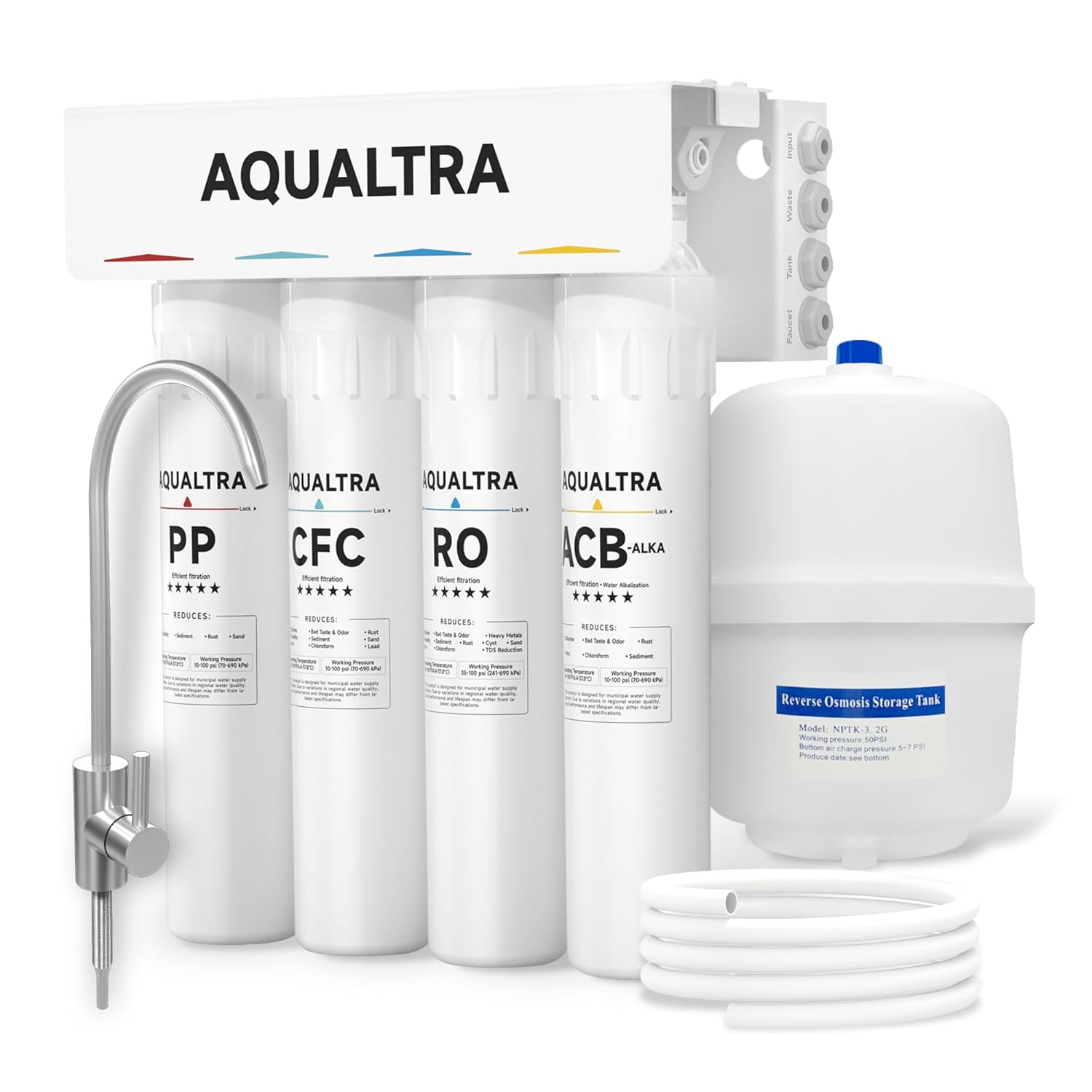
The AQUALTRA USF-4RF-100 is an under-sink reverse osmosis system that delivers on basic RO performance with a mineral-boost stage to return some beneficial electrolytes to filtered water. It uses four filters including a PP prefilter, carbon block, RO membrane and an alkaline post-filter, and pairs a 3.2 gallon storage tank with a 100 GPD membrane for fast delivery. Installation is designed for DIY use with push-to-connect fittings and quick-twist housings, so most homeowners can fit it under a standard sink without special tools. The unit is intended for municipal cold water only and is not rated for well water or hot lines, and the system requires periodic filter changes on staggered schedules—PP every 6 to 12 months, carbon and alkaline about 24 months, and the RO membrane up to 36 months. The product claims a 3:1 pure-to-drain ratio and lists third-party lab contaminant reduction results, which supports solid contaminant removal for everyday drinking and cooking needs. Expect straightforward installation and affordable operating costs if your incoming water matches the product limits.
Best for: Buyers seeking an affordable under-sink RO that balances good contaminant removal with easy DIY installation and improved taste from remineralization.
Less Ideal for: Homes on untreated well water, users who need hot-water filtration, or buyers wanting a zero-waste tankless RO solution should look elsewhere.
- Alkaline remineralization stage restores some beneficial minerals for better taste
- 100 GPD membrane plus 3.2 gallon tank supplies purified water quickly
- Push-to-connect and quick-twist design simplifies DIY installation
- Third-party lab results cited for wide contaminant reduction
- Staggered filter lifespans reduce frequency of full-service replacement
- Not suitable for well water or hot water sources
- Pure-to-drain ratio is 3:1 which still produces wastewater compared with tankless, zero-waste options
Verdict: A budget-friendly under-sink RO that combines strong contaminant removal, a remineralization stage, and easy DIY installation for municipal cold-water households.
Home Master Artesian TMAFC-ERP

| Purification Method | Alkaline, Reverse Osmosis |
|---|---|
| Stages | 7-stages |
| Maximum Flow Rate | 1 gpm |
| Supported Water TDS Level Maximum (PPM) | 500 |
| Capacity | 2000 gallons |
The Home Master Artesian Full Contact TMAFC-ERP is an under-sink RO system designed to deliver very clean, mineral-enhanced drinking water with fewer of the hassles common to older RO units. It uses seven filtration stages including catalytic carbon, sediment prefilter, and a DOW RO membrane, plus a patented two-pass remineralization that restores calcium and magnesium for better taste. A built-in non-electric permeate pump reduces wastewater and raises output, and the Fast Flo kit and larger tubing give a noticeably quicker faucet fill. The modular, canister-free design makes annual filter changes straightforward without wrenches, and components meet NSF material safety expectations. Important limitations are typical for RO equipment: it needs sufficient feed pressure and space under the sink for the assembled unit and tank, and annual filter and membrane replacements are required to maintain performance. For buyers wanting dependable, well-engineered under-sink water with improved efficiency and taste, this system balances performance and serviceability.
Best for: Buyers who want a reliable, low-maintenance under-sink RO system that prioritizes consistent purity, improved taste, and reduced water waste.
Less Ideal for: People with very limited under-sink space, low incoming water pressure, or those unwilling to perform yearly filter and membrane maintenance.
- Adds beneficial minerals twice during filtration for improved taste
- Non-electric permeate pump reduces water waste and boosts production
- Fast Flo fittings and larger tubing deliver quicker faucet fill
- Modular, easy-to-change filters without wrenches
- Requires adequate under-sink space and water pressure for optimal performance
- Annual filter and membrane replacements are necessary to sustain filtration quality
Verdict: Pick this system if you want a dependable under-sink RO that improves taste with remineralization while cutting waste and speeding faucet fill.
iSpring RCC7AK-BN RO System

| Purification Method | Reverse Osmosis, Alkaline, Activated Carbon, Carbon block |
|---|---|
| Power Source | No Power Needed |
| Maximum Flow Rate | 284 liters_per_day |
| Operating Pressure Range | 70 psi |
| Filter Life Cycle | 6 months |
The iSpring RCC7AK-BN is an under-sink reverse osmosis system that combines a 5-stage RO membrane with an additional alkaline mineral stage to restore balanced pH and trace minerals. It installs beneath the sink and supplies drinking water through the included brushed nickel faucet, with a top-mounted fastener designed to simplify countertop faucet installation from above. Key features include NSF/ANSI 58 certification for the full system, a transparent first-stage housing for visual monitoring, push-to-connect fittings and color-coded tubing for easier DIY setup, and an electricity-free operation. In real-world use the RCC7AK-BN delivers very low TDS and removes a wide range of contaminants while adding minerals for better taste, and compatible fittings make fridge connection possible. Maintenance requires periodic filter and membrane replacements on the manufacturer schedule and space under the sink for the tank and housings, and throughput is governed by its 75 GPD capacity which may be limiting for heavy simultaneous demand. For buyers who value verified performance and clear installation guidance, this system is a dependable under-sink RO option.
Best for: Buyers who prioritize verified, lab-backed contaminant reduction and want a DIY-friendly, under-sink RO that also restores mineral balance for better tasting water.
Less Ideal for: Households that need very high continuous flow for multiple simultaneous uses or those with extremely tight under-sink space should consider alternatives.
- NSF/ANSI 58 full-system certification confirming contaminant reduction performance
- Alkaline remineralization stage restores pH and adds trace minerals for improved taste
- Transparent first-stage housing allows quick visual check of sediment buildup
- Push-to-connect fittings and color-coded tubing simplify DIY installation
- Operates without electricity and includes a storage tank and brushed nickel faucet
- 75 GPD capacity may limit output during heavy simultaneous use
- Requires periodic filter and membrane replacements and under-sink space for the tank
Verdict: Choose this system if you want a certified, electricity-free under-sink RO that removes a broad range of contaminants and returns mineral-rich, better-tasting water.
Waterdrop G3P600 Tankless RO
| Filtration stages | 8-stage |
|---|---|
| Flow rate | 600 GPD |
| Pure to drain ratio | 2:1 |
| Purification method | Carbon Block, Reverse Osmosis |
| Faucet | Smart display faucet |
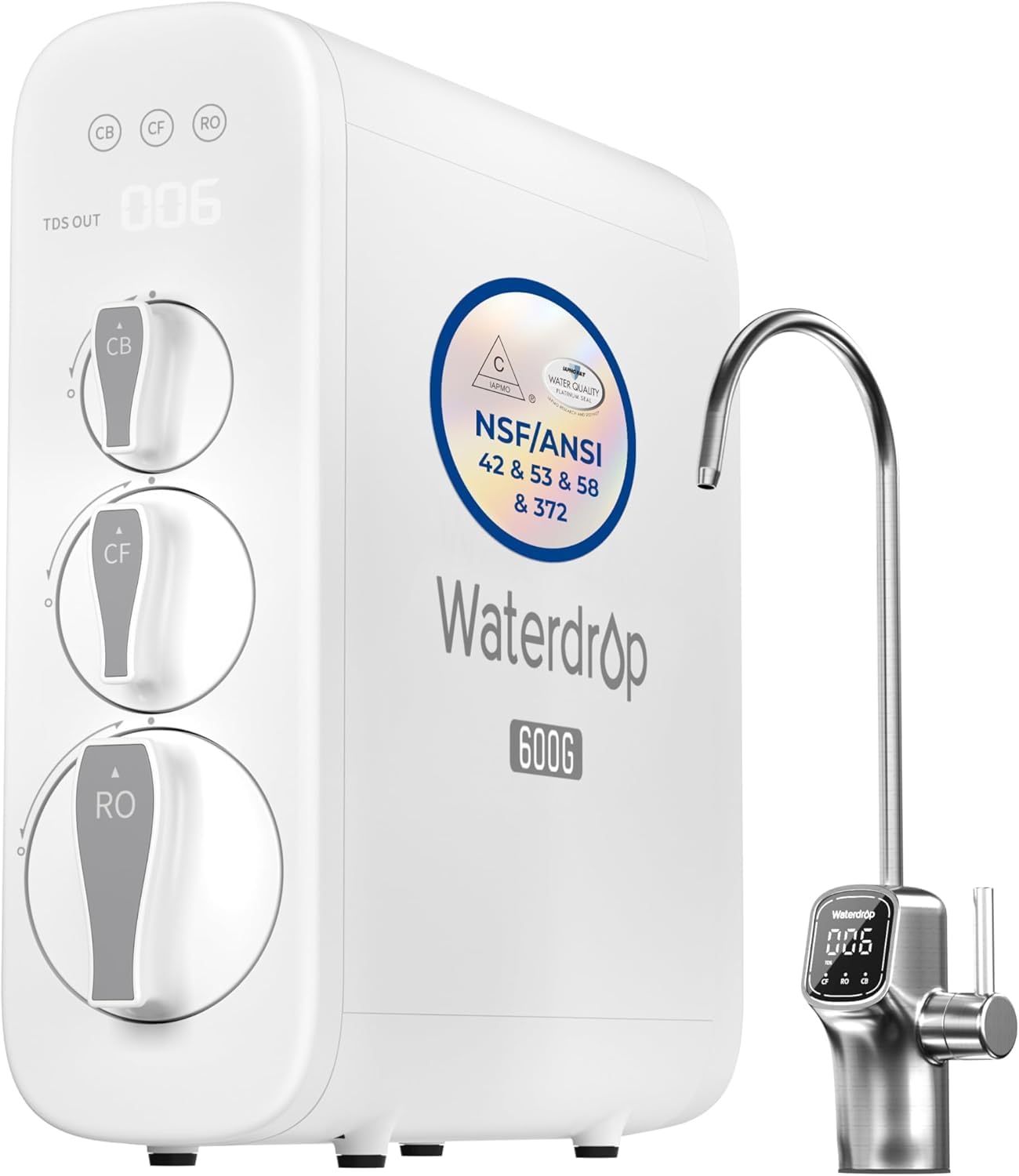
The Waterdrop G3P600 is a tankless under-sink RO system designed to produce large volumes of purified water quickly without a storage tank. It uses an 8-stage filtration train including a reverse osmosis membrane and carbon-block stages to reduce TDS, chlorine, heavy metals, PFAS and other common contaminants, and the unit is certified to NSF/ANSI 42, 53, 58 and 372. The smart faucet shows TDS and filter life so you can monitor water quality and know when to change cartridges, and the system claims a 2:1 pure-to-drain ratio and a fast fill rate that delivers an 8 oz cup in about 8 seconds. Tankless packaging saves under-sink space and the filters twist out for quick replacements, but the system requires an electrical connection under the sink and you must drill a faucet hole and a drain connection during installation. For buyers who want high capacity and real-time quality feedback without a bulky tank, this is a practical, high-performance option; for those who cannot provide under-sink power or prefer passive systems, a tankless RO may be less convenient.
Best for: A buyer who prioritizes certified contaminant reduction and reliable, high-volume purified water with visible TDS monitoring and wants to minimize under-sink footprint.
Less Ideal for: People without available under-sink power or those who prefer a passive, non‑electrical filter or a standalone countertop unit should consider other options.
- High production capacity up to 600 GPD for fast, on-demand water
- 8-stage filtration with RO membrane and carbon block to reduce a wide range of contaminants including PFAS and heavy metals
- Smart faucet with TDS readout and filter-life indicators for easy water-quality monitoring
- Tankless design saves under-sink space and uses quick twist-and-replace filters
- Requires under-sink electrical connection and drilling for faucet and drain during installation
- Produces waste water (2:1 pure to drain) so it needs a drain hookup and some water loss
Verdict: Buy this if you want a certified, tankless RO that delivers high daily output and real-time TDS feedback while saving under-sink space.
Choosing the Right Under-Sink Reverse Osmosis Water Filter for Sink: Key Factors to Consider
Contaminant Reduction Performance
An under-sink reverse osmosis system is primarily judged by what it removes and by how much. Look for systems with documented reductions for the specific contaminants of concern in your water, such as lead, chlorine, arsenic, nitrates, and dissolved solids. Filter stages and membrane pore size determine which molecules are trapped and which pass through.
Higher certified reduction rates matter when local water tests show particular contaminants above recommended levels. If your municipal report flags certain impurities, prioritize systems with verified removal for those substances to ensure meaningful improvement in water safety and taste.
Daily Output and Flow Rate
Daily output measures how much purified water a system can produce in a day, while flow rate determines how quickly water comes out at the faucet. Households that use filtered water for drinking, cooking, and a small electric kettle need higher output and better flow to avoid long waits or frequent tank drawdowns.
Consider whether the system has a storage tank and the tank size, since smaller tanks fill faster but dispense less before recharge. Systems without tanks or with low-production membranes can cause slow faucet flow. Match the expected daily output to your household consumption patterns to avoid inconvenience.
Installation Complexity and Space
Under-sink RO systems vary from simple add-on kits to multi-component assemblies that require cutting supply lines and drilling for a dedicated faucet hole. Assess the physical space beneath your sink, the location of the cold-water supply, and whether you can access a disposal connection or drain for RO reject water.
If you are a DIYer, choose systems with clear instructions and fewer connections. If under-sink space is limited, consider compact designs or models with remote tanks. Installation complexity affects the total cost of ownership when professional help is required.
Filter Lifespan and Ongoing Maintenance
Filter replacement frequency and the availability of replacement cartridges influence long-term cost and convenience. Some prefilters and carbon stages need changing every 6 to 12 months, while membranes usually last longer but may require periodic sanitization to maintain performance.
Check how simple it is to replace cartridges and whether the system requires special tools. Systems that use widely available, standardized cartridges tend to be easier to maintain. Also consider whether the manufacturer provides clear guidance on flushing and sanitizing intervals to protect water quality over time.
Waste Water Ratio and Environmental Impact
Reverse osmosis produces reject water during filtration. The waste ratio describes how much water is sent to drain compared with the purified output. Systems with very high waste generate more wastewater, which can be a concern in areas with limited water supply or higher utility costs.
Some systems include booster pumps or water-saving technologies to improve recovery rates. When choosing, weigh the waste ratio against your household priorities and local regulations. A more efficient system can reduce water waste but may come with additional complexity.
Faucet Compatibility and Aesthetics
Under-sink RO systems usually require a dedicated faucet for dispensing filtered water. Consider whether you prefer a separate faucet or a solution that integrates with an existing hole in your sink or countertop. The faucet design affects ergonomics, clearance, and how well it fits your kitchen style.
Verify faucet height and spout reach relative to your sink basin to avoid splashing or clearance problems. Also check whether the system supports common faucet finishes so the final installation looks cohesive with your kitchen fixtures.
How Reverse Osmosis Works Under Your Sink
Reverse osmosis pushes water through a semipermeable membrane that separates dissolved solids and many contaminants from the water stream. Pre- and post-filtration stages protect the membrane from chlorine and remove tastes or odors, which improves final water quality beyond what the membrane alone provides.
Under-sink placement centralizes components out of sight, with only a small faucet visible on the countertop. Understanding the flow path and where each filter stage sits helps when troubleshooting taste issues or scheduling replacements.
- Pre-filter: removes sediment and protects the membrane
- RO membrane: separates dissolved solids
- Post-filter: polishes taste and removes residual odors
- Storage tank: holds purified water for immediate dispensing
- Drain line: carries concentrate away from the system
Sizing a System to Household Water Use
Estimate daily filtered-water needs by adding typical drinking, cooking, and small appliance usage. A two-person household will need far less daily output than a family that fills water bottles and runs a coffee maker from filtered water. Select a system with a daily production rating that leaves margin for peak use.
Also account for headroom when guests visit or during cooking tasks that require more filtered water. If you frequently need larger volumes at once, prioritize systems with larger tanks or higher immediate flow rates.
- Match daily production rating to average daily use
- Consider peak events and occasional heavy use
- Larger tanks smooth out demand spikes
Common Installation Pitfalls and How to Avoid Them
Under-sink installations can be complicated by tight cabinets, plumbing that is hard to access, or undersink garbage disposals that limit available drain connections. Before buying, measure clearance and note where shutoff valves and the cold-water feed are located. That helps ensure the system you pick will physically fit and that you will have a convenient drain tie-in for reject water.
Avoiding unnecessary trips to the hardware store starts with checking whether the system requires a separate faucet hole, special hoses, or a particular shutoff valve style. If in doubt, consider a professional install to ensure correct sealing and leak prevention.
- Measure space and cabinet obstructions before ordering
- Confirm drain tie-in compatibility
- Check whether a faucet hole needs drilling
Maintaining Water Quality Over Time
Routine maintenance keeps performance steady. Replace prefilters and carbon stages on the schedule recommended by the manufacturer or sooner if local water is particularly sediment-laden. Periodically test water quality or monitor taste and odor changes to detect declining filter performance.
Sanitizing the system and flushing the storage tank during filter changes helps prevent bacterial growth. Keep a maintenance log with dates and parts installed so you can anticipate future purchases and service needs.
- Follow recommended cartridge change intervals
- Sanitize and flush the system during major service
- Keep a record of maintenance dates and filter part numbers
Dealing With Low Water Pressure and Booster Pumps
Reverse osmosis performance is sensitive to incoming water pressure. Low feed pressure reduces production rate and can increase reject ratios. If your home has low municipal pressure or the supply line under the sink is narrow, the system may underperform.
Booster pumps raise feed pressure to the membrane, improving output and efficiency. They add electrical requirements and potentially more noise, so weigh the benefits against those tradeoffs when choosing a system for a low-pressure environment.
- Check incoming water pressure before purchase
- Consider booster pumps if pressure is below recommended levels
- Understand noise and power needs if a pump is included
How We Chose the Best Under-Sink Reverse Osmosis Water Filter for Sink
We focused on features that directly affect real-world performance and day-to-day ownership. Key evaluation points included contaminant removal capability and laboratory-verified reduction ratings because effective filtration is the primary purpose of an RO system. We also considered daily output and flow rate to ensure systems meet typical household drinking and cooking needs without long waits. Installation complexity and required tools were assessed to reflect what a competent DIYer or a plumber would face under a standard sink cabinet. Space footprint and tank size were used to determine whether a system will physically fit under typical sink layouts. Filter life and replacement frequency were evaluated to estimate maintenance cadence and ongoing cost of ownership. Finally, build quality and warranty coverage were reviewed as indicators of long-term reliability. We excluded point-of-use pitchers, countertop purifiers, and whole-house treatment systems because they do not match the under-sink reverse osmosis scope. Systems lacking verifiable contaminant reduction data or basic warranty information were not considered. The end result is a curated list of systems that balance filtration performance, usable flow, installation practicality, and predictable maintenance.
Our full evaluation process is outlined in our review methodology.
FAQ
How often should I replace filters in an under-sink RO system?
Prefilters like sediment and carbon typically need changing every 6 to 12 months, while the RO membrane often lasts 2 to 3 years depending on water quality. Monitor changes in taste and flow as a practical indicator that service is due.
Will an under-sink RO system increase my water bill due to waste?
RO systems produce reject water, so some additional water use is expected. The exact impact depends on the system's waste ratio and how much filtered water you consume. Systems with better recovery rates reduce waste but may add complexity.
Can I install an under-sink RO system myself?
Many homeowners can install simpler systems with basic plumbing skills and tools. More complex multi-stage systems or installations in cramped cabinets might require a plumber. Assess your comfort with cutting supply lines and mounting a dedicated faucet before deciding.
Do under-sink RO systems require electricity?
Most passive RO systems do not need electricity, but booster pumps and some smart features do require power. If you choose a system with a pump, account for the outlet location and any noise the pump may produce.
How do I know if an RO system will fit under my sink?
Measure the cabinet depth and height, note the location of plumbing fixtures, and compare those dimensions with the system footprint. Consider remote tank options or compact designs if space is limited.
Final Verdict
When choosing an under-sink reverse osmosis water filter for sink, prioritize verified contaminant removal and a daily output that matches how you use filtered water. Balance installation needs and under-sink footprint against maintenance frequency and waste water rates to find a system that fits your kitchen and routine. By weighing these tradeoffs, you can pick a system that reliably delivers better-tasting, cleaner water without unexpected installation or upkeep burdens.