
Note: This article contains affiliate links. If you click on these links and make a purchase, we may earn a small commission at no extra cost to you. This helps support our research and content. Read our full affiliate disclosure here.
If you want better-tasting, safer water straight from the kitchen tap, an under-sink water filter for drinking water can make the difference. Installing a dedicated under-sink unit removes common aesthetic contaminants and reduces concern about specific health-related impurities while preserving water pressure for daily use. Choosing the right filter matters because filtration technology, certified contaminant removal, and installation space vary a lot, and those differences affect long-term maintenance and water quality. This guide spotlights seven shortlisted under-sink systems that fit typical household needs. We evaluated each option on the practical factors that matter most to people using an under-sink filter for drinking water, including measured contaminant reduction, flow characteristics, ease of installation, and ongoing filter cost. Read on to find the systems that best match your kitchen setup and water quality priorities.
Top Picks at a Glance
| Best Overall The best all-around choice for most situations | APEC Water ROES-50 |  |
| Best Quality Built to a higher standard if you want something more solid | iSpring RCC1UP-AK 100 GPD RO System |  |
| Best Value The sweet spot between price and what you get | Amazon Basics Under-Sink Water Filter |  |
| Best Budget The cheapest option that still gets the job done reliably | ICEPURE WFC5300A Under-Sink Filter |  |
| Top Rated A top-rated pick with lots of positive feedback | iSpring RCC7AK-BN 75 GPD RO System |  |
| Most Popular A crowd favorite that many people choose with confidence | Waterdrop WD-10UA Under-Sink Filter | 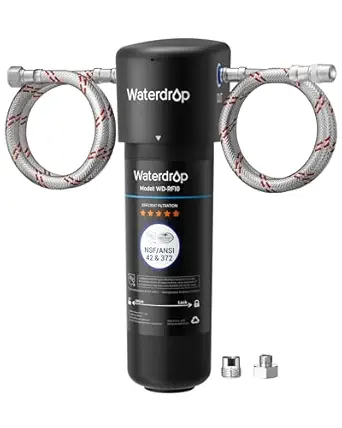 |
| Best Seller A high-volume bestseller chosen again and again | Waterdrop WD-15UA Under Sink Filter |  |
APEC Water ROES-50

| Purification Method | Reverse Osmosis |
|---|---|
| Filtration Stages | 5-Stage |
| Daily Output (GPD) | 50 gallons |
| Operating Pressure Range | 40-85 psi |
| Filter Life Cycle | 6 months |
The APEC ROES-50 is a 5-stage under-sink reverse osmosis system designed to deliver highly purified drinking water at home. It installs under the sink with included fittings, separate storage tank, and a dedicated faucet, and is intended for daily household use where low-TDS, great-tasting water is the goal. The five filtration stages (pre-filters, RO membrane, post-filter) remove common contaminants including chlorine, lead, arsenic, fluoride, and many others while also reducing PFAs and microplastics, producing up to 50 gallons per day. Practical benefits include long filter life for prefilters and membranes depending on source water, easily sourced replacement filter sets, and DIY-friendly quick-connect tubing and color-coded lines that simplify service. Important limitations are the relatively low maximum flow rate at the faucet and the need for periodic filter and membrane replacements; it also requires an under-sink space for the tank and system plumbing and operates on household water pressure within the 40-85 psi range. For buyers wanting very clean drinking water and straightforward home maintenance, it is a solid, proven option.
Best for: Buyers who want consistently very low-TDS, great-tasting drinking water from a permanent under-sink system and value proven contaminant removal with straightforward DIY installation and upkeep.
Less Ideal for: People with very low water pressure, extremely limited under-sink space, or those who need high flow rates from the tap should consider other solutions.
- Five-stage RO filtration removes a wide range of contaminants including heavy metals and fluoride
- Produces up to 50 gallons per day for steady household supply
- DIY-friendly quick-connect fittings and color-coded tubing simplify installation and maintenance
- Includes faucet and storage tank so system is complete out of the box
- Long-lasting membrane and prefilter lifespans reduce frequency of replacements
- Relatively low maximum flow rate at the faucet compared with non-RO tap water
- Requires under-sink space for the unit and storage tank
- Needs periodic filter and membrane replacement based on incoming water quality
Verdict: Choose the ROES-50 if you want a reliable, five-stage under-sink RO system that consistently delivers very low-TDS drinking water with easy DIY installation.
iSpring RCC1UP-AK 100 GPD RO System

| Purification Method | Reverse Osmosis, Alkaline, Activated Carbon, Carbon block, Ultraviolet |
|---|---|
| Power Source | Corded Electric |
| Capacity | 100 gallons |
| Supported Water TDS Level Maximum (PPM) | 750 |
| Maximum Flow Rate | 0.07 gpm |
The iSpring RCC1UP-AK is a high-capacity 7-stage under-sink reverse osmosis system built for performance-oriented households that want very clean drinking water. It uses three prefilters, an RO membrane and post-stage alkaline remineralization to remove a broad range of contaminants while restoring minerals for palatable taste, and a smart UV lamp that activates only when water flows to provide microbial protection. The included booster pump helps maintain consistent output and improves membrane efficiency, which reduces wastewater compared with non-boosted systems and supports up to 750 ppm feed water. Installation is DIY-friendly with quick-fit connectors and a top-mounted faucet for easier access under the sink, though the unit is sizeable and requires space for the pump and UV chamber. Practical benefits include strong contaminant reduction (including PFAS and lead), visible first-stage housing for condition checks, and parts for optional fridge hookup, but buyers should allow for periodic filter and UV bulb replacement and find room for the assembly under a standard sink.
Best for: Buyers who prioritize maximum contaminant removal and consistent RO performance and want a factory-quality under-sink system that includes UV protection and remineralization for better tasting drinking water.
Less Ideal for: People with extremely limited under-sink space or those seeking a near-zero maintenance pitcher or countertop purifier should consider more compact alternatives.
- 7-stage filtration that targets a wide range of contaminants including PFAS, lead, and chlorine
- Booster pump maintains consistent flow and improves RO efficiency for higher effective output
- UV filter provides on-demand microbial disinfection with flow-activated control
- Alkaline remineralization restores beneficial minerals for improved taste
- Transparent first-stage housing and included parts support DIY installation and maintenance
- Large under-sink footprint requires ample cabinet space for the pump and UV chamber
- Periodic replacement of filters and UV bulb adds ongoing maintenance tasks
Verdict: Choose this system if you want a high-performance under-sink RO that pairs a booster pump and UV disinfection with remineralization for consistent, great-tasting drinking water.
Amazon Basics Under-Sink Water Filter

| Purification Method | Activated Carbon |
|---|---|
| Installation Type | Under Sink |
| Capacity | 11000 gallons |
| Supported Water TDS Level Maximum (PPM) | 500 |
The Amazon Basics under-sink filter is a straightforward activated-carbon system designed to connect directly to a kitchen cold-water feed and deliver treated drinking water under the sink. Installation uses a twist-and-lock canister and push-to-connect fittings with a 3/8" line and included 3/8"–1/2" converter, so you can install it quickly without specialized tools. The carbon block cartridge targets chlorine, taste and odor and is IAPMO certified to NSF/ANSI 42 and 372, making it a practical choice for municipal water. Each cartridge is rated for up to 11,000 gallons or 12 months of service, which suits average household use and reduces replacement frequency. Because it is a single-stage carbon filter, it does not remove dissolved minerals, heavy metals, or microbes, so it is best for improving flavor and chlorine reduction rather than comprehensive contaminant removal. The manual, no-power design keeps operation simple and maintenance limited to periodic cartridge swaps.
Best for: Buyers who want an easy-to-install, low-maintenance under-sink solution to improve tap taste and reduce chlorine for everyday drinking and cooking water.
Less Ideal for: Households needing removal of lead, nitrates, fluoride, or microbiological contaminants should choose a multi-stage or specialty system instead.
- NSF/ANSI 42 and 372 certified for chlorine, taste and odor reduction
- Quick twist-and-lock and push-to-connect fittings for tool-free installation
- High capacity rated for up to 11,000 gallons or 12 months per cartridge
- Includes hoses and a 3/8"–1/2" converter for direct connection to common sink feed lines
- Single-stage carbon filter does not remove dissolved solids, heavy metals, or microbiological contaminants
- Designed for cold-water use only
Verdict: A no-frills, high-capacity carbon under-sink filter that quickly improves taste and chlorine levels with minimal installation effort.
ICEPURE WFC5300A Under-Sink Filter
| Service life | 3 years / 22,000 gallons |
|---|---|
| Filter rating | 0.5 micron |
| Certifications | IAPMO, WQA, NSF/ANSI 42 |
| Material Type | Lead-free and Food-grade |
| Compatible models | Icepure WFS5300A |
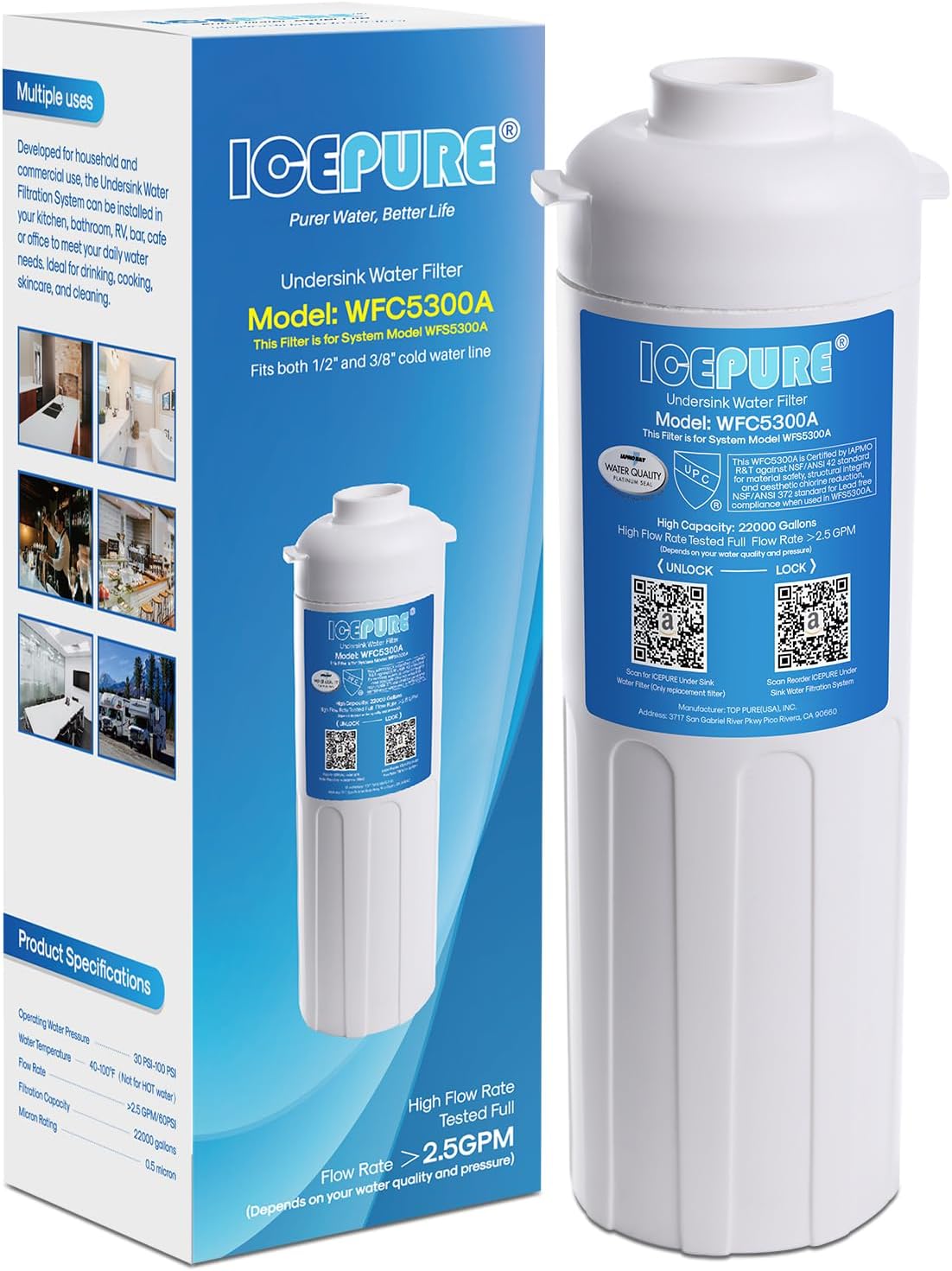
The ICEPURE WFC5300A is a compact under-sink replacement filter designed for long service life in household drinking-water setups. It uses a 0.5 micron filtration element and is rated to last up to 22,000 gallons or roughly three years on municipal water, which reduces the frequency of cartridge changes for budget-minded owners. The unit carries multiple third-party certifications including NSF/ANSI 42 and IAPMO and the manufacturer says it removes heavy metals, chlorine, bad taste, odor, rust, and sediment, making it suitable for drinking and cooking water. Installation is intended to be simple without professional help and the filter is built from food-grade, lead-free materials. The main compromises are that flow rate and exact contaminant reduction numbers beyond the certifications are not detailed on the listing, and its long service life assumes typical municipal water conditions so households with very hard or heavily contaminated feed water may need more frequent replacement or a different filtration stage.
Best for: Buyers who want a low-maintenance, budget-friendly under-sink replacement that runs for years between changes and prioritizes certified removal of chlorine and heavy metals for drinking and cooking water.
Less Ideal for: Homes with very hard water, well water, or known heavy contamination that require multi-stage treatment or specific contaminant testing should consider more targeted or higher-capacity systems.
- Very high rated capacity: 22,000 gallons or about 3 years on municipal water
- Certified by NSF/ANSI 42 plus IAPMO and other third-party marks
- Constructed from lead-free, food-grade materials
- Compact design suitable for under-sink installation and easy DIY replacement
- Listing does not provide detailed contaminant reduction percentages beyond certification claims
- Performance and replacement interval depend on local water quality and may be shorter in poor conditions
Verdict: Choose this filter if you want a certified, long-life under-sink replacement that minimizes how often you change cartridges while keeping drinking water free of chlorine and common heavy metals.
iSpring RCC7AK-BN 75 GPD RO System

| Purification Method | Reverse Osmosis, Alkaline, Activated Carbon, Carbon block |
|---|---|
| Power Source | No Power Needed |
| Maximum Flow Rate | 284 liters_per_day |
| Supported Water TDS Level Maximum (PPM) | 750 |
| Filter Life Cycle | 6 months |
The iSpring RCC7AK-BN is a six-stage reverse osmosis system designed for under-sink installation that produces mineral-balanced drinking water without electricity. It uses sediment and carbon prefilters, an RO membrane, and an alkaline remineralization stage to restore healthy pH and minerals, while a clear first-stage housing makes visual monitoring of the sediment filter straightforward. The system is NSF 58 certified for the complete unit, rated to treat up to 75 gallons per day and handle tap water TDS up to 750 ppm, and it includes a storage tank and a brushed nickel faucet for direct dispensing. Installation is DIY-friendly with push-to-connect fittings and convertible feed adapters, and replacement filter options are clearly specified for maintenance intervals. Expect steady, very high contaminant reduction and low running costs because it needs no power, but plan for periodic filter and membrane replacements and allow under-sink space for the tank and housings during installation.
Best for: Buyers who prioritize a proven, independently certified under-sink system that consistently delivers low-TDS, mineralized drinking water and want a product they can install and maintain themselves.
Less Ideal for: People with very tight under-sink cabinetry or those who need instant high-volume dispensing without a storage tank should consider alternatives.
- NSF/ANSI 58 full-system certification ensures verified contaminant reduction
- Six-stage filtration with alkaline remineralization restores pH and minerals
- Operates without electricity for low ongoing energy needs
- Transparent first-stage housing allows easy visual inspection of sediment
- DIY-friendly fittings and included installation tools simplify setup
- Requires regular replacement of filters and RO membrane on a schedule
- Storage tank and housings need significant under-sink space
- Flow rate is limited by the 75 GPD membrane and may be slow without tank
Verdict: Choose the iSpring RCC7AK-BN when you want a reliable, NSF-certified under-sink RO system that delivers mineralized, low-TDS drinking water without needing electricity.
Waterdrop WD-10UA Under-Sink Filter

| Purification Method | Activated Carbon |
|---|---|
| Installation Type | Under Sink |
| Maximum Flow Rate | 2.5 gpm |
| Filter Life Cycle | 1 years |
| Supported Water TDS Level Maximum (PPM) | 700 |
The Waterdrop WD-10UA is an under-sink activated carbon filter that connects directly to standard 3/8" or 1/2" cold water lines to deliver drinking-quality water at the tap. It installs with twist-and-lock and push-to-connect fittings, so a basic DIYer can mount it under the sink and hook it to the feed valve without drilling or specialized tools. The cartridge is rated for about 11,000 gallons or up to 12 months with municipal water and the system is NSF/ANSI 42 and 372 certified for chlorine, taste and odor reduction; Waterdrop also lists PFAS and lead reduction. Flow rate is suitable for everyday use — tested flow at 60 psi is reported around 0.75 gpm with a 3/8" outlet upgrade to 1.33 gpm — so you can fill a glass or pot without long waits. The unit is mechanical, uses no electricity, and replacement filters (WD-RF10) are economical. Limitations are that it is intended for cold, municipal water only (not well water or hot water) and it does not claim ultrafine particulate or bacterial removal like UF or RO systems, so buyers wanting near-complete contaminant removal should consider additional stages.
Best for: Buyers who prioritize proven, well-reviewed filtration for everyday drinking water and want an easy-to-install under-sink solution that reduces chlorine, lead, and PFAS without complex maintenance.
Less Ideal for: Homes relying on well water, users who require RO- or UF-level contaminant removal, or buyers who need a hot-water-capable filtration system should look elsewhere.
- NSF/ANSI 42 and 372 certification for chlorine, taste and odor reduction
- Push-to-connect and twist-lock fittings enable quick, no-drill installation
- Filters common chemical contaminants including PFAS and lead according to listing
- Single mechanical system needs no electricity and fits standard under-sink plumbing
- Long service life rated up to 12 months or ~11,000 gallons with municipal water
- Designed only for cold municipal water and not recommended for well or hot water
- Does not provide ultrafiltration or reverse-osmosis level removal for bacteria or dissolved solids
Verdict: A straightforward, NSF-certified under-sink carbon filter that delivers better-tasting, lower-lead municipal drinking water with easy installation and year-long cartridge life.
Waterdrop WD-15UA Under Sink Filter
| Capacity | 19000 gallons |
|---|---|
| Filter Life Cycle | 2 years |
| Maximum Flow Rate | 0.75 gpm |
| Purification Method | Activated Carbon |
| Installation Type | Under Sink |
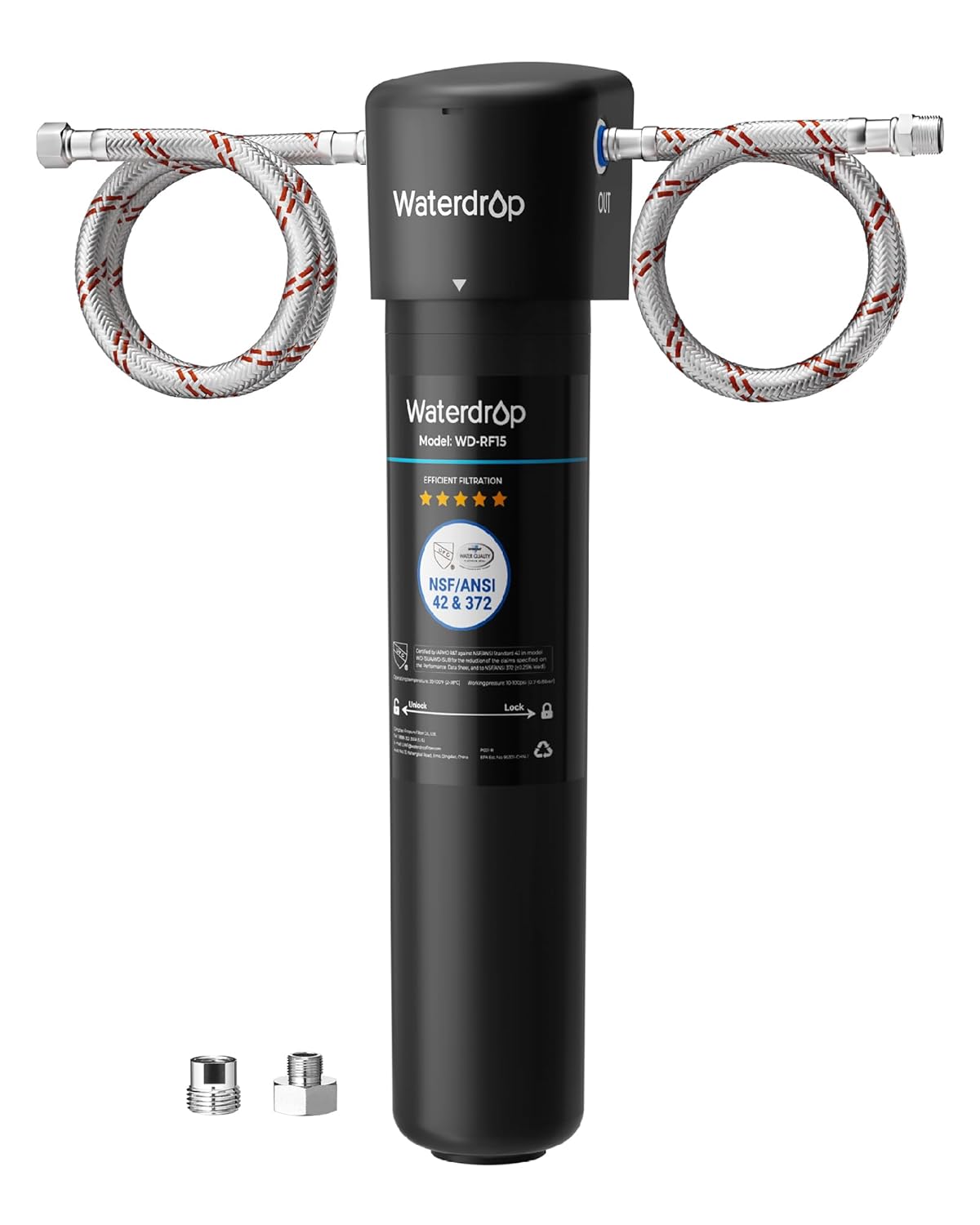
The Waterdrop WD-15UA is a straightforward under-sink filter that connects directly to a cold-water feed and delivers filtered drinking water without a separate faucet. It uses multistage activated carbon media certified to NSF/ANSI 42 and 372 and tested for lead reduction, and the cartridge is sized for a long service life so the manufacturer rates it for up to 19,000 gallons or about 24 months with municipal water. Installation is tool-free with push-to-connect fittings and a 3/8" direct-connect hose plus a 3/8"–1/2" converter, and replacement cartridges swap quickly. The unit provides a steady household flow (specified 0.75 gpm at 60 psi), suitable for drinking, cooking and making ice, and keeps beneficial minerals while targeting chlorine, PFAS and heavy metals. Limitations: it is intended for cold municipal water only and not for well or hot water, and the extended lifespan requires a larger cartridge that needs space under the sink. For buyers who want a long-life, low-maintenance under-sink filter that reduces common chemical contaminants, this is a practical option.
Best for: A cautious buyer who prioritizes certified contaminant reduction and low-maintenance, long-life cartridge replacements for everyday drinking and cooking water.
Less Ideal for: People sourcing water from private wells or those who need hot-water filtration should look at systems designed specifically for those situations.
- Long rated service life of up to 19,000 gallons or 24 months with municipal water
- NSF/ANSI 42 and 372 certified components and third-party testing for lead reduction
- Tool-free push-to-connect installation and quick cartridge replacement
- Keeps steady flow suitable for drinking, cooking and ice makers
- Includes fittings for both 3/8" and 1/2" cold water lines
- Not designed for well water or hot water use
- Requires sufficient under-sink clearance due to larger cartridge size
Verdict: Choose the WD-15UA if you want a certified, long-life under-sink filter that delivers low-maintenance, dependable drinking water for a typical household.
Choosing the Right Under-Sink Water Filter for Drinking Water: Key Factors to Consider
Certified Contaminant Removal
Look for systems with independent laboratory or third-party certification for the contaminants you care about. Certifications and test reports show measured performance for items like lead, chlorine taste and odor, cysts, and volatile organic compounds. Knowing the proven removal rates helps match the filter to your water quality concerns because not all cartridges remove the same list of contaminants.
If your water comes from a municipal supply, focus on taste and chlorine reduction plus lead or disinfection byproduct claims. If you use a private well, prioritize systems that address bacteria, cysts, and specific mineral or chemical contaminants identified by testing.
Flow Rate and Tap Performance
Under-sink filters sit inline with your cold-water feed to the drinking tap, so flow rate is a practical consideration. A restrictive cartridge or small housing can reduce flow to a trickle, which affects filling glasses, pitchers, and kettles. Check the rated gallons per minute and any real-world user feedback on flow consistency under normal household pressure.
Also consider whether the system uses a dedicated dispenser faucet or ties into your existing faucet. Dedicated faucets can maintain flow rates independent of the main kitchen faucet but require extra countertop hole and space. Systems that integrate with the cold-water line maintain a simpler aesthetic but may alter flow slightly.
Filter Life and Ongoing Replacement Costs
Filter longevity directly impacts the total cost of ownership and maintenance frequency. Some cartridges are rated for a few hundred to several thousand gallons, and others specify months of use. Shorter-lived cartridges mean more frequent replacements, which raises long-term expense and the chance of skipped maintenance.
Consider the availability and cost of replacement cartridges, whether the system uses proprietary parts, and how easy it is to swap cartridges yourself. Systems with longer-lived, easy-to-change cartridges tend to be more user-friendly for busy households.
Installation Complexity and Space Requirements
Under-sink spaces vary widely. Measure the available clearance, pipe layout, and whether there is room for single or multi-stage housings. Some systems are compact and mount vertically, while others need horizontal space for multiple canisters or a separate storage tank.
Evaluate whether you can install the system yourself with basic tools or if you will need professional help. Consider connections to the cold-water supply, shutoff valves, and whether the installation requires drilling for a dedicated faucet. Simpler installations reduce cost and downtime.
Taste and Aesthetic Impact
One of the main reasons people install under-sink drinking water filters is improved taste and clarity. Different media, such as activated carbon, specialized resins, or membrane filters, affect flavor differently. Carbon-based cartridges are usually best for chlorine taste and odor, while membrane or reverse-osmosis stages can remove a broader range of dissolved solids.
Also think about whether the system requires a visible faucet or tank on the counter. Many people prefer a minimal look with the hardware tucked under the sink, but a small dedicated tap can be acceptable if it significantly improves water quality.
Maintenance Accessibility and Support
Regular maintenance matters for consistent performance. Check how easy it is to access and replace cartridges, whether the system has simple twist-off housings, and if there are clear indicators for filter change. Good manufacturer support, straightforward warranty terms, and readily available replacement parts ease long-term ownership.
Also consider whether the system needs periodic sanitization or additional valves to simplify filter changes. Systems designed for tool-free swaps reduce the friction of regular maintenance.
Types of Under-Sink Filtration
Under-sink drinking-water systems generally fall into a few technical categories, each with different tradeoffs. Carbon block or granular-activated carbon cartridges are common for taste and odor reduction and are effective against chlorine and many organic compounds. Post-carbon polishing stages improve flavor after other media have done bulk contaminant work.
Reverse-osmosis and membrane-based systems provide broader dissolved-solids reduction, including many inorganic contaminants, but they can waste some water and often require a small storage tank. Inline sediment or pre-filters extend the life of finer media by removing particulate matter before it reaches the main cartridge.
- Carbon filtration: best for taste and chlorine reduction
- Membrane/RO: broad dissolved-solids removal, may need storage tank
- Sediment pre-filter: protects downstream cartridges and improves longevity
Installation Tips and Common Pitfalls
Before you start, shut off the cold-water valve and measure the under-sink area to confirm fit. Identify where the cold-water supply line and drain are so you can plan the routing. If the system uses a dedicated faucet, check for a spare hole in your sink or counter; a deck-mount faucet requires drilling if a hole is not available.
Avoid common mistakes such as overtightening threaded fittings, failing to use plumber tape where specified, and positioning housings where they cannot be accessed for cartridge changes. If pressure regulators or air chambers are present, account for them during installation to prevent leaks and pressure issues.
- Measure twice: verify clearance and pipe layout before buying
- Use the correct fittings and follow torque guidance
- Position housings for easy cartridge access
Testing Your Water and Setting Priorities
A simple water test can clarify which contaminants matter most and guide your filter choice. Municipal water quality reports provide a baseline for regulated contaminants, while home test kits or lab tests can reveal lead, nitrate, or other localized issues. Align the filter's claimed removal list with your specific test results.
Set priorities based on health concerns and daily use. If taste and chlorine are the main issues, a high-quality carbon stage may be sufficient. If inorganic contaminants or dissolved solids are a concern, look at membrane-based options even though they require extra plumbing considerations.
- Use municipal reports for baseline information
- Run targeted tests if you suspect lead or specific pollutants
- Match filter type to the contaminants you actually have
Routine Maintenance and Troubleshooting
Replace cartridges on the manufacturer-recommended schedule or sooner if you notice reduced flow or degraded taste. Keep a spare cartridge on hand to avoid lapses in filtration. When replacing cartridges, flush new media according to instructions to avoid initial carbon fines or off-flavors.
If you experience a sudden drop in flow, check for a clogged pre-filter or a kinked feed line. Persistent leaks usually indicate a misaligned O-ring or an improperly seated housing. Regular visual checks under the sink can catch small leaks before they cause bigger problems.
- Follow replacement intervals and flush new cartridges
- Keep spare cartridges in stock
- Inspect housings and O-rings during each change
How Filtration Affects Kitchen Appliances
Filtered drinking water can improve the performance and lifespan of appliances that use or heat water, such as kettles and coffee makers, by reducing minerals and chlorine that cause scale or off-flavors. However, not all under-sink filters remove hardness minerals that cause scale; if scale is an issue, consider additional softening measures for appliances.
For appliances that require higher flow, ensure the chosen system maintains sufficient gallons per minute so that routine household tasks are not slowed. Check whether the system's specifications list peak or nominal flow rates and consider real-world reductions under typical home water pressure.
- Filtering can reduce scale-related taste issues but may not eliminate hardness
- Confirm flow specs if you use filtered water for appliance fills
How We Chose the Best Under-Sink Water Filter for Drinking Water
We focused on criteria that reflect real-world use for under-sink drinking water filtration. First, certified contaminant removal was a top filter: we prioritized systems with clear performance data for common drinking-water concerns such as lead, chlorine taste and odor, cysts, and volatile organic compounds. Second, flow rate and days-to-empty performance were evaluated because a slow or inconsistent flow undermines everyday use at the kitchen tap. Third, filter life and replacement cost were included to reflect recurring ownership expense and maintenance frequency. Fourth, installation complexity and space footprint were considered to ensure the units fit under most sinks and can be installed by a competent DIYer or a plumber when needed. Fifth, build quality and warranty support were factored in to estimate long-term reliability. We excluded whole-house systems, countertop pitchers, and inline refrigerator filters to keep the list specific to under-sink point-of-use units for drinking water. Products missing independent contaminant test data or without clear filter life information were not considered. The systems selected demonstrate a balance across these criteria so readers can decide which tradeoffs—highest removal capability, lowest running cost, or easiest installation—matter most for their kitchen.
Our full evaluation process is outlined in our review methodology.
FAQ
How often should I replace under-sink water filter cartridges?
Replacement intervals depend on cartridge type and household use but typically range from three months to a year. Follow the manufacturer's rated gallons or months guideline and replace sooner if you notice reduced flow or a change in taste.
Will an under-sink filter remove lead from drinking water?
Some under-sink filters are designed and tested to remove lead, but not all cartridges do. Check for independent test data or certification that specifically lists lead removal to be sure it addresses this contaminant.
Do under-sink filters affect water pressure at the kitchen tap?
They can reduce flow if the cartridge or housing is undersized for your water pressure. Look at the rated flow rate and real-world user feedback. Systems with higher rated gallons per minute or with dedicated faucets are less likely to cause noticeable pressure loss.
Is installation of an under-sink drinking filter a DIY job?
Many under-sink units are designed for moderate DIY installation using basic tools, especially single-canister systems with standard fittings. More complex multi-stage or RO systems may require additional plumbing steps and benefit from professional installation if you are not comfortable with drilling or altering supply lines.
Can I connect an under-sink drinking filter to my existing faucet?
Yes, many systems tie into the cold-water feed to your existing faucet, but some use a separate dedicated faucet. If you prefer no visible hardware on the countertop, verify the product supports integration without a separate dispenser.
Final Verdict
Choosing the right under-sink water filter for drinking water means balancing contaminant removal, flow performance, and ongoing maintenance costs. Prioritize verified removal for the specific contaminants your water test identifies, then confirm the rated flow and filter life to match daily household use. Consider installation space and whether you want a dedicated faucet or integration with your existing tap. Decide which tradeoffs are acceptable: maximum contaminant reduction often means more complex plumbing and higher maintenance, while simpler carbon-only systems deliver immediate taste improvements with easier upkeep. Use the evaluation criteria in this guide to pick the system that best fits your kitchen and drinking-water priorities.