
Note: This article contains affiliate links. If you click on these links and make a purchase, we may earn a small commission at no extra cost to you. This helps support our research and content. Read our full affiliate disclosure here.
When mains service is interrupted or your regular supply is compromised, an under-sink water filter for emergency use can be the difference between unsafe tap water and drinkable water at the sink. You want a system that turns on quickly, treats the contaminants that matter in crises, and keeps providing enough flow for cooking and hydration. This guide shortlists seven top under-sink systems that are practical for emergency preparedness, focusing on reliability, contamination protection, and ease of use. Below we cover how these options perform on key criteria like filtration capability, emergency flow and capacity, installation and maintenance, and durability. Use the summary to match a system to your household needs and emergency plan, then read the product blocks for details on each shortlisted option.
Top Picks at a Glance
| Best Overall The best all-around choice for most situations | ICEPURE WFS5300A Under-Sink Filter |  |
| Best Quality Built to a higher standard if you want something more solid | APEC Water ROES-50 RO System |  |
| Best Value The sweet spot between price and what you get | CuZn UC-100 Under Sink Filter |  |
| Best Budget The cheapest option that still gets the job done reliably | AQUA CREST 5KDC Under Sink Filter |  |
| Top Rated A top-rated pick with lots of positive feedback | Waterdrop WD-15UB Under Sink Filter |  |
| Most Popular A crowd favorite that many people choose with confidence | Waterdrop WD-10UA Under Sink Filter | 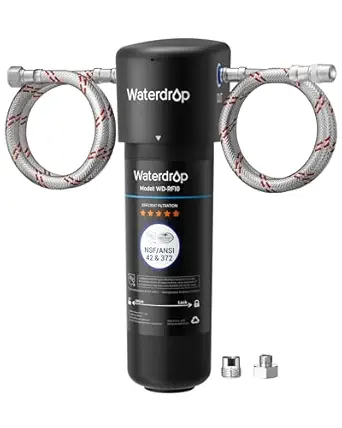 |
| Best Seller A high-volume bestseller chosen again and again | iSpring US31 Under-Sink Filter |  |
ICEPURE WFS5300A Under-Sink Filter

| Purification Method | Activated Carbon |
|---|---|
| Maximum Flow Rate | 2.5 gpm |
| Filter Life Cycle | 3 years |
| Capacity | 22000 gallons |
| Certifications | NSF/ANSI 42 & 372 |
The ICEPURE WFS5300A is a compact under-sink cartridge filter intended for direct connection to a cold water line to deliver filtered drinking water at the faucet. Installation is straightforward with a direct-connect adapter for 1/2" or 3/8" female NPT lines and the manufacturer emphasizes a simple plug-and-play setup and quick cartridge swaps. The filter uses coconut-shell activated carbon and an outer 0.5 micron layer to reduce chlorine, taste, and odor and the unit holds NSF/ANSI 42 and 372 certifications for those claims. It is rated for a high service life of about 22,000 gallons (roughly 3 years under typical household use) and maintains a tested flow rate up to 2.5 gpm, so it should not noticeably slow down the tap for drinking and cooking. Limits to keep in mind: it is for cold-water use only and does not claim to lower total dissolved solids or provide multi-stage contaminant removal beyond chlorine, heavy metals screening, and sediment capture, so it is not a substitute for systems targeting microbiological contamination. For emergency preparedness it offers long life and easy maintenance, but you should confirm the connection type before buying.
Best for: Buyers who want a low-maintenance, long-life under-sink filter that improves tap taste and runs at near-normal faucet flow for everyday drinking, cooking, and emergency water access.
Less Ideal for: People who need certified removal of bacteria, viruses, or dissolved mineral reduction, or who require a hot-water compatible or multi-stage purification system.
- NSF/ANSI 42 and 372 certified for chlorine, taste, odor reduction and lead-free materials
- High claimed capacity of 22,000 gallons for up to about 3 years of use
- Fast tested flow rate (2.5 gpm) that preserves normal faucet performance
- Simple direct-connect installation and tool-free, quick cartridge replacement
- Cold-water only connection restricts use with hot lines or systems that require hot-water filtration
- Does not advertise reduction of TDS or comprehensive multi-contaminant filtration such as microbiological removal
Verdict: Choose this long-life, NSF-certified under-sink carbon filter if you want easy installation and extended, high-flow chlorine and taste reduction for everyday and emergency drinking water.
APEC Water ROES-50 RO System

| Purification Method | Reverse Osmosis |
|---|---|
| Filtration Stages | 5-Stage |
| Daily Output | 50 GPD |
| Operating Pressure Range | 40-85 psi |
| Filter Life Cycle | 6 months |
The APEC ROES-50 is a 5-stage under-sink reverse osmosis system designed to deliver very clean drinking water from your kitchen tap. It uses multiple prefilters, an RO membrane, and a post-filter to remove a wide range of contaminants including chlorine, heavy metals, fluoride, and many dissolved solids, producing up to 50 gallons per day and storing treated water in the included tank for steady flow. Installation is DIY-friendly with quick-connect fittings and color-coded tubing so a competent homeowner can set it up with basic tools, and the system ships with a faucet and replacement filter set. Filters are large-capacity and staged so prefilters typically last 6 to 12 months while the membrane and post-filters can last 12 to 24 months depending on feed water quality. Trade-offs are the modest production rate compared with some higher-GPD units and the need for occasional filter changes and a dedicated under-sink space and tank, but in return you get widely certified performance and consistently low-TDS water for drinking and food prep.
Best for: Buyers who prioritize reliably low-TDS, high-purity water for drinking and cooking and who want a robust, serviceable under-sink RO system they can install themselves.
Less Ideal for: People who need very high daily output without a storage tank or those without available under-sink space should consider other solutions.
- Five-stage RO filtration removes a broad range of contaminants including heavy metals and fluoride.
- Produces up to 50 gallons per day with an included storage tank for steady flow.
- DIY-friendly quick-connect fittings and color-coded tubing simplify installation and maintenance.
- Large-capacity filters and membrane offer long service intervals (6–24 months depending on water quality).
- Includes a dedicated faucet and full installation kit out of the box.
- 50 GPD output may be limiting for very large households or heavy non-drinking use.
- Requires under-sink space for the system and storage tank, so not suitable where space is extremely tight.
Verdict: Choose the ROES-50 if you need a proven, DIY-friendly under-sink RO that delivers consistently very pure drinking water for emergency and everyday use.
CuZn UC-100 Under Sink Filter

| Model Number | UC-100 |
|---|---|
| Material Type | Stainless Steel |
| Included Components | Installation Kit |
| External Testing Certification | NSF |
| Filter Life | Up to 10,000 gallons or 1 year |
The CuZn UC-100 is an inline under-sink filter that uses a three-stage combination of micro-sift membranes, KDF-55 media, and coconut shell carbon to improve taste and reduce chlorine, PFAS/PFOA, lead, and sediment while retaining beneficial minerals. It installs directly onto the cold water line without drilling and includes an installation kit and video instructions, so homeowners can usually fit it in minutes. The unit is built from stainless steel and is NSF-tested for targeted contaminant reduction, and its long life rating—up to 10,000 gallons or one year—keeps replacement frequency and ongoing costs lower than many 6-month cartridges. In everyday use it supplies filtered tap water for drinking and cooking and helps protect small appliances from sediment buildup. The UC-100 does not function as a reverse osmosis system and will not lower total dissolved solids, so it is not suited for removing dissolved salts or producing ultra-pure water. Expect straightforward DIY installation and durable, maintenance-light performance for emergency preparedness and daily drinking-water needs.
Best for: Buyers who want a low-maintenance, long-life under-sink filter that delivers safer-tasting drinking water and fewer cartridge changes for everyday use and emergency readiness.
Less Ideal for: People who need removal of dissolved solids, mineral-free water, or laboratory-grade purity should choose a reverse osmosis system instead.
- Long rated service life: up to 10,000 gallons or one year reduces replacement frequency
- Three-stage media targets chlorine, PFAS/PFOA, lead, sediment, and improves taste
- Stainless steel construction with NSF-tested components for durable, verified performance
- Simple inline DIY installation with included kit and tutorial video
- Does not reduce total dissolved solids so it will not produce ultra-pure or demineralized water
Verdict: Choose the UC-100 when you want a durable, easy-to-install under-sink filter that provides long-lasting contaminant reduction and lower replacement hassle for everyday and emergency water use.
AQUA CREST 5KDC Under Sink Filter

| Purification Method | Activated Carbon |
|---|---|
| Capacity | 5000 gallons |
| Filter Life Cycle | 12 months |
| Maximum Flow Rate | 1.5 gpm |
The AQUA CREST 5KDC is a direct-connect under-sink filter designed for everyday drinking and cooking water. It uses a coconut-shell activated carbon block with KDF to capture chlorine, taste and odor, VOCs, and several heavy metals while intercepting rust, suspended solids, and larger particles; its 0.5 μm micron rating and NSF/ANSI approved components give a practical level of contaminant reduction. The unit installs to the cold-water line with included push-to-connect hoses and fittings so you can set it up without drilling, and it delivers up to 1.5 gpm so faucets and appliances keep usable flow. The cartridge is rated for 5,000 gallons or about 12 months, so annual replacement is simple and keeps running costs low. It does not lower total dissolved solids and is not a full multi-stage purifier for bacteria or viruses, so it is best used where municipal or otherwise-treated water needs taste and chemical reduction rather than emergency pathogen disinfection. For emergency situations it provides faster access to better-tasting, lower-chlorine water but should be paired with a disinfection method when microbial contamination is a concern.
Best for: Buyers looking for an affordable, low-maintenance under-sink filter to improve taste and reduce chlorine and common chemical contaminants during everyday use or emergencies where municipal water chemistry is the main concern.
Less Ideal for: Households needing removal of dissolved minerals, comprehensive microbial disinfection, or certified multi-contaminant treatment should choose a different purification system or add a disinfection step for emergency water safety.
- High-capacity cartridge rated for 5,000 gallons or about 12 months between changes
- Includes all hoses and push-to-connect fittings for tool-free installation to standard 3/8" cold water valves
- Uses coconut shell activated carbon and KDF for effective chlorine, taste, odor, and VOC reduction
- Delivers a practical 1.5 gallons per minute flow so normal faucet use is not restricted
- Does not reduce total dissolved solids (TDS) and is not designed to remove all microbial contaminants
- Replacement filter life is limited to a year and requires periodic purchasing
Verdict: AQUA CREST 5KDC is a budget-friendly under-sink filter that delivers high-capacity, easy-install chlorine and VOC reduction for better-tasting water in daily and emergency use.
Waterdrop WD-15UB Under Sink Filter

| Purification Method | Activated Carbon |
|---|---|
| Maximum Flow Rate | 0.75 gpm |
| Supported Water TDS Level Maximum (PPM) | 700 |
| Filter Life Cycle | 2 years |
| Capacity | 19000 gallons |
The Waterdrop WD-15UB is an under-sink filter intended for cold municipal tap water and installs beneath the sink with its own stainless steel faucet. It uses multistage filtration centered on an activated carbon block and other media to cut PFAS, PFOA/PFOS, chlorine, lead, sediment, and common chemical tastes and odors, while retaining beneficial dissolved minerals. Setup is straightforward with push-to-connect fittings and a 3/8"–1/2" converter for most supply lines, and replacement uses a twist-and-lock cartridge that the listing says can be swapped in seconds. Rated flow is about 0.75 gpm at 60 psi (with a tested 1.33 gpm outlet in some configurations), so it maintains usable faucet flow for drinking and cooking. The unit is IAPMO/NSF-related certified for several standards, and the cartridge life is listed at two years or 19,000 gallons which reduces maintenance frequency. Limitations: it is for cold municipal water only, not designed for well water or hot water, and the listed flow depends on household pressure so expect slower output on low-pressure systems.
Best for: Buyers who prioritize a reliable, low-maintenance under-sink filter for emergency preparedness or everyday drinking water want a certified system that needs infrequent cartridge changes and installs quickly.
Less Ideal for: Homes relying on well water, sinks that require hot-water filtration, or users needing ultrafine filtration for bacteria should look at systems designed for those specific needs.
- Multistage activated carbon filtration reduces PFAS, lead, chlorine, bad taste and odor
- Includes a dedicated brushed stainless steel faucet for separate drinking water
- Long nominal filter life rated at 19,000 gallons or about 2 years, lowering replacement frequency
- Push-to-connect fittings and twist-and-lock cartridge simplify installation and cartridge changes
- IAPMO/NSF-related certifications for chlorine and lead reduction provide verified performance
- Only rated for cold municipal tap water and not suitable for well or hot water use
- Flow rate depends on household pressure and may be slower on low-pressure systems
Verdict: A dependable, easy-to-install under-sink filter with long cartridge life and verified contaminant reduction that suits emergency and everyday municipal tap water needs.
Waterdrop WD-10UA Under Sink Filter

| Purification Method | Activated Carbon |
|---|---|
| Installation Type | Under Sink |
| Maximum Flow Rate | 2.5 gpm |
| Filter Life Cycle | 1 years |
| Supported Water TDS Level Maximum (PPM) | 700 |
The Waterdrop WD-10UA is an under-sink activated carbon filtration unit built for straightforward daily use with municipal cold water. It installs directly to a 3/8" feed using push-to-connect fittings and a twist-and-lock cartridge for quick tool-free setup and replacement, and the system is sized to sit neatly under most counters. The filter is NSF/ANSI 42 certified for chlorine, taste and odor reduction and is also advertised to reduce PFAS, PFOA/PFOS and lead, which makes it useful for improving drinking and cooking water. Waterdrop rates the cartridge life at about 12 months with typical household municipal water and lists a tested flow rate that supports steady faucet use. Because it relies on activated carbon, it keeps beneficial dissolved minerals while targeting chemical contaminants, but it is not rated for hot water or well water and requires a cold-water feed. The unit is compact and easy to service, but buyers wanting ultrafine particulate or microbial removal should look at UF or RO options instead.
Best for: Buyers who prioritize verified contaminant reduction and easy, low-effort installation for drinking and cooking water in homes or temporary setups during emergencies where municipal cold water is used.
Less Ideal for: Homes relying on well water, systems that need hot-water filtration, or users who require microbiological or sub-micron particle removal as their primary concern.
- NSF/ANSI 42 certified for chlorine, taste and odor reduction.
- Push-to-connect and twist-and-lock design enables fast installation and quick cartridge swaps.
- Advertised reduction of PFAS, PFOA/PFOS and lead for municipal tap water.
- Compact single-canister design fits easily under most sinks and in RVs or offices.
- Rated for a long service life of up to 12 months per cartridge under municipal water conditions.
- Not suitable for well water or hot water use.
- Activated carbon filter does not provide ultrafiltration-level bacteria or virus removal.
Verdict: Choose the WD-10UA when you want a compact, easy-to-install under-sink carbon filter that improves municipal tap water taste and reduces common chemical contaminants during emergencies.
iSpring US31 Under-Sink Filter

| Purification Method | 3 Stage: PP + GAC + CTO |
|---|---|
| Maximum Flow Rate | 1 gpm |
| Filter Life Cycle | 12 months |
| Capacity | 10000 gallons |
| Upper Temperature Rating | 100 °F |
The iSpring US31 is a 3-stage under-sink filtration system designed to give steady, on-demand filtered water through its included brushed-nickel faucet. It uses a PP sediment, granular activated carbon, and CTO carbon block stack to remove sediment, chlorine, odors, and many chemical contaminants while preserving dissolved minerals, and the clear first-stage housing makes visual inspection simple. Installation is intended to be user-friendly with a patented above-counter faucet fastener so the faucet can be secured from above the countertop, and the unit runs on household water pressure at up to 1 gallon per minute, so no electricity is needed. Filters are rated for roughly 6 to 12 months depending on use and the system claims up to 10,000 gallons per cycle, which reduces replacement frequency during extended emergency situations. Important limits: it does not lower TDS or serve as a reverse-osmosis system, so it will not remove dissolved salts or reduce hardness and is not marketed for desalination or heavy mineral removal.
Best for: Buyers who prioritize reliable, tested contaminant reduction and low-maintenance operation for everyday drinking water and emergency preparedness will appreciate this system.
Less Ideal for: Homes that require TDS reduction, water softening, or removal of dissolved minerals should consider reverse-osmosis or dedicated softening systems instead.
- Three-stage filtration (PP+GAC+CTO) removes sediment, chlorine, and common chemical contaminants.
- Works on water pressure alone so no electricity is required during outages.
- Patented above-counter faucet fastening simplifies installation and avoids hard access under the sink.
- Transparent first-stage housing allows quick visual checks of sediment build-up.
- High claimed capacity and 6–12 month filter life reduce maintenance frequency in long-term emergency use.
- Does not reduce total dissolved solids so it will not soften water or remove dissolved salts.
- Maximum flow rate is 1 gallon per minute, which is slower than an unfiltered kitchen tap for filling very large pots quickly.
Verdict: A reliable, no-electricity three-stage under-sink filter that delivers tested contaminant reduction and low-maintenance performance for emergency-ready household drinking water.
Choosing the Right Under-Sink Water Filter for Emergency: Key Factors to Consider
Contaminant Coverage
In an emergency you face a different contaminant risk profile than in everyday use. Look for under-sink systems that explicitly reduce bacteria, cysts, lead, sediment, and common chemical contaminants. Some systems combine mechanical filtration with activated carbon or certified membrane stages to handle both particulates and dissolved chemicals.
Understanding which contaminants the local supply is at risk for will guide your choice. For example, microbial protection matters more after flooding or sewer issues, while heavy-metal reduction is critical if aging plumbing is suspected. Certification claims and published reduction tables help verify coverage.
Flow Rate and Usable Capacity
Flow rate determines how long you wait for water during an emergency, and usable capacity defines how much treated water you can get before performance drops. Systems with very low flow can be frustrating when filling pots, washing, or meeting multiple household members' needs.
Consider peak household demand and whether the filter can reliably support short periods of higher use. Also check the rated gallons per day or per filter cartridge lifespan to understand how many days of typical drinking and cooking use the system will support before a replacement is needed.
Installation and Serviceability
In emergencies you may need to install or service the system quickly. Under-sink filters that use simple push-fit or quick-connect fittings and clear instructions reduce installation time and the risk of leaks. Systems that require only basic tools and minimal plumbing changes are preferable for preparedness plans.
Serviceability covers how easy it is to change cartridges, whether spares are widely available, and if filter changes can be done without shutting off the whole water supply. Consider whether you can store replacement cartridges and perform maintenance yourself under constrained conditions.
Durability and Reliability
A robust mechanical design and solid housing reduce the chance of leaks or failures when you most need water. Durable materials, good sealing, and a reputation for reliable operation are important because emergency conditions may stress equipment.
Evaluate materials and mounting options so the system can survive intermittent use, temperature swings, and the occasional impact. A design that minimizes single points of failure and that uses standard replaceable parts improves long-term readiness.
Certification and Test Data
Independent testing and certifications provide objective evidence that a system removes the contaminants it claims. Look for third-party testing against relevant standards for lead, cysts, and microbial reduction. Certification does not guarantee every contaminant is covered, but it gives confidence in the filter's core performance.
Read published reduction rates and understand the test conditions. Systems certified for specific contaminant classes are more reliable choices when health-related contaminants are a concern.
Maintenance Frequency and Replacement Cost
Maintenance frequency affects how long a system can stay emergency-ready without intervention. Filters that require very frequent cartridge swaps increase the burden of preparedness because you must store more spares. Conversely, long-life cartridges reduce logistical needs.
Consider replacement filter availability and how easy it is to source spares. Even without pricing specifics, understand whether typical cartridge life is short (weeks) or long (months), and plan storage and rotation of spares accordingly.
How Under-Sink Emergency Filters Differ From Everyday Filters
Emergency-focused under-sink systems prioritize rapid access, broad contaminant protection, and durability during periods of disrupted service. While many everyday filters focus on taste and odor improvements, emergency models emphasize health-related contaminant removal and operational reliability.
Design choices that support emergency use include higher-capacity sediment stages to prevent clogging after a contamination event, quick-connect fittings for fast installation, and cartridge options certified for microbial and heavy-metal reduction. Those differences affect how the system performs when water quality is uncertain.
- Robust prefiltration to handle turbid water
- Certifications for health-related contaminants
- Quick-connect plumbing for fast setup
- Larger-capacity cartridges for extended use
Preparing Your Under-Sink Filter for an Emergency
Do a readiness checklist: install the unit proactively, keep at least one spare cartridge on hand, and test the system periodically so you know it functions when needed. Familiarize yourself with shutoff valves and how to isolate the filter if incoming water is unsafe.
Label cartridges with installation dates and track expected end-of-life. If your household is in a region prone to specific contaminants, stock the appropriate replacement cartridges that target those risks.
- Keep spare cartridges and basic tools under the sink
- Practice a cartridge swap once before an emergency
- Know the water shutoff and bypass options
Sizing a System for Household Emergency Needs
Estimate daily potable-water needs for drinking and short-term cooking to choose a system with adequate flow and cartridge lifespan. A family of multiple people has different needs than a single-person household, so size the system and stock spares accordingly.
If multiple taps will be used during an outage, ensure the under-sink unit can deliver the required flow or consider strategic placement of additional dedicated emergency filtration points.
- Calculate liters or gallons needed per day
- Match cartridge capacity to expected outage duration
- Plan for peak-use moments such as meal preparation
Common Installation Pitfalls to Avoid
Avoid routing the filter through complex plumbing runs that add leak risk. Keep the filter and its fittings easily accessible for swaps and inspection. Double-check that seals are correctly seated and use supplied hardware rather than improvising with untested fittings.
Do not rely on a system you have never tested. Run water through the filter and confirm there are no leaks and that flow is acceptable. If the system requires periodic flushing after cartridge changes, make sure you understand that procedure ahead of time.
- Ensure easy access to the shutoff valve
- Use manufacturer-recommended fittings
- Perform a leak test after installation or service
Storing and Rotating Replacement Cartridges
Store cartridges in a cool, dry place and keep them in their original packaging until use. Labeling with purchase or received dates helps you rotate stock so filters are used before their maximum recommended shelf life expires.
If you live in an area prone to contamination events, keep multiple cartridges per cartridge slot so you can extend service life during prolonged outages. Track how many gallons or days a cartridge typically delivers under your household usage pattern.
- Keep an inventory of spare cartridges
- Store in suitable conditions per manufacturer guidance
- Rotate stock to avoid expired spares
How We Chose the Best Under-Sink Water Filter for Emergency
We prioritized performance characteristics that matter in emergency scenarios rather than ornamental or nonessential features. First, contaminant removal capability was a must: filters that reduce common emergency risks such as microbial cysts, chlorine, lead, and particulate sediment were favored. Second, emergency flow and capacity were assessed to ensure a system can supply enough potable water during outages without excessive wait times. Third, installation and serviceability were considered so users can fit and maintain the system quickly, even under stress. Fourth, reliability and build quality were evaluated to minimize failure risk during prolonged use. Finally, compatibility with typical under-sink plumbing and availability of replacement filters were part of the selection filter. We excluded systems that require complex external components, permanent professional plumbing alterations, or that have poor documentation for emergency use. We also excluded units that only target aesthetic improvements such as taste and odor without addressing health-related contaminants. The resulting shortlist reflects systems that balance robust contaminant reduction, practical emergency flow and capacity, straightforward installation, and realistic maintenance demands.
Our full evaluation process is outlined in our review methodology.
FAQ
Can an under-sink filter make water safe after a boil-water advisory?
Often under-sink filters with a certified microbial or ultrafiltration stage can reduce certain pathogens, but performance depends on the filter type and certification. During boil-water advisories, follow local health guidance; use filters that explicitly state microbial reduction if you plan to rely on them.
How long can an under-sink system sit unused and still work in an emergency?
That depends on build quality and cartridge type. Systems can sit unused for months if installed and sealed properly, but cartridges have shelf-life considerations. Periodic checks and replacing cartridges before they expire helps ensure functionality when needed.
Is DIY installation practical during an emergency?
Yes, if the system uses quick-connect fittings and you have basic tools. Choose models designed for straightforward installation and practice once to build confidence. Avoid systems that require significant plumbing changes when preparing for emergencies.
Do under-sink emergency filters remove viruses?
Virus removal often requires specific technologies such as ultrafiltration or validated disinfection steps. Many standard under-sink filters do not reliably remove viruses, so check certifications and consider complementary measures if viral contamination is a concern.
How do I know which replacement cartridges to keep on hand?
Match cartridges to the contaminants you need to address and the system's cartridge model. Prioritize cartridges that target health-related contaminants you are most likely to encounter, and keep enough spares to cover the expected duration of a worst-case outage.
Final Verdict
When choosing an under-sink water filter for emergency use, prioritize proven contaminant reduction, sufficient flow and capacity, and a design that is easy to install and service under stress. Tradeoffs are inevitable: systems with the broadest contaminant coverage may need larger cartridges or slightly reduced flow, while fastest-flowing units may focus on particulate and taste improvements. Decide which risks you need to mitigate, size the system to match household demand, and keep spare cartridges and basic tools on hand. With those priorities, you can pick a dependable under-sink emergency filter that supports safe water access when it matters most.