
Note: This article contains affiliate links. If you click on these links and make a purchase, we may earn a small commission at no extra cost to you. This helps support our research and content. Read our full affiliate disclosure here.
If you spend time on the road or camp frequently, an under-sink water filter for RVs makes a noticeable difference in taste, odor, and safety. Choosing the right unit affects how much maintenance you do, how often you refill or disinfect lines, and whether the system fits your RV's limited space. This guide lists seven shortlisted under-sink water filters chosen for RV use, with attention to filtration capability, footprint, and installation demands. Below are the evaluation points we used and practical advice to help you choose and install the right system for life on the road.
Top Picks at a Glance
| Best Overall The best all-around choice for most situations | FRIZZLIFE SK99 Under-Sink Filter |  |
| Best Quality Built to a higher standard if you want something more solid | iSpring CU-A4 Under-Sink Filter |  |
| Best Value The sweet spot between price and what you get | ICEPURE WFS5300A Under-Sink Filter |  |
| Best Budget The cheapest option that still gets the job done reliably | Amazon Basics Under-Sink Water Filter |  |
| Top Rated A top-rated pick with lots of positive feedback | Waterdrop WD-10UA Under Sink Filter | 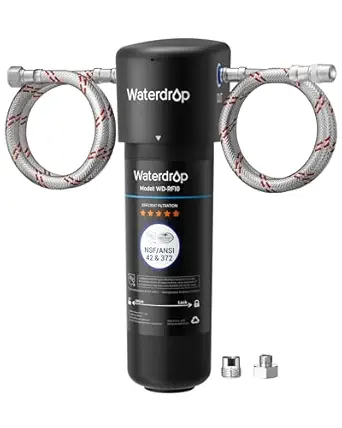 |
| Most Popular A crowd favorite that many people choose with confidence | Waterdrop WD-15UA Under-Sink Filter |  |
| Best Seller A high-volume bestseller chosen again and again | CuZn UC-200 Under Sink Filter |  |
FRIZZLIFE SK99 Under-Sink Filter

| Purification Method | Carbon Block |
|---|---|
| Filtration Accuracy | 0.5 micron |
| Certifications | NSF/ANSI 42 & 53 (IAPMO tested) |
| Maximum Flow Rate | 2.5 gpm |
| Operating Pressure Range | 20-80 psi |
The FRIZZLIFE SK99 is an under-sink carbon block filter designed to provide high-accuracy 0.5 micron filtration from a compact housing. It installs under a counter or inside a cabinet and connects to a dedicated faucet or can feed an ice maker with the appropriate kit, so in an RV it can be set up to supply drinking water directly to a small sink or fridge. The system is IAPMO-tested to NSF/ANSI 42 and 53 standards and uses an 8-layer cartridge intended to reduce chloramine, lead, PFAS/PFOA, chlorine, bad taste and odors while keeping total dissolved solids and beneficial minerals. Practical benefits include fast flow up to 2.5 gallons per minute, twist-in cartridge replacements that avoid swapping the whole housing, and a built-in pressure regulator for added leak protection. Limitations for RV use are that it is an under-sink style meant for a fixed cabinet location and requires compatible hookups and sufficient water pressure in the RV plumbing; it is not a portable pitcher or inline hose filter. Expect straightforward DIY installation but plan space and plumbing access inside the RV cabinet before buying.
Best for: Buyers who want a compact, certified under-sink system that delivers high-accuracy filtration and fast flow for drinking water in small living spaces like an RV cabinet and prioritize clean-tasting water over portable convenience.
Less Ideal for: If you need a portable, no-installation solution for campground hookups or a filter that mounts externally to an RV waterline, choose a dedicated inline or portable model instead.
- Certified to NSF/ANSI 42 and 53 for material safety and contaminant reduction
- Fine 0.5 micron, 8-layer carbon block filtration that targets chloramine, lead, PFAS/PFOA, chlorine, taste and odor
- Fast flow rate (up to 2.5 gpm) suitable for filling a cup quickly
- Twist-in cartridge replacements reduce waste and simplify filter changes
- Compact housing with pressure regulator and reinforced case to minimize leaks
- Requires under-sink cabinet space and compatible RV plumbing for installation
- Depends on adequate water pressure to achieve rated flow
- Not designed as a portable or temporary inline filter for external hookups
Verdict: For RV owners who can install an under-sink unit, the SK99 delivers certified, very fine filtration and fast flow in a compact, leak-resistant package.
iSpring CU-A4 Under-Sink Filter

| Purification Method | Mechanical Filtration, Chemical Absorption, Redox, Ultrafiltration |
|---|---|
| Filter Life Cycle | 6 months |
| Capacity | 8000 gallons |
| Installation Type | Under Sink |
The iSpring CU-A4 is a compact, tankless under-sink filter that combines a 0.01μm ultrafiltration membrane with KDF and GAC stages plus a sediment and carbon polish to remove chlorine, lead, arsenic, odors, and many other contaminants while retaining minerals. It is designed for direct point-of-use filtration at a sink and works without electricity or a storage tank, so there is no wastewater and flow is immediate through the included brushed-nickel faucet. Installation uses push-to-connect fittings and twist-on cartridges for quick service and part replacement, and the system is space-saving for tighter under-sink areas. Filter life is listed around 6 to 12 months depending on water quality, and the unit is rated to treat up to 8,000 gallons. Important limitations: this is not a reverse-osmosis system and does not reduce total dissolved solids, so it will not soften water or remove dissolved salts; performance will vary with source water, and membrane replacement is required on a schedule to maintain output and contaminant removal.
Best for: Buyers who prioritize high contaminant removal and compact, no-power filtration for point-of-use applications in confined spaces like RVs or small kitchens.
Less Ideal for: Those who need lowered TDS, water softening, or removal of dissolved salts should consider a reverse-osmosis or specialty softening system instead.
- Very fine 0.01μm ultrafiltration membrane removes bacteria and many particulates
- Multi-stage KDF and GAC polishing reduces chlorine, chloramine by-products, heavy metals and odors
- Tankless design provides no wastewater and fits in tight under-sink or RV cabinet spaces
- Push-to-connect fittings and twist-on cartridges make installation and filter changes straightforward
- Does not reduce total dissolved solids so it will not soften water or remove dissolved salts
Verdict: Choose the iSpring CU-A4 when you want a compact, tankless under-sink system that delivers very fine ultrafiltration and multi-stage contaminant reduction without electricity.
ICEPURE WFS5300A Under-Sink Filter

| Capacity | 22000 gallons |
|---|---|
| Maximum Flow Rate | 2.5 gpm |
| Filter Life Cycle | 3 years |
| Purification Method | Activated Carbon |
The ICEPURE WFS5300A is an under-sink cartridge filter designed to deliver cleaner drinking water with minimal fuss. It installs directly on a cold water line and uses activated coconut shell carbon in a compact head-and-cartridge design that the maker says can be changed in seconds. Rated to treat about 22,000 gallons (roughly three years with typical household use) and tested to NSF/ANSI 42 for chlorine, taste and odor reduction and NSF/ANSI 372 for lead-free materials, it keeps beneficial minerals while cutting common aesthetic contaminants. The system supports a high flow rate up to 2.5 gpm, so you should not notice a slow faucet in most RV or small-kitchen setups. Because it is intended for cold water lines and specific 1/2" or 3/8" female NPT fittings, installation is straightforward for a DIYer but may need an adapter for nonstandard plumbing on some RVs. Its one-stage carbon block design is effective for chlorine and sediment but will not remove dissolved solids or handle specialized contaminant removal that multi-stage systems provide.
Best for: Budget-minded RV owners or small-kitchen users who want a low-maintenance, high-capacity carbon under-sink filter that improves taste and odor without frequent servicing.
Less Ideal for: Travelers or users needing removal of heavy metals, microbes, or dissolved solids should choose a multi-stage or specialized filtration system instead.
- High rated capacity of 22,000 gallons reduces frequency of filter changes
- NSF/ANSI 42 and 372 certifications for chlorine reduction and lead-free materials
- Compact single-cartridge design with quick, tool-free filter changes
- Measured flow up to 2.5 gpm maintains good faucet pressure for small kitchens and RVs
- Designed only for cold water lines and specific 1/2" or 3/8" female NPT fittings
- Single-stage carbon filter does not reduce TDS or some dissolved contaminants
Verdict: If you want a compact, high-capacity under-sink carbon filter that quickly improves taste and odor with minimal maintenance, this ICEPURE unit is a practical choice for RVs and small kitchens.
Amazon Basics Under-Sink Water Filter

| Purification Method | Activated Carbon |
|---|---|
| Installation Type | Under Sink |
| Capacity | 11,000 gallons |
| Certified Standards | NSF/ANSI 42 & 372 |
| Supported Water TDS Level Maximum (PPM) | 500 |
This Amazon Basics under-sink filter is a straightforward, manual activated-carbon system designed to reduce chlorine, bad tastes, and odors for up to 11,000 gallons or 12 months. It connects directly to standard 3/8" or 1/2" cold-water feed lines using the included convertor and push-to-connect fittings, and the twist-and-lock cartridge makes swaps quick without tools. For an RV application it offers a compact, low-complexity solution that does not require power and is easy to install under tight cabinetry. The certified NSF/ANSI 42 and 372 ratings give reasonable assurance about basic contaminant reduction and material safety. Limitations for RV use include its size and plumbing fit: it is built for household under-sink hookups and may need careful routing or extra adaptors to work with some RV supply lines, and it does not address sediment, heavy metals, or biological contaminants beyond what an activated carbon block targets. Consider it a budget-friendly option to improve taste and remove chlorine on road trips when paired with appropriate prefilters or periodic disinfection if source water quality is uncertain.
Best for: Buyers prioritizing a very affordable, no-power under-sink filter to improve taste and remove chlorine on RV trips who want an easy-install solution and are comfortable adding prefilters or treating questionable water separately.
Less Ideal for: People who need comprehensive pathogen protection, heavy-metal removal, or a self-contained RV-specific filtration module should look at systems designed for onboard plumbing and multi-stage filtration instead.
- NSF/ANSI 42 and 372 certified for chlorine, taste, and odor reduction.
- High claimed capacity of 11,000 gallons or 12 months per cartridge under municipal water conditions.
- Tool-free twist-and-lock cartridge and push-to-connect fittings simplify installation and replacement.
- Includes hoses and 3/8"–1/2" convertor to match common plumbing connections.
- Designed for household under-sink plumbing so may require adapters or creative routing in many RVs.
- Does not filter sediment, bacteria, or heavy metals — focuses on chlorine, taste, and odor.
Verdict: A budget-friendly, tool-free under-sink carbon filter that improves taste and removes chlorine for RVers who want a simple, low-maintenance solution.
Waterdrop WD-10UA Under Sink Filter

| Purification Method | Activated Carbon |
|---|---|
| Installation Type | Under Sink |
| Maximum Flow Rate | 2.5 gpm |
| Filter Life Cycle | 1 years |
| Capacity | 11000 gallons |
The Waterdrop WD-10UA is an under-sink activated carbon filtration system built for straightforward, low-maintenance water improvement in homes, offices, and RVs that use municipal cold water. It connects to standard 3/8" or 1/2" feed valves with included fittings and uses push-to-connect and twist-lock mechanics for fast installation and tool-free filter swaps. The cartridge is NSF/ANSI 42 and 372 certified for chlorine, taste and odor reduction and is claimed to cut PFAS, PFOA/PFOS, and lead, which makes it a practical choice for better-tasting drinking and cooking water. With a rated life of 12 months and a stated capacity of 11,000 gallons, the unit offers long replacement intervals for typical household or RV use, and the upgraded filtration area aims to reduce clogging. The system is mechanical-pressure powered so no electricity is needed, but it is only intended for cold municipal water and is not suitable for well water or hot lines. Flow rates are modest but usable for a small kitchen or RV faucet, and replacement filters are available separately for continued service.
Best for: Buyers who prioritize a reliable, easy-to-install under-sink filter for consistent, certified reduction of chlorine, lead, and PFAS in municipal cold water, including RV owners who need a compact unit that connects to standard supply lines.
Less Ideal for: People who rely on well water, need hot-water filtration, or require higher flow rates for multiple simultaneous fixtures should consider other systems.
- NSF/ANSI 42 and 372 certified for chlorine, taste and odor reduction
- Twist-and-lock plus push-to-connect fittings enable quick, tool-free install and filter changes
- Long rated filter life (12 months) with high stated capacity for less frequent replacements
- Mechanical operation needs no electricity and works with standard 3/8" or 1/2" feed valves
- Designed only for cold municipal water so it is not suitable for well water or hot-water lines
- Flow rate is modest compared with whole-house systems and may be slower under high demand
Verdict: A compact, NSF-certified under-sink filter that delivers reliable, tool-free installation and long-lasting municipal cold-water filtration ideal for RVs and small kitchens.
Waterdrop WD-15UA Under-Sink Filter
| Purification Method | Activated Carbon |
|---|---|
| Installation Type | Under Sink |
| Maximum Flow Rate | 0.75 gpm |
| Filter Life Cycle | 2 years |
| Capacity | 19000 gallons |
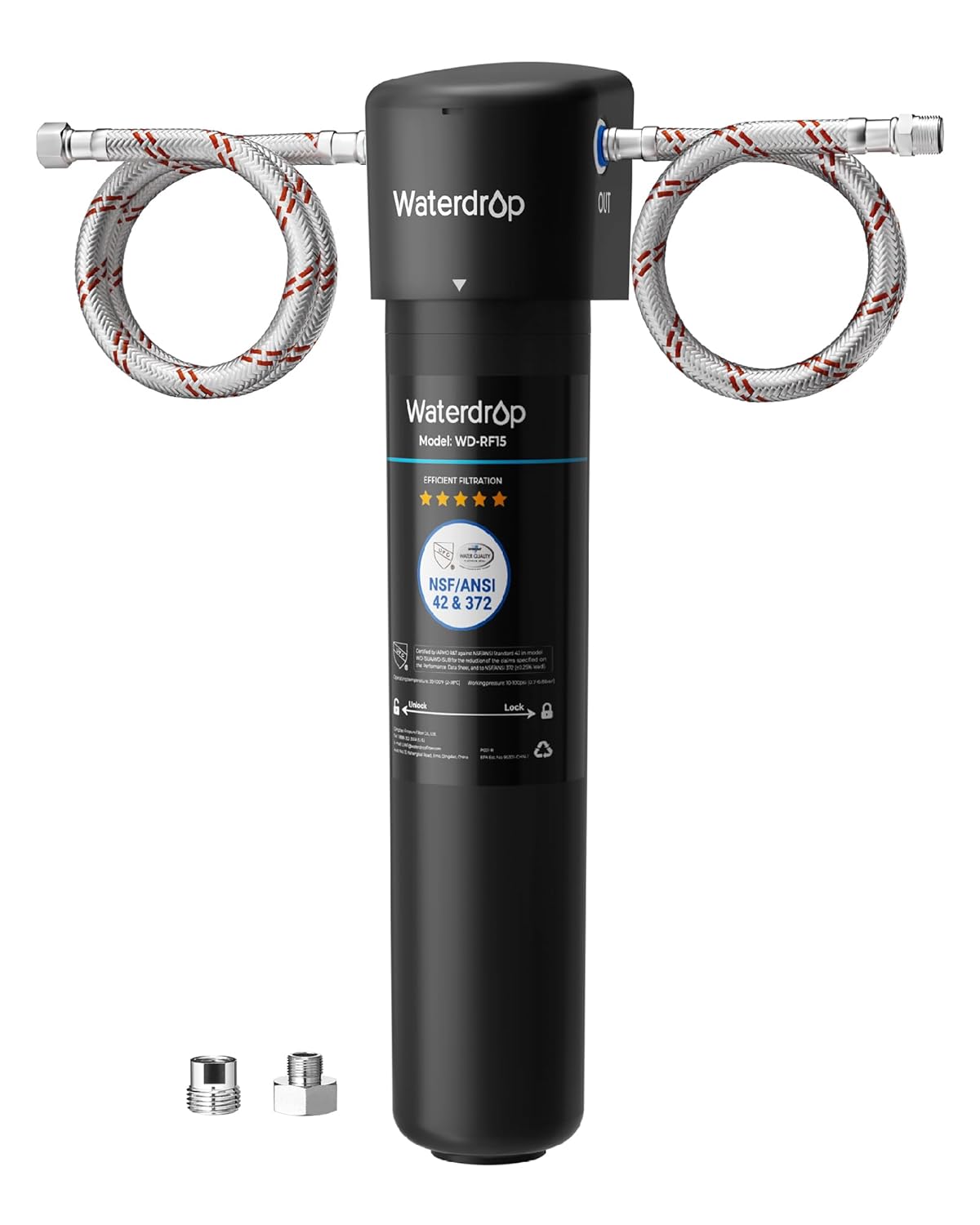
The Waterdrop WD-15UA is an under-sink direct-connect filter engineered for long service life in municipal cold-water systems and light commercial or RV use. It installs without drilling using a 3/8" push-to-connect hose and a 3/8"–1/2" converter, and delivers up to 0.75 gpm at 60 psi for steady drinking and cooking water. The cartridge uses activated carbon multistage media designed to reduce chlorine, bad taste and odor, lead, PFAS/PFOA/PFOS and other contaminants while retaining beneficial minerals. The filter is marketed to last up to 24 months or about 19,000 gallons on municipal water, which reduces replacement frequency compared with short-life cartridges. Because it is cold-water only and sized for municipal supplies, it is not suitable for well water or hot lines. The system is compact but the manufacturer warns to check under-sink clearance before buying. For RV owners who want a low-maintenance, factory-certified inline option that improves tap water flavor and reduces specific contaminants, this model is a practical choice.
Best for: Buyers who prioritize low-maintenance, long-life filtration with verified contaminant reduction and want an easy direct-connect under-sink solution for an RV or small kitchen.
Less Ideal for: People with well water, those needing hot-water filtration, or users who require ultra-fine or specialty filtration beyond the stated contaminant list should consider other systems.
- Long advertised service life (up to 24 months / 19,000 gallons) reduces replacement frequency.
- Push-to-connect direct hose and included 3/8"–1/2" converter make installation quick without drilling.
- Activated carbon multistage media targets chlorine, bad taste, lead and PFAS-class contaminants.
- Maintains flow suitable for drinking and cooking with a tested flow of 0.75 gpm at 60 psi.
- Certified components to NSF/ANSI 42 and 372 and third-party testing for lead reduction increases confidence in claims.
- Designed for municipal cold water only so it is not suitable for well water or hot-water lines.
- Larger internal cartridge area for extended life increases physical size, which may be tight in some under-sink or RV cabinets.
Verdict: If you want a simple, easy-install under-sink filter for an RV that reduces chlorine, lead and PFAS and runs long between replacements, the WD-15UA is a solid low-maintenance choice.
CuZn UC-200 Under Sink Filter

| Model Number | UC-200 |
|---|---|
| Included Components | Stainless Steel Connection Hose |
| Material Type | NSF Approved Material Components |
| Filter Life | Up to 5 years / 50,000 gallons |
The CuZn UC-200 is an under-sink inline filter designed for simple DIY connection to a cold-water faucet and offers an unusually long service life of up to five years or 50,000 gallons depending on water quality. It combines a micro-sediment membrane, KDF-55 media, and coconut shell carbon to reduce chlorine, lead, PFAs/PFOS and other common contaminants while leaving beneficial minerals intact. Installation is straightforward and includes a stainless steel connection hose so you can fit it under a kitchen or bathroom sink without drilling, which suits tight RV cabinetry when a compact footprint matters. The main practical benefit is low maintenance: the single long-life cartridge avoids frequent changeouts and plastic waste from disposable pitchers or inline filters. Limitations are that it does not reduce total dissolved solids, so it will not soften very hard water or replace an RO system, and actual life depends heavily on incoming water quality, so high-sediment or very hard-source water may shorten service intervals.
Best for: Buyers who prioritize a low-maintenance, long-lasting under-sink filter that improves taste and removes common contaminants without frequent cartridge swaps, especially where space is limited.
Less Ideal for: Those needing removal of dissolved minerals, heavy hardness, or near-pure water for appliances should consider an RO or specialist softening solution instead.
- Very long rated filter life—up to 5 years or 50,000 gallons under typical conditions
- 3-stage media (micro-sediment membrane, KDF-55, coconut shell carbon) reduces chlorine, lead, PFAs and improves taste
- Compact inline design with included stainless steel connection hose for easy under-sink installation
- Retains beneficial minerals by not removing total dissolved solids
- Does not reduce total dissolved solids so it will not soften hard water
- Performance and lifespan vary with incoming water quality, potentially reducing interval in poor-source conditions
Verdict: Choose the UC-200 when you want a compact, easy-to-install under-sink filter for RV use that delivers multi-contaminant reduction with minimal maintenance over several years.
Choosing the Right Under-Sink Water Filter for RVs: Key Factors to Consider
Filtration Performance and Target Contaminants
Know what the filter is designed to remove. Different media target different issues: activated carbon improves taste and reduces chlorine and organic compounds, while CTO or sediment prefilters protect downstream carbon media. Some multi-stage systems include specialized blocks for lead, volatile organic compounds, or cysts. Matching the filter media to expected contaminants improves water quality and reduces wasted capacity.
Check published reduction claims and, if available, independent test data. For RV use, consider microbial risks from uncertain fill sources and whether a system includes or allows a certified microfilter or UV stage. Higher-rated contaminant removal may mean shorter cartridge life or higher maintenance, so balance performance needs with how often you are willing to change filters.
Physical Size, Mounting, and Cabinet Fit
Under-sink space in RVs is limited and often irregular. Measure cabinet depth, width, and available vertical clearance before selecting a system. Low-profile or horizontally oriented housings can fit where standard vertical canisters do not. Consider whether the unit mounts to a wall or cabinet floor and whether mounting hardware and fastenings are suitable for a moving vehicle.
Also account for pipe routing and valve placement. Some systems require extra clearance to change cartridges; if access is tight, look for quick-change or slide-out cartridges. Think about where the drain line and any pressure-relief fittings will sit to avoid kinks or rubbing against cabinet panels.
Plumbing Compatibility and Installation Complexity
RV plumbing commonly uses smaller-diameter tubing and quick-connect fittings. Ensure the filter connections match your supply lines or that adapters are readily available. Installation simplicity matters if you prefer a DIY approach: units with push-fit connectors and clear instructions reduce installation time and the need for specialized tools.
Also consider shutoff valves, bypass options, and how the system integrates with water heaters or pumps. Some installs require temporary depressurization of the system or simple valve additions. If the filter requires tapping into a pressurized line, verify that your RV water pump and pressure settings are compatible.
Maintenance Frequency and Replacement Parts
Filter life determines how often you must carry spares or schedule service stops. Cartridge longevity varies with inlet water quality and usage volume. For RVs, irregular fill sources can shorten filter life unexpectedly, so choose a system with readily available replacement cartridges and clear indicators for end-of-life.
Also evaluate the cost and availability of parts, the clarity of replacement instructions, and whether routine maintenance tasks like O-ring lubrication or sanitization are straightforward. Systems that allow tool-free cartridge changes or include reusable housings reduce long-term hassle.
Durability and Vibration Resistance
Road vibration, temperature swings, and moisture exposure place unique stresses on RV-installed equipment. Look for housings and fittings made from corrosion-resistant materials and mounting systems that absorb vibration. Strong threaded connections or quality push-fit fittings are preferable to brittle plastics that can crack under repeated movement.
Consider whether the filter is rated for the temperature range you will experience, and whether seals are compatible with occasional freezing risk. Robust build quality reduces the chance of leaks and the need for mid-trip repairs.
Flow Rate and Pressure Drop
Flow capacity affects daily use, especially if you regularly run showers or fill containers. Some high-grade filtration media reduce flow and require larger diameter housings or parallel setups to maintain acceptable delivery. For RVs, where water pressure is supplied by a pump, check the expected pressure drop across the filter and ensure it will not starve fixtures.
If you expect to run multiple outlets simultaneously, choose a system with rated flow that matches typical RV pump output. Also consider whether adding a pressure regulator or booster is necessary to maintain steady performance.
Installation Tips for Tight RV Cabinets
Plan the install layout before mounting hardware. Remove cabinet shelving and mock up the filter orientation with tape or cardboard to ensure cartridge changes are possible without removing the unit. Keep fittings accessible and route tubing to minimize bends.
Use vibration-absorbing mounting pads or rubber grommets under brackets to reduce stress on fittings. Tighten fittings hand-firm plus a small quarter turn; avoid overtightening plastic threads which can crack. Label inlet and outlet lines to avoid plumbing errors during installation.
- Measure twice and check clearance for cartridge removal
- Use flexible tubing for short runs to reduce pressure on fittings
- Install a shutoff valve upstream to isolate the filter for maintenance
Sanitizing and Winterizing the System
Regular sanitization prevents biofilm buildup in low-use or seasonal RVs. Follow the manufacturer guidance for safe sanitizing agents and procedures, typically involving a diluted bleach solution and thorough flushing. After sanitizing, run water until the taste and odor clear.
For winter storage, drain the filter housing per instructions and consider removing cartridges to prevent freeze damage. If you cannot remove cartridges, install a low-temperature or antifreeze-rated cartridge and store the RV in a temperature-controlled space when possible.
- Sanitize at least once per season or after filling from an unknown source
- Fully drain and dry housings before long-term storage
- Keep a small sanitizing kit and spare O-rings in your maintenance drawer
Balancing Filter Life and Water Quality On The Road
Cartridge life is a balance between desired water quality and how often you want to replace parts. If you frequently use questionable fill stations, opt for heavier-duty media or add a sediment prefilter to protect downstream cartridges. If you camp in areas with tested municipal water, lighter carbon-only cartridges may deliver good taste with longer intervals between changes.
Track usage by miles or gallons to anticipate changes, and carry a spare cartridge if you will be off-grid for extended periods. For occasional weekend trips, a longer-life cartridge that sacrifices some contaminant reduction may be acceptable.
- Consider carrying one spare cartridge for trips longer than two weeks
- Use a sediment prefilter to extend carbon cartridge life
- Keep a simple flowmeter or track fill volumes to estimate remaining life
DIY Vs Professional Install: When to Call an Expert
Many under-sink systems for RVs are designed for DIY installation and use common push-fit or compression fittings. If you are comfortable with basic plumbing, a well-documented kit and a few hand tools are usually sufficient.
Call a professional if the install requires altering structural cabinetry, tapping into pressurized lines in complex ways, or integrating permanently with on-board water heaters. Also seek help if you detect persistent leaks or pressure issues after installation.
- DIY if connections match your supply lines and instructions are clear
- Hire pros for permanent structural changes or complex plumbing integrations
- Test thoroughly for leaks and proper flow before stowing gear
Carrying Spares and Routine Roadside Repairs
Pack small, lightweight spares that solve the most common issues: a replacement cartridge, spare O-rings in correct sizes, silicone lubricant for seals, and a basic wrench or filter spanner if the system requires one. A few feet of extra tubing and a couple of quick-connect fittings can handle most minor line repairs.
Keep a compact leak kit and absorbent towels nearby during the first few drives after installation so you can spot and address minor weeping before it causes cabinet damage.
- Spare cartridge and O-rings fit easily in a maintenance kit
- Carry tubing and basic fittings for emergency repairs
- Inspect mounts and fittings after the first 100 miles of travel
How We Chose the Best Under-Sink Water Filter for RVs
We focused on filters built specifically to meet the constraints and water-quality issues common in recreational vehicles. Our evaluation prioritized measurable filtration capabilities, physical footprint and mounting options, ease of installation and serviceability, long-term maintenance costs, and materials durability against vibration and temperature swings. Each candidate had to offer clear specification data for contaminant reduction or filtration media type and provide replacement parts that are widely available. We excluded whole-vehicle or point-of-entry systems that require professional plumbing modification or permanent structural changes. We also excluded countertop, faucet-mounted, and gravity-only systems that do not fit under-sink installation in typical RV cabinets. The final shortlist balances contaminant removal performance with compact design and practical installation steps that RV owners can complete without major tools. Products that lacked published performance data, required custom fabrication, or depended on proprietary single-source cartridges were not included.
Our full evaluation process is outlined in our review methodology.
FAQ
How often should I change under-sink filter cartridges in an RV?
It depends on water quality and usage. Typical carbon cartridges last 3 to 12 months under normal RV use. Heavy sediment or frequent fills from uncertain sources will shorten life, so monitor flow and taste and carry at least one spare for extended trips.
Can I install an under-sink filter myself in my RV?
Often yes. Many RV under-sink systems use push-fit or compression fittings and straightforward instructions. DIY is reasonable if you are comfortable with basic plumbing tasks, but call a professional for complex wiring, structural modifications, or if persistent leaks occur.
Will an under-sink filter affect my RV water pressure?
All filters introduce some pressure drop. For typical RV pumps and single-fixture use, the drop is minor. If you often run multiple outlets simultaneously, choose a unit with a higher rated flow or add a parallel setup to avoid reduced performance.
How should I winterize my under-sink system when storing the RV?
Drain and dry the housings and remove cartridges if recommended. If cartridges cannot be removed, follow the manufacturer guidance for antifreeze-safe procedures or store the RV in a temperature-controlled location to prevent freeze damage.
Are replacement cartridges easy to source while traveling?
Availability varies by cartridge type. Choose systems with commonly used cartridge sizes or widely available adapters. Carrying one spare cartridge is a practical precaution for longer trips or remote travel.
Final Verdict
Choosing the right under-sink water filter for RVs means balancing filtration performance, physical fit, and how much maintenance you are willing to do on the road. Prioritize contaminant removal that matches your most likely fill sources, a compact design that fits your cabinet, and connectors compatible with RV plumbing. Durable materials and simple serviceability reduce the chance of mid-trip problems. Decide whether you need heavy-duty multi-stage treatment or a simpler carbon-based system based on your typical water sources. With the right priorities—filtration effectiveness, installation ease, and manageable maintenance—you can secure safer, better-tasting water throughout your travels.