
Note: This article contains affiliate links. If you click on these links and make a purchase, we may earn a small commission at no extra cost to you. This helps support our research and content. Read our full affiliate disclosure here.
Choosing the right wall heater for a room matters because it directly affects comfort, safety, and running costs. Whether you need supplemental heat for a drafty bedroom, a small living area, or a finished basement, the correct unit balances heat output, noise, and installation complexity so your space reaches and stays at a comfortable temperature. This guide shortlists the top wall heaters for room heating across common use cases. We evaluated units on heating capacity, installation and mounting requirements, energy efficiency, noise, and safety features to help you compare the best options for your space. Read on to see the top picks and the criteria that matter most when fitting a wall-mounted heater in a room.
Top Picks at a Glance
| Best Overall The best all-around choice for most situations | Dreo Smart Wall Heater WH719S |  |
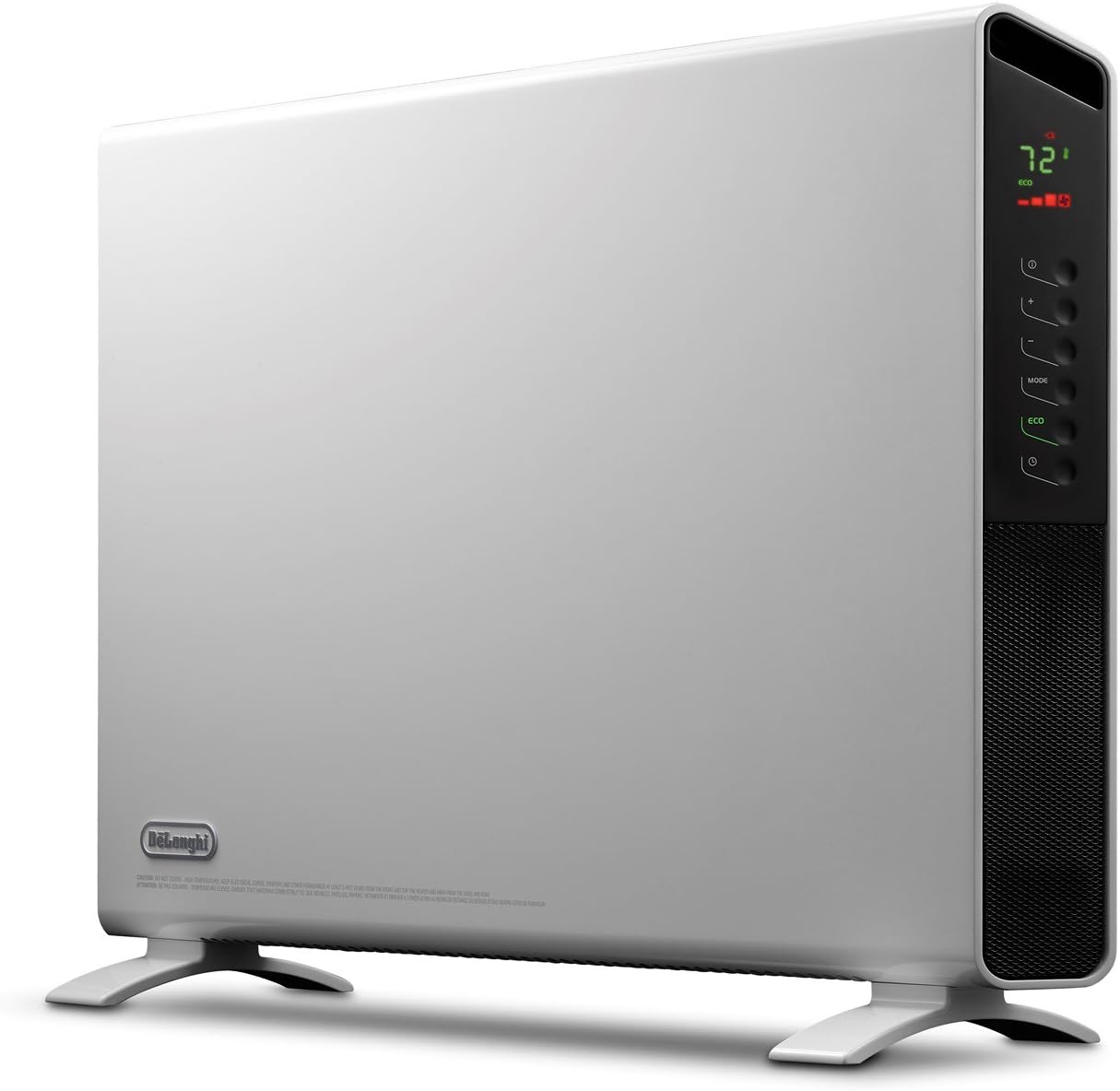
| Best Quality Built to a higher standard if you want something more solid | De'Longhi SlimStyle Convector HCX9115E |  |
| Best Value The sweet spot between price and what you get | GiveBest Wall Heater UPH300M |  |
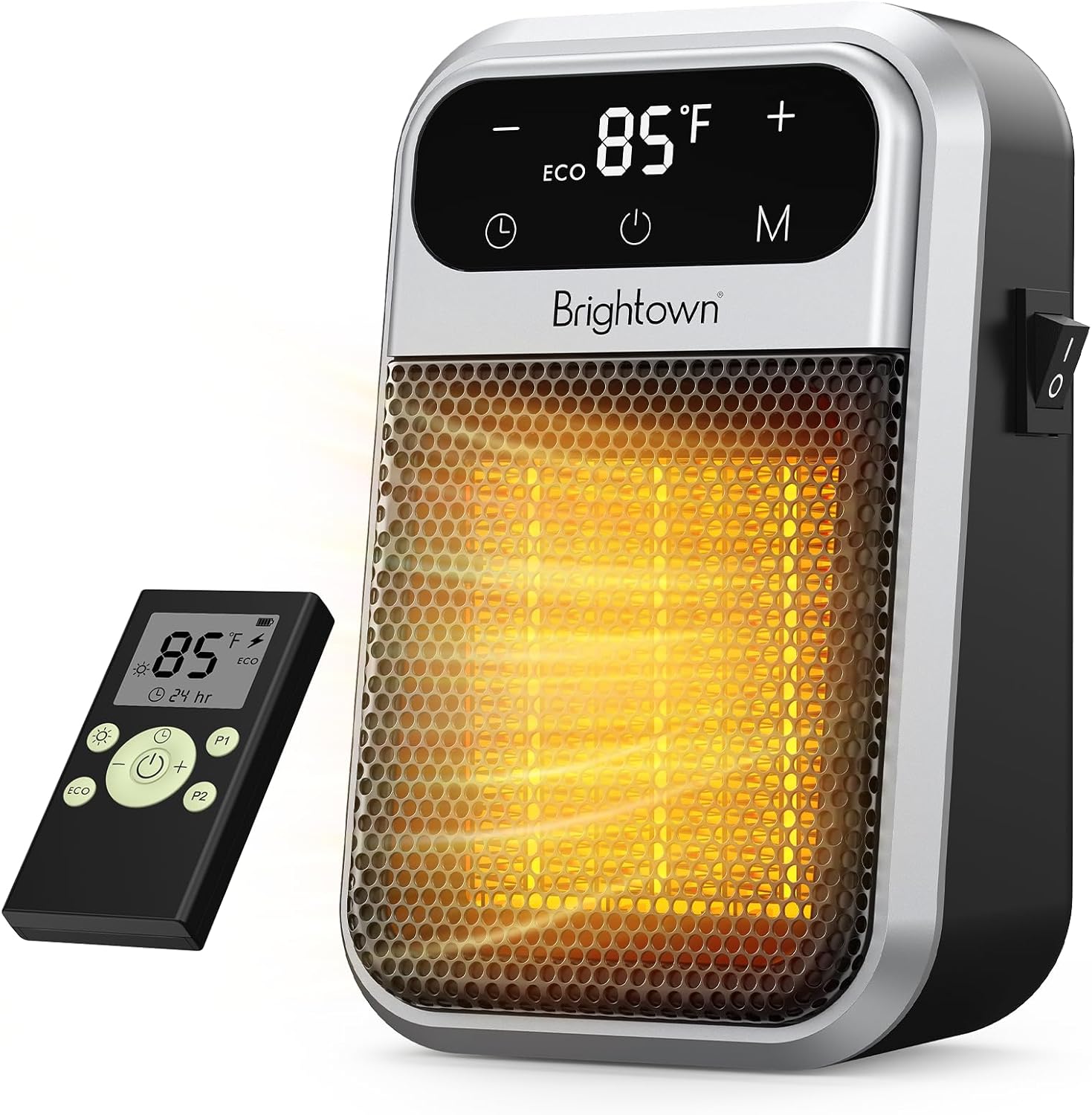
| Best Budget The cheapest option that still gets the job done reliably | Brightown Plug-in Wall Heater MH-20 |  |
| Top Rated A top-rated pick with lots of positive feedback | DREO Smart Wall Heater DR-HSH017S |  |
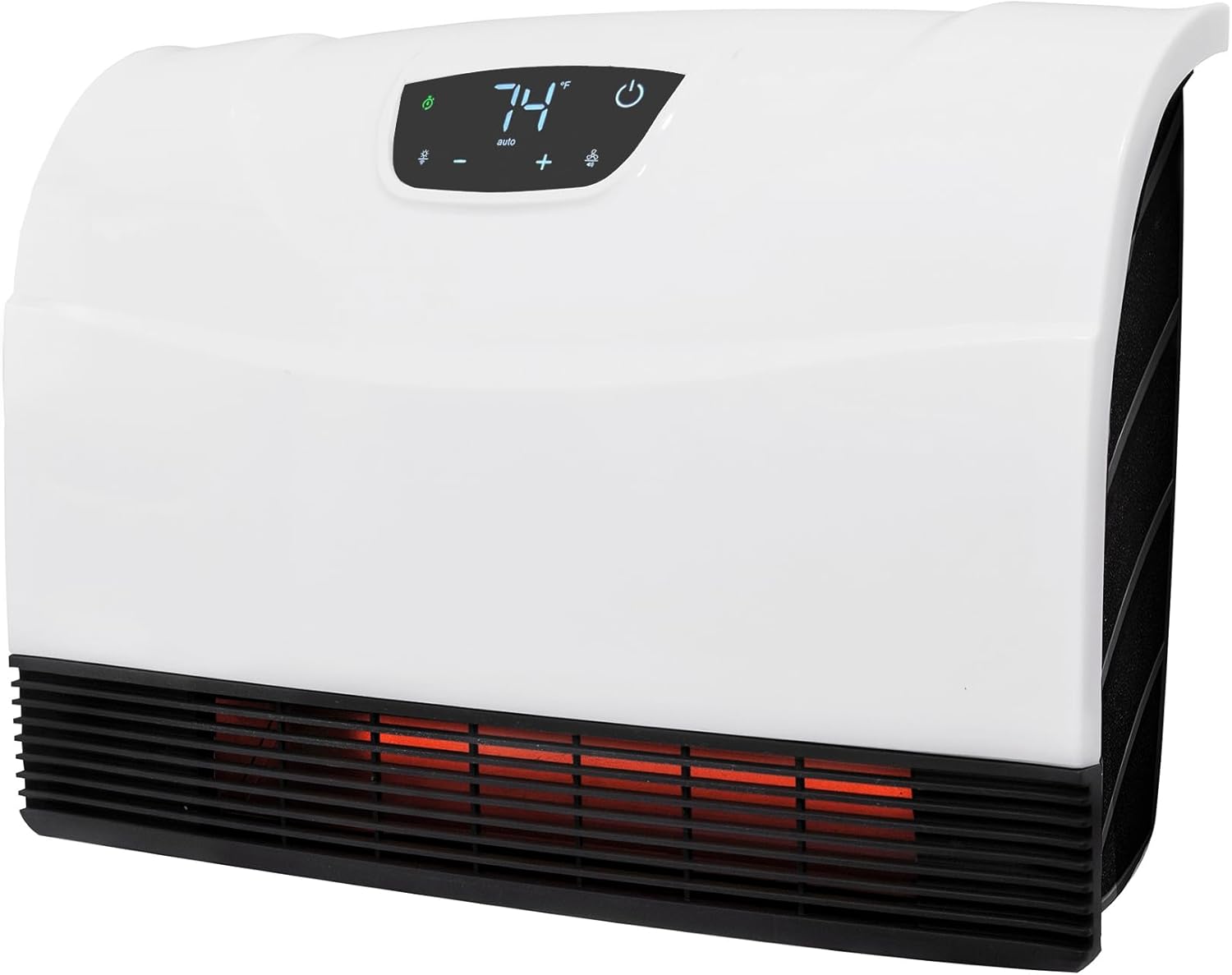
| Most Popular A crowd favorite that many people choose with confidence | Heat Storm Phoenix HS-1500-PHX-WIFI |  |
Dreo Smart Wall Heater WH719S

| Heat Output | 1500 watts |
|---|---|
| Heating Method | Forced Air, PTC |
| Heating Coverage | 200-750 sq.ft. |
| Number of Speeds | 3 |
| Min-Max Temperature | 41 °F – 95 °F |
The Dreo Smart Wall Heater WH719S is a wall-mounted 1500W electric space heater designed to warm bedrooms and living areas quickly and evenly. It uses a PTC ceramic element with forced-air circulation and a 120° vertical oscillation to distribute heat top to bottom, and offers three fan speeds plus an electronic thermostat you can set between 41 and 95°F in 1°F increments. Smart features include Wi-Fi control via the Dreo app, voice control with Alexa and Google Home, a remote, and a 24-hour timer for scheduled heating. The LED display dims for night use and the unit includes a reusable filter and detachable front for easier maintenance. In practice this heater works well as a primary source for smaller rooms or as supplemental heat for larger spaces, and the wide oscillation helps avoid hot spots. Expect standard electric-heater running costs at full power and plan for a wall-mounted installation; the unit is not portable and requires proper mounting and clearance. Noise is relatively low on lower settings but rises on the higher fan speeds.
Best for: Buyers who want a permanent, smart wall-mounted heater that delivers even, controllable warmth and easy scheduling for bedrooms or living spaces.
Less Ideal for: People looking for a portable or plug-and-play heater or those who need an ultra-low-power option for very small, infrequently used rooms.
- 120° vertical oscillation spreads warm air across more of the room to reduce cold spots
- Smart controls with Wi-Fi, app access, and Alexa/Google Home voice support for remote scheduling
- Precise electronic thermostat adjustable in 1°F increments from 41°F to 95°F
- Reusable filter and detachable front make maintenance and cleaning straightforward
- Requires wall mounting and permanent installation, so it is not portable
- Consumes up to 1500 watts which can be costly if used continuously at high output
Verdict: A smart, wall-mounted 1500W heater that delivers even, programmable warmth and voice/app control for bedroom and living-room heating.
De'Longhi SlimStyle Convector HCX9115E
| Power | 1500 watts |
|---|---|
| Number of Speeds | 5 |
| Voltage | 120 |
| Anti-freeze Setting | Yes |
The De'Longhi SlimStyle HCX9115E is a 1500-watt convection panel heater designed to deliver even, full-room warmth for medium to large rooms. It uses a dual lateral fan system to move heated air more quickly and evenly than a basic convector, and offers programmable digital controls including an adjustable thermostat, 24-hour delayed on/off timer, Eco Plus energy-saving mode, and multiple heat settings. The unit can sit on feet or be wall mounted with the supplied kit, and cool-touch handles plus an internal tip-over switch and thermal cutoff increase safe everyday use. Practical benefits include faster heat spread compared with passive panels, an antifreeze setting to protect pipes, and the convenience of digital scheduling. Trade-offs are typical for a 1500W portable heater: it will supply strong localized heating but cannot substitute for whole-house systems, and performance depends on room insulation and layout. Overall, this model suits buyers who want controllable, efficient room heating with flexible mounting and safety-focused design.
Best for: Buyers who prioritize fast, controllable room heating and want a flexible unit that can be wall mounted or used freestanding for focused heating in medium to large rooms.
Less Ideal for: People seeking silent background heating for very small rooms or those who need whole-house heat solutions should consider other options.
- Dual lateral fan system delivers faster and more even heat distribution than passive panel heaters
- Digital thermostat, 24-hour timer, and Eco Plus mode let you schedule and optimize energy use
- Wall-mountable or freestanding design with pre-assembled feet for installation flexibility
- Multiple built-in safety features including thermal shutoff, internal tip-over switch, and cool-touch controls
- At 1500 watts it is best for single-room heating and may not keep very large or poorly insulated spaces comfortable
- Relies on fan-forced convection so it produces some airflow noise compared with fully silent mica or oil-filled units
Verdict: Choose the De'Longhi SlimStyle HCX9115E when you want a wall-mountable 1500W heater that delivers faster, controllable full-room warmth with robust safety features.
GiveBest Wall Heater UPH300M

| Heat Output | 1500 watts |
|---|---|
| Heating Coverage | up to 200 square feet |
| Heating Element | PTC |
| Number of Speeds | 3 |
| Voltage | 120 volts |
The GiveBest UPH300M is a wall-mounted 1500W electric space heater built for steady, targeted heating in small to medium rooms. It mounts on the wall to save floor space and offers three user interfaces: WiFi app control, an included remote, and an LED touch panel that displays real-time temperature. The heater uses a PTC element and a precision thermostat with an ECO mode that cycles output to conserve energy while maintaining comfort. Safety features include ETL-listed overheat and tip-over protection and flame-retardant materials. In practice it heats quickly on high modes for faster warm-up and can be scheduled or preheated via the app, which is handy for bedrooms or home offices. Expect temperature cycling in ECO mode, especially in poorly insulated or large open areas, so use the higher power modes for consistent warmth. Installation requires wall mounting but the package includes mounting template and hardware. For buyers prioritizing a compact, smart wall heater for a single room, this balances control, safety, and energy-minded features well.
Best for: Buyers who want a compact, energy-conscious wall heater with smart controls for reliably warming a single room like a bedroom, office, or bathroom.
Less Ideal for: People who need whole-house heating, continuous steady output in very large or uninsulated spaces, or those who cannot mount a unit to the wall.
- 1500W PTC heating element provides fast, effective warmth for rooms up to about 200 sq ft
- Three control methods: WiFi app, remote control, and LED touch panel with real-time temperature readout
- Energy-saving ECO mode and precision thermostat to reduce power consumption
- Built-in safety: ETL-listed overheat and tip-over protection plus flame-retardant materials
- Wall-mounted design saves floor space and includes mounting template and hardware
- ECO mode can cause noticeable temperature cycling in larger or poorly insulated spaces
- Requires wall installation which may not suit renters who cannot drill or mount permanently
Verdict: A smart, wall-mounted 1500W heater that combines app and remote control with energy-saving modes to efficiently warm a single room up to about 200 sq ft.
Brightown Plug-in Wall Heater MH-20
| Power | 800W |
|---|---|
| Heating coverage | 100 square feet |
| Max temperature setting | 85 °F |
| Mounting type | Tabletop Mount |
| Special features | Digital Display, Timer, Remote Control |
The Brightown MH-20 is a low-wattage plug-in wall heater built to provide targeted warmth in small rooms and workspaces. It installs into a standard outlet with a 180 degree rotating plug so you can position it upright or inverted, and the touch LED panel plus included remote make temperature and timer adjustments simple from across the room. At 800 watts the heater is energy-conscious and can supplement or maintain warmth in areas up to about 100 square feet without overloading circuits. It runs quietly and includes safety features such as overheat auto shut-off and flame-retardant materials, which make it reasonable for near-constant use in living rooms, bedrooms, or home offices; the listing also notes recommended placement to avoid direct water exposure in bathrooms. The unit is compact and space-saving, trades off raw heating power for efficiency, and is best when used for spot heating rather than trying to warm large or very cold rooms.
Best for: Buyers looking for an inexpensive, energy-conscious heater to warm a single small room or provide targeted supplemental heat in a bedroom, office, or dorm.
Less Ideal for: People who need to heat large rooms, open-plan living areas, or very cold spaces should choose a higher-capacity heater or central heating solution.
- Low 800W power draws less energy and reduces circuit load risk
- Rotating plug design for flexible outlet orientation and space-saving wall use
- Remote control and LED touch display for convenient temperature and timer adjustments
- Built-in safety features including overheat auto shut-off and flame-retardant materials
- 800W output limits effective heating to small rooms or supplemental use only
- Not intended to replace central heating for larger or very cold spaces
Verdict: A compact, budget-friendly 800W plug-in heater that delivers quiet, energy-efficient spot heating for single small rooms.
DREO Smart Wall Heater DR-HSH017S

| Heat Output | 1500 watts |
|---|---|
| Heating Method | Forced Air, PTC |
| Heating Coverage | 150 square feet; 750 square feet |
| Number of Speeds | 3 |
| Min/Max Temperature | 41 °F to 95 °F |
The DREO Smart Wall Heater is a wall-mounted electric heater built to warm bedrooms, home offices, and living spaces with a 1500-watt PTC forced-air element and a targeted 11.5 ft/s airflow. It mounts to the wall and offers three power/speed settings, 30 degree manual oscillation, and a digital thermostat that adjusts from 41 to 95 F in 1 degree increments for precise control. Smart features include app control, Alexa voice support, and a supplied remote so you can change settings without touching the unit. Safety and durability are addressed with IP24 splash resistance, overheat protection, and flame-retardant materials. In practice it works well as a primary heater for a small room or as supplemental heat for larger spaces, and ECO mode helps balance comfort with energy use. The unit is relatively quiet at 28 dB but requires wall mounting and hardwiring or routing the long cord, so it is less flexible than portable heaters and best suited where a permanent wall install is acceptable.
Best for: Buyers who want a reliable, permanently installed heater with precise temperature control and smart connectivity for everyday room heating.
Less Ideal for: People who need a portable or temporary heater solution or who prefer a plug-and-play unit that does not require wall installation.
- Smart control via app, remote, and Alexa for convenient adjustments.
- Precise digital thermostat with 1°F increments and ECO mode for energy-minded temperature control.
- Low noise operation (about 28 dB) suitable for bedrooms and offices.
- IP24 splash resistance and multiple safety features including overheat protection.
- Wall-mounted design requires installation and is not portable.
- Heating coverage may be limited as a primary source for larger or poorly insulated rooms.
Verdict: A dependable wall-mounted heater with precise thermostat control and smart app/voice features that makes it a strong permanent heating choice for small to medium rooms.
Heat Storm Phoenix HS-1500-PHX-WIFI
| Power | 1500 watts |
|---|---|
| Heating Method | Infrared (Radiant) |
| Voltage | 110 volts |
| Heating Coverage | 150 ft² primary, 750 ft² secondary |
| Max Temperature Setting | 99 °F |
The Heat Storm Phoenix is a wall-mounted 1500-watt infrared heater that delivers targeted warmth to bedrooms, bathrooms, offices, and small garages without taking up floor space. It uses radiant infrared heating to raise surface and body temperatures rather than blasting hot air, which feels quick and comfortable in well-insulated rooms up to about 150 sq ft as a primary source and larger areas as supplemental heat. The unit includes one-touch Bluetooth setup for Wi‑Fi control, a touchscreen digital thermostat, a remote, and washable filters, so you can schedule and adjust temperature from a phone or the included remote. Installation is straightforward: it mounts on the wall and plugs into a standard 110V outlet with the option to hide the cord when installed over the outlet. Practical benefits include space saving, smart scheduling, and a cooler-to-the-touch exterior. Limitations to consider are that it is intended for indoor zone heating rather than whole-house use, the maximum set temperature is listed at 99°F, and performance will depend heavily on room insulation and layout.
Best for: Buyers who want a compact, smart wall heater to add reliable zone heat to a single room and value remote control and preset scheduling.
Less Ideal for: People who need whole-house heating or who require high temperature output for very large or poorly insulated spaces should look elsewhere.
- Wi‑Fi and remote control for scheduling and remote adjustments
- Wall‑mount design frees up floor space and keeps the unit out of the way
- 1500W infrared element provides quick, radiant warmth suitable for small rooms
- Touchscreen thermostat and washable filters for easy control and maintenance
- Rated as a zone heater so not suitable as a full-house solution
- Maximum temperature limited to 99°F which may be low for some users
Verdict: Pick this if you want a space-saving, Wi‑Fi controllable wall heater that delivers efficient radiant zone heat for a single room.
Choosing the Right Wall Heater for Room: Key Factors to Consider
Room Size and Heat Output
Match the heater's rated output to the room's square footage and ceiling height. A unit that is too small will run constantly and fail to reach comfortable temperatures, while an oversized unit can short-cycle if its controls are not well matched to the space.
Consider typical insulation and window area. Rooms with poor insulation or large windows require more capacity. Determine the required British Thermal Units (BTUs) or watts for your room before comparing models so you can shortlist appropriately sized wall heaters.
Electrical Requirements and Circuit Capacity
Wall-mounted electric heaters often require dedicated circuits or specific voltage ratings. Verify your home's electrical panel can support the heater's amperage and that local code allows the intended installation. Using a breaker that is undersized or sharing a circuit with heavy loads can create safety hazards and trigger nuisance trips.
If a unit needs 240V or a dedicated 20A circuit, plan for installation costs and whether you have easy access to run wiring. Knowing the electrical requirements upfront prevents surprises and ensures the heater performs safely and reliably.
Mounting, Location, and Clearance
Wall heaters need proper mounting height and clearances from furniture, curtains, and combustible materials. Placement affects heat distribution and safety. Mounting on an exterior wall may alter installation complexity because of cold spots and potential for drafts.
Think about airflow patterns in the room. Position units where they can circulate warm air without being blocked. Also assess whether the wall construction can support the unit and whether any finish work will be required after installation.
Controls, Thermostats, and Zoning
Precise temperature control reduces energy use and improves comfort. Built-in thermostats, digital controls, or compatibility with external wall thermostats offer different levels of accuracy and convenience. Some heaters include programmable settings or occupancy modes that help reduce runtime.
If you plan to use the heater as part of a room-by-room zoning strategy, confirm compatibility with external thermostat wiring or supplemental controllers. Better control reduces overshoot and short-cycling, which extends component life and lowers operating costs.
Energy Efficiency and Running Costs
Heater wattage determines maximum output, but efficiency depends on how often and how long the unit runs. Units with accurate thermostats and adaptive control will consume less energy to maintain a steady temperature than basic on/off designs. Consider features like fan-assisted convection versus radiant elements and how they change perceived warmth and energy use.
Estimate typical runtime for your climate and temperature preferences to compare running costs across candidate units. Efficiency features and tighter temperature control can lead to noticeable savings over a heating season.
Safety Features and Certifications
Look for safety measures such as overheat shutoff, tip or obstruction sensors, cool-touch housings, and clear airflow guards. Certification marks from recognized testing bodies indicate the unit has met established safety standards. These are especially important for units in bedrooms, bathrooms, or rooms used by children and pets.
Also review the manufacturer's installation guidance for required clearances and mounting instructions. Proper installation and adherence to listed safety requirements reduce fire risk and help the unit operate as intended.
Sizing a Wall Heater for Common Room Types
Estimate the room's heating needs before selecting a unit. Use square footage and ceiling height as starting points and adjust for insulation quality, window area, and local climate. For example, lightly insulated rooms or those with many windows will require more output.
Consider how the heater will be used. For continuous background warmth in a bedroom, choose a unit with fine thermostat control and low noise. For a rarely used guest room, a simpler on/off model may be acceptable if it provides sufficient capacity.
- Measure floor area and ceiling height to calculate volume.
- Factor in insulation level and window orientation.
- Choose slightly higher capacity for poorly insulated rooms.
Installation Options and Building Considerations
Wall heaters can mount on interior or exterior walls, but exterior wall installations often require attention to air sealing and may expose the unit to colder backing temperatures. Check wall cavity depth, stud spacing, and whether the chosen location allows for necessary clearances.
Decide whether you need a professional electrician. Units that require new circuits, 240V, or hardwired connections typically need licensed installation. Simpler plug-in wall-mount options exist but may be limited in output and placement flexibility.
- Inspect wall construction and wiring access before buying.
- Confirm required clearances for furniture and window treatments.
- Plan for any aesthetic finish work after mounting.
Noise and Comfort: Choosing the Right Operation Type
Different internal designs produce different noise profiles. Fan-assisted convection heaters circulate warm air quickly but produce background noise. Radiant or convector-only designs operate more quietly but may warm the room more slowly.
If you intend to use the heater in a bedroom or study, prioritize lower noise ratings and smooth thermostat cycling. For living areas where some fan noise is acceptable, fan-assisted models can deliver faster warm-up times.
- Decide between faster warm-up or quieter operation.
- Look for low-setting noise specs when using in bedrooms.
- Consider timer or sleep modes to reduce runtime overnight.
Maintenance, Longevity, and Common Repairs
Wall heaters generally require minimal maintenance but benefit from periodic checks. Keep vents and air passages free of dust, and inspect electrical connections after the first heating season. Replace or service thermostats and fans as recommended by the manufacturer.
Simple preventive steps extend service life: ensure proper clearances, avoid blocking airflow, and address any unusual smells or noises quickly. Regular inspection prevents small issues from becoming safety concerns.
- Clean exterior grilles and vacuum internal vents when powered off.
- Schedule professional electrical inspection if you notice tripped breakers.
- Document installation details for future service or replacement.
Optimizing Efficiency with Controls and Zoning
Good thermostat control is the easiest way to reduce running costs. Use programmable schedules or precise digital thermostats to lower setpoints when rooms are unoccupied. Combining wall heaters with simple door and window sealing often yields bigger efficiency gains than swapping to a slightly higher-efficiency model.
If heating multiple rooms, consider running wall heaters on independent schedules so you only heat occupied spaces. That approach limits overall energy use while keeping comfort where you need it.
- Program lower temperatures during sleep or absence.
- Pair heaters with good room insulation and weatherstripping.
- Use timers or occupancy sensors where available.
How We Chose the Best Wall Heater for Room
We prioritized practical, measurable criteria that affect real-world room heating. Heat output and coverage were primary filters to ensure each heater can maintain target temperatures in typical room sizes. Installation and mounting complexity was assessed because wall heaters must fit existing wall constructions, electrical supply options, and homeowner skill levels. Energy efficiency and thermostat control features were evaluated to estimate operating costs and temperature stability. Safety and code compliance mattered: we favored units with reliable overheat protection, cool-to-the-touch surfaces, and clear electrical requirements. Noise level under normal operation was considered for living spaces and bedrooms. We excluded any units that required uncommon electrical modifications or specialized ductwork, or that lacked clear safety specifications. The resulting list reflects devices that balance adequate heating performance with straightforward installation, reasonable running costs, and safety features relevant to wall-mounted room heaters.
Our full evaluation process is outlined in our review methodology.
FAQ
Do wall heaters need a dedicated electrical circuit?
Often they do. Many wall-mounted electric heaters require a dedicated circuit or specific voltage to operate safely. Check the unit's electrical specifications and consult an electrician when in doubt.
Can I install a wall heater on an exterior wall?
Yes, but exterior wall installations may need additional sealing and consideration for colder backing temperatures. Make sure the mounting location still meets clearance and insulation recommendations.
Are wall heaters noisy?
Noise varies by design. Fan-assisted models are generally louder but warm up faster. Radiant and passive convection units are quieter and may be better for bedrooms.
How do I size a wall heater for my room?
Start with square footage and ceiling height, then adjust for insulation, window area, and local climate. Use the manufacturer's suggested coverage guidelines to choose a model with appropriate output.
What safety features should I look for?
Important features include overheat shutoff, cool-touch surfaces, stable mounting hardware, and certified electrical safety marks. Follow installation clearances to minimize fire risk.
Final Verdict
Prioritize a wall heater that matches your room size and electrical capacity while offering reliable thermostat control and essential safety features. Installation complexity is a key tradeoff: higher-capacity, hardwired units deliver more heat but may require professional wiring, while plug-in or lower-output options are easier to fit but may not suffice for poorly insulated rooms. Balance heat output, noise, and control features against your installation constraints to choose the right wall heater for room heating needs. Focusing on accurate sizing, proper electrical setup, and proven safety measures will yield the most comfortable and dependable outcome.