
Note: This article contains affiliate links. If you click on these links and make a purchase, we may earn a small commission at no extra cost to you. This helps support our research and content. Read our full affiliate disclosure here.
If you rely on chilled water and ready ice throughout the day, the right water dispenser with an ice maker makes a noticeable difference in convenience and utility. These units combine continuous cold-water dispensing with on-board ice production so you are not juggling separate appliances or manual trays. Picking the right option affects how much ice you get, how quickly water dispenses, and how much maintenance the unit needs. This guide shortlists the top water dispensers with ice makers and walks through the most relevant performance, capacity, and maintenance considerations. Read on for a practical look at the features that matter and the criteria we used to choose the best models.
Top Picks at a Glance
| Best Overall The best all-around choice for most situations | Gleedelish Bottom-Load Water Dispenser |  |
| Best Quality Built to a higher standard if you want something more solid | Brio 420 Water Cooler with Ice |  |
| Best Value The sweet spot between price and what you get | UMOMO Freestanding Water Dispenser EU1010 |  |
| Best Budget The cheapest option that still gets the job done reliably | COSTWAY Countertop Ice Maker |  |
| Most Popular A crowd favorite that many people choose with confidence | Electactic Compact Bullet Ice Maker |  |
| Best Seller A high-volume bestseller chosen again and again | ICEPURE 3-in-1 Water Cooler |  |
Gleedelish Bottom-Load Water Dispenser

| Installation Type | Freestanding |
|---|---|
| Access Location | Bottom |
| Upper Temperature Rating | 203 °F |
| Lower Temperature Rating | 47 °F |
| Capacity | 5 gallons |
This Gleedelish bottom-load dispenser combines a fast ice maker with hot, cold and room-temperature dispensing in a single freestanding unit intended for home or office use. The ice maker produces bullet-style cubes quickly—nine cubes in about seven minutes and up to roughly 33 pounds per day—while a top-access ice basket and removable drip tray make grabbing and cleaning straightforward. Bottom-loading design hides 3- or 5-gallon bottles and eliminates heavy lifting, and LED indicators plus one-touch controls keep operation simple. Practical safety features include a child lock on the hot spout and a dedicated bottom drain for easier maintenance. Trade-offs are typical for combo units: it has a modest internal ice storage bin (about 1.3 pounds) so frequent use may require steady production, and the unit is relatively heavy and sizable for tight spaces. For buyers who want an all-in-one cooler with fast ice production and easy bottle changes, this model offers a sensible balance of convenience and functionality.
Best for: Buyers who want a single freestanding machine that delivers quick ice along with hot, cold and room-temperature water and prefer easier bottle changes without lifting heavy jugs.
Less Ideal for: People who need large on-demand ice storage or a compact countertop solution should look elsewhere.
- Fast ice production: makes nine bullet cubes in about 7 minutes and up to 33 lbs/day
- Bottom-loading cabinet conceals 3- and 5-gallon bottles to simplify replacement and reduce lifting
- Top-access ice basket and removable drip tray make scooping ice and cleaning easier
- Child safety lock on hot spout and clear LED indicators for straightforward, safer operation
- Small built-in ice storage (around 1.3 lbs) requires frequent production under heavy use
- Relatively heavy and tall unit that needs floor space and may be harder to move
Verdict: Choose this dispenser if you want an all-in-one bottom-loading water cooler that produces ice quickly and makes bottle replacement effortless.
Brio 420 Water Cooler with Ice

| Wattage | 400 watts |
|---|---|
| Installation Type | Freestanding |
| Capacity | 5 gallons |
The Brio 420 combines a bottom-load water dispenser with an integrated ice maker to deliver hot, cold, and on-demand bullet ice in non-plumbed locations. It produces about 24.6 lb of ice per day with cycles every 9 to 12 minutes, while the tall 10.5" dispense height and 2x fast dispense make filling large bottles and containers quick and convenient. The unit uses a concealed bottom-load bottle compartment to avoid heavy lifting and preserve a clean look, and the LED touch interface shows heating and cooling status and includes an optional night light. Built-in UV self-cleaning sanitizes the cold tank to reduce biofilm risk and the child-safety hot water lock helps prevent accidental dispensing. Trade-offs are its substantial footprint and weight compared with countertop units and the need to supply standard 3- or 5-gallon bottles, and some buyers may find setup and ongoing ice maintenance more involved than a simple cooler without an ice maker.
Best for: Buyers who prioritize reliable ice production and steady hot and cold dispensing for homes or small offices and who want a low-effort bottle change without lifting heavy jugs.
Less Ideal for: People needing a compact countertop solution, minimal maintenance appliance, or those who cannot accommodate a full-size freestanding unit in their space.
- Integrated ice maker producing up to ~24.6 lb/day for steady ice availability
- Bottom-load design avoids heavy lifting and keeps bottles out of sight
- LED touch interface with illuminated status indicators and optional night light
- UV self-cleaning for automated sanitizing of the cold water tank
- Tall dispense height and fast dispense speed for filling large containers quickly
- Large, heavy freestanding unit that requires permanent floor space
- Requires 3- or 5-gallon bottles and regular maintenance for the ice system
Verdict: Choose the Brio 420 if you want a floor-standing bottom-load dispenser that reliably makes bullet ice while delivering hot and cold water with automated UV sanitizing.
UMOMO Freestanding Water Dispenser EU1010

| Installation Type | Freestanding |
|---|---|
| Upper Temperature Rating | 194 °F |
| Capacity | 33 pounds |
This freestanding UMOMO dispenser pairs a built-in bullet ice maker with a three-temperature water system for everyday home or small-office use. The unit can produce up to 33 pounds of bullet-shaped ice per day and stops automatically when the ice basket is full, which makes it convenient for hosting or continuous use. The compressor cools water down to about 32°F and the heater reaches up to 194°F for hot drinks, and the LED control panel and removable drip tray simplify operation and cleaning. Top-loading compatibility with standard 3–5 gallon bottles keeps installation and bottle changes straightforward, and the child safety lock on the hot tap helps prevent accidents. Expected trade-offs are the freestanding footprint and top-loading design, which require floor or counter space and periodic bottle replacement, and the ice capacity may be more than some households need but is ideal for frequent entertaining. Build materials and a rear drain plug for maintenance are practical touches for long-term use.
Best for: Buyers who want a single freestanding unit that combines a high-capacity ice maker with hot and cold water for frequent entertaining or a small office and who prioritize reliable, easy-to-use operation.
Less Ideal for: People who need an undercounter or space-minimizing dispenser or who rarely use ice and prefer a simpler cooler without an integrated ice maker.
- Built-in bullet ice maker produces up to 33 lbs of ice per day with auto shutoff when full
- Three-temperature dispensing with fast cooling to 32°F and heating up to 194°F
- Child safety lock on hot water tap and intuitive LED control panel
- Top-loading design fits standard 3–5 gallon bottles and removable drip tray for easy cleaning
- Top-loading freestanding form factor requires dedicated floor or counter space
- Ice production and storage may exceed needs for very small households
Verdict: Choose this UMOMO freestanding dispenser if you want a high-capacity built-in ice maker combined with hot and cold water in a single easy-to-use unit.
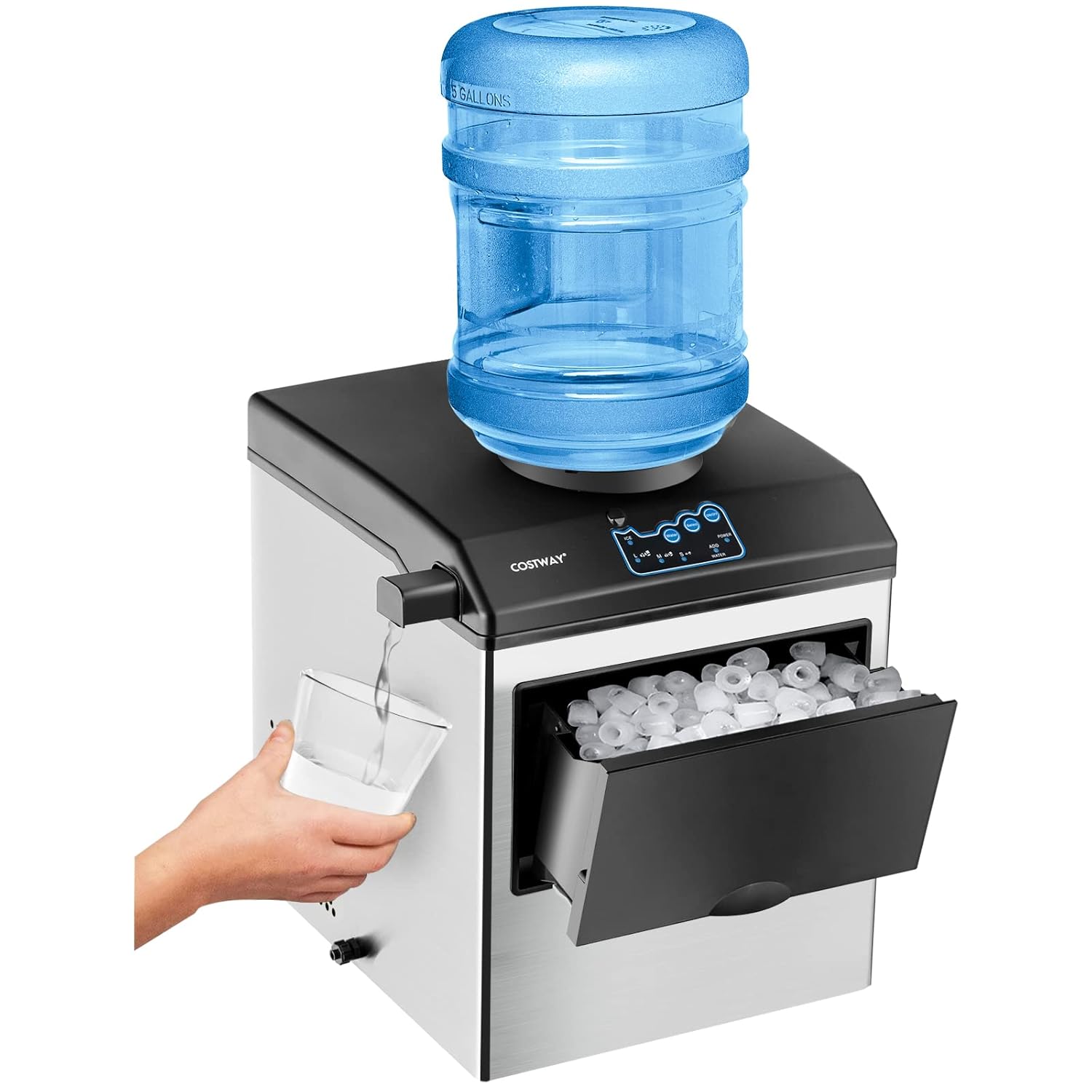
COSTWAY Countertop Ice Maker
| Capacity | 48 pounds |
|---|---|
| Ice Production per Day | 48 pounds |
| Wattage | 1840 watts |
| Voltage | 115 volts |
| Refrigerant | R290a |
This COSTWAY countertop ice maker combines an ice machine and extendable chilled water spout for basic home or small-event use. It makes ice in roughly 6 to 10 minutes and is rated to produce up to 48 pounds of ice per day, with small, medium, and large cube settings and a removable 5 lb storage basket for short-term holding. The top-loading water base accepts bottled water for continuous operation or can be filled manually, and the unit includes simple button controls plus water-shortage and ice-full indicators to prevent downtime. Its stainless steel exterior and R290a refrigerant reflect higher-end touches, and the manufacturer notes a quiet 42 dB operating level suitable for a kitchen counter. Expect routine cleaning every few weeks and to discard the first batch after setup; the unit is reasonably portable for a countertop machine but still substantial in weight. This model is a straightforward, no-frills solution if you need steady ice plus occasional chilled water without plumbing.
Best for: Buyers who want an affordable, countertop appliance that delivers a large daily ice output and occasional chilled water without permanent plumbing.
Less Ideal for: People who need a permanently plumbed dispenser, ultra-compact portability, or a truly silent built-in solution for tight spaces.
- High daily ice capacity up to 48 pounds suitable for parties or heavy household use
- Selectable ice sizes (small/medium/large) for different beverage types
- Integrated extendable chilled water spout for dispensing cold water without separate appliance
- Detachable 5 lb ice basket and simple button controls with shortage/full indicators
- Requires regular cleaning and initial setup steps like discarding the first batch
- Relatively heavy for a countertop unit which limits easy relocation
Verdict: Choose this unit if you need a budget-friendly countertop ice maker that reliably produces lots of ice and also dispenses chilled water without plumbing.
Electactic Compact Bullet Ice Maker

| Ice Production per Day | 26 pounds |
|---|---|
| Capacity | 3.3 pounds |
| Voltage | 115 volts |
| Water Tank | 3.3L |
This compact countertop ice maker delivers rapid bullet-style ice on demand and integrates a 3.3L water tank with a built-in dispenser for convenient cold water and ice without plumbing. It produces up to 26 pounds of ice per day, making 9 small bullet cubes in roughly 6 to 12 minutes depending on conditions, and stores finished ice in a 1.0L bin so you can serve several drinks between refills. Controls are simple one-touch buttons with indicator lights for low water, ice making, and full-ice, and the detachable tank and basket make refilling and cleaning straightforward. The unit is portable and suited to kitchens, offices, and parties where a freestanding supply of ice is needed rather than a plumbed dispenser. Expect typical limitations of compact, countertop machines: the daily output and bin size are modest compared with built-in or commercial ice makers, and performance can vary with ambient temperature. Overall it is a handy, easy-to-use option when you want quick, frequent ice without installation.
Best for: Buyers who want a portable, no-plumbing countertop ice maker that reliably supplies fresh ice and water for small gatherings, home kitchens, or office use and who value simple operation and easy cleaning.
Less Ideal for: Those needing large-capacity or commercial-level ice production or a permanently plumbed water dispenser should consider larger built-in or commercial units instead.
- Produces up to 26 pounds of bullet ice per day for frequent home use
- Fast cycles that make about nine bullet cubes in roughly 6 to 12 minutes
- Built-in 3.3L water tank and integrated dispenser remove need for plumbing
- Detachable tank and ice basket simplify refilling and cleaning
- One-touch controls with indicator lights for low water and full ice
- 1.0L ice storage bin is small and may require frequent emptying during parties
- Output and cycle time can be affected by room temperature, limiting peak performance
Verdict: A compact, easy-to-use countertop ice maker with a built-in tank and dispenser that delivers fast bullet ice for homes and small gatherings.
ICEPURE 3-in-1 Water Cooler

| Installation Type | Freestanding |
|---|---|
| Capacity | 26.5 pounds |
| Material Type | Plastic |
The ICEPURE 3-in-1 Water Cooler combines a hot and cold water dispenser with a built-in ice maker so a single freestanding unit handles drinking water and rapid ice production. It accepts top-loaded 2, 3 or 5-gallon bottles and the ice maker produces nine bullet-shaped cubes per cycle, claiming up to 33 lbs per 24 hours and a 6 to 11 minute cycle time for quick batches. The control panel is straightforward and includes a child lock and detachable drip tray for easier cleaning, while ETL certification and food-grade materials address basic safety concerns. The unit uses a compressor designed for lower energy use and operates quietly at under 43 dB, which helps in home or office settings. Expect practical convenience rather than premium finishes since the cooler is plastic-bodied and top-load only, and like many combo units it will need periodic cleaning and maintenance of the ice compartment to avoid scale or taste issues.
Best for: Buyers who want a straightforward, all-in-one cooler and ice maker for home or small office use and who prioritize safety certifications and easy controls over premium materials.
Less Ideal for: Those who need plumbed-in dispensing, a stainless finish, or a luxury appliance aesthetic should look at other options.
- 3-in-1 functionality: hot water, cold water, and built-in ice maker in one freestanding unit
- Fast ice cycles with nine bullet-shaped cubes per batch and up to 33 lbs daily capacity
- ETL certified and made from food-grade materials for basic safety compliance
- Quiet operation under 43 dB and simple controls with a child lock for safer use
- Plastic construction and top-loading design may feel less premium than bottom-load or plumbed units
- Requires routine cleaning and maintenance of the ice compartment to prevent scale or off-flavors
Verdict: This unit is a reliable, safety-focused choice for buyers who want an easy-to-use combined water dispenser and fast ice maker for home or small office use.
Choosing the Right Water Dispenser with an Ice Maker: Key Factors to Consider
Ice Production Rate
Ice production rate determines how much ice the unit can make within an hour or per cycle. Higher production is essential if you host gatherings or use a lot of ice daily. Consider both the per-cycle yield and whether the unit can maintain production during continuous use. A model with a faster cycle will recover ice supply more quickly after heavy use.
Also note that production rates are affected by incoming water temperature and ambient room temperature. If the dispenser sits in a warm kitchen or near heat sources, expect lower ice output than rated under ideal lab conditions. Planning for peak daily demand prevents running short of ice when you need it.
Cooling Performance And Setpoints
Consistent cooling keeps water cold and helps the ice maker form solid cubes quickly. Look for units that list achievable chilled-water temperatures and have adjustable setpoints or multiple cooling modes. Faster chill times and stable low temperatures mean better-tasting cold water and less melting in the ice bin.
Keep in mind that compact dispensers with limited refrigeration capacity may produce small amounts of ice and struggle to keep both water and ice cold at once. If you want very cold water and steady ice, prioritize models designed with separate refrigeration or sufficient compressor sizing.
Water Dispense Speed And Mechanism
Dispense speed affects how quickly you can fill glasses and containers. A powerful pump and well-designed spout reduce wait times and splashing. For frequent daily use, choose a dispenser with consistent flow at a practical pressure rather than one that relies on slow drip fills.
Check whether the unit uses a direct pump, gravity feed, or pressurized reservoir; each design has pros and cons for speed and reliability. Pumped systems are usually faster but may require more maintenance over time.
Maintenance And Cleaning Accessibility
Regular cleaning prevents scale buildup, mineral deposits, and bacterial growth in both the water path and the ice-making area. Models with removable ice bins, easy-access panels, and straightforward descaling instructions simplify upkeep. Consider how often filters need replacing and how easy filter changes are to perform without tools.
Also factor in whether replacement parts like filters and seals are standard sizes or proprietary. Easier-to-source parts reduce downtime and long-term ownership hassle.
Ice Storage Capacity And Retrieval
Storage capacity determines how much ice is available at any moment. Larger bins are useful if you want to keep a ready reserve for entertaining, while smaller bins are fine for low daily usage. Evaluate how the bin is accessed — top-loading bins or front-access drawers can be more convenient depending on counter layout and user height.
An accessible bin with a clear scoop area reduces spills and melting from frequent opening. Also consider whether ice is stored loose or in a slotted tray that reduces clumping.
Installation And Footprint
The dispenser's physical size and installation needs affect where it can go. Some units are freestanding and need only a nearby outlet, while others require a water line connection or a drain. Measure available counter or floor space and verify clearances for ventilation and door or bin access.
Weight and mobility matter if you plan to move the unit seasonally. Also check power requirements and whether the unit will need a dedicated circuit for reliable compressor operation.
Types Of Water Dispensers With Ice Makers
Dispenser designs vary from compact countertop units with internal ice makers to larger freestanding models with bigger refrigeration systems. Countertop options are convenient for small kitchens or offices and usually require only an electrical outlet, while freestanding units often offer higher ice output and larger storage capacity.
Some dispensers integrate a sealed ice-making module and a chilled-water reservoir, while others separate the refrigeration for the ice and water systems. Understanding the architecture helps match the unit to your space and usage patterns.
- Countertop units: compact, simple installation, lower ice output
- Freestanding units: larger capacity, higher ice yield, bigger footprint
- Reservoir vs direct-chill: tradeoffs between dispense speed and continuous cooling
Energy Use And Operating Costs
Ice-making adds electrical load because the compressor runs more frequently. Look for units with efficient compressors and standby modes that reduce power draw when ice demand is low. Energy-efficient models will matter more if the dispenser runs continually in a busy household or office.
Ambient temperature and placement affect operating efficiency. Placing the unit in a cool, well-ventilated spot reduces runtime and helps maintain rated ice output.
- Check energy consumption figures when available
- Prefer units with eco or energy-saving modes for occasional use
- Ensure adequate ventilation to avoid excess compressor cycling
Filtration Options And Water Quality
Many dispensers offer built-in filtration or accept inline filters to improve taste and reduce mineral scale, which also benefits ice quality. If your home water has high mineral content, a filtration system that removes hardness or suspended solids will reduce scale buildup in the ice maker.
Consider the type of filter and replacement interval. Carbon filters address taste and chlorine, while specialty filters target hardness or particulates. Verify whether the unit supports easy filter replacement and whether filters are a standard size for easier sourcing.
- Carbon filters for taste and odor control
- Scale-reduction filters for hard water areas
- Filter change frequency affects long-term maintenance cost
Noise And User Experience
Ice makers and compressors produce noise during operation. If the dispenser will sit near living spaces, consider units with quieter compressors or sound-dampening design. User interface quality also matters; simple, clearly labeled dispense controls and indicator lights for ice level or filter replacement improve daily use.
Also evaluate how easy it is to retrieve ice and fill containers. A well-positioned spout and generous clearance under the dispenser make refilling large pitchers straightforward without awkward tilting.
- Look for noise ratings or user feedback on operational quietness
- Prefer intuitive controls and clear status indicators
- Spout height and clearance for taller containers
Placement And Ventilation Requirements
Proper ventilation keeps compressors running efficiently and supports rated ice production. Freestanding units typically need space behind and at the sides for airflow, while compact countertop units may require clearance above and around the back. Check manufacturer guidance on minimum clearances and avoid enclosing the unit tightly in cabinetry.
If the unit requires a water line or dedicated drain, plan for those connections during placement. Also account for direct sunlight or heat sources that can reduce cooling performance and increase energy use.
- Allow recommended clearance for ventilation
- Avoid placing near ovens or direct sunlight
- Plan water line and drain access if required
How We Chose the Best Water Dispenser with an Ice Maker
We focused on capabilities that matter most for people who need reliable cold water and frequent ice production. Key evaluation criteria included ice-making capacity and cycle speed, which determine how much ice is available and how quickly it refills; cooling performance and temperature control, to ensure consistently cold water without long wait times; water dispense speed and pump reliability, since a slow or weak dispense reduces everyday convenience; maintenance and cleaning access, because regular descaling and filter changes affect longevity and hygiene; and build quality and component durability, which influence long-term performance in a high-use appliance. We also considered layout and ergonomics, such as where ice is stored and how easy it is to retrieve, plus energy usage where data was available. Units that lacked accessible maintenance panels, had poor ice yield specifications, or used unclear filtration setups were excluded. Our selections prioritize practical, measurable specs and features that align with typical home and small-office use cases.
Our full evaluation process is outlined in our review methodology.
FAQ
How much ice can I expect a typical home unit to make per day?
Ice production varies, but many home-oriented dispensers produce several pounds per day. Exact output depends on room temperature, input water temperature, and unit capacity, so check rated hourly or daily production when evaluating models.
Do I need a water line connection for every dispenser with an ice maker?
Not always. Some compact countertop dispensers use manual fill reservoirs, while larger freestanding units typically require a water line for continuous operation. Consider how often you want to refill a reservoir before choosing a model.
How often should I descale and clean the ice maker?
Frequency depends on water hardness and usage. In hard-water areas, plan to descale every few months. Regular cleaning of the bin and water path should be done at least quarterly to maintain hygiene and performance.
Will the ice taste bad if I do not replace filters regularly?
Possibly. Old or clogged filters can pass odors or minerals into the ice, affecting taste. Replacing filters at the recommended intervals helps preserve ice flavor and reduces scale buildup in the ice-making components.
Can I keep the dispenser outdoors or in an unheated garage?
Most home dispensers are meant for indoor use in controlled temperatures. Extreme cold can prevent ice production and damage refrigeration components, while excessive heat reduces efficiency. Use units only within the recommended ambient temperature range.
Final Verdict
When choosing a water dispenser with an ice maker, prioritize ice production rate and reliable cooling first, then confirm dispense speed and maintenance accessibility. Balance bin capacity and footprint against how much ice you actually use daily, and plan installation with ventilation and water-feed needs in mind. Paying attention to filtration and ease of cleaning will reduce long-term upkeep and preserve ice quality. With these tradeoffs considered, you can select a unit that delivers consistent chilled water and dependable ice for your household or small office.