
Note: This article contains affiliate links. If you click on these links and make a purchase, we may earn a small commission at no extra cost to you. This helps support our research and content. Read our full affiliate disclosure here.
If you get treated municipal water at the tap, a targeted water filter can remove tastes, odors, and specific contaminants that standard treatment does not address. Picking the right water filter for city water matters because municipal supply varies by region, and the wrong system can be noisy, expensive to maintain, or ineffective for your concerns. This guide shortlists the top-performing options across common home setups, focusing on real-world factors like filtration capability, installation type, and ongoing upkeep. Below you will find our best picks and the evaluation points we used to compare them so you can pick a system that fits your household routine and water quality goals.
Top Picks at a Glance
| Best Overall The best all-around choice for most situations | iSpring RCC7-BN 5-Stage RO System |  |
| Best Quality Built to a higher standard if you want something more solid | Berkey Big Berkey 2.25-Gallon |  |
| Best Value The sweet spot between price and what you get | Waterdrop WD-10UA Under-Sink Filter | 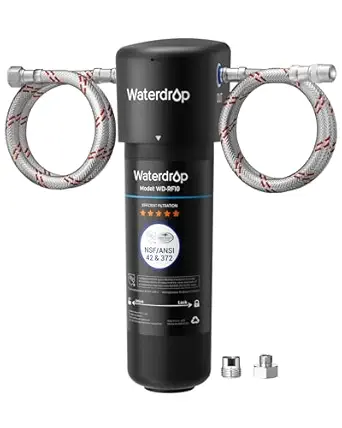 |
| Best Budget The cheapest option that still gets the job done reliably | Camco TastePure RV Water Filter 40043 |  |
| Top Rated A top-rated pick with lots of positive feedback | iSpring WGB21B 2-Stage Whole House Filter |  |
| Most Popular A crowd favorite that many people choose with confidence | ZeroWater 5-Stage Replacement Filter 2-Pack |  |
| Best Seller A high-volume bestseller chosen again and again | SimPure DB20P Whole House Filter Housing |  |
iSpring RCC7-BN 5-Stage RO System

| Purification Method | Reverse Osmosis, Activated Carbon, Carbon block |
|---|---|
| Power Source | No Power Needed |
| Maximum Flow Rate | 3.4 liters per minute |
| Supported Water TDS Level Maximum (PPM) | 750 |
| Capacity | 75 gallons |
The iSpring RCC7-BN is an under-sink 5-stage reverse osmosis system designed to turn municipal tap water into near-bottled-quality drinking water. It uses three pre-filters (sediment, GAC, carbon block), a high-precision RO membrane and a final GAC polishing filter to reduce over 1,000 contaminants including chlorine, lead, fluoride and PFAS while lowering TDS by roughly 80 to 90 percent. The system stores treated water in a tank and supplies it through a lead-free brushed nickel faucet, and it requires no electricity. Practical touches include a transparent first-stage housing for visual filter checks, push-to-connect fittings to simplify plumbing, and online installation videos for DIYers. It is certified to NSF/ANSI 58 for RO performance and is intended for municipal tap water rather than untreated well water. Maintenance involves periodic filter and membrane replacements and the unit occupies under-sink space, but for city water users seeking thorough contaminant removal and noticeably better taste, it provides reliable, long-term performance.
Best for: Homeowners on municipal city water who want thorough contaminant removal and greatly improved drinking-water taste and safety, and who prefer a DIY-friendly under-sink solution with certified performance.
Less Ideal for: People with untreated well water or those unwilling to allocate under-sink space and perform periodic filter maintenance should consider other whole-house or specialized pre-treatment options.
- Comprehensive 5-stage filtration that removes a wide range of contaminants including PFAS and heavy metals.
- NSF/ANSI 58 certification validates reverse osmosis performance.
- Transparent first-stage housing makes it easy to see when the sediment filter needs changing.
- Includes a dedicated lead-free brushed nickel faucet and necessary housings and tubing for installation.
- No power required and compact under-sink design suitable for typical kitchen installations.
- Not intended for raw well water without pre-treatment.
- Takes up under-sink space and includes a storage tank which may limit cabinet room.
- Requires regular replacement of filters and RO membrane to maintain performance.
Verdict: If you want NSF-certified, near-bottled-quality drinking water from city tap supply, the iSpring RCC7-BN delivers robust contaminant removal in a compact under-sink package.
Berkey Big Berkey 2.25-Gallon

| Capacity | 8.5 liters |
|---|---|
| Purification Method | Black Berkey proprietary filter media |
| Power Source | Gravity |
| Maximum Flow Rate | 0.03 gpm |
| Material Type | Stainless Steel |
The Big Berkey is a countertop, gravity‑fed filtration system designed to turn tap or freshwater into drinking water using two Black Berkey purification elements. You fill the upper stainless‑steel chamber and water slowly passes through the proprietary filter media into the lower chamber, then dispenses from a spigot; no electricity, tools, or installation are required. The Black Berkey elements are independently tested and rated to reduce more than 200 common contaminants and each pair is rated for up to about 6,000 gallons before replacement is recommended, which keeps ongoing costs low. Its compact 2.25‑gallon capacity and polished AISI 304 construction make it convenient for small households or office counters, and the system can be expanded with extra elements or optional spigots and bases. Limitations include a slow flow rate typical of gravity filtration and a modest storage volume that may not suit large families or high‑demand situations, and it does not address every possible contaminant without optional PF‑2 elements for fluoride or arsenic reduction.
Best for: Buyers who prioritize contaminant reduction and long‑lasting filter elements for reliable, off‑grid countertop filtration in a small household or office.
Less Ideal for: Those who need rapid large‑volume dispensing or a whole‑house/under‑sink plumbed solution should look elsewhere.
- Gravity operation requires no power or plumbing and is simple to use
- Black Berkey elements are third‑party tested to reduce 200+ common contaminants
- Long element lifespan with up to ~6,000 gallons per pair reduces replacement frequency
- Stainless steel chambers are durable and dishwasher‑safe surfaces for a countertop unit
- Flow is slow (gravity feed) so filling large containers takes time
- 2.25‑gallon capacity may be small for larger households during peak use
Verdict: Choose the Big Berkey when you want a durable, no‑power countertop filter that reliably reduces hundreds of contaminants with long‑lasting elements.
Waterdrop WD-10UA Under-Sink Filter

| Purification Method | Activated Carbon |
|---|---|
| Filter Life Cycle | 1 years |
| Maximum Flow Rate | 2.5 gpm |
| Supported Water TDS Level Maximum (PPM) | 700 |
| Capacity | 11000 gallons |
The Waterdrop WD-10UA is an under-sink activated carbon filter built for city tap water. It connects directly to standard 3/8" or 1/2" cold-water feed lines with included fittings and installs quickly using twist-and-lock and push-to-connect hardware. In use it provides steady filtered water for drinking, cooking and beverages while targeting chlorine, lead and PFAS/PFOA/PFOS to improve taste and odor. The unit advertises a long 11,000-gallon capacity and a one-year filter life under municipal water conditions, plus a claimed higher filtration area to reduce clogging. Flow is adequate for everyday use with tested rates around 0.75 gpm at 60 psi and an upgraded 3/8" outlet rated to about 1.33 gpm. Limitations: it is for cold municipal water only (not for well or hot water) and replacement filters are required annually; compatibility is limited to sinks and faucets with female 3/8" or 1/2" threads unless you add adapters. For someone prioritizing simple installation, reliable contaminant reduction and low maintenance, this is a practical city-water solution.
Best for: Buyers who want a straightforward, low-effort under-sink filter for city tap water that improves taste and reduces common urban contaminants while minimizing installation hassle.
Less Ideal for: Homes using well water, hot-water filtration needs, or systems that require specialized multi-stage contaminant removal should look elsewhere.
- NSF/ANSI 42 & 372 approved components for validated chlorine and aesthetic contaminant reduction
- Twist-and-lock plus push-to-connect fittings allow fast, tool-light installation
- Long service life rated at 11,000 gallons or roughly 12 months on municipal water
- Designed to maintain reasonable flow with a 3/8" outlet to reduce slowdowns and clogging risk
- Not suitable for well water or hot water applications
- Requires annual replacement filters to maintain performance
Verdict: A practical, easy-to-install under-sink filter that reliably improves municipal tap water taste and reduces lead and PFAS with minimal upkeep.
Camco TastePure RV Water Filter 40043

| Model Number | 40043 |
|---|---|
| Material Type | Polypropylene (PP) |
| Certifications | NSF/ANSI 42, NSF/ANSI 53, NSF/ANSI 372 |
| Included Components | Adapter |
The Camco TastePure RV Water Filter is an inline hose filter designed to give campers and boaters cleaner, better-tasting water from city or campground hookups. It attaches between a standard garden or drinking-water hose and the supply, using a wide-body, high-flow design so you get good water pressure while the internal 20-micron sediment layer removes silt and granular activated carbon and KDF media reduce chlorine, taste and limit bacterial/mold growth when idle. The unit includes a flexible hose protector to prevent kinks and reduce stress at the connection, and it is certified to NSF/ANSI 42, 53 and 372 for lead-free construction and contaminant reduction. Practical benefits are simple installation, U.S. manufacture, and components geared to typical municipal contaminants; limitations are that it is an inline, single-use cartridge style filter so it does not remove all contaminants that a whole-house or reverse-osmosis system would, and eventual replacement cartridges are required to maintain performance.
Best for: Buyers who want an affordable, easy-to-install filter to improve taste and reduce common municipal contaminants at campground or city water hookups without sacrificing flow.
Less Ideal for: People seeking full removal of dissolved minerals, heavy metals beyond NSF 53 scope, or those who need point-of-use reverse-osmosis level purification should consider different systems.
- Multi-stage GAC and KDF media reduce chlorine, taste and control microbial growth.
- High-flow wide-body design preserves hose pressure for normal use.
- NSF/ANSI 42, 53 and 372 certifications and made in the USA.
- Includes flexible hose protector to prevent kinks and strain at the connection.
- Inline cartridge design does not replace comprehensive systems like RO for dissolved solids.
- Filter media will need periodic replacement to retain effectiveness.
Verdict: A budget-friendly inline filter that delivers noticeably better tasting, chlorine-reduced city water at the hose with simple setup and certified filtration.
iSpring WGB21B 2-Stage Whole House Filter
| Maximum Flow Rate | 15 gpm |
|---|---|
| Operating Temperature | 40-100 ºF |
| Operating Pressure Range | 25-80 psi |
| Filter Life Cycle | 12 months |
| Inlet / Outlet | 1 inch Female NPT |
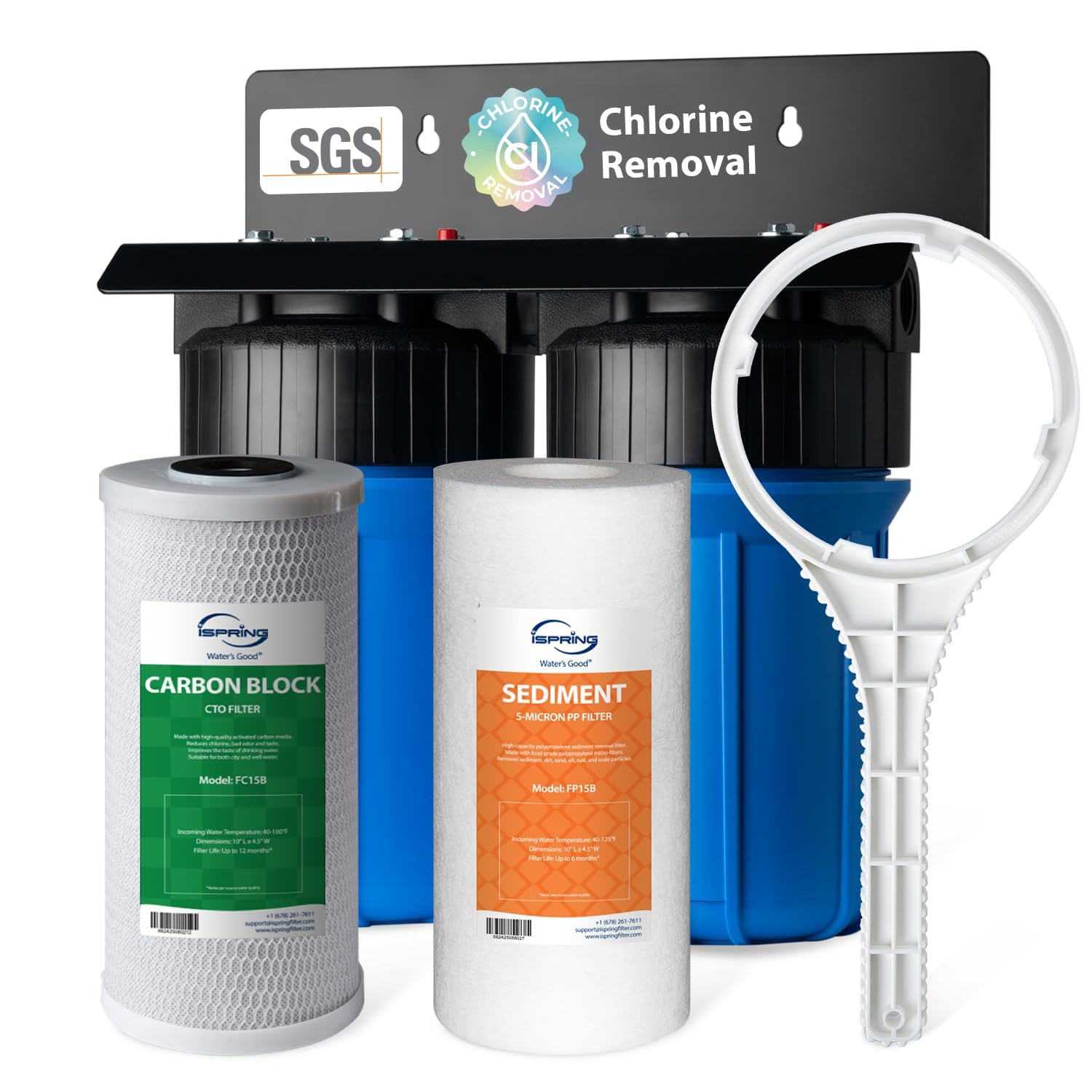
The iSpring WGB21B is a point-of-entry two-stage whole-house filter built to treat city water before it reaches faucets and appliances. It pairs a 5-micron polypropylene sediment cartridge with a coconut-shell carbon CTO block to capture sand, rust, and larger particles first, then reduce chlorine, VOCs, and taste and odor issues. The system is preassembled on a mounting bracket, includes a filter wrench and pressure-relief valve, and fits standard 1-inch inlet/outlet plumbing for straightforward DIY installation or quick handoff to a plumber. It supports high flow rates up to 15 gpm and a service life rated up to 50,000 gallons or roughly 12 months under typical household use, which keeps maintenance simple. The housings are made from durable materials and the design does not require power, so it runs continuously without adding complexity. Limitations are that it does not lower TDS or remove dissolved minerals and it is focused on sediment and chlorine-type contaminants only, so buyers wanting softening or RO-level purity will need additional systems.
Best for: Homeowners on municipal water who want a reliable, low-maintenance POE filter to remove sediment and chlorine and protect plumbing and appliances without adding powered equipment.
Less Ideal for: Homes needing hardness reduction, TDS lowering, or near-complete contaminant removal should consider adding a softener or RO system instead.
- Two-stage setup with sediment then carbon CTO targets both particles and chlorine/taste issues
- Preassembled mounting bracket, filter wrench, and pressure-relief valve simplify DIY installation and servicing
- High flow capacity with 1" inlet/outlet and up to 15 gpm to avoid noticeable pressure loss
- Long-rated capacity up to 50,000 gallons or about 12 months between changes under normal use
- Does not reduce total dissolved solids or perform softening
- Filter replacement required roughly annually depending on water quality
Verdict: A straightforward, factory-quality two-stage whole-house filter that reliably removes sediment and chlorine for city water with minimal maintenance.
ZeroWater 5-Stage Replacement Filter 2-Pack

| Unit Count | 2 Count |
|---|---|
| Model Number | ZR-017 |
| Included Components | 2 ZeroWater Replacement Filters |
| External Testing Certification | IAPMO, ANSI |
These ZeroWater replacement filters use a 5-stage ion-exchange system to strip out total dissolved solids and reduce contaminants like lead, PFOA/PFOS and mercury, which is useful for improving taste and safety on treated city water. They are sold as a two-pack and fit a range of ZeroWater and Culligan pitcher models, making swaps straightforward for households that already use those pitchers. The filters are IAPMO certified for reduction of specific contaminants and are made from BPA-free plastic, and the listing notes an estimated 15-gallon life per filter that will vary with local water quality. Practical benefits include noticeably clearer tasting water and the ability to verify replacement timing by monitoring a TDS meter, but expect recurring expense and the need to change filters more often in harder or heavily mineralized water. Installation is simple and the filters are widely compatible with the brand's pitcher lineup, though buyers should confirm model fit before purchasing.
Best for: Homebuyers who prioritize independently certified contaminant reduction and clear social-proof results and who already use or plan to use a ZeroWater/Culligan pitcher for treating city tap water.
Less Ideal for: People looking for a long-life or whole-house filtration solution or those who need a filter that treats very high flow or whole-home plumbing without frequent replacements.
- 5-stage ion exchange filtration reduces TDS and chemicals such as PFOA/PFOS, lead, and mercury
- IAPMO certified reductions for listed contaminants
- Sold as a two-pack for easier scheduling of replacements
- BPA-free construction and compatibility with many ZeroWater/Culligan pitchers
- Estimated 15-gallon life per filter can be short depending on city water quality
- Ongoing replacement cost compared with long-life or whole-house systems
Verdict: Choose this two-pack if you want IAPMO-certified, pitcher-level removal of dissolved solids and contaminants for safer, better-tasting city tap water.
SimPure DB20P Whole House Filter Housing

| Inlet / Outlet | 1" NPT Brass Port |
|---|---|
| Compatible Filter | Fits 4.5" x 20" cartridges |
| Maximum Flow Rate | 20 gpm |
| Working Water Temperature | 41-104 °F |
The SimPure DB20P is a single-stage whole-house filter housing intended as a pre-filter for city or well water systems. It accepts standard 4.5" x 20" cartridges so you can choose sediment, granular activated carbon, or CTO filters depending on your water concerns. The housing is molded from reinforced, food-grade polypropylene and uses a 1" NPT brass inlet and outlet to support up to 20 gpm flow, which is adequate for most household demands. Installation is straightforward for a DIYer: the kit includes a mounting bracket, screws, and a wrench, and the built-in red pressure-relief button makes cartridge changes easier. Practical benefits include protecting downstream appliances and plumbing from sand and sediment and improving taste and chlorine odor when paired with carbon cartridges. Limitations to note are that cartridges are sold separately and the housing requires enough clearance for a 20" filter during replacement; also it is a single-stage housing, so complex contaminant removal will need additional stages or specialized cartridges.
Best for: Homeowners who want a reliable, factory-quality pre-filter to protect plumbing and appliances and who prefer a straightforward, serviceable single-stage housing for city or well water.
Less Ideal for: People seeking multi-stage contaminant removal or a complete drinking-water treatment system in one unit should consider multi-stage systems instead.
- Fits universal 4.5" x 20" cartridges so you can pick sediment or carbon media
- 1" NPT brass inlet/outlet and rated to 20 gpm for robust household flow
- Reinforced food-grade polypropylene housing resists chemicals and impact
- Includes mounting bracket, wrench, screws, and a pressure-relief button for easier cartridge changes
- Cartridges and push fittings are not included, adding to total cost
- Large 20" cartridge size requires ample installation clearance for replacement
Verdict: A durable, easy-to-service 20" housing that provides reliable pre-filtration and appliance protection for city water when paired with the appropriate sediment or carbon cartridge.
Choosing the Right Water Filter for City Water: Key Factors to Consider
Filtration Technology and Target Contaminants
Different filter technologies address different contaminants. Activated carbon excels at removing chlorine, taste, and odor, and reduces many organic chemicals. Reverse osmosis units remove dissolved solids, lead, and many other contaminants but also slow water delivery and waste some water. Ceramic and composite filters are effective for particulate reduction and can block microbial matter when specifically rated.
Matching the technology to the specific municipal contaminants you want to reduce is essential. For instance, if chlorine taste is your main concern, a carbon-based filter is often sufficient. If lead or heavy metals are present, choose a system with certified reduction for those elements. Check independent test data or certification claims to understand what each filter will actually remove from city-treated water.
Flow Rate, Capacity, and Household Needs
Flow rate determines how quickly filtered water is available and whether the system can serve multiple uses simultaneously. Countertop and faucet-mounted filters typically support single-point use with modest flow, suitable for drinking and cooking. Under-sink and whole-sink systems can supply higher flow for a single fixture, and point-of-entry systems are designed to handle whole-house needs but are generally larger and costlier to operate.
Filter capacity affects replacement frequency and running costs. Higher-capacity cartridges last longer between changes but may be larger or slower. Consider how many people live in the home and how much filtered water you use daily to choose an appropriate capacity that balances convenience and long-term maintenance cost.
Installation Type and Plumbing Compatibility
Installation options range from simple countertop or faucet-mounted attachments to under-sink or inline systems that tie directly into cold-water plumbing. Faucet and countertop models are easiest to install and remove without tools, while under-sink units usually require basic plumbing work such as installing a dedicated faucet, saddle valves, or using quick-connect fittings.
Think about whether you are comfortable with a do-it-yourself install or will need a plumber. Also check the required clearance under the sink, whether the unit needs a drain line, and if the system is compatible with your existing faucet and water pressure. Some homes with modern or nonstandard plumbing may need additional adapters or professional installation.
Maintenance, Filter Replacement, and Operating Cost
All filters require periodic cartridge or membrane replacement. The cadence ranges from a few months for small carbon cartridges to years for larger under-sink filters or membranes, depending on usage and incoming water quality. Replacement frequency directly affects lifetime cost and convenience.
Consider how easy the cartridges are to access and change, whether replacements are widely available, and what the typical cost per replacement is. Systems with user-friendly twist-off housings or no-tool cartridges reduce maintenance hassle. Also account for any annual sanitizing or prefilter changes that some systems require to maintain performance and warranty compliance.
Certifications, Testing, and Performance Claims
Independent testing and third-party certifications provide verification that a filter performs as claimed. Certifications to look for include those that test for specific contaminant reduction such as lead, chlorine, or VOCs. Certification bodies test products under controlled conditions to validate manufacturer claims.
When evaluating options, prefer systems with clear performance data and certification documentation. If a system lacks third-party verification, scrutinize the manufacturer's test conditions and look for user reports about real-world effectiveness. Certification can be especially important if you have specific health concerns tied to certain contaminants.
Space, Aesthetics, and Noise
Where the filter will live affects which type you choose. Countertop units occupy visible counter space, while under-sink units are hidden but require under-sink clearance. Whole-house systems are larger and may need a garage or utility area. Noise is another practical factor; some systems, particularly those with pumps or RO units draining to waste, produce audible sounds during operation.
Consider the visual impact, whether you need the system to be concealed, and whether you prefer a quiet, unobtrusive solution. Also account for the access space needed to change cartridges comfortably and any additional hardware like a dedicated faucet or pressure regulator that might alter the look of your sink area.
Countertop and Faucet-Mounted Options
Countertop and faucet-mounted filters are the simplest way to improve drinking water from a single tap. They usually require no permanent installation and are good choices for renters or anyone who wants a quick, reversible upgrade.
These units are typically carbon-based and effective at removing chlorine taste and many organic compounds. They are useful when you need a low-commitment solution that is easy to install and maintain, though they may not handle heavy metal removal as thoroughly as under-sink or RO systems.
- Quick setup with no plumbing changes
- Best for single-tap drinking and cooking use
- Lower capacity and flow compared with installed systems
Under-Sink Systems for Daily Convenience
Under-sink filters provide a dedicated source of filtered water at the kitchen sink and strike a balance between performance and discretion. These systems are commonly installed under the sink with a separate faucet or integrated into an existing faucet with the right fittings.
They can offer multi-stage filtration and higher capacity than countertop units, making them a good fit for families who want continuous access to filtered water without losing counter space.
- Higher capacity and filtration options
- Concealed installation with dedicated faucet
- May require basic plumbing work to install
Reverse Osmosis and High-Reduction Choices
Reverse osmosis systems deliver high contaminant reduction for dissolved solids, lead, and certain other impurities. They typically include prefilters and postfilters to protect the membrane and improve taste, and they are best when you need thorough reduction of dissolved contaminants.
Consider the tradeoffs: RO systems produce filtered water more slowly, use a storage tank, and waste a portion of feed water during the process. They are a strong choice when incoming municipal water shows contaminants that simpler carbon filters will not address.
- Very high reduction of dissolved contaminants
- Lower usable flow and some water waste
- Often includes multiple filter stages
Point-of-Entry and Whole-House Options
Whole-house or point-of-entry filters treat water as it enters the home, protecting all fixtures and appliances from chlorine, sediment, and other bulk contaminants. These systems are useful when you want consistent water quality throughout the house, not just at a single tap.
They are larger and usually installed by a professional. For municipal water, whole-house systems are often focused on sediment removal and chlorine control rather than fine removal of dissolved metals, which is typically handled at the point of use.
- Treats water for all fixtures and appliances
- Requires larger footprint and professional installation
- Best for sediment control and whole-house taste improvements
Measuring and Testing Your City Water
Before committing to a system, test your municipal supply to identify chlorine levels, lead presence, or other specific concerns. Your water supplier may publish an annual water quality report that lists detected contaminants and their concentrations, which is a useful starting point.
If the report identifies a contaminant of concern or if you notice tastes or odors, consider a targeted test kit or lab analysis. Accurate knowledge of your water quality helps you choose a technology that addresses the real issues rather than guessing.
- Check municipal water quality reports
- Use targeted test kits or lab tests for specific concerns
- Match treatment technology to tested contaminants
Practical Tips for Installation and Upkeep
Plan for convenient access to cartridges and routine maintenance. Keep a spare set of replacement filters on hand to avoid downtime, and set reminders for scheduled changes based on the manufacturer's rated capacity and your daily usage.
When installing, verify cold-water connections and pressure ratings. If you are unsure about the plumbing steps, hiring a professional can prevent leaks and maintain warranty coverage. Small adjustments like adding a prefilter for high-sediment areas can prolong cartridge life and save money over time.
- Store replacement cartridges and set maintenance reminders
- Verify plumbing compatibility and pressure ratings
- Consider prefilters in high-sediment situations
How We Chose the Best Water Filter for City Water
We evaluated systems based on criteria that matter most to homeowners using municipal water. Filtration capability was assessed by the range of contaminants each technology can address, including chlorine taste and odor, lead, volatile organic compounds, and common disinfection byproducts. Flow and capacity were examined to ensure systems supply adequate water for typical household use without excess pressure loss or frequent cartridge changes. Installation and compatibility covered how the system connects to common household plumbing, whether a countertop, under-sink, or whole-sink solution, and the tools or professional help typically needed. Maintenance and operating cost measured cartridge life, ease of replacement, and availability of parts. Build quality and warranty considerations were used to judge long-term reliability and manufacturer support. We excluded systems designed specifically for private wells, untreated source water, or industrial applications because their design targets different contaminants and flow requirements. Products that lacked transparent performance data or clear maintenance specifications were not included. These filters made the list because they balance measurable contaminant reduction, practical installation for city water setups, predictable upkeep, and solid documentation.
Our full evaluation process is outlined in our review methodology.
FAQ
Do I need a water filter if I have city water?
Often city water is treated and safe, but filters can remove tastes, odors, and specific contaminants like lead or VOCs that may still be present. Whether you need one depends on your water report, personal sensitivity to chlorine, and taste preferences.
How often should I replace filter cartridges for city water?
Replacement frequency depends on system capacity, daily use, and incoming water quality. Small faucet or countertop cartridges may need changing every 2 to 6 months, while under-sink cartridges and membranes can last 6 months to several years. Follow manufacturer guidelines and watch for flow reduction or taste changes.
Will a point-of-use filter protect my whole house?
No. Point-of-use systems treat water at a single faucet and do not protect other fixtures. Whole-house or point-of-entry filters are required to treat water for the entire plumbing system and appliances.
Are certifications important when choosing a filter for city water?
Yes. Third-party certifications verify specific contaminant reductions and give confidence the system performs as claimed. Look for certifications that match the contaminants you need to address, such as lead or chlorine reduction.
Can I install an under-sink filter myself?
Many under-sink units are designed for DIY installation with basic tools, quick-connect fittings, and clear instructions. However, if your plumbing is nonstandard or you are uncomfortable with the steps, a plumber can ensure a leak-free, code-compliant installation.
Final Verdict
Choosing the right water filter for city water comes down to matching the technology to the contaminants you want to reduce, the installation you are willing to do, and your tolerance for routine maintenance. For simple taste and odor issues, carbon-based countertop or faucet filters deliver convenience and low upkeep. If your water report shows dissolved metals or other persistent contaminants, consider higher-reduction systems like reverse osmosis or a targeted under-sink solution. Balance flow needs, cartridge life, and long-term operating cost against installation complexity. Prioritize verified contaminant reduction and accessible maintenance to ensure the system continues to perform reliably. With the right priorities, you can confidently select a filter that improves tap water quality and fits your household routine.