
Note: This article contains affiliate links. If you click on these links and make a purchase, we may earn a small commission at no extra cost to you. This helps support our research and content. Read our full affiliate disclosure here.
Choosing the right water filter for home use makes a practical difference in taste, safety, and the cost of keeping potable water on hand. Whether your priority is removing chlorine and taste issues, reducing lead and heavy metals, or improving overall water clarity, the right filter changes daily routines and lowers dependence on bottled water. This guide shortlists seven top water filters for home use across common household setups and explains the tradeoffs you should expect. Below you will find our top picks followed by clear evaluation criteria and buying guidance to help you match a filter to your plumbing, water quality concerns, and maintenance preferences.
Top Picks at a Glance
| Best Overall The best all-around choice for most situations | APEC Water ROES-50 Reverse Osmosis |  |
| Best Quality Built to a higher standard if you want something more solid | iSpring RCC7AK-BN 75 GPD RO System |  |
| Best Value The sweet spot between price and what you get | Waterdrop WD-10UA Under Sink Filter | 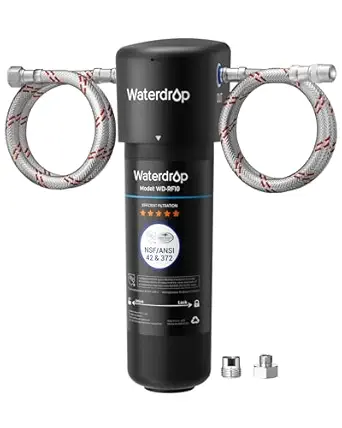 |
| Best Budget The cheapest option that still gets the job done reliably | Waterdrop PT-05B-L Pitcher | 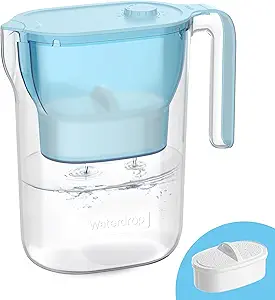 |
| Top Rated A top-rated pick with lots of positive feedback | Brita Large 10-Cup Pitcher |  |
| Most Popular A crowd favorite that many people choose with confidence | Brita Metro 6-Cup Pitcher |  |
| Best Seller A high-volume bestseller chosen again and again | DREO RO Countertop Water Filter 5L |  |
APEC Water ROES-50 Reverse Osmosis

| Purification Method | Reverse Osmosis |
|---|---|
| Filtration Stages | 5-Stage |
| Capacity | 50 gallons per day |
| Operating Pressure Range | 40-85 psi |
| Supported Water TDS Level Maximum (PPM) | 2000 |
The APEC ROES-50 is a five-stage under-sink reverse osmosis system designed to deliver very low-TDS drinking water for a typical household. It installs under the sink and comes with a dedicated faucet, storage tank, and an installation kit with quick-connect fittings and color-coded tubing, which makes DIY setup straightforward for someone comfortable with basic plumbing. The system uses prefilters to protect the RO membrane, a high-efficiency membrane to remove dissolved solids, and post-filtration to improve taste and odor, with replacement intervals ranging from about 6 to 24 months depending on water quality. It is WQA/NSF-certified for broad contaminant reduction and can handle source water TDS up to 2000 ppm while operating in typical household pressure and temperature ranges. Expect very pure water and steady flow from the tank, but note the system produces wastewater during RO processing and requires periodic filter changes and space under the sink for the unit and tank.
Best for: Buyers who want a reliable, proven under-sink solution that prioritizes very low TDS and comprehensive contaminant removal while being able to handle routine filter maintenance and allocate under-sink space.
Less Ideal for: People who need a zero-install countertop option, those with extremely low water pressure without a booster pump, or users unwilling to perform periodic filter replacements and manage RO wastewater.
- Comprehensive 5-stage filtration that removes a wide range of contaminants including heavy metals and chlorine
- Includes tank, brushed-nickel faucet, and installation kit for a complete under-sink setup
- DIY-friendly quick-connect fittings and color-coded tubing simplify installation and service
- Certified construction and tested performance provide verified contaminant rejection
- Filter life optimized to protect the membrane, with prefilters and longer-lived membrane/post-filter intervals
- Produces wastewater as part of the reverse osmosis process
- Requires dedicated under-sink space for the system and storage tank
- Filters and membrane require periodic replacement based on incoming water quality
Verdict: Choose the APEC ROES-50 if you want a certified, complete under-sink RO system that reliably delivers very low-TDS drinking water for everyday home use.
iSpring RCC7AK-BN 75 GPD RO System

| Purification Method | Reverse Osmosis, Alkaline, Activated Carbon, Carbon block |
|---|---|
| Power Source | No Power Needed |
| Maximum Flow Rate | 284 liters_per_day |
| Operating Pressure Range | 70 psi |
| Filter Life Cycle | 6 months |
The iSpring RCC7AK-BN is a six-stage under-sink reverse osmosis system designed to remove a wide range of contaminants while adding minerals back for higher pH drinking water. It installs under a kitchen sink and uses sediment, carbon, RO membrane, and a mineral remineralization stage to reduce TDS, heavy metals, PFAS, chlorine and more, then stores treated water in the included tank for on-demand use. Notable conveniences include a transparent first-stage housing for visual filter checks, push-to-connect fittings and color-coded tubing to simplify DIY installation, and a patented top-mounted faucet fastener that makes countertop faucet mounting easier. The system is NSF/ANSI 58 certified for the full system, and it operates without electricity, so it works reliably during outages. Maintenance requires periodic filter changes on the multi-stage cartridges and replacement membrane schedule, and the unit's physical footprint and storage tank need under-sink space; throughput is limited by the RO membrane rate and tank capacity rather than instant flow. Overall, it is a high-performance home RO setup for buyers who prioritize certified contaminant removal and mineral-balanced water.
Best for: Buyers who prioritize verified, high contaminant-removal performance and want mineral-balanced drinking water from a hard-working under-sink system they can install and maintain themselves.
Less Ideal for: People with very limited under-sink space or who need instantaneous continuous high flow without a storage tank should consider alternative filtration types.
- NSF/ANSI 58 full-system certification for verified contaminant reduction
- Six-stage filtration with alkaline remineralization for balanced, higher-pH water
- Operates without electricity so it works during power outages
- Transparent first-stage housing makes visual monitoring of sediment easy
- Push-to-connect fittings and top-mounted faucet design simplify DIY installation
- Requires regular filter and membrane replacements on a set schedule
- Needs sufficient under-sink space for the system and storage tank
Verdict: Choose this system when you want a certified, high-performance under-sink RO that removes a broad range of contaminants while returning healthy minerals and operating without electricity.
Waterdrop WD-10UA Under Sink Filter

| Purification Method | Activated Carbon |
|---|---|
| Maximum Flow Rate | 2.5 gpm |
| Filter Life Cycle | 1 years |
| Supported Water TDS Level Maximum (PPM) | 700 |
| Capacity | 11000 gallons |
The Waterdrop WD-10UA is an under-sink activated carbon filter system meant for municipal cold water that installs with push-to-connect fittings and a twist-and-lock cartridge for tool-free changes. It is typically mounted under the counter and connects to standard 3/8" or 1/2" cold-water feeds using the included adaptor, delivering filtered water for drinking, cooking, and general kitchen use. Notable features include NSF/ANSI 42 certification for chlorine and taste reduction, an expanded filtration area to reduce clogging risk, and compatibility with several replacement filters for different performance needs. The manufacturer rates the cartridge life at about 12 months with municipal water and claims a tested flow near 0.75 gpm (with an upgraded 3/8" outlet supporting higher flow). Practical benefits are clear: compact footprint that fits leased or small cabinets, straightforward installation without drilling, and long advertised service life that keeps maintenance infrequent. Limitations are that it is for cold municipal water only, not rated for well or hot water, and finer contaminant removal (for example microbial reduction) requires different filter upgrades that are sold separately.
Best for: Buyers who prioritize an easy-to-install, low-maintenance under-sink filter that improves tap taste and removes common chemical contaminants for everyday kitchen use.
Less Ideal for: Homes on private well water, buyers needing hot-water filtration, or those who require certified microbe/virus removal out of the box should look elsewhere.
- NSF/ANSI 42 certified for chlorine, taste and odor reduction
- Tool-free twist-and-lock cartridge and push-to-connect fittings for fast installation and quick replacements
- Long advertised cartridge life of up to 12 months with municipal water
- Compact design fits under most sinks and includes fittings for 3/8" and 1/2" connections
- Higher filtration surface area intended to reduce clogging and maintain flow
- Designed for cold municipal water only and not suitable for well or hot water
- Does not provide ultra-fine or microbial filtration without purchasing compatible upgraded filters separately
Verdict: A compact, NSF-certified under-sink filter that delivers easy installation and year-long cartridge life for practical, low-maintenance home water improvement.
Waterdrop PT-05B-L Pitcher

| Capacity | 7-Cup |
|---|---|
| Filter life | Up to 200 gallons / 3 months |
| Certifications | NSF/ANSI 42, 372 |
| Material Type | BPA-free, lead-free |
The Waterdrop PT-05B-L is a compact countertop water filter pitcher that uses an activated carbon fiber filter to reduce chlorine, PFOA/PFOS and dozens of other common contaminants to improve taste and odor. You fill the top reservoir and filtered water collects in the 7-cup pitcher; the included filter is rated for up to 200 gallons or about three months under typical use, and the lid has a mechanical dial to track filter lifespan. Because it is NSF 42 and 372 certified, the pitcher offers verified reduction of chlorine and certain heavy metals and organic contaminants, and the filter life claim helps lower replacement frequency and plastic-bottle waste. The pitcher is made from BPA-free, lead-free plastic and is ergonomically shaped for everyday use, but it does not reduce total dissolved solids so it will not soften very hard, mineral-heavy water. For buyers who want reliable, budget-friendly taste improvement and a long-life cartridge, this is a convenient, low-maintenance option; if you need TDS reduction or advanced mineral removal, consider other systems instead.
Best for: A practical buyer seeking an affordable, certified pitcher filter that noticeably improves taste and cuts bottled-water waste without frequent cartridge swaps.
Less Ideal for: People who need significant TDS reduction, softening, or advanced mineral removal for brewing, aquarium use, or very hard water should choose a different filtration type.
- NSF/ANSI 42 and 372 certifications for verified chlorine and lead reduction
- Long filter life up to 200 gallons or roughly 3 months reduces replacement frequency
- Compact 7-cup pitcher fits in most fridge doors and is easy to handle
- BPA-free, lead-free construction and simple mechanical life indicator for filter changes
- Does not lower total dissolved solids (TDS), so it will not remove dissolved minerals or soften hard water
Verdict: Pick this Waterdrop pitcher if you want an inexpensive, NSF-certified pitcher that reliably improves taste and lasts longer between filter changes.
Brita Large 10-Cup Pitcher

| Capacity | 10 ounces |
|---|---|
| Purification Method | Granular Activated Carbon |
| Filter Life Cycle | 2 months |
| Supported Water TDS Level Maximum (PPM) | 500 |
| Power Source | Manual |
The Brita Large 10-Cup Pitcher is a simple, manual pitcher-style water filter designed for everyday home use. Water passes through a Brita Plus filter that combines activated carbon and ion-exchange media to reduce chlorine taste and odor and certified reductions for copper, cadmium and mercury, and the flip-top lid makes refilling quick without removing the reservoir. It comes with one filter rated for about 40 gallons or roughly two months of typical household use, and the pitcher fits easily on refrigerator shelves so you can store chilled filtered water. This model is straightforward to set up and maintain; replace filters on schedule and flush new cartridges before first use to avoid carbon dust in early pitchers. Limitations are inherent to pitcher filters: it does not remove microbiological contaminants and its flow rate is constrained by gravity so filling takes time compared with faucet or under-sink systems. For routine tap-water improvement and lower-cost bottled water replacement, it is a reliable, low-effort option.
Best for: Buyers who prioritize a dependable, low-maintenance way to improve tap water taste and reduce common chemical contaminants for everyday drinking and cooking.
Less Ideal for: Homes that need filtration for microbiological safety, very high daily filtered-water demand, or faster plumbed dispensing should consider other system types.
- Certified to reduce chlorine taste and odor and select heavy metals (copper, cadmium, mercury)
- Compact 10-cup capacity that fits on most refrigerator shelves
- Flip-top lid for easy one-handed refills
- Includes one replaceable filter rated for about 40 gallons or 2 months
- Does not remove microbiological contaminants and is not a purifier
- Slower fill and filtration speed compared with plumbed systems
Verdict: A practical, fridge-friendly pitcher that reliably improves tap water taste and reduces select metals for everyday home use.
Brita Metro 6-Cup Pitcher

| Filter Life Cycle | 2 months |
|---|---|
| Maximum Flow Rate | 9.7 milliliters_per_second |
| Supported Water TDS Level Maximum (PPM) | 500 |
| Upper Temperature Rating | 85 °F |
The Brita Metro 6-cup pitcher is a small, fridge-friendly filter pitcher designed for everyday tap water improvement. It uses a Standard Brita filter (included) that is WQA and NSF/ANSI certified to reduce chlorine taste and odor as well as copper, mercury, and cadmium, and the SmartLight filter indicator tracks filter life so you know when to replace it (about 40 gallons or two months). The easy-fill lid and space-saving shape let it fit in most fridge doors and mini-fridges, making it a convenient option for dorms, small households, or anyone who wants filtered water on demand without plumbing changes. Practical benefits include lower single-use plastic waste and simple maintenance, and the pitcher works with Brita Standard and Elite filters for different replacement intervals. Limitations are inherent to pitcher systems: flow and fill rate are modest, capacity is limited to about six cups so frequent refills may be needed for larger households, and it does not remove all contaminants that more advanced systems target.
Best for: Buyers who want an affordable, space-saving way to improve tap water taste and reduce some contaminants without installing equipment, and who prioritize proven certifications and broad customer adoption.
Less Ideal for: Households needing whole-home or point-of-use removal of a wide range of contaminants or higher daily filtered volumes should consider under-sink or countertop filtration systems instead.
- WQA and NSF/ANSI certified to reduce chlorine taste and odor plus select heavy metals
- SmartLight indicator gives an accurate reminder to replace the filter
- Compact, fridge-friendly design with an easy-fill lid
- Standard filter compatibility lets you choose longer-life Elite filters
- Only a 6-cup capacity, requiring frequent refills for larger households
- Slower fill and pour speed compared with plumbed or pitcherless systems
Verdict: A compact, certified pitcher that delivers noticeably better-tasting tap water with a reliable filter indicator, ideal for small households and fridge storage.
DREO RO Countertop Water Filter 5L

| Purification Method | Reverse Osmosis |
|---|---|
| Capacity | 5 liters |
| Pure to Drain Rate | 3:1 |
| Included Components | RO Filter and 2 Autofill Water Pitchers |
| Other Features | Built In TDS Meter, Change Filter Indicator, Touch Control |
The DREO countertop RO system delivers multi-stage purification in a compact, install-free package for households that want bottled-water quality without plumbing changes. It uses a 7-stage RO filter and reports real-time TDS for both feed and purified water, so you can monitor water quality and get filter change reminders. Two auto-fill pitchers let one stay ready while the other refills automatically, and the unit's self-cleaning flush helps reduce internal buildup. The system is designed for daily use by 3 to 4 people with a 5L tank and a 3:1 pure-to-drain ratio that limits waste compared with traditional RO units. Setup is simple—place on the counter and plug in—and filter replacement is a twist-to-install cartridge. Important limitations are the countertop footprint and the 3:1 drain ratio, which still uses some water during production of purified water, and the filter's stated service life of about 265 gallons for the RO cartridge requires periodic replacement for consistent performance.
Best for: Buyers who prioritize reliable, lab-tested purification and simple, low-risk ownership will appreciate this ready-to-use countertop RO for everyday drinking water without plumbing changes.
Less Ideal for: Homes that need whole-house or high-volume point-of-use treatment, or those with very limited counter space, should consider other options.
- 7-stage reverse osmosis purification removes a wide range of impurities and includes a built-in TDS meter for real-time water quality checks
- Auto-fill dual-pitcher system provides hands-free refills and a grab-and-go pitcher for convenience
- Self-cleaning auto-flush reduces internal buildup and maintenance needs
- Compact, install-free countertop design requires no plumbing and is quick to set up
- Twist-to-install filter replacement makes servicing straightforward
- Produces wastewater at a 3:1 pure-to-drain ratio, so it still consumes extra water during filtration
- Filter life for the RO cartridge is limited to around 265 gallons, requiring regular replacement
Verdict: A compact, install-free countertop RO system for buyers who want measurable, high-quality drinking water with easy monitoring and low-effort maintenance.
Choosing the Right Water Filter for Home Use: Key Factors to Consider
Contaminants Removed
Different filters target different contaminants. Carbon filters are effective at improving taste and removing chlorine, while reverse osmosis and specialized media address dissolved solids, heavy metals, and some chemicals. Knowing which contaminants are present in your water supply guides your choice.
Start by checking a recent water quality report for municipal supplies or a lab test for private wells. Prioritize filters that list reduction capabilities for the specific contaminants you want to address, rather than buying a general-purpose unit that may miss the most important issues.
System Type and Household Fit
Water filters for home use come in several configurations: pitcher or countertop, under-sink, faucet-mount, whole-house, and point-of-entry systems. Each has tradeoffs in capacity, coverage, and installation complexity. Pitchers and countertop units are simple but limited in volume and filtration scope. Under-sink units serve a single faucet with higher performance without altering whole-house plumbing. Whole-house systems treat all incoming water but are larger and costlier.
Consider how many people live in the house, what taps you need treated, and whether you want treated water for showers and laundry in addition to drinking and cooking. Choose a system type that matches both your daily water usage and your willingness to install or maintain the unit.
Flow Rate and Daily Capacity
A filter's flow rate and capacity determine how much treated water is available during busy periods. Low flow can be frustrating at the kitchen sink and may not meet household needs for cooking or filling containers. Capacity, often listed as gallons per cartridge, affects how often cartridges must be changed.
Match the rated flow and capacity to your household size. For larger families or frequent heavy use, prefer higher-capacity cartridges or systems with larger storage tanks to avoid frequent downtime or slow dispensing.
Installation and Plumbing Requirements
Some home water filters install in minutes with no tools, while others require drilling or modifications to under-sink plumbing. Think about access to the installation point, whether you have a dedicated cold-water line, and whether you are comfortable with basic plumbing tasks or will hire help.
Also consider whether the system needs electricity or a drain connection. Units requiring a drain or power may add complexity and constraints on placement. Simpler, tool-free installations reduce upfront hassle and can be swapped between homes more easily.
Maintenance Frequency and Filter Availability
Filter replacement intervals vary widely from a few months to multiple years depending on cartridge type and local water conditions. Frequent replacements increase long-term costs and require planning so you do not run without treated water. Look for filters with clearly stated life estimates and easily sourced replacement cartridges.
Assess how easy it is to replace cartridges. Twist-and-lock or push-fit designs are faster and cleaner than systems requiring tool removal. Consider subscription options or local availability of replacement parts to avoid service gaps.
Health and Materials Safety
Materials in contact with drinking water should be certified for potable use and free of leachable contaminants. ABS, polypropylene, and stainless steel are common safe materials, but check certifications and claims. Also evaluate whether the system has third-party testing to back up reduction claims.
For households with infants, immunocompromised members, or specific health concerns, prioritize systems that are tested to relevant standards and that document which contaminants they reliably reduce.
Understanding Your Water Source
Before choosing a water filter for home use, identify whether your water comes from a municipal supplier or a private well. Municipal supplies typically disclose a water quality report annually that lists standard contaminants. Well water can have very different issues, including bacteria, nitrates, and higher mineral content, so testing is often necessary.
A targeted approach saves money and maintenance efforts. If your main problem is taste and chlorine, a simple carbon-based option may suffice. If testing shows heavy metals or high dissolved solids, consider media or membrane systems designed to address those specific concerns.
- Request or download the annual water quality report for municipal systems
- Get a certified lab test for private wells
- Match filter capabilities to identified contaminants
Common Filter Technologies and What They Do
Carbon adsorption removes chlorine, many organic compounds, and improves taste and odor. It does not remove dissolved salts or most heavy metals without specialized media. Reverse osmosis membranes reduce a wide range of dissolved solids and many contaminants but require storage tanks and a drain line.
Ceramic filters block particulates and many microbes, while ion-exchange resins target hardness and specific ions. Combination systems layer technologies to address broader contaminant lists. Choosing the right technology depends on the contaminants identified and how much treatment you need at each tap.
- Carbon filters: taste, odor, chlorine
- Reverse osmosis: dissolved solids, many contaminants
- Ceramic: particulates and microbes
- Ion-exchange: hardness and targeted ions
Sizing and Placement Considerations
Decide which taps need treated water. A single under-sink or faucet-mounted option is sufficient for drinking and cooking, while whole-house systems treat every outlet but are larger and more complex. Also consider space constraints under sinks, access to cold-water lines, and whether you need a dedicated faucet.
If you plan to treat only drinking water, point-of-use systems are usually the most cost-effective. For broader concerns like sediment protecting appliances, pre-filters or point-of-entry systems are more appropriate.
- Point-of-use for drinking and cooking
- Point-of-entry for whole-house protection
- Check under-sink clearance and line access before buying
Installation Tips for Homeowners
Read the installation instructions fully before purchasing. Measure clearances and identify the cold-water shutoff valve. For under-sink installs, you may need a saddle valve, tee fitting, or a dedicated inlet. Countertop and pitcher units usually require no plumbing changes.
If a unit requires a drain or electricity, plan placement accordingly. Keep spare cartridges on hand so you can swap them promptly when life expectancy is reached.
- Turn off water and relieve pressure before working on fittings
- Use plumber tape on threaded connections
- Have basic tools and a towel handy for potential drips
Maintaining Performance Over Time
Follow the recommended replacement schedule to avoid biological growth and reduced effectiveness. Flushing new cartridges per instructions ensures proper performance. Keep records of replacement dates and set reminders to avoid lapses.
Inspect housings and fittings periodically for leaks or material degradation. Replace seals or cartridges promptly if you notice reduced flow or off flavors returning.
- Mark replacement dates on the calendar
- Flush new cartridges before first use
- Check for leaks after each service
How We Chose the Best Water Filter for Home Use
We selected these water filters for home use using practical, use-centered editorial filters. First, filtration effectiveness was a primary screen: we prioritized systems with verified reduction claims for chlorine taste and odor, particulates, common heavy metals, and volatile organic compounds. Flow rate and capacity were also critical; filters had to deliver usable household water volumes without causing excessive pressure drop. Installation flexibility mattered for real homes, so we favored models that support common setups including under-sink, countertop, and whole-house configurations where applicable. Maintenance burden is a real ownership cost, so we weighed filter life, ease of cartridge replacement, and availability of replacement elements. Build quality and safe materials were considered to ensure long-term durability and food-safe water contact surfaces. We excluded systems that rely on unverified claims, require specialized plumbing beyond typical homeowner abilities, or use materials not rated for potable water. The final list balances measured filtration capability, practical installation, and reasonable upkeep to reflect common buyer priorities.
Our full evaluation process is outlined in our review methodology.
FAQ
How often should I replace a home water filter cartridge?
Replacement frequency depends on cartridge type and household usage. Typical carbon cartridges last three to six months, while some high-capacity or specialty cartridges can last a year or more. Check the manufacturer's life estimate and monitor changes in taste or flow as indicators.
Can a home water filter remove lead and heavy metals?
Some systems and specific media are designed to reduce lead and certain heavy metals. Look for filters with documented reduction claims or third-party testing covering the particular contaminants identified in your water. Not all basic carbon filters will address heavy metals.
Will a water filter affect my water pressure?
Some filters, especially high-restriction membranes or undersized cartridges, can reduce water pressure at the tap. Choose systems rated for household flow rates and consider units with larger housings or built-in storage tanks if pressure or volume is a concern.
Is professional installation necessary for under-sink systems?
Many under-sink filters are designed for DIY installation and include clear fittings. However, if you are uncomfortable working with plumbing, lack needed tools, or the installation requires modifications to supply lines or drain connections, hiring a professional ensures a reliable fit.
Do water filters remove bacteria and viruses?
Most standard carbon and sediment filters do not reliably remove viruses. Some ceramic filters and certified systems can reduce bacteria. For microbiological contamination, choose systems specifically tested and certified for pathogen reduction or use additional disinfection methods.
Final Verdict
Selecting the right water filter for home use depends on knowing your water issues, matching system type to how and where you need treated water, and balancing performance with upkeep. Prioritize filtration effectiveness for the contaminants you face, adequate flow and capacity for daily use, and an installation approach that fits your comfort level. Regular maintenance and timely cartridge replacement keep performance consistent. Focus on the contamination targets, household water demand, and ease of maintenance to choose confidently. With those priorities in mind, you can pick a system that delivers safer, better-tasting water with manageable upkeep.