
Note: This article contains affiliate links. If you click on these links and make a purchase, we may earn a small commission at no extra cost to you. This helps support our research and content. Read our full affiliate disclosure here.
If you are worried about PFAS in your tap water, picking the right water filter matters for health and everyday use. Filters designed to address PFAS vary in how much contamination they remove, how often they need service, and where they install in your home. This guide highlights a curated set of top shortlisted water filters for PFAS and explains the practical tradeoffs buyers face. We evaluate filtration effectiveness, flow and capacity, and upkeep requirements to help you choose a reliable system for clean drinking water. Read on to see the key criteria and practical guidance before the product list.
Top Picks at a Glance
| Best Overall The best all-around choice for most situations | CuZn UC-200 Under Sink Filter |  |
| Best Quality Built to a higher standard if you want something more solid | iSpring RCC7AK-BN 75 GPD RO System |  |
| Best Value The sweet spot between price and what you get | Culligan ZeroWater 32-Cup Dispenser |  |
| Best Budget The cheapest option that still gets the job done reliably | Waterdrop Lucid Pitcher WD-PT-07W |  |
| Top Rated A top-rated pick with lots of positive feedback | Waterdrop WD-10UA Under Sink Filter | 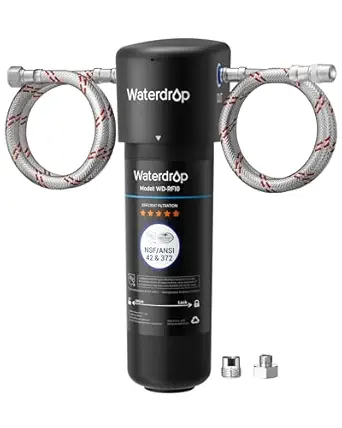 |
| Most Popular A crowd favorite that many people choose with confidence | ZeroWater 22-Cup Ready-Read Dispenser |  |
| Best Seller A high-volume bestseller chosen again and again | PUR PLUS Faucet Filter RF9999 |  |
CuZn UC-200 Under Sink Filter

| Model Number | UC-200 |
|---|---|
| Included Components | Stainless Steel Connection Hose |
| Material Type | NSF Approved Material Components |
| Product Benefits | Removes Lead |
The CuZn UC-200 is an under-sink inline filter designed for point-of-use water improvement with a claimed service life up to five years or 50,000 gallons depending on incoming water. It uses a three-stage blend of micro sediment membrane, KDF-55 media and coconut-shell carbon to cut chlorine, bad tastes and odors, lead, PFAS/PFOS and microplastics while leaving healthy dissolved minerals intact. Installation is straightforward for DIYers: the unit connects directly to a cold-water supply with the included stainless steel connection hose and does not require drilling a new hole for a dedicated faucet. The long lifespan is the UC-200's main practical benefit, reducing replacement frequency and plastic waste compared with cartridge filters that need changing every few months. Limitations to note are that it does not reduce total dissolved solids so it will not produce RO-style low-TDS water, and real-world longevity depends on local water quality so heavy sediment or very hard water may shorten filter life.
Best for: Buyers who want a low-maintenance, long-lasting under-sink filter to improve tap water taste and reduce PFAS and heavy metals without removing beneficial minerals.
Less Ideal for: Homes that need near-total TDS reduction, demineralized drinking water, or point-of-use systems for very high-sediment municipal or well water should consider RO or sediment-prep systems instead.
- Very long rated filter life (up to 5 years or 50,000 gallons) lowers replacement frequency
- Reduces PFAS/PFOS, lead, chlorine, sediment and improves taste without stripping beneficial minerals
- Three-stage media (micro sediment membrane, KDF-55, coconut-shell carbon) addresses a broad range of contaminants
- Simple inline under-sink installation with included stainless steel connection hose
- Does not lower total dissolved solids so it is not a substitute for reverse osmosis
- Actual lifespan will vary with local water quality and may be shorter in high-sediment or very hard water
Verdict: Choose the UC-200 if you want a durable, low-maintenance under-sink filter that reliably reduces PFAS and lead while keeping beneficial minerals.
iSpring RCC7AK-BN 75 GPD RO System

| Purification Method | Reverse Osmosis, Alkaline, Activated Carbon, Carbon block |
|---|---|
| Power Source | No Power Needed |
| Maximum Flow Rate | 284 liters_per_day |
| Operating Pressure Range | 70 psi |
| Filter Life Cycle | 6 months |
The iSpring RCC7AK-BN is a six-stage reverse osmosis system designed for under-sink installation that produces remineralized drinking water without electricity. It uses sediment and carbon prefilters, an RO membrane, and an alkaline post-filter to reduce a wide range of contaminants while adding minerals back for balanced pH. The top-mounted faucet fastening simplifies installation in tight spaces and the transparent first-stage housing makes it easy to see when the sediment filter needs changing. With NSF/ANSI 58 certification for the full system and published removal rates for PFAS, lead, fluoride, chlorine and many other contaminants, this model is strong on contaminant reduction for performance-focused buyers. Routine maintenance involves scheduled filter changes (6-month and longer replacement options) and a storage tank provides ready water on demand, but expect some water waste typical of RO systems and occasional cabinet space required for the tank and filter housings.
Best for: Buyers who prioritize thorough contaminant removal and verified performance and want a factory-certified under-sink system that also restores minerals for better-tasting water.
Less Ideal for: People who need a zero-waste or countertop solution, or those who cannot accommodate under-sink tank and filter housings should consider alternative filter types.
- NSF/ANSI 58 full-system certification for verified RO performance
- High contaminant reduction including PFAS, lead, fluoride, chlorine and more
- Alkaline remineralization stage restores minerals and balances pH
- Top-mounted faucet nut and clear sediment housing simplify installation and maintenance
- Reverse osmosis process produces wastewater and requires periodic filter replacements
- Requires under-sink space for the tank and multi-stage housings
Verdict: Choose the RCC7AK-BN when you want an NSF-certified RO system that demonstrably removes PFAS and heavy metals while returning minerals for better-tasting, performance-grade drinking water.
Culligan ZeroWater 32-Cup Dispenser

| Purification Method | Ion Exchange |
|---|---|
| Capacity | 256 fluid ounces |
| Other Special Features | Built In TDS Meter |
| Container Type | Dispenser |
| Installation Type | Countertop |
The Culligan ZeroWater 32-Cup Dispenser is a countertop pour-through unit that uses a five-stage ion-exchange filtration to strip dissolved solids and contaminants from tap water, and it includes a built-in TDS meter to check water purity. You fill the top reservoir, the filter processes water into the lower dispenser, and the easy-slide lid and pour spout make refills and serving straightforward for daily use. The filter is IAPMO-certified to reduce total PFAS as well as lead, mercury and chlorine, which makes it a practical choice when reducing specific health-risk contaminants is a priority. The large 256-ounce capacity suits families or anyone who prefers fewer refills, and the dispenser is designed to sit on a counter or fit in a fridge. Limitations include the need to replace filters periodically and that these dispensers require space on a countertop or shelf, and the product is not compatible with legacy ZeroWater filters so replacements must match the new Culligan filter type.
Best for: Buyers who prioritize measurable contaminant removal and want a high-capacity, easy-to-use dispenser for daily drinking and cooking water.
Less Ideal for: People who need an ultra-compact single-serve solution or who prefer a filter compatible with legacy ZeroWater cartridges should look elsewhere.
- Certified reduction of Total PFAS, lead, mercury and chlorine
- Built-in TDS meter provides instant, on-device water quality readings
- Large 32-cup (256 fl oz) capacity reduces refill frequency
- Five-stage ion exchange filtration removes high levels of dissolved solids
- Countertop design with easy-slide lid and pour spout for convenient daily use
- Requires periodic filter replacements and matching new Culligan filters
- Takes counter or refrigerator space compared with smaller pitchers
Verdict: Choose this dispenser if you want a large-capacity, certified filtrationsystem that measurably reduces PFAS and other dissolved contaminants while giving instant TDS feedback.
Waterdrop Lucid Pitcher WD-PT-07W

| Capacity | 3.5 liters |
|---|---|
| Filter Life Cycle | 200 gallons / 3 months |
| Purification Method | Activated Carbon, 5-stage |
| Upper Temperature Rating | 1 °C |
The Waterdrop Lucid WD-PT-07W is a compact countertop pitcher that filters tap water through an activated carbon-based 5-stage cartridge rated for about 200 gallons (roughly 3 months). It is used like a typical pour-through pitcher: soak and install the included PF-01A style filter, fill the reservoir, and filtered water dispenses through a hands-free lid that helps keep dust out. The filter carries NSF/ANSI 42 and 372 certifications and is tested to reduce chlorine, PFAS-related compounds like PFOA/PFOS, certain metals and odors, so it noticeably improves coffee and tea taste. Practical perks include a slim shape that fits most fridges, an LED usage indicator for timely replacements, and non-electric operation. Limitations are predictable for a pitcher: it does not lower total dissolved solids, has a modest 10-cup capacity that requires frequent refilling for larger households, and replacement filters are required every few months to maintain performance.
Best for: Buyers wanting an affordable, space-saving pitcher that improves taste and reduces PFAS-related compounds and common contaminants for daily drinking water.
Less Ideal for: Those seeking whole-house treatment, significant TDS reduction, or a high-volume solution for large families should consider larger filtration systems instead.
- NSF/ANSI 42 and 372 certified filtration for chlorine, taste, odor, and certain metals
- Filter life up to 200 gallons (about 3 months) for longer between replacements
- Slim, fridge-friendly pitcher shape with hands-free lid to reduce dust
- LED indicator that tracks filter usage and signals replacement
- Does not reduce total dissolved solids (TDS)
- 10-cup capacity requires frequent refills for multiple users
Verdict: Choose this slim, NSF-certified pitcher if you want an inexpensive, fridge-friendly filter that lowers chlorine, improves taste, and helps reduce PFAS-related contaminants in everyday drinking water.
Waterdrop WD-10UA Under Sink Filter

| Purification Method | Activated Carbon |
|---|---|
| Maximum Flow Rate | 2.5 gpm |
| Filter Life Cycle | 1 years |
| Supported Water TDS Level Maximum (PPM) | 700 |
| Other Special Features of the Product | NSF/ANSI 42&372, PFAS, PFOA/PFOS and Chlorine Reduction |
The Waterdrop WD-10UA is a compact under-sink activated carbon filter intended for municipal cold water use that installs with push-to-connect fittings and a twist-and-lock cartridge for fast, tool-light setup and replacement. It connects to standard 3/8" or 1/2" cold feed lines and supplies steady flow for drinking, cooking, and other kitchen uses while targeting contaminants including PFAS, PFOA/PFOS, lead, chlorine, and bad taste or odor. The cartridge is rated for roughly 12 months of service under typical tap conditions and the system is NSF/ANSI 42 certified, which supports its effectiveness for chlorine and aesthetic improvements. Practical benefits include a small footprint that fits under most cabinets, a claimed increase in filtration area to resist clogging, and compatibility with alternate Waterdrop cartridges for different filtration needs. Limits to consider are that the system is specified only for cold municipal water, is not intended for well or hot water, and it does not advertise submicron mechanical filtration beyond the activated carbon function, so microbial reduction or very fine particulate removal may require an additional stage.
Best for: Buyers who prioritize a reliable, easy-to-install under-sink solution to reduce PFAS, lead, chlorine, and taste issues from municipal tap water and want a low-maintenance one-year cartridge schedule.
Less Ideal for: Homes using well water, users needing hot-water filtration, or those who require submicron microbial or sediment removal without adding extra filtration stages.
- NSF/ANSI 42 certified for chlorine and aesthetic contaminant reduction
- Targets PFAS, PFOA/PFOS, lead, chlorine, and bad taste and odor
- Twist-and-lock cartridge with push-to-connect fittings enables quick installation and fast replacements
- Compact under-sink design with steady flow suitable for drinking and cooking
- Designed only for cold municipal water and not suitable for well or hot water
- Single-stage activated carbon does not provide ultrafine particulate or broad microbial removal
Verdict: Choose the WD-10UA when you want a compact, NSF-certified under-sink carbon filter that reliably reduces PFAS, lead, chlorine, and taste problems with simple installation and annual cartridge changes.
ZeroWater 22-Cup Ready-Read Dispenser

| Capacity | 5.2 liters |
|---|---|
| Purification Method | Ion Exchange |
| Supported Water TDS Level Maximum (PPM) | 1 |
| Included Components | 22-Cup Dispenser, 5-Stage Filter, TDS Meter |
The ZeroWater 22-Cup Ready-Read dispenser is a pour-through countertop pitcher-style system built around a 5-stage ion-exchange filter and a built-in TDS meter that tells you when dissolved solids have been removed. You fill the top reservoir and the filter processes water into the 22-cup lower chamber for dispensing, which makes it suitable for kitchens and small offices. Notable features include the included TDS meter for on-the-spot water quality checks, IAPMO certification for reduction of lead, PFOA/PFOS, chromium and mercury, and an ergonomic handle for everyday use. In practice the system delivers very low TDS readings and noticeably cleaner taste compared with basic carbon pitchers, and the large 22-cup capacity reduces refill frequency. Limitations are that replacement filters are required regularly and filtering is a batch process so you do not get continuous tap-speed output; the product is plastic and countertop-only, so it is not a under-sink or plumbed solution for higher flow needs.
Best for: Buyers who want a demonstrably effective countertop purifier for PFAS and heavy metal reduction and who value an included TDS meter and third-party certification to confirm performance.
Less Ideal for: People who need continuous, high-flow filtration, a plumbed under-sink solution, or a built-in system for whole-kitchen use should look elsewhere.
- Five-stage ion-exchange filtration certified to reduce lead, PFOA/PFOS, chromium and mercury.
- Integrated TDS meter for quick, objective checks on filter performance.
- Large 22-cup capacity reduces how often you need to refill.
- Includes one filter and a TDS meter out of the box for immediate use.
- Batch filtration is slower than plumbed or faucet-mount systems, limiting flow for high-demand households.
- Made of plastic and intended for countertop use only, not a built-in or under-sink install.
Verdict: Pick this dispenser if you want a countertop PFAS- and heavy-metal-reducing filter with a built-in TDS meter and large 22-cup capacity.
PUR PLUS Faucet Filter RF9999

| Unit Count | 2 Count |
|---|---|
| Model Number | RF-9999-2 |
| Material Type | Plastic |
| External Testing Certification | NSF, WQA |
The PUR PLUS Faucet Mount Replacement 2-pack gives you faucet-mounted filtration intended for everyday kitchen use and drinking water needs. Each cartridge uses a 14-layer, 3-in-1 filter design and a mineral core to improve taste while reducing a long list of chemical and physical contaminants; the manufacturer states IAPMO certification for reduction of 70 substances including PFAS and lead. Filters are meant to be replaced every three months or after about 100 gallons, and the twist-and-pull style installation is straightforward for most sinks. Practical benefits include on-demand filtered water without plumbing changes and a compact cartridge form that keeps countertops clear. Limitations are the usual ones for faucet cartridges: they do not treat microbes and require regular replacement on a fixed schedule, and compatibility is limited to the listed PUR faucet models. If you want a simple, certified way to cut PFAS and similar contaminants at the tap, these genuine PUR cartridges deliver predictable, tested performance.
Best for: Buyers who prioritize certified chemical contaminant reduction at the kitchen tap and want a simple, no-plumbing solution for daily drinking and cooking water.
Less Ideal for: People who need whole-house filtration, microbial disinfection, or a universal filter that fits non-PUR faucet systems should consider other solutions.
- IAPMO-certified reduction of many contaminants including PFAS and lead
- Counts as two replacement cartridges for about six months of typical use
- Easy faucet-mounted installation with pull-tab design
- 14-layer filter construction for increased surface area and improved taste
- Only compatible with specific PUR faucet-mount models
- Does not filter microbes, so not suitable for biological contamination
Verdict: If you want a simple, certified faucet-mounted cartridge that reduces PFAS and lead without plumbing changes, these genuine PUR PLUS replacements are a reliable choice.
Choosing the Right Water Filter for PFAS: Key Factors to Consider
PFAS Reduction Effectiveness
The primary reason to buy a water filter for PFAS is how much it lowers those specific chemicals. Look for systems that use media known to capture PFAS, such as granular activated carbon, powdered activated carbon, or specific ion-exchange materials. Reduction rates vary by compound and by media contact time, so verify lab or certification data tied to PFAS congeners.
High documented reduction percentages matter for long-term exposure. If you have a lab report showing elevated PFAS, prioritize systems with independent test results for those chemicals and similar water chemistry.
Filter Capacity and Flow Rate
Capacity determines how many gallons a cartridge or system will treat before performance drops. Higher-capacity filters need fewer replacements and are better for larger households. Flow rate affects convenience at the tap: some high-contact-time systems reduce PFAS better but deliver slower flow.
Match capacity to household consumption to avoid frequent downtime. If you plan whole-house protection, choose units rated for the expected daily flow to prevent pressure drops or bottlenecks in plumbing.
Installation Location and Complexity
Installation affects who can realistically install the filter and where it will be most effective. Countertop or pitcher-style devices are easiest but treat limited volumes. Under-sink or inline systems require moderate plumbing skills and may need space for cartridges and valves. Whole-house installs are the most complex and are best handled by a plumber.
Consider access for future filter changes and whether shutoff valves or bypass options are needed. Systems that allow tool-free cartridge swaps simplify maintenance and reduce long-term service friction.
Maintenance Frequency and Running Costs
Maintenance includes cartridge replacements, periodic sanitizing, and any media regeneration steps. Replacement frequency directly affects ownership cost and convenience. Filters that require frequent changes can be burdensome even if they perform well initially.
Estimate annual replacement parts and factor in any special disposal needs. Systems with clear replacement intervals and widely available cartridges reduce surprises and help maintain PFAS reduction performance over time.
Certifications and Independent Testing
Third-party certifications or lab reports give confidence that a system performs as claimed. Look for independent test results that include PFAS or similar organofluorine compound challenge tests. Certification to established standards for related contaminants can indicate robust manufacturing and quality control.
Avoid systems that lack accessible test data. Transparent vendors or manufacturers should provide test reports or certification documentation that aligns with the filter configuration you plan to buy.
Waste, Environmental Impact, and Disposal
Filters and spent media create waste that may contain accumulated contaminants. Some cartridge materials are recyclable while others require landfill disposal. Consider the environmental footprint of frequent cartridge replacements and whether the manufacturer offers recycling options.
For larger-capacity systems, factor in how often large spent vessels or media need replacing and whether local waste rules restrict disposal of used filter media.
Types of Water Filters That Reduce PFAS
Different filter technologies reduce PFAS by different mechanisms. Granular activated carbon captures PFAS by adsorption and is commonly used in point-of-use and point-of-entry systems. Ion-exchange media can selectively remove certain PFAS compounds but may require regeneration or more frequent replacement.
Reverse osmosis offers strong contaminant rejection including many PFAS, but it wastes some water and typically works at the point of use. Choosing between these options depends on how much water you need filtered, available space, and tolerance for maintenance.
- Granular activated carbon: common, effective for many PFAS, easier maintenance.
- Ion-exchange resins: targeted removal, may need specialist cartridges.
- Reverse osmosis: high rejection rates, lower flow and higher water waste.
Testing Your Water and Interpreting Results
Testing is the first step to understanding whether a PFAS-specific filter is needed. Use a certified lab for drinking water analysis and request PFAS panel testing. Results typically list concentrations for several PFAS compounds and offer a baseline for selecting an appropriate system.
When you have results, compare them to the expected reduction percentage of candidate filters. Some filters list removal rates for specific PFAS; if those compounds match your lab findings, you can better predict post-filter concentrations.
- Get a lab test that specifies PFAS compounds and concentrations.
- Match lab results to filter test data when possible.
- Retest after installation to verify real-world performance.
Point-of-Use Versus Whole-House Options
Point-of-use solutions such as under-sink, countertop, or reverse osmosis systems treat water at a single tap and are practical when the main concern is drinking and cooking water. They are generally less expensive to install and maintain than whole-house systems.
Whole-house filters treat all water entering the home, protecting showers and laundry as well as taps. These systems are larger and more complex to install and maintain but are appropriate when PFAS levels are high throughout the supply or when you want comprehensive protection.
- Point-of-use: treats one tap, lower installation complexity.
- Whole-house: treats entire supply, higher complexity and cost of upkeep.
Monitoring Performance Over Time
Filter performance can decline as media saturates. Keep a replacement schedule based on manufacturer flow and capacity specifications, and track water taste and odor as early warnings. Some systems include pressure gauges or sensors that indicate when flow has slowed due to fouling.
Plan to verify removal effectiveness periodically with follow-up water testing especially if your source water chemistry changes or if you notice performance issues. Regular monitoring preserves health protection and ensures the system continues to meet expectations.
- Use manufacturer capacity data to plan cartridge swaps.
- Watch for reduced flow, taste changes, or other signs of saturation.
- Retest water annually or after major maintenance events.
Practical Installation and Space Considerations
Measure available under-sink or utility space before choosing an under-sink or whole-house unit. Some systems need clearance for vertical cartridges, tubing, and valves. Check that you can access shutoff valves and that there is room to remove and replace cartridges without moving other equipment.
If you are not comfortable with basic plumbing, budget for professional installation for whole-house or inline systems. Simple countertop or pitcher options are useful temporary solutions if space or plumbing access is limited.
- Measure height, width, and clearance where the unit will be installed.
- Verify access to water shutoff and drain lines for certain systems.
- Consider professional installation for complex or whole-house systems.
How We Chose the Best Water Filter for PFAS
We focused on systems and cartridges that target PFAS reduction while remaining realistic for residential use. Our selection criteria prioritized verified contaminant reduction performance for PFAS compounds, the type and certification of filter media used, and independent test data or lab-verified claims. We also evaluated system capacity and flow rate to ensure a practical match for typical household consumption, plus installation options and ongoing maintenance frequency. Safety and convenience were weighted equally: filters that require frequent cartridge changes or complex installation were scored lower than simpler, durable options. We excluded devices lacking third-party test support or clear performance data for PFAS, as well as industrial units unsuitable for home plumbing. Final picks balanced measurable PFAS removal, usable daily flow, reasonable upkeep, and installation flexibility.
Our full evaluation process is outlined in our review methodology.
FAQ
How do I know if my water has PFAS?
The only reliable way is a lab test that includes PFAS analysis. Home test kits exist but often lack sensitivity. Have your water sampled by a certified lab to get accurate concentration data for specific PFAS compounds.
Can a simple carbon filter remove all PFAS?
Carbon filters can reduce many PFAS but effectiveness depends on the media type, contact time, and compound. Some PFAS are harder to remove and may require specialized media or reverse osmosis for higher reduction rates.
How often do PFAS filters need replacement?
Replacement frequency varies by system capacity, household usage, and water chemistry. Typical cartridge lifespans range from a few months to over a year. Follow manufacturer guidance and replace earlier if you notice reduced flow or changes in taste.
Should I test my water again after installing a filter?
Yes. Post-install testing verifies that the installed system is delivering the expected PFAS reductions in your actual water. Retest after commissioning and periodically afterward, especially if you suspect changes in source water quality.
Is reverse osmosis better for PFAS than other options?
Reverse osmosis typically achieves high rejection rates for many PFAS compounds because it physically blocks dissolved contaminants. However, RO systems use more water and usually operate at a single tap, so consider tradeoffs in water waste and scope of protection.
Final Verdict
Prioritize a filter that demonstrates documented PFAS reduction, matches your household water usage, and fits the installation space you have. Expect tradeoffs between higher removal performance and factors such as flow rate, water waste, and maintenance frequency. Focus on verified test data and manageable upkeep when narrowing your choices. With a clear sense of capacity needs and installation constraints, you can select a system that reliably lowers PFAS exposure and fits your daily routines.