
Note: This article contains affiliate links. If you click on these links and make a purchase, we may earn a small commission at no extra cost to you. This helps support our research and content. Read our full affiliate disclosure here.
When you want safer, better-tasting water straight from the faucet, the right water filter for tap water makes a measurable difference in daily life. You may be aiming to reduce chlorine taste, remove common contaminants, or simply avoid single-use bottles. This guide gathers seven top water filters shortlisted for home kitchens and evaluates them on practical performance and installation needs. We focus on filtration effectiveness, installation and maintenance demands, flow rate, and long-term operating costs. Below you will find our top picks followed by buying factors, useful guidance on installation and care, and answers to common questions to help you choose the right tap water filter for your situation.
Top Picks at a Glance
| Best Overall The best all-around choice for most situations | Waterdrop Lucid Pitcher WD-PT-07B |  |
| Best Quality Built to a higher standard if you want something more solid | Clearly Filtered Pitcher P-V3 |  |
| Best Value The sweet spot between price and what you get | ZeroWater 22-Cup Ready-Read Dispenser |  |
| Best Budget The cheapest option that still gets the job done reliably | Waterdrop PT-05B-L Pitcher | 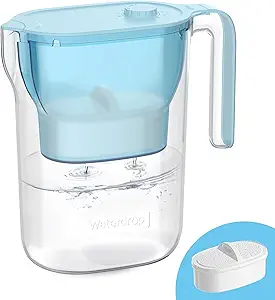 |
| Top Rated A top-rated pick with lots of positive feedback | EveryDrop Refrigerator Filter 1 EDR1RXD1 |  |
| Most Popular A crowd favorite that many people choose with confidence | Brita Large 10-Cup Pitcher |  |
| Best Seller A high-volume bestseller chosen again and again | Brita Metro 6-Cup Pitcher |  |
Waterdrop Lucid Pitcher WD-PT-07B

| Capacity | 2.4 liters |
|---|---|
| Filter Life Cycle | 200 gallons / 3 months |
| Purification Method | Activated Carbon |
| Maximum Flow Rate | 0.5 gpm |
The Waterdrop Lucid Pitcher is a compact 10-cup countertop pitcher that filters tap water with a multi-stage activated carbon element designed to reduce chlorine, some heavy metals, and certain organic contaminants. You fill the reservoir and the hands-free lid dispenses filtered water without lifting the cover, which helps keep the spout cleaner in daily use. The replaceable PF-01A filter is rated for roughly 200 gallons or about three months of typical household use and the built-in LED indicator lets you track filter life so you do not forget replacements. Because it is non-electric and slim it fits easily on most fridge doors and works well for apartments, dorms, or small kitchens where bottled water would otherwise be used. Limitations to note are that this system does not lower total dissolved solids (TDS) and its flow depends on gravity so initial fill and filtration take longer than powered systems. The pitcher is best suited as an affordable, low-maintenance option for improving taste and reducing select contaminants in everyday drinking water.
Best for: Buyers who want a simple, low-maintenance pitcher to improve taste and cut common contaminants for everyday drinking water in small households or apartments.
Less Ideal for: People who need mineral/TDS reduction, very high flow rates, or whole-home/under-sink filtration should look at other system types.
- NSF/ANSI 42 and 372 certified reduction for chlorine, lead-related standards and select contaminants
- Long filter life rated up to 200 gallons or about 3 months per cartridge
- Hands-free lid for hygienic dispensing and an LED indicator for filter status
- Slim, fridge-friendly pitcher design that fits small kitchens and dorms
- Does not reduce total dissolved solids (TDS) so it will not lower mineral content or water hardness
- Gravity filtration is slower than powered or under-sink systems
Verdict: A compact, NSF-certified pitcher that delivers better-tasting tap water with long-life cartridges and a hygienic hands-free lid, ideal for everyday household use.
Clearly Filtered Pitcher P-V3

| Capacity | 80 fluid ounces |
|---|---|
| Purification Method | Affinity Filtration |
| Filter Life Cycle | 100 gallons (approx. 3–4 months) |
| Supported Water TDS Level Maximum (PPM) | 500 |
The Clearly Filtered Pitcher P-V3 is a family-sized countertop pitcher designed to remove a broad set of tap-water contaminants using the brand's Affinity Filtration technology. You fill the 80-ounce pitcher from the top hinge lid and filtered water collects in the reservoir for pouring; the unit is made from medical-grade Tritan for durability and to avoid plastic taste. The replaceable filter is rated for about 100 gallons or roughly 3–4 months of typical household use and the company publishes independent lab results and NSF certification for chlorine taste and certain materials standards. Practical benefits include fewer refills thanks to the large capacity, a comfortable ergonomic handle and a spill-resistant dam for easier pouring, and a long filter life compared with many store brands. Expect slower flow if your tap has very high contaminant loads or as a cartridge nears end of life, and replacement filters are required to maintain performance. This pitcher is best when you want a simple, no-power countertop solution that emphasizes contaminant removal and transparency in testing.
Best for: Buyers who prioritize high contaminant-removal performance and lab-backed claims and who want a simple, family-sized countertop pitcher for everyday drinking water.
Less Ideal for: Those who need instantaneous high flow for filling multiple large containers frequently or who prefer whole-house or under-sink filtration solutions.
- Targets a very wide range of contaminants with documented lab testing and NSF certification for key standards
- Large 80 fl oz capacity reduces refill frequency for families
- Medical-grade Tritan construction that is BPA- and BPS-free and resists odors and leaching
- Filter life rated to about 100 gallons, roughly 3–4 months of typical use
- Flow rate can slow with high-contaminant water or toward filter end of life
- Requires periodic replacement filters to retain full contaminant removal
Verdict: Choose this pitcher if you want a family-sized, countertop filter that emphasizes lab-verified removal of a wide range of contaminants.
ZeroWater 22-Cup Ready-Read Dispenser

| Capacity | 5.2 liters |
|---|---|
| Purification Method | Ion Exchange |
| Supported Water TDS Level Maximum (PPM) | 1 |
| Included Components | 22-Cup Dispenser, 5-Stage Filter, TDS Meter |
The ZeroWater 22-Cup Ready-Read dispenser is a countertop pitcher-style system built for households that want near-zero total dissolved solids in their drinking water. It uses a five-stage ion-exchange filter cartridge and includes a TDS meter so you can measure water quality and know when to replace the filter. In typical use you fill the top reservoir and dispense from the spigot; the 22-cup capacity suits kitchens, small offices, or families who prefer a central filtered-water station. Notable features include the IAPMO certifications for reducing lead, PFOA/PFOS, chromium and mercury, a change-filter indicator via the TDS readout, and an ergonomic handle for pouring and carrying. Practical benefits are clear tasting water, reduced reliance on bottled water, and an easy maintenance cycle driven by the meter. Trade-offs are that filtration uses ion-exchange media rather than a dedicated carbon block for taste-specific contaminants, and replacement filters are a recurring cost and need changing when TDS rises above the ready-read threshold.
Best for: Buyers who want a simple countertop solution that reliably lowers dissolved solids and heavy metals and prefer a measurable, low-effort way to know when to change filters.
Less Ideal for: People needing a whole-house or under-sink purification system, or those who prioritize specialized carbon-based odor and chlorine removal over TDS reduction.
- Includes a 5-stage ion-exchange filter that targets heavy metals and dissolved solids
- Built-in TDS meter lets you confirm water quality and time filter changes
- Large 22-cup capacity reduces frequent refills for families or small offices
- IAPMO-certified reductions for lead, PFOA/PFOS, chromium and mercury
- Requires periodic replacement filters which add ongoing cost
- Uses ion-exchange filtration that may not address every organic taste or odor source
Verdict: Choose this dispenser if you want a countertop filter that delivers near-zero TDS with a built-in meter so you can see when to replace the cartridge.
Waterdrop PT-05B-L Pitcher

| Capacity | 7-Cup |
|---|---|
| Filter life | Up to 200 gallons / 3 months |
| Certifications | NSF/ANSI 42 & 372 |
| Material type | BPA-free, lead-free |
The Waterdrop PT-05B-L is a straightforward pitcher-style water filter for everyday tap water use. It holds about seven cups and uses an activated carbon fiber filter certified to NSF/ANSI 42 and 372 to cut chlorine taste and odor plus a range of contaminants including PFOA/PFOS. Setup is simple: soak the filter, press it into the reservoir, and discard the first two pitchers of water; a mechanical dial on the lid tracks the filter lifespan. The filter is rated for up to 200 gallons or roughly three months under typical use, which helps stretch replacement intervals and reduce single-use bottles. The pitcher is made from food-grade BPA-free plastic with an ergonomic handle and a slim profile that fits most fridge doors. Limitations are its modest 7-cup capacity and the fact that it does not lower total dissolved solids, so it is aimed at improving taste and removing specific contaminants rather than producing very low-TDS water.
Best for: Shoppers seeking an affordable, easy-to-use countertop pitcher that improves taste and removes common contaminants without the complexity of a plumbed system.
Less Ideal for: Homes that need heavy-duty water treatment, low-TDS water, or a high-capacity solution for many people should consider larger pitchers or under-sink systems instead.
- NSF/ANSI 42 and 372 certified filtration reduces chlorine taste and certain contaminants
- Long-life filter rated up to 200 gallons or about 3 months per cartridge
- Slim, fridge-friendly pitcher design with an ergonomic handle
- Mechanical life recorder on the lid for simple filter replacement tracking
- Only a 7-cup capacity, which may require frequent refills for larger households
- Does not reduce total dissolved solids, so it will not lower water hardness or TDS
Verdict: A budget-friendly pitcher that delivers certified chlorine and contaminant reduction with longer filter life for everyday tap water taste improvement.
EveryDrop Refrigerator Filter 1 EDR1RXD1

| Model Number | EDR1RXD1 |
|---|---|
| Unit Count | 1 Count |
| Included Components | 1 Water Filter |
| Compatible Refrigerator Models | Whirlpool GSC25C6EYW |
| External Testing Certification | NSF 42, NSF 53, NSF 401 |
This EveryDrop Filter 1 (EDR1RXD1) is a genuine Whirlpool-compatible refrigerator filter engineered for straightforward push-in replacement and broad contaminant reduction. It uses a coconut shell activated carbon core and Triple Filtration Technology to trap large particles, micro-filter mid-size contaminants, and adsorb microscopic pollutants, and it is independently certified to NSF 42, 53 and 401. In practical use the filter supplies noticeably cleaner-tasting water and clearer ice when changed every six months or about 200 gallons, and its factory fit minimizes installation uncertainty or leaks. The filter is intended as a direct replacement for compatible Whirlpool models and is positioned as a reliability-minded, OEM-quality part; avoid mixing with non-genuine cartridges to reduce the risk of poor fit or performance. The key limitations are that replacement is scheduled rather than performance-monitored, and you must pick the correct model match for your refrigerator to ensure compatibility.
Best for: Buyers who prioritize consistent, factory-quality filtration and want an easy, reliable replacement that matches their Whirlpool refrigerator and restores better tasting water and clearer ice.
Less Ideal for: People seeking whole-house treatment, higher flow rates, or filters with real-time usage tracking or smart indicators should consider other solutions.
- Certified to NSF 42, 53 and 401 for verified contaminant reduction
- Reduces up to 70 contaminants including heavy metals, VOCs and microplastics
- Factory-designed fit for Whirlpool refrigerators simplifies installation and reduces leak risk
- Uses coconut shell activated carbon and triple-stage filtration for broad contaminant capture
- Requires model-specific selection so incorrect part will not fit
- No built-in usage indicator; replacement is time or gallon-based
Verdict: Choose this factory-designed EveryDrop Filter 1 when you want a proven, certified refrigerator filter that reliably restores clean, better-tasting tap water and ice.
Brita Large 10-Cup Pitcher

| Capacity | 10 ounces |
|---|---|
| Purification Method | Granular Activated Carbon |
| Filter Life Cycle | 2 months |
| Power Source | Manual |
The Brita Large 10-Cup Pitcher is a simple countertop pitcher that filters tap water through a Brita Plus filter to improve taste and reduce chlorine, copper, cadmium and mercury. It is used by filling the flip-top lid, letting water pass through the reservoir and into the pitcher for chilled drinking or filling bottles; the package includes one filter rated for about 40 gallons or roughly two months of typical family use. The pitcher is freestanding, fits on fridge shelves and is made of BPA-free plastic, which keeps it lightweight and easy to handle but makes it less premium-feeling than glass. Setup and filter replacement are straightforward and Brita provides a sticker indicator to remind you when to change the cartridge. The filtration targets taste and certain contaminants rather than full purification, so it is best for improving municipal tap water rather than treating biologically unsafe sources. For buyers who want a proven, no-fuss way to get better-tasting tap water and a widely certified filter technology, this pitcher delivers predictable results with minimal maintenance.
Best for: Buyers who prioritize trustworthy, widely used filtration to improve taste and reduce select heavy metals in municipal tap water and want a low-maintenance pitcher-style solution backed by strong user reviews.
Less Ideal for: People who need comprehensive purification for non-potable or microbiologically unsafe water or who prefer a higher-end material like glass or stainless for aesthetics or durability.
- Reduces chlorine taste and odor and certified to reduce copper, cadmium and mercury
- Includes one replaceable filter rated for about 40 gallons or 2 months
- BPA-free plastic and fridge-friendly shape for easy storage
- Easy-fill flip-top lid and sticker filter indicator for simple maintenance
- Plastic construction feels less premium than glass or metal
- Not intended to make biologically unsafe water safe to drink
Verdict: A reliable, easy-to-use pitcher that improves tap water taste and reduces select contaminants with a well-known, certified filter system.
Brita Metro 6-Cup Pitcher

| Filter Life Cycle | 2 months |
|---|---|
| Maximum Flow Rate | 9.7 milliliters_per_second |
| Supported Water TDS Level Maximum (PPM) | 500 |
| Upper Temperature Rating | 85 °F |
The Brita Metro 6-cup pitcher provides everyday filtered water for small households, dorms, or office use. Water passes through a standard Brita filter that uses activated carbon and ion-exchange resin to reduce chlorine taste and odor as well as select metals like copper, mercury, and cadmium, and the SmartLight filter indicator reminds you when to change the cartridge (about every 40 gallons or roughly 2 months). Its space-saving shape and easy-fill lid let you refill without removing the pitcher from most fridge doors, and the BPA-free plastic construction is lightweight and simple to handle. This model is best for routine tap-water improvement rather than removing all contaminants, and it requires regular filter replacements to maintain performance; replacement filters add ongoing cost. The pitcher is certified by WQA/NSF for the listed reductions and is compatible with Brita standard and Elite filters, making it a low-effort way to improve taste and reduce single-use plastic compared with bottled water.
Best for: Buyers who want a low-risk, proven way to improve tap water taste and reduce common contaminants with minimal setup and maintenance effort.
Less Ideal for: People needing removal of specialized contaminants, whole-house treatment, or laboratory-grade purification should look at advanced filtration or point-of-use systems instead.
- WQA/NSF-certified reduction of chlorine taste and odor and select heavy metals
- SmartLight indicator accurately signals when to replace the filter
- Compact, fridge-door friendly design with easy-fill lid
- Compatible with Brita standard and Elite filters, simplifying replacements
- Not designed to remove every contaminant present in tap water
- Requires filter replacements every ~40 gallons which adds recurring cost
Verdict: A simple, certified fridge-friendly pitcher that reliably improves tap water taste with an easy-to-follow filter schedule.
Choosing the Right Water Filter for Tap Water: Key Factors to Consider
Filtration Target and Certifications
Know which contaminants you want to reduce and look for filters tested to address those specific targets. Some filters are optimized for chlorine taste and odor, while others reduce lead, cysts, or volatile organic compounds. Independent testing or certifications from recognized labs provide confidence that a filter reduces the contaminants it claims.
Matching filter media to your water issues avoids overpaying for capabilities you do not need. If you have a private well or known contamination concerns, choose a filter rated for those compounds. For municipal water, priority tends to be chlorine, chloramine, taste and sediment control.
Installation Type and Space Requirements
Tap-mounted or faucet-attached units are typically easiest to install and require little under-sink space, but they may alter faucet ergonomics or reduce flow slightly. Countertop filters sit next to the sink and usually connect with a short hose to the faucet, offering good capacity without under-sink plumbing changes. Under-sink systems deliver a dedicated filtered outlet and preserve faucet function, but they require cupboard space and more involved installation.
Consider whether you will install the filter yourself and how much clearance and cabinet space you have. Some under-sink systems need a separate dedicated faucet hole, which may require drilling if your sink lacks spare holes.
Flow Rate and Daily Capacity
Flow rate determines how long you wait to fill a glass, pot, or kettle. Higher flow rates matter when you have multiple users or frequent cooking needs. Capacity, often expressed as gallons per filter cartridge or liters, indicates how long a cartridge lasts before replacement.
If you prepare large amounts of water daily or have a family, prioritize filters with higher flow rates and longer cartridge life. For single users or infrequent use, a lower-capacity unit with less frequent upfront cost may be acceptable.
Filter Lifespan and Replacement Costs
Replacement cartridges are the primary ongoing expense for a tap water filter. Look at both the expected lifespan in gallons and the unit cost of replacements to estimate annual ownership costs. Some systems use proprietary cartridges that cost more but may offer advanced multi-stage media.
Factor in how easy it is to change the filter. Twist-and-lock or cartridge-snap systems reduce mess and time. Long-life filters reduce replacement frequency but can be more expensive initially. Balance upfront cost with ongoing expense for the best long-term value.
Material Quality and Plumbing Compatibility
Durable housings and corrosion-resistant fittings extend the life of the system, especially in hard-water or high-use environments. Check that connectors match your existing faucet threads or that adapters are available. Poorly matched fittings can lead to leaks or require additional plumbing parts.
Pay attention to gasket quality and ease of accessing seals during maintenance. Systems with clear serviceable parts and replacement seals simplify upkeep and lower the risk of unexpected leaks.
Taste, Odor, and Water Aesthetics
Beyond measured contaminant reduction, user satisfaction often comes down to taste and clarity. Activated carbon is commonly used to improve taste and remove chlorine, while sediment prefilters improve clarity and protect downstream media.
If aesthetics matter, consider filters with polishing stages that remove fine particulates and reduce discoloration. Some filters include optional remineralization stages to adjust pH and mouthfeel for preferred drinking experience.
Types of Tap Water Filters and When to Use Them
Tap water filters for home use come in several installation types, each with tradeoffs. Faucet-mounted and faucet-adapter filters are simple and low-cost to install, making them a good choice for renters or for temporary use. Countertop units offer larger cartridges and higher capacity without under-sink modifications, which is useful if you want better performance but cannot alter plumbing.
Under-sink systems provide the most discreet solution and can deliver higher flow rates through a dedicated faucet. They are well suited to households that use filtered water for cooking and multiple users. Inline or in-line replacement filters can be installed on some existing water lines to supply a single appliance.
- Faucet-mounted: fastest setup, lower capacity, may affect faucet operation
- Countertop: higher capacity, no cabinet space needed, visible on counter
- Under-sink: dedicated faucet, higher flow, requires installation and clearance
How to Evaluate a Filter's Contaminant Claims
Look for test data or third-party certifications that match your primary concerns. Manufacturers often publish laboratory testing for specific contaminants; match that data against the contaminants in your water report or local advisories. For lead removal, check that the media and test results demonstrate measurable reduction under realistic flow conditions.
Pay attention to the conditions used in test reports, such as flow rate and influent concentration. Some media perform well at low flows but lose efficiency at higher flow rates. If you want to treat multiple contaminants, ensure the filter's multi-stage media is rated for those specific compounds rather than assuming one stage handles all problems.
- Match test targets to your water concerns
- Verify test conditions reflect household use
- Prefer independent lab or recognized standard testing
DIY Installation Tips
Most faucet-mounted and countertop filters can be installed with basic tools in under 15 minutes. Before starting, inspect the existing faucet threads and gather any adapters you may need. Turn off the water at the faucet, relieve pressure by opening the tap, then follow the manufacturer steps to attach the filter or hose.
For under-sink installations, measure cabinet clearance and identify the cold-water shutoff valve. If the system requires a separate faucet hole, confirm your sink or countertop has one available. If you are not comfortable with basic plumbing, plan for professional help to avoid leaks or invalidating warranties.
- Keep a towel and bucket handy for drips
- Test for leaks at connections after installation
- Record the install date to track filter change intervals
Maintaining Performance Over Time
Regular maintenance preserves filtration performance and extends the system life. Replace cartridges according to the manufacturer's recommended interval or sooner if you see reduced flow or a change in taste. Flush new cartridges as instructed to remove trapped carbon fines and prime the media before use.
Inspect seals and fittings during each cartridge change. Hard water can accelerate scale buildup, so filters in hard-water homes may need more frequent service or pre-sediment filters to protect the media. Keep replacement cartridges on hand to avoid prolonged periods without filtration.
- Follow recommended replacement schedules
- Flush new cartridges before drinking
- Check fittings and replace worn gaskets promptly
Estimating Long-Term Cost and Waste
Calculate total ownership cost by combining initial purchase cost with the expected annual expense of replacement filters. Longer-life cartridges can lower annual cost but may cost more upfront. Consider packaging waste and cartridge recycling options when choosing a system; some manufacturers participate in recycling programs or offer mail-in returns for spent cartridges.
If environmental impact matters, look for systems with fewer disposable components or filters with recyclable materials. Reducing single-use bottled water often offsets the waste of replacement cartridges, but comparing recycling availability and cartridge volume helps minimize long-term environmental footprint.
- Estimate annual cartridge cost for budgeting
- Check for recycling or take-back programs
- Preference for longer-life cartridges reduces replacement frequency
How We Chose the Best Water Filter for Tap Water
We screened available tap-mounted, under-sink, and countertop water filtration options to find units that balance measurable contaminant reduction with everyday usability. Selection prioritized proven contaminant removal capabilities for common municipal and well-related concerns such as chlorine, lead, volatile organic compounds, and particulates. We also considered flow rate and filter longevity to ensure a practical balance between performance and convenience. Durability and installation complexity were weighted heavily because many buyers install filters themselves or need solutions that fit existing plumbing without modifications. Filter replacement cost and availability were evaluated to reflect ongoing ownership expense. We excluded specialty laboratory-grade equipment and point-of-entry whole-house systems because this guide focuses on point-of-use filters for drinking and cooking at the tap. Final picks represent products that met minimum filtration standards, offered clear maintenance schedules, and accommodated typical kitchen sink configurations. The filters included cover a range of installation types, flow capacities, and replacement intervals so readers can match options to their water quality needs and household habits.
Our full evaluation process is outlined in our review methodology.
FAQ
Do all tap water filters remove lead?
Not all filters reduce lead. Look for filters specifically tested for lead removal and check independent test results or certifications. Media type and contact time affect lead reduction effectiveness.
How often should I change the filter cartridge?
Change intervals vary by model and usage but usually range from three months to a year. Replace sooner if flow drops or taste changes, and track gallons used when possible to match the cartridge lifespan to actual use.
Can I install a tap water filter myself?
Many faucet-mounted and countertop units are designed for DIY installation with basic tools. Under-sink systems may require more plumbing knowledge and clearance; if unsure, seek professional assistance to avoid leaks.
Will a tap water filter affect water pressure?
Some filters reduce flow slightly, especially under higher demand or as cartridges load with contaminants. Choose a system with an adequate flow rate for your household size to minimize noticeable pressure changes.
Are replacement cartridges easy to recycle?
Recycling options vary by manufacturer and cartridge design. Some programs accept spent cartridges for recycling or reuse, while others do not. Check local recycling rules and any available manufacturer take-back programs.
Final Verdict
Prioritize the contaminants you want to reduce, the installation style that fits your kitchen, and the balance between flow rate and filter lifespan when choosing a water filter for tap water. Consider long-term cartridge costs and maintenance effort alongside measured filtration capabilities to find a solution that works day to day. Focusing on targeted contaminant removal, installation compatibility, and realistic replacement schedules will help you pick a filter that delivers reliable, better-tasting water without unnecessary upkeep. Choose the option that best matches your household water use and maintenance preferences for a predictable, long-term experience.