
Note: This article contains affiliate links. If you click on these links and make a purchase, we may earn a small commission at no extra cost to you. This helps support our research and content. Read our full affiliate disclosure here.
If you rely on a pull out kitchen faucet for everyday tasks, adding a dedicated water filter can improve taste, reduce contaminants, and keep fragile fittings working smoothly. Choosing the right water filter for a pull out faucet matters because these fixtures have limited clearance, moving spray hoses, and specific connection points that affect fitment and long-term reliability. This guide shortlists the top picks for pull out faucets and explains the most important tradeoffs, including filtration performance, mounting and hose compatibility, and maintenance needs. The products below are the best options we considered for homeowners who want cleaner tap water without reworking plumbing or sacrificing faucet maneuverability.
Top Picks at a Glance
| Best Overall The best all-around choice for most situations | ICEPURE WFS5300A Under-Sink Filter |  |
| Best Quality Built to a higher standard if you want something more solid | CuZn UC-200 Under Sink Filter |  |
| Best Value The sweet spot between price and what you get | Waterdrop FC-01 Faucet Filter |  |
| Best Budget The cheapest option that still gets the job done reliably | CaoXiong 360° Rotating Faucet Filter | 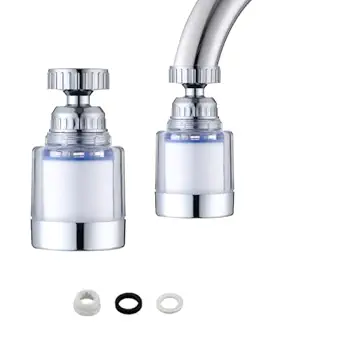 |
| Top Rated A top-rated pick with lots of positive feedback | Waterdrop WD-10UA Under-Sink Filter | 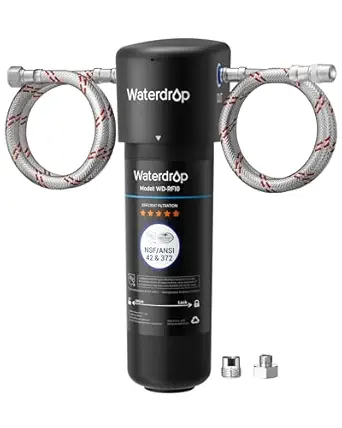 |
| Most Popular A crowd favorite that many people choose with confidence | Brita On Tap Faucet Filter System |  |
| Best Seller A high-volume bestseller chosen again and again | CECEFIN Sink Filter Faucet Aerator |  |
ICEPURE WFS5300A Under-Sink Filter

| Purification Method | Activated Carbon |
|---|---|
| Maximum Flow Rate | 2.5 gpm |
| Filter Life Cycle | 3 years |
| Capacity | 22000 gallons |
| Certifications | NSF/ANSI 42 & 372 |
The ICEPURE WFS5300A is an under-sink activated carbon cartridge system designed to feed a dedicated cold water drinking line without drilling a faucet hole. It connects to 1/2" or 3/8" cold water lines and delivers a tested flow rate up to 2.5 gallons per minute, so it can supply a pull-out or dedicated drinking faucet without noticeable lag. The filter uses coconut shell carbon with a 0.5 micron outer layer and is NSF/ANSI 42 and 372 certified to reduce chlorine, taste, odor, and provide lead-free materials. Installation is plug-and-play with a compact head and a tool-free filter change that the brand says takes only seconds. The standout here is the long service life: ICEPURE rates the cartridge for about 22,000 gallons or roughly three years on typical municipal water, which reduces replacement frequency and ongoing cost. Limitations: it is for cold water only and focuses on chlorine, sediment, and heavy metal reduction rather than multi-stage contaminant removal or TDS reduction, so buyers needing broader contaminant control should consider a different multi-stage system.
Best for: Buyers who want a low-maintenance, high-flow under-sink filter to feed a pull-out or dedicated drinking faucet and prioritize certified chlorine and taste improvement with infrequent cartridge changes.
Less Ideal for: People who need whole-house treatment, hot-water filtration, or removal of a wide range of contaminants like TDS, VOCs, or microbiological pathogens.
- Long rated service life of 22,000 gallons (about 3 years) reduces filter changes.
- NSF/ANSI 42 and 372 certifications for chlorine, taste/odor reduction and lead-free materials.
- High tested flow rate (2.5 GPM) suitable for supplying a pull-out or dedicated drinking faucet.
- Compact, direct-connect design with tool-free filter changes for quick DIY installation.
- Only treats cold water and is focused on chlorine/sediment/heavy metals rather than broader contaminant removal.
- Not a multi-stage system for reducing dissolved solids or specialized contaminants.
Verdict: A high-flow, long-life under-sink carbon filter that delivers certified chlorine and taste reduction ideal for supplying a pull-out drinking faucet with minimal upkeep.
CuZn UC-200 Under Sink Filter

| Model Number | UC-200 |
|---|---|
| Included Components | Stainless Steel Connection Hose |
| Material Type | NSF Approved Material Components |
The CuZn UC-200 is an inline under-sink filter built for long service life and straightforward DIY installation. It combines a micro sediment membrane, KDF-55 media and coconut shell carbon to cut chlorine, lead, PFAS/PFOS and other common contaminants while leaving beneficial minerals intact. Installation is direct-connect to a cold-water line and the unit ships with a stainless steel connection hose so you can fit it to a pull-out faucet setup without drilling. The standout is durability: the company rates the UC-200 for up to five years or roughly 50,000 gallons depending on water quality, which greatly reduces replacement frequency and ongoing cost. You should expect noticeably better taste and lower chlorine odor without the flow loss and maintenance overhead of reverse-osmosis systems, but it will not lower total dissolved solids. For buyers who prioritize long-term performance and minimal upkeep, the UC-200 delivers a high-capacity, no-fuss point-of-use solution; those needing RO-level purification or TDS reduction will need a different system.
Best for: Buyers who want a low-maintenance, high-capacity under-sink filter that improves taste and removes common contaminants with minimal ongoing effort and infrequent cartridge changes.
Less Ideal for: Those who need reverse-osmosis level purification, TDS removal, or complete desalination should consider an RO system instead.
- Very long filter life rated up to 5 years or ~50,000 gallons
- Multi-stage media targets chlorine, lead, PFAS/PFOS and sediment while retaining minerals
- Includes stainless steel connection hose for straightforward under-sink or pull-out faucet hookup
- Simple DIY direct-connect installation with no drilling required
- Reduces tastes and odors without the complexity of an RO system
- Does not reduce total dissolved solids so not a replacement for reverse osmosis
- Performance depends on incoming water quality so lifespan may vary
Verdict: Choose the UC-200 if you want a durable, high-capacity under-sink filter that cuts chlorine, lead and PFAS with years between cartridge changes.
Waterdrop FC-01 Faucet Filter

| Certification | NSF/ANSI 42 & 372 |
|---|---|
| Lifespan | 320 gallons / 3 months |
| Filtration material | Activated carbon fiber |
| Fit | Standard faucets |
| Unit count | 1 |
The Waterdrop FC-01 is a compact faucet-mounted filter that delivers basic carbon-block filtration for everyday kitchen use. It installs to standard fixed faucets with included adapters and lets you switch between filtered and unfiltered water to preserve filter life. Certified to NSF/ANSI 42 for chlorine, taste and odor reduction and to NSF/ANSI 372 for lead-free material, the cartridge uses activated carbon fiber to cut chlorine and reduce lead, and Waterdrop rates each cartridge for about 320 gallons or roughly three months of typical household use. Practical features include quick fill flow that can fill multiple water bottles in under a minute and a simple twist-on replacement process. Limitations: it will not fit pull-out, handheld, spray-style, or sensor faucets and it does not reduce TDS or act as a reverse-osmosis system, so it is aimed at improving taste and removing some contaminants rather than comprehensive purification.
Best for: Buyers who want an inexpensive, easy-to-install faucet filter to improve taste and reduce chlorine and lead on a standard fixed kitchen faucet and who prioritize convenience and low maintenance.
Less Ideal for: People with pull-out or spray-style faucets, those seeking full-spectrum purification or TDS reduction, or anyone needing long-life high-capacity filtration should look elsewhere.
- NSF/ANSI 42 certified for chlorine, taste and odor reduction
- NSF/ANSI 372 certified lead-free materials
- Rated for about 320 gallons or roughly three months per cartridge
- Simple switch between filtered and unfiltered water to extend filter life
- Easy installation on standard fixed faucets with included adapters
- Does not fit pull-out, handheld, spray-style, or sensor faucets
- Not a comprehensive purifier — does not lower TDS or replace an RO system
Verdict: A simple, NSF-certified faucet-mounted filter that reliably improves taste and reduces chlorine and lead on standard fixed faucets for budget-minded, low-maintenance buyers.
CaoXiong 360° Rotating Faucet Filter
| Purification Method | Activated Carbon, Ion Exchange |
|---|---|
| Installation Type | Faucet Mount |
| Upper Temperature Rating | 120 °F |
| Supported Water TDS Level Maximum (PPM) | 300 |
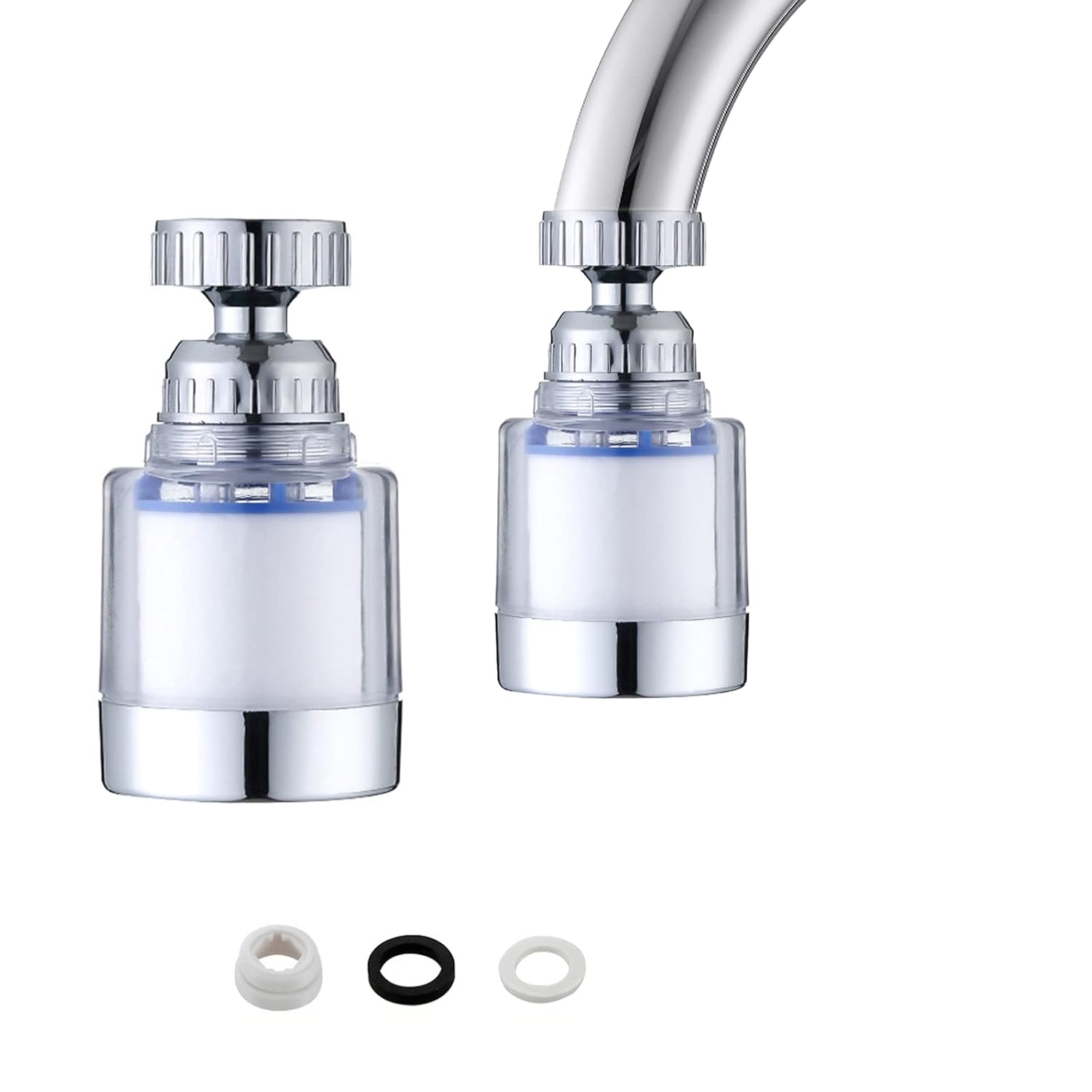
This small 360-degree rotating faucet filter mounts directly to most round faucets and is intended to reduce lead, iron, rust, chlorine, and some hardness minerals using a combination of activated carbon, ion exchange and micron PP cotton. Installation is simple: remove the existing bubbler, attach the filter or use the included adapter ring for internal-thread faucets, then tighten. The transparent housing and replaceable cartridge let you see when the element is discolored and flow slows, and the swivel head helps aim filtered water for filling containers or rinsing. Practical benefits are straightforward: improved taste and reduced sediment for everyday kitchen or bathroom use without plumbing changes. Important limitations are its narrow fitment (requires ~0.86 inch outlet diameter), modest TDS handling up to 300 ppm, and plastic construction that may not feel as durable as metal-bodied units, so expect periodic cartridge replacement and limited heavy-duty longevity.
Best for: Buyers seeking an inexpensive, no-plumbing way to improve tap water taste and reduce sediment on a pull-out or standard round faucet, and who prioritize low upfront cost and easy DIY installation.
Less Ideal for: Those with nonstandard faucet outlets, very hard water above the stated TDS limit, or households wanting a long-lasting, metal-bodied filtration solution should consider other options.
- Easy faucet-mount installation with adapter ring for internal threads
- 360-degree rotating head for flexible water direction
- Uses activated carbon and ion exchange plus PP cotton for sediment, chlorine, and heavy metal reduction
- Transparent housing lets you visually monitor cartridge condition
- Fits only most round faucets with about 0.86 inch outlet diameter
- Plastic build and small size may wear faster than metal alternatives
- Rated for water up to 300 ppm TDS, so not for very hard or highly contaminated supplies
Verdict: A very affordable, easy-to-install faucet-mount filter that improves taste and reduces sediment for budget-minded buyers with compatible round faucets.
Waterdrop WD-10UA Under-Sink Filter

| Purification Method | Activated Carbon |
|---|---|
| Filter Life Cycle | 12 months |
| Maximum Flow Rate | 2.5 gpm |
| Supported Water TDS Level Maximum (PPM) | 700 |
| Material Type | NSF/ANSI Approved Components |
The Waterdrop WD-10UA is a compact under-sink activated carbon filtration system that connects directly to standard 3/8" or 1/2" cold water feed lines and is intended for everyday drinking and cooking water. Installation uses twist-and-lock construction and push-to-connect fittings so it can be mounted under a sink without drilling and installed in minutes; included hoses and a convertor fitting cover common sink hookups. The cartridge is NSF/ANSI 42 certified for chlorine and taste reduction and is rated for about 11,000 gallons or roughly 12 months of service on municipal water, making replacement intervals simple to predict. Flow is practical for a pull-out faucet with tested flow rates reported up to 1.33 gpm from the upgraded outlet and 0.75 gpm at 60 psi, so it supplies steady water without long delays. Limitations include suitability only for cold, municipal water (not well or hot water) and that it is a single-stage carbon filter, so it will not remove dissolved minerals or perform microfiltration beyond advertised contaminants. For a straightforward, reliable under-sink upgrade to improve taste and reduce common chemical contaminants, the WD-10UA is an easy-to-install option.
Best for: Buyers who prioritize a dependable, low-maintenance under-sink filter to improve tap water taste and remove common chemical contaminants for daily drinking and cooking use.
Less Ideal for: People who need filtration for well water, hot water, or want multi-stage/ultrafine contaminant removal should consider different systems.
- NSF/ANSI 42 certified for chlorine and taste reduction
- Twist-and-lock and push-to-connect fittings for quick, no-drill installation
- Long cartridge life rated ~11,000 gallons or 12 months on municipal water
- Includes hoses and 3/8"–1/2" convertor to fit common sink feed valves
- Reported stable flow (up to 1.33 gpm) suitable for pull-out faucets
- Designed for cold municipal water only and not suitable for well or hot water
- Single-stage activated carbon filter does not remove dissolved minerals or perform ultrafiltration
Verdict: A reliable, easy-to-install under-sink carbon filter that delivers predictable one-year service and steady flow for pull-out faucets.
Brita On Tap Faucet Filter System

| Capacity | 100 gallons |
|---|---|
| Filter Life Cycle | 4 months |
| Maximum Flow Rate | 0.5 gpm |
| Supported Water TDS Level Maximum (PPM) | 1000 |
The Brita On Tap Faucet Filter System installs directly onto a standard faucet to deliver filtered water without needing a pitcher or countertop unit. It uses a carbon-block-style cartridge to reduce chlorine taste and odor, sediment, and a range of contaminants including lead, and the cartridge is rated for about 100 gallons or roughly four months of typical household use. Installation is tool-free and includes adapters for common thread types, and the unit offers a lever to switch between filtered and unfiltered flow so you do not lose the faucet entirely. Practical benefits are straightforward: immediate access to filtered water, lower single-use plastic bottle waste, and a visible indicator to prompt filter replacement. Important limitations are that it does not fit pull-out or spray-style faucets and it lowers maximum flow to about 0.5 gallons per minute, so it is best for drinking and light kitchen tasks rather than high-flow needs.
Best for: Buyers who prioritize proven contaminant reduction and prefer immediate, on-tap filtered drinking water with minimal setup and visible maintenance cues.
Less Ideal for: People with pull-out or spray-style faucets or those who need high flow rates for heavy kitchen tasks should look at other filtration options.
- Tool-free installation with included adapters for common faucet threads
- Reduces chlorine taste and odor plus certified lead reduction and multiple other contaminants
- Filter indicator helps know when to replace the cartridge
- Switchable filtered/unfiltered flow preserves faucet usability and avoids constant filtration when not needed
- Not compatible with pull-out or spray-style faucets
- Lower flow rate (0.5 gpm) can feel slow for filling large pots or rinsing tasks
Verdict: Choose this Brita faucet filter if you want an easy, certified on-tap solution for better-tasting drinking water and clear filter-change reminders.
CECEFIN Sink Filter Faucet Aerator

| Thread Size | Female 55/64" (22mm), Male 15/16" (24mm) |
|---|---|
| Flow Rate | 1.2 gpm |
| Material Type | ABS aerator, brass body |
| Included Components | 1080 swivel aerator, 8 filter cartridges, washers, wrenches |
The CECEFIN Sink Filter Faucet Aerator combines a swivel extender and a three-layer filter to soften tap water and remove particles larger than 1 micron. It mounts to common faucet threads (female 55/64" and male 15/16") and includes eight replacement cartridges plus installation washers and wrenches. In daily use you can switch between a soft aerated stream for face washing and a stronger spray for rinsing dishes or produce, and the foldable 1080-degree arm makes aiming and storage convenient. The package uses brass connectors and an ABS aerator body with chrome plating for corrosion resistance, and the manufacturer recommends replacing cartridges every 1 to 3 months depending on water quality. Expect a modest reduction in flow when using the carbon fiber cartridges that remove odors and chlorine, and note that some faucets with nonremovable aerators will not be compatible without an adapter. For risk-averse buyers this unit is straightforward to install and maintain, but check thread compatibility before buying and be prepared to replace cartridges regularly in poor-water areas.
Best for: Buyers who want a simple, low-risk faucet filter and extender that improves water for face washing and light kitchen tasks while keeping installation and maintenance straightforward.
Less Ideal for: People with non-removable aerator faucets who cannot use an adapter or users who need high flow rates for heavy-duty kitchen tasks.
- Includes multiple replacement cartridges and basic installation tools for immediate use
- Dual outlet modes (soft stream and power spray) for face washing and rinsing tasks
- 1080-degree swivel and foldable arm improves reach and sink coverage
- Brass connectors with chrome-plated ABS body resist corrosion and handle hot water
- Not compatible with faucets that have non-removable aerators without an adapter
- Carbon fiber filter can slightly reduce water pressure when active
Verdict: A practical, easy-to-install swivel faucet filter and extender that improves tap water quality and reach while including replacement cartridges for immediate upkeep.
Choosing the Right Water Filter for Pull Out Faucet: Key Factors to Consider
Physical Size and Mounting Location
Pull out faucets have limited cabinet clearance and a moving spray hose that can get tangled or rub against a filter housing. Measure your under-sink space and look for filter units that either mount vertically on the cabinet wall or sit compactly beside the water supply shutoff. A slim, low-profile housing reduces the chance the filter will interfere with hose travel and makes routing the flexible spray hose simpler.
Also consider whether the filter requires a dedicated mounting bracket or can sit unfastened. Brackets that allow the filter to be positioned away from the spray hose path help prevent abrasion and accidental disconnection when the faucet is pulled out.
Connection Type and Hose Compatibility
Pull out faucets often use quick-connect fittings, small-diameter supply lines, or nonstandard adapters for the spray hose. Choose a filter that offers compatible fittings or includes a set of adapters for both compression and push-fit connections. Check the filter's inlet and outlet diameters and whether it supports connection to both the supply shutoff and the spray hose line if needed.
Compatibility matters because forcing mismatched fittings can lead to leaks or require additional plumbing work. Filters that offer flexible tubing and simple adapter kits are easier to integrate without replacing the faucet or doing complex plumbing changes.
Filtration Performance and Certifications
Different filters target different contaminants. For basic taste and odor improvements, a carbon-based cartridge is often sufficient to reduce chlorine and volatile organic compounds. If you are concerned about metals like lead, choose media rated to reduce heavy metals and look for verifiable third-party testing or certification claims. Certified performance gives a clearer expectation of what the filter will remove and for how long.
Pay attention to the contaminants listed by the manufacturer and match those to your local water quality concerns. A higher-rated media may have a shorter service life but remove a wider range of contaminants, while a simpler carbon block will last longer for basic chlorine and sediment control.
Maintenance Cycle and Replacement Ease
Under-sink filters require periodic cartridge changes, and pull out faucet installs can complicate access. Consider how often cartridges must be replaced and whether replacements are simple to swap without disturbing the faucet hose routing. Filters with tool-free changeouts and clear indicators for end-of-life reduce the chance of running degraded filtration.
Also factor in cartridge availability and whether replacement filters are common sizes. A straightforward maintenance routine keeps the system performing well and minimizes the risk of users skipping necessary replacements due to access or complexity.
Leak Resistance and Build Quality
A moving spray hose introduces extra strain on plumbing connections, so fittings and housings should be robust. Look for reinforced fittings, quality seals, and straightforward shutoff valves that allow you to isolate the filter during cartridge changes. Poorly sealed connections can lead to leaks that damage cabinetry.
Materials such as BPA-free plastics and corrosion-resistant fittings extend the system's useful life. Inspect how the filter seals at both inlet and outlet points and whether the design prevents kinking or stress on the flexible hose used with pull out faucets.
Flow Rate and Faucet Performance
Pull out faucets rely on adequate flow for rinsing and cleaning tasks. A highly restrictive filter can reduce flow and affect spray performance. Check the filter's rated flow rate and ensure it meets your faucet's typical usage needs. Some filters reduce flow slightly but remain acceptable for drinking and light rinsing; others may be unsuitable if you frequently use the spray at maximum flow.
Consider whether the filter includes a bypass option for high-flow tasks or whether you can switch between filtered and unfiltered water for specific uses. Matching flow rate expectations to how you use the pull out faucet avoids frustrating performance tradeoffs.
Installation Tips for Pull Out Faucet Setups
Plan the filter location before you start. Place the filter where it will not block the spray hose path or prevent the hose from retracting smoothly. Common locations are the cabinet sidewall or the back wall, mounted vertically to keep the housing clear of the hose.
Use the correct adapters for your faucet's fittings and ensure you have adequate tubing length. If the filter supplies the spray hose directly, route the lines so they have gentle curves rather than sharp bends that can kink or stress connections.
- Turn off the cold-water shutoff before disconnecting lines
- Test connections under low pressure to check for leaks before final mounting
- Secure tubing to avoid rubbing against the spray hose
Common Plumbing Obstacles and Quick Fixes
Tight under-sink spaces and obstructing garbage disposals are frequent issues. If you cannot find a flat spot for the filter housing, consider a slender, inline cartridge that attaches directly to the supply line and tucks into small gaps.
If adapter fittings are missing, a local hardware store can supply compression or push-fit adapters that match the supply line diameter. Avoid forcing connections; use the correct adapter size to maintain a reliable seal.
- Trim flexible tubing squarely for secure push-fit connections
- Use thread seal tape on threaded adapters to prevent slow leaks
- Add a simple shutoff tee if your faucet lacks a convenient isolation valve
Balancing Filtration and Flow
Higher-capacity media can reduce flow slightly. If you frequently use the pull out spray for rinsing large pans or filling pots, prioritize filters with higher rated flow to avoid a noticeable drop in performance. For primarily drinking-water use, a slower but more thorough filter may be acceptable.
Some setups let you route filtered water to a dedicated dispenser while leaving the pull out faucet unfiltered. That approach keeps full flow for rinsing tasks while providing filtered water for drinking without additional hose routing.
- Check liters or gallons per minute ratings when comparing filters
- Consider a dual-line setup only if under-sink space and plumbing complexity allow
Routine Maintenance Best Practices
Establish a calendar reminder for cartridge changes based on the manufacturer's rated life and your household water usage. Regular replacement maintains filtration performance and reduces the risk of microbial buildup. Inspect fittings and tubing during each change for signs of wear or leakage.
Flush the system after installing a new cartridge as recommended to clear trapped carbon fines and restore taste. Keep replacement cartridges accessible so you are more likely to perform timely maintenance.
- Record installation date on the filter housing
- Keep a small bucket and towels under the sink to catch drips during service
- Replace O-rings if the housing is removed frequently
When to Call a Plumber
If you encounter persistent leaks that do not stop after tightening fittings or replacing seals, call a professional to avoid water damage. Complex faucet assemblies or nonstandard supply configurations are also reasons to seek professional help.
A plumber can install a dedicated shutoff tee or reroute supply lines for an optimal, safe filter mount when your under-sink layout is tightly packed or obstructed.
- Persistent dripping after installation
- Difficulty accessing shutoff valves
- Need to relocate the supply line or install rigid mounting brackets
How We Chose the Best Water Filter for Pull Out Faucet
We prioritized filters that meet the practical needs of pull out faucet installations. Key evaluation criteria included compact physical size and mounting options to ensure the filter fits under sinks without interfering with the pull out hose path. We also assessed filtration performance based on contaminant reduction targets and certified media types commonly used to remove chlorine, lead, and sediment. Ease of installation and hose/connectivity options were critical because pull out faucets use flexible spray hoses and sometimes nonstandard quick-connect fittings. Maintenance factors such as filter lifespan, cartridge replacement frequency, and availability of clear maintenance indicators were considered to reflect long-term ownership costs and effort. Finally, build quality and materials were reviewed to ensure reliable seals and minimal risk of leaks given the faucet's moving parts. We excluded whole-house and large under-sink systems that require significant plumbing changes or dedicated faucet replacements. We also did not consider point-of-entry systems or countertop pitchers because they do not address the specific fitment and hose constraints of pull out faucets. The products selected strike a balance between reliable contaminant reduction, compact installation, and straightforward hose compatibility for typical pull out kitchen faucets.
Our full evaluation process is outlined in our review methodology.
FAQ
Can I attach a water filter directly to my pull out spray hose?
Often you can, but it depends on the faucet's fittings. Many pull out faucets use small-diameter or quick-connect lines that require specific adapters. Verify inlet and outlet sizes and use compatible adapters to avoid leaks.
Will a filter reduce my faucet flow too much?
Some filters slightly reduce flow, especially high-efficiency media with tighter pores. Check the filter's rated flow rate and match it to your typical usage. For heavy rinsing tasks, a higher-flow rated filter or routing unfiltered water for those tasks can help.
How often should I change the filter cartridge under a pull out faucet?
Replacement intervals typically depend on cartridge capacity and household usage and usually range from a few months to a year. Follow the manufacturer's rated life and monitor taste and flow; strict schedules and indicators reduce the chance of degraded performance.
Will installing a filter void my faucet warranty?
Warranty impact varies by manufacturer. In many cases, adding a properly installed inline filter does not void the faucet warranty, but altering the faucet itself or using nonstandard modifications could. Check your faucet documentation or contact the manufacturer if concerned.
Is it better to filter only drinking water or the whole faucet supply?
Filtering only drinking water uses fewer filter resources and can maintain higher flow for other tasks. Filtering the entire cold-water line ensures all dispensed water is treated but may complicate installation and slightly reduce flow. Choose based on priorities for flow versus comprehensive filtration.
Final Verdict
For pull out faucets, prioritize compact housings, correct fittings, and maintenance simplicity. The best choices balance verified contaminant reduction with a low-profile install that does not impede the spray hose. Focus on filtration performance for the contaminants that matter most to you, confirm hose and adapter compatibility, and pick a cartridge life that fits your maintenance habits. That approach will give you reliable, better-tasting water without frequent plumbing headaches.