
Note: This article contains affiliate links. If you click on these links and make a purchase, we may earn a small commission at no extra cost to you. This helps support our research and content. Read our full affiliate disclosure here.
Picking the right water filter for a sink faucet matters because it directly affects the quality and taste of the water you use for drinking, cooking, and making beverages. A well-chosen faucet-mounted or inline sink filter can reduce common contaminants, improve flavor, and save you trips buying bottled water. This guide presents the top shortlisted water filters for sink faucets across common household needs, from basic sediment and chlorine reduction to more comprehensive contaminant removal. We evaluated each option on measurable installation and performance factors so you can match a filter to your faucet type, water quality concerns, and maintenance preferences. Read on for the picks and the criteria we used to assess them.
Top Picks at a Glance
| Best Overall The best all-around choice for most situations | APEC Water ROES-50 |  |
| Best Quality Built to a higher standard if you want something more solid | iSpring CU-A4 Under-Sink Filter |  |
| Best Value The sweet spot between price and what you get | Waterdrop WD-10UA Under Sink Filter | 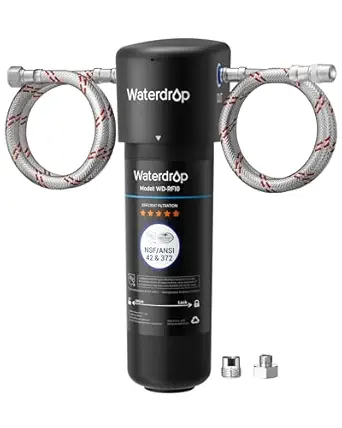 |
| Best Budget The cheapest option that still gets the job done reliably | CaoXiong 360° Rotating Faucet Filter | 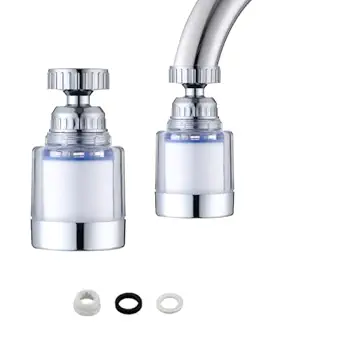 |
| Top Rated A top-rated pick with lots of positive feedback | Waterdrop WD-15UB Under Sink Filter |  |
| Most Popular A crowd favorite that many people choose with confidence | Brita On Tap Faucet Filter |  |
| Best Seller A high-volume bestseller chosen again and again | PUR Plus Faucet Replacement Filter |  |
APEC Water ROES-50

| Purification Method | Reverse Osmosis |
|---|---|
| Filtration Stages | 5-Stage |
| Capacity | 50 gallons |
| Operating Pressure Range | 40-85 psi |
| Supported Water TDS Level Maximum (PPM) | 2000 |
The APEC Water ROES-50 is a 5-stage under-sink reverse osmosis system designed to deliver very high-purity drinking water to a kitchen faucet. It is typically installed under the sink and connects to a dedicated countertop faucet and supplied storage tank so you get steady flow even when the membrane is working. Notable features include a five-stage filtration train that targets chlorine, lead, fluoride, arsenic, PFAs and microplastics, WQA/NSF-style certification, quick-connect fittings and color-coded tubing to simplify DIY installation, and an included Filter-Max replacement set. In practice the system produces very low-TDS water at up to 50 gallons per day and the prefilters protect the RO membrane so replacements are staggered across 6 to 24 months depending on your feed water. Important trade-offs are the slow fill rate compared with whole-house systems and the need for periodic filter and membrane changes and a storage tank footprint under the sink. For buyers seeking very clean tap water at the kitchen faucet, this RO system is a reliable, user-friendly choice.
Best for: Home cooks and families who want near-bottled-quality drinking water at the kitchen faucet and value a proven, easy-to-install under-sink RO system.
Less Ideal for: People who need whole-house filtration, very high continuous flow without a tank, or who cannot accommodate under-sink storage space should consider other solutions.
- Five-stage reverse osmosis removes a broad range of contaminants including heavy metals, fluoride, and PFAs
- Rated for 50 gallons per day, suitable for typical household drinking and cooking needs
- Includes storage tank and faucet for steady flow at the sink
- DIY-friendly quick-connect fittings and color-coded tubing simplify installation
- Replacement Filter-Max set is available to streamline maintenance
- Slower production rate than whole-house systems, relying on a storage tank for immediate flow
- Requires periodic filter and membrane replacements and under-sink space for the tank
Verdict: If you want reliable, very high-purity drinking water at the sink from a proven, user-friendly under-sink RO system, the ROES-50 is a solid pick.
iSpring CU-A4 Under-Sink Filter

| Purification Method | Mechanical Filtration, Chemical Absorption, Redox, Ultrafiltration |
|---|---|
| Filter Pore Size | 0.01μm |
| Installation Type | Under Sink |
| Capacity | 8000 gallons |
| Filter Life Cycle | 6 months |
The iSpring CU-A4 is a performance-focused, tankless under-sink filter that uses a four-stage process including a 0.01 micron ultrafiltration membrane plus KDF and GAC stages to reduce chlorine, heavy metals and other common contaminants while retaining beneficial minerals. It installs under the sink and comes with a brushed nickel faucet so filtered water is available at the tap and for appliances like coffee makers or refrigerators without a storage tank or wastewater. The quick twist-on/twist-off cartridges and push-to-connect fittings make filter swaps straightforward and the system is rated for up to roughly 8,000 gallons with typical filter life quoted at 6 to 12 months depending on water quality. Because it is not reverse osmosis, it does not lower TDS, which is useful if you want mineral-retaining filtration but not if you need desalination or extreme TDS reduction. The tankless design saves under-sink space and eliminates wastewater, making this a practical, high-flow choice for buyers prioritizing contaminant removal and convenience.
Best for: Buyers who prioritize high contaminant reduction and on-demand flow at the kitchen sink and who want to retain minerals while avoiding storage tanks or wastewater.
Less Ideal for: Those who need very low TDS or want desalination-level purification should consider an RO system instead.
- Four-stage filtration including 0.01 μm ultrafiltration membrane for very fine particle removal
- Tankless design provides on-demand filtered water with no wastewater
- Includes a dedicated brushed nickel faucet for easy access at the sink
- Quick twist-on/twist-off cartridges and push-to-connect fittings simplify filter changes
- Not a reverse osmosis system and does not reduce total dissolved solids (TDS)
Verdict: Choose the CU-A4 if you want a high-performance, tankless under-sink filter that removes very fine contaminants while keeping water minerals and delivering on-demand flow.
Waterdrop WD-10UA Under Sink Filter

| Purification Method | Activated Carbon |
|---|---|
| Filter Life Cycle | 1 years |
| Maximum Flow Rate | 2.5 gpm |
| Supported Water TDS Level Maximum (PPM) | 700 |
| Capacity | 11000 gallons |
The Waterdrop WD-10UA is an under-sink activated carbon filter built for easy, no-fuss filtration of municipal cold water. It installs with push-to-connect fittings and a twist-and-lock cartridge so most homeowners can fit it to a standard 3/8" or 1/2" cold-water feed without drilling or complex plumbing. The filter is NSF/ANSI 42 and 372 certified for chlorine and aesthetic contaminant reduction and claims reductions for PFAS, PFOA/PFOS, and lead while preserving beneficial minerals. Practical details include a one-year filter life, a tested flow rate that can reach about 1.33 gpm from the 3/8" outlet, and compatibility with replacement WD-RF10 cartridges and optional upgrades for finer filtration. The system is compact and suited to kitchens, bathrooms, RVs, or offices, but it is intended only for cold municipal water, not well water or hot lines. If you want a straightforward under-sink unit that balances performance, cartridge cost savings, and easy maintenance, this is a sensible choice; those needing very fine micron filtration or well-water treatment will need a different system.
Best for: Buyers who want a low-maintenance, easy-to-install under-sink filter that improves tap taste and reduces common contaminants in municipal cold water without complicated plumbing.
Less Ideal for: Homes drawing from private wells, users needing ultrafine or bacteriological filtration, or anyone requiring hot-water filtration should choose a different system.
- NSF/ANSI 42 & 372 certified for chlorine and aesthetic contaminant reduction
- Twist-and-lock cartridge plus push-to-connect fittings for fast DIY installation and quick replacement
- Designed to reduce PFAS, PFOA/PFOS, lead, bad taste, and odor while retaining beneficial minerals
- Compact footprint fits under sinks, RVs, bathrooms, or small offices
- Only suitable for cold municipal water and not recommended for well water or hot water
- Filter life capped at 12 months which requires annual replacement for maintained performance
Verdict: A compact, NSF-certified under-sink filter good for practical buyers who want reliable contaminant reduction and simple DIY installation for municipal cold water.
CaoXiong 360° Rotating Faucet Filter
| Purification Method | Activated Carbon, Ion Exchange |
|---|---|
| Installation Type | Faucet Mount |
| Upper Temperature Rating | 120 °F |
| Supported Water TDS Level Maximum (PPM) | 300 |
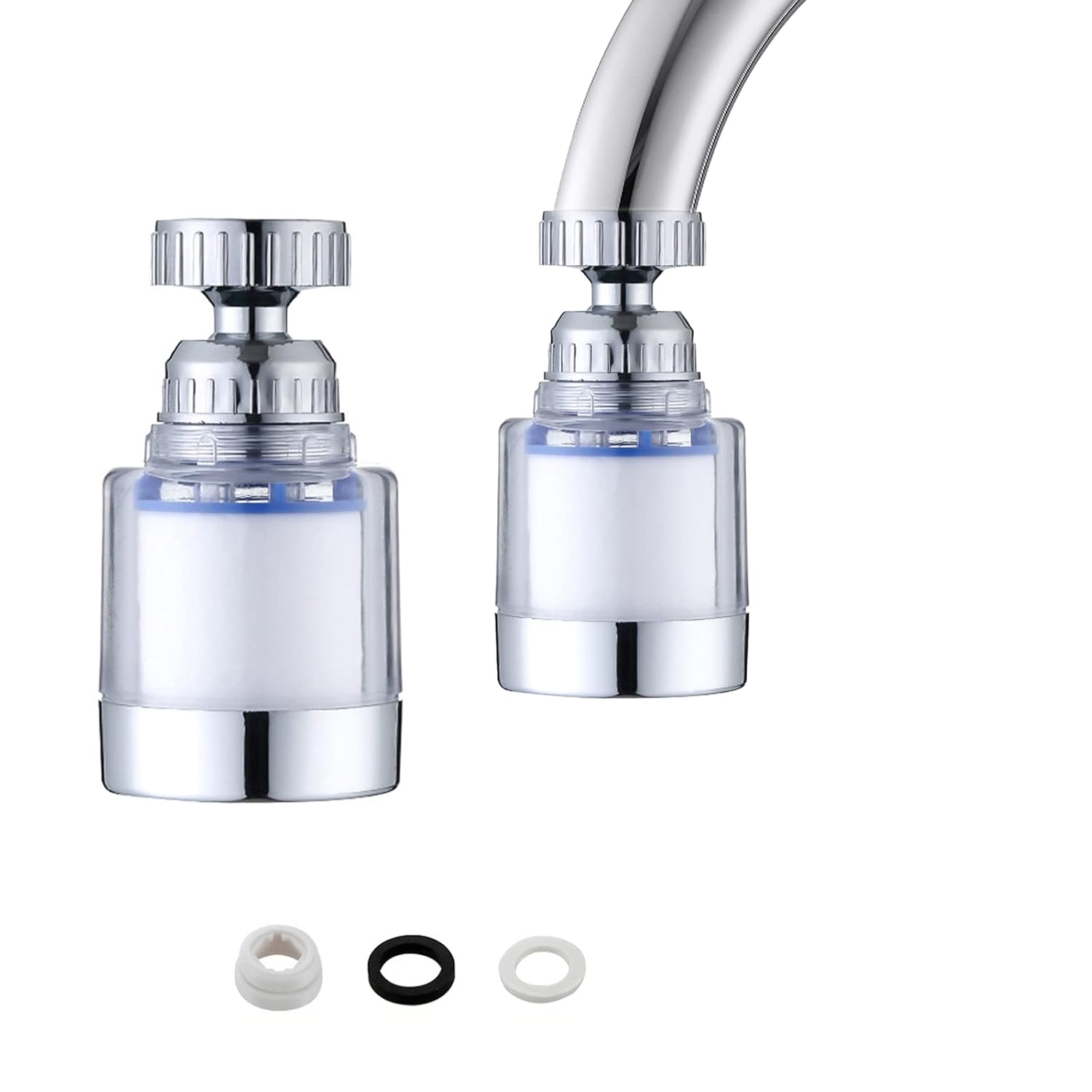
This compact faucet-mounted filter attaches to most round faucets and uses a combination of activated carbon, ion exchange media, PP cotton and mineralized balls to filter out heavy metals, rust, chlorine and reduce hardness. It rotates 360 degrees for easier use and has a transparent housing so you can see the cartridge condition, and the manufacturer notes the filter element is replaceable. Installation is straightforward: remove the aerator or fit the included adapter ring for internal-thread faucets and tighten. The unit is plastic and rated to handle water up to 120 F and TDS up to 300 ppm, so it is best suited to everyday kitchen or bathroom tap water treatment rather than whole-house use. Because the filter is small and inexpensive it will require periodic cartridge replacement and may reduce flow as it loads with sediment, but it is an inexpensive way to get basic contaminant reduction and softer-feeling water at a single faucet.
Best for: Buyers wanting an affordable, no-fuss faucet-mounted filter to improve tap water taste and reduce common contaminants at a single sink.
Less Ideal for: Homes needing high-capacity filtration, filtration for multiple faucets, or treatment for very high TDS or industrial contaminants should choose a larger under-sink or whole-house system.
- Simple faucet-mount installation with included adapter for many round faucets
- Multi-stage media (PP cotton, activated carbon, ion exchange, mineral balls) targets heavy metals, chlorine, rust and hardness
- 360-degree rotating head and transparent body for flexible use and visual inspection
- Compact, low-cost option that is easy to replace when cartridge life ends
- Small cartridge size means more frequent replacement and some flow reduction as it loads
- Plastic construction may be less durable than metal-bodied faucet attachments
Verdict: A very affordable, easy-to-install faucet-mounted filter that provides basic reduction of heavy metals and chlorine for a single sink.
Waterdrop WD-15UB Under Sink Filter

| Purification Method | Activated Carbon |
|---|---|
| Maximum Flow Rate | 0.75 gpm |
| Filter Life Cycle | 2 years |
| Capacity | 19000 gallons |
| Supported Water TDS Level Maximum (PPM) | 700 |
The Waterdrop WD-15UB is a single-cartridge under-sink filter designed to deliver cleaner tasting cold tap water through its dedicated stainless steel faucet. It uses multistage filtration with activated carbon block media to target chlorine, heavy metals, PFAS/PFOA/PFOS, sediment and other common municipal contaminants, and the manufacturer rates the cartridge for about 19,000 gallons or roughly two years of life. Installation is straightforward with push-to-connect fittings and a feed water adapter that ties into standard 3/8" or 1/2" cold water lines, and the twist-and-lock cartridge makes replacements quick without tools. Flow is reasonable for a drinking-water line, with a tested rate around 0.75 gpm at 60 psi and upgraded outlet claims near 1.33 gpm, so the dedicated faucet provides steady service without significant trickle delays. The system is certified to NSF/ANSI related standards and ships with a brushed stainless faucet and hardware. Limitations: it is cold-water only and intended for municipal water rather than well water, and it does not function as a whole-home or hot-water filter.
Best for: Buyers who prioritize a dependable, low-maintenance under-sink solution for consistently clean drinking water and want a cartridge that lasts longer between changes.
Less Ideal for: Homes needing whole-house treatment, hot-water filtration, or filtration for untreated well water should seek a different system.
- Multistage activated carbon block removes chlorine, lead, PFAS/PFOA/PFOS and bad taste
- Long nominal filter life rated for about 19,000 gallons or two years
- Includes dedicated brushed stainless faucet and installation hardware
- Push-to-connect fittings and twist-and-lock cartridge speed installation and replacement
- Tested flow rate suitable for a drinking faucet so you get steady water without long waits
- Only for cold water and not intended for well water or hot-water applications
- Not a whole-home system so it only treats the dedicated faucet output
Verdict: A reliable, easy-to-install under-sink filter with long cartridge life and certified contaminant reduction for consistent drinking-water performance.
Brita On Tap Faucet Filter

| Container Type | Faucet Mount System |
|---|---|
| Purification Method | Sedimentation |
| Maximum Flow Rate | 0.5 gpm |
| Filter Life Cycle | 4 months |
| Supported Water TDS Level Maximum (PPM) | 1000 |
The Brita On Tap Faucet Filter is a compact faucet-mounted filtration system designed to give on-demand filtered water without pitcher refills. It installs directly to standard threaded faucets using included adapters and offers a choice of filtered or unfiltered flow, so you can switch to unfiltered water for washing and filtered for drinking. The cartridge uses Brita carbon-block technology to reduce chlorine taste and odor, sediment, and a range of contaminants including lead, and the unit includes a filter life indicator to signal replacements roughly every 100 gallons or about four months. Practical benefits include space-saving installation that keeps countertops clear and a straightforward one-click cartridge swap for maintenance. Limitations are the fitment: it does not work with pull-out or spray-style faucets, and its 0.5 gpm maximum flow rate can be noticeably slower than unfiltered tap flow during filling. The system also requires regular filter changes to maintain contaminant reduction performance.
Best for: Buyers who want a low-effort, space-saving faucet filter that reliably improves drinking water taste and reduces common contaminants and who value visible replacement reminders and brand-tested filtration.
Less Ideal for: Homes with pull-out or spray-style faucets or users who need high flow rates from their tap should look for a different filter type or a whole-house solution.
- Reduces chlorine taste and odor plus a wide list of contaminants including lead
- Easy, tool-free installation to standard threaded faucets with included adapters
- Filter indicator makes it simple to know when to replace the cartridge
- Offers selectable filtered or unfiltered flow to preserve faucet performance when filtering is not needed
- Does not fit pull-out or spray-style faucets
- Maximum flow rate of 0.5 gpm can slow filling and flow compared with unfiltered tap
Verdict: A simple, compact faucet-mounted system that delivers noticeably better tasting, lower-contaminant drinking water for standard faucets with easy maintenance and a clear replacement indicator.
PUR Plus Faucet Replacement Filter

| Model Number | RF-9999-2 |
|---|---|
| Unit Count | 2 Count |
| Included Components | 2 replacement filters |
| External Testing Certification | NSF, WQA |
These PUR Plus faucet replacement filters are drop-in cartridges for PUR faucet-mount systems that deliver mineral-enhanced, better-tasting tap water while reducing a wide range of contaminants. Each cartridge uses a 14-layer, 3-in-1 design with increased surface area to trap particles and reduce lead, PFAS, VOCs, chlorine, microplastics, and other listed chemical and physical substances; PUR notes certification by third parties for those claims. Installation is simple thanks to a pull-tab design and they are intended for routine replacement every three months or after about 100 gallons. In practice the filters provide noticeably crisper drinking water compared with untreated tap water and work directly at the kitchen faucet for drinking and cooking use. The package is a two-count set, offering six months of coverage if you follow the recommended change schedule. Limitations: they do not remove microbes and you need a compatible PUR faucet mount system for fitment, and regular changes are required to maintain performance.
Best for: Buyers who prioritize certified contaminant reduction and predictable, factory-quality filtration from a trusted brand and want an easy faucet-mounted solution for drinking and cooking water.
Less Ideal for: Anyone without a compatible PUR faucet-mount system or households needing microbial disinfection or whole-home treatment should consider other options.
- Certified reduction of lead, PFAS, VOCs, chlorine, microplastics and other listed contaminants
- 14-layer, high-surface-area 3-in-1 design for fine particle capture and improved taste
- Easy pull-tab installation designed for faucet-mounted PUR systems
- Two-pack provides sequential replacement coverage for about six months with typical use
- Requires a compatible PUR faucet mount system; not universal
- Does not filter microbes, so not suitable for biological contamination
- Needs replacement every three months or ~100 gallons to maintain performance
Verdict: Choose these genuine PUR faucet filters if you want a certified, easy-to-install cartridge that reliably reduces lead, PFAS, and other common tap-water contaminants for better-tasting drinking water.
Choosing the Right Water Filter for Sink Faucet: Key Factors to Consider
Filtration Performance and Target Contaminants
Understand which contaminants you most want to reduce. Some sink faucet filters focus on chlorine and taste and odor, while others include activated carbon plus additional media to reduce lead, cysts, or volatile organic compounds.
Knowing your water's common issues matters because it determines the cartridge technology you need. For example, municipal water with chlorine taste typically responds well to carbon-based filters, whereas concerns about heavy metals or microbes may require specialized media or multi-stage filtration.
Faucet Compatibility and Installation Type
Check whether the filter mounts directly to the faucet spout, installs under the sink onto the cold-water line, or fits inline between supply and faucet. Faucet-mounted units are easiest to install but may not fit all spouts or pull-down designs.
Under-sink or inline filters keep the countertop clear and can handle higher flow and larger cartridges, but they usually require basic plumbing work and more space. Confirm thread types, adapter needs, and whether tools or a secondary diverter are required to avoid surprises at setup.
Flow Rate and Water Pressure Impact
Flow rate affects daily utility, especially if you use the tap for filling pitchers or cooking. Some filters reduce flow noticeably as they age or if they rely on dense media for fine filtration.
Evaluate the published flow rate and consider your household's typical use. If you have low incoming pressure, choose a filter designed to preserve flow or use an under-sink option with a larger cartridge to minimize pressure loss.
Filter Life, Replacement Ease, and Costs
Cartridge longevity determines how often you'll perform maintenance and how much ongoing upkeep will cost. Look for clear stated capacities in gallons or months under typical household use.
Also consider how easy it is to swap cartridges. Twist-off or tool-free replacements reduce the chance of leaks from incorrect reassembly. Availability of replacement cartridges matters long-term; prefer filters with straightforward part numbers and widely available replacements.
Materials, Seal Quality, and Leak Prevention
Durable construction and reliable seals reduce the risk of dripping or catastrophic leaks. Metal housings and reinforced plastic components tend to last longer than thin, brittle plastics.
Examine how seals and O-rings are accessed and replaced during maintenance. A design that isolates the filter media from the faucet connection can limit wear on threaded fittings and reduce the chance of cross-contamination when changing cartridges.
Certifications and Testing Transparency
Third-party testing and certifications provide documented evidence that a filter reduces specific contaminants. Look for independent test results or certifications that list contaminants and reduction rates.
If a manufacturer cites NSF or similar verification, review the scope of the testing to confirm it matches your concerns. Absence of testing does not always mean a product is ineffective, but verified results increase confidence in performance claims.
Types of Sink Faucet Filters
Sink faucet filters come in several form factors: faucet-mounted units that attach to the spout, inline filters that connect to the supply line under the sink, and under-sink cartridge systems with a dedicated faucet. Each type has tradeoffs in ease of installation, aesthetics, and filtration capacity.
Faucet-mounted units are compact and simple to install without cutting pipes, but they can interfere with faucet geometry and may offer smaller cartridges. Inline and under-sink systems usually provide higher flow and longer cartridge life but require more installation effort and space.
- Faucet-mounted: Quick setup, limited cartridge size, visible on spout
- Inline: Hidden under sink, moderate capacity, requires basic plumbing
- Under-sink: Highest capacity and options, requires installation and dedicated space
Preparing Your Faucet and Workspace
Before installing any sink faucet filter, clear out the cabinet under the sink to give yourself room to work and protect stored items from drips. Turn off the cold-water shutoff and relieve residual pressure by opening the faucet.
Inspect the faucet spout and supply connections so you know which adapters you may need. Keep a towel and a small bucket nearby to catch water when disconnecting lines, and have basic tools on hand such as an adjustable wrench and plumber's tape for threaded fittings.
- Turn off water and drain the line beforehand
- Verify spout threads and measure space for mounting
- Have replacement O-rings and plumber's tape available
Installation Tips to Avoid Leaks
Follow the manufacturer's torque guidance when tightening fittings; over-tightening plastic threads can crack housings while under-tightening invites leaks. Use plumber's tape on male threads where suggested and replace old O-rings during cartridge changes to preserve seal integrity.
When testing a new installation, slowly pressurize the line and inspect for tiny drips for several minutes. If you detect a leak, isolate the source and re-seat or replace seals before finishing the job.
- Hand-start threaded connections to avoid cross-threading
- Replace O-rings anytime a housing is opened
- Slowly re-pressurize and check for leaks before regular use
Maintaining Peak Performance
Regular maintenance keeps filtration effective and prevents flow reduction. Mark cartridge change dates and track gallons filtered if the product specifies capacity. Cleaning any pre-filters or aerators periodically can also restore flow and performance.
If you notice persistent taste or odor issues between scheduled changes, it may indicate exhausted media or contamination in the faucet aerator. Swap the cartridge early if performance drops significantly.
- Keep a maintenance schedule and spare cartridges on hand
- Clean faucet aerators and pre-filters to maintain flow
- Replace cartridges early if water taste or clarity worsens
When to Consider Professional Installation
Most faucet-mounted filters are DIY-friendly, but under-sink systems that tie into existing plumbing or require adding a dedicated faucet may benefit from a professional to ensure a leak-free install. A plumber can also confirm water pressure compatibility and advise on required shutoff or backflow protection.
If your installation must meet local plumbing codes or you lack confidence with basic pipe work, professional assistance reduces the risk of leaks and improper connections that could damage cabinetry or flooring.
- Complex under-sink installs or code-restricted connections
- Low incoming pressure issues that need professional diagnosis
- Homes with fragile cabinetry where leaks would be costly
How We Chose the Best Water Filter for Sink Faucet
We focused our selection on real-world factors that affect how well a sink faucet water filter performs and how easy it is to live with. Key evaluation criteria included filtration capability, measured by the range of contaminants reduced and the presence of NSF or equivalent testing claims. Installation and compatibility were assessed for common kitchen faucet types and for how quickly a typical homeowner can complete setup using standard tools. Flow rate and filter life were weighed because low flow or very short cartridge life can make a filter impractical for everyday kitchen use. Ease of maintenance covered cartridge-change simplicity, availability of replacement parts, and clear user instructions. Build quality and materials were considered to estimate durability and leak resistance over time. We also looked at any user-focused convenience features such as integrated diverters, filter-change indicators, or multi-stage cartridges. We excluded products that lack transparent filtration specifications or any third-party testing claims. Filters designed exclusively for specialized lab or industrial use were omitted. The resulting list emphasizes household-ready sink faucet filters that balance contaminant reduction, install simplicity, and ongoing upkeep.
Our full evaluation process is outlined in our review methodology.
FAQ
How often should I change a sink faucet filter cartridge?
It usually depends on the filter's stated capacity and your household water usage. Typical intervals range from 2 to 6 months or a specified number of gallons. Monitor taste and flow and replace earlier if performance declines.
Will a faucet-mounted filter fit my existing kitchen faucet?
Many faucet-mounted filters fit standard threaded spouts but not all. Check your spout type and thread size and confirm whether adapters are provided. Pull-down or nonstandard spouts may require an inline or under-sink solution instead.
Do sink faucet filters remove lead and other heavy metals?
Some sink faucet filters include media designed to reduce lead and certain heavy metals, while simpler carbon-only units focus on chlorine and taste. Look for filters with explicit testing or claims for the specific contaminants you are concerned about.
Will a sink filter affect my water pressure?
Some filters reduce flow slightly, particularly as the cartridge accumulates sediment. Models with larger media beds or under-sink systems typically maintain better flow than compact faucet-mounted units. If you have low incoming pressure, choose a design that minimizes pressure loss.
Can I install a sink faucet filter myself without hiring a plumber?
Many faucet-mounted and simple inline filters are designed for DIY installation with basic tools and clear instructions. Under-sink systems that require cutting or adding fittings may be more complex and are candidates for professional installation if you are not comfortable with plumbing tasks.
Final Verdict
Focus on matching filtration capability to the contaminants you want to reduce and selecting an installation type that fits your faucet and skill level. Prioritize clear testing data, reasonable cartridge life, and straightforward replacement procedures to minimize maintenance headaches. Balance flow rate and filtration depth based on daily use. If you need simple chlorine and taste reduction, a compact faucet-mounted unit may suffice. For broader contaminant removal or higher flow, consider inline or under-sink options and plan for periodic cartridge replacement to keep water quality consistent.