
Note: This article contains affiliate links. If you click on these links and make a purchase, we may earn a small commission at no extra cost to you. This helps support our research and content. Read our full affiliate disclosure here.
When you rely on campground hookups, potable-water stations, and on-the-road sources, a dependable water filter for RVs keeps your drinking and cooking water safe and palatable. Choosing the right filter matters because RV plumbing and limited storage change which systems are practical and effective in the field. This guide shortlists the top options for RV use and evaluates them on practical criteria like filtration performance, installation simplicity, and maintenance needs. Use the shortlist and evaluation notes below to match a filter to your rig, travel style, and water-quality priorities.
Top Picks at a Glance
| Best Overall The best all-around choice for most situations | PUREPLUS RV Dual Stage Water Filter |  |
| Best Quality Built to a higher standard if you want something more solid | FRIZZLIFE MV99 RV Water Filter | 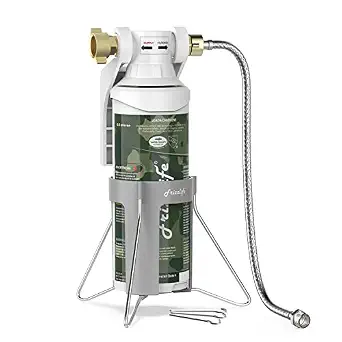 |
| Best Budget The cheapest option that still gets the job done reliably | Devvicoo RV Inline Water Filter 2-Pack |  |
| Top Rated A top-rated pick with lots of positive feedback | Camco TastePURE RV Water Filter |  |
| Most Popular A crowd favorite that many people choose with confidence | Camco Tastepure RV Water Filter 2-Pack |  |
PUREPLUS RV Dual Stage Water Filter

| Certification | NSF/ANSI 42 |
|---|---|
| Inlet/Outlet | 3/4" stainless steel fittings |
| Filtration stages | 2-Stage (5μ + 1μ) |
| Rated capacity | 13,000 gallons (single set) |
The PUREPLUS RV Dual Stage Water Filter is a compact, vehicle-focused system that combines a 5-micron sediment cartridge with a 1-micron CTO/KDF carbon cartridge to cut sediment, chlorine, odors, heavy metals and some PFAS-targeted contaminants. It installs in minutes using the included dual-purpose metal bracket and rubber base pads for floor or wall mounting, and 3/4-inch stainless steel fittings meant to match standard campground hoses. The tool-free setup and included wrench make cartridge changes straightforward, and a single cartridge set is rated to process roughly 13,000 gallons before replacement, which the manufacturer equates to several months of typical RV use. Because the system is NSF/ANSI 42 certified and built with corrosion-resistant ports, it is practical for drinking, cooking and showering on the road. Expect good flow and minimal pressure loss under normal campground hookups, but like any inline RV filter it will need periodic cartridge replacements and does not eliminate the need for source awareness at unknown water fills.
Best for: Buyers who want a reliable, easy-to-install RV water filter that improves taste and reduces common contaminants for drinking, cooking and showering while traveling.
Less Ideal for: Users needing whole-vehicle plumbing solutions or advanced contaminant removal like full PFAS removal certifications should consider larger or specialty systems instead.
- Two-stage filtration targets sediment plus chlorine, odors and heavy metals
- NSF/ANSI 42 certification for verified chlorine and taste reduction
- Stainless steel 3/4" fittings for more durable, leak-resistant hookups
- Tool-free installation and a bracket that supports floor or wall mounting
- Replacement cartridge set rated for ~13,000 gallons for multi-month use
- Requires periodic cartridge replacements which add ongoing cost
- Does not guarantee removal of all contaminants; lab testing varies by contaminant
Verdict: A compact, NSF-certified dual-stage RV filter that delivers better tasting, safer water with simple tool-free installation and durable stainless connections.
FRIZZLIFE MV99 RV Water Filter

| Purification Method | Activated Carbon, Carbon Block |
|---|---|
| Maximum Flow Rate | 1.5 gpm |
| Upper Temperature Rating | 100 °F |
| Supported Water TDS Level Maximum (PPM) | 300 |
| Other Special Features of the Product | Chlorine Reduction, NSF certified |
The FRIZZLIFE MV99 is an inline RV hose filter built for heavy outdoor use and frequent hookups. It installs directly between a 3/4" garden hose and your RV freshwater inlet using solid brass fittings, and the larger cartridge and 0.5 micron carbon block deliver thorough removal of chlorine, sediment, lead and other heavy metals without a big drop in flow. The unit is freestanding with a holder and wall-mount options, an auto-shutoff feature that simplifies quick cartridge swaps, and a twist-in design that makes replacements fast. It is rated for up to 1.5 gpm and a 100°F max temperature, and the manufacturer highlights a much longer service life than smaller disposable hose filters. The practical benefits are cleaner tasting water for drinking and cooking, reduced sediment to protect valves and pumps, and a rugged brass-plumbed body for outdoor handling. Limitations to note are the 1.5 gpm maximum flow if you need higher throughput and the need to buy replacement inner cores periodically rather than a permanent element.
Best for: RV owners and outdoor users who prioritize thorough contaminant removal and durable construction to protect onboard plumbing and deliver better-tasting water on the road.
Less Ideal for: Those who need very high flow rates for filling or simultaneous water use or users seeking a permanent, no-replacement filtration solution should consider other options.
- NSF/ANSI 42 and 53 certified 0.5 micron activated carbon block for chlorine, sediment, lead and odor reduction
- Solid lead-free brass connection fittings compatible with standard 3/4" garden hoses
- Twist-in cartridge and included holder enable quick replacements and easy mounting
- Auto-shutoff design simplifies filter changes without turning off the water supply
- Maximum flow rate of 1.5 gpm may be limiting for high-demand filling or multiple simultaneous uses
- Replacement inner cores are required periodically which adds ongoing maintenance costs
Verdict: Choose the MV99 if you want a rugged, NSF-certified inline RV filter that prioritizes contaminant removal and plumbing protection while still keeping reasonable flow.
Devvicoo RV Inline Water Filter 2-Pack

| Set Name | 2-Pack RV Water Filter Set |
|---|---|
| Material Type | Acrylonitrile Butadiene Styrene (ABS) |
| External Testing Certification | IAPMO |
This 2-pack Devvicoo inline water filter is a simple, budget-friendly solution for improving freshwater in an RV or at the campsite. Each filter uses granular activated carbon to reduce chlorine, sediment, and bad tastes so drinking, cooking, and washing water taste and smell better. The kit includes a flexible hose protector to prevent kinks and quick push-on hookups that install without tools, so you can set it up at a spigot or fill station in seconds. Construction from ABS plastic and lead-free materials keeps the unit lightweight and reasonably durable for outdoor use, and an IAPMO-related certification suggests it meets basic safety standards. Expect the usual limitations of small inline filters: they will improve taste and remove common contaminants but are not designed to remove all pathogens or replace multi-stage purification systems, and filters will need periodic replacement depending on water quality and use. For campers who want an inexpensive, easy-to-install way to improve tap water on the road, this is a practical pick.
Best for: Buyers looking for an inexpensive, no-fuss way to improve tap water taste and clarity while RVing or camping who prioritize easy installation and portability.
Less Ideal for: Travelers needing full-spectrum purification for biological contaminants or those who require certified lab-grade water treatment should consider multi-stage or specialty purifiers instead.
- Includes two filters for spare or dual use
- Granular activated carbon media reduces chlorine, sediment, and unpleasant tastes
- Tool-free, quick push-on installation compatible with standard hoses
- Flexible hose protector prevents kinks and helps maintain steady flow
- Made from lead-free materials and ABS plastic with external testing noted
- Not a multi-stage purifier so it will not remove all microbes or very fine contaminants
- No lifespan/flow-rate specification provided, so replacement frequency is unclear
Verdict: A practical, wallet-friendly inline filter kit that instantly improves tap water taste and flow for RV campers who want a quick, tool-free upgrade.
Camco TastePURE RV Water Filter

| Material Type | Polypropylene (PP) |
|---|---|
| Included Components | Adapter |
| External Testing Certification | NSF/ANSI 42, NSF/ANSI 53, NSF/ANSI 372 |
| Product Benefits | Reduces bad taste, odor, chlorine and sediment; protects against bacteria |
The Camco TastePURE RV Water Filter is an inline hose filter designed to give campers cleaner, better-tasting water at the spigot. It installs between a standard garden or drinking-water hose and the RV inlet and uses a multi-step Hex-Flow media stack combining activated carbon (GAC), KDF and a 20-micron sediment layer to cut chlorine, bad tastes, odors and visible silt while helping control bacteria and mold when idle. Its wide-body, high-flow form factor keeps pressure and flow usable for drinking and filling tanks, and the included flexible hose protector helps prevent kinks and connection strain during setup. The unit is made in the USA and carries NSF/ANSI 42, 53 and 372 listings for verified contaminant reduction and lead-free compliance. Expect routine replacement of the cartridge as with any disposable filter and slightly reduced flow compared with an unfiltered line; it is not a full multi-contaminant treatment for heavy industrial contaminants. For reliability-focused RV owners wanting certified, easy inline protection, this filter performs as advertised.
Best for: RV owners who prioritize dependable, tested filtration for campground water and want a simple inline solution that attaches to a standard hose.
Less Ideal for: Users seeking a comprehensive treatment system for industrial contaminants or those who need filtration for long-term off-grid water sources should consider higher-capacity or specialized systems.
- Multi-stage filtration (GAC + KDF + 20-micron sediment) reduces chlorine, taste, odor and visible sediment
- NSF/ANSI 42, 53 and 372 certifications verify performance and lead-free compliance
- Wide-body, high-flow design preserves usable water flow for drinking and tank filling
- Includes flexible hose protector to prevent kinks and reduce strain on connections
- Made in the USA with polypropylene housing for durable field use
- Filter cartridges are disposable and require periodic replacement
- Will slightly reduce flow compared with an unfiltered hose line
Verdict: Choose this certified inline filter when you want a reliable, tested way to improve campground water taste and basic safety without complex installation.
Camco Tastepure RV Water Filter 2-Pack

| Model Number | 40045 |
|---|---|
| Unit Count | 2 Count |
| Product Benefits | Reduces Chlorine |
| Material Type | Plastic |
| External Testing Certification | ANSI |
The Camco Tastepure RV Water Filter 2-pack is an inline hose filter designed to give campers cleaner, better-tasting water directly from campground spigots. Each wide-body filter combines granular activated carbon (GAC) with KDF media and a 20-micron sediment layer in a six-step Hex-Flow design to cut chlorine, odors, and particulates while helping limit bacterial and mold growth when idle. They attach to standard garden/drinking hoses and maintain relatively high flow thanks to the larger housing, so you can fill jugs, run a sink, or rinse gear without a big drop in pressure. The filters are made in the USA and carry ANSI testing references for common filtration standards, which adds confidence about performance. Expect routine replacement based on usage and source-water quality since inline filters have finite life and do not remove every contaminant such as dissolved salts or microbes requiring disinfection. For typical RV and outdoor use these filters are an easy, low-effort upgrade to improve taste and reduce sediment at the campsite.
Best for: Campers who prioritize cleaner-tasting, lower-chlorine water at campsites and want a proven, tested inline solution that is easy to attach and maintain.
Less Ideal for: Travelers who need full microbial disinfection, desalination, or treatment for chemically contaminated sources should choose a different purification system.
- Multi-stage GAC and KDF media that reduce chlorine, taste, and odors
- 20-micron sediment layer blocks silt and visible particulates
- Wide-body, high-flow design preserves water pressure for normal RV tasks
- Certified/ANSI-tested design and made in the USA for quality assurance
- Two filters in the pack for immediate backup or staggered replacement
- Does not disinfect or remove all dissolved contaminants like salts or viruses
- Filter life varies with source water and will require periodic replacement
Verdict: A tested, high-flow inline filter pack that reliably improves taste and reduces chlorine and sediment for RV campsite water.
Choosing the Right Water Filter for RVs: Key Factors to Consider
Filtration Type and Contaminant Reduction
Different filter media target different contaminants. Carbon-block cartridges are good at reducing taste, chlorine, and some organic compounds, while sediment pre-filters remove sand and rust. Some RV-focused filters include specialty media for lead, cysts, or volatile organic compounds. Knowing which contaminants are most likely on your routes helps you choose a media type that addresses the real risk.
Filter performance is usually rated by micron size and certified test results. Micron ratings tell you the smallest particle size a filter can reliably trap. For drinking water clarity and taste, a combination of sediment plus activated carbon is often effective without excessive flow loss.
Installation and Hose/Port Compatibility
RV water systems use a handful of common hose sizes and inlet fittings. A filter that uses standard quick-connect fittings or garden-hose threads will be far easier to adopt at campsites. Some filters mount inline between your freshwater hose and RV inlet, others attach directly to the faucet or sit under-sink with a dedicated faucet. Consider whether you need a portable inline unit you can disconnect when towing, or a semi-permanent unit for longer stays.
Installation difficulty affects how likely you are to use the filter consistently. Tools, extra adapters, or permanent mounts can complicate travel and storage, so buyers often prefer options that install with minimal parts and hand-tight connections.
Flow Rate and Water Pressure
Many RV tasks need steady flow, especially filling tanks, showering, and using pressure-reliant appliances. Some high-grain or fine-pore filters slow flow or drop pressure, which can make showers weak or lengthen tank fills. Check rated flow throughput and pressure tolerance for any filter intended for whole-rig use.
If you routinely boondock and run off a pump, be mindful of filters that add significant backpressure to your pump. For city hookups, maintaining reasonable gallons-per-minute is more important. Balance filtration efficiency with the flow your typical activities require.
Filter Lifespan, Replacement Ease, and Cost of Ownership
Filter cartridges wear out as they capture sediment and contaminants. Lifespan is usually given in gallons or months and varies with source water quality. A long-life cartridge reduces the frequency of replacements but may cost more up front. Also consider how easy it is to buy and replace cartridges while traveling.
Ease of service matters: twist-off housings, clear indicators, and accessible mounts make swaps faster at a campsite. Think about seasonal storage and whether you need to winterize or remove the filter to avoid freeze damage.
Build Quality and Freeze Resistance
RVs face vibration, temperature swings, and occasional impact during travel. Filters built with reinforced plastics, brass fittings, and corrosion-resistant seals will last longer under these conditions. If you travel in cold weather, select a design that is easy to drain or remove for storage to avoid cracking.
Evaluate seals and connection points since leaks are a top concern in mobile plumbing. Materials that resist UV degradation are also useful for units stored outside or in exposed compartments.
Portability and Onboard Storage
Storage space in an RV is limited, so the physical size and shape of a filter and its replacement cartridges matter. Compact, stackable cartridges and models that disassemble for storage are easier to stow. Consider whether you will leave the filter installed year-round or swap it in and out per trip.
A portable inline unit that fits a standard hose can double as an accessory for day trips and lends flexibility. Conversely, a larger dedicated under-sink unit may offer better media capacity but will need dedicated space.
Inline Versus Mounted Systems
Inline filters attach between your freshwater hose and the RV inlet and are often the simplest solution for travel. They are typically compact, quick to hook up, and easy to remove for storage or winterization.
Mounted or under-sink systems offer larger media capacity and sometimes multi-stage filtration, but they usually require a more permanent install and more storage space for replacement cartridges.
- Inline: portable, quick hookup, limited media capacity
- Mounted: higher capacity, better multi-stage options, semi-permanent
Common Installation Scenarios
Most RVers encounter three installation scenarios: hookup-only at the city water inlet, point-of-use under a galley or bathroom sink, and portable inline use for filling or quick drinking water. Match the filter style to where you need treated water most often.
If you mainly want better-tasting drinking water, a point-of-use unit under the sink or a dedicated faucet filter is sensible. For whole-rig protection when hooked up, an inline inlet filter makes more sense.
- Hookup inlet: protects entire rig during city water connection
- Point-of-use: targets drinking and cooking water with better media
- Portable inline: flexible for campsite use and tank fills
Maintaining Your RV Water Filter
Regular maintenance ensures consistent performance. Flush new cartridges before first use when the manufacturer recommends it, and keep a schedule for replacements based on gallons or months of use. Inspect O-rings and seals with each cartridge change and replace them if they show wear.
Winterization is important in cold climates. Drain and remove filters that cannot be left full of water, or use a heated compartment to prevent freezing.
- Flush new cartridges before use
- Check seals at each service interval
- Remove or drain before freezing temperatures
Assessing Water Quality on the Road
Water quality varies dramatically between campsites and public sources. Carry a simple test kit for chlorine, hardness, and basic bacterial indicators if you are concerned about source variability. Even a short test can guide whether you need a higher-capacity or specialty contaminant filter.
Pay attention to taste and odor changes. Sudden off-tastes or cloudiness indicate the need to change cartridges or to run a flush cycle and reassess the source.
- Carry basic test strips for quick checks
- Monitor taste and clarity after connecting to a new source
Storage and Spare Parts to Carry
Keeping a small inventory of spare O-rings, common adapters, and at least one replacement cartridge can avert inconvenient downtime on remote trips. Store cartridges in dry, dark compartments to preserve media life until installation.
Also pack a small toolkit and thread tape for quick fixes at a campsite. Compatibility adapters for different hose threads are compact and often pay for themselves by preventing the need to remove and reinstall a filter.
- Pack spare O-rings and a replacement cartridge
- Carry common thread adapters and thread tape
How We Chose the Best Water Filter for RVs
We focused on filters designed specifically for mobile use and RV plumbing to build a shortlist that balances real-world convenience with measurable performance. Key filters were evaluated for particulate and contaminant reduction based on certified media types and rated capacities, installation compatibility with standard RV inlet and hose fittings, and how easily they integrate with typical RV water systems. Durability and materials were assessed for seasonal storage, freeze risk, and corrosion resistance. Maintenance factors included replacement filter lifespan, clarity of service indicators, and accessibility for quick swaps at campsites. Flow rate and pressure retention were examined so systems do not starve faucets or pumps. We excluded multi-stage home systems that require permanent installation, large under-sink cartridges unsuitable for mobile hookups, and any units that depend on nonstandard plumbing modifications. The resulting picks reflect a balance of filtration effectiveness, user-friendly installation, and low-maintenance operation suited to RV life.
Our full evaluation process is outlined in our review methodology.
FAQ
How often should I replace an RV water filter cartridge?
Replacement depends on water quality and usage, but cartridges are usually rated by gallons or months. Expect to change more frequently with cloudy or heavily chlorinated sources. Follow the manufacturer guidance for gallons and visually inspect for flow reduction or discoloration.
Can I leave a water filter installed when towing my RV?
Many inline and compact filters are safe to leave installed while towing, but larger mounted systems may be better removed or secured. Make sure fittings are tight and the unit is protected from impact; some travelers prefer to disconnect to reduce freeze and vibration risk.
Will a water filter remove bacteria and viruses?
Most common RV carbon and sediment filters reduce particulates, taste, and some chemicals but are not guaranteed to remove all bacteria or viruses. If microbial contamination is a concern, look for media or systems specifically rated for cysts and pathogens, or use additional disinfection methods.
Do filters affect water pressure or pump performance?
Filters with fine pores or heavy media can reduce flow and add backpressure. Choose a filter with an adequate rated flow for showers and tank filling, and avoid overly restrictive units if you rely on your onboard pump for most water use.
How do I winterize a water filter in cold climates?
Drain and remove filters that cannot be left full of water, or store them in heated compartments. Replace seals if they show signs of wear before reinstalling in spring. Flushing and drying cartridges before storage can help prevent mold and degradation.
Final Verdict
For RV owners, the best water filter balances effective contaminant reduction with easy installation and minimal impact on flow. Prioritize the filtration types you need for the water sources you typically encounter and choose a form factor that fits how you travel, whether that means portable inline units or larger mounted systems. Account for replacement frequency, build durability, and winter storage when making a final choice. With the right priorities in place, you can keep onboard water tasting better and safer without complicating RV life.