
Note: This article contains affiliate links. If you click on these links and make a purchase, we may earn a small commission at no extra cost to you. This helps support our research and content. Read our full affiliate disclosure here.
If you need safe drinking water where power is unavailable, a water filter without electricity can be an essential part of your household or emergency preparedness plan. These gravity-fed, pump-free, or ceramic-based filters remove particulates, bacteria, and other contaminants using no external power, so they work during outages, in remote cabins, and while camping. This guide covers the top shortlisted water filters that operate without electricity and explains the practical tradeoffs that matter in daily use. Below you will find our top picks, followed by clear guidance on the specs and features that affect real-world performance and upkeep. Use the evaluation criteria to match a filter to the volume, portability, and maintenance level you expect.
Top Picks at a Glance
| Best Overall The best all-around choice for most situations | Purewell 3-Stage Gravity Water Filter |  |
| Best Quality Built to a higher standard if you want something more solid | Big Berkey 2.25‑Gallon Water Filter |  |
| Best Value The sweet spot between price and what you get | Waterdrop Lucid Pitcher WD-PT-07B |  |
| Best Budget The cheapest option that still gets the job done reliably | Waterdrop PT-05B-L Pitcher | 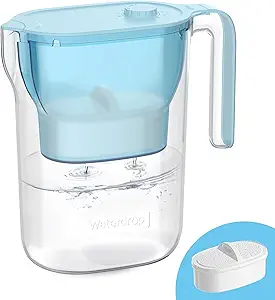 |
| Top Rated A top-rated pick with lots of positive feedback | LifeStraw Personal Water Filter |  |
| Most Popular A crowd favorite that many people choose with confidence | ZeroWater 23-Cup Dispenser |  |
| Best Seller A high-volume bestseller chosen again and again | Aquatabs 49mg Water Purification Tablets |  |
Purewell 3-Stage Gravity Water Filter

| Capacity | 2.25 gallons |
|---|---|
| Purification Method | Activated Carbon, Silver Ion, Hollow Fiber UF Membrane |
| Filter Life Cycle | 6 months |
| Upper Temperature Rating | 100 °F |
| Supported Water TDS Level Maximum (PPM) | 500 |
The Purewell 3-stage gravity water filter is a non-electric countertop system that uses a hollow fiber UF membrane, silver ion layer, and activated carbon block to reduce chlorine, sediment, rust, organic matter, and some heavy metals. You fill the upper stainless-steel chamber and gravity pushes water through the 0.01 μm filter into the lower chamber, where a built-in spigot dispenses filtered water; the company rates typical flow around 4 gallons per hour. The kit includes two carbon filter elements, a non-slip stand, and a stainless spigot for a finished look and leak-resistant fit. Filters are replaceable and are rated for roughly 3,000 gallons each (6,000 gallons total) with recommended replacement about every six months depending on water quality. Because it runs without power it works indoors or outdoors and is simple to set up, but it does not reduce TDS and relies on periodic manual refilling and filter changes. For buyers wanting a straightforward, electricity-free countertop solution that prioritizes chlorine and particulate removal with fine UF filtration, this system delivers consistent filtered water and a durable stainless exterior.
Best for: Buyers who want a reliable, electricity-free countertop filter that emphasizes fine particulate and chlorine reduction with low maintenance setup and replaceable cartridges.
Less Ideal for: Anyone who needs a system to reduce dissolved minerals or who requires high daily throughput and a pressurized tap-style supply should consider other technologies.
- Three-stage filtration including 0.01 μm hollow fiber UF membrane for high particulate and microorganism interception
- NSF/ANSI 42 and 372 certified carbon filter for verified chlorine reduction and lead-free materials
- Comes with stainless-steel housing, spigot, stand, and two filter elements for ready-to-use setup
- Non-electric gravity operation lets you use it without power indoors or outdoors
- Does not lower total dissolved solids (TDS) so dissolved minerals remain in the output water
- Manual refill and gravity flow mean slower output compared with powered systems and no continuous pressurized supply
Verdict: A durable, ready-to-use countertop gravity filter that delivers fine UF-level particulate and chlorine reduction without electricity.
Big Berkey 2.25‑Gallon Water Filter

| Capacity | 8.5 liters |
|---|---|
| Purification Method | Black Berkey proprietary filter media |
| Power Source | Gravity |
| Maximum Flow Rate | 0.03 gpm |
| Filter Elements Included | 2 Black Berkey Elements |
The Big Berkey 2.25‑gallon gravity‑fed system delivers reliable, electricity‑free filtration for everyday drinking and cooking water. You fill the polished stainless steel top chamber, water passes through two Black Berkey BB9‑2 elements and collects in the lower chamber where a spigot dispenses filtered water. The BB9‑2 elements are third‑party tested and are rated to reduce over 200 common contaminants, and each pair is rated for up to 6,000 gallons before replacement is recommended. Setup is simple with no tools or plumbing required, and the compact footprint fits on most countertops while serving small families. The unit's slow 0.03 gpm flow rate means filtration takes time, especially if you rely only on two elements, but the system can be expanded to four elements to increase throughput. Because it is gravity driven there is no power dependence, making it useful for daily use or off‑grid situations, but it does require periodic maintenance and eventual cartridge replacement depending on source water quality.
Best for: Buyers who prioritize contaminant reduction and independence from electricity and want a proven gravity filtration system for daily drinking water in a small household or off‑grid setting.
Less Ideal for: People who need high daily throughput or instantaneous dispensing for large households or those who prefer a plumbed or electric filtration system with faster flow.
- Gravity‑fed design requires no electricity or plumbing
- Black Berkey BB9‑2 elements are third‑party tested to reduce 200+ contaminants
- Durable AISI 304 stainless steel construction for countertop use
- Compact 2.25‑gallon capacity suitable for small households and travel
- Expandable filter configuration (can add two more elements for higher flow)
- Slow nominal flow rate (0.03 gpm) with only two elements installed
- Requires replacement elements over time and occasional maintenance
- Upper temperature rating and some specs limit use in very hot conditions
Verdict: Choose the Big Berkey if you want a proven, electricity‑free countertop system that prioritizes contaminant reduction for everyday drinking water.
Waterdrop Lucid Pitcher WD-PT-07B

| Capacity | 2.4 liters |
|---|---|
| Filter Life Cycle | 200 gallons / 3 months |
| Purification Method | Activated Carbon / ACF |
| Certifications | NSF 42, NSF 372 |
| Maximum Flow Rate | 0.5 gpm |
The Waterdrop Lucid pitcher is a compact, non-electric pitcher-style filter designed for daily drinking water improvement. It uses a 5-stage activated carbon/ACF filtration cartridge certified to NSF 42 and 372 to reduce chlorine, odors, certain metals and PFAS chemicals, and it is intended for simple countertop or refrigerator use. The pitcher holds about 2.4 liters (10 cups) and has a hands-free lid that lets you pour without opening the top, which helps keep the reservoir cleaner. The included filter is rated for roughly 200 gallons or three months and the small LED indicator tracks filter life so replacements are easy to time. Because it is gravity-fed and non-electric, flow is slower than powered systems but still suitable for filling glasses, pitchers, or a kettle for coffee and tea. The slim profile fits most fridge doors, but the filter requires an initial 10-minute soak and discarding the first two pitchers of water during setup. This is a straightforward, low-maintenance option when you want better-tasting water without hookups or power.
Best for: Buyers who want a simple, no-power filtration solution to improve everyday drinking water and prefer low maintenance and a slim pitcher that fits in the fridge.
Less Ideal for: People who need rapid large-volume filtration, want systems that lower TDS, or require advanced multi-contaminant treatment beyond what a pitcher filter offers.
- NSF 42 and 372 certified reduction for chlorine, odor, some metals, and PFAS-related contaminants
- Long filter life rated at about 200 gallons or 3 months reducing replacement frequency
- Hands-free lid design reduces dust and makes pouring easier
- Slim, fridge-friendly shape for countertop storage and fridge doors
- Gravity-fed flow is slower than powered filtration systems
- Does not lower total dissolved solids (TDS)
Verdict: A compact, NSF-certified pitcher that delivers better-tasting water without power and requires infrequent filter changes, ideal for practical daily use.
Waterdrop PT-05B-L Pitcher

| Capacity | 7-Cup |
|---|---|
| Filter life | Up to 200 gallons / 3 months |
| Certifications | NSF/ANSI 42, 372 |
| Material Type | BPA-free, lead-free |
The Waterdrop PT-05B-L is a compact pitcher-style water filter meant for everyday at-the-counter use where you need cleaner tasting water without electricity. It uses an activated carbon fiber 5-stage filter that is NSF/ANSI 42 and 372 certified to reduce chlorine, taste, odor, PFOA/PFOS and a range of metals and contaminants; the filter is rated for up to 200 gallons or about three months depending on water quality. Setup is straightforward: soak and press the included replacement filter into the reservoir, track remaining life with the mechanical dial, and discard the first fills as instructed. The pitcher is made from BPA-free material, has an ergonomic handle, and a slim shape that fits most refrigerator doors. Its main benefits are reliable contaminant reduction and a longer filter life that cuts replacement frequency and single-use plastic bottles. Limitations include no active TDS reduction and the need to replace filters periodically to maintain performance, so it is not a substitute for whole-house or reverse-osmosis systems when very low mineral content is required.
Best for: Buyers seeking an affordable, no-power countertop solution to improve drinking water taste and reduce common contaminants on a daily basis.
Less Ideal for: People who need very low TDS water, full deionization, or whole-house/point-of-entry treatment should choose a different system.
- NSF/ANSI 42 and 372 certified for chlorine, taste, and select contaminants
- Long-life filter rated up to 200 gallons or about three months
- Slim pitcher profile designed to fit refrigerator doors
- BPA-free construction with an ergonomic handle for daily use
- Does not reduce total dissolved solids (TDS) or provide RO-level purification
- Filter still requires periodic replacement to maintain effectiveness
Verdict: A budget-friendly, NSF-certified pitcher that delivers longer-lasting filtered water without electricity for everyday drinking needs.
LifeStraw Personal Water Filter

| Model Number | LSPHF038 |
|---|---|
| Material Type | Plastic |
| External Testing Certification | NSF |
| Unit Count | 1 Count |
The LifeStraw Personal Water Filter is a simple, ultralight straw you can use to drink directly from lakes, rivers, or containers when treated water is not available. It uses a microfiltration membrane tested to NSF and EPA-related protocols to block bacteria, parasites, microplastics, and visible sediment, and it reduces turbidity for clearer water. Because it requires no batteries or pumps you use it by sipping through the mouthpiece or connecting it to a bottle, which keeps setup and maintenance minimal in the field. The unit is compact and durable plastic construction makes it ideal for hiking, travel, and emergency kits, and the manufacturer rates it to provide thousands of liters of safe drinking water with proper care. Limitations include no chemical or viral removal in most cases and no active flow assistance, so filtering is slower than pump or gravity systems and it is best for individual use rather than filling many containers quickly.
Best for: Buyers who prioritize a reliable, no-power method to get safe drinking water in the outdoors or emergencies and want a low-maintenance tool that works every time.
Less Ideal for: People who need to treat water for groups, rapidly fill many containers, or require viral and chemical contaminant removal should choose a pump, gravity system, or chemical/UV treatment instead.
- Ultralight, compact design easy to carry in a pack or emergency kit
- Tested microfiltration membrane that removes bacteria and parasites
- Removes microplastics and reduces turbidity for clearer drinking water
- No power, batteries, or complex setup required
- Does not reliably remove viruses or dissolved chemicals
- Designed for one-person direct drinking so not ideal for quickly treating large volumes
Verdict: A proven, ultralight no-power water filter that reliably delivers safe drinking water for one person in outdoor and emergency situations.
ZeroWater 23-Cup Dispenser

| Capacity | 5.4 liters |
|---|---|
| Purification Method | Ion Exchange |
| Power Source | Manual/Gravity-fed |
| Included Components | 5-Stage Water Filter, TDS Meter |
The ZeroWater 23-Cup Dispenser is a gravity-fed countertop unit built around a 5-stage ion-exchange filter that aims to remove virtually all total dissolved solids for very low-TDS drinking water. It is used like a standard pour-through dispenser: fill the top reservoir, let water pass through the filter into the lower tank, then use the spigot or Ready-Pour feature to dispense while the upper chamber continues filtering. The included TDS meter lets you verify water quality and know when the filter needs replacement, and the IAPMO certification covers reduction of lead, PFOA/PFOS, chromium and mercury which adds measurable assurance for health-conscious buyers. Practical benefits include a large 23-cup capacity for families or small offices and a simple manual operation that requires no power. Limitations are that replacement filters are specific to ZeroWater and filter life depends heavily on incoming water TDS, so costs vary by use, and the unit is plastic-bodied which some buyers may find less premium than glass or metal alternatives.
Best for: Buyers who prioritize verified contaminant reduction and want a no-power, high-capacity dispenser with a built-in way to monitor water purity before and after filtration.
Less Ideal for: Those who prefer a glass or stainless housing for aesthetics or who want filters compatible with multiple third-party brands.
- Five-stage ion-exchange filtration removes most dissolved solids for very low-TDS water
- Includes TDS meter so you can measure water quality and know when to change the filter
- Large 23-cup capacity suitable for families or small offices
- IAPMO certification for reduction of lead, PFOA/PFOS, chromium and mercury
- Replacement filters are proprietary to ZeroWater which can raise long-term operating cost
- Filter life and replacement frequency vary widely with source water TDS
Verdict: Choose this dispenser if you want a large, electricity-free system with a certified multi-stage filter and a TDS meter to confirm cleaner drinking water.
Aquatabs 49mg Water Purification Tablets

| Tablet strength | 49 mg |
|---|---|
| Pack quantity | 30 Count |
| Treatment time | 30 minutes |
| Supported TDS maximum | 1000 ppm |
Aquatabs are single‑dose chemical tablets intended to disinfect drinking water when pumps or filters are unavailable. You drop one 49 mg tablet into roughly 0.75 to 2 liters (about 60 quarts total capacity listed per pack) and wait about 30 minutes for halogen‑based disinfection to remove bacteria, viruses, and cysts. They are compact and lightweight, making them easy to stash in a backpack, emergency kit, or glovebox, and they are EPA registered and NSF/ANSI 60 certified which supports reliability for safety‑minded users. Treated water typically has minimal taste compared with iodine alternatives, and the tablets work well as a backup to mechanical filters for turbid water after pre‑settling or straining. Important limitations: they do not remove sediment, chemicals, or heavy metals, and performance depends on correct dosage and contact time; very cloudy water may require pre‑filtration. For everyday hiking or emergency preparedness they are a low‑maintenance, gravity‑free disinfection option, but they are not a complete substitute for filtration when clarity or chemical contamination is a concern.
Best for: Buyers who prioritize dependable, low‑complexity water disinfection for emergencies, camping, or travel and want a certified, easy backup that does not need batteries or moving parts.
Less Ideal for: People who need to remove sediment, chemical contaminants, or heavy metals from water, or who prefer instant clear water without waiting or pre‑filtration steps.
- EPA registered and NSF/ANSI 60 certified for verified disinfection performance
- Compact, lightweight single‑dose tablets that fit emergency kits and backpacks
- Fast action with a 30‑minute treatment time for bacteria, viruses, and cysts
- Minimal taste compared with iodine‑based treatments
- Does not remove sediment, turbidity, chemicals, or heavy metals
- Requires correct dosing and waiting time to be effective
Verdict: A compact, certified chemical backup for reliably disinfecting small amounts of drinking water when you need an electricity‑free solution.
Choosing the Right Water Filter Without Electricity: Key Factors to Consider
Filtration Technology
Different electricity-free filters rely on ceramic, activated carbon, hollow-fiber membranes, or layered sediment and carbon stages. Ceramic and hollow-fiber membranes block bacteria and protozoa physically, while activated carbon reduces taste, odor, and certain organic chemicals. Understanding the media tells you what contaminants the filter can reliably reduce.
Match the technology to the water source. For surface water with sediment and microbes, look for a mechanical barrier like ceramic or hollow-fiber. For treated but poor-tasting municipal water, carbon stages can improve flavor and trap chlorine byproducts. If chemical contamination is a concern, confirm that the media is rated for those specific contaminants.
Flow Rate Without Power
Flow rate varies widely among gravity and pump-free units. Gravity-fed systems depend on head height and filter pore size, so larger-pore or multi-filter setups will deliver water faster but may offer lower microcontaminant removal. Consider how much daily potable water you need and whether waiting for slow filtration is acceptable.
If you need faster output for a household, choose a larger capacity element or a multi-cartridge system designed for higher throughput. For recreational or emergency single-person use, slower but more robust filtration may be an acceptable tradeoff.
Capacity and Storage
Capacity determines how much filtered water is available between fills. Some units are compact personal filters with a few liters of capacity, while others are jerry-rigged gravity systems or countertop canisters holding many gallons. Bigger capacity reduces refill frequency but increases footprint and weight.
Think about where you will use the filter. For small cabins or travel, compact capacity that is quick to refill may be best. For family use during extended outages, a higher-capacity system reduces chores and ensures a steady supply.
Maintenance and Lifespan
Maintenance for non-electric filters typically means backwashing, scrubbing ceramic elements, or replacing cartridges. Some media can be cleaned and reused many times; others require periodic replacement. Consider how easy it is to access and service the element and whether replacements are standardized and widely available.
Low-maintenance options reduce long-term cost and complexity. If you expect to be off-grid for long periods, prioritize filters with long lifespans between replacements and simple cleaning procedures that do not require special tools.
Portability and Setup
Portability affects whether the filter is suitable for travel, camping, or fixed installation. Collapsible or lightweight systems are easier to transport but may compromise capacity or robustness. Fixed gravity canisters and heavy ceramic setups are better for stationary use.
Assess how much time and effort you can dedicate to setup. A quick-hang gravity bag can be deployed in minutes, while a large countertop system needs a stable spot and more initial setup.
Health and Safety Certifications
Certifications and third-party testing show what contaminants a filter can reduce and to what degree. Look for test claims about bacterial, protozoan, and turbidity reduction. While many electricity-free filters perform well against particulates and biological hazards, certifications provide measurable assurance.
When treating water from unknown sources, prioritize technologies with documented pathogen reduction. Certification does not eliminate the need for proper cleaning and replacement, but it helps set realistic expectations for performance.
Gravity Versus Manual-Pressure Systems
Gravity systems rely on vertical separation between the source reservoir and the output tap, making them completely passive and easy to use for families or communal settings. Manual-pressure systems use hand pumps or squeeze mechanisms to force water through the media and can yield faster flow at the cost of extra effort.
Decide whether you prefer hands-off operation or faster, demand-responsive flow. Gravity setups are better for continuous, low-effort supply, while manual-pressure filters are useful when immediate higher flow is needed and someone can operate the pump.
- Gravity: low effort, steady but sometimes slow flow
- Manual-pressure: faster flow, requires human power
- Both: do not need electricity and can be useful in emergencies
Sanitizing and Storing Filtered Water
Filtered water still needs safe handling. Use clean containers and keep the output spigot elevated and away from dirty surfaces. If you plan to store filtered water, choose food-grade jugs with tight lids and keep them in cool, dark places to minimize microbial growth.
For longer storage, consider periodic disinfection methods such as UV pens or commercially available small-dose chemical treatments if you suspect post-filtration contamination. Label containers with the date filtered and rotate supplies to maintain freshness.
- Clean hands and utensils before handling containers
- Store in opaque, food-safe containers to limit algae and microbial growth
- Use within recommended storage windows for potable water
Adapting Filters to Different Water Sources
Know your water source and pre-treat accordingly. Very turbid water will clog fine filters quickly, so pre-filtering with a cloth or coarse sediment trap helps extend element life. For biologically risky sources such as rivers, prioritize mechanical removal media that blocks bacteria and protozoa.
If chemical contamination is suspected, pair a mechanical filter with dedicated carbon stages or additional adsorbent media. Remember that no single passive device removes all chemical contaminants, so match the system to the contaminants most likely to be present.
- Pre-filter turbid water to preserve fine elements
- Use carbon or adsorbent stages for taste and chemical reduction
- Replace or clean elements more frequently when source water is poor
Common Installation and Placement Tips
Place gravity systems high enough to create good head for flow but stable enough to avoid tipping. Ensure the output tap clears the container you will use to collect water without splashing. For countertop units, level placement and a stable base prevent accidental spills.
When using manual-pressure filters, secure the inlet and outlet hoses and keep moving parts accessible for maintenance. Avoid placing filters in direct sunlight for extended periods unless the housing is UV-stable, since heat can degrade some materials over time.
- Ensure adequate head height for gravity-fed flow
- Keep spigots and outlets clean and elevated
- Protect materials from prolonged UV and heat exposure
Replacement Cartridges and Consumables
Understand the replacement rhythm for each filter element. Some ceramic elements can be scrubbed and used for years, while carbon cartridges may need scheduled swaps after a specified number of liters or months. Availability and ease of replacement are important for ongoing performance.
Check the expected lifespan stated for each media and whether the filter supports standard-size replacements. Stocking a spare element or cartridge can be prudent for long trips or extended outages.
- Track liters treated between replacements
- Prefer widely available standardized cartridges
- Keep spare consumables on hand for long deployments
How We Chose the Best Water Filter Without Electricity
We selected products that perform reliably without any electrical input and that suit everyday household use, emergency situations, and off-grid living. Our evaluation emphasized filtration efficacy, measured by the filter media and pore size; sustained flow rate under gravity or manual operation; usable capacity for single-household or group use; ease of maintenance and replacement; and long-term durability and materials suitable for potable water. We excluded devices that require mains power, battery assistance, or intermittent electric controls. We also set minimum performance expectations: systems had to demonstrate multi-stage particulate or biological reduction, or use certified media capable of removing bacteria, protozoa, or sediment. Practical considerations such as filter lifespan, ease of cleaning, and availability of replacement cartridges were essential to make sure a selected unit remains serviceable long term. The result is a list focused on off-grid reliability, predictable flow without pumps, and manageable maintenance for nontechnical users.
Our full evaluation process is outlined in our review methodology.
FAQ
Can a gravity water filter remove bacteria and protozoa?
Many gravity filters with ceramic or hollow-fiber membrane elements can physically block bacteria and protozoa. Effectiveness depends on pore size and construction. Confirm that the media rating addresses biological contaminants for the source you plan to treat.
How often should I clean or replace filter elements?
Cleaning and replacement intervals depend on water quality and filter type. Ceramic elements can often be scrubbed to restore flow, while carbon cartridges have a finite adsorption capacity and need scheduled replacement after a number of liters or months.
Are electricity-free filters suitable for household use during outages?
Yes. Many non-electric filters provide sufficient daily output for drinking and cooking for a household if you choose an appropriately sized capacity and throughput. Larger-capacity gravity systems are typically better for households than single-person portable filters.
Do I need to pre-filter turbid water?
Pre-filtering is recommended for very cloudy or sediment-heavy sources. Using a coarse cloth or sediment trap protects fine elements from clogging and extends their usable life, improving overall reliability.
Can a non-electric filter remove chemical contaminants?
Some non-electric systems include activated carbon or other adsorbents that reduce certain organic chemicals and improve taste and odor. However, not all passive filters remove every chemical contaminant, so match media capabilities to the specific contaminants you are concerned about.
Final Verdict
Choosing a water filter without electricity requires balancing filtration capability, flow rate, capacity, and maintenance. Prioritize filtration media that target the contaminants you expect, and match capacity to your household or trip needs. Consider ease of cleaning and the availability of replacement elements to ensure long-term reliability. For off-grid and emergency use, favor systems that offer documented pathogen reduction and manageable maintenance routines. That approach will deliver the most dependable supply of safe drinking water when power is unavailable.