
Note: This article contains affiliate links. If you click on these links and make a purchase, we may earn a small commission at no extra cost to you. This helps support our research and content. Read our full affiliate disclosure here.
Choosing the right water filter affects taste, safety, and long-term plumbing health. Whether you want clearer drinking water, fewer contaminants, or an easy-to-maintain system, the right water filtration solution makes daily use simpler and safer. This guide covers seven shortlisted water filters that represent reliable approaches for common household needs and budgets. We focused on systems that deliver measurable contaminant reduction, straightforward installation, and manageable upkeep. Below you will find concise evaluations and clear decision criteria to help match a water filter to your household priorities.
Top Picks at a Glance
| Best Overall The best all-around choice for most situations | iSpring RCC7AK-BN Reverse Osmosis System |  |
| Best Quality Built to a higher standard if you want something more solid | Waterdrop G3P600 Tankless RO |  |
| Best Value The sweet spot between price and what you get | Frizzlife SP99 Under Sink Filter |  |
| Best Budget The cheapest option that still gets the job done reliably | Amazon Basics Pitcher Water Filters (3-Pack) |  |
| Top Rated A top-rated pick with lots of positive feedback | LifeStraw Personal Water Filter |  |
| Most Popular A crowd favorite that many people choose with confidence | EveryDrop Refrigerator Filter 1 EDR1RXD1 |  |
| Best Seller A high-volume bestseller chosen again and again | DREO RO Countertop Water Filter WF112 | 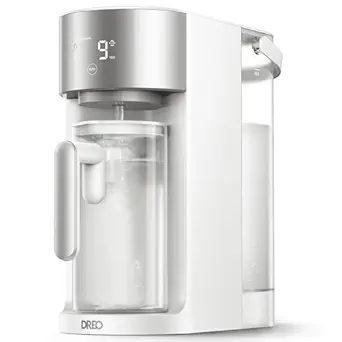 |
iSpring RCC7AK-BN Reverse Osmosis System

| Purification Method | Reverse Osmosis, Alkaline, Activated Carbon, Carbon block |
|---|---|
| Power Source | No Power Needed |
| Maximum Flow Rate | 284 liters_per_day |
| Supported Water TDS Level Maximum (PPM) | 750 |
| Filter Life Cycle | 6 months |
The iSpring RCC7AK-BN is a six-stage, under-sink reverse osmosis system designed to deliver highly purified, mineral-balanced drinking water. It combines sediment and carbon prefilters, an RO membrane, and a mineral alkaline stage to reduce TDS and many contaminants while restoring healthy minerals and pH. The top-mounted patented faucet fastener and push-to-connect fittings simplify installation and make it possible to set up from above the sink, and the transparent first-stage housing helps you see sediment buildup for timely filter changes. The system requires no electricity and includes a storage tank and brushed nickel faucet, making it suitable for everyday kitchen use. Filters have defined lifecycles and a clear replacement path, but routine maintenance and periodic filter swaps are necessary to keep performance at NSF-certified levels. Flow is limited by the 75 GPD capacity and the tank, so heavy simultaneous demand will draw from stored water rather than instant RO output. Overall this is a practical, fully certified RO choice for households that want very clean water with a mineral boost and manageable DIY installation.
Best for: Buyers who want a verified, whole-system RO solution that removes a wide range of contaminants while returning minerals and who value clear maintenance cues and an easier DIY install.
Less Ideal for: Renters or users who need immediate high-volume dispensing without a storage tank or who prefer a zero-maintenance, filter-free option.
- Six-stage filtration with alkaline remineralization for both contaminant removal and improved taste
- NSF/ANSI 58 full-system certification for verified RO performance
- Transparent first-stage housing for easy visual monitoring of sediment
- Top-mounted patented faucet fastener and push-to-connect fittings simplify DIY installation
- Operates without electricity and includes storage tank and faucet
- 75 GPD flow and reliance on the storage tank can limit instant output during heavy use
- Requires regular filter replacements on a set schedule to maintain certified performance
Verdict: Choose the RCC7AK-BN if you want an NSF-certified under-sink RO system that delivers very clean, mineral-balanced drinking water with DIY-friendly installation.
Waterdrop G3P600 Tankless RO
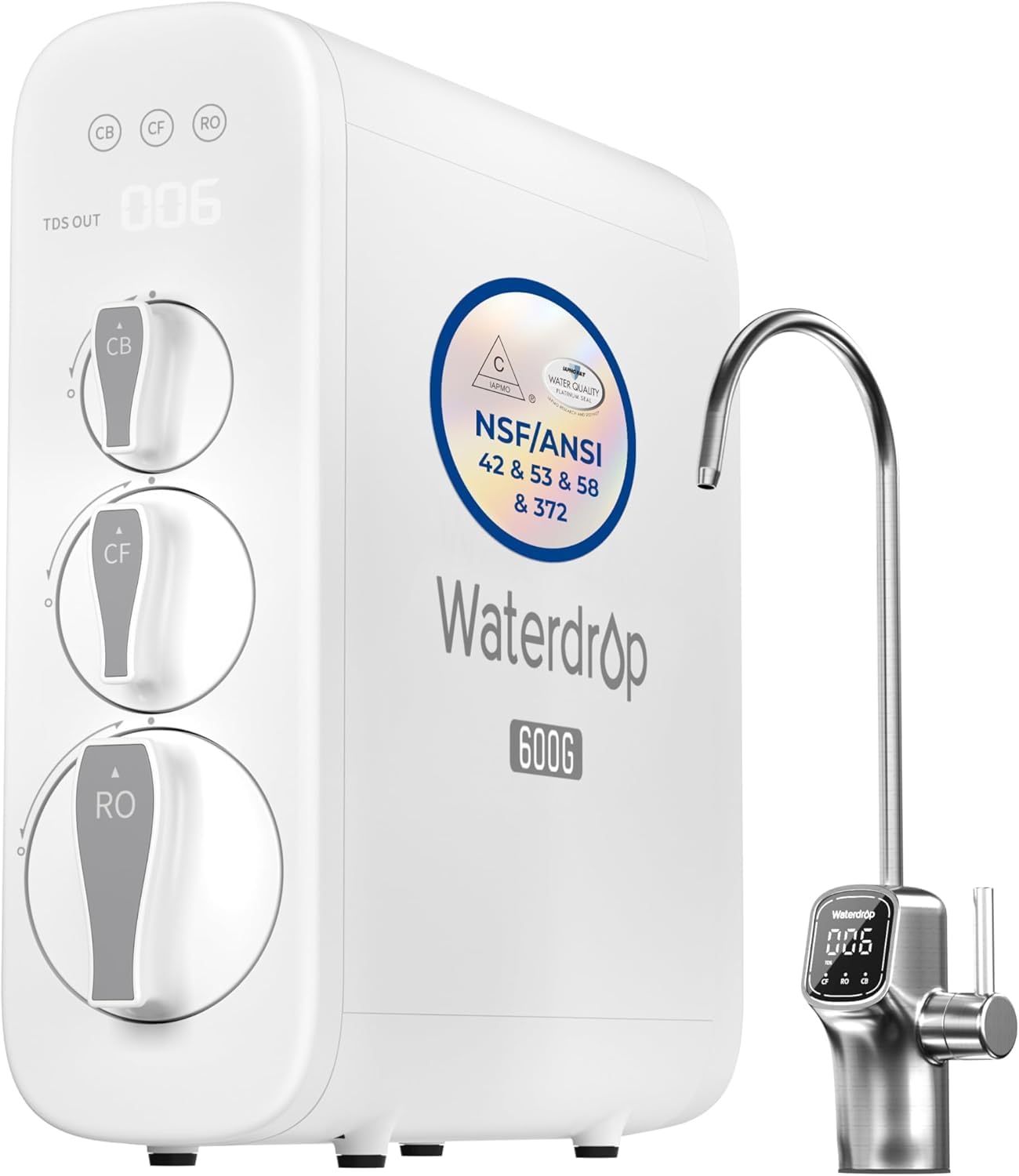
| Filtration stages | 8-stage |
|---|---|
| Flow rate | 0.42 gpm |
| Pure to drain ratio | 2:1 |
| Supported water TDS max | 1500 ppm |
| Power source | Corded Electric |
The Waterdrop G3P600 is a tankless under-sink reverse osmosis system built for high throughput and low waste. It uses an 8-stage filtration train including carbon block and an RO membrane to reduce TDS, heavy metals, PFAS, chlorine and other common contaminants, and its 600 GPD capacity produces an 8 oz cup in about 8 seconds for quick dispensing. The unit is tankless to save under-sink space and includes a smart faucet with a TDS readout and filter-life indicator so you can monitor water quality and know when to change filters. Installation requires a power outlet under the sink and two drilled holes for the faucet and drain connection, and filters rotate for tool-free replacement. Practical limits: it needs under-sink electricity and adequate cabinet clearance, and the maximum faucet flow is limited by its rated flow specification rather than household supply alone. For buyers who prioritize fast, low-drain performance and real-time TDS feedback, this system is geared to deliver.
Best for: Aimed at buyers who want high-flow, performance-focused water purification with minimal water waste and live water-quality feedback for everyday drinking and cooking.
Less Ideal for: Not a good fit for installations without an accessible under-sink outlet, for users who cannot modify the countertop or cabinet, or for those who prefer non-electric, passive filtration systems.
- High production capacity up to 600 gallons per day for fast dispensing
- Low 2:1 pure-to-drain ratio reduces wastewater compared with traditional RO units
- Smart display faucet with TDS monitor and filter-life indicator for on-demand water quality info
- Tankless design frees under-sink space and enables tool-free filter replacement
- Requires under-sink electrical connection which may complicate installation
- Cabinet space and two drilled holes are needed so not ideal for very small or sealed vanities
Verdict: Choose this tankless RO if you want fast, high-capacity purified water with low waste and live TDS monitoring for confident, performance-focused drinking water.
Frizzlife SP99 Under Sink Filter

| Purification Method | Activated Carbon, Carbon Block, Ultra Filtration |
|---|---|
| Maximum Flow Rate | 1.5 gpm |
| Operating Pressure Range | 20-80 psi |
| Upper Temperature Rating | 100 °F |
| Supported Water TDS Level Maximum (PPM) | 500 |
The Frizzlife SP99 is an under-sink water filter system designed to give household tap water clearer taste and lower contaminant levels without removing beneficial minerals. It installs beneath the sink and includes a dedicated brushed-nickel faucet, and the replaceable 8-layer cartridge claims 0.5 micron filtration to cut lead, chlorine, chloramine, PFAS/PFOA/PFOS, VOCs and particulates. The unit is certified to NSF/ANSI 42 and 53 for filtration performance and supports a fast flow rate (about 1.4–1.5 gpm), so it can supply both the faucet and optional fridge/ice connections without slowdowns. Replacements swap only the cartridge, which reduces waste and ongoing cost versus swapping heavy housings, and the maker emphasizes tool-free DIY installation and reinforced housings to limit leaks. Limits to note are the manual water-pressure operation and the stated choice to retain total dissolved solids, so it does not lower TDS or soften water; performance will depend on your supply pressure and local water chemistry.
Best for: Buyers who want a certified, cost-conscious under-sink filter that improves taste and reduces specific contaminants while keeping essential minerals and minimizing waste from full-housing replacements.
Less Ideal for: People who need a system that lowers TDS or softens water, or those who require a powered or tanked system for very low incoming water pressure.
- NSF/ANSI 42 and 53 certified for material safety and contaminant reduction
- Fine 0.5 micron, 8-layer cartridge targets lead, chlorine, chloramine, PFAS and particulates
- Included dedicated faucet simplifies separate filtered-water access
- Relatively high flow rate (~1.4–1.5 gpm) suitable for sink and fridge/ice usage
- Cartridge-only replacements reduce plastic waste and lower ongoing cost
- Does not reduce total dissolved solids so it will not soften water
- Depends on household water pressure since it is water-pressure driven
- Requires replacement cartridges for ongoing contaminant protection
Verdict: Choose the SP99 if you want an NSF-certified under-sink filter that delivers fast, mineral-preserving filtration with low waste and affordable cartridge replacements.
Amazon Basics Pitcher Water Filters (3-Pack)

| Unit Count | 3 Count |
|---|---|
| Material Type | Plastic |
| External Testing Certification | WQA Certified against NSF/ANSI 42, 53, 401 & 372 |
| Filter Life | Approximately 40 gallons / 2 months per cartridge |
These Amazon Basics replacement filters are designed for standard Brita-compatible pitchers and use multi-stage carbon filtration and a fine mesh to reduce nine contaminants including chlorine taste and odor and heavy metals. Typical use is swapping the cartridge every two months or after roughly 40 gallons to keep water tasting fresh and to avoid single-use plastic bottles. The filters are WQA certified against NSF/ANSI 42, 53, 401 and 372, are made in Europe, and are lead- and BPA-free, which supports both safety and performance expectations. In practice they offer similar ease of installation and flow rate to factory-style pitcher filters while positioning as a cost-saving alternative to brand-name replacements. Limitations include a finite lifespan per cartridge and compatibility exclusions such as Brita Stream pitchers, so double-check fit before buying multiple packs. For everyday kitchen use they deliver noticeable taste improvement at a lower recurring cost than many OEM cartridges.
Best for: Buyers who prioritize good contaminant removal and verified certifications while keeping recurring costs low for everyday filtered water in a kitchen pitcher.
Less Ideal for: People who need a filter for Brita Stream pitchers or want longer-lasting high-capacity filtration systems like under-sink or whole-house units.
- WQA/NSF-certified to multiple standards including NSF/ANSI 42, 53, 401 and 372
- Compatible with most Brita-style pitchers and easy to install
- Certified lead-free and BPA-free for safer drinking water
- Each cartridge replaces up to about 300 single-use plastic bottles over its life
- Not compatible with Brita Stream pitchers
- Each filter lasts about two months so replacements are recurring
Verdict: A budget-friendly, WQA/NSF-certified Brita-compatible cartridge that delivers reliable everyday contaminant reduction at a lower recurring cost.
LifeStraw Personal Water Filter

| Material Type | Plastic |
|---|---|
| Model Number | LSPHF038 |
| External Testing Certification | NSF |
| Product Benefits | Reduce Parasites,Removes Bacteria |
The LifeStraw Personal Water Filter is an ultralight straw-style purifier designed for hiking, travel, and emergency use that lets you drink directly from lakes, rivers, and streams or from a container. It uses a microfiltration membrane tested to EPA and NSF protocols to remove bacteria, parasites, microplastics, and particulate cloudiness, and it reduces turbidity to provide visibly clearer water. The unit is extremely portable and simple to use — just place the intake in the water and sip — and requires no batteries or chemicals, so it is a dependable option in remote or emergency situations. Rated to provide up to 4,000 liters (1,000 gallons) of treated water with proper maintenance, the LifeStraw is durable for long-term field use and carries NSF-verified performance. Limitations are that it does not remove dissolved chemicals, heavy metals, or many viruses, and its flow slows as the filter loads, requiring backflushing or replacement in heavy-sediment conditions. For users who need a lightweight, proven microbial barrier for outdoor and preparedness kits, it is a straightforward, reliable choice.
Best for: Buyers who prioritize a compact, proven microbial barrier for reliable drinking water on hikes, travel, or in emergency kits and value simplicity and low maintenance.
Less Ideal for: Anyone needing removal of chemicals, heavy metals, or guaranteed viral protection should choose a different treatment method or a multi-stage purifier.
- NSF-tested microfiltration that blocks bacteria, parasites, and microplastics
- Ultralight, packable straw design that requires no power or chemicals
- Long service life rated up to 4,000 liters with proper use
- Simple operation for direct drinking or filling containers in the field
- Does not remove dissolved chemicals, heavy metals, or most viruses
- Flow rate decreases as the filter loads and may require backflushing
Verdict: Choose the LifeStraw when you want an ultralight, NSF-verified straw filter that reliably protects against bacteria and parasites for outdoor and emergency water needs.
EveryDrop Refrigerator Filter 1 EDR1RXD1

| Model Number | EDR1RXD1 |
|---|---|
| Unit Count | 1 Count |
| Included Components | 1 Water Filter |
| External Testing Certification | NSF 42, NSF 53, NSF 401 |
EveryDrop Filter 1 (EDR1RXD1) is a factory-quality replacement cartridge designed to drop into compatible Whirlpool refrigerators to improve the taste and safety of drinking water and ice. It uses a three-stage filtration system built around a coconut shell activated carbon core to trap large particles, micro-filter medium-size debris, and absorb microscopic contaminants; the company cites independent NSF certifications (42, 53, 401) for reduction of aesthetic impurities, health-related contaminants, and select emerging contaminants. Typical use is straightforward: push-in installation in the filter housing and replace about every six months or 200 gallons. In practice this delivers noticeably clearer ice and reduced chlorine and metallic tastes, and it is certified to remove 99% of microplastics down to very small sizes. The filter is sold as a single pack and is sized for specific Whirlpool models, so it is simple to install but you must pick the right model fit; genuine filters also reduce the chance of installation issues compared with generic cartridges.
Best for: Buyers who prioritize independently verified contaminant reduction and want a genuine, factory-compatible replacement for their Whirlpool refrigerator to ensure consistent water quality and straightforward installation.
Less Ideal for: People who need a universal or multi-model filter solution or who prefer bulk multi-packs for extended spare supply should consider other options.
- NSF-certified to Standards 42, 53, and 401 for broad contaminant reduction
- Reduces 99% of microplastics and addresses heavy metals, VOCs, and other contaminants
- Factory-designed to fit Whirlpool refrigerators for reliable installation and operation
- Activated carbon core sourced from coconut shell for targeted taste and odor improvement
- Sold as single-count pack which may be less convenient for households that prefer bulk replacement
- Compatibility is limited to specific refrigerator models so buyers must confirm fit
Verdict: Choose this genuine EveryDrop Filter 1 when you want an independently certified, factory-compatible cartridge that demonstrably reduces microplastics and a wide range of contaminants.
DREO RO Countertop Water Filter WF112

| Capacity | 3 liters |
|---|---|
| Purification Method | Reverse Osmosis |
| Pure to Drain Rate | 3:1 |
| Included Components | RO body, RO filter, autofill pitcher |
| Filter Runtime | 265 gallons (1000L) |
The DREO WF112 is a countertop reverse osmosis purifier that delivers laboratory-style filtration in a compact package for kitchens, offices, or small households. It uses a 7-stage RO filter to cut TDS and common contaminants while reporting raw and purified TDS on a built-in meter and prompting when the filter needs replacement. Water fills the included 1.1L autofill pitcher automatically via a sensor, and the unit supports a self-cleaning flush to purge internal lines. The system is installation-free and designed for daily drinking and cooking use by one to two people, trading off lower throughput and a modest 3:1 pure-to-drain ratio compared with larger under-sink RO setups. Filters are twist-to-install and rated for roughly 265 gallons (about 1000 L) per cartridge, so ongoing maintenance is straightforward but periodic filter replacements are required. Its small footprint and hands-off features make it a practical choice when you want RO-quality water without plumbing modifications, but expect slower fill times versus plumbed systems.
Best for: Buyers who prioritize reliable, lab-grade purification without altering plumbing and want clear, easy-to-read indicators and low-effort daily use.
Less Ideal for: Households that need high daily water volume, faster fill rates, or a fully plumbed under-sink installation should consider larger or plumbed RO systems instead.
- Seven-stage RO filtration that removes a wide range of impurities.
- Built-in TDS meter and filter-life indicator for real-time water quality and maintenance alerts.
- Autofill pitcher with sensor for hands-free dispensing.
- Self-cleaning flush to reduce biofilm and maintain internal cleanliness.
- Compact, installation-free countertop design suitable for renters or small kitchens.
- Filter capacity and tank size are limited, so it is best for 1–2 people rather than larger households.
- As a non-plumbed countertop RO, it has slower output and still produces some wastewater due to the pure-to-drain process.
Verdict: A compact, installation-free RO countertop unit that delivers measurable, low-effort purified water for risk-averse buyers who want RO performance without plumbing changes.
Choosing the Right Water Filter: Key Factors to Consider
Contaminant Reduction
Different filters target different contaminants. Some systems reduce chlorine and sediment while others are certified to reduce lead, volatile organic compounds, or microbial cysts. Knowing which contaminants you need removed should guide your choice.
Check test data or certifications to confirm claimed reductions. If your water report shows specific issues, pick a filter with verifiable performance for those contaminants rather than a general-purpose cartridge.
Flow Rate and Household Capacity
Flow rate matters for faucets, refrigerators, and whole-house systems. A filter that restricts flow can be frustrating during daily use, so consider the gallons-per-minute rating and lifetime capacity in relation to your household size.
Systems with larger canisters or higher-capacity media need less frequent replacement but are typically larger. Match capacity to household consumption to avoid running filters beyond recommended life and to keep water pressure acceptable.
Installation and Plumbing Compatibility
Some filters install under a sink, others mount on a counter, connect to a fridge, or replace a whole-house line. Assess the physical space, available water connections, and whether you are comfortable doing basic plumbing or need professional help.
Look for systems with clear fittings and compatibility information. Quick-connect fittings and included mounting hardware reduce installation time, while systems requiring new taps or dedicated lines increase complexity and may need a plumber.
Maintenance Frequency and Cost
Filter life and replacement cadence drive ongoing cost and convenience. Cartridges rated for higher gallon counts or long service intervals minimize maintenance frequency, but replacement parts should be easy to find and reasonably priced.
Consider how simple it is to change filters: tool-free access and clear indicators save time and reduce the chance of incorrect installation. Also factor in whether replacements require flushing or priming that affects downtime.
Materials and Durability
Filter housings, seals, and fittings determine long-term reliability. Durable materials resist cracking, leaking, and corrosion from water chemistry over time. For whole-house systems, robust housings and mounting brackets are especially important.
Inspect warranty coverage and material descriptions when available. Better build quality reduces the likelihood of leaks and the need for premature replacement of the system itself.
Certification and Test Data
Independent certification from recognized labs or organizations provides objective evidence a filter performs as claimed. Certifications can cover specific contaminants, structural integrity, and material safety.
Review available test reports or certification marks to verify that the system has been evaluated for the contaminants you care about. Lack of independent data should be a red flag when contaminant removal is a primary goal.
Types of Water Filters and Where They Work Best
Water filters come in several common formats, and each fits a different use case. Countertop or faucet-mounted filters are convenient for drinking water and require minimal plumbing changes. Under-sink systems keep the filter out of sight and can serve a dedicated drinking faucet. Whole-house units treat incoming water for all taps and appliances but are larger and more complex to install.
Match the type to your goals. For taste and odor improvements, a simple carbon-based filter often suffices. If you need lead or cyst reduction, choose systems with specific media or certifications geared to those contaminants. Whole-house filtration makes sense when protecting appliances or removing sediment from incoming water.
- Countertop/Faucet: Easiest to set up, good for drinking water
- Under-sink: Out of sight, can support higher flow to a dedicated faucet
- Refrigerator inline: Direct feed for chilled water and ice
- Whole-house: Protects plumbing and appliances across the home
Reading Performance Specs and Certifications
Performance claims should be backed by measurable numbers. Look for stated percent reductions at specified contaminant concentrations and flow rates. Test conditions can vary, so compare apples to apples by checking test flow rates and contaminant challenge levels.
Certifications from independent labs or standards bodies provide extra confidence. When certifications are present, verify which contaminants were tested and under what conditions. This helps you understand real-world effectiveness versus marketing language.
- Check percent reduction and test parameters
- Look for independent lab results or certification marks
- Verify which contaminants the system was tested for
Installation Tips to Avoid Common Issues
Plan the installation space and gather necessary tools before you start. Turn off the water supply, relieve residual pressure, and follow manufacturer flow direction when connecting housings. Use thread seal tape on metal fittings when appropriate and check for leaks with the system pressurized.
If you are unsure about your plumbing type or the required fittings, consult a plumber. Small errors during installation are the most common cause of leaks and performance problems, so take time to confirm each connection and the correct orientation of cartridges.
- Measure space and access for cartridge swaps
- Confirm water shutoff locations and line materials
- Pressure-test connections and inspect seals after installation
Maintaining Filters for Consistent Performance
Follow the replacement intervals suggested by the manufacturer, but treat them as guidelines influenced by your actual water quality and usage. If water clarity or taste changes, or flow decreases noticeably, replace cartridges sooner. Keep a spare cartridge on hand if replacement times are long or parts are shipped from afar.
Regular visual checks of housings and O-rings can prevent leaks. When changing cartridges, clean seating surfaces and lubricate O-rings with a food-grade lubricant where recommended. Record replacement dates to track service intervals accurately.
- Track replacement dates and gallon usage
- Inspect seals and housings during each service
- Flush new cartridges per instructions to remove loose media
Sustainability and Waste Considerations
Replacement cartridges create waste, so consider systems with recyclable components or long-life media that reduce frequency of disposal. Some filter manufacturers offer take-back or recycling programs, which can lower the environmental impact over time.
Another option is to choose media that can be regenerated or replaced in smaller parts rather than disposing of an entire housing. Balance environmental concerns with the need for effective contaminant removal and practical maintenance routines.
- Prefer recyclable cartridges or take-back programs
- Consider longer-life media to reduce waste volume
- Weigh environmental benefits against ease of maintenance
How We Chose the Best Water Filter
We evaluated candidates using metrics that matter for everyday household water filtration. Primary emphasis was placed on measurable contaminant reduction backed by third-party test claims or certified performance, ensuring systems actually remove or reduce substances buyers care about. We also prioritized flow rate and capacity so the system can meet routine household demand without excessive pressure loss or frequent cartridge swaps. Installation complexity and compatibility were factored to reflect what buyers will experience during setup. Ease of maintenance was another key filter: we preferred systems with accessible cartridges, clear replacement intervals, and straightforward part availability. Durability of housings and materials was reviewed to reduce the risk of leaks or premature failure. We excluded products that lacked credible performance specifications, failed to disclose maintenance requirements, or relied solely on vague marketing claims. Final selections balance filtration capability, practical daily use, and reasonable upkeep demands.
Our full evaluation process is outlined in our review methodology.
FAQ
How often should I change a water filter cartridge?
It usually depends on the cartridge capacity and your household usage. Typical replacement intervals range from three months to one year. Higher sediment loads or heavy usage often require earlier replacement.
Will a water filter affect my water pressure?
Some systems reduce flow, especially when heavily loaded or when using fine media at higher flow rates. Choose a filter rated for your household flow needs and maintain cartridges to minimize pressure loss.
Do all water filters remove lead and microorganisms?
No. Different filters target different contaminants. Verify test data or certification to confirm removal of lead or microorganisms. Not all carbon or sediment filters are sufficient for those specific hazards.
Can I install an under-sink water filter myself?
Many under-sink systems are designed for DIY installation, but it depends on your plumbing. If it requires cutting supply lines or installing a separate faucet, you may prefer professional help. Confirm compatibility and included fittings before starting.
Are replacement parts easy to find for most filters?
Availability varies by system. Popular cartridge types and sizes are usually easy to source, but proprietary cartridges can be harder to find. Consider how easy it will be to obtain replacements in your area.
Final Verdict
Choose a water filter by balancing the contaminants you need removed, the household flow and capacity requirements, and the level of installation and maintenance you are comfortable with. Prioritize verified performance and reasonable cartridge life to keep maintenance predictable. Finally, weigh build quality and available certifications to reduce the risk of leaks or inadequate filtration so you can select a reliable solution for cleaner water.