
Note: This article contains affiliate links. If you click on these links and make a purchase, we may earn a small commission at no extra cost to you. This helps support our research and content. Read our full affiliate disclosure here.
Picking the right water heater for a mobile home affects daily comfort, energy bills, and how you use limited space. Mobile-home setups often have tighter utility access, lower electrical or propane capacity, and less room for a full-size tank, so your choice has to balance output, footprint, and installation complexity. This guide presents seven shortlisted water heaters suited to mobile home needs, selected for compact dimensions, sensible recovery rates, and practical installation options. Below we summarize the evaluation criteria used and explain what to expect from each type before the product list.
Top Picks at a Glance
| Best Overall The best all-around choice for most situations | GASLAND BE528 20L Tankless Propane Heater | 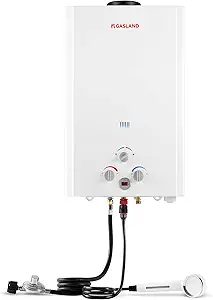 |
| Best Quality Built to a higher standard if you want something more solid | poukaran 65,000 BTU RV Tankless Heater |  |
| Best Value The sweet spot between price and what you get | VEVOR 10-Gallon Electric Water Heater |  |
| Best Budget The cheapest option that still gets the job done reliably | xwdzswgs 3000W Tankless Water Heater |  |
| Top Rated A top-rated pick with lots of positive feedback | Rheem RTEX-13 Tankless Water Heater |  |
| Most Popular A crowd favorite that many people choose with confidence | CAMPLUX AY132 Portable Water Heater |  |
| Best Seller A high-volume bestseller chosen again and again | Rheem RTEX-18 Tankless Electric |  |
GASLAND BE528 20L Tankless Propane Heater
| Power Source | Propane (LPG) |
|---|---|
| Flow Rate | 5.28 gpm |
| Maximum Temperature | 176 °F |
| Maximum Pressure | 110 psi |
| Heat Output | 136,000 BTU/hr |
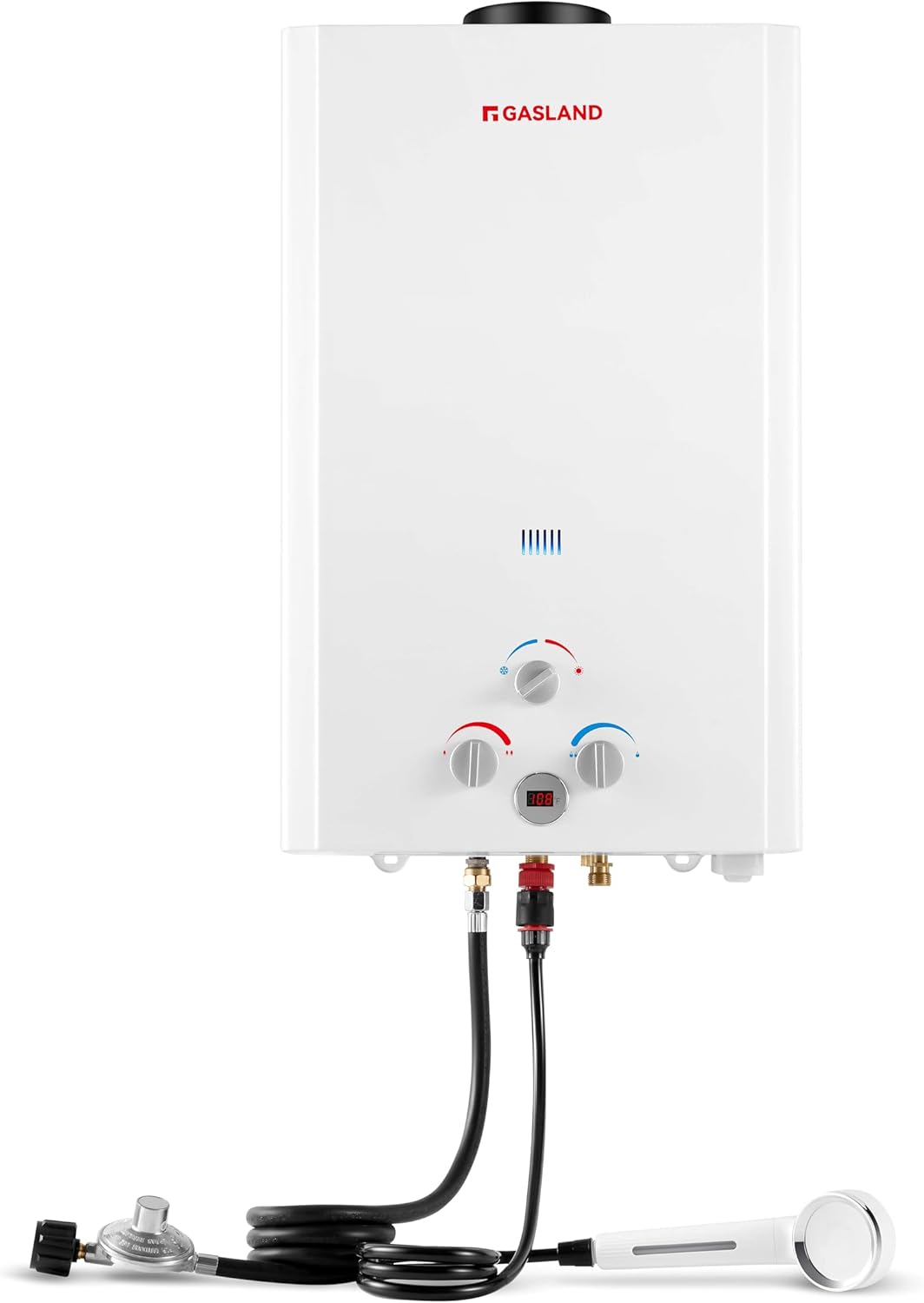
The GASLAND BE528 is a portable, wall-mountable propane tankless heater designed to supply on-demand hot water for mobile homes and outdoor use. It runs on a standard 20 lb LPG cylinder and uses two D-cell batteries for electronic ignition and the LED temperature display. Typical uses include showers, outdoor kitchens, vehicle washing, and other off-grid needs where a natural gas line is not available. Notable features are a high heat output (136,000 BTU/hr), a claimed flow rate of 5.28 GPM, adjustable temperature control with a digital readout, low-pressure start (around 4.0 PSI), and multiple safety protections including overheat, flame failure, and dry-combustion safeguards. Practical benefits include strong flow for single-shower applications, splash-resistant construction for outdoor mounting, and included accessories like a regulator, hose, and shower head. Limitations include no horizontal installation option, unsuitability above 3,300 ft or in strong winds, dependence on propane and batteries, and the need to protect the unit from prolonged rain exposure to avoid damage.
Best for: Buyers who want a compact, high-output propane tankless heater for a mobile home or outdoor setup and prioritize reliable single-shower performance and simple digital controls.
Less Ideal for: People who need a unit for high-altitude cabins, windy exposed installations, multi-bath homes, or those who cannot accommodate propane and battery maintenance.
- High maximum heat output (136,000 BTU/hr) suitable for quick temperature rises
- Generous flow rate up to 5.28 GPM for steady single-shower use
- Digital temperature display and temperature lock for easier control
- Starts at low water pressure (around 4.0 PSI) making it usable with weak supply
- Includes regulator, hose, shower head, and mounting hardware for out-of-the-box setup
- Not designed for high-altitude locations above 3,300 feet or for sustained use in strong winds
- Requires a 20 lb propane tank and D-cell batteries for ignition, adding ongoing fuel and battery needs
- Should be sheltered from prolonged rain despite splash resistance to protect electronics
Verdict: A high-output, propane-powered tankless heater that gives mobile-home and outdoor users reliable on-demand hot water with simple digital control.
poukaran 65,000 BTU RV Tankless Heater

| Power Source | Propane |
|---|---|
| Voltage | 12 volts DC |
| Maximum Temperature | 123 °F |
| Heat Output | 65,000 BTU |
This tankless RV heater supplies continuous hot water on demand using propane for heat and a 12V control system, so multiple showers or dishwashing sessions are possible without waiting for a tank to refill. The unit is built around a high-output 65,000 BTU burner, an oxygen-free copper heat exchanger and a brushless DC fan, which helps it maintain stable temperatures at higher altitudes and start reliably in cold conditions. It offers both internal and external water outlets for indoor plumbing and outdoor use, a microcomputer control panel with adjustable temperature up to 123°F and built-in safety features like forced exhaust, freeze protection and automatic gas shutoff. The compact design fits into a small RV access door and includes error codes to simplify troubleshooting. Expect solid performance for demanding mobile use, though installation requires propane and proper venting and the maximum temperature tops out at 123°F which may be lower than some household tankless units.
Best for: Buyers who prioritize on-demand hot water performance in a mobile setting and need a compact, altitude-capable unit that delivers strong flow for showers and chores.
Less Ideal for: People who want higher domestic-style maximum temperatures, an electric-only solution, or who cannot accommodate propane and venting requirements in their RV.
- High 65,000 BTU output for fast recovery and strong flow at typical RV draw rates
- Oxygen-free copper heat exchanger and brushless DC fan for efficient, stable heating and altitude performance
- Front and external water outlets for flexible indoor and outdoor use
- Compact footprint designed to fit common RV access doors and tight installations
- Microcomputer control with adjustable temperature and error codes for easier operation and troubleshooting
- Maximum set temperature is 123°F which can be lower than some home tankless units
- Requires proper propane hookup and venting which may need professional installation
Verdict: Choose this unit when you need a compact, high-BTU propane tankless heater that reliably delivers continuous hot water for performance-focused RV use.
VEVOR 10-Gallon Electric Water Heater

| Capacity | 10 gallons |
|---|---|
| Wattage | 1600 watts |
| Maximum Temperature | 167 °F |
| Power Source | ac |
This compact 10-gallon tank heater stores and supplies hot water for everyday tasks like dishwashing, showers, and light laundry, using a 1600W immersion element that heats water up to 167°F. It is set up as a floor-mounted unit with an LED heating indicator and a rotary knob for temperature adjustment, which makes monitoring and dialing in comfort straightforward. The enamel-coated inner tank and 20mm foam insulation help resist corrosion and retain heat, while built-in protections — dry-heat, overheat, and high-pressure safeguards — add safety for continuous use. Installation is typical for small storage heaters and can suit tight spaces when placed away from direct sun and rain; the unit's modest wattage keeps electrical requirements to a single 120V circuit but means recovery after heavy use is slower than higher-power models. For mobile home use the compact footprint and straightforward controls make it practical, but you should confirm your electrical capacity and available mounting/ventilation before buying.
Best for: Buyers who need a compact, factory-quality storage heater that fits limited spaces and prefers simple, reliable controls and built-in safety for everyday hot water needs.
Less Ideal for: Homes that frequently demand large volumes of hot water or have higher recovery-speed requirements should consider larger-capacity or higher-wattage options instead.
- Compact 10-gallon capacity suited to small households and space-constrained installs
- 1600W immersion element delivers adequate heat on a standard 120V circuit
- LED display and rotary control provide simple, visible temperature management
- Enamel-coated inner tank and foam insulation improve durability and heat retention
- Multiple safety protections including dry-heat and overheat protection
- 1600W power limits recovery speed after heavy or back-to-back hot water use
- Floor-mount design requires appropriate placement and clearances in tight mobile home spaces
Verdict: A space-saving 10-gallon electric tank that delivers reliable, easy-to-control hot water for mobile-home sized needs when you prioritize compact footprint and built-in safety.
xwdzswgs 3000W Tankless Water Heater

| Wattage | 3000 watts |
|---|---|
| Voltage | 110 volts |
| Flow Rate | 0.5 gpm |
| Maximum Temperature | 131 °F |
| Mount Type | Wall |
This compact 3000W tankless water heater is a point-of-use unit designed to mount vertically under a sink or on a wall to provide near-instant hot water for small tasks. It heats water quickly at low flow rates and shows temperature on an LED display with an option to switch between Celsius and Fahrenheit. Built-in protections include dry-burning prevention, leakage protection, automatic shutoff for over-temperature, and IPX4 splash resistance, which helps in tight or damp spaces. Installation is straightforward for basic plumbing setups thanks to a G1/2-inch universal interface and included mounting screws, though the maker recommends a dedicated 32A trip switch and heavier gauge wiring. Performance is best for single fixtures or light-duty use because the listed flow rate is low, so it is not intended to supply multiple taps simultaneously. The lightweight ABS enclosure and small footprint make it easy to fit in mobile homes or beneath vanities, but vertical-only installation and electrical requirements mean planning is needed before purchase.
Best for: Buyers looking for an affordable, space-saving point-of-use heater for a single sink or light hot-water tasks in a mobile home or small apartment.
Less Ideal for: Homes that need hot water for multiple fixtures at once or higher flow jobs such as showering should choose a higher-capacity solution.
- Compact wall-mounted design fits easily under sinks and in small spaces
- Fast heating with 3000W output and LED temperature display for on-demand hot water
- Multiple safety features including dry combustion protection and automatic shutoff
- Universal G1/2-inch interface and included mounting hardware simplify installation
- Low maximum flow rate (0.5 gpm) limits use to a single fixture at a time
Verdict: A budget-friendly, compact point-of-use heater that provides quick hot water for a single sink or light tasks in mobile homes and small spaces.
Rheem RTEX-13 Tankless Water Heater

| Power Source | Electric |
|---|---|
| Wattage | 13 KW |
| Voltage | 240 volts |
| Flow Rate | 4.8 gpm |
| Maximum Temperature | 140 °F |
The Rheem RTEX-13 is a wall-mounted, 240V electric tankless heater designed to provide continuous hot water at single or limited multiple points. It uses two copper immersion heating elements with self-modulating power control and an external LED thermostat that adjusts temperature in 1°F increments, so you can dial in consistent outlet temperatures. Typical use is for a mobile home bathroom or kitchen run where space is limited and you want near-instant hot water without a storage tank. Installation is straightforward with 1/2 NPT adapters and side compression water connections, and the unit is field-serviceable if an element needs replacement. The practical benefits are compact footprint, high electrical efficiency, and precise temperature control for predictable performance. Important limitations are the electrical demand—the 13 kW, 240V setup requires a properly sized circuit (54 A noted) and may not support multiple high-flow fixtures simultaneously, so flow and simultaneous use should be planned. The unit is best where matched to a single point or modest demand in a mobile home setting.
Best for: Buyers who prioritize dependable, compact hot-water delivery for a single bathroom or kitchen in a mobile home and want a straightforward, serviceable unit with precise temperature control.
Less Ideal for: Large households or installations that need simultaneous high-flow hot water across multiple fixtures should choose a higher-capacity or whole-house solution.
- Compact wall-mounted design fits small spaces typical of mobile homes
- External digital thermostat with 1°F adjustment for precise temperature control
- High electrical efficiency with self-modulating elements to reduce energy waste
- Field-serviceable copper heating elements and simple plumbing connections for easier maintenance
- Requires a high-capacity 240V circuit and 54 A rating which may need electrical upgrades
- Flow rate limits simultaneous use—not suitable as whole-house solution in higher-demand setups
Verdict: A compact, energy-efficient tankless unit that delivers reliable point-of-use hot water with precise digital control for mobile homes with proper 240V electrical capacity.
CAMPLUX AY132 Portable Water Heater

| Flow Rate | 1.32 gpm |
|---|---|
| Maximum Temperature | 167 °F |
| Heat Output | 34,000 BTU |
| Power Source | Battery Powered (ignition) / Propane fuel |
| Water Pressure Range | 3-130 PSI |
The CAMPLUX AY132 portable propane tankless water heater kit supplies on-demand hot water for outdoor and mobile-home style situations where mains hookups are unavailable. It runs on liquid propane for heating and uses two D batteries for ignition while the included 12V pump can draw water from a tank, bucket, or lake, so you can set up a shower or wash station away from a pressurized tap. The kit bundles a CSA gas regulator, shower head, two extension hoses with quick connectors and long power cables that let you position the pump up to about 25 feet from a vehicle battery, making setup flexible and fairly quick. Safety features such as flame-failure and dry-combustion protection plus low-flow protection add user confidence during use. Limitations include a modest maximum flow (about 1.32 gpm) and reliance on propane and batteries instead of AC power, so it is best for short showers, cleaning tasks, or light use rather than multiple back-to-back long showers.
Best for: Buyers who prioritize a proven, ready-to-run off-grid hot water solution for camping, RVing, or mobile-home outdoor showers and want the reassurance of included pump and safety features.
Less Ideal for: People needing high-flow or continuous multi-user hot water or those who prefer an AC-powered permanent home installation should consider larger or AC-compatible units instead.
- Complete kit includes heater, 12V pump, regulator, shower head, hoses and long power cables for immediate off-grid setup.
- Battery ignition and 12V pump eliminate need for mains power, enabling use from vehicle battery or battery bank.
- Built-in safety features like flame failure, dry combustion and low-flow protection improve reliability in remote use.
- Flexible water sourcing lets you draw from tanks, buckets or natural water sources for true off-grid operation.
- Maximum flow rate of about 1.32 gpm limits shower length and water coverage.
- Depends on propane and batteries so you must carry fuel and replacement batteries for extended trips.
Verdict: If you need a proven, all-in-one propane tankless hot-water kit for off-grid RV or mobile-site use, the CAMPLUX AY132 gets you a safe, ready-to-run shower solution with pump and hoses included.
Rheem RTEX-18 Tankless Electric
| Wattage | 18000 watts |
|---|---|
| Voltage | 240 volts |
| Flow Rate | 4.4 gpm |
| Heat Output | 18 KW |
| Maximum Temperature | 140 °F |
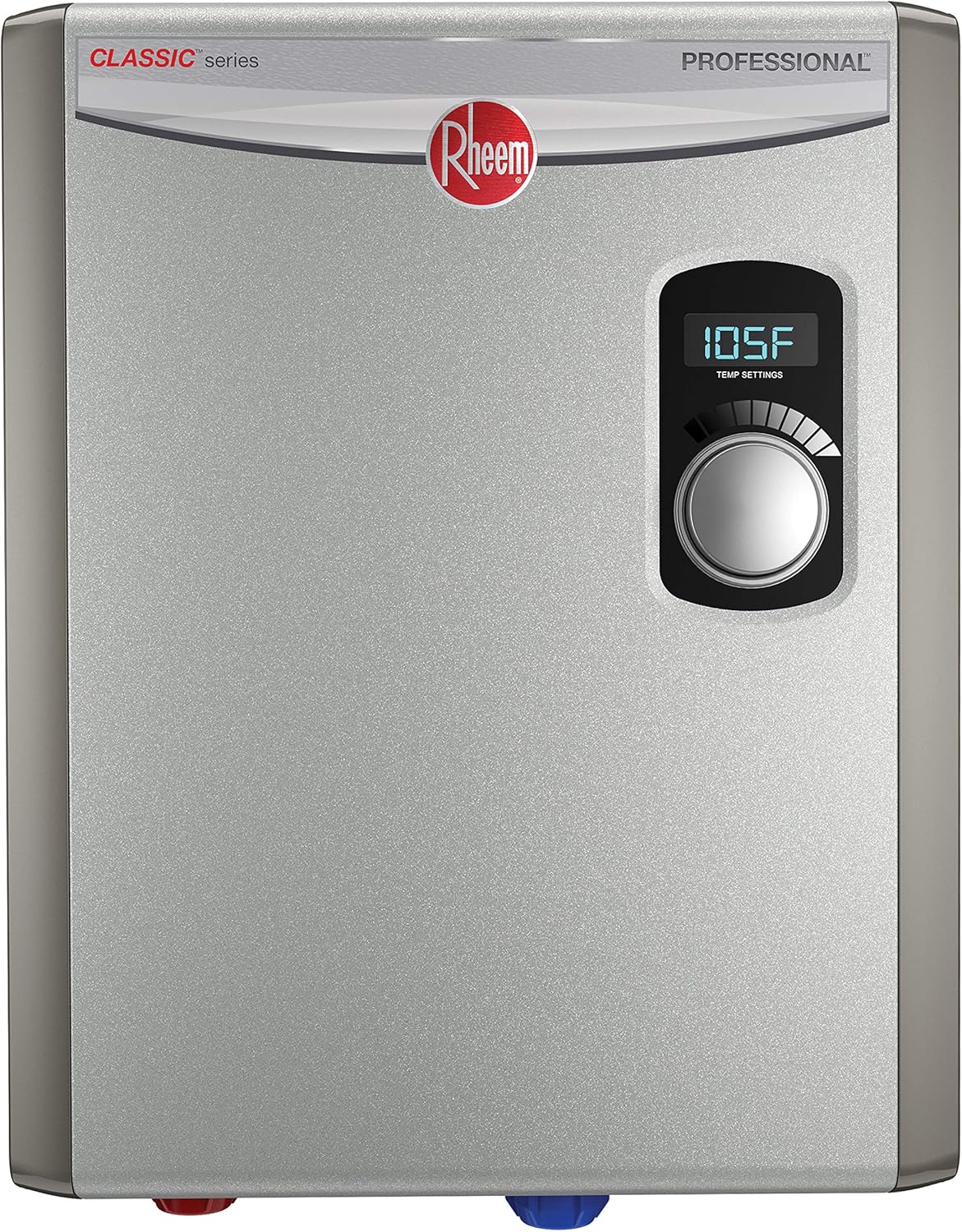
The Rheem RTEX-18 is a wall-mounted tankless electric water heater built for continuous on-demand hot water in mid-size homes or single-shower whole-home setups. It uses self-modulating electronics and two field-serviceable copper heating elements to match power to demand, and a front LED thermostatic control lets you set outlet temperature to the nearest degree. With a listed flow rate up to 4.4 gallons per minute and an 18 kW heat output at 240 V, it can handle one to two fixtures simultaneously in typical temperate conditions. Because it is electric and vent-free, installation is flexible for indoor wall mounting and it saves space compared with tank systems. Important limitations are its electrical requirements—240 V wiring and substantial breaker capacity—which may need professional upgrade in older mobile homes, and its flow rate falls short of supporting multiple full showers at once in cold inlet conditions. For buyers who want a compact, efficient, factory-quality tankless that provides continuous hot water and easy temperature control, the RTEX-18 is a practical middle-ground option.
Best for: Buyers who prioritize reliable, space-saving on-demand hot water and want a factory-quality electric tankless that is efficient and easy to control in a mobile or modest whole-home setting.
Less Ideal for: Homes without adequate 240 V electrical service or users who need simultaneous hot water for multiple full bathrooms during peak use should consider other solutions.
- Provides continuous on-demand hot water without venting
- Self-modulating power matches energy use to demand for better efficiency
- Digital LED thermostatic control with +/-1 degree adjustment
- Compact wall-mounted design saves space compared with tank heaters
- Field-serviceable copper heating elements for easier maintenance
- Requires 240 V electrical supply and significant breaker capacity which may need electrical upgrades
- Maximum flow rate (4.4 GPM) may be limited for simultaneous high-demand fixtures
Verdict: A compact, efficient electric tankless that delivers steady on-demand hot water and precise temperature control for mobile or modest whole-home installations.
Choosing the Right Water Heater for Mobile Home: Key Factors to Consider
Footprint and Mounting Options
Mobile homes often have very limited interior space and may require exterior or closet-mounted water heaters. Measure available height, width, and depth before choosing. Some units offer vertical and horizontal venting or wall-mount configurations that let you fit a heater into narrow closets or under stair storage.
Mounting options also affect how you route plumbing and venting. A compact, wall-hung heater can free floor space but requires reliable wall structural support and may complicate drain routing. If exterior mounting is needed, verify freeze protection and insulation recommendations to prevent cold-weather damage.
Fuel Type and Electrical Demands
Mobile homes can be limited by electrical panel capacity and by available propane or natural gas hookups. Confirm whether the dwelling supports the heater's power requirements and whether a dedicated circuit or upgraded service is needed. Electric tankless and high-capacity electric storage units can demand more amperage than a typical mobile-home panel provides.
If using gas or propane models, check venting clearances and whether a power vent or direct-vent option is necessary. Propane-fired units often provide strong recovery with lower electrical draw, but require safe fuel piping and appropriate clearance for combustion air.
Usable Hot Water and Recovery
For small tanks, usable hot water depends on both the tank volume and the temperature rise your system needs. Recovery rate indicates how quickly the heater can reheat water after heavy use. In mobile-home households where showers, dishwashing, and laundry may occur in quick succession, a higher recovery rate reduces the chance of running out of hot water.
Consider simultaneous-use scenarios typical for your household. A unit with a smaller tank but faster recovery can outperform a larger, slow-recovery tank in day-to-day use. For very limited electrical supply, a hybrid approach or low-power tankless alternative may offer better practical output.
Venting, Clearance, and Local Codes
Venting needs vary by fuel type and unit design. Direct-vent or sealed-combustion models reduce indoor air requirements and can be safer in small, tightly sealed mobile homes. Proper clearance to combustible materials and correct vent pipe routing are essential for safety and code compliance.
Check local mobile-home installation codes before selecting a unit. Some jurisdictions restrict certain venting methods or require specific clearances and combustion-air provisions. Planning for venting early prevents expensive retrofits or failed inspections.
Energy Use and Insulation
Energy efficiency matters in mobile homes where heat loss and utility costs can be more noticeable. Look at standby heat loss for storage tanks and insulation R-values for external units. High-efficiency models reduce ongoing costs and can be especially beneficial in colder climates where water heating demands increase.
Consider additional insulation options like an insulating jacket for a tank-style heater or heat-trap fittings to limit convective losses. Efficient controls and programmable thermostats can also reduce wasted energy by lowering setpoint during idle periods.
Maintenance and Access
Regular maintenance—such as anode rod checks, sediment flushing, and pressure-relief valve inspections—extends service life. For mobile-home installations, choose a location with enough access clearance to perform these tasks safely.
Simpler designs with easy access to serviceable components reduce maintenance time and cost. If the heater will be enclosed or hard to reach, factor in potential future removal or replacement complexity when deciding.
Choosing Between Tank and Tankless for Mobile Homes
Tank models offer predictable capacity and simpler installation for basic setups, while tankless units deliver on-demand hot water with a smaller footprint. The tradeoff is that tank units can lose heat while idle, and tankless options may require more electrical or gas input and specific venting.
Assess how often multiple hot-water fixtures are used at once. If simultaneous showers and appliance use is common, a tank with adequate volume or a high-flow tankless system will handle peak demand better. Conversely, if space is the overriding constraint, a compact tankless or small tank with quick recovery could be the better fit.
- Tank: Simpler plumbing, visible capacity, potentially higher standby losses
- Tankless: Smaller footprint, on-demand heat, may need higher power or gas flow and specific venting
Installation Tips for Tight Mobile-Home Spaces
Plan physical routing for hot and cold plumbing before purchase to minimize bends and avoid long runs that increase heat loss and delay hot water delivery. Use insulated lines where appropriate to maintain water temperature.
Consider installing a small recirculation loop or point-of-use booster for fixtures that are far from the heater to reduce water waste and waiting time. Ensure the chosen location allows service access and meets clearance and venting rules.
- Verify wall strength if mounting a unit vertically or horizontally
- Confirm access to drain for future maintenance
- Label shutoff valves and provide space for an expansion tank if required
Freeze Protection and Climate Considerations
Mobile homes are more exposed to outside temperature swings, especially if the heater is in an exterior closet or under the home. Choose units with built-in freeze prevention or plan for pipe insulation and heated enclosures in cold climates.
If the heater will be located outdoors or in an unheated compartment, verify manufacturer guidance for winterizing and whether the unit needs continuous power or specialized anti-freeze measures to avoid damage during extended cold spells.
- Insulate exposed pipes and valves
- Consider a low-wattage heat source in exterior compartments
- Follow winterization protocols for extended absences
Simplifying Venting and Combustion Air
Sealed-combustion and direct-vent systems minimize the need for indoor combustion air and are often safer in compact, tightly sealed mobile homes. Power-vent options can allow more flexible placement but require an electrical connection for the fan.
When routing vent pipes, minimize bends and maintain recommended slope where applicable. Avoid placing vents where exhaust could be drawn into windows or vents that create backpressure under certain wind conditions.
- Prefer sealed-combustion in tight indoor spaces
- Keep vent runs short and simple where possible
- Ensure outdoor vent termination meets clearance rules
Practical Controls and Thermostat Settings
Simple, reliable thermostat controls let you balance comfort and energy use. Setting the water temperature lower reduces scald risk and cuts energy use, while higher settings increase available hot water volume for a given tank size because the inlet water requires less heating per gallon.
Consider models that support easy temperature adjustment and that display diagnostic codes to simplify troubleshooting. A tempering valve at the outlet can allow safe delivery of hotter water inside the tank while preventing scalding at taps.
- Lower setpoint saves energy and reduces scald risk
- Tempering valves allow safe higher tank temperatures
- Digital controls can show fault codes for faster service
How We Chose the Best Water Heater for Mobile Home
We focused on criteria that directly influence performance and practicality in mobile-home installations. First, unit size and footprint were prioritized because many mobile homes have constrained closets or exterior mounting requirements. Second, fuel and electrical compatibility mattered; we looked for models that work reliably on common mobile-home electrical systems or standard propane setups. Third, recovery rate and usable hot-water output were evaluated to reflect realistic family use, not just tank volume. Fourth, installation flexibility and venting options were assessed for tight or unconventional spaces. Fifth, energy efficiency and standby losses were considered to estimate operating cost and comfort. We excluded units that require substantial structural modification, nonstandard hookups, or specialized commercial-grade utilities. Overall, the list favors compact, easy-to-install designs that match the typical constraints and demands of mobile-home living.
Our full evaluation process is outlined in our review methodology.
FAQ
Can I install a standard water heater in a mobile home?
Often you can, but many mobile homes require compact models with compatible venting and lower electrical demands. Check local codes and the home's utility capacity before installing a standard residential unit.
Is tankless water heating a good choice for mobile homes?
Tankless units are attractive for their small footprint and continuous hot water, but they may need higher electrical or gas input and specific venting. They can be a good choice if the mobile home's utilities support the necessary power or fuel flow.
How do I avoid running out of hot water in a small tank?
Look for units with higher recovery rates, or consider a slightly larger tank if space permits. Staggering hot-water activities and installing low-flow fixtures also reduce peak demand and help the available volume last longer.
What venting should I use in a tightly sealed mobile home?
Sealed-combustion or direct-vent systems are typically best because they do not rely on indoor air for combustion. Ensure vent terminations meet required clearances and follow manufacturer instructions and local codes.
Do mobile-home water heaters need special maintenance?
Maintenance is similar to residential units but access can be trickier. Regular flushing, anode checks, and valve inspections are important. Plan for service access when selecting the installation location.
Final Verdict
Prioritize the constraints of your mobile home—space, fuel or electrical capacity, venting options, and climate—when choosing a water heater. Decide whether footprint or continuous output is more important for your household and match recovery rate and mounting style to those priorities. With attention to installation access, venting, and energy use, you can find a compact, reliable water heater that meets daily needs without demanding major utility upgrades.