
Note: This article contains affiliate links. If you click on these links and make a purchase, we may earn a small commission at no extra cost to you. This helps support our research and content. Read our full affiliate disclosure here.
If you rely on campground hookups or fill from varied municipal and well sources, a Whole-House Water Filter for RVs protects your plumbing, fixtures, and health. The right system removes sediment, chlorine taste and odor, and common contaminants while keeping water pressure stable for showers, sinks, and appliances. This guide shortlists the top options built for RV use and evaluates them on the most important practical criteria: filtration effectiveness and flow capacity, plus installation and maintenance needs. Read on to find a filter that fits your RV's plumbing and daily water demands.
Top Picks at a Glance
| Best Overall The best all-around choice for most situations | Filterelated RV Water Filter |  |
| Best Quality Built to a higher standard if you want something more solid | iSpring WGB32B 3-Stage Filter |  |
| Best Value The sweet spot between price and what you get | Beech Lane RV Dual Water Filter |  |
| Top Rated A top-rated pick with lots of positive feedback | iSpring WGB21B 2-Stage Whole House Filter |  |
| Best Seller A high-volume bestseller chosen again and again | SimPure DB10P 10" Filter Housing |  |
Filterelated RV Water Filter
| Purification Method | Activated Carbon, Sedimentation |
|---|---|
| Power Source | Gravity Fed |
| Upper Temperature Rating | 120 °F |
| Supported Water TDS Level Maximum (PPM) | 500 |
| Filter Life Cycle | 6 months |
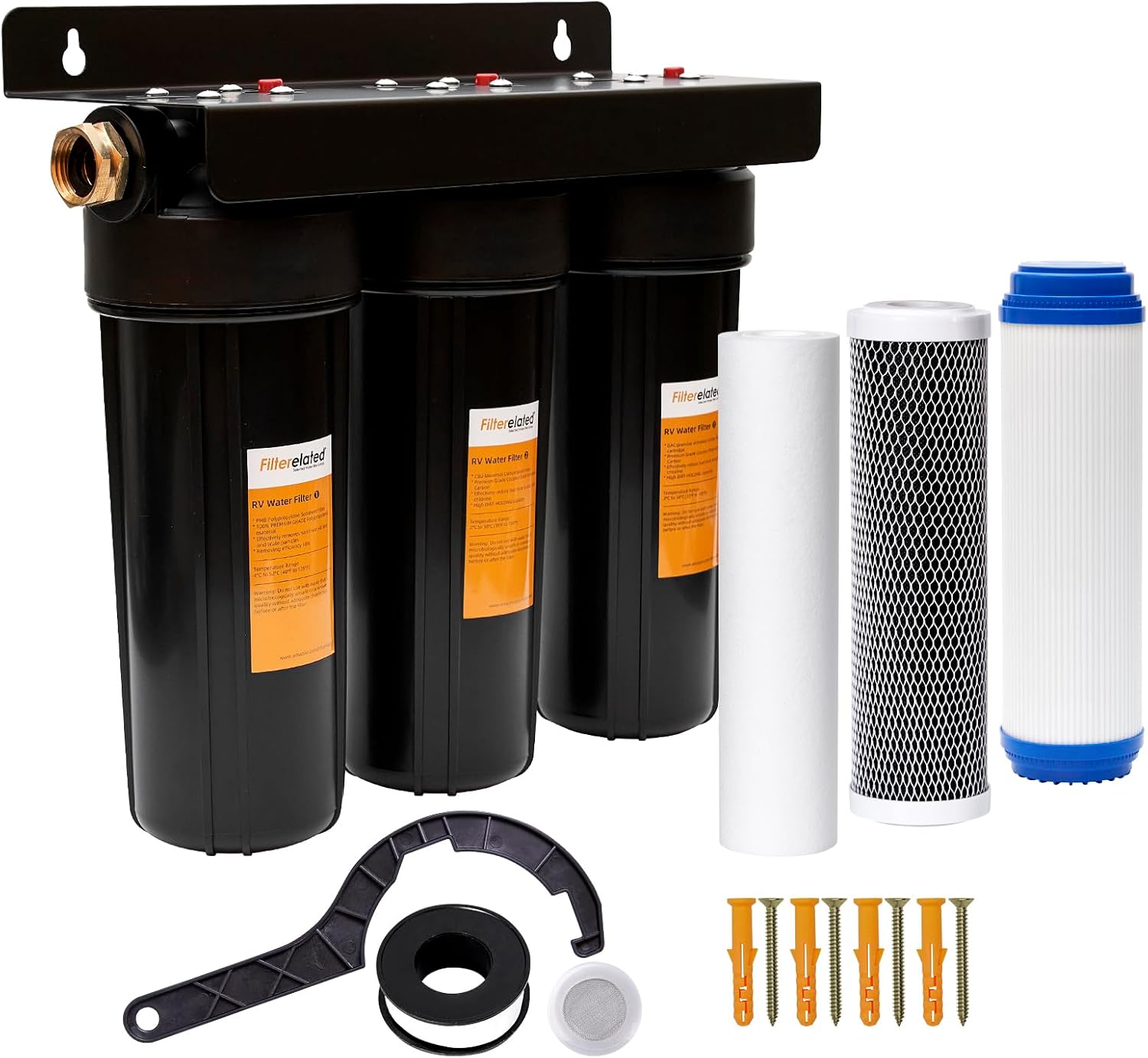
This Filterelated RV water filter is a portable, gravity-fed three-stage system intended to improve freshwater quality at the source for RVs, boats, and similar small installations. It uses a 1 micron sediment cartridge, a 5 micron compressed activated carbon cartridge, and a granular activated carbon cartridge to remove sand, silt, rust, chlorine, organic compounds, and to improve taste and odor. Installation is straightforward with included 3/4-inch brass fittings and a basic wrench, making it practical to mount under a sink or inline with a standard hose in roughly five minutes. The filter is user-serviceable so individual cartridges can be replaced to tailor performance, and the manufacturer rates a typical cartridge life around 3 to 6 months depending on use. Limitations are that it is a non-powered, gravity-fed unit so flow rate and filtering speed depend on water pressure, and it is sized for RV-scale use rather than whole-house municipal demand. For everyday RV freshwater maintenance this system offers a clear, economical way to reduce common contaminants and protect plumbing.
Best for: Buyers who want a compact, serviceable RV water filter that improves taste and removes common contaminants without electrical hookups and can be installed quickly.
Less Ideal for: People seeking a high-flow, whole-home municipal-grade system for large permanent dwellings or applications that need higher throughput and pressure.
- Three-stage filtration (1 micron sediment, 5 micron compressed carbon, granular activated carbon) targets sediment, chlorine, and odors
- 3/4-inch brass fittings and included wrench make installation quick and durable
- Replaceable cartridges let you maintain performance and customize filtration over time
- Gravity-fed design requires no power and is suitable for off-grid RV or boat use
- Gravity-fed, non-powered operation can limit flow rate compared with pressurized or electric systems
- Cartridge life of about 3–6 months means regular replacement and ongoing cost
Verdict: A compact, easy-to-install three-stage RV filter that improves taste and removes sediment and chlorine without needing power, ideal for balanced RV owners who want reliable on-board water quality.
iSpring WGB32B 3-Stage Filter

| Maximum Flow Rate | 15 gpm |
|---|---|
| Inlet / Outlet | 1 inch Female NPT |
| Operating Pressure Range | 25 – 80 psi |
| Operating Temperature | 40 – 100 °F |
| Capacity | 100000 gallons |
The iSpring WGB32B is a tankless three-stage whole-house filter built around a 20×4.5-inch big-blue sediment cartridge plus two coconut-shell carbon block stages for chemical and chlorine reduction. It is typically installed at the incoming water line to protect plumbing and appliances and to improve water taste and odor for every tap. The system supports up to 15 gallons per minute, operates on water pressure with 1-inch female NPT connections, and is meant for DIY installation with supplied wrench and instructions. Notable strengths are its large-capacity cartridges tested for up to 100,000 gallons (about a year of use) and lab-tested chlorine removal using high-grade carbon, which keeps flow high while cutting chlorine and volatile organics. Limitations include no softening capability or TDS reduction, and the unit is designed for indoor, protected installations; outdoor or RV installations will need freeze and weather protection and space for the three 20-inch housings. Replacement cartridges are annual and moderately large, so plan for storage and service access.
Best for: Buyers seeking a high-flow, performance-focused whole-house filter to remove chlorine, sediment, and taste for every tap and protect plumbing and appliances.
Less Ideal for: People who need scale or mineral reduction, or those wanting a compact, outdoor-ready RV-specific filter without additional weatherproofing and mounting modifications.
- Three-stage filtration combining 5-micron sediment plus two carbon block stages for effective chlorine and taste removal
- High flow capability up to 15 gpm suitable for whole-house demand
- Large 20×4.5" cartridges rated up to 100,000 gallons for extended service life
- DIY-friendly installation with included wrench and step-by-step guides
- Does not reduce hardness or TDS so a separate softener is required for hard water
- Designed for indoor, protected installation and needs insulation or shelter for outdoor/RV use
Verdict: Choose the WGB32B when you need a high-flow, three-stage whole-house filter that reliably removes chlorine and sediment while maintaining strong water pressure.
Beech Lane RV Dual Water Filter

| Installation Type | External/RV-Mounted |
|---|---|
| Purification Method | Carbon Block |
| Other Special Features | Chlorine Reduction |
| Supported Water TDS Level Maximum (PPM) | 2000 |
| Power Source | Manual Operation |
The Beech Lane external RV dual water filter is a heavy-duty, twin-canister system built for outdoor RV use and routine freshwater filtration. It mounts outside the coach and uses a 5 micron sediment cartridge paired with a 0.5 micron carbon block to remove sand, dirt, and reduce chlorine taste and odor, while manual operation keeps it simple and reliable without power. The housing and mounting bracket are made for rough exposure, and lead-free 3/4" brass fittings reduce leak risk compared with plastic connectors; a housing wrench is included for easier cartridge changes. Because it is an external, inline unit, it is best used as a point-of-entry RV freshwater prefilter to protect onboard tanks and faucets. Limitations include routine cartridge replacement and the need to size replacement filters to the specified micron ratings, and it does not treat dissolved solids beyond chlorine and particulates.
Best for: Buyers who want a robust, install-once external prefilter for an RV that prioritizes leak resistance and simple, effective removal of sediment and chlorine.
Less Ideal for: Travelers who need an all-in-one treatment for high TDS, heavy chemical contamination, or who prefer an onboard or powered filtration system with additional purification stages.
- Dual-stage filtration (5 micron sediment plus 0.5 micron carbon block) for both particles and chlorine reduction
- Lead-free 3/4" brass fittings designed to resist leaks better than plastic connectors
- Sturdy, RV-rated housings and mounting bracket built for outdoor exposure
- Includes housing wrench to simplify filter changes
- Requires periodic replacement cartridges and matching micron-rated filters
- Does not reduce dissolved solids or high TDS beyond a 2000 ppm supported maximum
Verdict: A durable external dual-canister filter that gives RV owners reliable sediment and chlorine reduction with leak-resistant brass fittings.
iSpring WGB21B 2-Stage Whole House Filter
| Maximum Flow Rate | 15 gpm |
|---|---|
| Operating Pressure Range | 25-80 psi |
| Operating Temperature | 40-100 °F |
| Inlet / Outlet | 1 inch Female NPT |
| Filter Life Cycle | 12 months / up to 50,000 gallons |
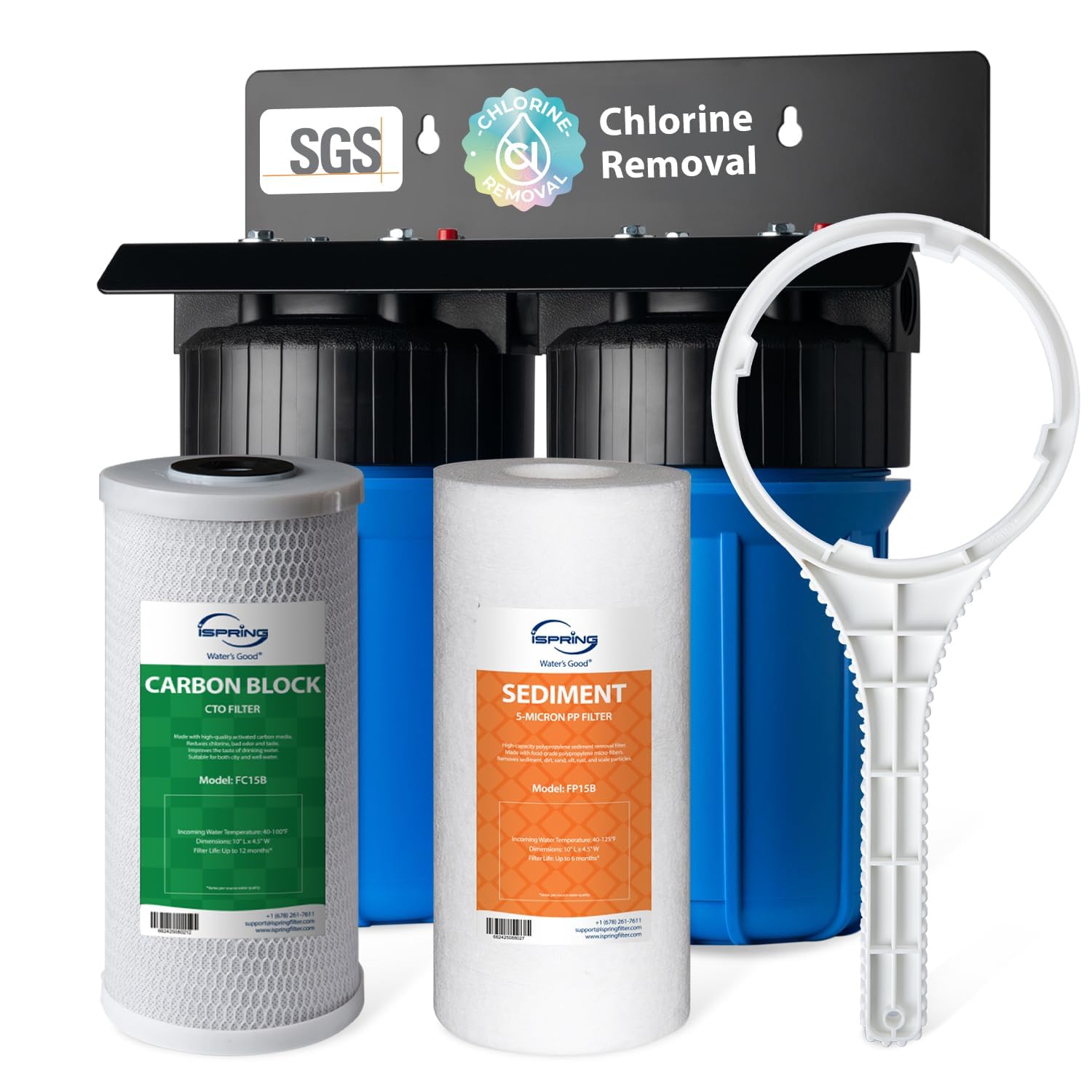
The iSpring WGB21B is a simple, heavy-duty two-stage point-of-entry filter built around a 5-micron polypropylene sediment cartridge followed by a carbon block CTO filter, so it removes sediment and knocks down chlorine, VOCs, and bad tastes for every faucet. It is typically mounted at the main inlet and is sized with 1-inch female NPT ports to preserve flow while filtering the entire RV plumbing or house supply. The unit ships preassembled on a bracket with a filter wrench and a pressure relief valve to make routine cartridge changes straightforward, and the housings are made from durable polyethylene and steel for long service life. The filters are rated up to about 50,000 gallons or roughly 12 months under typical use, but it does not reduce total dissolved solids so it will not soften water or remove dissolved minerals. Installation is DIY-friendly with video guides, though tight spaces or RV-specific plumbing runs may still benefit from a plumber to ensure leak-free connections. For someone after reliable chlorine and sediment reduction with low maintenance, this model delivers consistent, factory-quality filtration at the point of entry.
Best for: Buyers who prioritize a dependable, low-maintenance point-of-entry filter to reliably cut sediment and chlorine for an RV or small-home supply and who want straightforward DIY installation.
Less Ideal for: People seeking water softening, TDS reduction, or removal of dissolved ions should choose an RO or softener system instead.
- Two-stage design targets both sediment and chlorine/taste/odor for broad everyday water improvement
- 1-inch inlet/outlet maintains high flow rates with minimal pressure loss
- Housings and bracket built from sturdy polyethylene and steel for durable installation
- Comes preassembled with wrench and pressure relief valve to simplify filter changes
- Does not remove total dissolved solids or soften water
- Replacement filters are annual and will add ongoing maintenance cost
Verdict: Choose the iSpring WGB21B when you need a reliable, low-maintenance whole-house point-of-entry filter that consistently removes sediment and chlorine while preserving flow for an RV or small plumbing system.
SimPure DB10P 10" Filter Housing

| Inlet/Outlet | 1" NPT Brass Port |
|---|---|
| Compatible Filter Size | 10" x 4.5" cartridges |
| Maximum Flow Rate | 20 gpm |
| Working Pressure Range | 15-90 PSI |
| Applicable Water Temperature | 5-38 ℃ (41-100 ℉) |
The SimPure DB10P is a single-stage whole-house filter housing built to hold standard 10" x 4.5" cartridges and fit 1" NPT inlet and outlet plumbing. It is typically used as a pre-filter on municipal or well water lines to remove sediment, chlorine taste and odor when paired with the appropriate cartridge. The housing is made from food-grade reinforced polypropylene with brass-threaded ports and includes a steel mounting bracket, wrench, screws and a built-in red pressure-relief button to simplify cartridge changes. Its 20 gpm maximum flow rating and 15–90 PSI operating range mean it can handle substantial residential flow, and the brass threads are intended to reduce leaks versus cheaper fittings. Limits to be aware of are that cartridges are sold separately and the unit requires space for installation and filter swaps, and it does not perform multi-stage filtration by itself so you must choose the correct cartridge for your contaminants. For an RV application this model is compact and durable but check clearance around the housing for service access.
Best for: Buyers who prioritize a reliable, factory-quality housing for point-of-entry pre-filtration and want a compact, serviceable unit that uses common replacement cartridges.
Less Ideal for: Users who need a complete multi-stage purification system out of the box or who cannot spare the installation clearance required to remove and replace cartridges.
- Accepts universal 10" x 4.5" cartridges so replacement filters are widely available
- 1" NPT brass inlet/outlet for higher-flow plumbing and a more secure thread seal
- Reinforced food-grade polypropylene body resists corrosion and is NSF-tested
- Includes mounting bracket, wrench, screws and a pressure-relief button for easier service
- 20 gpm max flow supports typical household or larger RV water demands
- Filter cartridges must be purchased separately so additional cost and selection are required
- Requires physical space for installation and cartridge replacement which can limit placement in tight RV compartments
- Single-stage housing only—you must pick a cartridge or add stages to address multiple contaminant types
Verdict: A sturdy, compact 10" housing ideal for buyers who want a dependable factory-quality pre-filter unit that accepts common cartridges for RV or whole-home pre-filtration.
Choosing the Right Whole-House Water Filter for RVs: Key Factors to Consider
Filtration Performance and Micron Rating
A filter's media type and micron rating determine which particles and contaminants it removes. For RV use, look for systems that remove sediment down to a low micron size and, if desired, include activated carbon stages for chlorine taste and organic contaminants.
Higher-efficiency media can protect plumbing and appliances, but very fine filters may reduce flow. Consider whether your primary concern is sediment protection, chemical taste and odor, or broader contaminant reduction when choosing micron specs and media combinations.
Flow Rate and Pressure Drop
Maintaining usable water pressure at multiple fixtures is critical in an RV. Flow capacity is typically rated in gallons per minute at a specified pressure. Choose a filter that supports your typical simultaneous demand, such as shower plus sink.
Also consider pressure drop across the filter. Systems with low resistance preserve pump and fixture performance. If you frequently camp at sites with marginal water pressure, prioritize units with higher flow capacity and lower pressure loss.
Size, Porting, and RV Plumbing Compatibility
Space is limited in most RVs, and fittings vary. Check physical dimensions, mounting options, and inlet/outlet sizes to ensure the system will fit near existing plumbing and connect without extensive rework.
Some whole-house units are designed for permanent-home plumbing and are too large for RV compartments. Look for compact housings, right-angle ports, or adapters that match common RV thread sizes to simplify installation.
Ease of Installation and Reversible Mounting
Installation should be straightforward and reversible so you can remove or winterize the system as needed. Systems that require only basic tools, standard fittings, and clear instructions reduce installation time and the risk of leaks.
Consider whether the filter can be mounted vertically or horizontally, how much clearance is needed to change cartridges, and whether quick-connect fittings or threaded adapters are included to match your RV supply line.
Maintenance Frequency and Cartridge Cost
Regular replacement of cartridges is part of owning a whole-house filter. Understand expected cartridge life based on gallons filtered and incoming water quality, and factor in both the frequency and the ongoing cost of replacement elements.
Prefer systems with readily available replacement cartridges and simple access for swaps. Long-life or washable prefilters can lower upkeep in places with high sediment loads, but evaluate tradeoffs in filtration performance.
Construction Quality and Vibration Resistance
RV travel exposes equipment to vibration, temperature swings, and occasional bumps. Durable housings and secure mounting hardware reduce the chance of leaks or damage while on the road.
Materials such as reinforced plastics or metal housings and corrosion-resistant fittings extend service life. Check for features like reinforced seals and robust fasteners that keep the system secure during travel.
Typical RV Water Issues and What To Filter
RV water sources range from municipal hookups to campground tanks and private wells, each with its own contaminants. Sediment and rust are common when filling from older infrastructure, while chlorine and taste issues are typical at municipal hookups. Wells can introduce iron, manganese, or bacteria in some areas.
A whole-house filter for RVs should address the issues you encounter most. For sediment-heavy fills, prioritize a low-micron sediment stage. If taste and odor are the problem, add an activated carbon stage. For uncertain sources, a multi-stage approach that combines sediment, carbon, and optional specialty media offers broader protection.
- Sediment filters protect valves, faucets, and appliances from clogging.
- Carbon stages reduce chlorine taste and some organic compounds.
- Specialty media can target iron, hydrogen sulfide, or specific contaminants when needed.
Installation Tips for Tight RV Spaces
Plan the installation before cutting any lines. Identify a location near the main water inlet that provides enough clearance for cartridge changes and is protected from road splash. Measure available space and check for obstructions like electrical conduits or propane lines.
Use appropriate thread adapters or quick-connect fittings to avoid custom plumbing work. If you expect to winterize the RV, ensure you can bypass or remove the filter easily to prevent freeze damage.
- Mount close to the water entry point to protect downstream plumbing.
- Leave clearance equal to at least one cartridge length for easy service.
- Use mounting brackets and vibration-isolating hardware when possible.
Maintaining Your RV Whole-House Filter
Check prefilter cartridges frequently during seasons or trips with high sediment. Replace or clean them according to the manufacturer's recommended schedule or sooner if you notice reduced flow. Keeping a spare cartridge and a small toolkit on board minimizes downtime on the road.
Sanitize housings during annual maintenance or after known contamination events. If you winterize your RV, follow the procedure for draining or bypassing the filter to avoid damage from freezing water.
- Monitor flow and water clarity as indicators of cartridge life.
- Record cartridge changes and gallons filtered to predict replacements.
- Carry compatible spare parts and seals for quick roadside fixes.
When to Add Specialty Media or a UV Stage
Most RV users will be well served by sediment and carbon stages, but specialty media have their place. If you repeatedly encounter iron staining or sulfur odors, consider media designed to remove those specific contaminants. These media sometimes require specific flow rates or pre-treatment to function correctly.
A UV disinfection stage addresses microbiological contamination but needs consistent power and the correct flow and clarity entering the UV chamber. For RVers relying on questionable surface water or wells, a UV stage combined with proper prefiltration can provide an extra layer of protection.
- Use iron-specific media for rusty water or staining issues.
- Consider UV only if you can meet its power and clarity requirements.
- Combine specialty stages with proper prefiltration to avoid fouling.
Winterizing and Storage Considerations
Freezing temperatures can damage filter housings and seals. If you plan to store the RV in cold climates, remove cartridges and drain housings or use a bypass that allows you to isolate the filter during winterization. Some systems offer quick-disconnects to simplify removal.
Store replacement cartridges in a dry, cool place and keep seals lubricated per manufacturer guidance. Before reusing the system in spring, inspect O-rings and fittings for wear and replace any compromised parts to prevent leaks.
- Drain housings completely before storage to prevent freeze damage.
- Keep spare O-rings and lubrication on hand for seasonal servicing.
- Test the system at low-pressure first after reinstalling to check for leaks.
How We Chose the Best Whole-House Water Filter for RVs
We selected products that suit the unique needs of RV systems, where limited space, variable source water quality, and on-the-road reliability matter most. Our evaluation focused on concrete, measurable features: particle and chemical removal capability based on filter media and micron ratings, nominal flow capacity at typical RV pressures, physical dimensions and inlet/outlet compatibility for common RV plumbing, ease of routine cartridge replacement and filter access, and construction durability for vibration and campground use. We excluded whole-house systems designed only for permanent residential installations, units that require complex electrical hookups, and products lacking clear performance specifications. We prioritized filters with documented micron ratings, flow figures, and straightforward maintenance requirements. The final shortlist balances effective contaminant reduction with capacity to maintain usable water pressure and easy installation for RVers.
Our full evaluation process is outlined in our review methodology.
FAQ
How often should I replace cartridges in an RV whole-house filter?
Replacement intervals depend on water quality and usage. In general, sediment prefilters may need changing every 1 to 3 months with heavy use, while carbon cartridges often last 6 to 12 months. Monitor flow and water clarity and carry spares when traveling.
Will a whole-house filter reduce my RV's water pressure?
Any filter introduces some pressure drop. Choosing a unit with adequate flow capacity and low resistance minimizes noticeable loss. If you have marginal campground water pressure, prioritize systems rated for higher flow at low pressure.
Can I install a whole-house filter myself in my RV?
Many RV-friendly systems are designed for DIY installation using basic tools and standard fittings. Plan the location, measure clearance for cartridge changes, and use appropriate adapters. If you are unsure about plumbing modifications, consult a qualified RV technician.
Is a UV disinfection stage necessary for RV use?
A UV stage is useful when you suspect biological contamination or frequently use untreated sources. It requires consistent power, proper prefiltration, and clear water to work effectively. For most municipal hookups, sediment and carbon stages are sufficient.
How do I prevent leaks from vibration while driving?
Secure mounting, vibration-isolating hardware, and robust fittings help prevent loosening. Use thread sealants where appropriate and check fasteners periodically. durable housings and reinforced seals also reduce the risk of leaks from road vibration.
Final Verdict
Choose a Whole-House Water Filter for RVs by balancing filtration needs with flow and space constraints. Prioritize a system that removes the contaminants you actually encounter, provides sufficient flow at typical campground pressures, and fits your RV's plumbing without complex modifications. Also factor in maintenance frequency and spare parts availability so you can service the system while traveling. The best choice will be the unit that matches your source-water risks and daily water demand while staying compact and easy to maintain. Focus on measurable specs and proven installation features to pick confidently.