
Note: This article contains affiliate links. If you click on these links and make a purchase, we may earn a small commission at no extra cost to you. This helps support our research and content. Read our full affiliate disclosure here.
Installing a whole-house water filter for sink use changes how you interact with household water by improving taste, reducing sediment, and protecting plumbing fixtures. If you want cleaner water at kitchen and bathroom sinks without dealing with frequent cartridge swaps or low flow, choosing the right system matters. This guide shortlists the top options for sink-focused whole-house filtration and explains the practical tradeoffs you should expect. We evaluated systems for contaminant reduction, flow performance, and maintenance needs to highlight choices that fit common sink-focused setups. Read on to compare the best picks and learn which features will matter most for your household.
Top Picks at a Glance
| Best Overall The best all-around choice for most situations | Express Water 3-Stage Whole House System |  |
| Best Quality Built to a higher standard if you want something more solid | 3M Aqua-Pure AP904 Whole House Filter | 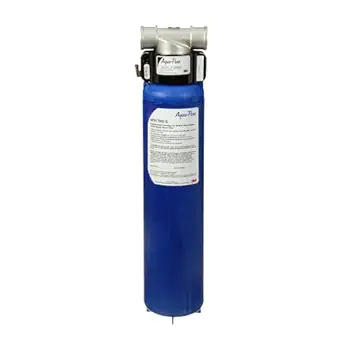 |
| Best Value The sweet spot between price and what you get | XINSHUO Whole House Water Filter |  |
| Best Budget The cheapest option that still gets the job done reliably | Max Water 2-Stage Whole House Filter |  |
| Top Rated A top-rated pick with lots of positive feedback | iSpring WGB21B 2-Stage Whole House Filter |  |
| Most Popular A crowd favorite that many people choose with confidence | Culligan WH-HD200-C Whole House Filter |  |
| Best Seller A high-volume bestseller chosen again and again | SimPure DB10P Water Filter Housing |  |
Express Water 3-Stage Whole House System

| Purification Method | Activated Carbon, KDF, Polyphosphate |
|---|---|
| Maximum Flow Rate | 17 gpm |
| Operating Pressure Range | 20-80 psi |
| Supported Water TDS Level Maximum (PPM) | 800 |
| Filter Life Cycle | 6 months |
The Express Water 3-Stage Whole House System is a freestanding point-of-entry filter that treats all water entering a home using a three-stage combination of sediment/activated carbon, KDF, and polyphosphate media. It is installed on the main supply line and is intended to remove chlorine, bad tastes and odors, significant heavy metals like lead and arsenic, and to provide anti-scale protection to plumbing and appliances. The system ships on a stainless steel stand with pressure gauges and quick-release buttons for easier servicing, and it delivers a high flow rate rated up to 17 gpm with an operating pressure range of 20-80 psi. Filters are expected to last roughly 6 months or up to 100,000 gallons depending on use, and the unit requires no electrical power. Important limits to note: it does not lower total dissolved solids, so it will not produce RO-level purity, and replacement cartridges are required on a regular schedule. For a household wanting whole-home chlorine, sediment, heavy metal reduction, and scale control without an RO unit, this is a practical choice.
Best for: Buyers who want a balanced, whole-home solution to improve taste, remove chlorine and heavy metals, and prevent scale across all taps without adding a separate RO system or electrical components.
Less Ideal for: Homes that need drinking-water-level purification for very low TDS or those seeking point-of-use reverse osmosis-quality water at the sink should consider an RO system instead.
- Three-stage filtration addresses sediment, chlorine, heavy metals, and scale in one system
- High flow capacity up to 17 gpm supports full-house water use with minimal pressure loss
- Stainless steel freestanding frame with pressure gauges makes installation and monitoring easier
- Manual operation with no power required simplifies placement and reduces running costs
- Does not reduce total dissolved solids (TDS) so it will not replace a reverse osmosis system
- Filter cartridges require periodic replacement roughly every 6–12 months depending on usage
Verdict: Choose this system if you want reliable whole-house reduction of chlorine, heavy metals, and scale with high flow and easy servicing rather than RO-level TDS removal.
3M Aqua-Pure AP904 Whole House Filter

| Included components | Head/mounting bracket, AP917HD-S cartridge, user manual |
|---|---|
| Flow rate | Up to 20 gpm |
| Filter life | Replace every 12 months or 100,000 gallons |
| Connections | 1" inlet and outlet |
| Certification | NSF Standard 42 |
The 3M Aqua-Pure AP904 is a point-of-entry whole-house filter built around a Sanitary Quick Change cartridge and a 304 stainless steel head for durable, pro-grade installation. It is used upstream of the home plumbing to supply clearer, better-tasting water to all fixtures while protecting water heaters and appliances from sediment and scale. The AP917HD-S cartridge combines activated carbon block and pleated media to cut chlorine taste and odor and capture sediment, while dissolved mineral scale is controlled with a polyphosphate scale inhibitor. Installation uses 1-inch inlet/outlet ports and supports flow rates up to 20 gpm, so it suits larger homes and higher-demand systems. Cartridge swaps are tool-free and hygienic thanks to the SQC design, and the unit is NSF tested to Standard 42. Expect long service intervals—3M recommends replacement at 100,000 gallons or annually depending on use—but professional plumbing installation is typical for best results and initial fitment.
Best for: Buyers who prioritize high flow and whole-house protection and want a robust, low-maintenance system that delivers measurable improvement in water taste and appliance longevity.
Less Ideal for: People looking for a compact under-sink consumer filter or those who need a system that actually removes water hardness rather than inhibiting scale.
- Sanitary Quick Change (SQC) cartridge allows tool-free, hygienic filter replacements
- Stainless steel head and 1-inch connections support professional, durable installation
- Activated carbon plus pleated media reduces chlorine taste, odor, and sediment
- Scale inhibition feature helps protect appliances and maintain flow rates up to 20 gpm
- NSF testing to Standard 42 provides independent verification of contaminant reduction claims
- Designed for professional point-of-entry installation rather than simple DIY under-sink swaps
- Polyphosphate scale control does not remove hardness minerals, it only inhibits scaling
Verdict: Choose the AP904 when you need a professional-grade whole-house filter that delivers high flow, easy cartridge changes, and reliable chlorine and sediment reduction across the home.
XINSHUO Whole House Water Filter

| Maximum Flow Rate | 15 gpm |
|---|---|
| Purification Method | Activated Carbon, Sedimentation |
| Supported Water TDS Level Maximum (PPM) | 1000 |
| Filter Life Cycle | 6 months |
| Capacity | 10000 gallons |
This XINSHUO whole-house system is a 3-stage setup that uses sediment and carbon filtration to improve water taste and remove visible debris before it reaches taps, showers, and appliances. It is typically plumbed at the main inlet or under a sink and delivers up to 15 gpm so pressure holds up with multiple fixtures running. The clear housings let you visually check debris buildup and the kit includes a wrench, valves, tape, and nine filters (three full sets) for about 1 to 2 years of use. The unit runs on water pressure and is compatible with both city and well supplies and it preserves minerals while lowering chlorine and common sediment. Expect routine cartridge swaps roughly every six months and plan for basic plumbing work on install; the dual valve design makes filter changes easier without fully shutting off the supply. This system is practical for households that want a visible, maintainable whole-home filter with included spare cartridges, though it does not perform reverse osmosis or lower TDS readings.
Best for: Buyers who want a straightforward, maintainable whole-house filter that improves taste and protects fixtures without complicated upgrades, and who value visible filter condition and included spare cartridges.
Less Ideal for: Homes needing substantial TDS reduction, advanced contaminant removal like RO, or certified lab-grade treatment for specific contaminants should consider different systems.
- Three-stage filtration that targets sediment, chlorine, rust, and odors
- Clear housings for easy visual monitoring of filter condition
- Includes three full sets of replacement cartridges for 1–2 years of service
- 15 gpm maximum flow rate maintains good water pressure with multiple taps
- Dual valve and included wrench simplify filter changes without a full shutdown
- Filter life noted as about six months so periodic replacement is required
- Does not reduce total dissolved solids so mineral levels remain unchanged
Verdict: A practical, easy-to-install three-stage whole-house filter with clear housings and multiple spare cartridges for buyers who prioritize visible maintenance and immediate chlorine and sediment reduction.
Max Water 2-Stage Whole House Filter

| Purification Method | Carbon Block |
|---|---|
| Installation Type | user-installed |
| Operating Pressure Range | 40-100 psi |
| Upper Temperature Rating | 125 °F |
| Capacity | 5 liters |
This Max Water 10" 2-stage whole-house filter is a budget-friendly cartridge system that pairs a sediment stage with a carbon block to tackle visible particles, chlorine, and common taste and odor issues for the whole home. It installs on a 3/4" inlet and is manually operated, making it suitable for a straightforward DIY fit under or near a main cold-water line; included inlet and outlet hoses simplify hookup. The compact clear housing makes cartridge changes quick to inspect and replace, and the carbon block media provides noticeable chlorine reduction that protects plumbing and point-of-use fixtures. It does not reduce dissolved solids, so it is not a replacement for reverse osmosis when you need TDS reduction. Also the unit is rated for standard household pressure and temperatures and relies on periodic cartridge replacement for continued performance. For buyers prioritizing low upfront cost and basic sediment and chlorine control across the house, this unit delivers practical filtration without complex plumbing or electrical needs.
Best for: Buyers on a tight budget who want an inexpensive, easy-to-install whole-house filter to cut chlorine, sediment, and odors across sinks and fixtures without complex plumbing or electricity.
Less Ideal for: Homes needing TDS reduction, heavy chemical or microbial remediation, or certified contaminant removal should look at reverse osmosis or higher-grade whole-house systems instead.
- Two-stage design (sediment plus carbon block) reduces sediment, chlorine, and improves taste
- Compact 10-inch clear housing for easy visual inspection and simple cartridge changes
- Includes inlet and outlet hoses for easier DIY installation
- Manual operation with no power required
- Does not reduce total dissolved solids or provide reverse osmosis-level purification
- Limited to basic contaminant reduction and depends on regular cartridge replacement
Verdict: A low-cost, easy-to-install two-stage whole-house filter that effectively reduces sediment and chlorine for budget-focused homeowners.
iSpring WGB21B 2-Stage Whole House Filter
| Maximum Flow Rate | 15 gpm |
|---|---|
| Operating Pressure Range | 25-80 psi |
| Operating Temperature | 40-100 °F |
| Filter Life Cycle | 12 months |
| Inlet / Outlet | 1 inch Female NPT |
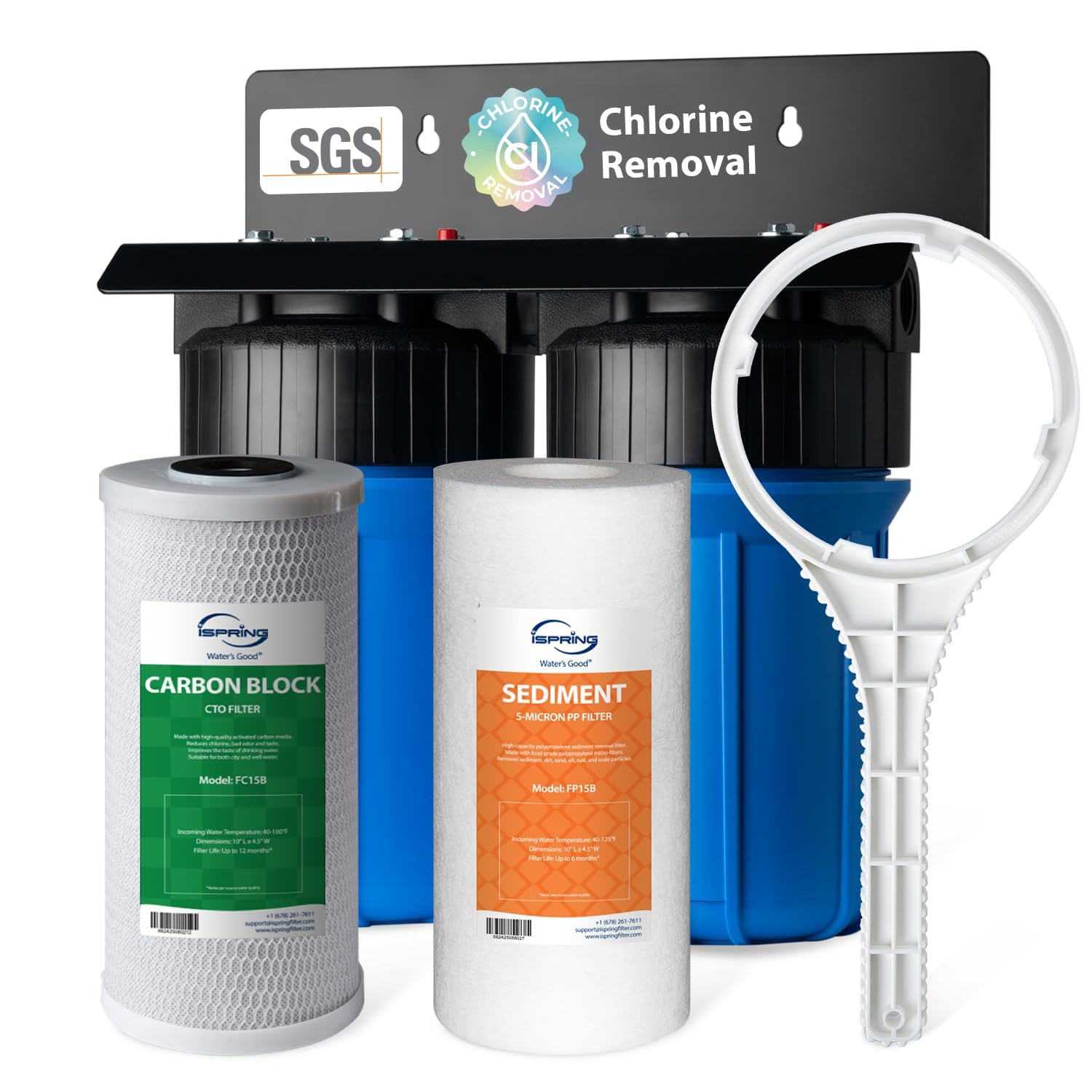
The iSpring WGB21B is a point-of-entry two-stage whole-house filter that pairs a 5-micron polypropylene sediment cartridge with a coconut-shell carbon CTO block to reduce sediment, chlorine, bad tastes, odors, and many VOCs across the home. It mounts on a bracket and uses 1-inch inlet/outlet ports to maintain high flow with low pressure loss, and the housings and fittings are designed for DIY installation with the included wrench and clear instructions. Filters are full-size 10" x 4.5" cartridges rated for up to about 50,000 gallons or roughly 12 months in typical household use, which keeps replacement cadence simple for most families. Practical benefits include protecting appliances and plumbing from sediment, delivering better-tasting water to all taps, and retaining beneficial minerals because it is not an RO system. Limitations include the system not reducing TDS and the need to replace both large cartridges annually depending on local water quality, so heavy sediment or specific contaminant removal beyond chlorine and VOCs will require additional stages or specialized media.
Best for: Buyers who prioritize a reliable, factory-quality point-of-entry filter to protect plumbing and appliances and who want consistent improvement in chlorine taste and odor across every sink and tap.
Less Ideal for: Homes that need TDS reduction, nitrate or heavy metal removal, or very fine particulate filtration without adding extra stages should consider alternative or additional treatment options.
- Two-stage design removes sediment and over 90% of chlorine to improve taste and protect plumbing
- Full-size 10" x 4.5" filters with long life up to 50,000 gallons reduce replacement frequency
- 1" inlet/outlet and high flow design minimize pressure loss for whole-house use
- Pre-assembled mounting bracket and included filter wrench simplify DIY installation
- Does not reduce total dissolved solids (TDS) or serve as a replacement for RO systems
- Annual filter replacement may be required sooner in very dirty or high-sediment water conditions
Verdict: A straightforward, reliable two-stage whole-house filter that delivers long-life sediment and chlorine removal to improve water at every sink.
Culligan WH-HD200-C Whole House Filter

| Installation Type | In Line |
|---|---|
| Maximum Flow Rate | 10 gpm |
| Purification Method | Sedimentation |
| Supported Water TDS Level Maximum (PPM) | 600 |
| Material Type | Stainless Steel |
The Culligan WH-HD200-C is a clear-sump whole-house filter housing that installs inline at a 1-inch water main and accepts heavy-duty filter cartridges (sold separately) to remove sediment, rust, sand, silt, and chlorine taste and odor. It is typically used at the point of entry to protect appliances and plumbing and to improve tap water aesthetics for the entire house or for downstream fixtures such as kitchen sinks. The stainless steel cap, built-in shut-off and bypass valves, integrated mounting bracket, and included wrench make installation and maintenance more straightforward, and the clear sump lets you see cartridge condition without disassembly. Flow capacity is rated up to 10 gpm and the housing is WQA-tested for durability, which suits most residential mains. Limitations are that you must buy the correct filter cartridge separately and filtration performance depends on the cartridge chosen; the unit itself does not remove dissolved solids and is not a complete treatment system for chemical contaminants.
Best for: Buyers who want a robust, visible whole-house filter housing to protect plumbing and improve tap water taste and are comfortable selecting and replacing the specific cartridge that matches their water issues.
Less Ideal for: Households looking for a self-contained chemical or reverse-osmosis whole-house treatment or those who prefer an all-in-one system with included cartridges and certified contaminant removal claims.
- Clear sump lets you visually inspect cartridge condition without opening the housing
- Stainless steel cap and WQA-tested design for durability and a tight seal
- Built-in shut-off, bypass, and pressure relief valve simplify servicing
- Universal 1" inline housing fits standard whole-home filter cartridges and supports up to 10 gpm flow
- Filter cartridge is sold separately so ongoing cost and selection fall to the buyer
- Does not remove dissolved solids or specific chemical contaminants by itself
Verdict: Choose this durable, visible 1" filter housing if you want a reliable point-of-entry unit to protect plumbing and sink fixtures while you pick the cartridge suited to your water concerns.
SimPure DB10P Water Filter Housing

| Maximum Flow Rate | 20 gpm |
|---|---|
| Inlet/Outlet | 1" NPT Brass Port |
| Compatible Filter Size | 10" x 4.5" |
| Working Water Pressure Range | 15-90 PSI |
| Applicable Water Temperature | 5-38 ℃ (41-100 ℉) |
The SimPure DB10P is a single-stage 10" x 4.5" whole-house filter housing intended as a pre-filter to protect downstream fixtures and appliances from sediment and chlorine. It accepts standard 10" cartridges such as sediment or granular activated carbon and installs on a 1" NPT line using the included brass-threaded inlet/outlet and heavy-duty mounting bracket. Practical touches include a wrench for servicing and a red pressure-relief button that makes cartridge changes easier and safer. The polypropylene housing is reinforced for durability and the brass ports help ensure a reliable threaded seal when installed correctly. This unit supports up to 20 gpm flow and is rated for typical residential water temps and TDS levels, so it works well ahead of water heaters, washing machines, and under-sink systems. Limitations to note are that cartridges are sold separately and you will need to plan clearance for swapping filters and for any plumbing adapters to mate with your sink branch lines or existing fittings.
Best for: Buyers who prioritize a conservative, reliable pre-filter to protect household plumbing and appliances and who want a straightforward, serviceable housing that accepts standard cartridges.
Less Ideal for: Those seeking an all-in-one multi-stage system or a compact under-sink-only filter designed specifically for point-of-use drinking water should consider other options.
- Fits common 10" x 4.5" cartridges so filter options are widely available
- 1" NPT brass inlet/outlet for higher flow capacity and durable threaded connections
- Built-in pressure relief button and service wrench simplify cartridge changes
- Reinforced polypropylene body designed for corrosion resistance and long service
- Filter cartridges and plumbing fittings are not included
- Requires sufficient installation space for the housing and cartridge replacement
Verdict: A rugged, serviceable 10" housing that gives risk-averse buyers a reliable pre-filtration point to protect home plumbing and appliances.
Choosing the Right Whole-House Water Filter for Sink: Key Factors to Consider
Contaminant Profile and Certifications
Know what you need the filter to remove. Different media target different contaminants such as sediment, chlorine, VOCs, heavy metals, or scale. Matching the system to your water issues ensures you get meaningful improvements in taste, odor, and safety.
Certifications from recognized testing bodies indicate verified performance claims for specific contaminants. Look for certifications relevant to your concerns rather than generic marketing terms. For sink-focused whole-house use, prioritize technologies that reduce unwanted chemicals and particulates that affect drinking and cooking water.
Flow Rate and Faucet Performance
A whole-house system must maintain adequate flow and pressure at sink faucets. Low flow options can leave taps sluggish and make everyday tasks like filling pots frustrating. Check the system's rated flow at expected household pressure and choose one that matches your plumbing demand.
Consider peak usage scenarios such as simultaneous faucet and shower use. For sink-centric installs, ensure the model preserves steady pressure for kitchen tasks and any attached accessories like filtered spray heads.
Filter Lifespan and Replacement Frequency
Filter longevity affects both convenience and operating cost. Short-lived cartridges need frequent swaps and can cause downtime if spares are not on hand. Expect life estimates to vary with local water quality; dirtier water shortens service intervals.
Evaluate whether the system uses common-size cartridges or proprietary modules, as this influences long-term availability and cost. Also check filter change indicators or bypass options that let you maintain water service during replacement.
Installation Requirements and Space
Where and how the system installs matters for a sink-focused setup. Some whole-house models require placement in a utility area with more space, while others are compact enough for under-sink or near-sink mounting. Assess available clearance, mounting points, and whether you have easy access to shutoff valves.
Installation complexity varies from simple inline connections to systems that need additional fittings or mounting brackets. If you prefer to DIY, confirm that the plumbing connections and tools required match your skill level.
Maintenance Accessibility and Service
Routine maintenance should be straightforward. Systems that let you change cartridges without special tools, that have clear indicators for service, or that offer quick bypass valves reduce hassle. Consider whether the unit allows filter replacement without shutting off the main water supply to the house or whether a local shutoff is required.
Also check the availability of replacement parts and whether routine service can be performed by a homeowner or requires a technician. Easy-to-follow maintenance reduces the chance of skipped service, which can degrade performance over time.
Material Quality and Long-Term Reliability
The filter housing, seals, and connections must withstand continuous exposure to water and occasional pressure spikes. Materials rated for potable water and corrosion resistance extend service life and reduce leakage risk.
Look for sturdy housings, high-quality gaskets, and reliable connection fittings. Long-term reliability also depends on whether the manufacturer or designer anticipates regular maintenance and provides clear instructions to avoid premature failures.
How Whole-House Filtration Affects Sink Water
Whole-house filtration treats water at the service entry point so every tap gets the same treated supply. For sinks, that means hot and cold faucets, filtered pot fillers, and any attached appliances benefit from reduced sediment and improved taste. The net effect on tap water depends on the technologies in the system and local water chemistry.
Expect improvements in clarity and odor when the system targets chlorine and particulates. Some systems also reduce specific chemicals and metals to improve drinking quality, but performance varies by media and certification.
- Sediment stages protect faucet aerators and extend life of point-of-use filters.
- Carbon-based media commonly improve taste and reduce chlorine odor.
- Specialized media can target metals or scale, which helps plumbing longevity.
Sizing a System for Sink-Focused Use
Choose a system flow rating that supports faucet use plus any simultaneous demand in the home. For a kitchen sink primarily used for drinking and cooking, you do not need industrial flow, but you do need smooth, predictable faucet performance. Evaluate rated gallons per minute at typical home pressure to avoid drop-offs during peak use.
Also consider storage footprint and whether the unit can fit under the sink or needs utility-room mounting. Compact housings help when space is tight, but may have smaller filter capacity and shorter lifespan.
- Check rated flow at 40 to 60 psi for a realistic performance estimate.
- Allow space for cartridge removal and replacement.
- Plan for any adapters or shutoff valves required for installation.
Installation Tips for Sink-Oriented Whole-House Filters
Plan the plumbing route so the system is accessible for routine maintenance. Install a shutoff valve and a pressure relief or bypass if possible. For under-sink placements, make sure mounting brackets and hose routing do not stress fittings when drawers or cabinets are used.
If you are not comfortable with cutting and soldering pipes, choose models with push-fit or threaded connections that match existing supply lines. Keep replacement cartridges and basic tools nearby to simplify future service.
- Install pre-filters upstream to protect more specialized media.
- Use flexible connectors to reduce stress on fittings during cabinet movement.
- Label shutoff valves to speed maintenance and emergency shutoff.
Common Media Types and What They Do
Carbon block and granular activated carbon are common for improving taste and removing chlorine and many organic compounds. Sediment cartridges remove dirt and rust that can clog faucets. For specific issues like lead or scale, look for media formulated to address those contaminants.
Some systems combine multiple stages so you get particulate removal, chemical adsorption, and specialized treatment in one assembly. Multi-stage designs often yield more consistent tap water but may require staggered filter changes.
- Sediment: protects downstream media and plumbing.
- Carbon: reduces taste and odor issues.
- Specialty media: target metals or hardness.
Maintaining Performance Over Time
Track filter change intervals and monitor flow and taste as simple indicators of when service is needed. A drop in flow or return of odors often signals exhausted media or clogged sediment stages. Keep a small stock of replacement cartridges on hand to avoid gaps in protection.
Regularly inspect housings and seals for leaks and replace worn gaskets promptly. If your water contains high sediment loads, increase the frequency of pre-filter changes to protect downstream media and extend overall system life.
- Note pressure drops as an early sign of clogged filters.
- Record installation and replacement dates to stay on schedule.
- Flush new cartridges per manufacturer guidance before using treated water.
How We Chose the Best Whole-House Water Filter for Sink
We started by focusing on systems designed to provide whole-home filtration that still perform well at individual sink outlets. Our selection filters favored units that combine effective contaminant removal with adequate flow rates for typical household faucets. Key evaluation criteria included measured particulate and chemical reduction across relevant media types, system flow capacity under normal household pressure, and projected cartridge life based on common water conditions. We also considered installation and serviceability, including whether the system fits standard plumbing configurations for sink supply lines and how easily filters can be replaced without specialized tools. Durability and materials were assessed to ensure corrosion resistance and safe contact with potable water. Noise, footprint, and suitability for under-sink or utility-room placement were additional practical filters. We excluded point-of-use faucet-mounted filters and systems that only treat a single tap. We also set aside designs that could not reliably sustain normal sink flow or required uncommon plumbing modifications. The shortlisted systems therefore balance contaminant reduction, usable flow, and reasonable maintenance frequency for sink-focused whole-house use.
Our full evaluation process is outlined in our review methodology.
FAQ
Will a whole-house filter for sink use reduce my faucet's water pressure?
It can if the system is undersized or the filters are clogged. Choosing a model with a rated flow that matches household demand and keeping filters changed on schedule minimizes pressure loss.
How often will I need to replace cartridges for a sink-focused setup?
Replacement intervals depend on local water quality and usage, but many systems require pre-filter changes every 3 to 12 months and specialized media less frequently. Monitoring flow and taste helps determine the right schedule.
Can I install a whole-house filter near the sink instead of at the service entry?
Yes. Installing closer to the sink is common for limited budgets or targeted treatment, but it means other house outlets remain untreated. Ensure the chosen location has space and proper plumbing access for service.
Do whole-house filters remove bacteria and viruses?
Most standard whole-house filtration systems are not designed to consistently remove bacteria or viruses. Systems that provide microbial protection use specific certified media or additional disinfection steps and should be selected when microbial contamination is a known concern.
Will a whole-house filter eliminate hard water scale at my sink?
Not all systems address hardness. Scale-control media or conditioners are required to reduce mineral scaling. If scale is a primary issue, choose a system or add-on specifically designed for hardness reduction.
Final Verdict
When choosing a whole-house water filter for sink use, prioritize the contaminant removal you need and a system flow rating that preserves faucet performance. Think about maintenance frequency, availability of replacement cartridges, and how easy the unit is to access for service. Tradeoffs typically involve cartridge life versus footprint and upfront installation complexity versus long-term convenience. Focus on matching media to your water issues and sizing the system for realistic household demand. With the right balance of filtration and flow, you can achieve reliable, better-tasting sink water without sacrificing everyday convenience.