
Note: This article contains affiliate links. If you click on these links and make a purchase, we may earn a small commission at no extra cost to you. This helps support our research and content. Read our full affiliate disclosure here.
Choosing the right whole-house water filter for tap water matters because it affects every faucet, appliance, and shower in your home. The correct system improves taste and odor, reduces visible sediment and common contaminants, and helps protect plumbing and water-using appliances from buildup. This guide covers the top shortlisted whole-house water filters for treating tap water. We evaluated options across practical criteria that matter to homeowners, including filtration effectiveness, flow capacity, installation complexity, and maintenance needs. Read on for a clear framework to match a system to your household water profile and usage.
Top Picks at a Glance
| Best Overall The best all-around choice for most situations | Culligan WH-HD200-C Whole House Filter |  |
| Best Quality Built to a higher standard if you want something more solid | iSpring WGB32BM 3-Stage Whole House Filter |  |
| Best Value The sweet spot between price and what you get | Aquaboon 5 Micron Sediment Filter |  |
| Best Budget The cheapest option that still gets the job done reliably | ICEPURE CTO10 Carbon 10"x2.5" (4-Pack) |  |
| Top Rated A top-rated pick with lots of positive feedback | Membrane Solutions String Wound 10" Filter |  |
| Most Popular A crowd favorite that many people choose with confidence | PUREPLUS 5 Micron 10" x 4.5" Filter |  |
| Best Seller A high-volume bestseller chosen again and again | SimPure DB10C 10" x 4.5" Housing |  |
Culligan WH-HD200-C Whole House Filter

| Maximum Flow Rate | 10 gpm |
|---|---|
| Supported Water TDS Level Maximum (PPM) | 600 |
| Capacity | 16000 gallons |
| Material Type | Stainless Steel |
The Culligan WH-HD200-C is a stainless-steel capped whole-house filter housing built to provide point-of-entry sediment protection when paired with the correct cartridge (not included). Installed inline on a 1" water main, it gives you a visible clear sump so you can inspect collected sediment and comes with a mounting bracket, wrench, integrated bypass and shut-off valves, and a pressure relief valve for easier servicing. The unit supports up to 10 gpm and is rated to handle water up to 600 ppm TDS, making it suitable for most residential mains that need heavy-duty sediment, rust, scale and sand reduction rather than chemical removal. Its durable construction and factory-quality valve hardware mean it can protect appliances and plumbing from abrasive particles, but you must buy compatible filter cartridges separately and choose the correct media for your water issues. The housing itself does not filter chemistry or chlorine without the right cartridge and requires a 1" pipe connection, so plan plumbing fitment and cartridge selection before purchase.
Best for: Homeowners who want a sturdy, serviceable point-of-entry housing to stop sediment and protect appliances and who plan to pick the right replacement cartridge for their water.
Less Ideal for: Buyers looking for upfront chemical, chlorine, or microfiltering solutions without selecting specific cartridges, or those with non-1" mains seeking a drop-in solution.
- Durable stainless-steel cap and heavy-duty housing for long service life
- Clear sump lets you visually monitor sediment build-up without disassembly
- Includes mounting bracket, bypass/shut-off and pressure relief for easier servicing
- Supports up to 10 gallons per minute, suitable for typical residential flow rates
- Filter cartridge sold separately so ongoing cost and cartridge selection are additional considerations
- Requires a 1" inlet/outlet plumbing connection which may need adapter work for some homes
Verdict: Choose this housing if you want a durable, visible whole-house sediment filter system that protects plumbing and appliances while you select the cartridge media that fits your tap water needs.
iSpring WGB32BM 3-Stage Whole House Filter
| Maximum Flow Rate | 15 gpm |
|---|---|
| Operating Pressure Range | 25 – 80 psi |
| Operating Temperature | 40 – 100 °F |
| Inlet / Outlet | 1 inch NPT |
| Filter Life Cycle | 1 years |
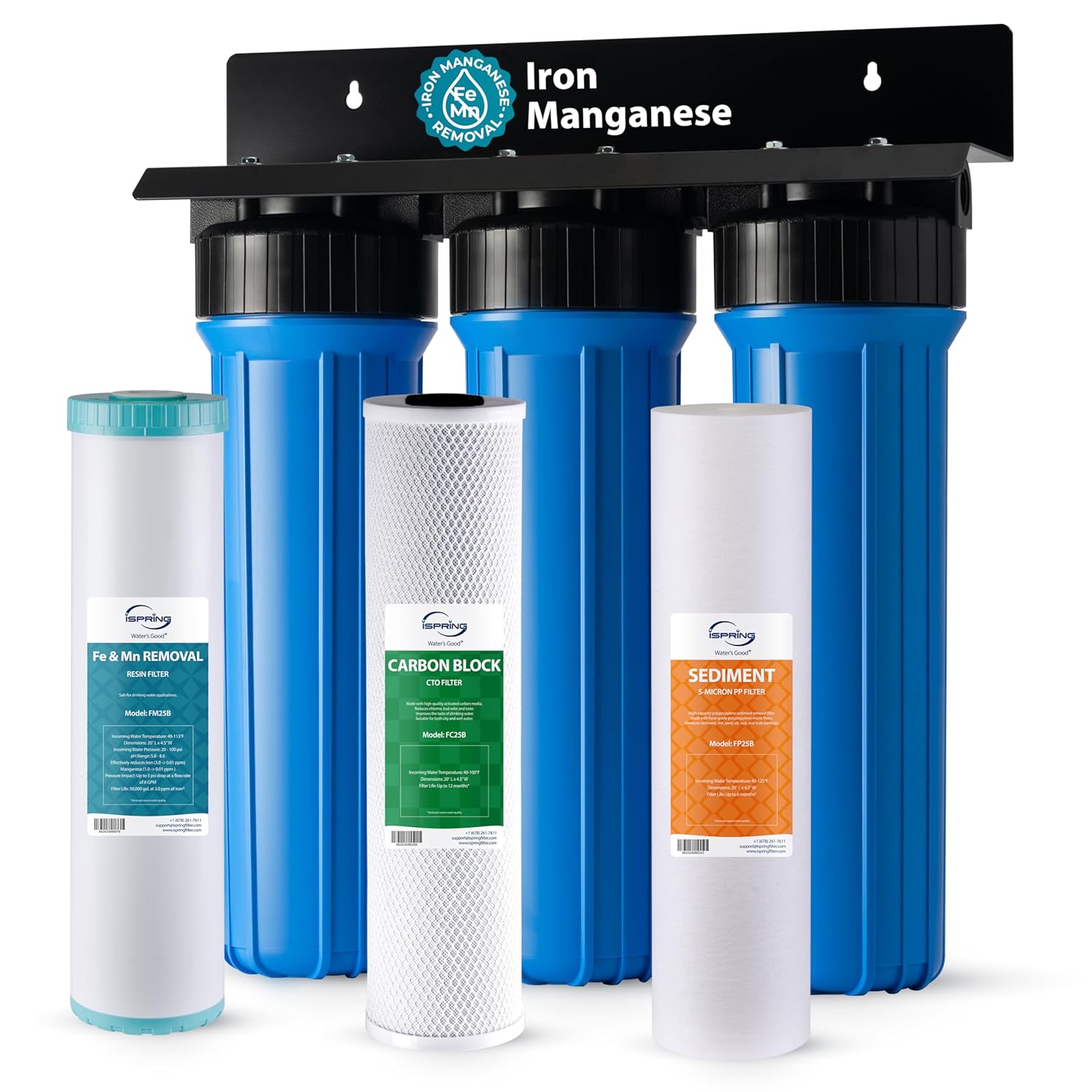
The iSpring WGB32BM is a tankless, 3-stage whole-house filter intended to treat all water entering a home. It uses a polypropylene sediment cartridge, a coconut-shell carbon block, and a catalytic iron & manganese reducing stage to lower visible particulates, chlorine, taste and odor, and iron/manganese down to trace levels within the system's stated limits. Designed for up to 15 gpm peak flow and a year or up to 100,000 gallons of service life for the carbon and sediment stages, it is sized to handle typical family plumbing without noticeable pressure loss. Practical benefits include DIY-friendly installation with 1 inch NPT fittings, long filter life that reduces replacement frequency, and a dedicated iron/manganese cartridge for homes with moderate levels of those contaminants. Limitations are that it will not reduce water hardness or total dissolved solids, and the iron/manganese stage is rated only for iron up to 3.0 ppm and manganese up to 1.0 ppm, so homes with heavier contamination need a more robust solution or pretreatment.
Best for: Buyers who prioritize strong whole-home contaminant reduction and sustained flow for daily household use, and who want a high-capacity, low-maintenance system that addresses chlorine, sediment, and moderate iron or manganese.
Less Ideal for: Homes with very hard water or iron/manganese levels above the stated limits should consider adding a dedicated softener or a heavier-duty pretreatment system instead.
- Three-stage filtration targets sediment, chlorine/taste/odor, and iron/manganese for broad contaminant reduction
- High peak flow rate up to 15 gpm supports whole-house use with minimal pressure loss
- Long service life for primary cartridges (up to 100,000 gallons or 12 months) reduces maintenance frequency
- 1-inch NPT connections and included wrench make DIY installation and filter changes straightforward
- Does not reduce hardness or total dissolved solids
- Iron and manganese removal is limited to moderate levels (iron up to 3.0 ppm, manganese up to 1.0 ppm)
Verdict: Choose this system if you want a high-flow, three-stage whole-house filter that reliably cuts chlorine, sediment, and moderate iron/manganese while minimizing maintenance.
Aquaboon 5 Micron Sediment Filter

| Micron rating | 5 micron |
|---|---|
| Material Type | Polypropylene (PP) |
| Unit Count | 6 Count |
| Compatible Water Purifier Models | Whirlpool WHKF-GD05 |
This Aquaboon 5 micron sediment cartridge is a straightforward replacement for standard 10 x 2.5 inch housings and is built from food-grade polypropylene with a melt-blown, multi-layered construction. It captures visible particulates such as rust, sand, and dirt while minimizing fiber shedding, and the universal 10" x 2.5" sizing means installation is quick and easy in most housings used for whole-house or under-sink filtration. The design aims to preserve flow and avoid noticeable pressure drop, so household water use from faucets and appliances remains steady while the cartridge protects downstream media and equipment from sediment buildup. It ships in packs (unit count shown as six) which makes routine replacement convenient and economical. Limitations are that this is a sediment-only filter so it will not remove chlorine, heavy metals, or dissolved chemicals, and performance depends on proper prefiltration and change intervals for heavy particulate loads.
Best for: Buyers who prioritize a low-cost, reliable sediment barrier to protect plumbing and downstream filters and who want an easy-to-change cartridge for routine maintenance.
Less Ideal for: People seeking chemical, microbiological, or heavy metal removal should choose a dedicated carbon, RO, or specialty filter instead.
- Universal 10 x 2.5 inch size fits most standard housings for quick replacement
- Food-grade polypropylene melt-blown construction that resists fiber shedding
- Effective 5 micron rating captures rust, sand, dirt, and sludge
- Designed to maintain water flow with minimal pressure drop
- Only removes particulate matter and does not filter chlorine, VOCs, or dissolved contaminants
- Lifespan and effectiveness depend on local sediment load and may require frequent changes in well water with heavy sediment
Verdict: A practical, easy-to-install sediment cartridge that protects whole-house plumbing and downstream filters by removing visible particulates without compromising flow.
ICEPURE CTO10 Carbon 10"x2.5" (4-Pack)

| Material Type | Activated Carbon |
|---|---|
| Unit Count | 4 Count |
| Compatible Water Purifier Models | Bepure Ace, GE GXWH20F |
| External Testing Certification | NSF/ANSI42 Certified by IAPMO |
These ICEPURE CTO carbon cartridges are standard 10" x 2.5" replacements intended for whole-house or under-sink systems that use CTO carbon blocks. In everyday use they snap into any standard 10" filter housing and work to reduce chlorine, taste and odor while trapping fine sediment; ICEPURE claims NSF/ANSI 42 certification and a rated service life up to about 13,000 gallons depending on water quality. The pack-of-four format makes it easy to keep spare cartridges on hand for regular six-month changes. Construction uses coconut shell activated carbon in a BPA-free housing and the listing highlights multi-step quality testing and leak-resistant sealing. Limitations: these cartridges are aimed at municipally treated tap water and are not optimized for heavy well-water sediment, and they only address chlorine/taste/odor and some heavy metals rather than comprehensive multi-contaminant removal like reverse osmosis or specialty media filters.
Best for: Buyers who want an affordable, easy-to-install carbon replacement for tap water to improve taste and remove chlorine on a regular maintenance schedule.
Less Ideal for: Homes using untreated well water with high sediment loads or buyers seeking removal of dissolved minerals and a wide range of contaminants should consider other filter types.
- Standard 10" x 2.5" size fits common housings and many system brands
- NSF/ANSI 42 certification for chlorine taste and odor reduction
- Made from coconut shell activated carbon for effective adsorption
- Pack of four keeps replacement schedule simple and reduces per-filter cost
- BPA-free housing and multiple quality tests for leak resistance
- Not designed for heavy well-water with large particulates which can shorten life
- Does not provide full-spectrum contaminant removal like RO or specialty cartridges
Verdict: A budget-friendly pack of NSF-certified CTO carbon cartridges that reliably improves tap water taste and odor while fitting standard 10" x 2.5" housings.
Membrane Solutions String Wound 10" Filter

| Micron Rating | 5 Micron |
|---|---|
| Material Type | Polypropylene (PP) |
| Set Name | 6-Pack |
| Recommended Service Temp. | 40-113°F / 5-45℃ |
| Max. Operating Pressure | 75PSI @ 68°F |
This 6-pack of 5-micron string-wound polypropylene cartridges is designed as a sediment prefilter for whole-house and under-sink systems. Install it as the first-stage filter ahead of carbon, RO, or other post-filters to capture rust, sand, silt, and larger particulates and help prevent downstream clogging. The graded string-wound construction traps larger particles on the outside and finer debris toward the core, which increases dirt-holding capacity and extends time between changes; the listing claims up to 15,000–20,000 gallons depending on water quality. The cartridges are NSF-tested for material requirements and fit most standard 10"x2.5" housings, and the polypropylene material is lead- and BPA-free. Limitations are that this is a sediment-only cartridge so it does not reduce chlorine, taste, or dissolved contaminants, and actual life will vary a lot with well or municipal water conditions, so expect more frequent swaps on very sandy or high-sediment supplies.
Best for: Buyers who prioritize reliable, heavy-duty sediment protection for whole-house or under-sink systems and want a long-lasting, easy-to-install prefilter to protect downstream equipment.
Less Ideal for: Users looking for chemical, taste, or odor removal or a single-stage solution for dissolved contaminants should choose a carbon or specialty filter instead.
- High dirt-holding capacity from graded string-wound design
- Fits most standard 10"x2.5" filter housings for easy replacement
- Sold in a 6-pack for multiple changeouts or whole-house banks
- Polypropylene material is food-grade, lead- and BPA-free
- Only a sediment filter and does not remove chlorine, taste, or dissolved contaminants
- Actual lifespan depends heavily on inlet water quality and may be shorter than advertised
Verdict: A dependable, high-capacity sediment prefilter in a 6-pack that protects downstream filters and plumbing on systems needing robust particulate removal.
PUREPLUS 5 Micron 10" x 4.5" Filter

| Micron rating | 5 Micron |
|---|---|
| Unit count | 2 Count |
| Material type | Coconut Shell Carbon, Polypropylene (PP) |
| Certification | NSF 42 – Reduces aesthetic impurities |
This PUREPLUS replacement cartridge combines a three-layer polypropylene sediment structure with a coconut-shell activated carbon layer to remove chlorine, sediment, color and volatile organic compounds from tap water. It fits standard 10" x 4.5" housings and is typically used as a pre-filter or whole-house sediment/carbon stage to improve taste and protect downstream appliances. Notable features include multi-density PP layers for staged particle capture, a carbon block for chemical adsorption, NSF 42 certification for aesthetic impurity reduction, and soft end caps that form a seal without extra gaskets. The brand rates the life up to 30,000 gallons depending on water quality and recommends swapping the cartridge every 3 to 6 months in ordinary household use. Practical benefits are clearer tasting water, reduced chlorine odor, and protection for fixtures; limitations are that performance depends on inlet water quality so it may not be ideal for heavy well-water contaminants and you should flush a new cartridge for several minutes after installation. Installation is straightforward for anyone comfortable shutting a valve and replacing a standard filter element.
Best for: Buyers who prioritize proven performance backed by many customer reviews and want an easy-to-install sediment-plus-carbon cartridge to improve tap water taste and protect fixtures in municipal tap-water systems.
Less Ideal for: Homes relying on untreated well water with high iron, hydrogen sulfide, or bacterial concerns should consider dedicated well-water or multi-stage treatment options instead.
- Multi-layer PP sediment media plus coconut-shell activated carbon for combined particulate and chlorine/VOC reduction
- Fits standard 10" x 4.5" housings for broad compatibility with many whole-house systems
- NSF 42 certification for reducing aesthetic impurities such as chlorine and taste
- Soft end caps that form a seal without requiring additional gaskets make installation simpler
- May not address well-water-specific contaminants like heavy iron or biological issues
- Actual life and capacity vary with water quality, so high-sediment systems may need more frequent changes
Verdict: A reliable, easy-to-install 5-micron sediment and carbon replacement that improves tap water taste and protects plumbing in municipal water setups.
SimPure DB10C 10" x 4.5" Housing
| Inlet/Outlet | 1" NPT Brass Port |
|---|---|
| Compatible Filter Dimensions | 10" x 4.5" |
| Maximum Flow Rate | 20 gpm |
| Applicable Water Temperature | 41-104 °F (5-40 ℃) |
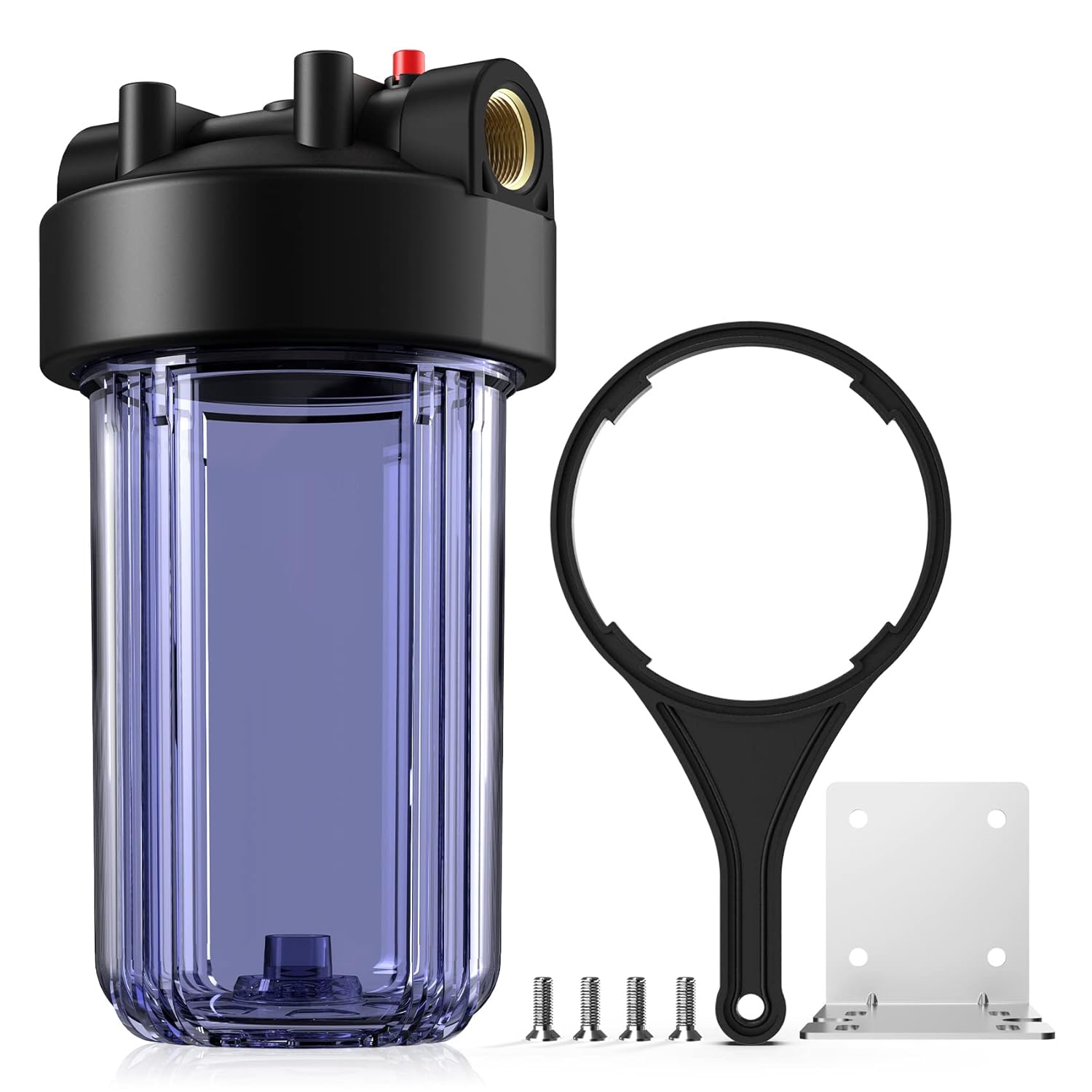
The SimPure DB10C is a single-stage whole-house filter housing designed to accept standard 10" x 4.5" cartridges for prefiltration of municipal or well water. It mounts inline using 1" NPT brass inlet and outlet ports and is typically used as the first stage to remove sand, dirt, sediment, chlorine and taste or odor when fitted with the appropriate cartridge. The clear reinforced polypropylene bowl makes visual inspection of the cartridge easy, and the builder-friendly extras include a heavy-duty mounting bracket, a wrench and a red pressure-relief button to release pressure before servicing. Brass ports and a double O-ring layout aim to reduce leaks compared with cheaper housings, and the unit is rated for up to 20 gpm and working pressures common in homes. Important limitations: the listing is the housing only so you must buy compatible filter cartridges separately, and its maximum recommended water temperature and pressure ranges should be observed. Space for installation and cartridge replacement is another practical consideration due to the housing size.
Best for: Homeowners who want a simple, factory-quality single-stage whole-house housing to protect plumbing and appliances from sediment and chlorine and who prefer visible cartridge inspection and brass fittings for reliability.
Less Ideal for: Homes needing multi-stage contaminant removal like RO or heavy iron/chemical treatment should consider multi-stage systems or specialty filters instead of a single housing.
- Accepts universal 10" x 4.5" cartridges so you can choose sediment, carbon, or pleated filters
- Clear polypropylene bowl lets you visually check cartridge condition without disassembly
- 1" NPT brass inlet/outlet ports support higher flow and provide more durable thread sealing
- Includes mounting bracket, wrench and pressure-relief button for easier installation and maintenance
- Rated for up to 20 gpm, suitable for whole-house prefiltration on many homes
- Filter cartridges are not included so total system cost requires purchasing compatible cartridges separately
- Requires adequate clearance for installation and cartridge replacement due to housing size
Verdict: A durable, clear 10" x 4.5" whole-house housing with brass ports and easy service features for buyers who want a reliable prefilter solution and visible cartridge monitoring.
Choosing the Right Whole-House Water Filter for Tap Water: Key Factors to Consider
Contaminant Reduction Targets
Know what you need the system to remove from tap water. Municipal supplies commonly require reduction of chlorine, chloramine in some areas, sediment, and organic compounds that affect taste and odor. If your water report shows trace heavy metals or specific chemical contaminants, confirm the filter media is certified or specified to address those constituents.
Choosing the right media or combination of stages matters because some filters specialize in sediment removal while others focus on chemical adsorption. A multi-stage whole-house unit can pair a sediment prefilter with a catalytic carbon stage to tackle both particles and chlorine effectively.
Flow Rate and Household Demand
Whole-house systems must maintain adequate flow for showers, dishwashers, clothes washers, and simultaneous fixtures. Flow capacity is usually specified in gallons per minute. Match that rating to your household peak demand to avoid drops in water pressure during busy times.
Oversizing the flow rating provides headroom for future use and accounts for pressure losses across older plumbing. Conversely, undersized systems may deliver excellent treatment but leave taps weak when multiple outlets run.
Filter Life and Ongoing Maintenance
Consider how often cartridges or media need replacement and the ease of accessing parts. Short-lived cartridges can be inexpensive but require frequent changes that raise lifetime maintenance work. Longer-life media or backwash-capable systems reduce replacement frequency but may need more complex servicing.
Factor in whether routine maintenance can be done with basic tools, whether shutoff valves and bypasses are included to avoid service disruption, and how readily replacement elements are available locally or online.
Installation Requirements and Plumbing Fit
Whole-house filters are installed at the main water entry to the home, so evaluate space, clearance for filter changes, and whether extra fittings are needed. Some systems require professional plumbing work, especially if adding bypass valves, pressure regulators, or mounting heavy housings.
A system with a straightforward install and clear instructions can lower upfront costs and time. If you intend a DIY install, verify the unit fits standard pipe sizes and whether threaded or slip fittings are used.
Material Durability and Certification
Durable housings and corrosion-resistant internal components extend a system's usable life. Look for materials rated for potable water and temperature ranges typical of your supply. Certifications from recognized test labs for claimed contaminant reductions offer added assurance that a system performs as described.
Also consider whether seals and O-rings are replaceable and what the warranty covers for housings and media.
Space, Footprint, and Bypass Options
Whole-house systems vary in footprint from compact single-cartridge housings to large multi-stage banks. Measure available space near the main shutoff and ensure there is room for service clearance. Built-in bypass valves or easily installed external bypasses let you restore water quickly during maintenance.
A unit that requires less clearance simplifies filter swaps, while a modular design can make future upgrades more straightforward.
Understanding Your Tap Water Before You Buy
Start by obtaining a recent water quality report from your municipal supplier or by testing a sample if you suspect issues. The report usually lists regulated contaminants and common non-regulated indicators like hardness and manganese. A targeted understanding of what is present will narrow the types of media and stages you should prioritize.
If testing reveals primarily aesthetic problems such as chlorine taste or sediment, a carbon plus sediment arrangement is often sufficient. If testing shows elevated specific contaminants, look for systems that explicitly address those, or plan for a tailored treatment step.
- Check municipal water quality annual reports
- Test for sediment, chlorine, hardness, and specific contaminants if needed
- Match filter media to the detected contaminants
Common Whole-House Filter Configurations
Whole-house setups commonly combine a sediment prefilter with media targeted at chemical adsorption or specialty treatment. Sediment stages protect downstream media and appliances from particles, while activated carbon reduces chlorine and organic compounds that affect taste and odor.
Some systems use backwashable media to extend life and reduce cartridge replacement frequency. Understanding the pros and cons of cartridge versus tank-based systems helps homeowners choose between lower upfront cost and lower ongoing maintenance.
- Sediment + activated carbon for municipal chlorine and particles
- Backwashable tanks for long life and reduced cartridge swaps
- Modular cartridge housings for easy upgrades and targeted stages
Sizing the System for Your Home
Calculate peak flow needs by adding typical flow rates for fixtures you might run simultaneously. A two-bath home will have different peak demands than a larger household with multiple showers. Choose a system rated to exceed that peak by a comfortable margin to preserve pressure.
Also factor in total daily water volume and the expected lifespan of filter media. Systems with larger media volumes can offer better contaminant capacity and longer service intervals for homes with heavier usage.
- Estimate peak simultaneous fixture usage
- Choose a flow rating higher than calculated peak
- Consider media capacity relative to household daily volume
Installation Tips and Preparing for Service
Plan for a location with space for cartridge changes and access to shutoff valves. Installing a service bypass and install-friendly shutoffs makes routine maintenance quicker and avoids water downtime. Verify pipe size compatibility and whether adapters are needed.
Keep basic spare parts on hand such as O-rings and a spare sediment cartridge. A simple maintenance checklist and labeling of valves will reduce confusion during future servicing.
- Allow clearance for filter swaps and maintenance
- Install bypass and shutoff valves for quick servicing
- Stock common replacement parts and follow a maintenance schedule
Maintenance Routines That Keep Systems Performing
Establish a regular schedule for checking pressure drop across the filter and replacing or cleaning elements as recommended. A rising pressure differential is the first sign a filter needs attention. For backwash systems, follow the manufacturer-prescribed backwash intervals to avoid channeling or media fouling.
Document each service event and note water quality changes after maintenance. Routine upkeep preserves flow capacity and filtration effectiveness over the long term.
- Monitor pressure drop to detect clogging
- Replace cartridges or backwash according to schedule
- Record maintenance dates and water quality observations
How We Chose the Best Whole-House Water Filter for Tap Water
We focused on systems designed specifically to treat municipal tap water and common household contaminants, excluding specialty or point-of-use units that only serve a single faucet. Our selection prioritized measurable filtration performance and practical installation and upkeep factors that affect everyday use. Concrete evaluation criteria included contaminant reduction capability across sediment, chlorine, and common chemical or particulate markers; supported flow rate capacity that preserves household water pressure during peak demand; filter lifespan and maintenance frequency; compatibility with standard residential plumbing and installation complexity; and spare-parts availability and ease of servicing. We also considered build quality and materials that resist corrosion and avoid leaching. We excluded systems intended solely for well water with specific iron or bacterial treatment needs, and we did not include inline or under-sink point-of-use filters. Our goal was to surface whole-house options that reliably improve tap water quality while being maintainable for typical homeowners.
Our full evaluation process is outlined in our review methodology.
FAQ
How do I know if a whole-house filter will remove chlorine from my tap water?
Look for systems that include activated carbon or catalytic carbon stages, which are effective at reducing chlorine and improving taste and odor. Check technical specifications or third-party test data to confirm claimed chlorine reduction levels.
Will a whole-house filter affect my water pressure?
A properly sized system should maintain normal household pressure. However, undersized units or heavily clogged filters can cause pressure drops. Choose a system with a flow rating above your peak demand and monitor pressure differential as part of routine maintenance.
How often do filters need to be changed or serviced?
Replacement intervals vary with media type and water quality. Sediment cartridges may need changing every few months in dirtier supplies, while carbon stages can last longer. Backwashable systems typically require less frequent media replacement but still need periodic inspections.
Can I install a whole-house filter myself?
Some homeowners can install simpler cartridge-based systems if they have basic plumbing skills and the correct fittings. More complex installs, large tank systems, or modifications to existing plumbing often warrant professional installation to ensure leak-free connections and correct bypass setup.
Do whole-house filters treat well water the same as municipal tap water?
Treatment needs differ. Whole-house systems designed for municipal tap water focus on chlorine, sediment, and common aesthetic contaminants. Well water may require additional steps for iron, manganese, hardness, or microbial issues, so a different treatment approach is often needed.
Final Verdict
When choosing a whole-house water filter for tap water, prioritize filtration stages that address the contaminants identified in your water report and select a flow rating that comfortably exceeds your household peak demand. Balance media life and maintenance frequency against ease of servicing and available space for the unit. Opt for systems with durable materials and accessible replacement parts, and plan for installation needs such as bypass valves and clearance for filter swaps. With the right fit, you will get noticeably better-tasting water and reduced sediment throughout the home while preserving reliable water pressure.