
Note: This article contains affiliate links. If you click on these links and make a purchase, we may earn a small commission at no extra cost to you. This helps support our research and content. Read our full affiliate disclosure here.
Picking the right Wi-Fi smart light bulb can transform how you light and control rooms. The right bulb gives you dependable remote control, accurate color or tunable white options, and simple schedules so your home lighting fits daily routines. This guide covers seven shortlisted Wi-Fi smart light bulbs that represent the best balance of connectivity, brightness, and practical features for everyday use. Below we summarize the evaluation criteria used to pick these top options and show which bulbs match different needs, whether you want color mood lighting, bright daylight for task areas, or just a simple, robust replacement for a standard lamp.
Top Picks at a Glance
| Best Overall The best all-around choice for most situations | Kasa Smart Bulb KL125P2 |  |
| Best Quality Built to a higher standard if you want something more solid | Philips Hue Essential A19 4-Pack |  |
| Best Value The sweet spot between price and what you get | Amazon Basics Smart A19 LED Bulb | 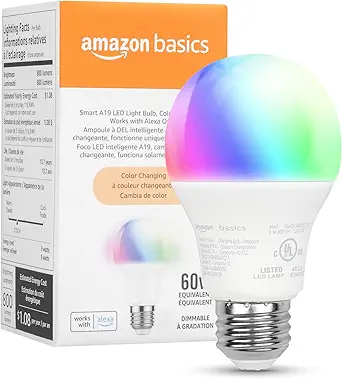 |
| Best Budget The cheapest option that still gets the job done reliably | Tapo L531E Smart A19 Bulb |  |
| Top Rated A top-rated pick with lots of positive feedback | Govee Smart A19 Light Bulbs H6008 |  |
| Most Popular A crowd favorite that many people choose with confidence | SYLVANIA Smart+ WiFi A19 |  |
| Best Seller A high-volume bestseller chosen again and again | Govee Smart A19 LED Bulb H6008 |  |
Kasa Smart Bulb KL125P2
| Light Output Maximum | 800 lumens |
|---|---|
| Light Source Wattage | 9 watts |
| Color Temperature | 6500 Kelvin |
| Connectivity Protocol | Wi-Fi |
| Color Rendering Index | 90 |
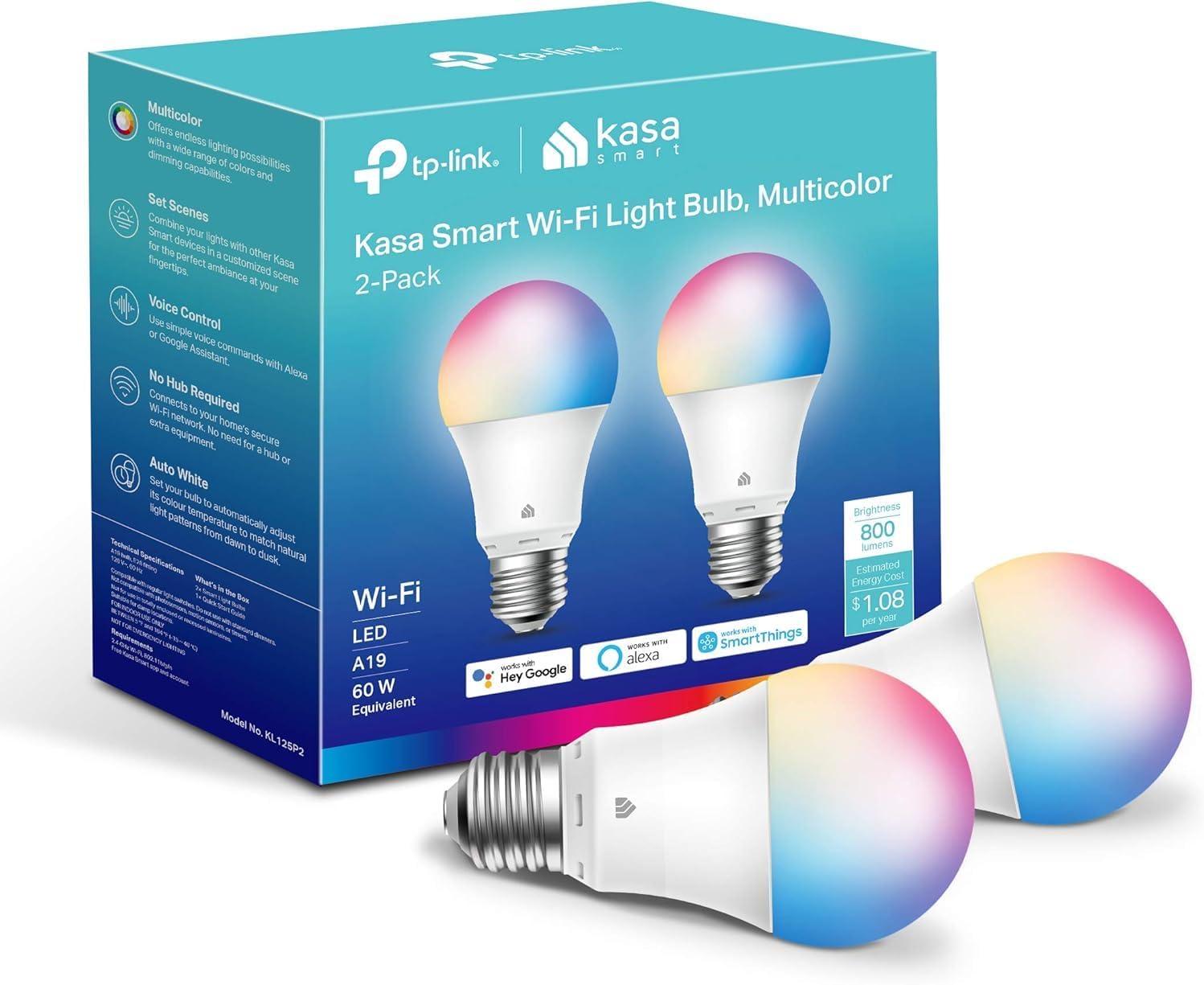
The Kasa KL125P2 is an A19 smart LED that brings 16 million colors plus tunable whites to a standard E26 socket while drawing about 9 watts for a 60W incandescent equivalent. You control it from the Kasa app or with voice via Alexa and Google Assistant, and it supports remote on/off, scheduling, and scenes so it is useful for everyday rooms, accent lighting, or holiday setups. Notable extras include automatic white adjustment to mimic daylight changes and basic energy monitoring so you can see real-time power use. Setup uses 2.4 GHz Wi‑Fi and the bulb is dimmable without a separate hub, which keeps installations simple. The bulb aims for good color quality with a CRI of 90 and 800 lumens of output, but it is intended for indoor use only and needs a reliable 2.4 GHz connection to access smart features. For someone who wants flexible color control and app-driven schedules without extra hardware, this provides a full feature set in a familiar bulb form factor.
Best for: Buyers who want a single, easy-to-install smart bulb that offers rich color options, reliable voice control, and app scheduling without adding a hub.
Less Ideal for: Users who need outdoor-rated bulbs, those on a 5 GHz-only Wi‑Fi network, or buyers who prefer bulbs with higher lumen output for very bright task lighting.
- Full color plus tunable white (2500K–6500K) for versatile lighting scenes
- Works with Alexa and Google Assistant for hands-free voice control
- No hub required and connects over 2.4 GHz Wi‑Fi for easy installation
- Energy monitoring and scheduling available through the Kasa app
- Requires a 2.4 GHz Wi‑Fi network and will not work on 5 GHz-only networks
Verdict: Choose the KL125P2 if you want hub-free, voice-ready smart bulbs with full-color control and app scheduling for everyday indoor lighting.
Philips Hue Essential A19 4-Pack
| Bulb Base | E26 |
|---|---|
| Bulb Shape Size | A19 |
| Light Output Maximum | 800 lumens |
| Color Temperature | 2200K-6500K |
| Power Consumption | 8.8 watts |
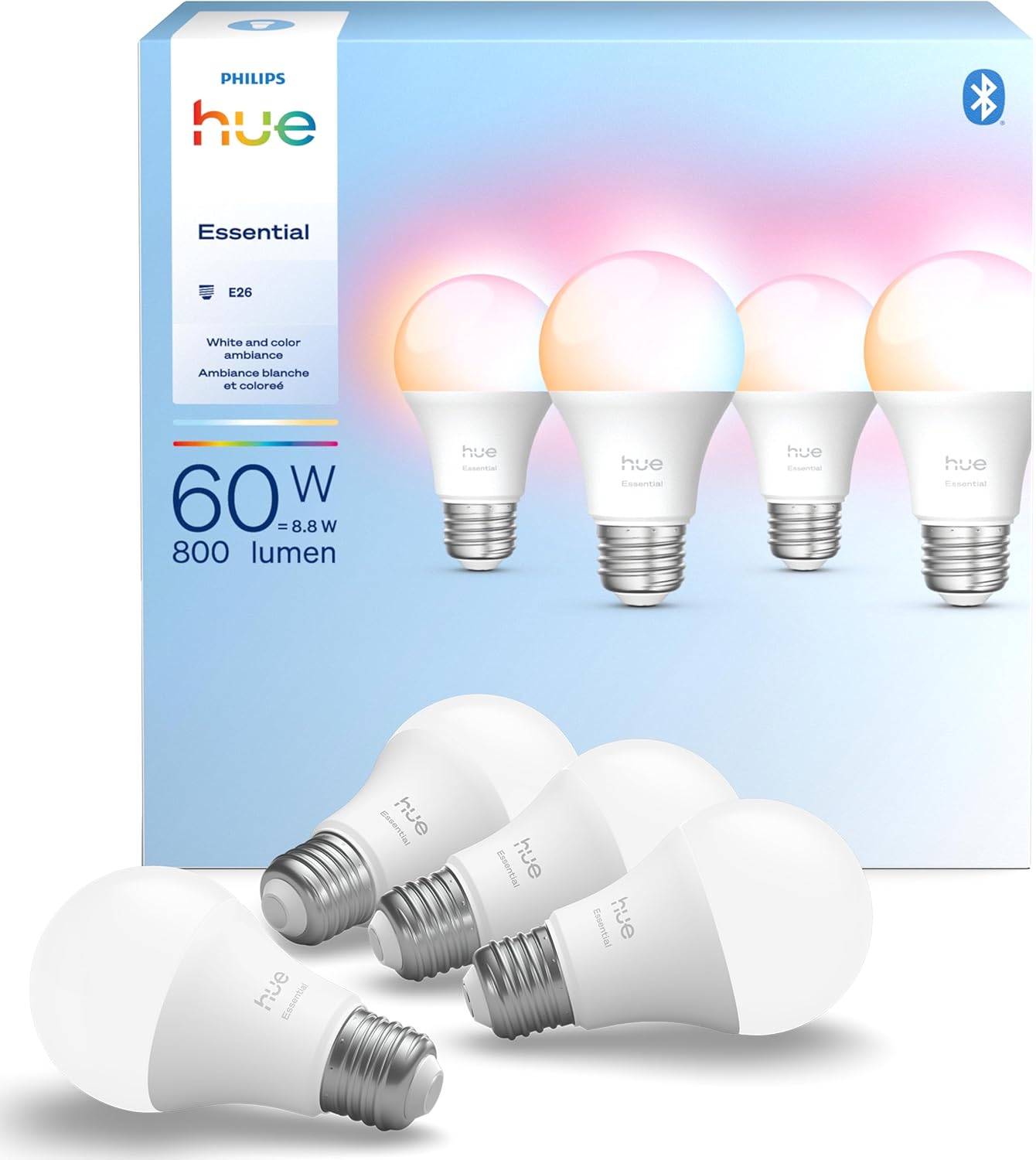
These Philips Hue Essential A19 bulbs are smart, full-color LED replacements for standard E26 A19 lamps sold in a four-pack. They pair with the Hue app for direct control of color temperature and millions of colors, and they also respond to Alexa, Google Assistant, and Apple Home voice commands. In daily use they provide up to 800 lumens of white brightness, smooth dimming down to a low level, and a wide 2200K–6500K white range plus color options for mood lighting or scenes. The bulbs draw about 8.8 watts while delivering a 60W-equivalent output and have an average CRI around 80, so colors look reasonably accurate. For users who want deeper integration and extra features like content sync or routines, adding a Hue Bridge unlocks advanced functions. Limitations include the need to use the Hue app or a compatible hub for best functionality and that the color rendering is not as high as some premium tunable-white bulbs, so it is best suited to general lighting and ambiance rather than color-critical tasks.
Best for: Buyers who prioritize smart home integration and flexible color and white control for living spaces and entertainment lighting.
Less Ideal for: Buyers needing the highest color accuracy for professional tasks or those who want a no-app plug-and-play bulb with full feature set without any hub dependency.
- Full color and tunable white control via the Hue app
- Works with Alexa, Google Assistant, and Apple Home for voice control
- 800 lumens output with smooth dimming to low levels
- Energy efficient at about 8.8 watts for a 60W-equivalent bulb
- Color rendering index of 80 may be lower than higher-CRI specialty bulbs
- Some advanced features require adding a Hue Bridge to the setup
Verdict: Choose these Philips Hue bulbs when you want reliable, app-driven color and tunable-white smart lighting that integrates with major voice assistants.
Amazon Basics Smart A19 LED Bulb

| Wattage | 9 watts |
|---|---|
| Bulb Shape Size | A19 |
| Bulb Base | E26 |
| Light Output Maximum | 800 lumens |
| Network Connectivity | 2.4 GHz Wi‑Fi only |
This Amazon Basics smart A19 LED bulb replaces a 60W incandescent using 9W of power and connects directly to 2.4 GHz Wi‑Fi so no separate hub is needed. It pairs with the Alexa app for voice and remote control, supports 16 preset colors, and provides a dimmable white output down to 5 percent for mood lighting or general room illumination. Setup is straightforward from the Alexa app and you can group bulbs, create routines, and control lights when away from home. The bulb is intended for indoor use and is compatible only with Alexa, so it integrates cleanly into an Alexa‑centric smart home but will not work with Google Assistant, HomeKit, or other ecosystems. It also does not support physical dimmer switches. For someone standardizing on Alexa, this bulb delivers reliable color options, simple scheduling, and solid 800‑lumen white brightness in a familiar A19/E26 form factor.
Best for: Buyers who prioritize easy, hub‑free smart lighting that integrates with an Alexa‑centric home and want straightforward color and scheduling controls to optimize everyday lighting.
Less Ideal for: People who rely on Google Assistant, Apple HomeKit, SmartThings, or who need physical dimmer switch compatibility should look elsewhere.
- Direct Wi‑Fi connection with no hub required
- Works with Alexa for voice control and remote app control
- 16 preset colors plus dimmable white from 5%–100% for flexible lighting scenes
- 800 lumens white output gives bright, usable light for most rooms
- Compatible only with Alexa and 2.4 GHz Wi‑Fi networks
- Not compatible with physical dimmer switches
Verdict: A simple, hub‑free Alexa‑only smart bulb that delivers reliable color and scheduling features for buyers standardizing on Alexa.
Tapo L531E Smart A19 Bulb

| Light Source Wattage | 9 watts |
|---|---|
| White Brightness | 800 lumens |
| Connectivity Protocol | Wi-Fi (2.4 GHz) |
| Color Temperature | 2500K–6500K |
| Color Rendering Index | >90 |
The Tapo L531E is a Wi‑Fi A19 smart bulb designed to replace a standard 60W lamp with an 800-lumen LED that supports 16 million colors plus adjustable white from warm to cool. You control it with the Tapo app or voice assistants to set schedules, dim to 1%, save custom scenes for movie or party modes, and trigger an Away mode to simulate occupancy. The bulb connects directly to 2.4 GHz Wi‑Fi so no hub is required, and its CRI>90 and 220° beam angle produce accurate, even light for living rooms and bedside lamps. Energy monitoring in the app shows usage over time and the LED draws a fraction of incandescent power. Expect straightforward setup with Alexa Frustration-Free Setup, but note the bulb is indoor-only and requires a stable 2.4 GHz network; advanced users wanting local LAN control or Matter support should verify ecosystem compatibility. For everyday smart lighting, this bulb balances color options, decent brightness, and low power draw in a familiar A19 form factor.
Best for: Buyers who want full-color smart lighting and scene control without adding a hub and who prioritize low running costs and easy voice/app control.
Less Ideal for: Users who need outdoor-rated bulbs, strict local-only control, or guaranteed Matter certification should look elsewhere.
- Wide color range plus true-white tuning from 2500K–6500K
- No hub required — connects to 2.4 GHz Wi‑Fi for direct app and voice control
- High CRI (>90) and 220° beam angle for accurate, even illumination
- Energy monitoring and low power draw for ongoing energy savings
- Requires a 2.4 GHz Wi‑Fi network and may not support advanced local or Matter integrations
Verdict: A flexible, budget-friendly Wi‑Fi A19 bulb that delivers bright, accurate color and white tuning without a hub, making it an easy upgrade for everyday smart lighting.
Govee Smart A19 Light Bulbs H6008

| Light Source Operating Life | 50000 hours |
|---|---|
| White Brightness | 800 lumens |
| Power Consumption | 9 watts |
| Connectivity Protocol | Bluetooth, Wi‑Fi |
| Control Method | App, Voice |
These Govee H6008 A19 smart bulbs bring flexible color and tunable white lighting to everyday rooms while relying on direct Wi‑Fi or Bluetooth control without a hub. You use them like standard E26 bulbs but control color, brightness, schedules, and scenes from the Govee Home app or voice assistants including Alexa, Google Assistant, Siri and HomeKit via supported bridges. Notable features include 16 million colors, 54 preset scene modes, music sync using phone microphone, group control and standard scheduling for wake/sleep routines. At 800 lumens and 9 watts each they provide bright, energy-efficient general lighting and a long rated life of 50,000 hours. Important limitations: they require a stable 2.4 GHz Wi‑Fi network for full cloud features, they do not work with 5 GHz networks, and they cannot be used with smart switches that cut power. For buyers prioritizing dependable, app-driven smart lighting these bulbs are a practical, well-rounded option.
Best for: Buyers who want reliable, app-driven smart lighting that works directly on home Wi‑Fi and integrates with voice assistants for everyday rooms and routines.
Less Ideal for: People who plan to control lights via wall-mounted smart switches that cut power or households that only use 5 GHz Wi‑Fi without a 2.4 GHz band.
- Direct Wi‑Fi and Bluetooth control with no hub required for straightforward setup
- Wide color range and tunable white plus 54 preset scenes for flexible lighting moods
- Works with major voice assistants and HomeKit for hands-free control
- Energy-efficient 9W output with 800 lumens brightness and long 50,000-hour rated life
- Requires a stable 2.4 GHz Wi‑Fi network and does not support 5 GHz
- Not compatible with smart switches that cut mains power to the bulb
Verdict: A dependable, hub-free smart bulb pack that delivers bright, long-lived multicolor lighting and smooth voice and app control for everyday Wi‑Fi setups.
SYLVANIA Smart+ WiFi A19

| Light Output Maximum | 800 lumens |
|---|---|
| Color Temperature | 2700 Kelvin (tunable white to 6500K) |
| Connectivity Protocol | Wi‑Fi (2.4 GHz required) |
| Light Source Operating Life | 15000 hours |
| Color Rendering Index | 90 |
The SYLVANIA Smart+ WiFi A19 is a full‑color, dimmable LED bulb intended for indoor fixtures and controlled over a 2.4 GHz Wi‑Fi network. It runs from a standard E26 socket and delivers about 800 lumens, with tunable white from warm to daylight and millions of color options selectable via the SYLVANIA Smart app or voice assistants. Setup requires no hub and supports routines, timers, grouping, and simple voice commands through Alexa or Google Assistant; Siri Shortcuts are supported for phone-based automations but the bulb is not HomeKit compatible. With a rated life around 15,000 hours and a CRI of 90, colors and whites look accurate for living spaces and task lighting. Practical limitations include the requirement for a stable 2.4 GHz Wi‑Fi network and exclusion from use in fully enclosed fixtures, and the app ecosystem may offer different features than some competing platforms. For buyers who prioritize straightforward Wi‑Fi control and reliable color quality, this bulb covers the essentials without extra hub hardware.
Best for: Buyers who want reliable, hub‑free smart bulbs with accurate color and voice control and who value widely used platform compatibility and proven user feedback.
Less Ideal for: Users seeking native Apple HomeKit integration or those who need bulbs for enclosed fixtures should look elsewhere.
- Full color plus tunable white for flexible scene and mood lighting
- Works with Amazon Alexa and Google Assistant for hands‑free control
- No hub required — connects directly to 2.4 GHz Wi‑Fi
- High CRI (90) for accurate color rendering
- Rated life around 15,000 hours reduces replacement frequency
- Requires a 2.4 GHz Wi‑Fi network and will not pair with 5 GHz networks
- Not compatible with Apple HomeKit and cannot be controlled natively by Home app
- Not rated for use in fully enclosed fixtures
Verdict: A dependable, hub‑free Wi‑Fi smart bulb that delivers accurate colors and simple voice control for buyers who want proven, easy smart lighting.
Govee Smart A19 LED Bulb H6008
| White Brightness | 800 lumens |
|---|---|
| Wattage | 9 watts |
| Bulb Base | E26 |
| Connectivity Protocol | Bluetooth, Wi‑Fi (2.4 GHz) |
| Color Temperature | Tunable (2700–6500K listed / 6500K spec) |
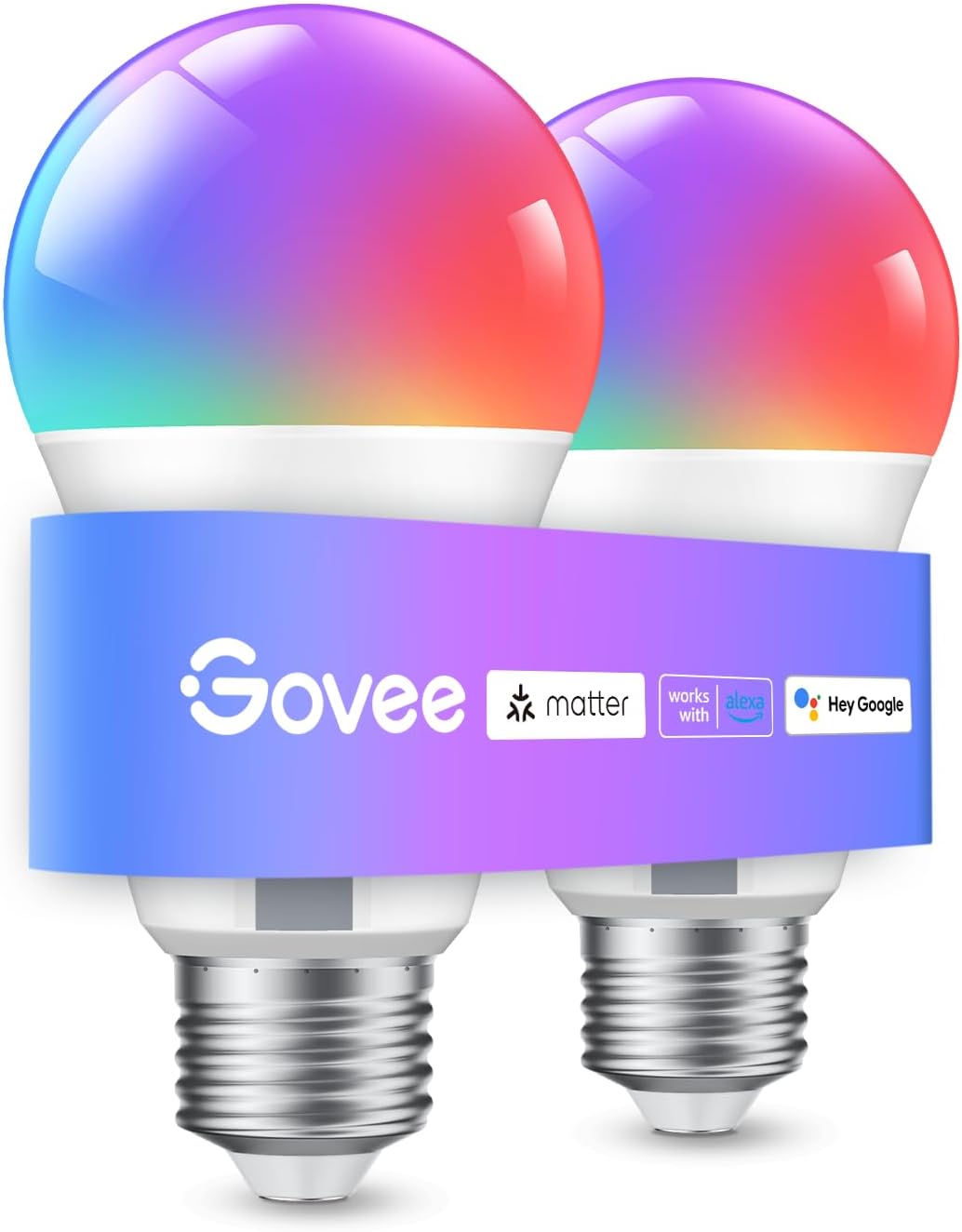
These Govee A19 smart bulbs provide a practical, user-friendly way to add color and scheduling to everyday lighting. They connect directly via 2.4 GHz Wi‑Fi or Bluetooth so no separate hub is required, and the Govee Home app plus voice control through Alexa, Google Assistant, Siri and other platforms lets you set timers, scenes, and group multiple bulbs. The bulbs support RGBWW color mixing and a tunable white range, offer about 800 lumens of white brightness, and include a music sync mode that reacts to sound for parties or ambient effects. At 9 watts they are energy efficient and meet Energy Star specifications. Limitations to note are the requirement for a stable 2.4 GHz Wi‑Fi network and that advanced music sync uses the phone microphone, which can be less reliable than dedicated audio integrations; they also cannot be used behind conventional smart switches without leaving the switch on. For buyers who want straightforward app and voice control with plenty of color options, these bulbs deliver solid everyday performance.
Best for: Home users who prioritize reliable, easy-to-set-up smart lighting with app and voice control and who want versatile color and scheduling without adding a hub.
Less Ideal for: People who need bulbs to work behind conventional switched circuits that are regularly turned off or who require hub-based, enterprise-grade lighting control.
- Direct Wi‑Fi and Bluetooth connection needs no hub
- Works with Alexa, Google Assistant, Siri, SmartThings and Matter-compatible ecosystems
- RGBWW color plus tunable white with 54 scene presets for varied moods
- 800 lumens output while consuming 9 watts and meeting Energy Star efficiency
- Requires a 2.4 GHz Wi‑Fi network and will not work on 5 GHz-only routers
- Music sync relies on the phone microphone which can be inconsistent
Verdict: A dependable, hub-free smart A19 bulb that delivers bright, energy-efficient white light plus wide color and voice control for everyday smart-home lighting.
Choosing the Right Wi-Fi Smart Light Bulb: Key Factors to Consider
Connectivity Reliability
A Wi-Fi smart light bulb only helps if it stays connected. Look for bulbs with solid 2.4 GHz Wi-Fi support and clear documentation about range and network behavior. Reliable connectivity reduces delays when using voice commands or automation and prevents unexpected light outages.
Connectivity also affects setup and troubleshooting. Bulbs that offer local control or explicit fallback behavior when the network is unavailable provide a smoother experience. Consider the layout of your home and whether you need bulbs that are tolerant of weaker signals or that can be easily reconnected without advanced networking knowledge.
Color Temperature and Color Accuracy
Decide whether you need tunable white (adjustable warm to cool white) or full RGB color. Tunable white is useful for living spaces and task lighting where color temperature affects comfort and visibility. RGB color adds mood and accent options but often sacrifices some white light accuracy.
Check the advertised color temperature range in kelvins and whether manufacturers publish color rendering index or similar metrics. Better color accuracy means whites look natural and skin tones are flattering, which matters for rooms where people spend extended time or where task clarity is important.
Brightness and Beam Characteristics
Brightness is measured in lumens, not watts. Match lumen output to the fixture and room function: higher lumens for kitchens and work areas, moderate output for living rooms and bedrooms. Also consider beam shape and dispersion for directional fixtures versus open lamps.
Some smart bulbs offer adjustable output but note the maximum lumen rating to ensure the bulb can produce enough light for its intended use. Understand how dimming affects color temperature and output range so you maintain useful light levels when the bulb is set below full brightness.
App Functionality and Automation
A flexible app makes the bulb more useful. Look for clear scheduling, scene creation, grouping, and straightforward integration with voice assistants or home automation platforms. Local control options reduce latency and dependence on cloud services for routine tasks.
Consider how easy it is to set up automations like wake-up routines, sunset-based triggers, or coordinated color scenes across multiple bulbs. An app that supports over-the-air updates can also deliver improvements and security patches over the bulb's life.
Compatibility with Fixtures and Dimmers
Ensure the bulb physically fits the fixture and is compatible with inline dimmers if you plan to use them. Some LED smart bulbs do not work well on circuits controlled by mechanical dimmer switches and can flicker or behave unpredictably.
Check base type, bulb shape, and maximum diameter for enclosed fixtures. Also confirm that the bulb is rated for enclosed fixtures if you intend to install it in covered ceiling lights, as overheating can shorten lifespan or degrade color.
Energy Use and Expected Lifespan
Smart bulbs consume power for light output and for maintaining a network radio. Look for efficient bulbs with clear watt-to-lumen ratios and an estimated rated life in hours. Higher efficiency reduces running cost, while a longer rated life lowers replacement frequency.
Also consider standby power draw and whether the bulb supports power-saving modes. For bulbs used many hours per day, energy efficiency and a long rated lifespan meaningfully affect total ownership cost and convenience.
Setting Up a Reliable Wi-Fi Bulb Network
Place bulbs within reliable range of your router or a mesh node and avoid installing them behind large metal fixtures or deep in enclosed fixtures that can block radio signals. During setup, connect bulbs to the 2.4 GHz network if required and use a dedicated smart-home SSID for fewer conflicts with other devices.
If you run into connection issues, temporarily move the bulb into the same room as the router to complete setup, then return it to the fixture. Document each bulb in the app and assign meaningful names or room groups to simplify automation and voice control.
- Prefer bulbs with clear QR-code or guided setup flows.
- Label devices in the app with location-specific names.
- Use mesh Wi-Fi or range extenders to cover larger homes.
Optimizing Light Scenes and Routines
Design scenes that match daily activities such as morning warm light for waking, bright cool light for focused work, and dimmed warm scenes for evenings. Group bulbs in a room to apply scenes simultaneously and maintain consistent ambience.
Use schedules and sunrise/sunset triggers to automate transitions. Test scenes at different times of day so color balance and brightness remain appropriate under ambient conditions.
- Create a few core scenes and avoid overly complex routines.
- Use gradual fades for wake-up and bedtime to reduce abrupt changes.
Troubleshooting Common Issues
If a bulb becomes unresponsive, first power-cycle the fixture and check the app for firmware updates. Verify the router is functioning and that the bulb is on the same 2.4 GHz network if required. Re-adding the bulb in the app often resolves pairing glitches.
For intermittent flicker or dimming problems, check for incompatible wall dimmers or loose connections in the fixture. Ensure bulbs used in enclosed fixtures are rated for that application to prevent overheating-related failures.
- Power-cycle and check app updates.
- Confirm network frequency and SSID membership.
- Inspect dimmer compatibility and fixture ratings.
Using Smart Bulbs in Multi-Bulb Fixtures
When a fixture contains multiple bulbs on a single switch, coordinate automation through grouping in the app rather than using the wall switch. If you need local switching, consider smart-compatible switches that preserve independent bulb control.
Avoid using standard wall dimmers with smart bulbs unless the dimmer is explicitly compatible. If bulbs are frequently switched off at the wall, choose bulbs that remember the last state or support simple power-cycle pairing behaviors.
- Group bulbs logically by fixture and function.
- Prefer smart controls over cutting power at the switch for automation reliability.
Security and Privacy Considerations
Change default passwords on your router and keep your smart-home app accounts protected with strong, unique passwords and two-factor authentication when available. Limit cloud access to only the services you use and understand what data the app collects.
Keep firmware up to date to receive security fixes. If a bulb offers local-only mode, that can reduce data shared with external services while retaining automation within your local network.
- Use strong router passwords and network segmentation where possible.
- Enable two-factor authentication for app accounts.
How We Chose the Best Wi-Fi Smart Light Bulb
We focused on criteria that matter for everyday use and long-term reliability. Connectivity reliability and range were prioritized because a bulb that drops off the network undermines automation. Color accuracy and brightness range were evaluated for mood lighting and task use. App features and local-control options were reviewed to ensure useful scheduling, scene creation, and integration with common smart-home platforms. Energy efficiency and rated lifespan were considered to reflect running cost and replacement frequency. Finally, physical fit and dimming compatibility were checked to avoid installation headaches with existing fixtures. We excluded products that require a proprietary hub or bridge unless the bulb operates fully over native Wi-Fi, and we filtered out bulbs with unclear technical specifications or insufficient documentation. Our editorial filters favored bulbs with explicit lumen outputs, color temperature ranges, and published connectivity specs. The result is a list of widely applicable Wi-Fi smart light bulbs that meet practical performance and reliability thresholds.
Our full evaluation process is outlined in our review methodology.
FAQ
Do Wi-Fi smart light bulbs work without internet?
Often bulbs remain controllable locally if they support local network control, but app features and cloud-based voice integration may be limited without internet. Functionality depends on the bulb's firmware and whether the app supports LAN mode.
Can I use smart bulbs with my existing dimmer switch?
Usually smart bulbs are not compatible with mechanical dimmer switches and can flicker or malfunction. If you need wall dimming, choose a dimmer rated for LED smart bulbs or use smart switches designed to work with smart bulbs.
How bright should a smart bulb be for a living room?
For ambient living room lighting aim for 800 to 1600 lumens per fixture depending on room size and other light sources. Combine multiple bulbs or use higher-lumen bulbs for larger rooms or areas that need task lighting.
Are Wi-Fi smart bulbs energy efficient compared with regular LEDs?
Smart bulbs are LED-based and generally energy efficient, but they consume a small additional amount of power for network connectivity. Over time, efficient models still offer lower energy usage than older incandescent options.
Will smart bulbs work with voice assistants?
Many Wi-Fi smart bulbs integrate with popular voice assistants, but the level of functionality varies. Local voice control and advanced routines depend on the integration method and the bulb's support for local APIs or cloud services.
Final Verdict
Prioritize bulbs that match your most important needs: choose strong connectivity and reliable app features for automated routines, or prioritize color accuracy and high lumen output if lighting quality matters most. Be mindful of fixture compatibility and dimmer interactions to avoid common installation issues. With the right tradeoffs based on coverage, color, and control, you can pick a Wi-Fi smart light bulb that delivers consistent performance and simplifies daily lighting. Focus on the evaluation criteria we outlined to make a confident choice for each room.