
Note: This article contains affiliate links. If you click on these links and make a purchase, we may earn a small commission at no extra cost to you. This helps support our research and content. Read our full affiliate disclosure here.
If you need a dryer that works where a 240V hookup is impractical, a 110V dryer can be the practical solution. These units are designed to run on standard household circuits and are often used in apartments, garages, or utility rooms where dedicated high-voltage wiring is not available. Choosing the right 110V dryer matters because differences in drying time, capacity, and venting can affect how often you do laundry and where you can install the machine. This guide shortlists the top 110V dryers across common use cases and evaluates them on real buyer concerns such as drying efficiency and installation flexibility. Read on to find the compact dryer that matches your space, load size, and venting options.
Top Picks at a Glance
| Best Overall The best all-around choice for most situations | COSTWAY Compact Portable Dryer |  |
| Best Value The sweet spot between price and what you get | Feelfunn Portable Dryer ZX-CD-6 1.5 Cu.Ft |  |
| Best Budget The cheapest option that still gets the job done reliably | MOJOCO Portable Dryer MJC-T03 |  |
| Top Rated A top-rated pick with lots of positive feedback | ROVSUN Portable Clothes Dryer |  |
| Most Popular A crowd favorite that many people choose with confidence | Panda Compact Dryer PAN760SF |  |
| Best Seller A high-volume bestseller chosen again and again | BLACK+DECKER BCED37 Portable Dryer |  |
COSTWAY Compact Portable Dryer
| Form Factor | Freestanding |
|---|---|
| Access Location | Front Load |
| Capacity | 10 pounds |
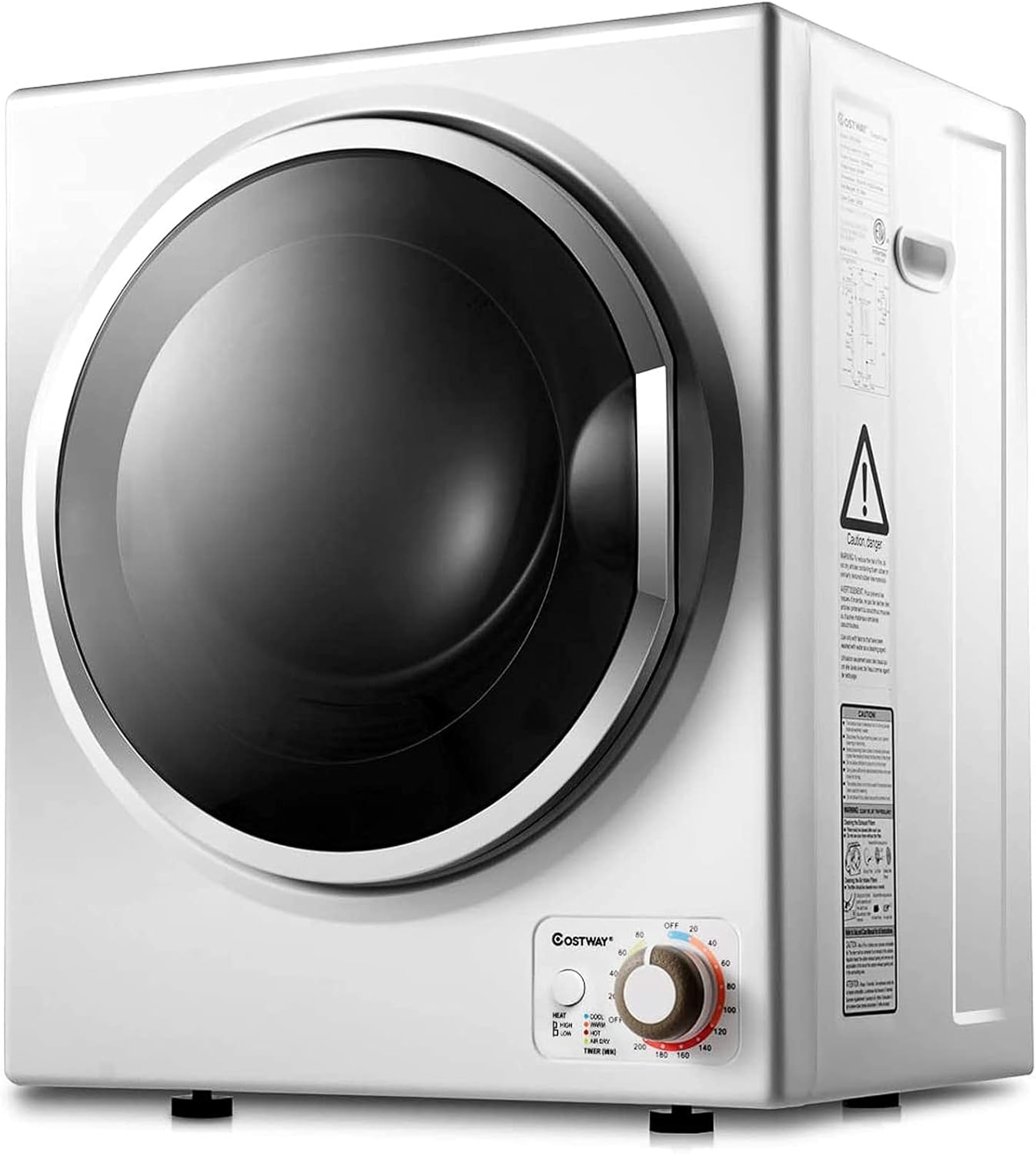
This COSTWAY compact portable dryer is a front-load freestanding unit designed for apartments, dorms, or any place without a full-size dryer. It uses an 850W heater and a stainless steel tumble drum to dry up to about 10 pounds of wet laundry, with recommended loads of roughly 5.5 pounds for faster results. The machine offers multiple modes and a timer—cool, warm, hot, anti-wrinkle, and air-dry—so you can match heat and runtime to fabric types and bulky items. The reverse tumble feature helps reduce tangling and wrinkles, and the removable lint filter makes maintenance straightforward. At roughly 37 pounds and compact footprint it can be wall-mounted or placed on firm ground, which helps in tight spaces. Trade-offs are slower cycle times and lower capacity compared with full-size dryers, and the 850W power means heavier loads will take much longer to finish than larger 110V models with higher wattage.
Best for: Buyers who need a space-saving 110V dryer that handles small loads reliably and offers multiple drying modes for different fabrics.
Less Ideal for: Households that run frequent large loads or need fast turnaround on heavy items should choose a higher-capacity or higher-wattage dryer instead.
- Compact footprint suits small spaces and can be wall-mounted or freestanding
- Stainless steel drum for durability and gentler tumbling
- Multiple heat modes and timers for fabric-specific drying
- Reverse tumble reduces tangling and helps anti-wrinkle performance
- Lower wattage limits drying speed on heavier or larger loads
- 10 lb maximum wet capacity means you must split large laundry loads
Verdict: A compact, stainless-steel 110V dryer that fits small spaces and gives fabric-specific drying options for buyers prioritizing convenience over large-capacity speed.
Feelfunn Portable Dryer ZX-CD-6 1.5 Cu.Ft

| Capacity | 1.5 cubic feet |
|---|---|
| Rated Power | 850W |
| Max Temperature | 140°F |
| Access Location | Front Load |
The Feelfunn ZX-CD-6 is a small, 110V-capable dryer designed for apartments, dorms, and RVs where a full-size unit is impractical. It uses an 850W heater that can reach about 140°F and a forward/reverse tumbling action to dry small loads while reducing tangles and wrinkles. Controls are a simple knob with four preset modes for different fabric types and load sizes, so operation is straightforward for day-to-day use. The stainless steel drum and multi-layer lint filter add durability and help contain lint, and the transparent door makes it easy to check progress. It is relatively lightweight for a dryer in this class and can be wall-mounted if floor space is tight. Expect longer cycle times and smaller wet-load limits compared with 240V household dryers, so this model works best for underwear, shirts, baby clothes, and small loads up to the recommended wet limit. Noise is reported as low, but drying very wet or bulky items will take significantly longer and may require multiple cycles.
Best for: Buyers who need a practical, space-saving 110V dryer to handle frequent small loads and prioritize simplicity, easy maintenance, and flexible placement.
Less Ideal for: Households that regularly dry large, heavy, or bulky loads should choose a full-size 240V dryer for faster, higher-capacity drying.
- Compact 1.5 cu ft size fits tight spaces and can be wall-mounted
- 850W heater reaches up to 140°F for effective small-load drying
- Stainless steel drum offers durability over plastic interiors
- Simple knob controls and four modes make it easy to use without a learning curve
- Multi-layer lint filter and transparent door improve maintenance and monitoring
- Small capacity and lower power mean longer cycle times versus full-size 240V dryers
- Not intended for large or heavy items—best for small loads only
Verdict: If you need a compact, easy-to-use 110V dryer for small, frequent loads in tight spaces, the Feelfunn ZX-CD-6 delivers practical, reliable drying with minimal fuss.
MOJOCO Portable Dryer MJC-T03

| Form Factor | Top Load |
|---|---|
| Capacity | 22 pounds |
| Included Components | Dryer, Dryer Bag |
The MOJOCO Portable Dryer is a lightweight, foldable top-load dryer built for small loads and tight spaces. It uses a 600W heater and two temperature settings to dry delicate or faster-drying items, and the manufacturer claims light garments can be ready in about 50 minutes while heavier pieces take longer. The unit is designed to hang up to nine lightweight garments and supports a stated maximum load of 22 pounds, making it suitable for underwear, shirts, baby clothes, and travel laundry. Notable features include a timer, whisper-quiet operation, built-in LED UV sanitizing, and automatic overheat protection for safer operation. In practice the dryer is easy to move and store, and the low power draw means it works on standard 110V circuits and uses less energy than full-size dryers. Limitations are its small capacity and slower cycles for heavier fabrics, so it is not a replacement for a household dryer when you have large or bulky loads.
Best for: Buyers who need an inexpensive, low-power dryer for small loads, travel, or apartments and prioritize portability and energy savings over large capacity.
Less Ideal for: People who regularly dry large, bulky items or need fast turnaround for family-sized laundry loads should choose a full-size electric dryer instead.
- Compact, foldable design that is easy to store and transport
- Two temperature modes for delicate and faster drying
- Built-in LED UV sanitizing and automatic overheat protection
- Quiet operation with a timer for unattended use
- Low 600W power draw compatible with standard 110V outlets
- Small effective capacity means longer cycles for heavier or bulky items
- Not a full replacement for a household dryer for large loads
Verdict: A budget-friendly, 110V-compatible portable dryer that saves space and energy for small loads and travel use.
ROVSUN Portable Clothes Dryer

| Rated Input | 850W |
|---|---|
| Capacity | 5.5 pounds |
| Form Factor | Front Load |
| Material Type | Stainless Steel |
The ROVSUN portable dryer is a compact front-load machine meant for apartments, dorms, and RVs that need fast small-batch drying without a 240V hookup. It uses an 850W heater that reaches up to about 140°F to dry recommended loads up to 5.5 pounds, and the stainless steel drum plus a multi-filtration lint system help protect fabric and keep airflow clear. Controls are a simple knob, so it is easy to set and walk away, and the door-stop safety feature pauses operation if the door opens. Because it is small and relatively light, you can place it on a countertop, level floor, or mount it on a wall with the included kit. Expect practical benefits like quick same-day wear for a few garments, low installation complexity, and durable drum material. The main limitations are its small capacity and modest power, which mean longer cycles or multiple loads for larger households and less suitability for heavy items like thick towels or bedding.
Best for: Buyers who prioritize a reliable, simple dryer that works on household 110V power and need quick same-day drying for small loads in tight spaces.
Less Ideal for: Households that regularly dry large loads, bulky bedding, or need rapid turnaround for many garments should choose a larger or higher-power dryer instead.
- Runs on standard 110V with 850W power, so no special electrical work is needed
- Stainless steel drum for durability and better wear resistance
- Compact size and included wall-mount kit allow flexible placement in small spaces
- Simple knob control makes operation intuitive and low-maintenance
- 5.5-pound capacity is small and not suited for large loads or bulky items
- Lower wattage means longer drying times compared with higher-powered 240V dryers
Verdict: A dependable 110V compact dryer that delivers practical, durable small-load drying without special electrical installation.
Panda Compact Dryer PAN760SF

| Capacity | 3.52 cubic feet |
|---|---|
| Rated Input | 1500W |
| Voltage | 120V/60Hz |
| Drum Material | Stainless Steel |
| Included Components | Plastic Venting Hose, mounting kits |
The Panda Compact Dryer PAN760SF is a vented front-load machine designed to fit apartments, dorms, RVs, or small laundry areas where a 120V outlet is the only option. It provides a 3.5 cu.ft. stainless steel drum and a 1500W motor capable of handling about 13.2 lb loads with selectable time and temperature settings including Cold, Hot, Air Dry, ECO, and Sensor Dry for more efficient cycles. The unit supports free-standing, stacked, or wall-mounted installation and ships with a venting hose and mounting kit. Practical features include a see-through door that opens wide for loading, a three-layer lint filter set for easier maintenance, and automatic shutoff for safety. Expect decent drying performance for everyday garments and smaller bedding, though as a compact 120V vented dryer it will take longer on heavy or very wet loads compared with full-size 240V models and requires an outside vent or indoor venting solution to manage humidity. For buyers prioritizing a space-saving, plug-in dryer that pairs well with compact washers, this Panda balances usability and flexibility, with understandable limits on speed and capacity compared to full-size dryers.
Best for: Buyers who need a reliable plug-in dryer for small living spaces and who value flexible installation and a familiar, easy-to-use control set backed by strong customer feedback.
Less Ideal for: Households that regularly wash large loads, heavy bedding, or need the fastest possible dry times should consider a full-size 240V dryer instead.
- Runs on standard 120V/1500W outlet so no special wiring required
- 3.5 cu.ft. stainless steel drum fits small loads and light bedding
- Multiple drying modes including ECO and Sensor Dry to tailor cycles
- Flexible installation options: freestanding, stacked, or wall-mounted
- Includes venting hose and mounting kit plus removable three-layer lint filters
- 120V power means longer dry times versus 240V full-size dryers
- Requires external venting or an indoor venting kit to manage moisture
Verdict: A space-saving 120V vented dryer that delivers versatile, easy-to-install drying for apartments and RVs when a full-size 240V machine is not an option.
BLACK+DECKER BCED37 Portable Dryer
| Capacity | 3.5 cubic feet |
|---|---|
| Load volume | 13.2 lbs. |
| Power | 1500W, 120V |
| Drum material | Stainless steel |
| Vent connector | 4 inch diameter |
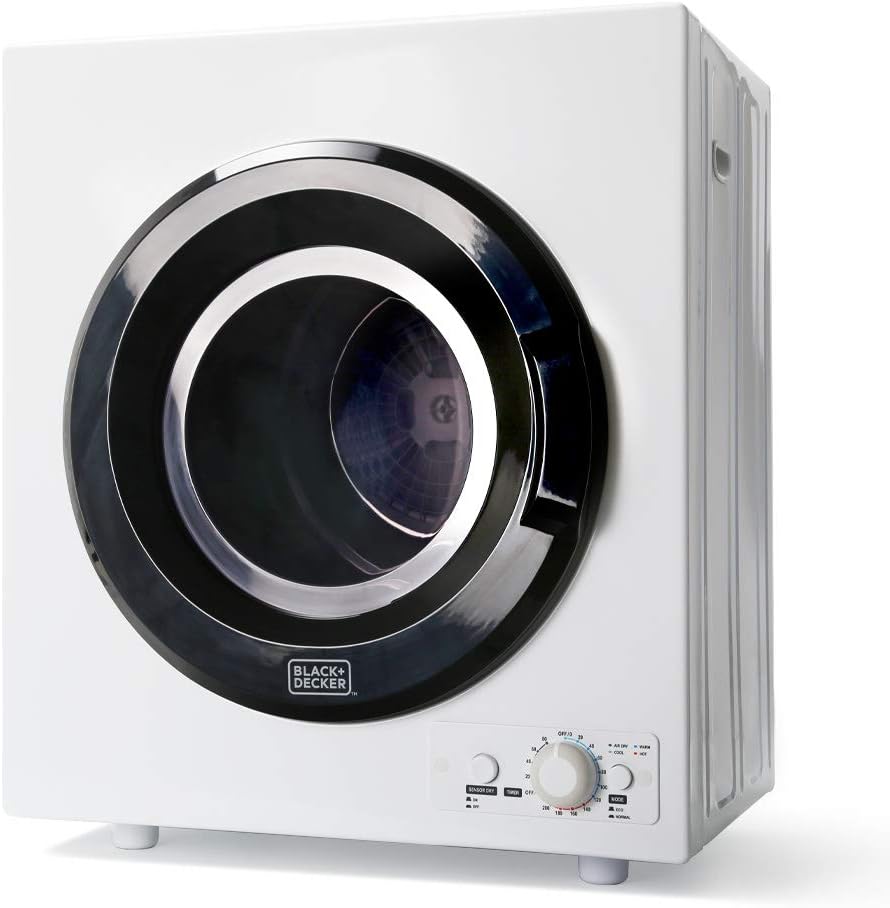
The BLACK+DECKER BCED37 is a compact, front-loading vented dryer designed to plug into a standard 120V outlet and handle small to medium laundry loads. It offers five drying modes including Air Dry, Cool, ECO, Warm and Hot, plus a Sensor Dry feature that measures moisture to reduce over-drying. The unit holds about 13.2 lb per load in a 3.5 cu ft stainless drum and includes a 4-inch exhaust connector, reusable lint and exhaust filters, adjustable leveling legs and a transparent front lid for checking progress. Because it runs on 1500W and 120V, typical drying cycles take longer than a 240V full-size dryer, so it works best when you fill it only halfway as recommended. Practical benefits include easy installation without hardwiring, a compact footprint for apartments or closets, and protective features like overheat protection. Limitations are longer cycle times compared with full-size models and the need to vent the exhaust, which may restrict placement options in some homes.
Best for: Buyers who need a reliable, plug-in dryer for apartments, condos, or rooms without 240V wiring and who prioritize easy installation and gentle drying over fast cycle times.
Less Ideal for: Households that need rapid turnaround on large loads or cannot install a vented exhaust should consider full-size or condenser alternatives instead.
- Works on standard 120V outlet so no electrical modifications required
- Stainless steel 3.5 cu ft drum with 13.2 lb load capacity suitable for apartment use
- Multiple drying modes including Sensor Dry for automatic moisture-based shutoff
- Includes 4-inch exhaust connector and reusable filters for vented operation
- Compact, front-load design with transparent lid and adjustable leveling legs for easy placement
- Drying cycles are longer than 240V full-size dryers due to 120V power
- Requires a vented installation which can limit placement in some small rooms
Verdict: If you need a plug-in, vented dryer that fits apartments or small spaces and delivers reliable, gentle drying without hardwiring, this BLACK+DECKER compact dryer is a practical choice.
Choosing the Right 110V Dryer: Key Factors to Consider
Drying Efficiency and Heat Design
How quickly and evenly a 110V dryer removes moisture affects how many cycles you run and whether items need repeat drying. Because 110V units often generate less heat than higher-voltage models, check for technologies or design choices—such as heat pump components, improved tumbling patterns, or moisture sensors—that raise effective drying performance.
Efficient drying reduces runtime and wear on fabrics. Moisture sensors are particularly useful because they stop the cycle when loads reach the target dryness level, which prevents over-drying and saves electricity. Also consider how the dryer's heat system handles mixed loads, heavy towels, or large bedding, since these are the items that most often expose performance limits.
Capacity and Drum Size
Capacity determines how many items you can dry per load and directly influences how often you need to run the machine. Compact 110V dryers often have smaller drums, so assess realistic usable capacity rather than just advertised volume. A slightly larger drum makes it easier to dry bulky items without stuffing the unit, which improves airflow and reduces drying time.
If you do laundry for multiple people or have occasional large items like comforters, choose a dryer with the largest practical capacity that still fits your installation space. Also consider drum shape and baffle design because those affect tumbling efficiency and how gently items move, which is important for mixed fabrics.
Venting Options and Installation
110V dryers are used in spaces where venting and electrical flexibility matter. Determine whether you need a vented, ventless, or convertible unit. Vented machines require a short, straight duct run to the outside for best performance; long or restrictive vents will reduce drying efficiency. Ventless or condenser-style units let you install the dryer where external venting is impossible, but they may have different maintenance or condensation management needs.
Also verify the electrical requirements and whether your home circuit can handle the dryer's draw. Many 110V dryers are designed for standard outlets, but confirm recommended breaker size and wiring to avoid nuisance tripping. Think about placement to minimize required duct length and to ease lint access for cleaning.
Energy Use and Operating Cost
Because 110V dryers typically run longer than higher-voltage counterparts, energy use and operating cost become central concerns. Look for cycles and features that reduce runtime, such as moisture sensors, eco cycles, and low-temperature options optimized for different fabric types. Energy-efficient design and good heat retention lower per-cycle consumption.
Consider how often you run the dryer and typical load composition. Frequent small loads will push up cumulative energy use more than occasional large loads, so a unit with better sensor-based control and efficient airflow will save more over time. Also factor in maintenance tasks like lint-filter cleaning, which preserves airflow and efficiency.
Noise, Vibration, and Location Suitability
Noise and vibration matter when the dryer will be placed near living areas, in a garage, or in a stacked laundry setup. Look for units with balanced drums, anti-vibration mounts, and quiet motor technology if sound matters. Lower noise levels make it possible to locate the dryer closer to bedrooms or open-plan spaces without disrupting daily life.
Vibration control also affects long-term reliability. Excessive vibration can strain mounts and fasteners and cause cabinets or shelving to shift. If you plan to stack the dryer or place it on a shelf, confirm mounting options and manufacturer recommendations for stabilization.
Maintenance and Accessibility
Regular upkeep keeps any dryer operating efficiently and safely. Check how easy it is to access and clean the lint filter, condenser (if ventless), and exterior vents. Units with straightforward, tool-free access to service points reduce lifetime hassle and lower the chance of lint buildup, which degrades performance and increases fire risk.
Also consider replacement part availability and how simple routine tasks are for the average homeowner. Clear indicators for filter cleaning or cycle status simplify use and help preserve efficiency over time.
Vented Vs Ventless 110V Dryers
Deciding between a vented or ventless 110V dryer depends on installation constraints and performance expectations. Vented units typically dry faster when you can run a short, unobstructed duct to the outside. Ventless options are attractive where external venting is impossible, like some apartments or interior rooms, but they usually require more frequent maintenance and can run longer on heavy loads.
When planning your installation, measure the available duct path and consider how often you will clean vents or condensers. Proper airflow is the single biggest factor for predictable dry times with 110V units, so prioritize a layout that minimizes bends and length in the vent run.
- Vented: faster drying with proper exterior ducting
- Ventless: flexible placement, possible longer cycles
- Convertible designs: check whether conversion is user-friendly
Stacking and Space-Saving Installations
Compact 110V dryers are commonly paired with smaller washers or stacked to conserve floor space. Confirm dimensions, clearance needs, and any stacking kit requirements before buying. Some units are optimized for pedestal or under-counter placement, which expands placement options in tight laundry rooms.
Also assess door swing and control placement to ensure accessibility in tight quarters. If you plan to enclose the dryer in a closet, allow for ventilation and service access.
- Measure clearances for door swing and service access
- Confirm stacking compatibility and required kits
- Allow airflow space around the unit to maintain efficiency
Realistic Expectations for Dry Times
Because 110V dryers often have lower heating capacity than high-voltage models, expect longer cycles on bulky or dense loads. Matching load size to capacity and using moisture-sensing cycles will produce the most consistent results. For heavy items like towels or thick jeans, run smaller loads or use multiple cycles if necessary.
Pre-sorting loads by fabric weight and using higher spin speeds in the washer reduces residual moisture and shortens dryer runtime. If fast turnarounds matter, plan for slightly longer drying windows or consider supplementing with a high-spin washer setting.
- Smaller, balanced loads dry more evenly
- Use moisture sensors to prevent over-drying
- High washer spin speeds reduce dryer time
Common Installation Pitfalls to Avoid
Poor duct routing, undersized vents, and restrictive bends are frequent causes of disappointing dryer performance. Use smooth, short ducts with minimal turns and an outside hood sized to the duct. Avoid flexible foil ducting when possible, as it traps lint and impedes airflow.
Another common issue is placing the dryer on a circuit that also runs other heavy appliances. Confirm circuit recommendations and ensure proper breaker sizing. Finally, allow for easy lint filter access and regular maintenance to keep airflow consistent and safe.
- Avoid long, convoluted duct runs
- Do not share heavy-load circuits without checking capacity
- Schedule regular lint-filter and vent cleaning
How Different Cycles Affect Fabrics
Cycle selection matters more in a 110V dryer because longer runtimes increase cumulative wear on clothing. Use low-heat or delicate cycles for thin or synthetic fabrics and reserve higher temperatures for towels and heavy cottons. Steam or refresh cycles are useful to remove wrinkles without full drying when items are slightly damp.
Familiarize yourself with cycle descriptions and recommended load types to avoid unnecessary fabric damage. Following care labels and matching cycle intensity to fabric weight will improve results and extend garment life.
- Delicate cycles for synthetics and blends
- High-heat for towels and linens
- Steam or refresh cycles for quick wrinkle removal
How We Chose the Best 110V Dryer
We selected these 110V dryers using a set of criteria focused on real-world usability and straightforward installation. Primary filters included drying efficiency for mixed loads, maximum usable capacity for typical household loads, and venting and installation options suitable for apartments or limited spaces. We also prioritized energy use and cycle variety to ensure users get workable performance without excessive electricity draw. Durability and ease of maintenance were considered through available serviceability features and straightforward user controls. Noise levels and vibration management were included to reflect compatibility with living spaces. We excluded specialty or commercial machines and any units that require dedicated 240V wiring or major electrical upgrades. The resulting shortlist reflects dryers that balance usable capacity, predictable dry times, compatible venting or ventless operation, and low-complexity installation for most typical homes and small spaces.
Our full evaluation process is outlined in our review methodology.
FAQ
Can a 110V dryer be used in an apartment with no exterior vent?
Yes, if you choose a ventless or condenser-style 110V dryer designed for interior installation. These machines condense moisture internally or drain it away, but they may require more frequent maintenance and can have longer dry times on very heavy loads.
Will a 110V dryer take much longer than a 240V model?
Often it will for heavy or bulky loads because 110V units generally produce less heat. However, moisture sensors, efficient airflow, and proper load sizing can narrow the difference for everyday loads.
What electrical considerations should I check before buying?
Verify the dryer's recommended circuit and breaker size and confirm your outlet type matches. Avoid placing the dryer on a circuit shared with other high-draw appliances to prevent nuisance tripping.
How important is lint-filter and vent maintenance for a 110V dryer?
Very important. Good airflow is essential for drying efficiency, and clogged filters or vents increase cycle times and fire risk. Clean lint traps after each load and inspect external vents regularly.
Can I stack a 110V dryer with my washer?
Many compact 110V dryers are stackable with compatible washers, but you should confirm dimensions, stacking kit requirements, and any ventilation or clearance needs before planning a stacked installation.
Are 110V dryers suitable for an occasional large load like a comforter?
They can handle occasional bulky items, but expect longer dry times and possibly multiple cycles. For frequent heavy loads, prioritize a larger-capacity unit and ensure good airflow to avoid repeated cycles.
Final Verdict
Choosing the right 110V dryer means balancing capacity, drying efficiency, and installation constraints. Prioritize units with reliable moisture sensing, sensible drum size for your typical loads, and installation options that match your available venting and electrical setup. Expect tradeoffs: compact, flexible installations may mean longer cycle times, while better airflow and sensor controls improve real-world performance. Use the criteria in this guide to match a dryer to your space and laundry habits so you get predictable drying without unnecessary electrical work.