
Note: This article contains affiliate links. If you click on these links and make a purchase, we may earn a small commission at no extra cost to you. This helps support our research and content. Read our full affiliate disclosure here.
Picking the right 3D printer under $800 matters because this price tier is where hobby-grade capability meets useful reliability. You want a machine that produces consistent prints, handles common filaments, and does not demand constant tinkering. In this guide we shortlist the top options in the sub-$800 range so you can focus on meaningful differences like build volume, print resolution, and workflow convenience. Each of the picks was chosen for practical performance and everyday usability. Below you will find concise evaluations that highlight the features most likely to affect your printing results and setup time, followed by focused buying guidance to help you choose the best fit for your projects.
Top Picks at a Glance
| Best Overall The best all-around choice for most situations | QIDI PLUS4 3D Printer |  |
| Best Quality Built to a higher standard if you want something more solid | Bambu Lab P2S Combo |  |
| Best Value The sweet spot between price and what you get | FLASHFORGE AD5X 3D Printer | 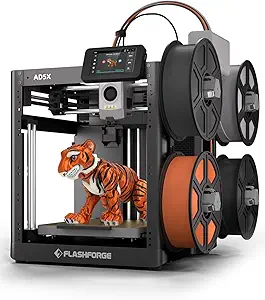 |
| Top Rated A top-rated pick with lots of positive feedback | Creality Ender 3 V3 SE |  |
| Most Popular A crowd favorite that many people choose with confidence | Creality K1C 3D Printer |  |
| Best Seller A high-volume bestseller chosen again and again | Bambu Lab P1S 3D Printer |  |
QIDI PLUS4 3D Printer

| Build volume | 305×305×280 mm |
|---|---|
| Max nozzle temp | ≤370°C (80W) |
| Active chamber temp | ≤65℃ (second generation) |
| Toolhead speed | ≤600 mm/s |
The QIDI PLUS4 is a geared-up Core XY 3D printer built for larger prints and engineering-grade materials. It offers a 305 × 305 × 280 mm build area and a high-temperature 80W hotend with a multi-metal integrated nozzle rated to 370°C, which lets you print high-temp filaments such as PPS-CF, PC, ABS and carbon-fiber blends. A second-generation active chamber heater with dual-layer insulation and air circulation helps reduce warping when printing temperature-sensitive materials, and a 6 mm aluminum bed plus dual-motor Z-axis improve flatness and long-term stability. The printer includes modern conveniences like fully automatic bed leveling, filament runout and break detection, an onboard HD camera for remote monitoring, and a 5-inch HD touch screen with Klipper firmware support. Speeds are aggressive with a toolhead spec up to 600 mm/s, though getting consistently clean results at top speed will require tuning. This unit is well suited to makers and small shops who need a large build volume and wide material support, but it is heavier and more industrial than hobbyist desktop machines and will demand some setup and tuning for optimal high-speed, high-temp printing.
Best for: Buyers who want a large-format printer that can handle engineering-grade, high-temperature filaments and who are comfortable tuning settings for faster, production-style printing.
Less Ideal for: If you only need small hobby prints or want a plug-and-play compact desktop machine with minimal setup, this larger, heavier unit is more than necessary.
- Large 305×305×280 mm build volume for printing big parts or multiple models at once.
- High-temperature 80W hotend and multi-metal nozzle capable of 370°C for engineering filaments.
- Second-generation active chamber heating with insulation and airflow to reduce warping on high-temp prints.
- Automatic leveling, filament detection and power-loss recovery simplify long prints and reduce failures.
- Sturdy mechanical upgrades (6 mm aluminum bed, dual Z motors, larger shafts) for improved flatness and precision.
- Aggressive advertised speeds may require tuning to avoid artifacts at very high velocities.
- Relatively heavy and more industrial in footprint compared with compact desktop printers.
Verdict: Choose the QIDI PLUS4 when you need a large-volume printer that reliably prints high-temperature, engineering materials for faster, production-style workflows.
Bambu Lab P2S Combo

| Bundle | P2S printer + AMS 2 Pro |
|---|---|
| Max print speed | 600 mm/s |
| Filament drying | AMS 2 Pro up to 65 °C |
| Company software ecosystem | MakerWorld, Bambu Studio, Bambu Handy |
The Bambu Lab P2S Combo combines a fast CoreXY P2S printer with the AMS 2 Pro feeder to deliver rapid, high-quality FDM prints and multi-color workflows. The P2S is built for speed and precision, using a PMSM servo extruder and Active Flowrate Compensation to hold detail even at very high accelerations, while AI failure detection and automatic calibration make setup and day-to-day printing straightforward. The AMS 2 Pro adds multi-spool feeding and onboard drying up to 65 °C so you can run multi-color or moisture-sensitive filaments with fewer jams and better consistency. Adaptive Airflow and a heated 50 °C-capable chamber help when printing tougher engineering filaments, and a carbon filter reduces odors. Practical limitations include the need for occasional maintenance on the AMS system and the learning curve for tuning very fast prints, and the combo size and weight mean it needs a stable workspace. For buyers focused on fast, production-style desktop printing and multi-color output, this bundle offers a lot of capability for the money.
Best for: Buyers who prioritize speed and production-style desktop printing and want a ready-made multi-color filament workflow for prototyping or small-run parts.
Less Ideal for: Casual hobbyists who only print occasional simple parts or those with very limited bench space should consider smaller, simpler printers instead.
- Extremely high maximum print speed up to 600 mm/s for fast part turnaround.
- PMSM servo extruder with flow compensation improves surface finish and dimensional consistency at speed.
- AMS 2 Pro enables seamless multi-color/multi-material printing with built-in filament drying.
- Adaptive Airflow and heated-chamber capability support printing of engineering-grade filaments.
- Fast setup features like automatic calibration and AI failure detection reduce failed prints and downtime.
- High-speed printing requires careful tuning to avoid ringing or quality loss on complex parts.
- AMS 2 Pro adds system complexity and requires periodic maintenance for reliable multi-spool feeding.
- Bundle footprint and weight demand a dedicated, stable workspace.
Verdict: For performance-focused makers who need blistering print speeds plus multi-color and moisture-controlled filament handling, the P2S Combo delivers a production-capable desktop package.
FLASHFORGE AD5X 3D Printer

| Build volume | 220×220×220 mm |
|---|---|
| Max extruder temp | 300°C |
| Travel speed | 600 mm/s |
| Structure | Open Core XY |
| Supported filaments | PLA/ABS/PETG/TPU/CF/etc. |
The FLASHFORGE AD5X is a CoreXY FDM printer built for faster prototyping and multi-color parts. It uses a 300°C direct-drive extruder with quick-detach nozzles and supports up to four filaments for multi-color printing, while one-click auto bed leveling, automatic filament feed/retract, and resume-printing simplify day-to-day use. The motion system targets high speed and acceleration (600 mm/s, 20,000 mm/s²) which shortens print times on small to medium parts, and selectable nozzle sizes from 0.25 mm to 0.8 mm balance detail versus throughput. Practical features include an intelligent filament system, optional camera and lighting expansion, and remote control via the Flash Maker app. Expect good surface finish thanks to dual-channel cooling and vibration compensation, but very high speeds will still require tuning and may stress filament or produce stringing on complex multi-color jobs. The open CoreXY frame gives easy access and is suited to PLA, ABS, PETG, TPU and carbon-filled filaments, though heavier industrial workflows may prefer enclosed, larger-format machines.
Best for: Buyers who want a fast, feature-rich desktop printer that balances speed and multi-color capability for prototyping, hobby projects, or small batch runs and who prioritize practical automation to save setup time.
Less Ideal for: Users needing a fully enclosed, large-format industrial machine for high-temperature or large-volume production should look at purpose-built enclosure models instead.
- Multi-color printing with up to four filaments for more complex parts
- High travel speed and acceleration for faster prints
- 300°C direct-drive extruder with quick-detach nozzles for versatile filament support
- One-click auto leveling and resume printing reduce setup and failed-job risk
- Open-frame design limits controlled-environment printing for some high-temp materials
- Very high advertised speeds require tuning to maintain consistent quality
Verdict: If you want a fast, practical desktop printer that adds four-color capability and automation to speed prototyping under $800, the AD5X is a strong choice.
Creality Ender 3 V3 SE

| Max printing speed | 250 mm/s |
|---|---|
| Printing acceleration | 2500 mm/s² |
| Supported filaments | PLA, PETG, ABS, TPU |
| Auto leveling | CR Touch with strain sensor |
The Ender 3 V3 SE is a budget-friendly FDM printer aimed at quick setup and steady everyday printing. It ships partially preassembled and claims a three-step assembly that gets you from box to first print in about 20 minutes, which is helpful for users who want a low-friction startup. Key hardware includes a full-metal Sprite dual-gear direct extruder for reliable filament feeding across PLA, TPU and PETG, a CR Touch auto-leveling sensor plus a strain sensor for auto Z-offset to reduce manual bed truing, and dual Z-axis with Y-axis linear shafts to cut Z wobble and improve layer accuracy. Creality also highlights high-speed capability up to 250 mm/s for faster prints and resume-printing after power interruptions. The bundle includes four PLA filament packs so you can begin printing immediately. Expect practical strengths in straightforward setup, consistent feeding for flexible filaments, and improved Z stability, while speed claims depend on chosen print profiles and may require tuning for best surface quality.
Best for: Buyers who prioritize a reliable, easy-to-start machine that minimizes manual leveling and feeding issues and want a dependable printer for everyday hobby or small project work.
Less Ideal for: Users who need large-format printing, advanced automation for continuous production, or factory-grade industrial throughput should look at higher-end models.
- Preassembled design and three-step setup get you printing quickly
- Sprite full-metal dual-gear direct extruder improves filament feeding for PLA, TPU and PETG
- CR Touch auto-leveling and strain sensor reduce manual bed leveling work
- Dual Z-axis and Y-axis linear shafts increase stability and reduce Z wobble
- Includes four PLA filament packs so you can start printing right away
- Maximum speed spec may require tuning to maintain high surface quality
- Bundle does not include advanced print-farm features like filament runout detection
Verdict: A dependable, easy-to-prepare desktop printer that focuses on stable feeding and automatic leveling so hobbyists get consistent prints with minimal fuss.
Creality K1C 3D Printer

| Printing speed | Up to 600 mm/s |
|---|---|
| Max hotend temperature | 300 C |
| Supported filaments | PLA, ASA, ABS, TPU, PLA-CF, PET-CF |
| Build volume | 8.66 x 8.66 x 9.84 inch |
The Creality K1C is a ready-to-run FDM printer aimed at makers who want faster prints without deep setup. It ships mostly assembled and boots like a consumer device so you can go from unboxing to printing in minutes, and built-in auto Z offset and auto leveling simplify first-time setup. The machine emphasizes speed and robustness with a claimed 600 mm/s top speed, a clog-free direct extruder that supports high-temperature filaments up to 300 C, and a reinforced nozzle/heatbreak to reduce heat creep. Practical additions include an AI camera for remote monitoring and failure detection, upgraded multi-fan cooling to improve bridging and overhangs, and a solid frame with a glass door for a more stable build environment. The build volume is modest, so it is best for small to medium parts rather than large prototypes, and real-world print quality at the highest claimed speeds will depend on tuning and filament choice. For buyers who prefer a plug-and-play experience and faster turnaround on small parts, the K1C is a compelling option under $800.
Best for: Buyers who want a fast, mostly plug-and-play desktop printer for small to medium parts and value remote monitoring and modern convenience features when evaluating reliability from other users.
Less Ideal for: Large-part fabricators or those needing a very large build volume for full-size prototypes should look at larger-format machines instead.
- Mostly preassembled and quick to start printing after unboxing
- Clog-free direct extruder with high-temperature capability to 300 C
- AI camera for real-time monitoring and failure detection
- Upgraded multi-fan cooling improves overhangs, bridging, and surface finish
- Modest build volume limits large-part printing
- Top advertised speeds require careful tuning and may not yield best surface quality
Verdict: If you want a fast, low-effort desktop 3D printer with modern monitoring and high-temp extrusion for small-to-medium parts under $800, the Creality K1C is a strong choice.
Bambu Lab P1S 3D Printer
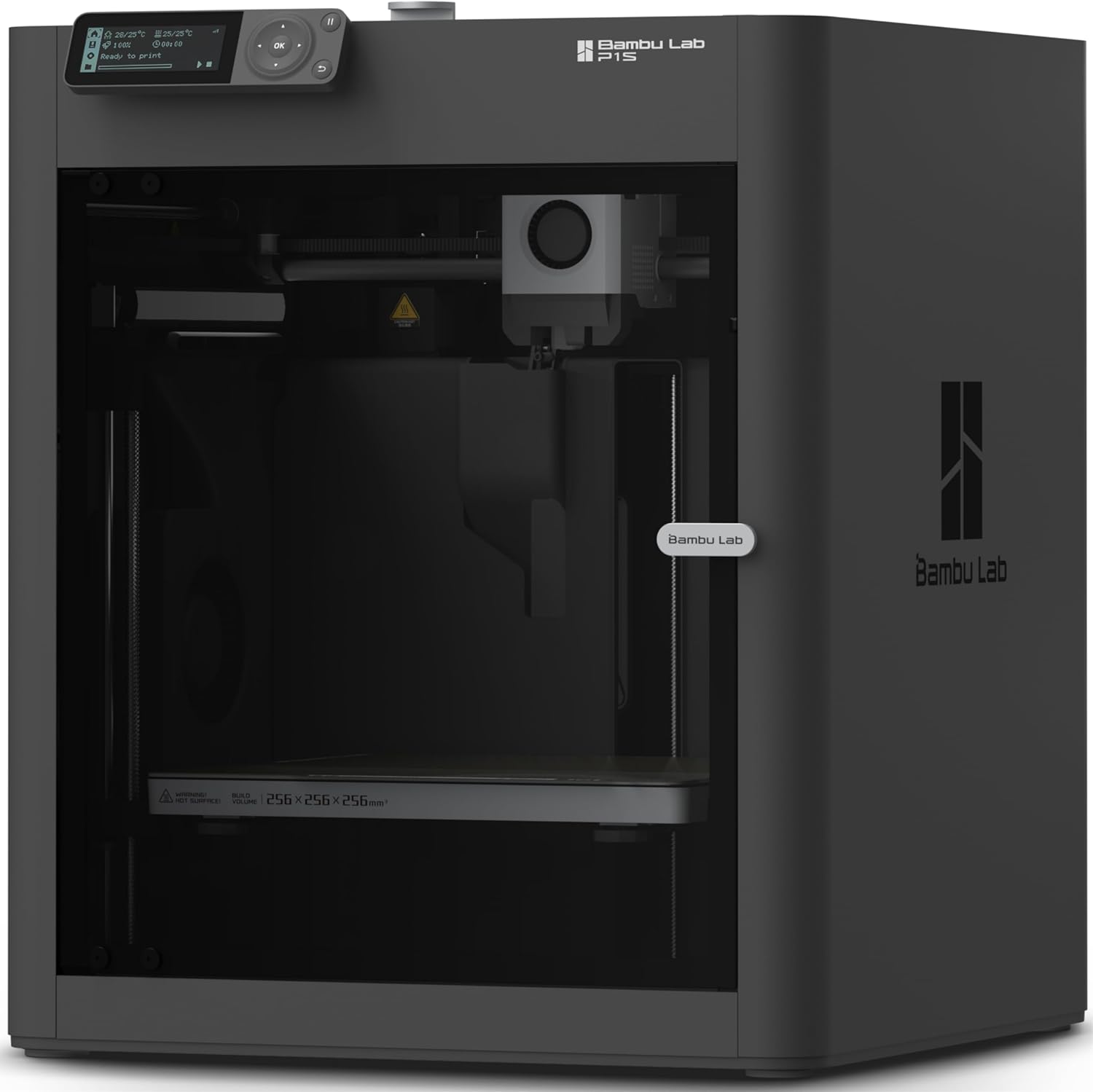
| Build volume | 256×256×256 mm³ |
|---|---|
| Supported filaments | PLA, PETG, TPU, PVA, PET, ABS, ASA, PA, PC (capable) |
| Max speed | 500 mm/s |
| Max acceleration | 20 m/s² |
The Bambu Lab P1S is an enclosed CoreXY FDM printer designed for fast, reliable printing straight out of the box. It offers a 256×256×256 mm build volume, direct-drive extruder that broadens material compatibility, automatic bed leveling, and a camera for time-lapse captures, making it convenient for hobbyists and makers who want good results with minimal setup. The printer supports a wide range of filaments including PLA, PETG, TPU, PVA and is capable of handling engineering materials like ABS, ASA and some PA/PC when needed, while explicitly advising against carbon or glass fiber reinforced composites. Performance claims include very high top speed and acceleration, which translate to much shorter print times on smaller parts, though achieving maximum speeds will depend on part geometry and chosen filament. The enclosed design improves warping control for temperature-sensitive filaments, but the unit is heavier and larger than compact hobby printers. Setup is intended to be quick and user-friendly, making the P1S a practical option for risk-averse buyers who want dependable prints without deep tuning work.
Best for: Buyers who want a mostly plug-and-play 3D printer that reliably produces quality parts with a minimal learning curve and quick setup.
Less Ideal for: Users who need a very small desktop printer for tight spaces or those who plan to print abrasive fiber-filled composites that require specialized extruders.
- Enclosed CoreXY design improves print stability and handling of temperature-sensitive materials.
- Direct-drive extruder expands usable filament types including flexible TPU.
- Automatic bed leveling simplifies first-layer setup and reduces failed prints.
- Large 256×256×256 mm build volume balances workspace with desktop footprint.
- High top speeds and acceleration can significantly cut print times for many parts.
- Maximum speeds and accelerations are situational and may require tuning to avoid quality loss.
- Not recommended for carbon or glass fiber reinforced filaments, limiting some advanced material use.
- Heavier and bulkier than compact entry-level printers, requiring more bench space.
Verdict: If you want a fast, enclosed, beginner-friendly printer that delivers reliable results with a wide range of common filaments, the Bambu Lab P1S is a strong choice under $800.
Choosing the Right 3D Printer: Key Factors to Consider
Print Quality and Layer Resolution
Print quality determines how much postprocessing you will need and whether the printer can handle fine features. Look for machines that advertise a high minimum layer height and have a rigid frame and precise motion components. A well-tuned hot end, stable bed, and consistent extrusion path reduce artifacts like ringing, stringing, and layer misalignment.
Higher native resolution matters when printing small details or functional parts that require tight tolerances. But note that effective print quality also depends on slicer settings and filament choice, so expect to spend some time dialing in profiles for best results.
Reliability and Consistency
A reliable printer produces predictable results across multiple prints without frequent recalibration. Components that influence reliability include a stable gantry, quality linear rails or rods, a consistent filament feed system, and a bed that holds its level. Look for designs that minimize mechanical play and use standardized parts that are easy to replace.
Consistency also covers how the machine handles long prints. Thermal stability and a dependable extruder reduce failed prints, which is especially important when running multi-hour or overnight jobs.
Filament Compatibility and Hot End Capability
Filament support affects the range of projects you can undertake. Basic PLA is forgiving, but many users want to print PETG, TPU, or engineered filaments. Verify hot end maximum temperature and whether the extruder is direct drive or bowden; that impacts how well flexible filaments print.
Also check the available nozzle options and whether the hot end and feeding system are user-serviceable. Machines that allow easy nozzle swaps and retain standard thread sizes simplify upgrades and maintenance.
Build Volume and Work Envelope
Build volume defines the maximum part size you can print without splitting models. A larger build area is useful for bigger prototypes or batch printing multiple small parts in a single run. Consider the typical project size you plan to print and choose a printer with some headroom.
Keep in mind that larger volumes can increase print time and may require better thermal management to maintain even layer adhesion across the bed.
Ease of Setup, Calibration, and Bed Leveling
A smooth first-time setup and straightforward calibration save time and frustration. Features that help include preassembled frames, auto bed leveling sensors, guided calibration wizards, and detachable build surfaces. Clear documentation and bundled calibration profiles reduce the learning curve for new users.
Automatic or assisted bed leveling is particularly valuable because an uneven bed is one of the most common causes of early print failures. Also factor in how easy it is to access and clean the nozzle, hot end, and extruder path.
Connectivity, Firmware, and Software Workflow
How you transfer files, monitor prints, and update settings affects daily usability. Options include SD card, USB, onboard touchscreen, or networked control. Network connectivity enables remote monitoring and can simplify multi-machine workflows, but it must be secure and reliable.
Firmware that supports common features like thermal runaway protection, filament runout detection, and resume-on-power-loss improves safety and reduces failed prints. Also look for compatibility with popular slicers and whether manufacturers or the community provide validated profiles.
Best Filaments to Use with Budget 3D Printers
Choosing the right filament for your printer and project can dramatically improve print outcomes. PLA is the easiest to use and works well for prototypes and aesthetic parts. PETG offers stronger, more temperature-resistant prints with better layer adhesion, though it can require slower cooling and slightly higher temperatures.
TPU and other flexible filaments need a compatible extruder and often benefit from a direct-drive setup and lower print speeds.
- PLA: low-warp, easy adhesion, good for detailed models
- PETG: tougher, more temperature-resistant, needs tuned cooling
- TPU: flexible parts, needs direct drive or careful feeding
- ABS: higher temp and ventilation needs, prone to warping
Maintenance Tips to Keep Prints Consistent
Regular maintenance keeps a budget 3D printer producing reliable results. Clean the build surface and nozzle regularly, check belt tension, and lubricate linear components as recommended. Replace consumables like nozzles and build surfaces when print quality declines.
Documenting your maintenance routine and keeping spare parts on hand reduces downtime. Periodic firmware checks and backing up configuration settings help recover quickly after changes.
- Clean nozzle and bed after major jobs
- Check and tighten belts monthly
- Keep spare nozzles and a replacement bed surface
- Update firmware carefully and back up settings
Upgrades That Give the Biggest Practical Benefit
Some low-cost upgrades yield large quality or usability gains without breaking the budget. A better build surface can improve adhesion and part removal. An improved part cooling fan or duct often reduces stringing and improves small-feature detail. Swapping to an all-metal hot end can expand filament choices by allowing higher temperatures.
Other useful upgrades include quieter stepper drivers for reduced noise and an enclosure for printing temperature-sensitive materials.
- All-metal hot end for higher-temp filaments
- Improved part cooling duct for finer details
- Textured or flexible build plates for adhesion and removal
- Stepper driver upgrades for quieter operation
Safety and Ventilation Considerations
Printing certain filaments can release ultrafine particles and volatile compounds. Ensure adequate room ventilation and avoid enclosed spaces without airflow when printing filaments like ABS. An enclosure can help control temperature for certain materials but should be paired with ventilation or filtration if needed.
Follow basic safety practices including never leaving long prints unattended without monitoring, securing wiring, and using smoke detectors in the printing area.
- Use ventilation or HEPA filtration when printing high-temp filaments
- Avoid placing printers in small, unventilated rooms
- Keep flammable materials away from hot ends and heated beds
- Install a smoke detector in the workshop area
How We Chose the Best 3D Printer
We focused on machines that deliver repeatable prints and a straightforward ownership experience for makers, hobbyists, and small workshops working with a budget under $800. Our primary filters were print fidelity, filament compatibility, and out-of-the-box usability. We prioritized printers with proven motion systems, reliable extruders, and firmware that supports necessary print settings. Secondary filters included build volume and upgrade potential, because usable build area determines what you can produce at scale and whether the printer grows with your needs. We also considered community support and documentation since troubleshooting and modding are common at this price point. We excluded experimental or kit-only machines that require extensive tuning before producing reliable parts. Machines lacking basic safety features or with severely limited filament support were also left out. The final shortlist balances technical capability, day-to-day convenience, and durability for typical home and small-business applications.
Our full evaluation process is outlined in our review methodology.
FAQ
What can I realistically print with a 3D printer under $800?
You can print prototypes, enclosures, functional brackets, hobby models, and small batch parts. The machines in this price range handle most consumer-grade filaments and are suitable for both decorative and some functional components.
Do I need a dedicated PC to operate these printers?
Most printers accept files via SD card or USB, and some offer networked printing. You do not need a dedicated PC, but using a slicer on a computer or a Raspberry Pi for remote control improves workflow and makes it easier to fine-tune prints.
How important is bed leveling on entry-level printers?
Bed leveling is crucial because an uneven bed causes adhesion problems and print failures. Models with automatic or assisted leveling significantly reduce setup time and failed first layers compared with fully manual leveling.
Can I print flexible or engineering filaments on budget machines?
You can print flexible filaments like TPU and many engineering filaments if the printer has an appropriate hot end temperature and a compatible filament feed system. Direct-drive extruders and all-metal hot ends make printing flexible and high-temp filaments easier.
How noisy are 3D printers in this price range?
Noise varies by drive electronics and mechanical design. Many budget printers are audible during operation, but upgrades such as quieter stepper drivers and vibration-damping feet can reduce noise substantially.
Final Verdict
When choosing a 3D printer under $800, prioritize the attributes that match how you plan to use the machine. Focus first on print quality and reliability if you need precise parts, or on build volume if you plan to print larger items. Consider filament compatibility and ease of setup as secondary priorities because they affect the day-to-day experience. Accept that some tradeoffs are inevitable in this price bracket. Choose a machine with solid fundamentals and upgrade paths so you can improve cooling, hot end capability, or noise levels over time. With the right priorities you can find a capable, dependable printer that handles most hobby and light professional projects confidently.