
Note: This article contains affiliate links. If you click on these links and make a purchase, we may earn a small commission at no extra cost to you. This helps support our research and content. Read our full affiliate disclosure here.
Choosing the right 7 Day Programmable Thermostat matters because your thermostat controls daily comfort and can drive meaningful energy savings over time. A well-chosen thermostat keeps temperatures consistent across different days and routines, avoids wasted heating or cooling, and integrates cleanly with your existing HVAC system. This guide shortlists the top 7 Day Programmable Thermostats available for home use and evaluates each for the features that most buyers need. Below you will find concise product summaries built around scheduling flexibility, installation and compatibility, and usability. Use the evaluation notes to match a thermostat to your household routine and system requirements.
Top Picks at a Glance
| Best Overall The best all-around choice for most situations | Google Nest Thermostat |  |
| Best Quality Built to a higher standard if you want something more solid | ecobee Smart Thermostat Essential |  |
| Best Value The sweet spot between price and what you get | Honeywell Home RTH7600D |  |
| Top Rated A top-rated pick with lots of positive feedback | PRO1 IAQ T805 Thermostat |  |
| Most Popular A crowd favorite that many people choose with confidence | Honeywell Home RTH6580WF Wi‑Fi Thermostat |  |
| Best Seller A high-volume bestseller chosen again and again | Sensi Smart Thermostat ST55 |  |
Google Nest Thermostat
| Connectivity Technology | Bluetooth, Wi-Fi |
|---|---|
| Power Source | Battery Powered |
| Display Type | LCD |
| Control Type | Remote Control, Voice Control |
| Number of Batteries | 2 A batteries required (included) |
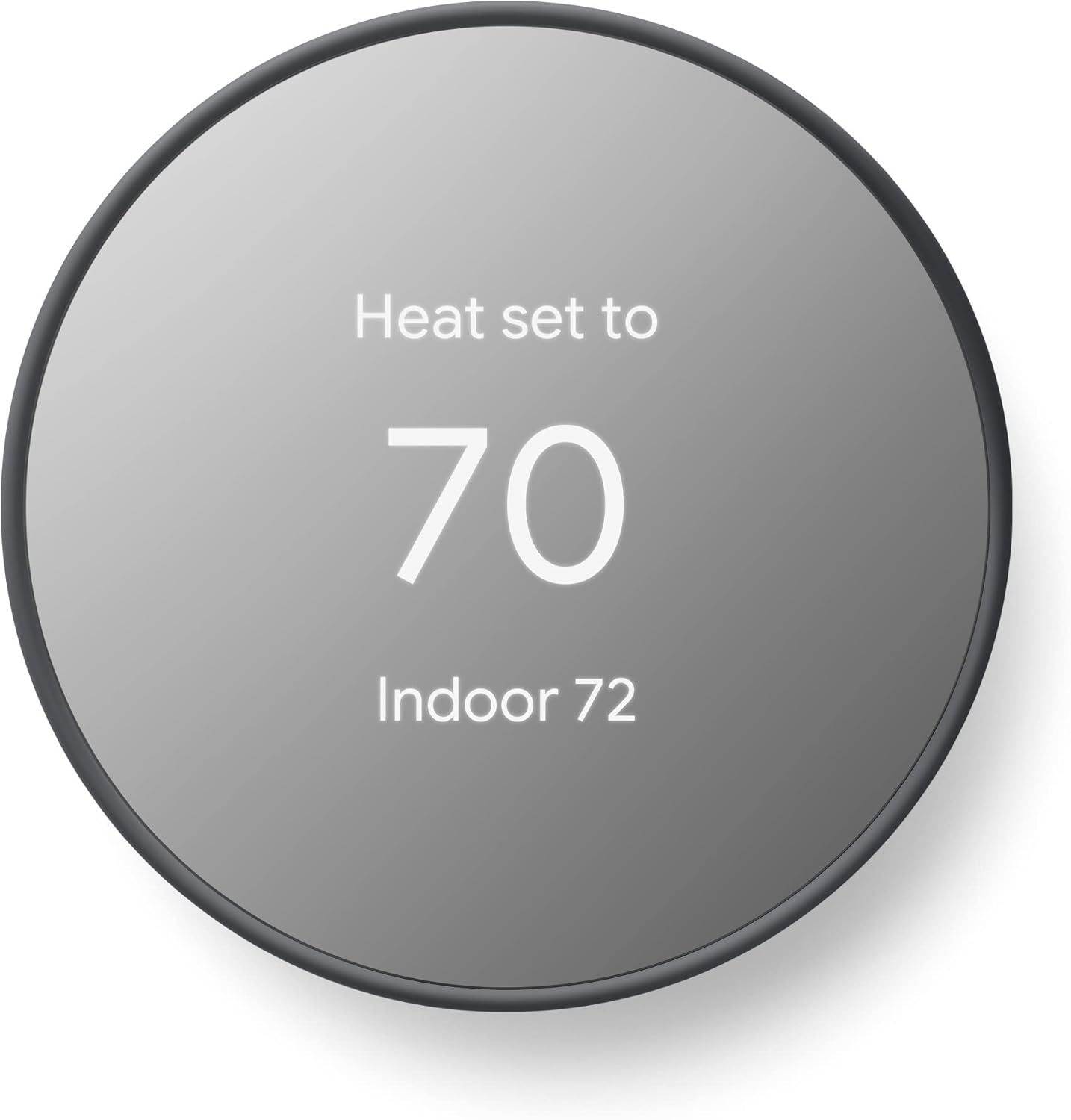
The Google Nest Thermostat is a user-friendly smart thermostat designed to replace a basic programmable controller and make routine HVAC management simpler. It mounts to the wall and pairs with the Google Home app so you can set schedules, change temperatures remotely, and use voice commands with compatible assistants. The thermostat includes features such as Savings Finder suggestions, Eco Temperatures when the home is empty, and basic HVAC monitoring that can send alerts if something seems off. It runs on two included A batteries and is advertised to work without a C wire in most homes, easing DIY installation. The compact LCD screen and touch bar on the side make local adjustments straightforward, and integration with Google services and Matter-certified assistants expands control options. Limitations to consider are that some advanced energy features require account setup and regional services, certain HVAC configurations may need a C wire or accessory, and it does not include learning capabilities found in higher-end Nest models.
Best for: Buyers who want a straightforward smart upgrade with remote and voice control and who value easy setup and energy-saving suggestions over advanced learning features.
Less Ideal for: People who need thermostat models with built-in adaptive learning or those whose HVAC setup is unusual and cannot provide the required power without professional modification.
- Easy app and voice control via Google Home and compatible assistants
- Savings Finder and Eco Temperature features help reduce energy use
- Usually installs without a C wire, simplifying DIY replacement
- Compact touch-bar interface and clear LCD for simple local adjustments
- Some energy services and alerts require account setup and regional availability
- May require a C wire or power accessory for certain HVAC systems
- Lacks the adaptive learning features of Nest Learning Thermostat models
Verdict: Choose this Nest Thermostat if you want an affordable, easy-to-install smart thermostat with app and voice control plus energy-saving features for everyday programmable use.
ecobee Smart Thermostat Essential

| Connectivity Technology | Wi-Fi |
|---|---|
| Controller Type | Amazon Alexa, Android, Apple HomeKit, Google Assistant, iOS |
| Power Source | Battery Powered |
| Display Type | LCD |
| Specification Met | Energy Star |
The ecobee Smart Thermostat Essential is a pared-down smart thermostat that gives you remote control, scheduling, and basic energy‑saving features in a compact wall‑mounted unit. It connects via Wi‑Fi and works with Apple HomeKit, Google Assistant, and Siri/Alexa, letting you change temperature from the color touchscreen or the ecobee mobile app. The unit supports auto‑scheduling and auto‑away modes to reduce runtime when you are out, plus eco+ features like time-of-use preheat/pre-cool and indoor humidity detection. Installation is designed for DIY and ecobee provides a compatibility checker to confirm your system; a Power Extender Kit is available for homes without a C wire. The Essential lacks some premium extras found on higher-end ecobee models, but it covers the core needs for a 7‑day programmable setup, offers Energy Star efficiency, and includes reminders and software updates for ongoing improvements. For buyers who prioritize straightforward performance and smart home integration without extra frills, this model offers a sensible balance of control and savings.
Best for: Buyers who want a reliable, performance-focused 7‑day programmable thermostat that emphasizes smart home control and energy savings without paying for top-tier extras.
Less Ideal for: Shoppers who need built-in room sensors, advanced air quality monitoring, or the full suite of premium features found on higher-end smart thermostats.
- Wi‑Fi with app and touchscreen control plus support for HomeKit, Google Assistant, and Alexa
- Auto-scheduling and auto-away modes that help reduce heating and cooling runtime
- Energy Star certified with eco+ features for time-of-use savings and humidity detection
- Easy DIY installation with compatibility checker and optional Power Extender Kit for no C‑wire setups
- Fewer advanced sensors and premium features compared with higher-end ecobee models
Verdict: A no‑nonsense, energy‑saving smart thermostat that delivers dependable 7‑day programmability and smart home integration for performance-minded buyers.
Honeywell Home RTH7600D

| Controller Type | Touch |
|---|---|
| Additional Features | Smart Response Technology, Touchscreen |
| Temperature Control Type | Heating and Cooling |
| Connectivity Technology | Wired |
| Power Source | Battery Powered |
The RTH7600D is a straightforward 7-day programmable thermostat built around a large backlit touchscreen and Honeywell Smart Response Technology. You program separate schedules for each day with up to four periods per day, and the display shows current and set temperatures at the same time for quick checks. Smart Response learns how long your system takes to reach setpoints so the home is at the right temperature at the scheduled time, and an auto changeover mode switches between heating and cooling when needed. It supports common low-voltage HVAC setups and offers basic protections such as compressor short-cycle protection and optional filter-change and low-battery alerts. Installation is designed for DIY fitting with included mounting hardware and a battery or wired power option. The interface and menu-driven programming are simpler than advanced Wi-Fi smart thermostats, so you get reliable schedule-based control without remote app features or voice integration.
Best for: Buyers who want reliable, schedule-focused temperature control and prefer a simple touchscreen interface over cloud‑connected smart features.
Less Ideal for: Users who expect remote control, energy reporting, or integrations with voice assistants and home automation platforms.
- Large backlit touchscreen that displays current and set temperatures simultaneously
- 7-day programming with four periods per day for flexible scheduling
- Smart Response Technology learns system run times to reach setpoints on schedule
- Auto changeover between heating and cooling and compressor protection features
- Simple DIY installation with included mounting hardware and battery/wired power
- No Wi‑Fi or remote app control for off-site adjustments
- Interface is menu-driven and lacks the advanced features of connected smart thermostats
Verdict: Choose the RTH7600D if you want a dependable, schedule-driven touchscreen thermostat that optimizes preheating and precooling without needing Wi‑Fi.
PRO1 IAQ T805 Thermostat

| Controller Type | Push Button |
|---|---|
| Temperature Control Type | programmable |
| Display Type | LCD |
| Specific Uses For Product | Air Conditioner, Furnace, HVAC systems |
The T805 is a straightforward 7-day programmable thermostat designed for single-stage HVAC systems like furnaces and air conditioners. It uses push-button and touch button control with an easy-to-read LCD, and lets you set distinct schedules for each day of the week so you can automate temperature changes without a smart-home setup. In practice it replaces a basic line-voltage or low-voltage mechanical stat with a digital schedule, improving consistency and avoiding manual adjustments. Notable strengths are its simple interface and focused feature set that make programming and routine operation quick for anyone familiar with traditional thermostats. The unit does not offer Wi-Fi, app control, or multi-stage support, so it stays best suited to users who want reliable scheduled control without connected features. Installation is typical for single-stage thermostats and it ships as a single component ready to swap into compatible HVAC systems.
Best for: Buyers who prioritize a reliable, no-frills programmable thermostat to maintain consistent schedules without smart-home complexity.
Less Ideal for: Users who want remote access, voice control, or compatibility with multi-stage HVAC systems should look at connected or multi-stage models instead.
- 7-day programmable schedules for daily temperature control
- Simple push-button and touch controls with clear LCD for easy operation
- Designed for common single-stage HVAC systems like furnaces and air conditioners
- Compact single-component unit that is straightforward to install
- No Wi-Fi or remote/app control for mobile scheduling or monitoring
- Not compatible with multi-stage or more complex HVAC systems
Verdict: Choose the T805 if you want a dependable, straightforward 7-day programmable thermostat that focuses on reliable scheduled temperature control without smart features.
Honeywell Home RTH6580WF Wi‑Fi Thermostat

| Connectivity Technology | Wi‑Fi |
|---|---|
| Temperature Control Type | Heating and Cooling |
| Power Source | Corded Electric |
| Display Type | LED |
| Additional Features | Auto Changeover, Energy Star certified, Smart Response Technology |
The Honeywell Home RTH6580WF is a Wi‑Fi 7‑day programmable thermostat that gives you smartphone and voice control over heating and cooling. It is typically installed on a wall and connected to existing HVAC wiring; the unit requires a C‑wire and supports forced air systems, hot water and steam, and heat pumps with electric backup. Use the Total Connect Comfort or Honeywell Home app to program schedules for each day, adjust setpoints remotely, and receive alerts, while the large backlit LED display and simple controls make in‑home operation straightforward. Notable features include Energy Star certification, Smart Response learning to improve comfort, app-based remote access, and compatibility with Alexa and Google Assistant for voice adjustments. Practical benefits are easier temperature management from anywhere, flexible day-by-day scheduling, and potential energy savings through efficient programming and utility program participation. Limitations include the need for a C‑wire for power, no compatibility with electric baseboard heating, and a relatively basic monochrome LED interface compared with modern color touchscreen smart thermostats.
Best for: Buyers who want a proven, networked programmable thermostat with reliable app and voice control and who prefer a straightforward, energy‑focused unit backed by many user reviews.
Less Ideal for: People with electric baseboard heating systems or those who want a full color touchscreen interface and advanced multi‑sensor ecosystems.
- Wi‑Fi connectivity with Total Connect Comfort and Honeywell Home apps for remote scheduling and control
- Works with voice assistants such as Amazon Alexa and Google Assistant
- Energy Star certified with Smart Response learning to improve comfort and efficiency
- 7‑day flexible programming lets you set different schedules for each day
- Requires a C‑wire and will not work with electric baseboard heating
- Monochrome LED display is less modern than color touchscreen competitors
Verdict: Choose this Honeywell Wi‑Fi 7‑day programmable thermostat when you want dependable remote scheduling, voice control, and energy‑saving features from a familiar, widely reviewed model.
Sensi Smart Thermostat ST55

| Connectivity Technology | Wi-Fi (2.4 GHz) |
|---|---|
| Control Method | App, Touch, Voice |
| Temperature Control Type | Programmable, Smart/Remote |
| Power Source | Corded Electric |
The Sensi ST55 is a 7-day programmable Wi‑Fi thermostat that replaces a conventional wall thermostat while adding remote control, scheduling, and energy-use reporting. It connects to 2.4 GHz Wi‑Fi and integrates with Alexa, Google Assistant, Apple HomeKit, SmartThings, and Vera so you can change temperature from the app or with voice commands. Installation is geared toward DIYers: the package includes mounting hardware, wire stickers, a built-in level and step‑by‑step app instructions, and it often works without a common wire. The interface mixes a simple LED screen, buttons and app control rather than a full-color touchscreen, which keeps operation straightforward but means less visual polish. Energy Star certification, usage reports and smart alerts help households track savings and maintain system health with filter reminders and equipment alerts. Backed by a long manufacturer HVAC pedigree and a three-year warranty, this thermostat favors reliability and privacy over flashy features, though advanced users may miss an onboard color display and some pro-level customization.
Best for: Homeowners who want a reliable, privacy-conscious programmable thermostat with simple DIY installation and broad smart-home integration for steady weekly scheduling and remote control.
Less Ideal for: Buyers seeking a premium touchscreen interface or advanced on-device customization should consider models with larger color displays and more granular local controls.
- Works with major smart platforms including Alexa, Google Assistant and Apple HomeKit
- Energy Star certified with usage reports and smart alerts to help reduce HVAC energy
- Easy DIY install with included hardware, built-in level and step-by-step app guidance
- Supports remote control and scheduling via a mobile app
- Includes batteries and basic indicators like filter reminders for maintenance
- No full-color touchscreen; uses LED display and buttons which limits on-unit controls
- Requires 2.4 GHz Wi‑Fi and may need a c‑wire in some installations
Verdict: A dependable, Energy Star certified 7-day programmable thermostat that delivers easy DIY setup, solid smart-home integration, and privacy-focused operation.
Choosing the Right 7 Day Programmable Thermostat: Key Factors to Consider
Weekly Programming Options
How a thermostat handles weekly schedules directly affects whether it fits your lifestyle. Some units offer fully independent schedules for each day of the week, while others group weekdays and weekends or provide only a limited number of periods per day. If your routine changes across weekdays, split-shift workdays, or you need different settings for every day, look for a thermostat that supports multiple programmable events per day and true seven-day independence.
Beyond the number of periods, consider how easy it is to edit or override a program temporarily. A thermostat that lets you set quick temporary holds or easily adjust single-day schedules will reduce friction and prevent you from abandoning the programmable features.
System Compatibility and Wiring
Not all thermostats work with every HVAC configuration. Check whether the thermostat supports your system type, such as heat-only, cool-only, heat pump, or multi-stage systems, and verify common wiring terminals like R, C, W, Y, G, and O/B are supported. Some models require a common wire for power; if your installation lacks a C wire, you will need a model that either does not require one or includes an adapter solution.
Installing a thermostat that is incompatible can lead to limited functions or unreliable control, so confirming wiring and control compatibility before buying prevents frustration and extra work during setup.
Ease of Installation
Installation complexity impacts whether you can set up the thermostat yourself or need professional help. Look for clear wiring labels, a simple mounting plate, and accessible terminal screws or push-in connectors. A thermostat with a comprehensive installation guide and straightforward wiring diagrams reduces the chance of mistakes.
If your home has an older control system or nonstandard wiring, you may need a technician. Otherwise, many homeowners can handle a swap in 30 to 60 minutes if the new unit supports the same terminals as the old thermostat.
Programming Usability
Even the most capable scheduler is of little use if programming it is difficult. Evaluate whether the thermostat offers an intuitive on-unit interface, clear labels, and reasonable defaults. Large display characters and simple menu flows make setting up daily schedules faster. Some thermostats include guided setup or step-by-step prompts that streamline initial configuration.
Also consider how easy it is to make quick changes once the schedule is set. A cumbersome menu or tiny buttons can lead to users choosing manual control over scheduled automation.
Temperature Sensing and Recovery
Accurate sensing and efficient recovery behavior determine comfort and energy performance. A good thermostat should read room temperature consistently and avoid frequent short cycles. Recovery settings that start heating or cooling ahead of a scheduled setpoint help reach the desired temperature at the programmed time without overshooting.
Look for thermostats with stable sensing methods and configurable temperature differentials so you can balance comfort with equipment run times. This helps prevent rapid toggling that can waste energy and stress HVAC components.
Matching a Thermostat to Your Weekly Routine
Think through how your household uses spaces across a typical week. If weekdays follow a regular pattern and weekends differ, you can rely on a basic weekday/weekend split. If your schedule changes every day, prioritize thermostats that allow independent programming for each of the seven days.
Also consider the number of time blocks you need per day. Two blocks may be fine for simple needs, but households with mid-day absences, early-morning routines, and evening activity will benefit from three or four programmable periods.
- Independent day-by-day schedules for varied routines
- Multiple time blocks per day for precise control
- Temporary hold and vacation modes for exceptions
Installation Checklist
Before removing your old thermostat, turn off HVAC power at the breaker or fuse box. Photograph the existing wiring and label each wire terminal to simplify transfer. Inspect the wall for a compatible backplate and check for a common wire if the replacement requires one.
During installation, follow the wiring diagram carefully and secure the thermostat to the mounting surface. After power restoration, verify that the thermostat powers up, that all stages and fan controls respond correctly, and that the display indicates the correct mode.
- Turn off HVAC power before starting
- Label and photograph existing wires
- Confirm C wire presence if required
Using Temporary Holds and Vacation Modes
Temporary holds let you deviate from the programmed schedule for a set time without erasing your weekly program. Use temporary holds for overnight guests or one-off schedule changes to keep the base program intact.
Vacation or long-absence modes set an economy temperature for an extended period and typically resume the normal schedule automatically on a set return date. This avoids manually reprogramming the thermostat and reduces energy use during prolonged absences.
- Temporary holds preserve the weekly schedule
- Vacation mode maintains a lower energy baseline
- Look for simple reactivation methods
Common Setup Mistakes to Avoid
A frequent error is programming too many narrow setpoint windows, which can lead to frequent cycling and inefficiency. Larger, well-planned blocks reduce runtime and can improve equipment life. Similarly, neglecting to set recovery times may leave you uncomfortable at the start of a scheduled period.
Another mistake is failing to test system compatibility before purchase. Confirming wiring and system type ahead of time avoids limited function or installation delays.
- Avoid overly granular schedules that cause short cycles
- Set recovery times for comfort at the start of periods
- Verify wiring compatibility before installing
Maintaining Your Thermostat
Keep the thermostat free of dust and do not block it with furniture or décor, which can skew temperature readings. Replace batteries on battery-powered models when low-battery alerts appear, and periodically check that the display and buttons remain responsive.
If your thermostat offers software or firmware updates, apply them when available to benefit from bug fixes and improved stability. For hardwired units, inspect wiring connections if the device shows intermittent power or erratic behavior.
- Keep unit free of dust and obstructions
- Replace batteries when prompted
- Apply firmware updates if offered
How We Chose the Best 7 Day Programmable Thermostat
We focused on features that determine how well a 7 Day Programmable Thermostat performs in realistic home use. Our evaluation prioritized scheduling flexibility, because true daily programming should let you set different temperature patterns for each day of the week and multiple time periods per day. We also checked compatibility with common HVAC control systems and wiring types to ensure straightforward installation for most homes. Ease of use was a key filter, covering both on-device controls and clear menus for programming. Other important criteria included the quality of temperature sensing and recovery behavior, which affects how precisely the system holds setpoints and returns to comfort after setbacks. Energy-saving features and optional vacation or temporary hold modes were considered for buyers focused on lower utility consumption. We excluded units that lacked basic 7-day programming capability or that required uncommon wiring setups. Overall, we selected products that balance flexible weekly scheduling, reliable system compatibility, good temperature control, and straightforward setup and operation.
Our full evaluation process is outlined in our review methodology.
FAQ
Do I need a common wire for a 7 day programmable thermostat?
It depends on the model. Some modern units require a common wire for continuous power, while others are designed to work without one or include an adapter. Check wiring requirements before buying and inspect your current thermostat wiring to confirm whether a C wire is present.
Can I program different temperatures for each day of the week?
Yes. True seven-day programmable thermostats allow independent schedules for each day, so you can set unique temperature periods for weekdays, weekends, and individual days as needed. Confirm the number of programmable periods per day to ensure it matches your routine.
How do temporary holds interact with the weekly schedule?
Temporary holds override the active schedule for a set duration without erasing your programmed weekly settings. After the hold expires, the thermostat returns to the scheduled program at the next event or on a preset resume time.
Will a programmable thermostat save me money on energy bills?
It often depends on usage. Using scheduled setbacks when the home is empty or occupants are asleep typically reduces heating and cooling runtime. Savings are influenced by how aggressively you set setbacks, your system efficiency, and how consistently the programmed schedules match real occupancy patterns.
How many time periods per day should I set?
Most homes do well with two to four periods per day: morning, daytime, evening, and night. Simpler two-period setups are easier to manage and can still yield energy benefits, while households with complex daily patterns may prefer additional periods for finer control.
Final Verdict
Focus on the scheduling flexibility and system compatibility that match your household routine and HVAC wiring. Prioritize thermostats that offer true seven-day programming and an interface you can comfortably program and override when needed. Balance the desire for multiple daily periods against the risk of frequent short cycles by choosing sensible block lengths. Ultimately, pick a thermostat that aligns with your wiring and control system, makes weekly programming straightforward, and includes temporary hold or vacation options so you can maintain comfort while controlling energy use. That approach will deliver the best mix of convenience and efficiency for most homes.