
Note: This article contains affiliate links. If you click on these links and make a purchase, we may earn a small commission at no extra cost to you. This helps support our research and content. Read our full affiliate disclosure here.
Choosing the right AC thermostat makes a noticeable difference in home comfort and energy use. The correct controller keeps temperatures steady, reduces pointless runtime, and can simplify daily scheduling. Whether you want basic programmable control or smarter features for automatic setbacks, the best options balance accurate sensing, installation fit, and reliable scheduling. This guide covers our shortlisted selections across common installation types and user needs. We evaluated devices for sensing accuracy, installation flexibility, control options, and long-term reliability to help you pick the thermostat that matches your home and HVAC setup.
Top Picks at a Glance
| Best Overall The best all-around choice for most situations | Amazon Smart Thermostat |  |
| Best Quality Built to a higher standard if you want something more solid | ecobee Smart Thermostat Premium |  |
| Best Value The sweet spot between price and what you get | Sensi ST55 Smart Thermostat |  |
| Best Budget The cheapest option that still gets the job done reliably | Aowel AW701 Thermostat |  |
| Top Rated A top-rated pick with lots of positive feedback | Sensi Touch ST75 |  |
| Most Popular A crowd favorite that many people choose with confidence | Google Nest Thermostat |  |
| Best Seller A high-volume bestseller chosen again and again | Riseem S3001 Thermostat |  |
Amazon Smart Thermostat
| C-wire required | Yes |
|---|---|
| Works with | Alexa and Ring |
| Manufacturer tech | Honeywell Home technology |
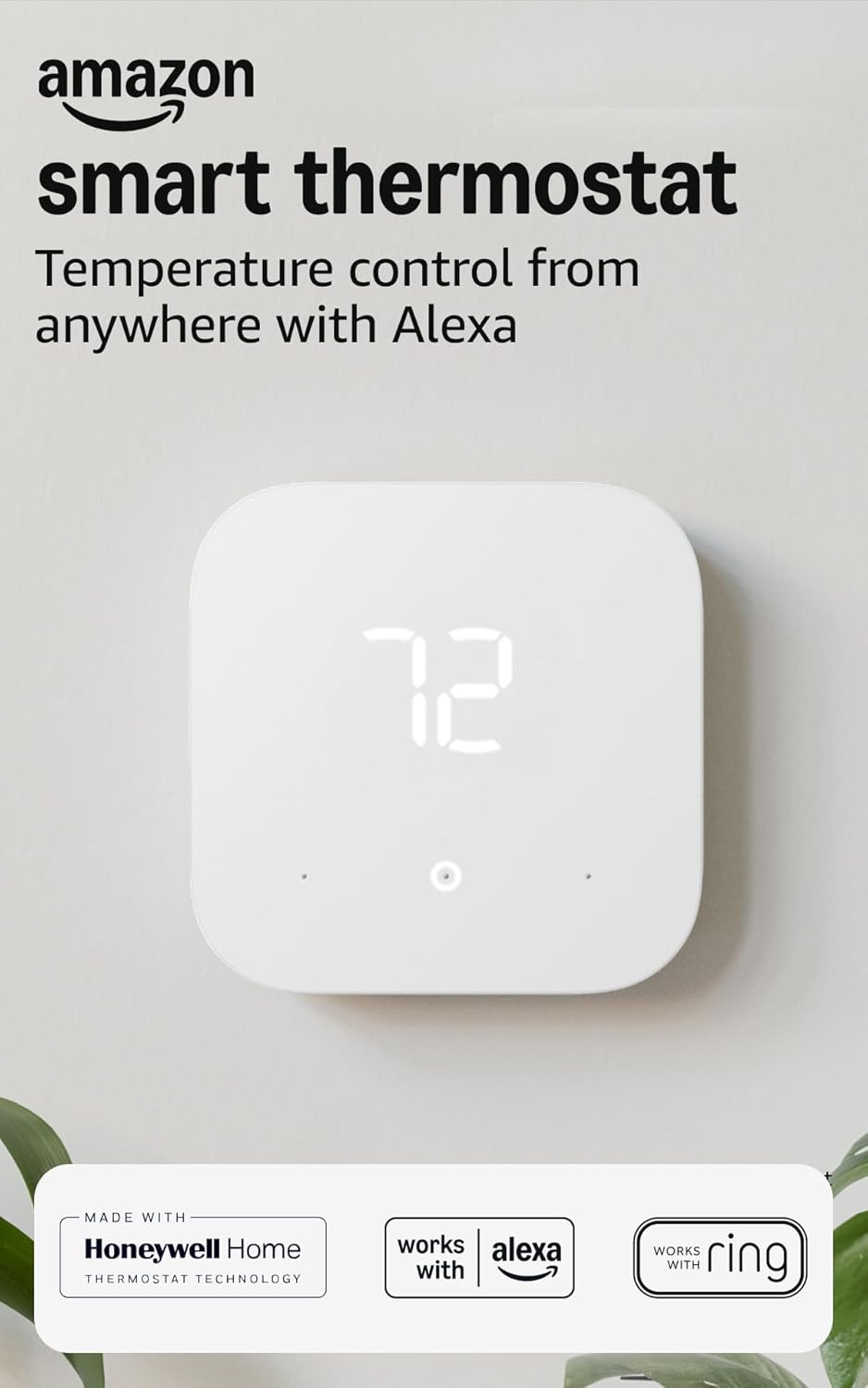
The Amazon Smart Thermostat is a basic Wi‑Fi thermostat that brings voice and app control to a conventional heating and cooling system. It installs with a required C-wire and the Alexa app walks you through setup, after which you can create schedules, use presence-based adjustments with compatible Alexa devices, and control temperature remotely. Built with Honeywell Home thermostat technology, it supports programmable home, away, and sleep modes and can participate in Alexa+ routines for multi-device automations. The unit emphasizes energy savings and links to potential local utility rebates, and the simple interface and Alexa integration make everyday adjustments easy for most households. Limitations include the need for a C-wire for installation and a focus on Amazon/Alexa ecosystems that may leave out buyers wanting broader smart-home platform support or advanced HVAC diagnostics and controls found on higher-end models.
Best for: Buyers who want a straightforward, voice-first smart thermostat that simplifies everyday temperature control and prioritizes energy savings within the Alexa ecosystem.
Less Ideal for: Homes without an available C-wire or users who need advanced HVAC diagnostics, multi-platform smart-home compatibility, or highly configurable pro-level controls.
- Alexa and Ring integration enables voice control and presence-based temperature adjustments
- App-based scheduling and remote temperature control through the Alexa app
- Built on Honeywell Home thermostat technology for reliable basic HVAC control
- Energy-saving focus with links to possible local utility rebates
- Requires a C-wire for installation, which may need extra wiring in some homes
- Primarily designed for the Amazon Alexa ecosystem and may lack broader platform compatibility
Verdict: Buy this if you want a simple, Alexa-integrated smart thermostat that lowers everyday energy use with easy app and voice control.
ecobee Smart Thermostat Premium

| Controller Type | Amazon Alexa, Android, Apple HomeKit, Google Assistant, iOS |
|---|---|
| Connectivity Protocol | Wi-Fi |
| Power Source | Battery Powered |
| Voltage | 24 volts |
| Included Components | Smart Thermostat Premium, SmartSensor, Backplate, Wire labels, Screws, Power Extender Kit, Trim plate |
The ecobee Smart Thermostat Premium is a performance-focused smart thermostat that optimizes comfort and energy use through advanced sensors and integrations. It is typically wall-mounted and used to control heating and cooling across a home, pairing with ecobee SmartSensor to reduce hot and cold spots while the built-in radar occupancy sensing and geofencing better detect presence. Notable features include a built-in air quality monitor, dual-band Wi‑Fi, compatibility with Alexa, Siri, Google Assistant and HomeKit, a built-in speaker for voice control and media, and an included power extender kit for homes without a C-wire. In practice the thermostat delivers a large, bright display and a responsive app-based control method that supports automated savings and filter reminders, and it can show live view from an ecobee doorbell when paired. Limitations to consider are the need to confirm HVAC compatibility before purchase and that some advanced integrations require an Apple home hub or ecobee accessories to enable every feature.
Best for: Buyers who prioritize precise climate control, energy savings, and advanced smart-home integrations and want a thermostat that actively balances comfort across rooms.
Less Ideal for: People who need a basic programmable thermostat without smart features or homes with incompatible HVAC systems should consider simpler or dedicated alternatives.
- Built-in air quality monitor provides alerts and filter reminders
- Includes SmartSensor to manage hot and cold spots for room-level comfort
- Radar occupancy sensing and geofencing improve presence detection for smarter control
- Built-in voice assistant and speaker let you use Siri or Alexa without a separate device
- Power Extender Kit and trim plate included for easier DIY installation
- Some advanced features require an Apple home hub or additional ecobee devices to unlock
- Requires checking system compatibility as it does not support line-voltage or certain low-voltage systems
Verdict: Choose the ecobee Smart Thermostat Premium if you want a top-tier smart thermostat that combines precise room-level sensing, built-in voice control, and air quality monitoring for performance-driven comfort and savings.
Sensi ST55 Smart Thermostat

| Connectivity Technology | Wi-Fi (2.4 GHz) |
|---|---|
| Controller Type | Amazon Alexa, Apple HomeKit, Google Assistant, SmartThings, Vera |
| Temperature Control Type | Programmable, Smart/Remote |
| Power Source | Corded Electric (24 VAC) and 2 AA batteries |
| Energy Certification | ENERGY STAR |
The Sensi ST55 is a DIY smart thermostat intended to replace a traditional wall thermostat while adding Wi‑Fi remote control, scheduling, and energy reports. It connects over 2.4 GHz Wi‑Fi and works with Alexa, Google Assistant, Apple HomeKit, SmartThings, and Vera, so you can change settings from the app or by voice. The unit is ENERGY STAR certified and provides usage reports and smart alerts to help identify inefficiencies and remind you about filter changes, which can reduce HVAC runtime. Installation is aimed at homeowners comfortable with a guided, c-wire optional setup and includes mounting hardware, wire stickers, and step‑by‑step app instructions. The ST55 uses a simple LED screen and button controls rather than a full-color touchscreen, and it runs on 2 AA batteries plus a 24 VAC power connection when present. If you want a straightforward, privacy-focused thermostat with solid remote features and clear energy tracking, the Sensi delivers; buyers who need an advanced touchscreen interface or large integrated displays will find its controls more basic.
Best for: Homeowners who want a practical, privacy-conscious smart thermostat that delivers reliable remote control and energy reports without a complex touchscreen experience.
Less Ideal for: People looking for a high-end thermostat with a large color touchscreen or integrated smart hub features should consider other models.
- Works with major smart assistants and home platforms for voice and app control
- ENERGY STAR certification plus usage reports and smart alerts for tracking savings
- Designed for easy DIY installation with app guidance and included mounting hardware
- Privacy-focused approach to user data handling
- Uses a basic LED display and button controls rather than a color touchscreen
- Requires 2 AA batteries and may need a C-wire for some HVAC systems
Verdict: Choose the Sensi ST55 if you want a straightforward, energy-focused smart thermostat that is easy to install and integrates with major voice assistants.
Aowel AW701 Thermostat

| Power Source | Battery Powered |
|---|---|
| Temperature Control Type | Heating and Cooling |
| Connectivity Technology | RH/RC, C, W, Y, G |
| Display Type | LCD |
The Aowel AW701 is a straightforward, budget-friendly non-programmable thermostat designed for conventional single-stage heating and cooling systems. It replaces basic wall thermostats and is typically used to set a steady temperature without scheduling features, making it suitable for renters or homeowners who prefer manual control. The 3.5-inch blue backlit LCD shows temperature and humidity and the large buttons make adjustments simple; technician-accessible settings let you adjust temperature calibration, heating and cooling swing, and enable a 3-minute compressor delay to protect equipment. It runs on two AAA batteries and can also accept 24VAC so a C-wire is usually not required, which simplifies installation in older homes. The unit does not support multistage systems, heat pumps, line-voltage baseboard heat, or RV systems, and it lacks smart features or programming, so users wanting remote control or automatic scheduling will need a different model. For straightforward, accurate manual control at a low price point, the AW701 covers the basics reliably.
Best for: Buyers wanting an inexpensive, no-frills thermostat to manually control a conventional single-stage furnace and central A/C who value easy installation and a clear display over smart features.
Less Ideal for: Users who want programmable schedules, smartphone control, or who have multistage or heat-pump HVAC systems should choose a different thermostat.
- Simple, large blue backlit LCD that shows temperature and humidity for easy reading
- Battery powered with optional 24VAC input so C-wire is not required in most installs
- Adjustable heating/cooling swing and temperature calibration for finer control
- 3-minute compressor delay selectable to protect HVAC equipment
- No programmable schedules or remote/wi-fi control
- Not compatible with multistage systems, heat pumps, line-voltage baseboard heat, or RV systems
Verdict: Aowel AW701 is the practical choice for budget-focused buyers who need a simple, easy-to-install manual thermostat for a single-stage HVAC system.
Sensi Touch ST75

| Connectivity Technology | Wi-Fi (2.4 GHz) |
|---|---|
| Display Type | LCD color touchscreen |
| Control Method | App, Touch, Voice |
| Specific Uses For Product | Air Conditioner, Boiler, Furnace, Heat Pump |
| Specification Met | Energy Star |
The Sensi Touch ST75 is a wall‑mounted smart thermostat that gives you app, touch and voice control of your HVAC from anywhere via 2.4 GHz Wi‑Fi. It is typically installed as a DIY replacement for a standard thermostat and uses the Sensi mobile app for scheduling, remote access, usage reports and maintenance alerts. The 4.3‑inch color touchscreen makes local control simple while the app provides geofencing, energy reports and filter reminders that help you monitor system performance. It works with Alexa, Apple HomeKit, Google Assistant and other controllers and is ENERGY STAR certified to help reduce HVAC energy use. Installation expects a C‑wire and the unit runs on AC/DC power, so homes without a common wire will need an adapter or professional wiring. The thermostat focuses on straightforward usability and data privacy rather than advanced learning algorithms, so it is best for buyers who want reliable remote control and clear energy reporting rather than fully automated adaptive schedules.
Best for: Buyers who prioritize a dependable, straightforward smart thermostat with solid app control and broad smart home compatibility and who prefer a DIY install with clear usage reporting.
Less Ideal for: People seeking a thermostat that learns your habits and auto‑optimizes without manual schedules or homeowners who cannot provide a common wire and do not want to add one.
- Bright 4.3-inch color touchscreen for easy on‑device control
- Works with Alexa, Apple HomeKit, Google Assistant and other smart platforms
- Remote access, geofencing and usage reports via the Sensi mobile app
- ENERGY STAR certified with features that can reduce HVAC energy use
- Requires a common wire (C‑wire) for typical installation
- Does not include advanced self-learning climate algorithms
Verdict: Choose the Sensi Touch ST75 for reliable remote control, broad smart home support and clear energy reporting in a user‑friendly, DIY smart thermostat.
Google Nest Thermostat
| Connectivity Technology | Bluetooth, Wi-Fi |
|---|---|
| Power Source | Battery Powered |
| Display Type | LCD |
| Control Type | Remote Control, Voice Control |
| Number of Batteries | 2 A batteries required. (included) |
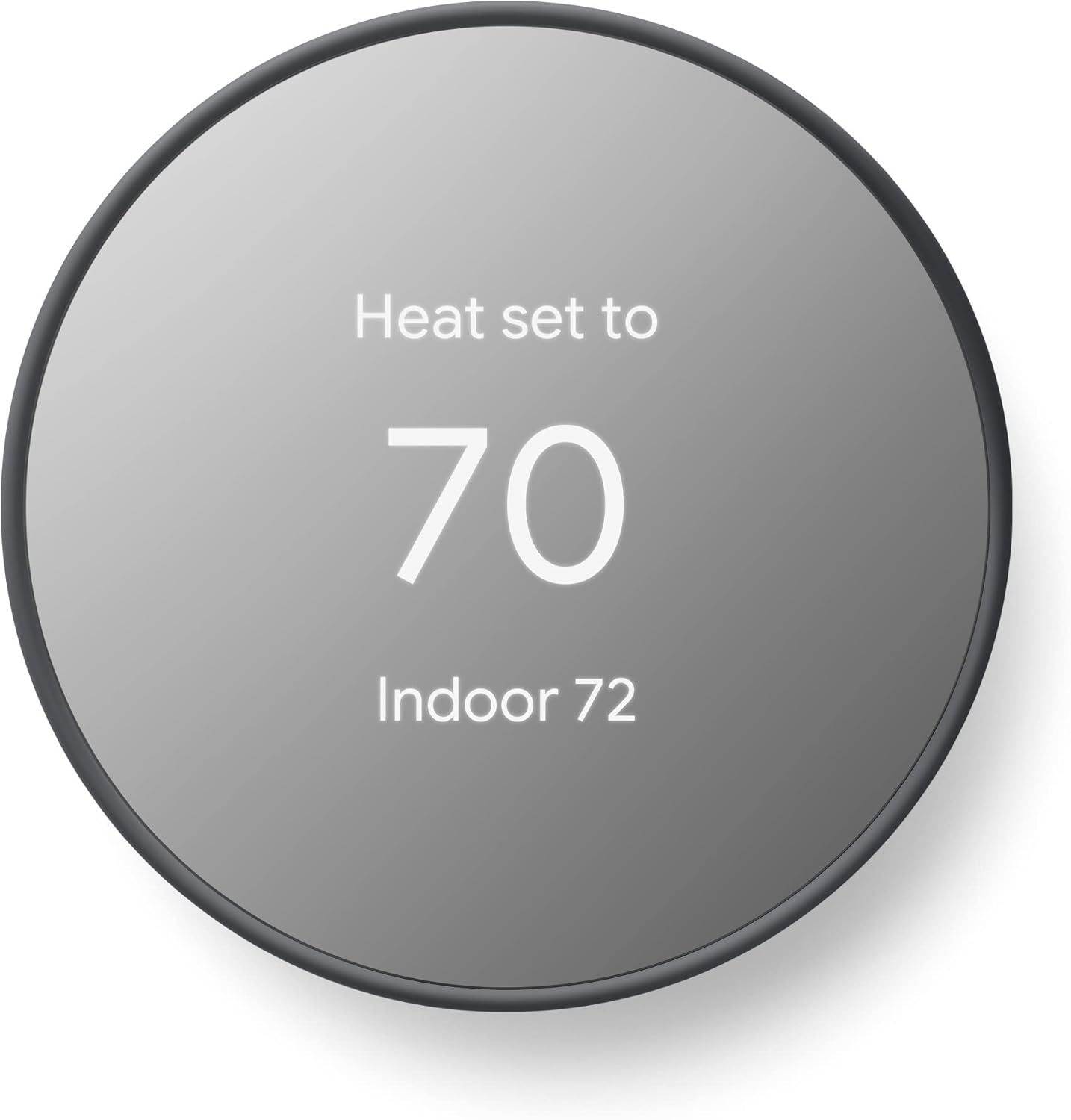
The Google Nest Thermostat is a compact smart thermostat meant to replace a standard wall thermostat and give remote control, scheduling, and basic HVAC monitoring through the Google Home app. It connects via Wi‑Fi and Bluetooth, supports voice control with compatible assistants, and is designed for DIY installation in most homes without requiring a C wire. In daily use you can adjust temperature from your phone, create quick schedules, and let the thermostat automatically set Eco Temperatures when it detects nobody is home, which can help reduce energy use. Savings Finder suggests schedule tweaks and the unit can send alerts if it detects potential system issues, offering simple preventative guidance. Limitations include reliance on the Google Home ecosystem for many smart features and voice controls, and some heating or cooling systems may still need a C wire or power accessory for reliable operation. The small LCD and side touch bar give basic local control but lack the richer display and sensors of higher-end Nest models.
Best for: Buyers who want an affordable smart thermostat that adds phone and voice controls plus basic energy-saving automation without needing pro installation.
Less Ideal for: Users who want a top-tier display, advanced local sensing, or a thermostat that provides deep diagnostics and integrations outside the Google ecosystem.
- Simple remote control and scheduling through the Google Home app
- Supports Wi‑Fi and voice control with popular assistants
- Designed for DIY installation and often works without a C wire
- Energy-saving features like Eco Temperatures and Savings Finder
- Includes batteries and basic mounting hardware
- Depends on Google Home ecosystem for full smart functionality
- May require a C wire or power accessory with some HVAC systems
Verdict: A cost-conscious smart thermostat that brings reliable remote and voice control plus simple energy-saving features for homeowners seeking easy DIY upgrade.
Riseem S3001 Thermostat

| Controller Type | Push Button |
|---|---|
| Temperature Control Type | Conventional Single Stage Systems |
| Power Source | 24VAC (with battery backup) |
| Display Type | LCD |
| Connectivity Technology | Wired |
The Riseem S3001 is a straightforward nonprogrammable wall thermostat designed for single-stage heating and cooling systems. It controls one heat and one cool stage using a backlit LCD and button controls, and it can run on 24VAC or two AA batteries for backup so you do not always need a C-wire. Installation is aimed at DIYers with a universal sub-base and large terminal blocks that simplify common wiring setups, though the base only accepts up to five wires so complex multiwire systems are not supported. The unit reports temperature to within about plus or minus 1 F and offers separate heating and cooling swing settings to reduce short-cycling and improve comfort. Because it is nonprogrammable there are no scheduling features, but that also means simple operation and fewer settings to manage. The thermostat is limited to conventional single-stage systems and explicitly excludes heat pumps, multistage systems, mini splits, and certain high-voltage or hydronic setups, so confirm system compatibility before buying.
Best for: Buyers who want a no-frills, reliable thermostat for a conventional single-stage HVAC system and prefer a simple, easy-to-install unit over programmable smart features.
Less Ideal for: Those who need scheduling, Wi-Fi connectivity, or compatibility with heat pumps, multistage systems, or mini split equipment should look elsewhere.
- Simple, easy-to-read backlit LCD and straightforward button controls
- Works on 24VAC or two AA batteries so many systems do not require a C-wire
- Universal sub-base and large terminal blocks simplify DIY installation
- Accurate temperature control reported at about +/-1°F
- Nonprogrammable design offers no scheduling or energy-saving timer features
- Not compatible with multistage systems, heat pumps, mini splits, or high-voltage baseboard heat
Verdict: A simple, accurate wall thermostat built for easy DIY installation on single-stage HVAC systems when you want dependable temperature control without programmable or smart features.
Choosing the Right Ac Thermostat: Key Factors to Consider
Temperature Accuracy and Sensor Placement
Accurate sensing determines how closely your home holds the set temperature. Thermostats with precise sensing and intelligent averaging reduce overshoot and short-cycling, which improves comfort and equipment life. Sensor placement matters too. Wall-mounted units should be located away from direct sunlight, drafts, heat sources, and interior doors to avoid skewed readings.
If a thermostat supports remote or multiple sensors, you can correct for problem rooms or wide temperature variation. Remote sensors help when a hallway-mounted device does not represent living areas. For buyers focused on comfort, prioritize models with solid sensor specs and options for remote sensing.
Wiring and Installation Requirements
Understanding the wiring at your HVAC control board affects which thermostats you can use. Some AC thermostats need a common wire for power, while others run on batteries or use power-stealing circuits. Check whether your system uses standard low-voltage control terminals and whether your air handler provides a C terminal. Simple wiring needs reduce installation time and complexity.
Also consider mounting footprint and whether the thermostat requires adapter plates or additional trim to cover old wall marks. If you are not comfortable with low-voltage wiring, factor in whether the unit is straightforward enough for a competent DIYer or likely to need professional help.
Compatibility With HVAC Controls
AC thermostat compatibility goes beyond wiring. Different systems require support for features like heat pump staging, two-stage compressors, or separate fan control. Ensure the thermostat you choose supports the control signals your system expects, such as conventional single-stage cooling, multi-stage systems, or heat pump reversing valves.
A mismatch can lead to improper behavior, like the fan running continuously or the compressor failing to engage. When in doubt, confirm the thermostat supports the control configuration at your outdoor unit and indoor air handler.
Scheduling, Energy Management, and Smart Features
How you control temperature throughout the day affects both comfort and energy bills. Thermostats with flexible scheduling and automated setbacks let you reduce runtime when the home is empty and restore comfort before arrival. Look for adaptive recovery, which ramps runtime to reach the target temperature on schedule without unnecessary overshoot.
Smart features such as geofencing, learning algorithms, and utility demand response compatibility can further optimize runtime. Decide whether you want simple fixed schedules or a thermostat that actively learns and adjusts to household patterns.
User Interface and Remote Control
An intuitive on-device interface matters for everyday adjustments, while mobile apps and voice control provide convenience from anywhere. Clear displays, tactile buttons, or responsive touchscreens reduce frustration. For mobile control, consider the quality of the app and whether it allows full configuration or only basic overrides.
If multiple household members will adjust settings, prioritize ease of use and access control. Integration with home assistants or automation hubs can simplify voice control and centralized schedules.
Durability, Firmware Updates, and Ongoing Support
A thermostat is a long-term fixture, so expected hardware reliability and vendor support matter. Firmware updates can add features, fix bugs, and maintain security for connected devices. Check whether the vendor provides a clear update path and reasonable support options.
Also think about environmental durability. Wall thermostats in humid or dusty areas should use robust finishes and connectors. Long-term support reduces the chance you will need to replace the controller because of software or compatibility issues.
Wiring Scenarios and What They Mean
Most residential AC thermostats connect to standard low-voltage terminals. If your wall plate has a C terminal, you have an easier path to modern smart thermostats that need continuous power. If you only have R, W, Y, G, and maybe O/B, look for units that either run on batteries or advertise compatibility with power-stealing setups.
Older setups or systems with proprietary controls can require an adapter or professional attention. Before buying, inspect the wires behind your existing thermostat or check the control board at the air handler to confirm available connections.
- C wire present: supports most smart thermostats without extra hardware
- No C wire: consider battery-powered models or compatible power modules
- Heat pump systems: ensure O/B and auxiliary heat terminals are supported
Using Remote Sensors Effectively
Remote temperature sensors extend accurate control into rooms that the main unit cannot represent well. Place remote sensors in frequently used living spaces rather than hallways for a more accurate comfort baseline.
If you use multiple sensors, choose how the thermostat averages or prioritizes readings. Some models allow you to prefer a specific sensor during occupied hours, which helps with rooms that warm up or cool down at different rates.
- Ideal placement: center of the room, away from windows and vents
- Avoid kitchens and bathrooms where transient heat or humidity skews readings
- Use occupancy-based sensor options if available for targeted comfort
Balancing Automation and Manual Control
Automation can save energy but may occasionally conflict with immediate comfort needs. Use scheduling and geofencing to reduce runtime when the house is empty, but make sure manual overrides are simple and temporary so you are not locked into an unwanted mode.
For households with varying schedules, flexible schedules and easy override options provide the best balance. Prioritize thermostats that make temporary adjustments obvious on the display and revert to the primary schedule cleanly.
- Set clear setback temperatures to avoid extremes when away
- Choose devices that support temporary hold and easy cancellation
- Consider learning thermostats only if you want automated pattern recognition
Maintaining Your Thermostat and HVAC for Accurate Control
Routine maintenance helps a thermostat deliver consistent results. Keep sensors and the surrounding wall area clean to avoid dust buildup that can affect readings. Replace batteries yearly in battery-powered units to prevent unexpected resets.
Ensure your HVAC system is serviced regularly. A thermostat can only control what the equipment delivers; malfunctioning compressors, clogged filters, or stuck dampers will undermine any thermostat's effectiveness.
- Clean wall area and sensors periodically
- Change batteries proactively on battery-powered units
- Schedule HVAC maintenance to keep system response predictable
Privacy and Network Security Basics
Connected thermostats can offer great convenience, but they also introduce networked access points. Use strong, unique passwords and keep firmware up to date to minimize exposure. If the device supports two-factor authentication or local-only control modes, consider those options for sensitive networks.
Segmenting smart devices on a separate network or guest SSID can reduce risk to primary home systems. Review the vendor privacy policy to understand what data is collected and whether it is shared for energy programs or analytics.
- Enable firmware auto-updates where possible
- Use unique network credentials and consider device isolation
- Review data-sharing and privacy settings in the app
How We Chose the Best Ac Thermostat
We focused on selection criteria that matter for AC thermostat buyers in real homes. First, temperature sensing accuracy and control responsiveness were prioritized because small offsets can cause overshoot, wasted runtime, and comfort complaints. Second, installation flexibility was a must: we evaluated compatibility with common wiring situations, mounting options, and whether the unit supports systems that require a common wire or simple battery operation. Third, scheduling and control features were considered to measure how well a thermostat lets you create efficient routines, manage setbacks, and respond to occupancy patterns. Fourth, user experience factors like on-device controls, mobile app clarity, and integration with existing home automation standards were scored. Finally, reliability and long-term support matter for a wall-mounted controller, so we considered expected firmware update policy and typical hardware robustness. We excluded products that require nonstandard HVAC modifications or professional-only interfaces. Units that only support commercial or industrial control protocols were not considered. Our shortlist reflects devices that are practical for typical residential AC setups and that meet the concrete criteria above.
Our full evaluation process is outlined in our review methodology.
FAQ
Do I need a C wire for modern AC thermostats?
Often but not always. Many modern thermostats prefer a C wire for continuous power, though some models operate on batteries or power-stealing technology. Check your existing wall wiring to determine if a C terminal is available and choose a thermostat that matches that supply.
Can a smart thermostat control a heat pump system?
Sometimes. Thermostats vary in their support for heat pump-specific controls like reversing valves and auxiliary heat. Verify that the thermostat supports the control terminals your heat pump requires before purchasing.
Are remote temperature sensors worth it?
Often yes for homes with uneven temperatures. Remote sensors provide readings from living spaces that a hallway-mounted thermostat might not reflect, improving comfort and reducing unnecessary runtime in other zones.
How secure are connected thermostats on a home network?
Security varies by vendor and setup. Use strong Wi-Fi credentials, enable firmware updates, and consider placing smart devices on a separate network to reduce exposure. Devices with local control options typically offer a smaller attack surface.
Will a thermostat save energy on its own?
Not automatically. Energy savings depend on how you configure schedules, setback temperatures, and features like adaptive recovery. A well-configured thermostat that reduces runtime during unoccupied periods will typically lower energy use.
How difficult is installation for most homeowners?
Installation difficulty depends on your wiring and comfort with low-voltage wiring. Many units are designed for DIY installation with clear wiring terminals, but systems lacking a C wire or with unusual control schemes may need a professional.
Final Verdict
Prioritize accurate sensing and installation compatibility when choosing an AC thermostat. Match the unit to your wiring situation and HVAC control signals first, then pick scheduling and interface features that fit how your household uses the system. Remember the tradeoffs: more automation can save energy but requires reliable connectivity and occasional oversight. Focus on the few criteria that matter most to you—sensor placement, wiring fit, and scheduling flexibility—to pick a thermostat that delivers comfort, predictable operation, and long-term reliability.