
Note: This article contains affiliate links. If you click on these links and make a purchase, we may earn a small commission at no extra cost to you. This helps support our research and content. Read our full affiliate disclosure here.
When you need a simpler way to control home temperature, a wireless thermostat removes wiring hassles and puts control on your phone or a slim wall unit. Picking the right wireless thermostat matters because installation complexity, sensor accuracy, and compatibility with your heating and cooling system directly affect comfort and utility bills. This guide shortlists the top wireless thermostats available and explains the practical tradeoffs you should weigh. We evaluated each pick for setup friendliness, connectivity reliability, sensor and scheduling capabilities, and energy-saving features to help you find a model that fits your home and routine.
Top Picks at a Glance
| Best Overall The best all-around choice for most situations | Amazon Smart Thermostat |  |
| Best Quality Built to a higher standard if you want something more solid | ecobee Smart Thermostat Premium |  |
| Best Value The sweet spot between price and what you get | Honeywell Home X2S Smart Thermostat |  |
| Best Budget The cheapest option that still gets the job done reliably | Sensi Lite Smart Thermostat ST25 | 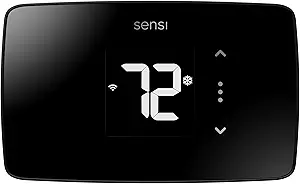 |
| Top Rated A top-rated pick with lots of positive feedback | ecobee Smart Thermostat Enhanced |  |
| Most Popular A crowd favorite that many people choose with confidence | Sensi Smart Thermostat ST55 |  |
| Best Seller A high-volume bestseller chosen again and again | Google Nest Thermostat |  |
Amazon Smart Thermostat
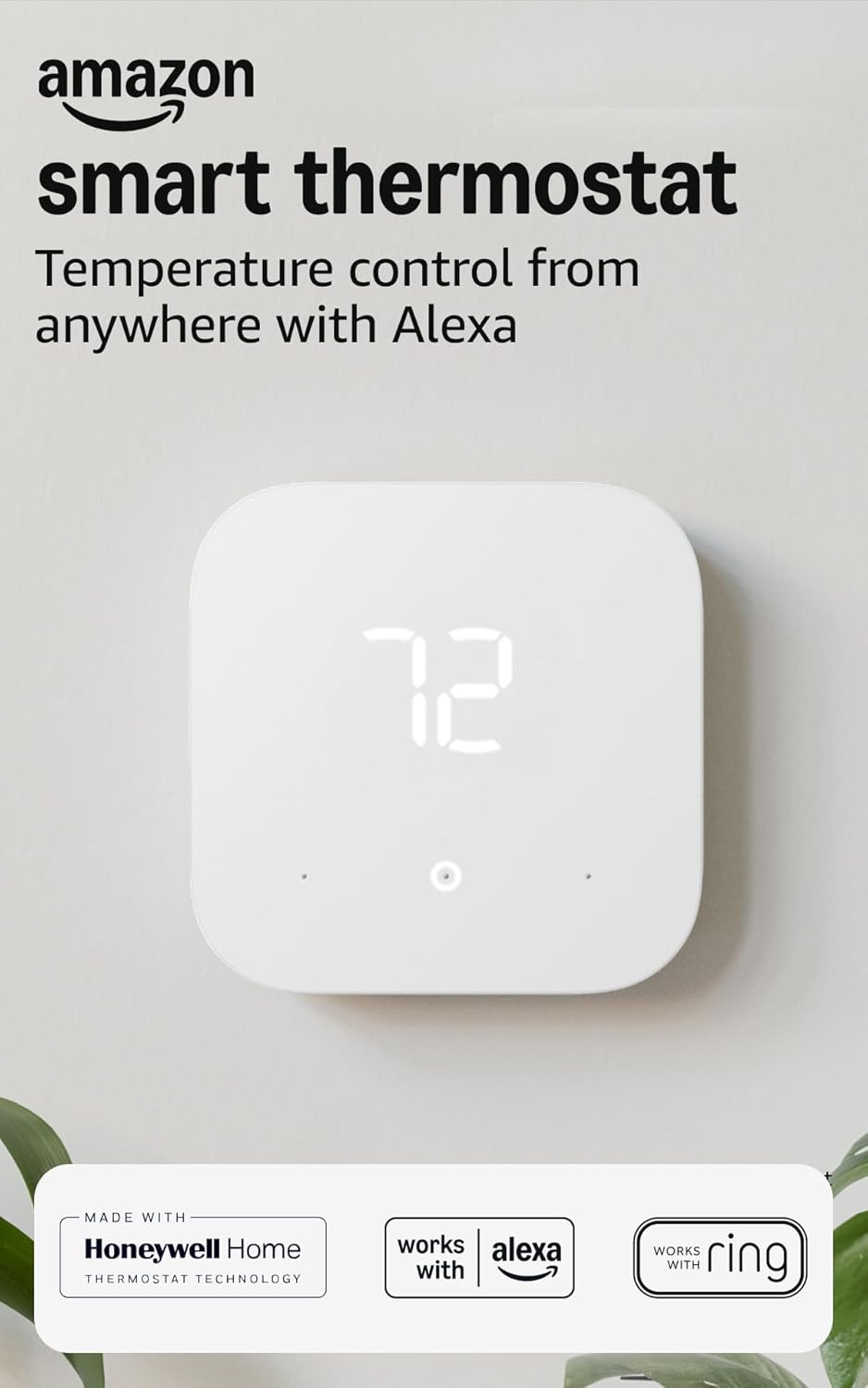
| Works with | Alexa and Ring |
|---|---|
| C-wire | Required |
| Manufacturer technology | Honeywell Home Thermostat Technology |
| Energy info | ENERGY STAR estimates savings |
The Amazon Smart Thermostat is a connected thermostat designed to replace a conventional wall unit and let you control heating and cooling from the Alexa app or by voice. Installation is intended for DIY with the app guiding wiring and setup; it requires a C‑wire. Once installed it supports scheduling, home/away modes, and Alexa-based presence detection to adjust temperature automatically. The unit leans on Honeywell thermostat technology for reliable basic controls and pairs tightly with Alexa features, including routines and remote control from the app. Practical benefits include simple voice control, the ability to create comfort zones through linked Alexa devices, and potential energy savings via programmable schedules and compatibility with ENERGY STAR incentives. Limitations are that advanced HVAC configurations or nonstandard wiring may need professional help, and full functionality depends on using Alexa and the Amazon ecosystem rather than a more platform-agnostic smart home approach.
Best for: Buyers who want a simple, voice-first smart thermostat that makes scheduling and remote control easy and who plan to use Alexa as their primary smart home hub.
Less Ideal for: People who prefer platform-agnostic thermostats or who lack a C‑wire and do not want to run new wiring or hire an HVAC pro.
- Tight Alexa integration for voice control and routines
- App-guided DIY installation for straightforward set up
- Programmable schedules and presence-based adjustments to save energy
- Built on Honeywell thermostat technology for dependable basic controls
- Requires a C‑wire which may not be present in older homes
- Relies on the Alexa ecosystem for some advanced features
Verdict: If you use Alexa and want an easy, app-guided smart thermostat that cuts energy use and adds voice control, this is a practical choice.
ecobee Smart Thermostat Premium

| Connectivity Protocol | Wi‑Fi |
|---|---|
| Controller Type | Amazon Alexa, Android, Apple HomeKit, Google Assistant, iOS |
| Power Source | Battery Powered |
| Voltage | 24 volts |
| Number of Batteries | 1 Lithium Ion batteries required. (included) |
The ecobee Smart Thermostat Premium is a feature‑rich wall thermostat that combines a large touchscreen, built‑in Alexa or Siri voice assistant, and an included SmartSensor to reduce hot and cold spots. You use the touchscreen or the ecobee app to set schedules, control heating and cooling, and view live doorbell video when paired with ecobee doorbell hardware. Key features are on‑device voice control and a built‑in air quality monitor that alerts you and offers filter change reminders, while radar occupancy sensing and geofencing tailor temperature to when people are home. Dual‑band Wi‑Fi and broad HVAC compatibility simplify installation, and the included Power Extender Kit helps homes without a C‑wire. The Premium model leans toward advanced users who want smarter automation, integrated voice, and home health data, but its full feature set requires app setup and optional smart home hubs for some integrations, and the metal premium finish makes it more of a visible fixture than a hidden upgrade.
Best for: Buyers who prioritize high performance automation, integrated voice control, and home health features to actively optimize comfort and energy use.
Less Ideal for: People who want a minimal, out‑of‑the‑way thermostat or who prefer a simple manual programmable unit with no app or smart‑home integrations.
- Built‑in Alexa or Siri voice assistant for hands‑free control and media playback.
- Included SmartSensor helps manage hot and cold spots for room‑level comfort.
- Built‑in air quality monitor with alerts and filter reminders supports home health.
- Radar occupancy sensing and geofencing improve automated energy savings.
- Includes Power Extender Kit and backplate for easier DIY installation on systems without a C‑wire.
- Full feature access requires app account setup and some integrations need additional smart home hubs or services.
- Premium metal design is prominent on the wall and may not suit buyers wanting a low‑profile look.
Verdict: Choose the ecobee Smart Thermostat Premium if you want a top‑end wireless thermostat that combines built‑in voice, room sensors, and air quality monitoring to maximize comfort and efficiency.
Honeywell Home X2S Smart Thermostat

| Compatibility | Up to 2H/2C conventional or up to 2H/1C heat pump |
|---|---|
| Connectivity | Wi‑Fi (2.4 or 5 GHz), Matter certified |
| Power | C‑wire required (24 VAC) |
| Scheduling | 7 day, 5-1-1 day, 5-2 day, 1 week or non‑programmable option |
| ENERGY STAR | Yes |
The Honeywell Home X2S is a wall‑mounted smart thermostat designed to replace midrange programmable units and add remote app and voice control. It connects to 2.4 or 5 GHz Wi‑Fi and is Matter certified, so you can control it from the First Alert app or integrate it with Alexa, Google Assistant, or Apple HomeKit. Setup targets homes with a C‑wire and supports conventional HVAC up to 2 heat/2 cool and heat pump up to 2 heat/1 cool. The unit offers multiple scheduling formats, auto‑away, change‑filter reminders, and optional indoor humidity monitoring, and ships with interchangeable trim pieces to match decor. Being ENERGY STAR certified it can participate in energy programs and rebates. Tradeoffs to note: it requires a C‑wire for full power, so older homes without one may need an adapter or professional wiring, and advanced installers may find the on‑device controls more limited than a touchscreen interface. For someone upgrading from a basic programmable stat, the X2S adds modern app control, integrations, and energy features without an overly complex setup.
Best for: Buyers who want a straightforward, energy‑focused smart thermostat that adds reliable app and voice control to a conventional or heat‑pump HVAC system without complicated setup or advanced installer features.
Less Ideal for: Homes without a C‑wire where running new wiring is not desired, and buyers who prefer a touchscreen display or highly customizable on‑device controls.
- Matter certification for broader smart home integration with Alexa, Google Assistant, and HomeKit
- ENERGY STAR certified to enable energy program participation and potential rebates
- Flexible scheduling options including 7, 5‑1‑1, 5‑2, 1‑week or non‑programmable modes
- Remote control and app management plus auto‑away and filter reminders for hands‑off energy savings
- Interchangeable trim pieces to better match home decor during installation
- Requires a C‑wire for proper operation which may need wiring changes or an adapter
- No touchscreen; relies on push buttons and the app for most advanced controls
Verdict: Choose the X2S if you want an ENERGY STAR certified, Matter‑ready smart thermostat that adds easy app and voice control to a conventional or heat pump system.
Sensi Lite Smart Thermostat ST25
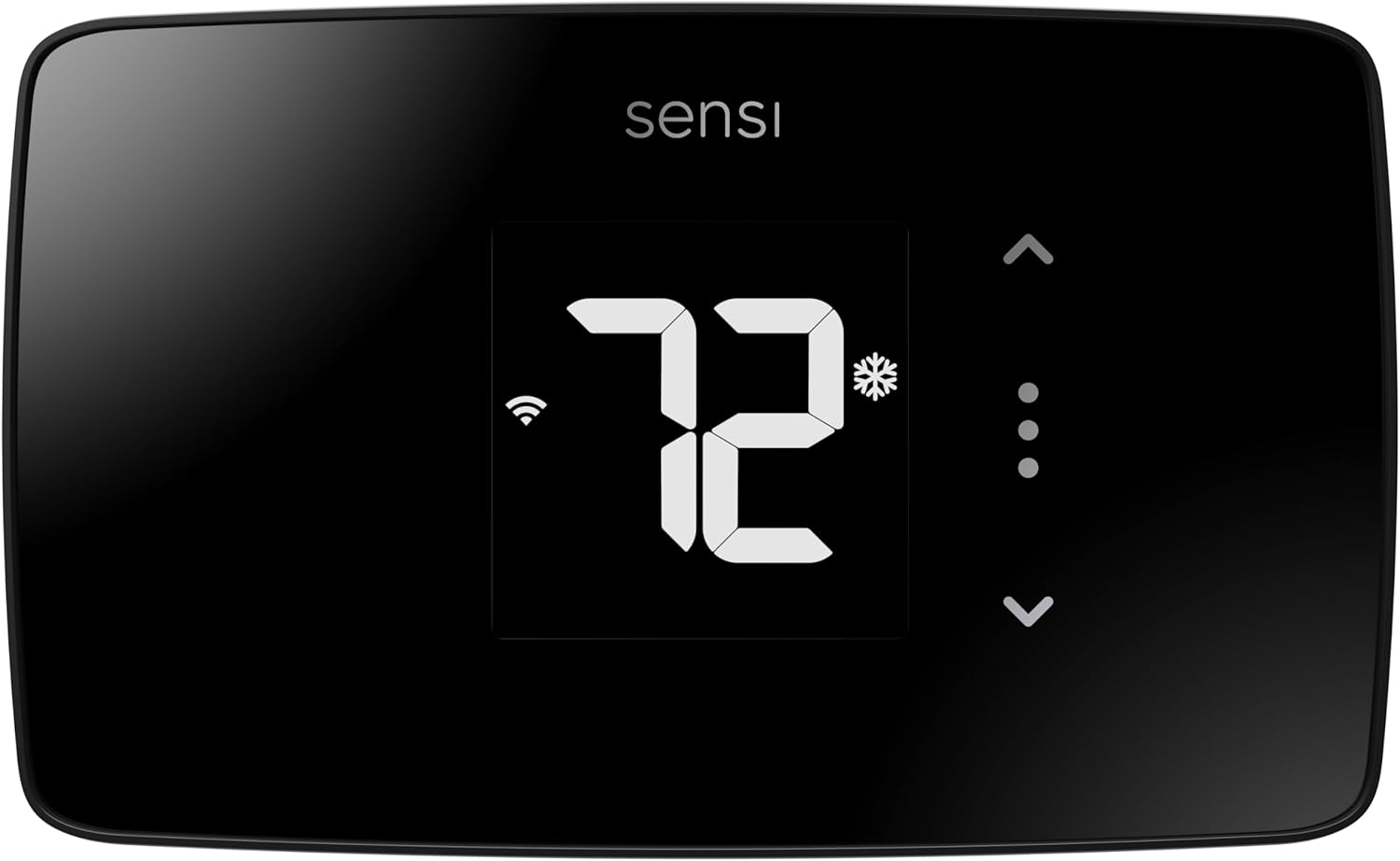
| Connectivity Technology | Wi‑Fi |
|---|---|
| Control Method | App, Touch, Voice |
| Power Source | Battery or C‑wire |
| Temperature Control Type | Automatic or Programmable |
| Number of Batteries | 2 AAA (included) |
The Sensi Lite ST25 is a simple, wireless smart thermostat designed for easy DIY replacement of a standard wall thermostat. It connects to 2.4 GHz Wi‑Fi and pairs with the Sensi mobile app to let you set schedules, adjust temperature remotely, and use voice controls via Alexa or Google Assistant. Installation is aimed at homeowners who want a fast swap‑out experience—the unit includes a built‑in level, mounting hardware, batteries, and step‑by‑step instructions, and it does not require a common wire on most systems. Practical benefits include Energy Star certified operation and app features like geofencing and usage reports that can reduce HVAC energy use. The display is a basic LCD and the control set is intentionally minimal, so you get reliable core smart thermostat functions without advanced HVAC tweaking or a high‑end interface. If you need deep system diagnostics, dual‑stage or commercial HVAC support, or a color touchscreen, this model is not targeted at those use cases.
Best for: Buyers who want an affordable, no‑frills smart thermostat to replace a home wall thermostat quickly and get reliable remote and voice control without paying for premium features.
Less Ideal for: Homes that need advanced HVAC tuning, multi‑stage or commercial system support, or users who want a full‑color touchscreen and deep diagnostics.
- Easy DIY install with included hardware, built‑in level, and step‑by‑step instructions
- Works over Wi‑Fi with remote app control and voice assistant compatibility
- Energy Star certified and includes scheduling, geofencing, and usage reports to lower HVAC energy use
- Does not require a common wire for most residential systems, simplifying upgrades
- Basic LCD and limited interface lacking advanced HVAC diagnostics or customization
- Requires 2.4 GHz Wi‑Fi and may need a C‑wire for some system types like heat pump or heat/cool only
Verdict: A budget‑friendly smart thermostat that delivers core remote control, scheduling, and voice integration for homeowners who want simple, energy‑saving upgrades.
ecobee Smart Thermostat Enhanced

| Connectivity Technology | Wi-Fi |
|---|---|
| Controller Type | Amazon Alexa, Android, Apple HomeKit, Google Assistant, iOS |
| Power Source | Corded Electric |
| Voltage | 24 volts |
| Display Type | LCD |
The ecobee Smart Thermostat Enhanced is a hardwired Wi‑Fi thermostat designed to reduce heating and cooling waste while keeping your home comfortable. It uses built‑in radar occupancy sensing and SmartSensor support to detect which rooms are in use and automatically prioritize conditioning, and eco+ software can suggest schedule changes and setbacks to save energy. Setup is aimed at DIY installers with a Power Extender Kit and trim plate included for systems without a common wire, and the unit integrates with Apple HomeKit, Alexa, Google Assistant, and other smart home platforms for voice and remote control. The 4‑inch LCD and app provide straightforward control and the unit is Energy Star certified. Because it is hardwired and supports common HVAC wiring, you get a reliable, always‑connected thermostat without frequent battery swaps, but installation still requires basic HVAC wiring familiarity and it is not compatible with high‑voltage or millivolt systems. For buyers prioritizing dependable, smart temperature control across a typical 24 VAC HVAC setup, ecobee delivers a strong mix of automation and integration.
Best for: Buyers who want a reliable, always‑connected thermostat that automates energy savings and integrates with mainstream smart home ecosystems while minimizing maintenance.
Less Ideal for: People with line‑voltage furnaces, millivolt or uncommon control systems, or those who need a simple battery‑powered replacement without wiring work.
- Built‑in radar occupancy sensing and SmartSensor support to target occupied rooms
- Dual‑band Wi‑Fi and app plus voice assistant integrations for remote control
- Includes Power Extender Kit and trim plate for easier DIY installs on systems without a C wire
- Hardwired design eliminates frequent battery changes and keeps the thermostat continuously powered
- Not compatible with line voltage, millivolt, or 0–10V systems
- Requires some HVAC wiring knowledge for installation despite included PEK
Verdict: Choose this ecobee if you want a dependable, hardwired smart thermostat that automates comfort and integrates with major voice assistants for consistent, low‑maintenance operation.
Sensi Smart Thermostat ST55

| Connectivity Technology | Wi-Fi |
|---|---|
| Control Method | App, Touch, Voice |
| Temperature Control Type | Programmable, Smart/Remote |
| Power Source | Corded Electric |
| Number of Batteries | 2 AA batteries required. (included) |
The Sensi ST55 is a DIY smart thermostat that replaces a conventional wall thermostat and connects to your home Wi‑Fi for remote control via its mobile app and voice assistants. It supports common HVAC systems including furnaces, heat pumps, boilers and air conditioners and is ENERGY STAR certified to help reduce HVAC energy use. Installation is aimed at homeowners comfortable with basic wiring and the app includes step-by-step guidance and a built-in level, while a C‑wire is not required in most setups. The controller offers button controls, a 5‑inch LED screen, filter reminders, usage reports and smart alerts to track system performance. It works with Alexa, Google Assistant, Apple HomeKit and several smart‑home hubs, and the manufacturer emphasizes data privacy. Tradeoffs are modest: the interface is button based rather than a full color touchscreen and advanced HVAC diagnostics are limited compared with professional systems, but for most households it delivers reliable remote scheduling, energy reporting and easy app-driven control.
Best for: Buyers who want a proven, privacy-focused smart thermostat with broad voice and smart‑home compatibility and straightforward DIY installation guided by a solid mobile app.
Less Ideal for: Homes that need advanced HVAC diagnostics, commercial installs, or users who want a large color touchscreen interface should consider more feature-rich or professional-grade options.
- Works with Alexa, Google Assistant, Apple HomeKit and major smart‑home hubs for voice and ecosystem control
- ENERGY STAR certified with scheduling and usage reports to help reduce HVAC energy use
- App-driven setup with step-by-step instructions and built-in level simplifies DIY installation
- Includes filter indicators and smart alerts to help maintain system performance
- Does not require a common wire in most installations, widening compatibility for older homes
- No full color touchscreen — uses button controls and a 5‑inch LED display
- Provides basic system alerts and usage reports but not in-depth professional diagnostics
Verdict: Choose the Sensi ST55 when you want an easy‑to‑install, ENERGY STAR smart thermostat that delivers reliable remote control and strong smart‑home compatibility with a focus on privacy.
Google Nest Thermostat
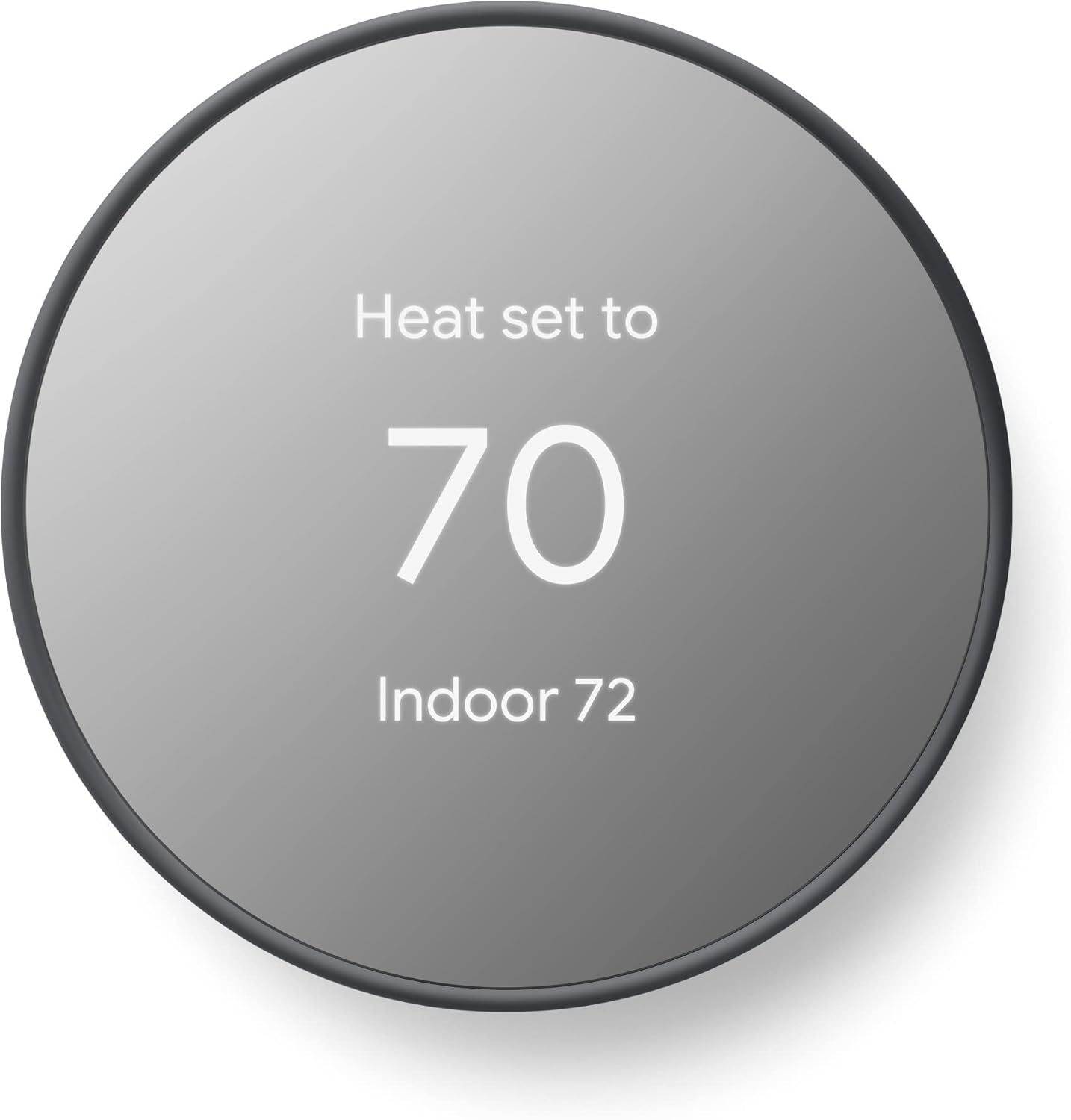
| Connectivity Technology | Bluetooth, Wi-Fi |
|---|---|
| Power Source | Battery Powered |
| Display Type | LCD |
| Control Type | Remote Control, Voice Control |
| Number of Batteries | 2 A batteries required (included) |
The Google Nest Thermostat is a compact smart thermostat designed for straightforward home climate control via the Google Home app or voice assistants. It installs on a wall plate and supports remote temperature changes, scheduling, and automatic Eco Temperatures when it senses the house is empty. Key features include Wi‑Fi and Bluetooth connectivity, Savings Finder suggestions in the app, and HVAC monitoring that can send alerts if the system appears to need attention. It is battery powered and sized for typical home installations, and Google provides on-screen touch control as well as mobile and voice control through compatible assistants. Practical benefits are easy DIY installation in many homes, simple remote management for families, and modest energy-saving automation. Limitations are that some HVAC setups require a C wire or power accessory to function reliably, advanced energy services like Nest Renew depend on account and local utility participation, and voice features need a compatible assistant and working internet. For buyers who want a no-fuss smart thermostat with solid app integration, Nest covers the essentials without complexity.
Best for: Homeowners who prioritize an easy to install, app‑centric smart thermostat with basic energy saving automation and reliable voice control integration.
Less Ideal for: Users who need a thermostat that powers complex legacy HVAC systems without a C wire or who require advanced, utility‑specific energy programs unsupported in their area.
- Remote control from the Google Home app for temperature changes and scheduling
- Automatic Eco Temperature and presence sensing to reduce energy use
- Works with Google Assistant and other Matter‑certified voice platforms
- Simple DIY installation with included mounting hardware and app guidance
- May require a C wire or power accessory for some HVAC systems
- Advanced services like Nest Renew are region and utility dependent
Verdict: A user-friendly smart thermostat for buyers who want simple app and voice control plus basic energy-saving features with easy DIY installation.
Choosing the Right Wireless Thermostat: Key Factors to Consider
Compatibility With Your HVAC System
Not all wireless thermostats work with every heating or cooling setup. Check whether the thermostat supports your system type, such as conventional gas or oil furnaces, heat pumps, or systems requiring a common wire. Compatibility affects whether the device can properly control stages, fans, and auxiliary heat. Choosing a compatible unit avoids unexpected wiring work and ensures full control of features like staging or emergency heat.
If your HVAC system uses a C-wire for power, confirm the thermostat's power options so you do not need add-on power modules. For homes without a C-wire, look for models that include power-extender kits or that operate reliably on battery power to prevent intermittent disconnections.
Ease Of Installation And Setup
Wireless thermostats vary from simple battery-powered swaps to models that require mounting a hub or connecting a common wire. Ease of installation matters because it influences whether you can DIY or need professional help, which impacts total project time and complexity. Clear labeling, a straightforward wall plate, and an app-guided setup reduce installation errors and make initial configuration faster.
Also consider physical mounting and whether the device needs placement near strong Wi-Fi or can use a separate bridge. A unit that guides you through wiring, tests terminals during setup, and provides clear recovery steps for common issues will save time and frustration.
Wireless Connectivity And Network Requirements
The reliability of the wireless connection determines how consistently the thermostat and remote sensors report temperature and accept commands. Evaluate supported wireless standards, whether the device uses a hub or connects directly to home Wi-Fi, and any range specifications for remote sensors. A thermostat that only supports 2.4 GHz Wi-Fi may be simpler for older networks, while dual-band support can improve stability in crowded environments.
Consider whether the thermostat's ecosystem needs a cloud account for basic features and whether local control is available during internet outages. If your router is in a utility room or the thermostat sits far from the access point, check for hub-mounted or mesh-network-friendly designs to avoid dead zones.
Sensor Accuracy And Placement Flexibility
Temperature accuracy affects comfort and energy use. Some wireless thermostats rely on a single wall sensor, while others support multiple remote sensors to monitor different rooms or occupied zones. Multi-sensor setups reduce hot and cold spots and let scheduling or occupancy logic target the areas you use most.
Pay attention to how sensors calibrate, whether they report humidity, and whether the thermostat averages multiple sensors or allows room-priority settings. Sensor battery life and reporting intervals also influence maintenance and responsiveness.
User Interface And Mobile Controls
A clear local display and an intuitive mobile app make daily adjustments and scheduling faster. Look for thermostats with touchscreens or simple button layouts if you prefer in-room control, and an app that offers reliable access to schedules, temperature history, and notifications. The app should make it easy to set time-based schedules, quick temperature overrides, and vacation modes without hidden menus.
Also assess how the thermostat handles firmware updates and whether the app notifies you of important alerts like sensor disconnection or low battery. A responsive interface reduces daily friction and makes it simpler to realize energy savings through smarter scheduling.
Energy Management And Reporting
Energy-saving features are a primary reason to upgrade a thermostat. Useful functions include adaptive scheduling that learns your routine, remote-temperature-based setbacks, and clear usage or savings reports. These features let you reduce runtime for heating and cooling when spaces are unoccupied and monitor whether changes actually lower consumption.
Check whether the thermostat provides practical, actionable reports and whether it integrates with home automation or presence detection for automated setbacks. The ease of creating temperature rules and the visibility of historical data determine how likely you are to maintain efficient settings over time.
How Wireless Thermostats Work
Wireless thermostats replace hardwired signal lines with radio or Wi-Fi links between the control unit and the HVAC system, or they rely on a small hub that bridges those wireless signals to the furnace or air handler. The main thermostat usually hosts the user interface and app connectivity, while optional remote sensors communicate wirelessly to provide temperature readings from other rooms. This separation lets you optimize comfort without running new wiring through walls.
- Direct Wi-Fi models connect to your router and are controlled via an app.
- Hub-based systems use a small bridge installed near the HVAC equipment and can offer more consistent range.
- Remote sensors communicate with the main unit to average or prioritize room readings.
Installation Scenarios And Typical Challenges
Common installations are simple swaps on homes that already have a compatible wiring setup. The usual challenges include missing common wires, confusing terminal labels from older thermostats, and ensuring the thermostat location reflects the house's average temperature rather than a drafty hallway. In multi-zone homes or systems with staged heating, verify the thermostat supports those control schemes before attempting a DIY swap.
When a C-wire is absent, you may need a power module, a battery-reliant unit, or minor adapter hardware. Also plan for Wi-Fi coverage; if the thermostat is far from your router, consider a hub-style device or an access point extension to maintain consistent connectivity.
- Check terminal labels before disconnecting the old thermostat.
- Avoid mounting the thermostat near vents or direct sunlight.
- Test app connectivity during initial setup to confirm range and permissions.
Using Remote Sensors To Improve Comfort
Remote sensors let the thermostat monitor temperatures in multiple locations and reduce temperature swings between rooms. You can place sensors in frequently used living areas, bedrooms, or other zones where the main thermostat's location does not reflect typical occupancy. Many systems let you average sensors to create a whole-house setpoint or prioritize an occupied room for more responsive comfort control.
Think about sensor placement carefully: avoid placing them near heat sources, windows, or in poorly ventilated spaces. Sensor placement and reporting interval affect how quickly the system reacts to changes and how often you need to replace batteries.
- Use sensors in rooms that feel consistently warmer or cooler than the thermostat location.
- Place sensors about four to five feet off the floor on an interior wall away from direct sunlight.
- Rotate sensor duty if you only have a few sensors but want broader coverage.
How We Chose the Best Wireless Thermostat
We prioritized features and real-world behaviors that matter most to people replacing or upgrading their home temperature controls. Our selection focused on wireless thermostats that deliver consistent wireless connectivity, straightforward installation paths for typical residential systems, accurate temperature sensing across rooms, and software that supports meaningful energy-saving schedules or automation. We also looked for units with clear user interfaces and mobile apps that avoid unnecessary complexity. Excluded from consideration were units that required specialized professional-only installation, obscure wireless protocols with little ecosystem support, or controllers lacking basic safety and certification marks. The final picks balance ease of setup, sensor and control flexibility, connectivity stability, and documented energy-management features. These dimensions guided inclusion and are the same factors used to score each model.
Our full evaluation process is outlined in our review methodology.
FAQ
Will a wireless thermostat work with my existing furnace or heat pump?
Often, yes. Many wireless thermostats support common residential systems, but compatibility depends on control terminals and power requirements. Check the thermostat's supported system list and terminal functions before installation.
Do wireless thermostats need a constant internet connection to operate?
Not always. Many units will maintain local control and basic scheduling without internet, but cloud features, remote app access, and some integrations require a connection. Verify whether offline control is available if internet reliability is a concern.
How much maintenance do remote sensors require?
Remote sensors typically need periodic battery replacement and occasional repositioning for accurate readings. Battery life varies by model and reporting frequency, and the thermostat's app usually alerts you when sensor batteries run low.
Are wireless thermostats secure from hacking?
Security depends on the device and your network practices. Choose thermostats that support modern encryption, keep firmware updated, and secure your Wi-Fi with a strong password. Isolating smart home devices on a separate network adds another layer of protection.
Can a wireless thermostat save me money on energy bills?
It can, often through better scheduling, setbacks, and adaptive control that reduces runtime when you do not need temperature conditioning. Actual savings depend on your thermostat settings, insulation, and HVAC efficiency.
Final Verdict
A wireless thermostat can simplify installation and deliver more flexible control than traditional wired units, especially when you need remote sensors or app-driven scheduling. Prioritize compatibility with your HVAC system, reliable wireless performance, and a user interface that you will actually use. Balance sensor coverage against installation complexity and look for clear energy-reporting tools to confirm savings. Choose a model that fits your technical comfort level and home layout: easy-install, battery-powered units suit quick DIY swaps, while hub-based systems and multi-sensor setups are better for larger homes that need broader coverage. Focus on the tradeoffs described here to select a wireless thermostat that improves comfort and reduces wasted runtime.