
Note: This article contains affiliate links. If you click on these links and make a purchase, we may earn a small commission at no extra cost to you. This helps support our research and content. Read our full affiliate disclosure here.
Picking the right programmable thermostat affects daily comfort, utility bills, and how much hands-on temperature management you need. A well-chosen unit makes scheduled heating and cooling automatic, adapts to your routine, and reduces energy waste without constant tinkering. This guide covers seven shortlisted programmable thermostats across common home setups, focusing on real-world usability and system fit. You'll get clear guidance on installation considerations, scheduling flexibility, and compatibility so you can choose the right unit for your home and goals. Read on for the criteria we used and practical advice to match a thermostat to your heating and cooling system.
Top Picks at a Glance
| Best Overall The best all-around choice for most situations | ecobee Smart Thermostat Essential |  |
| Best Quality Built to a higher standard if you want something more solid | ecobee Smart Thermostat Premium |  |
| Best Value The sweet spot between price and what you get | Honeywell Home X2P Programmable Thermostat |  |
| Best Budget The cheapest option that still gets the job done reliably | White‑Rodgers P150 Programmable Thermostat |  |
| Top Rated A top-rated pick with lots of positive feedback | Emerson 1F80-361 Programmable Thermostat |  |
| Most Popular A crowd favorite that many people choose with confidence | Sensi Smart Thermostat ST55 |  |
| Best Seller A high-volume bestseller chosen again and again | Google Nest Thermostat |  |
ecobee Smart Thermostat Essential

| Connectivity Technology | Wi-Fi |
|---|---|
| Controller Type | Amazon Alexa, Android, Apple HomeKit, Google Assistant, iOS |
| Power Source | Battery Powered |
| Display Type | LCD |
The ecobee Smart Thermostat Essential is a pared-back smart thermostat designed to give programmable temperature control and remote access without premium extras. It uses a color touchscreen for local control and a mobile app for scheduling and remote adjustments, and it connects over Wi‑Fi to work with Apple HomeKit, Google Assistant, and Siri/Alexa ecosystems. eco+ features run energy-optimization routines and humidity detection, and the unit can pair with optional SmartSensors for room-level temperature sensing. Installation is intended to be DIY friendly and ecobee provides a compatibility checker and an optional Power Extender Kit for systems without a C‑wire. Practical benefits include clear scheduling, basic energy reports, and broad HVAC compatibility for typical residential systems. The compromises are its simpler feature set versus higher-end ecobee models — no built‑in sensors beyond the basics and a more limited set of advanced integrations — but for users who want reliable app control, energy savings, and voice access without extra bells and whistles, it delivers a solid, straightforward solution.
Best for: Buyers who want a straightforward, budget-friendly smart thermostat that adds app control and voice assistant support while still delivering energy-saving schedules.
Less Ideal for: Users who need advanced built-in sensors, integrated air quality monitoring, or the full feature set of ecobee's premium models should consider higher-tier options.
- Works with HomeKit, Google Assistant, and Alexa for voice and remote control
- Color touchscreen plus mobile app for easy scheduling and temperature changes
- eco+ features offer energy optimization and basic humidity detection
- Broad compatibility with most 24 VAC HVAC systems and helpful online compatibility checker
- Does not include advanced built-in sensors or some premium features found on higher-end ecobee models
Verdict: A practical, budget-oriented smart thermostat that brings app control, voice assistant integration, and energy-saving scheduling without the premium extras.
ecobee Smart Thermostat Premium

| Controller Type | Amazon Alexa, Android, Apple HomeKit, Google Assistant, iOS |
|---|---|
| Connectivity Protocol | Wi-Fi |
| Power Source | Battery Powered |
| Voltage | 24 volts |
| Included Components | Smart Thermostat Premium, SmartSensor, Backplate, Power Extender Kit, trim plate |
The ecobee Smart Thermostat Premium is a performance-focused smart thermostat that replaces a traditional wall thermostat and manages heating and cooling automatically through app control, voice, and room sensors. It includes a SmartSensor to reduce hot and cold spots, built-in air quality monitoring with alerts and filter reminders, and radar occupancy sensing to detect presence for more accurate comfort and energy savings. The premium unit has a large, vibrant display, a metal trim and built-in speaker that supports Siri or Alexa for hands-free control and streaming. Installation covers most 24VAC HVAC systems and the box includes a Power Extender Kit for homes without a C-wire, plus trim and mounting hardware to simplify DIY setup. On the downside, advanced features like live doorbell view, smoke alarm alerts, and some voice functions require ecosystem setup and an Apple home hub for full Siri capability, and users on uncommon high-voltage or millivolt systems are not supported. If you want a thermostat that prioritizes precise comfort, air quality feedback, and integrated voice controls, this model delivers strong real-world performance.
Best for: Buyers who want a top-performing smart thermostat that prioritizes precise temperature control, energy savings, and integrated voice and air-quality features for a smarter home environment.
Less Ideal for: People with uncommon HVAC setups like line-voltage or millivolt systems or users who prefer a very basic, no-frills programmable thermostat.
- Built-in Alexa or Siri voice assistant and speaker for hands-free control and audio
- Included SmartSensor reduces hot and cold spots by adjusting room-level temperatures
- Built-in air quality monitor with alerts and filter reminders
- Radar occupancy sensing improves detection of presence for smarter scheduling
- Power Extender Kit and trim plate included for easier DIY installation on most systems
- Not compatible with line-voltage, millivolt, or certain low-voltage control systems
- Some advanced integrations require an Apple home hub or ecosystem setup for full functionality
Verdict: Choose this thermostat if you want a performance-grade smart thermostat that combines precise room-level control, built-in air quality monitoring, and integrated voice assistance for better comfort and energy savings.
Honeywell Home X2P Programmable Thermostat

| Compatibility | Single-Stage 1 Heat/1 Cool |
|---|---|
| Scheduling | 5-2 day (and non-programmable option) |
| Power Source | 2 AA batteries required |
| Display Type | Backlit LCD |
The Honeywell Home X2P is a straightforward programmable thermostat built for single-stage 1 heat/1 cool HVAC systems. It provides a 5-2 day schedule (with other schedule options or a non-programmable mode) so you can set weekday and weekend routines, and the large backlit LCD makes daily adjustments easy. It runs on two AA batteries and offers simple extras like change-filter reminders and humidity monitoring on the display. Installation is standard wall-mount and the thermostat accepts common conventional system types, though it does not support electric baseboard heat. Because it is not a smart WiFi model, there is no remote app control or learning features, but that also means fewer setup steps and no monthly cloud dependency. For buyers who want predictable, programmable temperature control without smart-home complexity, the X2P delivers reliable basic scheduling and an easy-to-read interface, while those needing remote access or multi-stage system support will need a different model.
Best for: Buyers who want reliable, no-frills programmable temperature control and clear on-device operation without the added complexity of smart features.
Less Ideal for: Those who need WiFi remote control, smart-home integration, or support for multi-stage heating and cooling systems should consider other models.
- 5-2 day scheduling with multiple schedule options for weekday/weekend programming
- Large backlit LCD and clear font for easy daily use
- Simple battery-powered operation avoids hardwiring complexities
- Filter change reminders and basic humidity readout on the display
- Not WiFi enabled so no remote control or app integrations
- Limited to single-stage HVAC systems and not compatible with electric baseboard heat
Verdict: Choose the X2P if you want a simple, dependable programmable thermostat that delivers weekday/weekend scheduling and easy on-device control without smart-home complexity.
White‑Rodgers P150 Programmable Thermostat

| Programmable schedule | 5-2 day with four periods |
|---|---|
| Compatible systems | Single-stage heating/cooling and heat pumps (without auxiliary) |
| Display | Backlit LCD |
| Temperature accuracy | +/- 1°F |
| Power | 2 AAA batteries |
The White‑Rodgers P150 is a straightforward 5-2 day programmable thermostat meant to replace simple single-stage and heat pump (without auxiliary) controls. You program separate weekday and weekend schedules with four periods per day (wake, leave, return, sleep) on an easy-to-read backlit LCD, and its precision control holds temperature within roughly one degree. Installation is designed for DIY: it uses existing low-voltage wiring, mounts to the wall with included hardware, and runs on two AAA batteries. The unit covers basic systems including single-stage gas, electric, oil and millivolt setups but will not work with multi-stage, line-voltage baseboard, or proprietary communicating systems. There is no advanced connectivity beyond wired control and an LCD interface, so expect no smart-home features or app control. For buyers who want reliable, no-frills programmable scheduling and solid temperature accuracy on a tight budget, the P150 delivers dependable performance without extras.
Best for: Buyers wanting an inexpensive, reliable programmable thermostat to get weekday/weekend scheduling and precise temperature control without smart features or complex setup.
Less Ideal for: Homes that need smart-home integration, multi-stage HVAC support, or line-voltage/baseboard control should choose a different model with those capabilities.
- 5-2 day programming with four periods per day for weekday/weekend schedules
- Backlit LCD for clear readout and easy adjustments
- Temperature accuracy of plus/minus 1°F for precise control
- Compatible with most single-stage heating, cooling and heat pump systems
- Includes mounting hardware and two AAA batteries for simple DIY install
- No smart or remote Wi‑Fi control or app integration
- Not compatible with multi-stage, line-voltage baseboard, or proprietary HVAC systems
- Basic interface lacks advanced energy-saving features and reminders
Verdict: A budget-friendly, no-frills programmable thermostat that gives reliable weekday/weekend scheduling and precise temperature control for single-stage systems.
Emerson 1F80-361 Programmable Thermostat

| Power Source | Battery Powered (2 AA) |
|---|---|
| Temperature Control Type | Programmable |
| Display Type | LCD |
| Mounting Type | Wall Mount |
| Number of Batteries | 2 AA batteries required. |
The Emerson 1F80-361 is a straightforward single-stage programmable wall thermostat designed for reliable day-to-day temperature control. It supports 5+1+1 scheduling with up to four periods per day, so you can set weekday and weekend routines and short-term offsets. The unit is battery powered (two AA batteries) and uses a simple LCD with button and touch controls for programming, making setup and periodic adjustments easy without needing a constant line power source. It is wired-compatible with standard 24V HVAC systems and millivolt setups, so it will work with gas, oil, or electric single-stage systems. The thermostat focuses on core functionality rather than smart features, which keeps operation predictable and avoids network-related complexity. Limitations include the lack of Wi-Fi, smartphone control, and multi-stage HVAC support, so it will not replace connected or advanced zoning systems for users who want remote access or adaptive learning. For homeowners seeking a basic, dependable programmable thermostat, it delivers practical scheduling and compatibility without extras.
Best for: Buyers who prioritize a dependable, no-frills programmable thermostat that reliably runs schedules without networking or frequent tinkering.
Less Ideal for: Users who want smart home integration, remote control via phone, or support for multi-stage HVAC systems should choose a connected or more advanced model.
- Programmable 5+1+1 schedule with up to four periods per day for consistent temperature control
- Works with common 24V and millivolt single-stage heating and cooling systems including gas, oil, and electric
- Battery powered operation allows installation where line power is not available
- Simple LCD and button/touch controls make setup and daily use straightforward
- No Wi-Fi or app control for remote scheduling or monitoring
- Only supports single-stage systems, not multi-stage or heat pump configurations
Verdict: Choose this Emerson if you want a simple, reliable programmable thermostat that provides steady schedule control without smart features.
Sensi Smart Thermostat ST55

| Connectivity Technology | Wi-Fi (2.4 GHz) |
|---|---|
| Controller Type | Alexa, Apple HomeKit, Google Assistant, SmartThings, Vera |
| Specific Uses For Product | Air Conditioner, Boiler, Furnace, Heat Pump |
| Temperature Control Type | Programmable, Smart/Remote |
| Power Source | Corded Electric |
The Sensi ST55 is a DIY smart thermostat that replaces a conventional wall unit to give you remote control, scheduling, and energy reporting for common HVAC systems such as furnaces, heat pumps, boilers, and AC. It connects over 2.4 GHz Wi‑Fi and works with Alexa, Google Assistant, Apple HomeKit and other smart home controllers, while the Sensi mobile app provides step‑by‑step installation guidance, remote access, usage reports and alerts. The unit keeps a familiar button interface and a backlit LED display so it looks and operates like a traditional thermostat, and it can run without a common wire in many installations. Practical benefits include Energy Star certified features that can reduce HVAC energy use, filter and maintenance reminders, and simple on‑wall mounting with included hardware. Limitations are that the screen is a basic LED rather than a full color touchscreen and advanced integrations depend on the chosen smart ecosystem; buyers who need the most advanced display or multi‑zone features may want a higher‑end model.
Best for: Buyers who prioritize proven smart ecosystem compatibility, clear app-driven installation, and measurable energy savings and want a straightforward, low‑risk upgrade from a conventional thermostat.
Less Ideal for: People seeking a premium touchscreen interface, extensive multi‑zone control, or highly customizable professional HVAC integrations should consider more advanced models.
- Wide smart assistant support including Alexa, Google Assistant and Apple HomeKit
- Energy Star certification with usage reports and scheduling to help lower HVAC energy use
- Easy DIY installation with app guidance and included mounting hardware
- Keeps traditional button controls and a familiar form factor for simple operation
- Basic LED display rather than a full color touchscreen
- Requires 2 AA batteries for backup and may need a C‑wire in some systems
Verdict: The Sensi ST55 is a dependable, Energy Star certified smart thermostat that delivers easy DIY setup, broad voice and app control, and practical energy‑saving features for risk‑aware buyers.
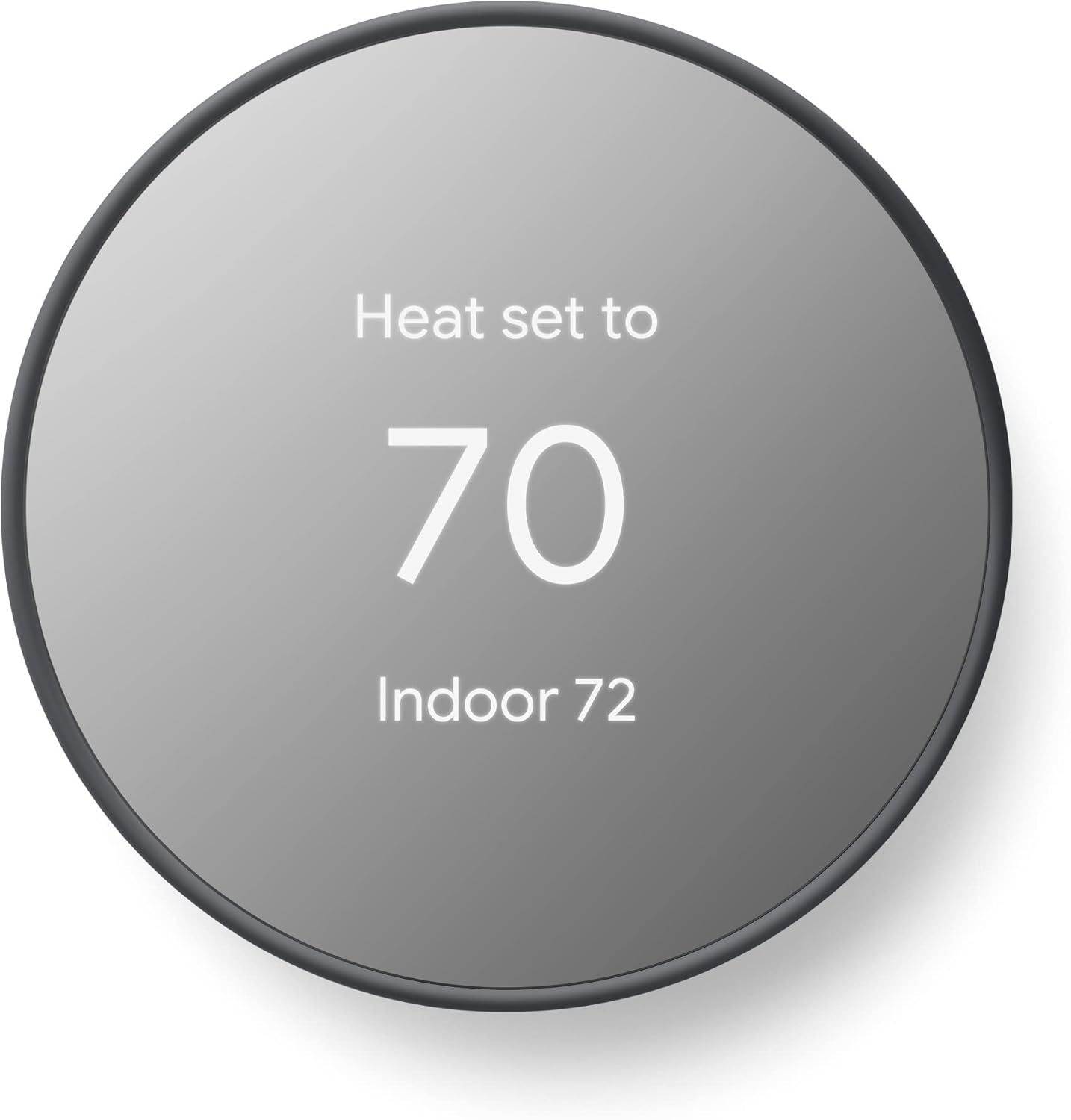
Google Nest Thermostat
| Connectivity Technology | Bluetooth, Wi-Fi |
|---|---|
| Power Source | Battery Powered |
| Display Type | LCD |
| Control Type | Remote Control, Voice Control |
The Google Nest Thermostat is a compact, user-friendly smart thermostat designed to simplify temperature control and reduce energy use. It connects to 2.4 GHz and 5 GHz Wi‑Fi and Bluetooth Low Energy so you can control it from the Google Home app or with voice assistants. Installation is intended for DIY and typically takes less than 30 minutes for compatible systems, and the device can operate without a C‑wire in most homes. In daily use it supports remote control, scheduling through Quick Schedule, and automated Eco Temperatures when the house is empty, while Savings Finder suggests schedule tweaks to help lower consumption. It also monitors HVAC performance and can send alerts if something seems off. The thermostat runs on two A batteries and uses a simple side swipe control plus an LCD display. Limitations include compatibility gaps with certain 110V/120V or unusual HVAC setups where a C‑wire or power accessory may be required, and advanced energy features depend on account setup and working internet. For risk‑averse buyers the Nest offers a familiar brand ecosystem and straightforward setup, but check system compatibility before buying.
Best for: Buyers who want a straightforward, brand-backed smart thermostat that is easy to set up and integrates with common smart home assistants while prioritizing energy savings and simple remote control.
Less Ideal for: Homes with nonstandard or high-voltage HVAC systems or buyers who need a thermostat that operates entirely offline without any app or cloud dependency.
- Remote control and scheduling via Google Home app for convenient temperature adjustments from anywhere
- Works with major voice assistants and Matter-certified devices for hands-free control
- Designed for easy DIY installation and often works without a C wire
- Energy-saving features like Eco Temperature and Savings Finder help reduce energy use
- HVAC monitoring sends alerts that can catch potential system issues early
- Not compatible with some high-voltage or uncommon HVAC systems and may require a C wire or power accessory
- Advanced features and alerts require working internet, Wi‑Fi, and a Google account
Verdict: Choose the Nest Thermostat if you want an easy-to-install, app- and voice-controlled programmable thermostat that focuses on simple energy savings and smart home integration.
Choosing the Right Programmable Thermostat: Key Factors to Consider
HVAC System Compatibility
Ensure the thermostat supports your specific heating and cooling setup. Different systems—single-stage furnaces, heat pumps, multi-stage systems, or systems that rely on proprietary control wiring—require particular terminal support. Choosing a thermostat that lacks the necessary terminals can prevent basic functions or require an adapter or professional rewire.
Compatibility matters because improper pairing can cause short cycling, inability to control all stages, or loss of fan control. Confirm terminal labels and wiring diagrams before buying and, when in doubt, inspect the existing thermostat wiring or consult the system's documentation.
Power and Wiring Requirements
Thermostats often need a common power connection to run displays and digital functions. Some programmable models run on batteries alone, while others require a C-wire for reliable power. If your home lacks a C-wire, you must choose a battery-operated model, use a C-wire adapter kit, or plan for a professional C-wire installation.
Power strategy affects stability and feature availability. Battery-only units may lose settings if batteries fail and can limit display brightness or backlight options. Hardwired units typically provide more consistent behavior and support advanced features like humidity monitoring or remote connectivity.
Scheduling Options and Flexibility
Look at how many daily program slots the thermostat supports and whether it allows separate weekday and weekend schedules. Some units offer multiple setpoints per day, differing schedules for each day of the week, or simple weekday/weekend profiles. The complexity you need depends on your routine: families with varying schedules benefit from per-day programming, while single-occupant homes may prefer simpler weekday/weekend setups.
Also consider features like gradual setback, hold functions, and vacation modes. These options let you temporarily override schedules without losing your baseline programming and can prevent discomfort or wasted energy during extended absences.
User Interface and Ease of Use
A clear display and intuitive controls determine whether you will actually use the programmable features. Touchscreens, tactile buttons, and readable fonts matter when you are adjusting setpoints or programming schedules. Menus should be logical and walk you through common tasks like setting time, selecting temperature offsets, and creating daily schedules.
Look for on-screen prompts, labeled buttons, and accessible help text. If the thermostat will be used by multiple household members, a simpler interface reduces accidental changes and makes it easier for everyone to operate.
Energy Saving and Control Features
Programmable thermostats provide savings through scheduled temperature setbacks and features that avoid heating or cooling an empty home. Check for programmable setback percentages or discrete temperature steps, and whether the unit supports maximum and minimum temperature limits to prevent extreme settings.
Additional energy features to value include adaptive recovery (reaching the target temperature by the programmed time), vacation scheduling, and simple integration with home automation rules. These capabilities determine actual energy savings and convenience over time.
Installation Complexity and Serviceability
Assess how straightforward the physical installation will be and whether the thermostat's faceplate and wiring terminals are designed for clear, secure connections. Some models have compact wiring areas that make it hard to fit multiple conductors, which can complicate retrofit installations. If you need professional installation, factor that into your planning.
Serviceability covers documentation, availability of user guides, and replaceable parts like faceplates or batteries. Thermostats with clear wiring diagrams and accessible support resources reduce installation mistakes and make future troubleshooting easier.
Wiring Checklist Before You Buy
Before selecting a programmable thermostat, identify the terminals and wires on your current thermostat. Turn off power to the HVAC system, remove the cover, and take a photo of the wiring for reference. Note labels such as R, Rc, Rh, W, Y, G, and C; these correspond to power, heat call, cool call, fan, and common power connections.
- Match terminal labels on the new thermostat to your existing wiring.
- If you have separate Rc and Rh wires, confirm whether a jumper is needed.
- If there is no C-wire, decide between a battery-powered unit or adding a C-wire or adapter.
Programming Tips for Maximum Savings
Use setback schedules when the house is unoccupied or during sleep hours. Small setbacks of 3 to 5 degrees for several hours can yield consistent savings without compromising comfort. Program gradual recovery periods so the system has time to reach the desired temperature by the scheduled time rather than blasting immediately before occupancy.
Many homeowners benefit from a weekly program with distinct weekday and weekend profiles. Test your schedule for a week and adjust setpoints and times to match real occupancy patterns.
- Prefer gradual setpoint changes to reduce system strain.
- Use vacation mode for extended absences to maintain low consumption.
- Avoid frequent manual overrides that defeat the programmed schedule.
Installation Options and When to Hire a Pro
If your system has straightforward wiring and a common wire, many programmable thermostats are user-installable with a screwdriver and the included instructions. Use the manufacturer wiring diagram and label each wire during removal. Keep power off to avoid shorting the control board.
Hire a professional if your system uses unconventional wiring, if you are uncomfortable working with low-voltage wiring, or if your system requires a bridging module or transformer work. A pro can verify compatibility and ensure the thermostat controls all HVAC stages correctly.
- DIY installation is reasonable for homeowners with basic wiring skills.
- Call a technician for heat pump systems with auxiliary heat or multi-stage control.
- Consider professional help if your wiring labels do not match common terminals.
Maintaining Your Programmable Thermostat
Change batteries on battery-backed units according to the manufacturer schedule and test that saved programs persist after battery replacement. Keep the thermostat free of dust and do not cover it with furniture or thick curtains that affect temperature sensing.
Periodically review the programmed schedule to reflect changes in occupancy, seasons, or lifestyle. Check wiring connections if you notice inconsistent behavior and consult installation documentation when troubleshooting.
- Replace batteries annually or when low-battery alerts appear.
- Avoid placing the thermostat near vents, direct sunlight, or drafts.
- Recheck settings at season change to align with heating or cooling needs.
How We Chose the Best Programmable Thermostat
Our editorial process targeted programmable thermostats that deliver reliable scheduling, straightforward installation, and broad system compatibility. We prioritized units that offer flexible daily and weekly program options, clear on-device controls, and durable hardware likely to stay accurate over years of use. Usability was a major filter: we favored thermostats with intuitive menus, clear displays, and easy program setup so homeowners can actually use the energy-saving features. We assessed connectivity and compatibility with common HVAC wiring, including support for single-stage and multi-stage systems, heat pumps, and systems that require a common wire. Energy control features such as setback scheduling, vacation modes, and minimum/maximum temperature limits were evaluated for practical energy savings. Build quality, warranty terms, and serviceability were also considered. Exclusions included devices that are not programmable (single setpoint thermostats), units lacking necessary wiring documentation, and thermostats intended exclusively for commercial applications. The final picks reflect a balance of installation practicality, scheduling capability, and long-term reliability.
Our full evaluation process is outlined in our review methodology.
FAQ
Will a programmable thermostat work with my furnace?
Often it will, but it depends on your furnace control wiring. Most residential furnaces use standard low-voltage terminals that programmable thermostats support. Confirm terminal labels and wiring before purchasing.
Do I need a C-wire for a programmable thermostat?
Sometimes. Battery-operated programmable models exist, but many digital units require a C-wire for reliable power. If you lack a C-wire, options include battery-only units, adding a C-wire, or using a power adapter.
Can I program different temperatures for each day?
Yes, many programmable thermostats provide separate schedules for individual days, while others offer weekday and weekend profiles. Choose a model with per-day programming if your household schedule varies throughout the week.
How much can scheduling actually save on energy bills?
Savings vary based on local climate, thermostat setbacks, and occupancy patterns. Small, consistent setbacks during unoccupied hours often produce noticeable savings over time, especially when used year-round.
Will installing a programmable thermostat void my HVAC warranty?
Usually not, but it depends on the HVAC system warranty terms. Simple thermostat swaps rarely affect warranties, yet if installation requires altering the system wiring or control board, consult your system documentation or service provider first.
Final Verdict
Prioritize compatibility and schedule flexibility when choosing a programmable thermostat. Confirm wiring and power requirements first, then match the unit's programming capabilities to your daily routine for the best balance of comfort and savings. Simpler interfaces reduce user error, while advanced setback and recovery features increase actual energy savings. Choose a thermostat that fits your system wiring and delivers the scheduling options you will consistently use. That approach ensures reliable comfort control and measurable efficiency over time.