
Note: This article contains affiliate links. If you click on these links and make a purchase, we may earn a small commission at no extra cost to you. This helps support our research and content. Read our full affiliate disclosure here.
Picking the right air purifier for a 300 square foot room matters because capacity, filtration type, and airflow determine real-world performance. In rooms this size you want a unit that can move air quickly enough to reach recommended air changes per hour while still running quietly and efficiently. This guide shortlists the top options for a 300 sq ft space and explains the practical factors that affect performance, maintenance, and noise. Read on to see the picks and how we evaluated them against metrics that matter for everyday home use.
Top Picks at a Glance
| Best Quality Built to a higher standard if you want something more solid | COWAY Airmega 50 |  |
| Best Value The sweet spot between price and what you get | Wozoyo Pure Air PA1 |  |
| Best Budget The cheapest option that still gets the job done reliably | MOOKA M01 Air Purifier |  |
| Most Popular A crowd favorite that many people choose with confidence | VOOPNU Air Purifier DH-JH12 |  |
| Best Seller A high-volume bestseller chosen again and again | Levoit Core Mini-P |  |
COWAY Airmega 50

| Coverage | Up to 250 sq ft in 30 minutes; up to 500 sq ft in 60 minutes |
|---|---|
| Filtration | Pre-filter, deodorization (activated carbon), HEPA (99.97% at 0.3 μm) |
| Sensor | PM10 particle sensor with AQI monitor |
| Noise level | As low as 18 dB (Sleep Mode) |
The Coway Airmega 50 is a small, performance-focused air purifier built for bedrooms and medium rooms where steady particle and odor removal matter. It uses a three-stage filtration stack—pre-filter, deodorization (activated carbon) filter, and HEPA—to capture 99.97% of 0.3-micron particles and reduce common VOCs and odors, with lab testing cited for allergens and gas reduction. A built-in PM10 sensor and AQI display let the unit adjust fan speed automatically in Auto Mode, and you can also set low, medium, or high manually. Noise is subdued in Sleep Mode, with lights off and an optional night light for comfort. Practical benefits include quick coverage—advertised to clean 250 sq ft in 30 minutes and 500 sq ft in 60 minutes—and straightforward filter replacement indicators. Limitations are its modest physical size and airflow relative to larger models, so it may run higher fan speeds for continuous heavy pollution and its lab-tested contaminant reductions may vary in real homes.
Best for: Buyers who prioritize measurable particle and odor reduction in medium bedrooms or living spaces and want an automatic AQI-driven purifier that runs quietly at night.
Less Ideal for: People needing continuous heavy-duty filtration for open-plan areas larger than 500 sq ft or for industrial smoke and high-volume particulate loads.
- Three-stage filtration including HEPA and activated carbon for particles and odors
- Built-in PM10 sensor and AQI display with Auto Mode for hands-off adjustment
- Rated coverage for 250 sq ft in 30 minutes and 500 sq ft in 60 minutes for medium-room performance
- Whisper-quiet Sleep Mode with lights-off operation and optional night light
- Simple manual fan speeds and filter replacement indicator for easy maintenance
- Coverage times are achieved under test conditions and real-world performance depends on room layout and pollutant levels
- Smaller cabinet and airflow compared with larger units may require higher fan speeds to handle heavy smoke or very large particle loads
Verdict: Choose the Airmega 50 when you want a quiet, AQI-driven HEPA purifier that can reliably clean medium rooms up to 300–500 sq ft.
Wozoyo Pure Air PA1

| Coverage | Up to 300 ft² (1 ACH) |
|---|---|
| CADR | 40 CFM |
| Filtration | Pre-filter, True HEPA, Activated carbon |
| Noise level | ≥ 22 dB |
| Fan speeds | 3 speeds |
The Wozoyo Pure Air PA1 is a compact tabletop purifier built to improve air in rooms up to about 300 sq ft using a 3-in-1 system: pre-filter, True HEPA, and activated carbon. It moves roughly 40 CFM with three fan speeds and 3D airflow to circulate air, and AHAM verification gives independent confirmation of its performance. In practice the unit is quiet enough for bedrooms or home offices, with low noise operation down to about 22 dB, and the small footprint makes it easy to place on a desk or nightstand. The activated carbon layer helps with everyday odors and mild smoke while the HEPA layer captures PM2.5 and pet dander. Limitations include modest airflow that suits single rooms rather than open-plan areas and the compact filter means replacement frequency will depend on heavy use or smoky/pet-heavy environments. There is no app or smart integration, so control is manual at the unit.
Best for: Buyers who want a proven, compact purifier to keep air clean in a single bedroom, home office, or similar 300 sq ft space and who prioritize verified performance and low noise.
Less Ideal for: People needing whole-home coverage or faster air changes in large open-plan living areas should consider higher-CFM units instead.
- AHAM-verified performance testing for reliable room coverage
- True HEPA plus activated carbon for particle and odor removal
- Quiet operation suitable for bedrooms and work desks
- Compact footprint that fits small rooms and surfaces
- Airflow (40 CFM) is sized for single rooms and won’t refresh large open areas quickly
- No smart features or remote control for scheduled operation
Verdict: A compact, AHAM-verified HEPA purifier that delivers quiet, reliable air cleaning for a single room up to about 300 sq ft.
MOOKA M01 Air Purifier

| Model | M01 |
|---|---|
| Coverage | 430 ft² |
| Filter type | H13 HEPA |
| Power | USB-C powered |
| Noise level | 15 dB sleep mode |
The MOOKA M01 is a compact USB-powered air purifier designed for desks, bedrooms, dorms and other small spaces up to about 430 sq ft. It uses a 3-stage filtration system with an H13 HEPA filter to capture dust, pollen, smoke, pet dander and odors, and offers four fan speeds plus an ultra-quiet 15 dB sleep mode for night use. Practical extras include an aroma pad, a timer, soft night light, child lock and a filter replacement indicator, and the unit runs from a USB-A to USB-C cable so it can be powered from a laptop, adapter or power bank. For buyers focused on budget, the M01's small footprint and low power draw make it inexpensive to run and easy to move between rooms or travel with. The main limitations are its compact size — meaning the actual clean air delivery will be lower than larger room purifiers — and the need to replace filters every few months under heavier use. Still, for personal spaces and light-to-moderate pollution this unit balances performance and affordability well.
Best for: Buyers who need an inexpensive, portable purifier for a bedroom, desk or small living area and prioritize quiet, low-power operation and simple features.
Less Ideal for: Those needing sustained high-capacity purification for large open-plan rooms or heavy smoke and wildfire events should consider a larger, higher-CADR unit instead.
- H13 HEPA filter captures fine particles like pollen, smoke and pet dander.
- Very quiet 15 dB sleep mode suitable for nightstands and bedrooms.
- USB-C power and wide voltage support for flexible, low-power use.
- Aroma function, timer and child lock add convenience and safety for family use.
- Compact size limits maximum room purification compared with full-size units.
- Filter requires periodic replacement every 3–6 months depending on use.
Verdict: A budget-friendly, ultra-quiet desktop purifier that delivers effective H13 HEPA filtration for bedrooms and other small spaces up to ~300–430 sq ft.
VOOPNU Air Purifier DH-JH12

| Coverage (lab) | 250 sq ft per 15 minutes / 1,076 sq ft per hour |
|---|---|
| Filter | H13 True HEPA multi-layer |
| Noise level | 22 dB (low) |
| Fan speeds | 3 speeds |
| Model number | DH-JH12 |
The VOOPNU DH-JH12 is a compact air purifier built around an H13 true HEPA multi-layer filter and 360 degree intake to capture common indoor pollutants like pet hair, pollen, smoke, and odors. It is typically placed on a desk or nightstand and run continuously to maintain cleaner air; the manufacturer reports it can clean about 250 sq ft every 15 minutes and cover up to 1,076 sq ft per hour in lab testing, which makes it well suited for a 300 sq ft room. Controls are simple with three fan speeds, a timer, and a quiet low setting down to about 22 dB for overnight use, and an essential oil tray lets you add fragrance. The unit is small and energy efficient and carries multiple safety and performance certifications. Limitations include the need to replace filters on a regular 3–6 month cycle and the modest physical size that may require positioning near pollution sources for best results; features like smart connectivity or advanced air-quality auto modes are not present. For buyers wanting straightforward, quiet HEPA filtration in bedrooms or living rooms, this model is practical and easy to use.
Best for: Buyers who rely on peer reviews and certifications and want a straightforward, quiet HEPA purifier that demonstrably cleans a typical 300 sq ft room with minimal setup or learning curve.
Less Ideal for: Users who want integrated smart-home controls, advanced sensors with automatic operation, or a unit sized for very large open-plan areas.
- H13 true HEPA multi-layer filtration captures 99.97% of fine particles
- 360 degree air intake improves room circulation
- Very quiet operation down to 22 dB for sleep-friendly use
- Compact footprint fits on desks, nightstands, or small corners
- Simple controls with three speeds, timer, and aroma tray for essential oils
- Requires regular filter replacements on the recommended 3–6 month cycle
- No smart features or automatic air-quality sensing to adjust fan speed
Verdict: A compact, quietly running HEPA purifier that delivers proven particle removal for a 300 sq ft room and is ideal for buyers favoring straightforward, certified performance.
Levoit Core Mini-P
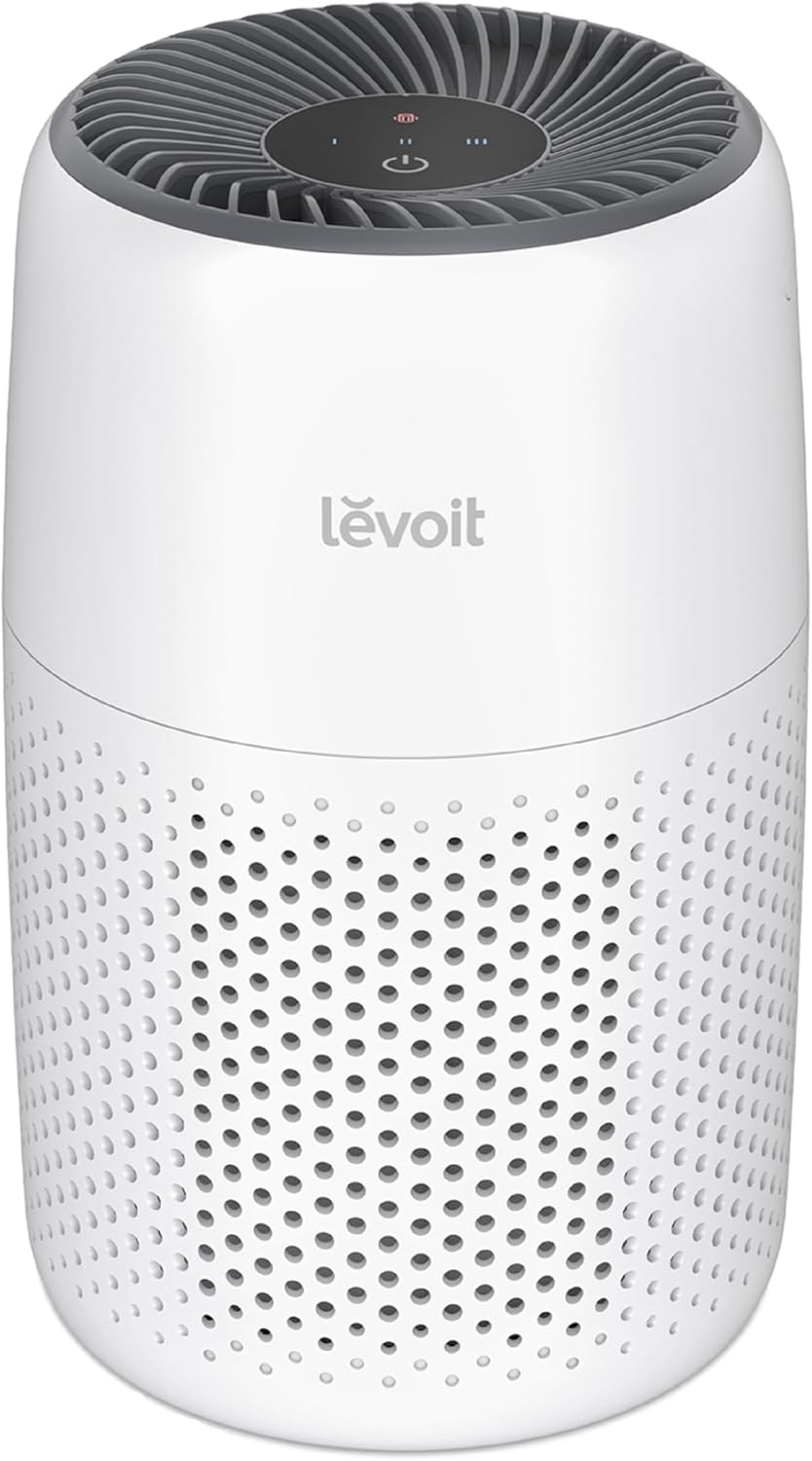
| Rated Power | 7W |
|---|---|
| Noise Level | 27-45dB |
| Adapter Input | 100-240V, 50/60Hz |
| Particle Retention Size | 0.3 micron |
The Levoit Core Mini-P is a small, plug-in tabletop air purifier intended for bedrooms, offices, or other small spaces where you want quieter, continuous air cleaning. It uses a pre-filter plus a main high-efficiency filter to capture lint, pet hair, dander, smoke and fine particulates, and it includes an aromatherapy sponge for light scenting. Practical features include a sleep mode and an auto-off display so the unit is less intrusive overnight, and measured noise is very low on the lowest setting. The purifier runs on low power (around 7W) and ships with an internal adapter. For a space under about 300 sq ft it can provide discreet local circulation and odor reduction, but because it is a compact unit you should not expect rapid clearing of heavy smoke or very large rooms. Also the aromatherapy feature requires only a few drops of essential oil to avoid overflow or plastic damage. If you want a quiet, energy-efficient purifier for a single small room, this model is a convenient choice; if you need whole-room fast turnover or heavy-duty smoke removal, a larger unit is better suited.
Best for: Buyers who prioritize quiet, energy-efficient air cleaning for a single bedroom or office and want a low-maintenance, easy-to-place purifier.
Less Ideal for: People seeking fast whole-room turnover for large living rooms or those needing industrial-strength smoke or allergen removal should choose a larger-capacity purifier.
- Compact footprint fits on a desk or nightstand
- Pre-filter plus main HEPA-grade filter captures pet dander, dust and smoke particles
- Very low noise in sleep mode for overnight use
- Low power draw (about 7W) and auto-off display reduce operating impact
- Small unit is not optimized for rapid cleaning of large rooms or heavy smoke
- Aromatherapy requires careful dosing to avoid overflowing and damaging plastic parts
Verdict: A tiny, whisper-quiet purifier that delivers efficient, low-power air cleaning for a single small room up to about 300 sq ft.
Choosing the Right Air Purifier for 300 Sq Ft: Key Factors to Consider
Room Coverage and CADR
Room coverage rating alone can be misleading, so focus on CADR (clean air delivery rate) numbers for smoke, pollen, and dust. CADR gives an estimate of how quickly an air purifier will reduce airborne particles in a space. For a 300 sq ft room you generally want a CADR that supports at least two to four air changes per hour depending on occupant sensitivity and source strength.
Higher CADR means faster cleaning, but higher fan speeds also raise noise and energy use. Match CADR to the room layout and the locations of pollutant sources to get reasonable performance without always running the unit at maximum speed.
Filtration Technology and Efficiency
A true HEPA mechanical filter is the most reliable way to capture fine particles down to 0.3 microns. Check that the purifier uses a certified HEPA or equivalent filter media and whether it also includes prefilters for large particles and activated carbon layers for odors and VOCs. Filtration efficiency affects allergy relief and particulate reduction more than extra features.
Combined filter stages work best for homes with both allergy and odor concerns. Be cautious of units that rely primarily on ionizers or ozone-generating technologies, as those do not substitute for mechanical HEPA capture and can introduce other air-quality issues.
Noise Levels and Nighttime Use
Noise matters when the device will run in living rooms or bedrooms. Manufacturers often publish decibel ratings at different fan speeds. Compare the low and typical operating noise levels to ensure the unit can run quietly overnight while still providing meaningful air changes. Features like sleep mode, dimmable displays, and lower minimum fan RPMs improve bedside usability.
Remember that perceived loudness is also affected by room acoustics and placement. A unit that is mildly audible in a large open plan area may be intrusive in a small bedroom, so check how noise scales across the fan speed range.
Energy Use and Fan Control
Because purifiers often run many hours each day, power draw determines ongoing electricity cost and practical running strategies. Look for models with efficient motors, multiple fan speeds, and programmable schedules or timers to limit runtime when heavy filtration is not needed. Variable-speed controls let you balance noise, airflow, and energy use throughout the day.
Smart controls and sensors can help by increasing fan speed only when particles are detected, but sensor accuracy and placement affect how well that feature saves energy in practice.
Filter Life and Replacement Costs
A low upfront cost can be offset by frequent filter replacements, so estimate annual maintenance costs when comparing options. Manufacturers typically present filter life in months under moderate use, but actual life depends on local pollution levels and runtime. Prefilters that are washable or inexpensive to replace can extend the life of the HEPA element.
Also consider how easy it is to access and swap filters. Models that require specialized tools or lengthy disassembly increase the friction of maintenance and can discourage timely filter changes.
Placement, Size, and Aesthetics
Physical dimensions and weight affect where you can place a purifier in a 300 sq ft room. A unit with a compact footprint and clean intake and exhaust paths is easier to position for effective circulation. Placement near pollutant sources or along common air paths improves performance more than simply choosing a higher-rated but poorly placed unit.
Aesthetics and interface design matter for spaces where the purifier will be in view. If the unit sits in a bedroom or living room, quieter displays, subdued lighting, and neutral styling reduce daily friction.
How Much CADR Do You Actually Need?
For a 300 sq ft room, calculate target CADR by considering desired air changes per hour. Aiming for two to four air changes per hour is common: multiply room volume by desired ACH, then divide by 60 to get the required cubic feet per minute. Many manufacturers list square-foot coverage instead of CADR, so cross-check both when possible.
Practical use cases change targets. If someone in the room has allergies or you expect frequent cooking or pet dander, lean toward higher CADR and accept higher fan noise during peak events. For routine background cleaning, a lower CADR running continuously may be quieter and just as effective over longer periods.
- Higher CADR cleans faster but typically increases noise.
- Aim for at least 2 ACH for general use, 4 ACH for sensitive occupants.
- Check CADR for the particle type you care about most.
Placement Tips for Best Circulation
Place the purifier where airflow is not blocked by furniture or walls. Ideally the intake and exhaust should have several inches of clearance, and the unit should be located near where pollutants originate, such as a bed, pet area, or cooking zone. Corner placements reduce effectiveness, while centralized placement or along the path between source and occupied area improves clean-air delivery.
- Avoid placing directly against walls or behind curtains.
- Keep at least 12 inches clearance on intake and exhaust sides.
- Consider elevating smaller units to improve room mixing.
Using Sensors and Auto Modes Effectively
Auto modes driven by particle sensors can reduce noise and energy use by increasing fan speed only when pollution rises. However, sensor placement and calibration matter. If the sensor is blocked or sits far from pollutant sources, the unit may not respond when needed. Use auto mode for day-to-day convenience but verify occasional manual boosts after activities like cooking or vacuuming.
For allergy sufferers, pair sensors with scheduled high-speed runs in the early morning or before guests arrive to ensure particle loads are reduced proactively.
- Auto mode is best as a baseline, not a complete replacement for manual checks.
- Run short high-speed cycles after known pollutant events.
- Clean sensors per manufacturer guidance to maintain accuracy.
Maintenance Habits That Keep Performance High
Regularly check and replace filters according to the usage pattern in your home rather than merely following the calendar. A heavily used purifier in a polluted environment will need more frequent filter changes. Clean or vacuum prefilters if the design allows, and wipe exterior vents to prevent dust buildup that constrains airflow.
Track filter replacements and keep spare filters on hand if the unit is critical for health needs. Proper maintenance preserves CADR and keeps noise from increasing as the fan works harder against clogged media.
- Inspect prefilters monthly in high-dust homes.
- Record replacement dates to predict future needs.
- Use only recommended filter types to preserve filtration claims.
Balancing Noise, Power, and Effectiveness
Choosing the right fan speed profile matters. Low speed minimizes noise but delivers slower cleaning. High speed maximizes CADR but can be disruptive. Look for units with a broad speed range and a low minimum that still provides reasonable air changes. Consider setting a quiet baseline overnight and scheduling daytime boosts when the room is occupied.
Energy-efficient motors and variable-speed fans let you run the purifier more hours with less electricity, so factor runtime into your comfort and cost calculations.
- Use low-speed overnight with occasional high-speed bursts.
- Prefer variable-speed models over single-speed designs.
- Check manufacturer power draw specs for long-term energy estimates.
How We Chose the Best Air Purifier for 300 Sq Ft
We focused on features and measurements that predict how well an air purifier will perform in a 300 sq ft room rather than marketing claims. Key evaluation criteria included measured CADR for smoke, pollen, and dust to estimate cleaning speed; true HEPA filter efficiency and certification to assess particle capture; filter lifespan and replacement cost to estimate ongoing maintenance; fan speed range and power draw to balance noise versus circulation; and additional useful features such as reliable sensors and programmable scheduling for real-world usability. We excluded units sized for much smaller or much larger rooms because capacity mismatch affects both performance and energy use. Units that relied only on electrostatic or ionization without mechanical HEPA capture were deprioritized for typical home allergy and particulate concerns. The list favors models with clear published filtration specs and transparent maintenance requirements so buyers can forecast operating costs and expected performance in a 300 sq ft environment.
Our full evaluation process is outlined in our review methodology.
FAQ
How often should I run an air purifier in a 300 sq ft room?
Often the best approach is continuous low-speed operation for steady background cleaning, with short high-speed cycles when pollutant levels spike. Continuous operation maintains lower average particle counts and avoids long catch-up runs.
Can one purifier handle adjoining rooms if the total area is about 300 sq ft?
It depends on room layout and airflow. Open-plan spaces can be treated as a single volume, but doors and partitions reduce effective coverage. Check CADR and run tests to confirm whether the unit delivers adequate circulation across both areas.
Are activated carbon filters necessary for a 300 sq ft room?
Activated carbon helps remove odors and many VOCs and is useful in kitchens or rooms with smoke or strong smells. For pure particulate removal, a true HEPA filter is sufficient, but carbon layers add versatility for mixed pollution sources.
How do I know when to replace filters?
Follow the manufacturer guidance but also inspect filters visually. Increased noise, reduced airflow, or a decline in perceived performance indicate the filter is nearing its end. Some units include filter-life indicators that estimate remaining service based on runtime.
Will an air purifier reduce humidity or mold growth in a 300 sq ft room?
Air purifiers remove airborne spores and particulate fragments but do not reduce humidity. Controlling humidity with dehumidification and addressing moisture sources is necessary to limit mold growth. Purifiers can help reduce spores in the air but are not a substitute for moisture control.
Final Verdict
For a 300 sq ft room, prioritize a purifier with CADR ratings that match your desired air-change rate and a certified HEPA filtration stage for reliable particle removal. Balance those needs with acceptable noise levels, reasonable filter life, and efficient fan control so the unit can run enough hours to maintain indoor air quality. Decide whether odor or VOC control is important and choose models with activated carbon if needed. Ultimately, match CADR, filtration type, and maintenance expectations to your daily patterns to get the best real-world results.