
Note: This article contains affiliate links. If you click on these links and make a purchase, we may earn a small commission at no extra cost to you. This helps support our research and content. Read our full affiliate disclosure here.
If you spend time commuting, traveling, or working in crowded indoor spaces, a compact wearable air purifier can reduce your exposure to airborne particles and odors. The right wearable unit balances effective filtration with battery life, fit, and user comfort so you can actually wear it during the day. This guide shortlists the top wearable air purifiers currently available and explains the practical tradeoffs that matter for everyday use. Read on for a focused look at our selections and the evaluation points we used to identify them.
Top Picks at a Glance
| Best Overall The best all-around choice for most situations | AirTamer A310 Personal Air Purifier |  |
| Best Quality Built to a higher standard if you want something more solid | AirTamer A320W Personal Air Purifier |  |
| Best Value The sweet spot between price and what you get | TWINKLE BIRDS Wearable Air Purifier JO-2001 |  |
| Best Budget The cheapest option that still gets the job done reliably | SoirFanTlio Portable Air Purifier Necklace |  |
| Top Rated A top-rated pick with lots of positive feedback | 4WDKING Rechargeable Wearable Air Purifier |  |
| Most Popular A crowd favorite that many people choose with confidence | Ruishenger Mini Rechargeable Air Purifier |  |
| Best Seller A high-volume bestseller chosen again and again | Electric Wearable Air Purifier Mask |  |
AirTamer A310 Personal Air Purifier

| Model | A310 |
|---|---|
| Battery | 1 Lithium Polymer battery (included) |
| Run time | 150+ hours |
| Includes | Adjustable lanyard and metal travel case |
The AirTamer A310 is a lightweight, necklace-style personal air purifier that uses electrostatic ion emission to push particles away from your breathing zone without fans or replaceable filters. It is designed to be worn or set nearby for use while commuting, traveling, at the office, or bedside, and the included adjustable lanyard with safety breakaway makes it easy to carry. Notable features include claimed lab testing against certain viruses, a long single-charge runtime (rated at 150+ hours), silent operation, and a metal travel case for protection. Because it uses ionization there are no filters to buy or clean, which simplifies maintenance, but its effective coverage is limited to the immediate breathing area rather than whole-room purification. The unit is small and unobtrusive, but like other wearable ionizers it cannot replace a room air purifier for dense smoke, heavy allergens, or large spaces, and efficacy in real-world, variable environments may vary from lab results. It is a convenient, low-maintenance option for day-to-day personal use where modest local particle reduction is the goal.
Best for: Buyers who want a low-maintenance, portable way to reduce local airborne particles while commuting, traveling, or working in close quarters and who value long battery life and simplicity.
Less Ideal for: People seeking true whole-room purification, heavy allergen or smoke removal, or medically necessary air filtration should choose a full-size HEPA or activated-carbon purifier instead.
- Ultra-light, wearable design for hands-free use
- No filters to replace or clean
- Very long claimed battery life on a single charge
- Silent operation with no fan noise
- Includes adjustable lanyard and metal travel case for protection
- Purification is limited to the immediate breathing zone and not whole-room coverage
- Effectiveness can vary in real-world conditions compared with lab tests
Verdict: A convenient, maintenance-free wearable purifier for travelers and commuters who want modest localized air cleaning and very long battery life.
AirTamer A320W Personal Air Purifier

| Item model number | A320W |
|---|---|
| Batteries | 1 Lithium Polymer (included) |
| Manufacturer | AirTamer |
| Date First Available | July 18, 2019 |
The AirTamer A320W is a compact, rechargeable wearable purifier that emits negative ions to reduce particles and tested viruses within the user's immediate breathing zone. It is worn on an adjustable conductive lanyard or placed nearby on a bedside table, and runs silently without fans or replaceable filters. The unit is built for mobility and long runtimes, with the manufacturer claiming 150+ hours per charge and including a USB charging cable and leather travel case. Independent lab testing cited by the brand reports rapid reduction of Influenza A and MS2 bacteriophage in 20 minutes, and the device is CARB approved with zero ozone emission. Practical benefits include near-silent operation, very low maintenance since no filters are needed, and a small form factor that makes it easy to wear on commutes or bring while traveling. Limitations are that performance is concentrated around the wearer rather than cleaning a whole room, and ion-based purifiers work differently from filter-based systems so they do not capture and remove particulates in the same way.
Best for: Buyers who prioritize portable, low-maintenance personal protection and need a long-running, unobtrusive purifier to wear or place nearby during travel and daily commutes.
Less Ideal for: Those looking to clean air across a whole room or who require HEPA-style mechanical filtration for allergen removal should consider room air purifiers with true filters instead.
- Rechargeable with long claimed runtime of 150+ hours per charge
- Silent operation with no fan or moving parts
- No filters to replace, reducing ongoing maintenance
- Includes adjustable conductive lanyard and leather travel case for travel use
- Purifies only the immediate breathing zone rather than whole-room air
- Uses ion emission rather than mechanical filtration, so it does not physically capture particles
Verdict: Choose the AirTamer A320W when you want a lightweight, long-running wearable purifier that delivers a personal sphere of cleaner air with minimal upkeep.
TWINKLE BIRDS Wearable Air Purifier JO-2001

| Battery life | About 10 hours |
|---|---|
| Charging time | About 1 hour |
| Power consumption | ≤0.5W |
| Negative ion concentration | 5,000,000 pcs/cm3 |
This compact wearable air purifier is designed to be worn around the neck or placed nearby to boost local negative ion concentration and reduce airborne particles like dust, pollen, and smoke. It delivers a continuous stream of negative ions, claims a very high ion concentration, and runs quietly with low ozone output, which makes it suitable for use at a desk, on public transit, or near a baby stroller. The unit charges in about an hour via USB and provides roughly 10 hours of operation on a single charge, and it does not require filter replacements so maintenance is minimal. Practical features include a safety breakaway lanyard and an indicator light for operating status. Keep in mind this is a personal, travel-size device that treats the immediate breathing zone rather than purifying an entire room, and its effectiveness depends on negative-ion technology rather than HEPA filtration, which may not capture all virus-sized particles or deliver measurable room-level clean-air delivery rates.
Best for: Buyers who want a low-maintenance, portable personal air device for travel, commuting, or desktop use and prioritize long runtime and quiet, wearable operation.
Less Ideal for: People seeking whole-room air cleaning, certified filtration performance, or HEPA-grade particle removal should consider conventional room purifiers instead.
- Rechargeable with about 10 hours of runtime after roughly 1 hour of charging
- No filter replacements required, lowering ongoing maintenance
- Ultra-quiet operation with low ozone emission for close-proximity use
- Lightweight and wearable design with a safety breakaway lanyard
- Uses negative-ion emission rather than HEPA filtration, so it is limited to treating the immediate breathing zone
- Manufacturer ion concentration claims are high but do not translate to standard room Clean Air Delivery Rate metrics
Verdict: Choose this wearable purifier if you need a lightweight, low-maintenance personal device with long battery runtime for travel and close-proximity use.
SoirFanTlio Portable Air Purifier Necklace

| Negative ion output | 1.2 billion |
|---|---|
| Model number | Ap-1200n |
| Rechargeable | Yes, USB charging |
This necklace-style personal purifier produces a very high negative ion output intended to neutralize airborne particles in the immediate breathing zone. It is small and lightweight, intended to be worn around the neck for continuous local purification while commuting, traveling, or spending time in crowded indoor spaces. Controls are simple—a single touch button with LED indicators—and the unit includes a rechargeable battery charged by USB for repeat use without disposable filters. The design targets reduction of PM2.5, smoke, and similar pollutants rather than whole-room cleaning, so you should expect benefits only in close proximity. The lack of a HEPA filter and reliance on ion generation means it does not capture particles in the same way as filter-based purifiers, and effectiveness can vary with airflow and environmental conditions. For buyers wanting an inexpensive, portable layer of defense in busy or smoky settings, this is a convenient option; those needing true room-scale filtration should choose a filter-based device instead.
Best for: Buyers looking for an inexpensive, portable way to reduce nearby airborne particles while commuting, traveling, or spending time in crowded indoor spaces and who prioritize mobility over whole-room cleaning.
Less Ideal for: Users who need verified, room-scale filtration or allergy-grade particle removal should choose a filter-based air purifier instead.
- Very high negative ion output (1.2 billion) for stronger local ionization
- Compact, lightweight wearable design for continuous on-the-go use
- Simple one-touch control with LED status indicators
- Rechargeable battery with USB charging avoids disposable parts
- Uses ion generation rather than a HEPA/filter system, so it does not physically capture particles
- Effectiveness is limited to the immediate breathing zone and not suitable for room-scale purification
Verdict: A budget-friendly wearable purifier that offers portable negative-ion cleaning for your immediate breathing space when you need on-the-go protection.
4WDKING Rechargeable Wearable Air Purifier
| Filter type | Japan H13 HEPA |
|---|---|
| Power source | Rechargeable Lithium Ion battery |
| Runtime | 8-10 hours per full charge |
| Filter life | Continuous 500 hours per filter element |
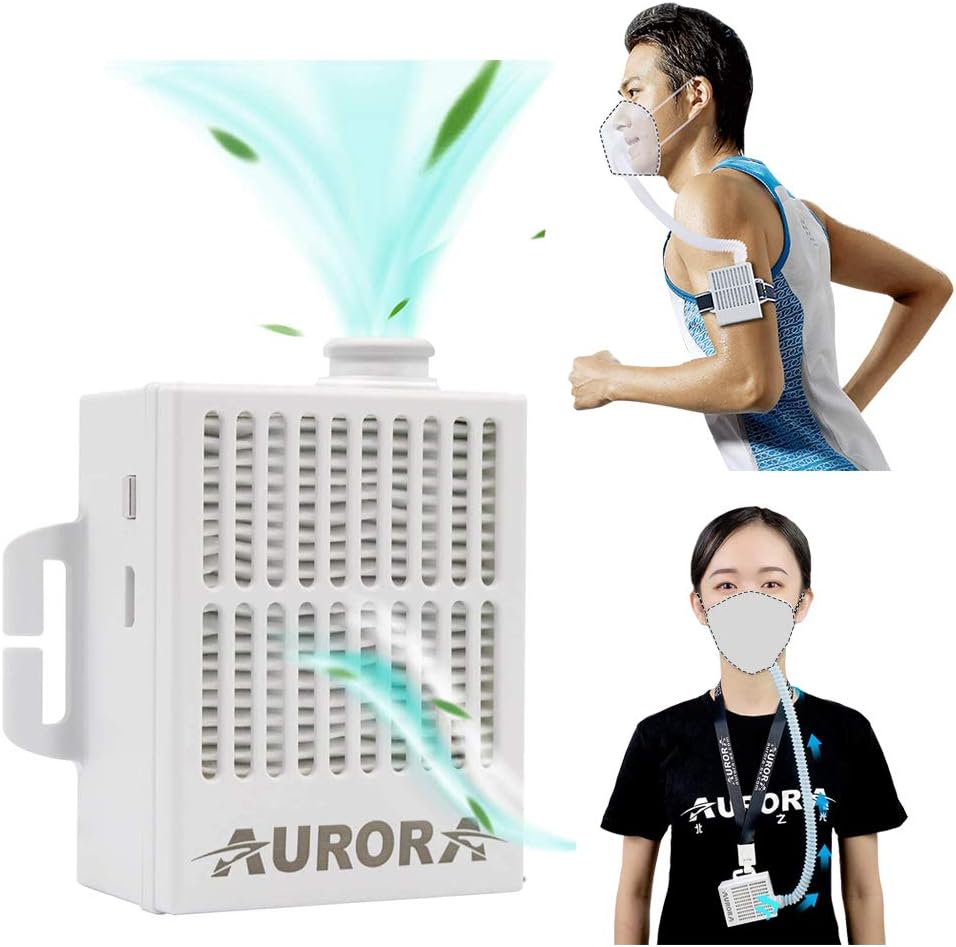
The 4WDKING rechargeable wearable air purifier is a compact personal respirator that combines a small fan-driven ventilation module with replaceable H13-grade filter media. Designed to be strapped to the body or worn near the face, it supplies a continuous stream of filtered air to reduce inhaled dust, pollen, and airborne particles while you sleep, work, or exercise outdoors. The unit is rechargeable and the manufacturer states a single filter element can run up to 500 hours and the battery provides about 8 to 10 hours per full charge with adjustable fan speeds. Practical benefits include low breathing resistance from the active ventilation, high filtration efficiency from the Japan H13 material, and multiple mounting options for hands-free use. Limitations are its small physical size which limits coverage to the immediate breathing zone rather than room-scale purification, and wearable form factors can feel obtrusive during strenuous activity or sleep for some users. Expect routine filter replacements and periodic charging as part of ongoing ownership.
Best for: Buyers who prioritize a reliable, continuously ventilated personal filtration solution for everyday exposure reduction and who value straightforward, long-run filter life and predictable battery runtime.
Less Ideal for: People seeking whole-room air cleaning or a hands-free unobtrusive solution for all-night sleep without any contact on the head or neck should consider other options.
- Uses Japan H13 HEPA filter material for high particulate capture
- Built-in fan reduces breathing resistance for longer comfortable wear
- Rechargeable battery with roughly 8–10 hour runtime per charge
- Adjustable fan speeds and multiple mounting options for flexible use
- Provides personal-zone filtration only and does not clean room air
- Wearable design may be uncomfortable for some users during sleep or vigorous activity
Verdict: A dependable wearable purifier for reliable personal filtration with long filter life and predictable rechargeable runtime.
Ruishenger Mini Rechargeable Air Purifier

| Item model number | DATANGR11 |
|---|---|
| Batteries | 1 Lithium Polymer battery (included) |
| Runtime | 4-6 hours (manufacturer stated) |
| Charge time | Approximately 1 hour |
| Filter | Replaceable 4-layer cartridge |
This small wearable purifier clips to a mask or outer cover and provides battery-powered airflow using a built-in fan and a replaceable 4-layer filter. It charges in about an hour and the manufacturer states a 4–6 hour runtime, with two-speed airflow so you can trade quieter operation for stronger pull when you're active. The unit is marketed for running, cycling, travel, and other outdoor uses and includes a hand-sewn washable outer cover to protect the device and extend its usable life. Practical benefits include true portability, simple recharging, and easy filter swaps for several days of protection per cartridge. Important limitations are its very small size and short filter life—filters are rated in days rather than weeks—so it is not a substitute for home or room air purifiers and will deliver modest particle removal compared with larger HEPA systems. Battery runtime and airflow strength mean it is best used for intermittent outdoor or mobile protection rather than continuous indoor filtration.
Best for: Buyers who want a compact, rechargeable personal purifier for outdoor activities and short periods of added protection and who prioritize portability and easy maintenance.
Less Ideal for: People who need continuous indoor air cleaning, high-volume filtration, or long filter life should choose a full-size HEPA air purifier instead.
- Very light and wearable design for active outdoor use
- Fast recharge with roughly 1-hour charge time and multi-hour runtime
- Replaceable 4-layer filter cartridge for easy maintenance
- Two-speed fan gives control over airflow and noise
- Filter life is short (3–7 days per cartridge) compared with larger purifiers
- Small unit provides limited airflow and filtration compared with room HEPA purifiers
Verdict: A highly portable rechargeable wearable purifier that delivers convenient, short-duration protection for active outdoor use.
Electric Wearable Air Purifier Mask
| Department | Unisex Adult |
|---|---|
| Date First Available | November 12, 2021 |
| Customer Reviews | 4.0 out of 5 stars (1,201) |
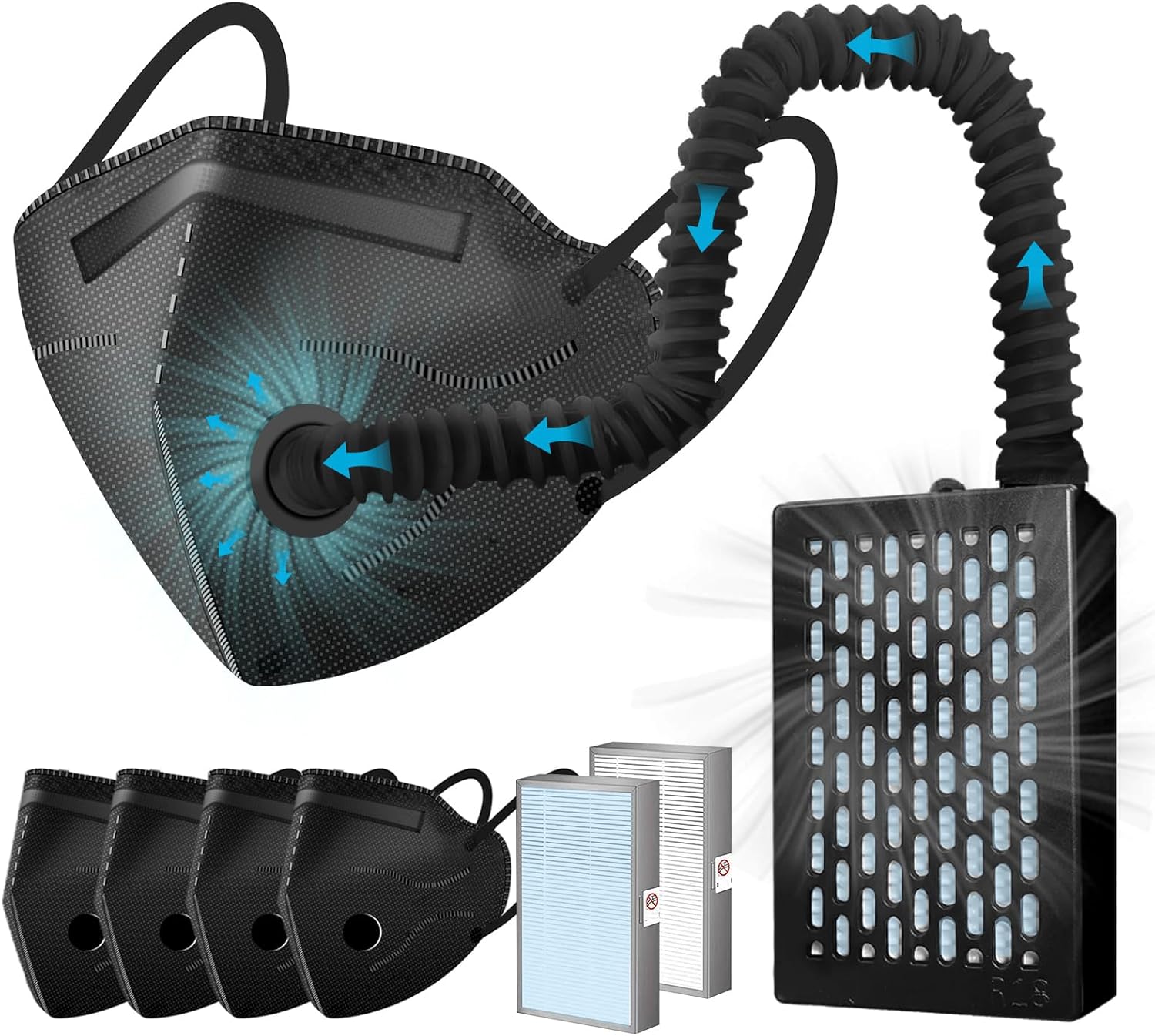
This wearable air purifier mask combines a compact powered air supply with HEPA filtration to reduce inhaled particulates during dusty or fume-prone tasks. It is worn like a face mask with an integrated fan module that forces filtered air toward the breathing zone, which helps keep contaminants out and can make sustained work more comfortable than using a passive respirator. Typical uses include light construction, painting prep, machine polishing, and hobby welding where dust and particulate are the primary concern. The included HEPA-style filter and active air delivery reduce breathing effort and can extend comfortable use time, but the system is not a full powered air-purifying respirator certified for all hazardous gases or heavy industrial exposures. Battery life, replacement filter cost, and fit are practical considerations since a poor seal or exhausted battery will reduce protection. For everyday DIYers and service pros wanting better particulate control than a basic mask, this offers a convenient, wearable upgrade with clearer breathing and filtered airflow.
Best for: People who prioritize straightforward, improved particulate protection for DIY, light trades, or studio work and want a wearable solution that eases breathing during multi-hour tasks.
Less Ideal for: Workers facing heavy chemical fumes, gas hazards, or environments requiring certified respiratory protection should choose industrial-grade PPE instead.
- Active airflow reduces breathing resistance compared with passive masks
- HEPA filtration targets fine dust and particulates common in painting and polishing tasks
- Compact wearable design keeps hands free and suits longer work sessions
- Not described as a certified respirator for gases, vapors, or heavy industrial hazards
- Protection depends on battery power and filter condition which require ongoing replacement and charging
Verdict: Choose this wearable purifier if you want an easy-to-wear, powered HEPA solution that lowers breathing effort and improves particulate protection for DIY and light trade tasks.
Choosing the Right Wearable Air Purifier: Key Factors to Consider
Filtration Efficiency and Particle Capture
Filtration efficiency determines how effectively a wearable air purifier removes airborne particles such as dust, pollen, smoke, and some aerosols. For wearables, look for specifications that report capture rates for the smallest particles of concern, typically around 0.3 microns, because many pollutants and allergens exist at or below that size.
Higher filtration efficiency generally means cleaner delivered air, but it can also require stronger fans or denser filters, which affects battery life and noise. Understanding a unit's filtration rating helps you balance protection against the practical limits of a small, portable device.
Airflow Delivery and Personal Coverage
A wearable purifier's usefulness depends on how it delivers cleaned air to your breathing zone. Some devices create a small local airflow toward the face, while others rely on passive filtration of the surrounding air. The delivery method affects how much the device actually reduces your immediate inhalation exposure.
Consider whether the unit directs air toward your nose and mouth, how far the airflow reaches, and whether it creates useful personal protection in typical environments like public transport or open-plan offices.
Battery Life and Charging Habits
Battery life is a practical constraint for wearable purifiers because users expect all-day operation without frequent recharges. Check run-time estimates at typical fan settings and consider how long the device takes to recharge. Removable or swappable batteries add flexibility but increase bulk and cost.
Also factor in real-world usage patterns: intermittent high-power blasts will shorten run time, and reliance on rapid recharge may be inconvenient if you are away from power sources during the day.
Comfort, Weight, and Mounting Options
Comfort determines whether you will actually wear the device for extended periods. Weight distribution, how the device mounts or clips to clothing, and whether it irritates skin or interferes with movement are all important. A purifier that is theoretically powerful but heavy or awkward will see little use.
Look for adjustable mounts, soft contact points, and options that keep the unit close to your breathing zone without pinching or dangling. Consider clothing types you typically wear and whether the mounting system is compatible.
Noise and Operational Discretion
Noise level matters in shared spaces, during meetings, or while commuting. Some wearables are whisper-quiet on low settings but become noticeably louder when boosting airflow. Evaluate manufacturer noise claims alongside user experiences where available, and prioritize units that remain unobtrusive at normal operating modes.
Lower noise often means lower fan speed and reduced airflow, so balance discretion against the filtration you need in a given environment.
Maintenance, Filter Replacement, and Longevity
Maintenance affects both long-term cost and ongoing performance. Find out whether filters are replaceable, how often replacements are required, and whether filters are easy to access and change without tools. Reusable or washable prefilters can extend the life of primary filters and reduce running costs.
Also consider the clarity of maintenance instructions and the presence of indicators for filter life. A device that is hard to clean or uses obscure replacement parts will be less practical over time.
How Wearable Purifiers Actually Improve Personal Exposure
Wearable purifiers focus on reducing the concentration of pollutants in the immediate breathing zone rather than cleaning the air in an entire room. By producing a localized airflow of filtered air or continuously capturing particles near your face, these devices lower the dose of inhaled contaminants during the time you wear them.
Their effectiveness depends on how well the device directs cleaned air to your mouth and nose and the background pollution level. They are most helpful in transient high-exposure situations such as crowded transit, smoke-affected areas, or indoor spaces with poor ventilation.
- Best for short-duration exposures and personal protection
- Not a substitute for room-scale air purification in shared spaces
- Effectiveness tied to placement and wearer movement
Typical Use Cases and Who Benefits Most
Commuters, frequent travelers, allergy sufferers in high-pollen seasons, and people who work in crowded indoor environments often benefit the most from wearable purifiers. These devices are also useful when temporary local sources of pollution appear, like cooking smoke in shared kitchens or nearby wildfire smoke.
If you spend long stretches in a single well-ventilated space, a room purifier may be more efficient. Wearable units shine when mobility or close proximity to sources makes area purification impractical.
- Daily commuters and public transit users
- Business travelers and frequent flyers
- Individuals with intermittent high-exposure events
Understanding Filter Types and What They Remove
Wearable purifiers use different filtration approaches, including mechanical HEPA-style filters, activated carbon for odors and VOCs, and in some cases charged plates or ionization to capture particles. Mechanical filters physically trap particles and provide predictable capture rates when rated to specific micron sizes.
Activated carbon layers help reduce odors and certain gaseous pollutants but do not capture fine particulates alone. When evaluating a device, check whether it combines particulate filtration and gas-phase adsorption if you need both particle and odor reduction.
- HEPA-style media: effective for particles down to 0.3 microns
- Activated carbon: reduces odors and some VOCs
- Ionization: can aid capture but look for supporting particle-capture data
Practical Tips for Wearing and Positioning
Place the unit so that the outlet or intake aligns with your breathing zone without obstructing movement. Clip or mount it to a collar, lapel, or lanyard at a consistent height rather than letting it swing freely. Keep the airflow path unobstructed by thick clothing or scarves.
Rotate fan speeds as needed—use low for quiet background protection and boost when entering high-exposure environments. Regularly inspect the device and filter elements for obstruction or accumulation that can reduce airflow.
- Use stable mounts and avoid loose dangling
- Adjust fan speed proactively based on environment
- Check and clear filter areas if airflow seems reduced
Battery and Charging Strategies for All-Day Use
If you need all-day coverage, prioritize units with long run times at typical settings or those with easy mid-day charging options. Carrying a compact power bank can extend uptime for USB-chargeable models. For swappable-battery designs, consider the added bulk and whether the extra battery is worth carrying.
Account for power draw increases when using high fan speeds and plan recharge windows accordingly. Also check whether the device supports fast charging if you expect short recharge opportunities.
- Carry a compact power bank for extended days
- Favor long baseline runtimes over intermittent boosts
- Plan charging breaks during low-activity periods
How We Chose the Best Wearable Air Purifier
We prioritized performance characteristics and real-world usability that matter for wearable air purifiers. Key evaluation dimensions included measured particle and VOC filtration efficiency, battery life and recharge time, airflow and delivery method, physical size and weight, comfort and wearability (including mounting options), and noise level during operation. We also considered control features such as fan-speed settings, indicator lights, and charging convenience. Products were excluded if they lacked meaningful filtration specifications, relied solely on ambiguous ionization claims without particle-capture data, or were impractically large for continuous wear. We favored units with independent test data or clear manufacturer filtration ratings for particles down to 0.3 microns and for volatile organic compounds when applicable. Durability and ease of cleaning were secondary filters: units with sealed, non-serviceable filters or unclear maintenance procedures were deprioritized. The final picks represent devices that balance measurable filtration performance with daylong wearability, battery endurance, and straightforward maintenance. These are the factors that determine whether a wearable purifier is genuinely useful in everyday situations.
Our full evaluation process is outlined in our review methodology.
FAQ
Do wearable air purifiers protect against viruses and bacteria?
They can reduce exposure to larger respiratory droplets and some aerosolized particles if the unit has adequate particulate filtration. However, protection depends on filter efficiency and the device's ability to deliver cleaned air to the breathing zone. Wearables are not a standalone medical-grade solution.
How often do I need to replace filters?
Replacement intervals vary by use, environment, and filter type. Light daily use in low-dust settings may allow several months between changes, while heavy or smoky environments will shorten filter life. Look for manufacturer guidance and filter-life indicators when available.
Can I wear a wearable purifier while exercising?
You can, but increased breathing rates and sweat can affect placement and comfort. Higher activity may require higher airflow settings, which reduces battery life. Evaluate fit and stability for active use and choose units designed to stay secure during movement.
Are wearable purifiers safe to use around children and pets?
Many wearable purifiers are safe for general use, but check for small parts, filter accessibility, and any ionization technology that produces ozone. Avoid models that emit appreciable ozone and ensure devices are kept out of reach of small children when not worn.
Will a wearable purifier replace a HEPA air cleaner at home?
No. Wearables reduce personal exposure in the immediate breathing zone, while a room HEPA cleaner reduces overall room concentration. For shared indoor spaces, a room purifier provides broader protection; wearables supplement personal protection in mobile or crowded situations.
Final Verdict
Prioritize filtration efficiency, airflow delivery, and comfort when choosing a wearable air purifier. Expect tradeoffs between filtration power, battery life, and noise; a more aggressive fan improves cleaned-air delivery but reduces runtime and increases sound. Factor in maintenance needs and how the device mounts or integrates with your daily routine. Choose a unit whose balance of filter performance and wearability matches how and where you will use it. That approach ensures the device is effective in reducing particle exposure and remains practical to wear regularly.