
Note: This article contains affiliate links. If you click on these links and make a purchase, we may earn a small commission at no extra cost to you. This helps support our research and content. Read our full affiliate disclosure here.
If you prefer straightforward, no-frills temperature control, an analog thermostat can be the easiest route to consistent comfort. These devices avoid confusing menus and touchscreen distractions, instead offering tactile dials or sliders that make setpoint changes immediate and intuitive. For many homeowners and renters, an analog thermostat keeps heating and cooling systems easy to use and maintain. This guide shortlists the top analog thermostats for typical home HVAC setups. Each pick was chosen for factors that matter most for everyday use, including installation simplicity, durability, and temperature control accuracy. Read on for what we considered and the features that will help you pick the right simple thermostat for your home.
Top Picks at a Glance
| Best Overall The best all-around choice for most situations | Suburban Wall Thermostat 161154 |  |
| Best Quality Built to a higher standard if you want something more solid | Honeywell The Round CT87N |  |
| Best Value The sweet spot between price and what you get | Stelpro SWT1F Wall Thermostat |  |
| Best Budget The cheapest option that still gets the job done reliably | briidea RV Analog Thermostat RVH |  |
| Most Popular A crowd favorite that many people choose with confidence | Honeywell Home The Round CT87K1004 |  |
Suburban Wall Thermostat 161154
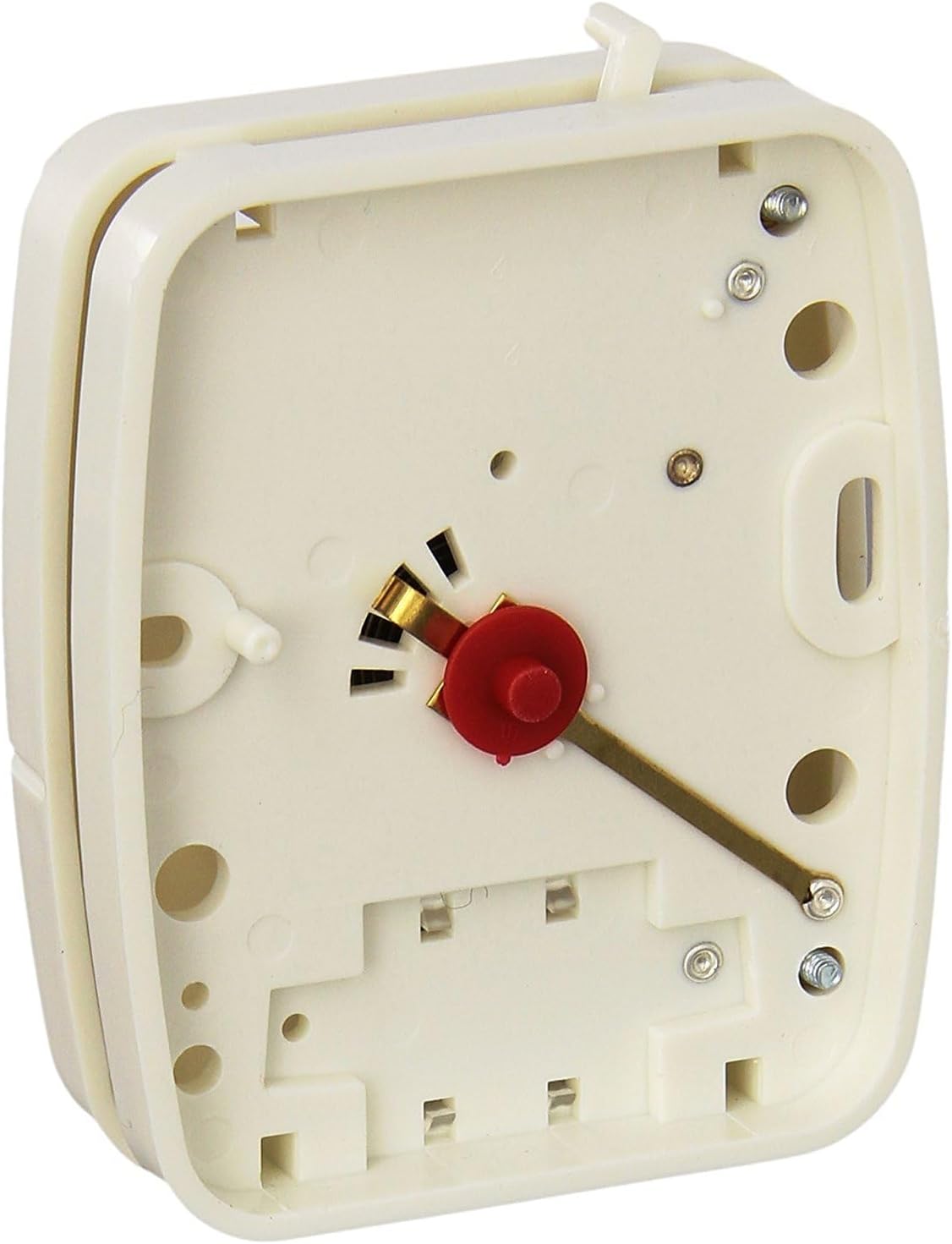
| Controller Type | Mechanical knob |
|---|---|
| Specific Uses For Product | Furnace |
| Power Source | Corded Electric |
| Voltage | 230 volts |
| Display Type | LCD |
This Suburban 161154 wall thermostat is a straightforward mechanical, dial-style controller intended primarily for heat-only applications like RV water heaters and furnaces. Installation is wall-mounted and the unit offers a tactile knob for setting temperature plus an LCD for basic readout; the listing also shows Wi‑Fi connectivity which could allow remote monitoring when integrated with compatible systems. The thermostat is corded electric and runs on 230 volts, and its auto changeover feature helps keep operation focused on heating needs. Its simple, modern white design and compact footprint make it unobtrusive in small spaces. Limitations include the lack of programmability and advanced scheduling common to digital smart thermostats, so it is best where users want manual, no-frills temperature control rather than automated energy management. For someone replacing an in-line heat-only controller or outfitting an RV furnace, it offers reliable, easy-to-use operation without extra complexity.
Best for: Buyers who want a reliable, no-frills thermostat for heat-only systems or RV furnaces and value simplicity and straightforward manual control over automation.
Less Ideal for: Users who want programmable schedules, advanced smart-home integrations, or full-home HVAC control should consider programmable or smart thermostats instead.
- Simple mechanical dial that is easy to use and adjust
- Auto changeover reduces need for manual mode switching
- Compact, wall-mounted design fits small spaces and RV interiors
- LCD display provides a clear temperature readout
- Nonprogrammable so no scheduling or advanced automation
- Listed specs mix mechanical controls with Wi‑Fi but lacks clear smart features or app details
Verdict: Choose this thermostat if you need a compact, easy-to-use mechanical controller for a heat-only system and prefer simple manual operation over programmable features.
Honeywell The Round CT87N

| Controller Type | Mechanical knob |
|---|---|
| Power Source | Battery Powered |
| Temperature Control Type | Heating and Cooling |
| Display Type | Manual |
The Honeywell The Round CT87N is a classic mechanical dial thermostat that gives precise, no-frills temperature control for heating and cooling systems. It is used by turning the large circular dial to set the desired temperature, making it fast and intuitive for anyone who prefers tactile controls over digital menus. The unit is battery powered and mercury free, and includes a decorative cover ring and mounting hardware for straightforward wall installation. Its enlarged temperature scale and simple temperature display make it easy to read and adjust at a glance, and the proven mechanical design delivers reliable performance without programming or network setup. The trade-offs are obvious: there are no scheduling, remote access, or energy-optimization features found in programmable or smart models, so users who want automated temperature setbacks or app control will need a different product. For someone who values accuracy, durability, and immediate manual control, the CT87N does the job with minimal fuss.
Best for: Buyers who prioritize straightforward, accurate manual temperature control and want a durable, easy-to-operate analog thermostat without the complexity of smart features.
Less Ideal for: Users who want programmable schedules, remote access, or smart home integration should choose a programmable or smart thermostat instead.
- Large, easy-to-read dial for quick manual adjustments
- Proven mechanical design known for reliable, long-term operation
- Mercury-free construction with included mounting hardware and cover ring
- Battery powered for simple installation without line-voltage wiring changes
- Lacks programming, scheduling, or remote/app control features
- No automatic energy-saving setbacks or smart integration
Verdict: Choose the CT87N when you want a reliable, easy-to-use analog thermostat that delivers precise manual temperature control without digital complexity.
Stelpro SWT1F Wall Thermostat

| Controller Type | Mechanical knob |
|---|---|
| Temperature Range | 50° to 90°F |
| Voltage | 240 volts |
| Mounting Type | Wall Mount |
The Stelpro SWT1F is a basic, no-frills mechanical wall thermostat built for 240V electric baseboards, convectors and fan heaters. It uses a tactile dial to set temperature across a 50 to 90°F range with a 4°F differential, so it holds room comfort with predictable, analog behavior and no programming or batteries to manage. Installation is a standard two-wire, hardwired connection and the compact rectangular housing blends into most rooms. Its strengths are simplicity and reliability: the dial is easy to adjust, the device is UL-rated, and the factory-style design is suitable for both residential and light commercial use. Limitations are inherent to its analog nature — there is no scheduling, remote control, or fine-grain digital accuracy, and the 4°F swing can feel coarse in rooms where tighter temperature control is desired. For anyone who wants a durable, easy-to-install thermostat with straightforward manual control, the SWT1F performs well, but it is not a replacement for programmable or smart thermostats when those features are needed.
Best for: Buyers who prioritize reliability and simplicity and want a durable, factory-style analog thermostat for electric heating without programming or battery maintenance.
Less Ideal for: People who need programmable schedules, Wi‑Fi control, or sub-degree temperature precision should consider digital or smart thermostat options instead.
- Simple mechanical dial for intuitive temperature adjustment
- Compatible with 240V electric baseboards, convectors and fan heaters
- Two-wire wired connection enables quick, straightforward installation
- UL-rated and made for durable, long-term use
- No programmable schedules, remote access, or digital controls
- Temperature holds within a 4°F differential which is less precise than digital thermostats
Verdict: Choose the Stelpro SWT1F when you want a rugged, easy-to-install analog thermostat that gives reliable manual control for 240V electric heaters.
briidea RV Analog Thermostat RVH

| Voltage | 12 volts |
|---|---|
| Temperature Range | 40-90°F (0-30°C) |
| Function | Cool / Furnace / Fan / Off |
| Display Type | analog |
The briidea RV Analog Thermostat is a manual, wall-mount 12V thermostat designed as a direct replacement for common RV units such as the Dometic 3106995.032. It uses an analog slider for a 40 to 90°F range and offers Cool, Furnace, Fan and Off positions plus a continuous-fan option for air circulation. Installation is intended for systems that already have an analog control board and matching wiring colors, and the unit includes a temperature sensor. Its CE certification and simple wired 12V design make it straightforward for basic heating and cooling control without smart features. Limitations include no compatibility with heat pumps or heat strips and no digital programming or Wi-Fi, so it only supports manual set-and-forget operation. For owners who want a low-cost, direct replacement that restores basic HVAC control in an RV, this unit delivers reliable, no-frills performance; buyers needing programmable schedules or remote control should look elsewhere.
Best for: Buyers on a tight budget who need a straightforward, drop-in analog replacement to restore basic heating and cooling control in an RV or camper without extra features.
Less Ideal for: Users who want programmable schedules, app control, or compatibility with heat pump/heat strip systems should choose a digital or smart thermostat instead.
- 12V wired design made for RV electrical systems and direct replacement of common RV thermostats
- Simple analog slider and mode switch for easy, intuitive operation
- Supports Cool, Furnace, Fan, and Off with a continuous fan option for better circulation
- CE certified and includes a temperature sensor for basic reliability
- Not compatible with heat pumps or heat strips
- No digital programming, Wi‑Fi, or remote control features
Verdict: If you need an inexpensive, no-frills 12V analog replacement to get an RV HVAC system back to working order, this thermostat is a practical choice.
Honeywell Home The Round CT87K1004

| Power Source | Battery Powered |
|---|---|
| Temperature Control Type | Manual |
| Control Type | Dial Control |
| Voltage | 120 volts |
The Honeywell Home The Round CT87K1004 is a classic mechanical, heat-only thermostat that sets temperature with a familiar twist dial. It is designed for straightforward heat-only systems where you want precise manual control without programming or menus. Installation is simple and typically involves mounting the round base, inserting the battery, and connecting low-voltage wiring; the decorative cover ring hides wall blemishes for a cleaner look. In daily use the dial provides responsive, accurate adjustments and the unit is mercury-free, which simplifies disposal and safety. Because it has no display or scheduling features, it stays intuitive for anyone who prefers tactile controls and immediate temperature changes. Limitations are its lack of cooling control, no programmable schedules, and no smart connectivity, so it is not suited for users seeking energy-saving automation or remote access. For those wanting a straightforward, reliable factory-quality manual thermostat, this model delivers consistent performance with minimal fuss.
Best for: Buyers who want a low-friction, dependable manual thermostat for a heat-only system and prefer simple tactile controls over programmable or smart features.
Less Ideal for: People who want cooling control, programmable schedules, or remote/smart home integration should look at digital or smart thermostat alternatives.
- Very easy to use dial control for quick temperature changes
- Simple installation and decorative cover ring conceals wall marks
- Mercury-free design for safer handling and disposal
- Accurate manual temperature control suitable for heat-only systems
- Only controls heating systems and does not support cooling
- Non-programmable with no scheduling or smart features
- No display or remote control options
Verdict: Choose this thermostat if you want an easy-to-use, reliable manual heat-only control with classic round styling and no programming.
Choosing the Right Analog Thermostat: Key Factors to Consider
Wiring and System Compatibility
Analog thermostats must match the wiring and control type of your HVAC system. Many residential systems use basic two- or four-wire setups for single-stage heating or cooling. Confirm the number of wires and whether your system requires a common wire or separate heat and cool calls. Mismatched wiring can prevent the thermostat from controlling the system properly and may require an adapter or a different thermostat type.
Check whether the thermostat supports the control signals your furnace, boiler, or air conditioner expects. Some analog units are strictly mechanical relays designed for simple on/off control, while others include small electronic components that change compatibility. Knowing the control type ahead of purchase avoids installation headaches and ensures reliable operation.
Temperature Accuracy and Stability
Analog thermostats use mechanical sensors or simple bimetal elements to detect temperature. That simplicity can be very reliable, but individual units differ in how closely their setpoint matches actual room temperature. Look for thermostats with clear, well-calibrated markings and a small margin of error for steady comfort.
Placement also affects perceived accuracy. Mounted on an interior wall away from direct sunlight, drafts, or heat sources, a well-calibrated analog thermostat will maintain stable control. If tight temperature control is critical, prioritize units noted for fine adjustment or adjustability in calibration during installation.
Ease of Installation and Mounting
One of the main advantages of analog thermostats is straightforward installation. Good models provide clearly labeled terminals, a simple mounting plate, and concise wiring diagrams. Confirm the mounting footprint and whether the unit accommodates common wall plates or requires patching paint or drywall.
Also consider whether the thermostat requires a particular orientation or spacing from other fixtures. Simple mechanical thermostats often need less technical setup than electronic models, but clear instructions and accessible terminal screws make installation faster and reduce the chance of wiring mistakes.
Control Mechanism and Durability
The tactile parts of an analog thermostat are the most used components, so build quality matters. Dials, sliders, and levers should move smoothly without wobble and hold their position over years of use. Metal or reinforced plastic mechanisms typically outlast very thin molded parts.
Durability also covers the internal relay or switching mechanism. Repeated cycling of heating and cooling systems puts wear on contacts, so choose units designed for frequent on/off operation. A robust mechanism reduces the chance of failure and keeps maintenance needs low.
User Interface and Readability
Analog thermostats are prized for their simplicity, but usability depends on clear markings and ergonomics. Large, well-contrasted temperature scales, intuitive dial detents, and logical labeling for system modes reduce user confusion. Consider whether the unit shows both Fahrenheit and Celsius markings if that matters for your household.
The physical feel of controls matters too. Dials should resist accidental movement but still be easy to adjust. Readability under different lighting conditions and the presence of simple mode indicators help occupants use the thermostat correctly without needing reference materials.
Maintenance and Serviceability
Analog thermostats tend to be low-maintenance, but they still require occasional checks. Mechanical contacts can attract dust, and dials may loosen over time. Choose units where the cover is easy to remove for inspection and where replacement parts such as mounting plates or contact modules are accessible.
Also verify whether the wiring terminals are protected and whether screws are standard sizes for homeowner tools. A thermostat that can be serviced without specialized equipment will save time and cost if minor repairs or readjustments are needed.
When an Analog Thermostat Is the Right Choice
Analog thermostats are ideal when you want straightforward temperature control without the complexity of programming or network features. They are particularly well suited for secondary spaces, vacation homes, or households where occupants prefer tactile controls.
Choose an analog unit if you value mechanical simplicity, low maintenance, and easy troubleshooting. These thermostats are often easier to repair and replace than digital models, and they can be more intuitive for users who want a single dial or lever for immediate adjustments.
- Simple on/off control reduces potential points of failure
- Good option for renters or properties requiring minimal setup
- Minimal power needs and no network configuration
Proper Placement for Accurate Readings
Thermostat location has an outsize impact on perceived performance. Mount the thermostat on an interior wall at eye level, away from direct sunlight, windows, exterior doors, and heating vents. Avoid placing it above appliances or in hallways that do not represent typical living area temperatures.
If the room has strong temperature stratification, consider relocating the thermostat or using passive circulation to improve measurement accuracy. Small placement adjustments can significantly reduce short-cycling and uneven comfort.
- Mount at 48 to 60 inches above the floor if possible
- Keep away from drafts, direct sun, and heat-generating fixtures
- Avoid exterior walls when practical
Basic Troubleshooting and Common Fixes
Because analog thermostats are mechanically simple, many common issues have straightforward remedies. Loose wiring screws can interrupt control signals, so verify terminal connections if the system is unresponsive. A thermostat that is stuck on a setting often needs a cover removed to check the dial mechanism or lever for obstruction.
If temperature readings seem off, confirm the mounting location and consider recalibrating if the unit supports it. For intermittent operation, inspect the switching contacts for pitting or debris. In many cases the thermostat can be cleaned or the contacts lightly filed to restore reliable switching.
- Check and tighten wiring terminals first
- Inspect the mechanical dial for binding or wear
- Clean switch contacts if cycling is inconsistent
Upgrading or Replacing an Existing Thermostat
Replacing an old thermostat with a new analog unit is often quick when the wiring and mounting footprint are compatible. Before buying, map the existing wires and photograph the connections so you can replicate them at the new thermostat. If the old unit used a cover with a large opening, expect to patch or paint the wall if the new backplate is smaller.
Consider whether you need additional features such as fan control or a separate heat/cool lever. If you later decide you need scheduling or remote access, remember those features require a different thermostat type. For now, focus on compatibility and mechanical reliability when choosing a replacement analog thermostat.
- Label and photograph existing wiring before removal
- Measure the old mounting plate to anticipate wall patching
- Decide whether additional manual controls are necessary
Safety and Electrical Considerations
Turn off power to the HVAC system at the breaker before attempting any thermostat work. Even simple analog units can switch line-voltage elements in some older systems, so verify whether you are working with low-voltage control wires or a higher-voltage circuit. Use a voltage tester when in doubt.
If you encounter unexpected wiring colors or extra wires, stop and consult a professional electrician or HVAC technician. Safety and correct wiring are essential for reliable operation and to prevent damage to the HVAC control circuits.
- Shut off power before wiring changes
- Verify low-voltage versus line-voltage systems
- Consult a pro for unclear or unfamiliar wiring setups
How We Chose the Best Analog Thermostat
We selected candidates that deliver the core strengths buyers expect from analog thermostats: mechanical simplicity, reliable temperature control, and compatibility with common residential HVAC wiring. Our filters prioritized products that are designed for easy homeowner installation, use robust mechanical or electromechanical controls, and include clear installation instructions and wiring diagrams. Concrete evaluation criteria included wiring and compatibility support, thermostat accuracy and temperature stability, build quality and durability of the dial or lever mechanism, and ease of installation including clear labeling and mounting options. We also considered user-facing factors such as intuitive operation and maintenance needs, plus the clarity of mechanical setpoint markings. We excluded programmable or smart thermostats and any models that rely on digital displays or app connectivity, since those do not match the analog scope. Units lacking basic wiring documentation or with known fitment issues for typical single-stage heating and cooling systems were also filtered out. The remaining picks are solid, practical choices for buyers who want simple, dependable temperature control.
Our full evaluation process is outlined in our review methodology.
FAQ
Are analog thermostats compatible with single-stage HVAC systems?
Yes. Most analog thermostats are designed for single-stage heating and cooling systems and provide simple on/off control. Verify the wiring and terminal labels to ensure the unit supports the specific connections your system uses.
Can I install an analog thermostat myself?
Often you can. Many analog thermostats have straightforward wiring and mounting. Turn off power, label wires, and follow the included wiring diagram. If your system uses unfamiliar wiring or line-voltage circuits, consider hiring a professional.
How do I improve temperature accuracy with an analog thermostat?
Start by checking placement and ensuring the thermostat is away from drafts, sunlight, and heat sources. If the unit has calibration adjustment, use that to fine-tune the setpoint. Regular maintenance and clean contacts also help maintain accuracy.
How long do analog thermostats typically last?
Many analog thermostats last a decade or more when maintained and not exposed to moisture or extreme temperatures. Longevity depends on the durability of the dial, switch contacts, and frequency of cycling.
Will an analog thermostat work with a multi-stage heating or cooling system?
Analog thermostats are usually intended for single-stage systems. Multi-stage systems often require thermostats with additional wiring and control logic, so verify compatibility before assuming an analog unit will suffice.
Final Verdict
Analog thermostats offer a simple, low-maintenance way to control home temperature that is easy to install and intuitive to use. Prioritize units that match your system wiring, offer clear and accurate setpoint markings, and have robust mechanical parts that will stand up to frequent use. Expect tradeoffs in programmability and advanced features, but enjoy the reliability and straightforward control that make analog thermostats a practical choice for many homes. When choosing, focus on compatibility, installation ease, and the physical quality of the control mechanism. Those priorities will guide you to an analog thermostat that performs reliably and keeps indoor comfort consistent without complexity.