
Note: This article contains affiliate links. If you click on these links and make a purchase, we may earn a small commission at no extra cost to you. This helps support our research and content. Read our full affiliate disclosure here.
Picking an app controlled thermostat shapes daily comfort, utility costs, and how easily you manage your heating and cooling from anywhere. A good model gives reliable remote control, clear scheduling, and smooth integration with your existing HVAC wiring and habits. In this guide we shortlist the top options and evaluate each for ease of use, connectivity, and compatibility with common home systems. Read on to see the features and tradeoffs that matter so you can choose the model that fits your schedule and tech setup.
Top Picks at a Glance
| Best Overall The best all-around choice for most situations | Honeywell Home Smart Color Thermostat |  |
| Best Quality Built to a higher standard if you want something more solid | ecobee Smart Thermostat Premium |  |
| Best Budget The cheapest option that still gets the job done reliably | Google Nest Thermostat E |  |
| Top Rated A top-rated pick with lots of positive feedback | Sensi Touch ST75 |  |
| Most Popular A crowd favorite that many people choose with confidence | Google Nest Thermostat |  |
| Best Seller A high-volume bestseller chosen again and again | Sensi Smart Thermostat ST55 |  |
Honeywell Home Smart Color Thermostat

| Connectivity Technology | Wi-Fi |
|---|---|
| Display Type | LCD |
| Voltage | 24 volts |
| Power Source | Battery Powered |
The Honeywell Home Smart Color Thermostat is a Wi‑Fi programmable thermostat that pairs a bright, customizable touchscreen with app and voice control for remote temperature management. It is typically wall‑mounted to replace a low‑voltage furnace or heat/cool system and requires a C‑wire for reliable power. Key features include a full‑color selectable display to match your décor, Smart Response learning that adapts to your home's heating and cooling cycles, on‑screen weather and humidity readouts, and compatibility with Alexa, Google Assistant and other smart home platforms. The app lets you set schedules, monitor energy usage and receive filter and connection alerts, while ENERGY STAR certification helps reduce energy consumption when used with optimized schedules. Practical limitations are the C‑wire requirement and incompatibility with high‑voltage or electric baseboard systems, so installation may need a power adapter or pro help in some homes. For buyers who want a visually customizable, app‑driven thermostat with learning features and energy tracking, this offers a well‑rounded feature set.
Best for: Buyers who want an app‑controlled thermostat that combines a customizable color display, smart learning, and energy tracking for everyday home comfort and savings.
Less Ideal for: Homes without a C‑wire, high‑voltage heating systems, or owners who need a thermostat for electric baseboard heating should look elsewhere.
- Full‑color selectable touchscreen that is easy to read and can be personalized
- Wi‑Fi and app control with voice assistant compatibility for remote management
- Smart Response learning adapts to home cycle times for more consistent comfort
- ENERGY STAR certified and offers energy‑saving scheduling and alerts
- Requires a C‑wire and does not support high‑voltage or electric baseboard systems
Verdict: Choose this thermostat if you want an app and voice‑ready unit with a customizable color touchscreen and learning features to simplify comfort and reduce energy use.
ecobee Smart Thermostat Premium

| Connectivity Protocol | Wi-Fi |
|---|---|
| Controller Type | Amazon Alexa, Android, Apple HomeKit, Google Assistant, iOS |
| Power Source | Battery Powered |
| Voltage | 24 volts |
| Display Type | LCD |
The ecobee Smart Thermostat Premium is a performance-focused smart thermostat that combines a large, bright touchscreen, built-in Siri or Alexa voice assistant, and an integrated air quality monitor to both simplify control and help reduce HVAC energy use. It installs on most 24VAC HVAC systems and ships with a SmartSensor and a Power Extender Kit to handle homes without a C‑wire, letting you reduce hot and cold spots by placing the sensor where comfort matters most. The unit also includes radar-based occupancy sensing for automatic adjustments, live view integration with an ecobee doorbell camera, and app control with geofencing and schedules for remote management. Practical benefits include potential energy savings, central air filter reminders, and a usable speaker for voice control and media. Limitations to note are the need to verify system compatibility before purchase and reliance on the app and cloud services for some advanced features, which may be a consideration for users seeking a fully local solution.
Best for: Buyers who prioritize precise, app-driven climate control, energy savings, and smart-home voice integration and want sensors to tune temperature in specific rooms.
Less Ideal for: People who need a simple, local-only thermostat with minimal app/cloud dependence or those with incompatible high-voltage or millivolt HVAC systems.
- Built-in voice assistant (Siri or Alexa) and speaker for hands-free control
- Includes SmartSensor to manage hot and cold spots and improve comfort
- Integrated air quality monitor with alerts and filter reminders
- Radar occupancy sensing and geofencing for automatic, room-aware adjustments
- Power Extender Kit included for easier DIY install on homes without a C‑wire
- Some advanced features depend on cloud/app connectivity rather than local-only control
- Requires checking compatibility with certain HVAC or line-voltage systems before installation
Verdict: Choose the ecobee Smart Thermostat Premium if you want app-forward, voice-enabled HVAC control with room sensors and air-quality monitoring to maximize comfort and savings.
Google Nest Thermostat E

| Connectivity Technology | Wi-Fi |
|---|---|
| Power Source | Hardwired |
| Control Type | App Control |
| Display Type | LCD |
| Controller Type | Amazon Alexa, Google Assistant |
The Nest Thermostat E is a straightforward, app‑controlled smart thermostat aimed at simplifying everyday temperature control. It mounts on the wall and connects to your 24V HVAC system, offering Wi‑Fi access so you can adjust settings from the Nest app or with voice assistants like Alexa and Google Assistant. The frosted, low‑glare LCD is easy to read and the unit supports programmable schedules, Auto‑Away and Eco modes to reduce energy use. Installation is intended for DIY with included mounting hardware and an optional trim plate. Practical benefits include remote control, basic energy history, and the Home/Away feature that helps save energy without constant manual changes. Limitations for buyers on a tight budget are that the Thermostat E lacks the advanced learning and higher‑resolution display of premium models, and it requires a hardwired 24V connection so it is not suitable where batteries only are needed. If you want a simple, app‑centric thermostat that covers core smart features and energy modes, this unit delivers them without extra complexity.
Best for: Buyers who want a simple, app‑driven smart thermostat that covers core remote control and energy modes without paying for advanced learning features.
Less Ideal for: Users seeking the most advanced learning capabilities, high‑resolution displays, or who need a battery‑only thermostat should consider other options.
- App and voice control via Wi‑Fi for remote temperature adjustments
- Frosted low‑glare LCD that is easy to read on the wall
- Energy-saving features like Eco Temperatures and Home/Away Assist
- DIY installation with included trim plate and mounting hardware
- Requires a hardwired 24V HVAC connection so it will not work in systems without a C‑wire
- Simpler feature set and display compared with higher-end learning thermostats
Verdict: A no‑frills, app‑controlled smart thermostat that delivers remote control and basic energy savings at a budget‑friendly level.
Sensi Touch ST75

| Connectivity Technology | Wi‑Fi |
|---|---|
| Control Method | App, Touch, Voice |
| Screen Size | 4.3 inches |
| Temperature Control Type | programmable |
| Specific Uses For Product | Air Conditioner, Boiler, Furnace, Heat Pump |
The Sensi Touch ST75 is a wall‑mounted smart thermostat that replaces a conventional thermostat to provide remote control, scheduling, and energy reports via the Sensi mobile app. Installation is designed for DIY users who have a C‑wire, with illuminated easy‑click terminals and an in‑app step‑by‑step guide; the large 4.3‑inch color touchscreen and physical mounting make daily local adjustments straightforward. On the smart side it supports 2.4 GHz Wi‑Fi and works with Alexa, Google Assistant, Apple HomeKit and other controllers, plus it provides usage reports, equipment alerts and maintenance reminders that help spot problems early. It is Energy Star certified and emphasizes data privacy. The main limitations are the C‑wire requirement for typical installation and dependence on 2.4 GHz Wi‑Fi, which may require network setup adjustments in some homes. For homeowners wanting a reliable, app‑driven upgrade that also offers clear diagnostics, the Sensi Touch is a practical choice.
Best for: Homeowners who prioritize a dependable, professionally backed smart thermostat with clear diagnostics and app control for managing HVAC performance over time.
Less Ideal for: People without an available C‑wire or those who need a thermostat that works on 5 GHz Wi‑Fi or without any wiring modifications.
- Easy DIY installation with illuminated easy‑click terminals and in‑app guidance
- Works with major smart platforms including Alexa, Google Assistant, and Apple HomeKit
- Large color touchscreen for clear local control and intuitive menus
- Provides remote access, usage reports, smart alerts and maintenance reminders
- Requires a common wire (C‑wire) for standard installation
- Only supports 2.4 GHz Wi‑Fi which may not match some modern network setups
Verdict: Choose the Sensi Touch ST75 when you want a reliable, app‑controlled thermostat with strong diagnostics and broad smart home compatibility.
Google Nest Thermostat
| Connectivity Technology | Bluetooth, Wi-Fi |
|---|---|
| Power Source | Battery Powered |
| Display Type | LCD |
| Control Type | Remote Control, Voice Control |
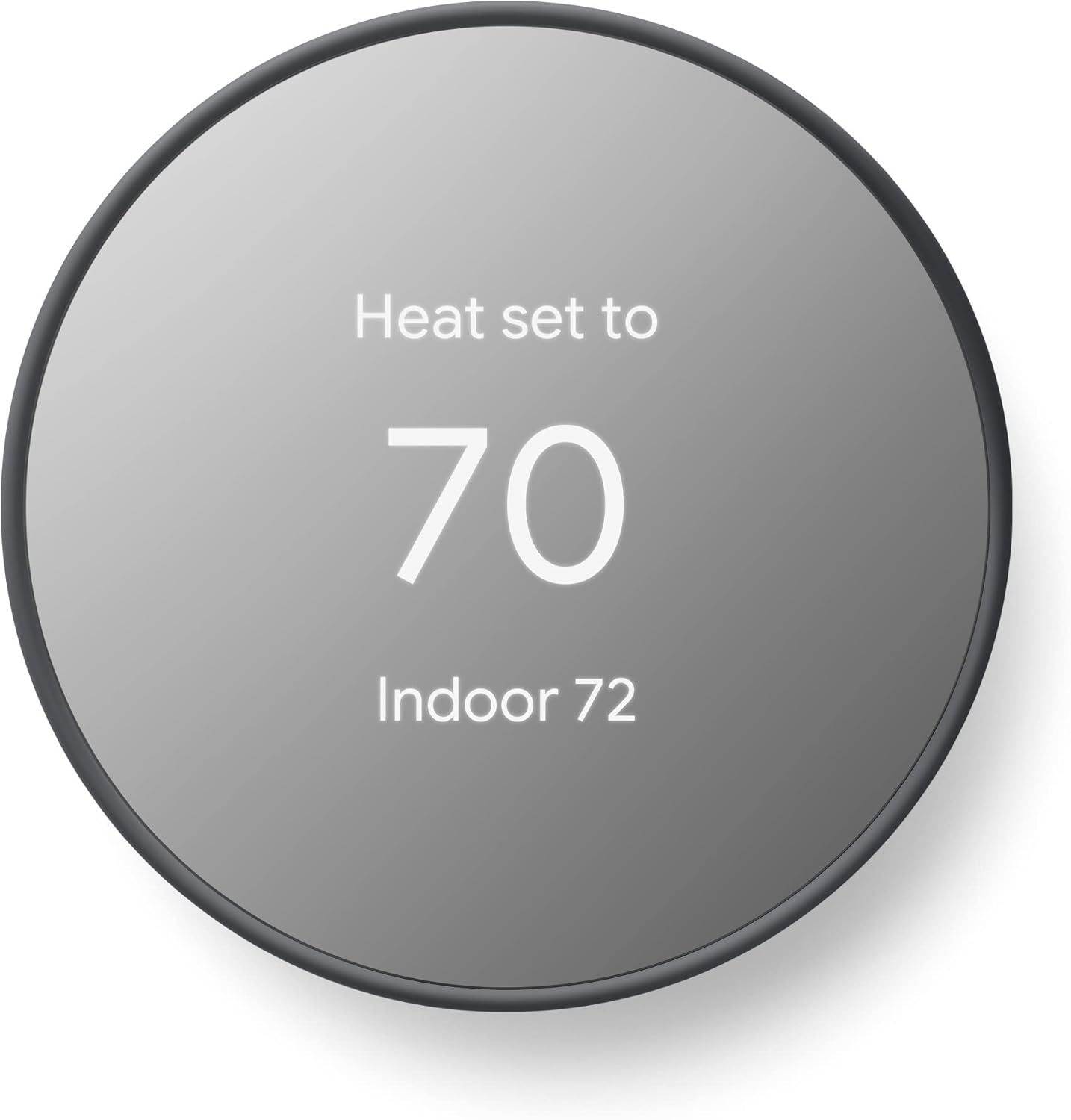
The Google Nest Thermostat is an app-controlled smart thermostat designed to make temperature control simple and help reduce energy use. It connects over 2.4/5 GHz Wi‑Fi and Bluetooth Low Energy so you can adjust settings from the Google Home app or with voice assistants, and it supports remote scheduling and quick schedule edits from your phone. The unit includes Savings Finder suggestions, Eco Temperatures when the house is empty, and basic HVAC monitoring that can send alerts if something seems off. Installation is intended for DIY users and typically takes under 30 minutes for compatible systems, and the thermostat is battery powered with two A batteries included. Practical limits are that some systems still require a C wire or a power accessory, and advanced features like Nest Renew or certain alerts require additional Nest products or account/utility eligibility. The display is a small 2-inch LCD with side touch controls rather than a large dial, so interaction is mostly app-first. For buyers prioritizing app control and energy features, this model balances ease of use with useful smart-home integrations.
Best for: Buyers who want an affordable, app-first smart thermostat with straightforward installation and energy-saving features and who value integration with Google Home and voice assistants.
Less Ideal for: Homes with uncommon HVAC wiring or owners who need a large physical display and dial-style controls; those wanting the most advanced Nest-only services may need newer Nest models.
- Wi‑Fi and Bluetooth connectivity for remote control and app scheduling
- Savings Finder and Eco Temperature features that suggest or apply energy-saving changes
- Quick DIY installation designed to take about 30 minutes for most compatible systems
- Works with voice assistants and integrates into Google Home for smart home routines
- May require a C wire or power accessory on some HVAC setups
- Small 2-inch LCD and touch bar offer less tactile control than larger dial-style thermostats
Verdict: A user-friendly, app-controlled thermostat that delivers easy remote scheduling and energy-saving features for most standard home HVAC systems.
Sensi Smart Thermostat ST55

| Connectivity Technology | Wi-Fi (2.4 GHz) |
|---|---|
| Control Method | App, Touch, Voice |
| Temperature Control Type | Programmable, Smart/Remote |
| Power Source | Corded Electric (2 AA batteries included) |
The Sensi Smart Thermostat ST55 is a wall‑mounted programmable thermostat that brings basic smart controls to typical residential HVAC systems. It connects to 2.4 GHz Wi‑Fi and pairs with the Sensi mobile app to let you adjust temperature remotely, set schedules, and receive usage reports and smart alerts. The unit supports voice control through Alexa, Google Assistant, Apple HomeKit and other platforms, and its button controls plus included wire stickers and step‑by‑step app guidance make DIY installation straightforward for most homes; a common C‑wire is not required in many setups. Energy Star certification and built‑in usage reporting aim to reduce HVAC energy use, while filter and maintenance reminders help protect system longevity. The display is a simple LED screen with backlight rather than a large color touchscreen, so interaction is functional rather than flashy. Battery backup and included mounting hardware simplify setup, but advanced users looking for more granular scheduling, larger color displays, or multi-zone features may find it basic. For buyers who want a reliable, privacy‑focused smart thermostat that is easy to install and use, the ST55 covers the essentials well.
Best for: Buyers who prioritize a low‑risk, easy to install smart thermostat with solid app control, voice assistant support, and energy‑saving features rather than advanced display or multi‑zone capabilities.
Less Ideal for: Users seeking a feature‑dense thermostat with a large color touchscreen, extensive advanced scheduling, or multi‑zone management should consider higher‑end models instead.
- Straightforward DIY installation with included hardware and app guidance.
- Remote control and scheduling via 2.4 GHz Wi‑Fi and the Sensi mobile app.
- Works with major voice assistants and smart home platforms for convenient voice control.
- Energy Star certification plus usage reports and maintenance alerts to help lower HVAC energy use.
- Battery backup and simple LED display keep operation reliable during setup and normal use.
- No large color touchscreen; display and controls are basic LED and button based.
- Not aimed at advanced multi‑zone setups or users wanting highly granular programming options.
Verdict: A dependable, easy‑to‑install smart thermostat that delivers straightforward app and voice control plus Energy Star savings for risk‑averse buyers.
Choosing the Right App Controlled Thermostat: Key Factors to Consider
App Usability
A thermostat app is where you will interact most of the time, so the interface should be intuitive and responsive. Look for clear controls for temperature adjustments, easy creation and editing of schedules, and straightforward access to away or hold modes. Visual feedback on current temperature, setpoint, and system status reduces confusion.
Advanced features like geofencing, short-term overrides, and multi-zone management can be helpful, but only if they are easy to configure. Poorly designed menus or slow app performance can make a capable thermostat frustrating in daily use.
Connectivity and Integration
How the thermostat connects to your home network affects reliability and available features. Native Wi-Fi models offer direct remote control from the app, while some devices use a hub for local mesh networking. Check whether the thermostat supports 2.4 GHz Wi-Fi, and whether it requires a separate hub for smart-home integrations.
Also consider compatibility with voice assistants and other smart-home platforms if you plan to automate routines. Reliable firmware updates and responsive cloud services matter because intermittent connectivity or slow updates can break automations and remote control.
HVAC Compatibility and Wiring
Thermostats must match your heating and cooling system and wiring to operate correctly. Confirm compatibility with system types such as single-stage or multi-stage heat pumps, conventional furnaces, and systems that need a common wire. Many modern smart thermostats expect a C wire for continuous power; if your system lacks one, ensure the device offers alternatives or an included power adapter.
Incorrect wiring can cause cycling, loss of Wi-Fi, or short equipment life. If you are not comfortable with thermostat wiring, factor in the potential need for professional installation.
Scheduling and Automation
Flexible scheduling helps you align HVAC operation with occupancy patterns to save energy and maintain comfort. Look for options to create weekday/weekend programs, temporary hold periods, and temperature setbacks. Automation features such as adaptive learning can be useful if they actually reduce manual adjustments rather than force confusing algorithms.
Integration with geolocation, occupancy sensors, or external triggers can further reduce wasted runtime, but buyers should weigh simplicity against the value of complex automation.
Energy Reporting and Sensing
Energy reporting tools can show runtime trends and estimated energy impact of temperature changes. Good reports highlight opportunities to save or explain spikes in usage. Equally important is accurate temperature sensing and placement flexibility, since a thermostat that reads too warm or too cold due to location will cause poor comfort and wasted energy.
Some systems support remote sensors to balance temperature across rooms. Consider whether you need auxiliary sensors for better whole-house comfort and how the device handles sensor averaging or prioritization.
Installation Basics and Wiring Checklist
Before you buy, check the wiring at your existing thermostat. Note labeled terminals and whether a C wire is present. Many app controlled thermostats require continuous power; if your system lacks a C wire, look for models that include a power adapter or support power-stealing installation methods.
Turn off power at the breaker and take a photo of the wiring for reference. Compare terminal labels to the new thermostat's installation guide. If your system uses multistage heating or a heat pump, verify the new thermostat supports those specific terminals to avoid operational problems.
- Confirm presence of common (C) wire or plan for adapter
- Document existing terminal labels with a photo
- Verify support for multistage systems or heat pumps
- Check whether a separate hub is required for the thermostat
Mobile Features That Actually Matter
Not all app features are equally useful. Prioritize responsive remote control, clear scheduling, and straightforward away modes. Geofencing can automate the thermostat when you leave and return, but it should be reliable and not cause frequent false triggers.
Look for easy temperature overrides and quick access to system status. Useful apps surface runtime reports and alerts for issues like lost connectivity or extreme indoor temperatures without burying them in menus.
- Quick-set temperature controls and overrides
- Reliable geofencing and presence detection
- Push alerts for connectivity and system warnings
- Clear runtime and energy summaries
Using Remote Sensors and Zoning
Remote sensors help address hot or cold spots by reporting temperature and occupancy in other rooms. Some thermostats average sensor readings; others prioritize a single sensor or allow manual selection. Decide how you want the system to behave so you get consistent comfort.
For multi-zone homes, complete zoning requires separate thermostats per zone or a compatible zoning controller. Understand whether remote sensors are included, optional, or sold separately and how many sensors the platform supports.
- Determine how the thermostat handles multiple sensor inputs
- Check sensor range and battery life for placement flexibility
- Plan for zoning needs in larger homes
Security and Privacy Considerations
A smart thermostat interacts with your home network and collects occupancy or schedule data. Use strong, unique passwords and enable two-factor authentication when available. Confirm the vendor provides firmware updates and clear privacy documentation.
Consider how long historical data is stored and whether you can delete or export logs. Devices with local control modes minimize cloud dependency but may limit remote features.
- Enable two-factor authentication if supported
- Check firmware update frequency and delivery
- Review data retention and privacy policy
Common Troubleshooting Steps
If the thermostat loses Wi-Fi or behaves erratically, first check power and wiring connections. Rebooting the thermostat and router often resolves transient connectivity problems. Ensure the thermostat firmware is current to benefit from bug fixes.
For persistent issues with temperature accuracy or system cycling, verify correct system type and terminal mapping in the device settings. When in doubt, consult wiring diagrams or seek professional HVAC assistance to avoid damaging equipment.
- Restart thermostat and router for connectivity issues
- Verify system type and wiring mapping in settings
- Update firmware before advanced troubleshooting
- Contact HVAC pro for wiring or persistent mechanical faults
How We Chose the Best App Controlled Thermostat
We focused on real-world usability, connectivity reliability, and HVAC compatibility when selecting the thermostats on this list. Key evaluation dimensions included app usability and features, wireless stability and ecosystem integration, thermostat compatibility with common HVAC systems and wiring, temperature sensing and scheduling flexibility, and energy reporting and automation options. We prioritized products that offered clear, modern mobile apps with straightforward scheduling, robust Wi-Fi or hub-based connections, and sensible automation rules. We excluded models that lack remote control via a dedicated app or that rely solely on proprietary hubs without reasonable consumer documentation. We also filtered out devices with unclear wiring requirements or insufficient support for multi-stage heating and cooling where that matters. The shortlist reflects appliances that deliver dependable app control, straightforward setup guidance, and meaningful energy or convenience features for everyday home use.
Our full evaluation process is outlined in our review methodology.
FAQ
Do app controlled thermostats need a constant power source?
Often yes. Many app controlled models require a common wire or a power adapter to supply continuous power for Wi-Fi and background functions. Some offer power-stealing methods, but those can be less reliable depending on your HVAC setup.
Can I control an app controlled thermostat without an internet connection?
You can usually adjust the thermostat locally, but remote control through the app and cloud-based automations require an internet connection. Some thermostats support local network control when both phone and device are on the same Wi-Fi network.
Are remote sensors necessary for good temperature control?
Remote sensors are helpful if you have rooms that differ significantly from the thermostat location. They are not required for every home, but they improve comfort in homes with uneven heating or cooling by reporting temperatures from other areas.
Will an app controlled thermostat save energy automatically?
It depends. Features like scheduling, adaptive setbacks, and geofencing can reduce runtime, but savings depend on how you configure the system and your home's insulation and HVAC efficiency. Automated learning features help some users but should be monitored to ensure they align with your comfort preferences.
How hard is it to replace my existing thermostat with an app controlled one?
For many homeowners the swap is straightforward if wiring matches and a C wire is present. Basic installations can be completed with common tools in under an hour. If your system uses multistage controls or lacks a common wire, consider professional installation.
Final Verdict
Choose an app controlled thermostat that matches your HVAC wiring and the level of automation you actually want. Prioritize models with solid app usability, reliable connectivity, and clear compatibility with your heating and cooling system. If you have temperature imbalances, plan for remote sensors or zoning. Focus on straightforward setup and good support to avoid installation and connectivity headaches. With those priorities in mind, you can pick a thermostat that improves comfort and reduces wasted runtime without adding daily friction.